Chart your course
Sailing Telltales Explained: Read the Ribbons, Trim the Sail
Quick answer
The short version
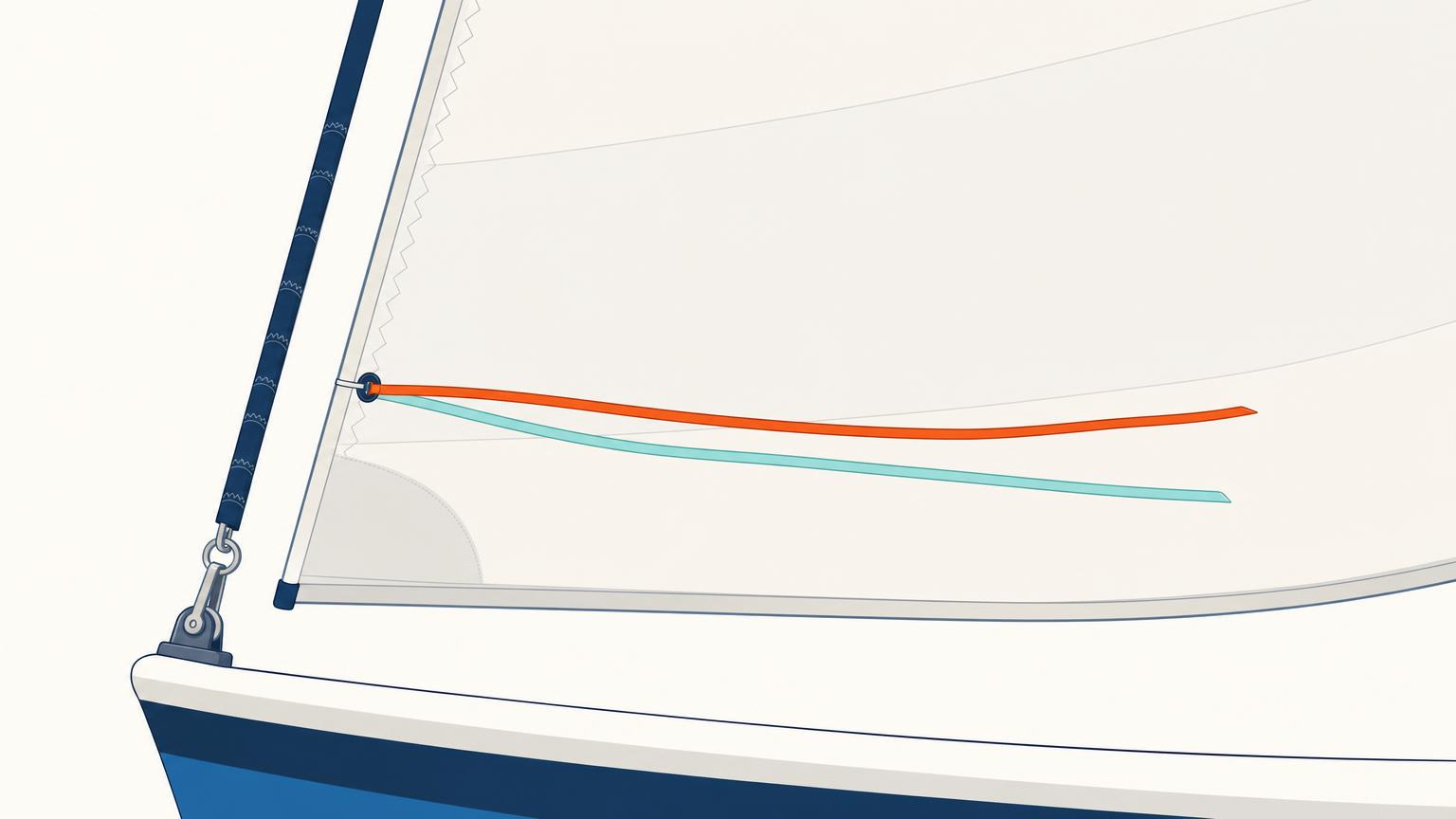
Sail telltales are light ribbons that make airflow visible at one small part of a sail. They are usually fitted in pairs, with one ribbon on each side. When both stream smoothly toward the sail's back edge, air is flowing along both surfaces. A fluttering ribbon shows disturbed or separated flow, while a limp ribbon shows little or no flow across that spot. Read the pair for a repeated pattern rather than reacting to every flicker. On a jib, adjust the sheet a little, pause, and look again until both ribbons settle into a steady stream aft.
For a simple jib check, ease the sheet a little and look again. If the sail's front edge begins to flutter, pull it back in just enough to stop it. Make one small change at a time, then pause, and watch for the overall pattern rather than chasing every brief flicker.
These ribbons are most useful when you're sailing toward the wind, up to about a beam reach. The habit worth building is testing one small change to the jib sheet, the line that controls the jib, and watching whether the ribbons settle into smooth, steady streaming before you ease off and look again.
What Does One Sail Telltale Actually Sense?
A telltale is a small, lightweight ribbon or piece of yarn attached to a sail. It sits in the thin layer of air moving right against the sail's surface. That is why it reacts to airflow that you cannot otherwise see.
When one telltale streams steadily aft (toward the back of the sail), the air is staying attached to the sail at that spot. This is a local reading. One ribbon does not tell you what the air is doing across the whole sail.
One telltale reads the side the wind reaches first; its matching ribbon on the far face reads the other side. Comparing them shows whether air is flowing smoothly on both sides of the sail or whether one side is disturbed.
Sometimes a ribbon flutters, lifts away, or hangs limp instead of streaming aft, and each movement is its own clue to what the air is doing.
What Do Streaming, Fluttering, and Limp Mean?
Group each ribbon's movement into one of three readings:
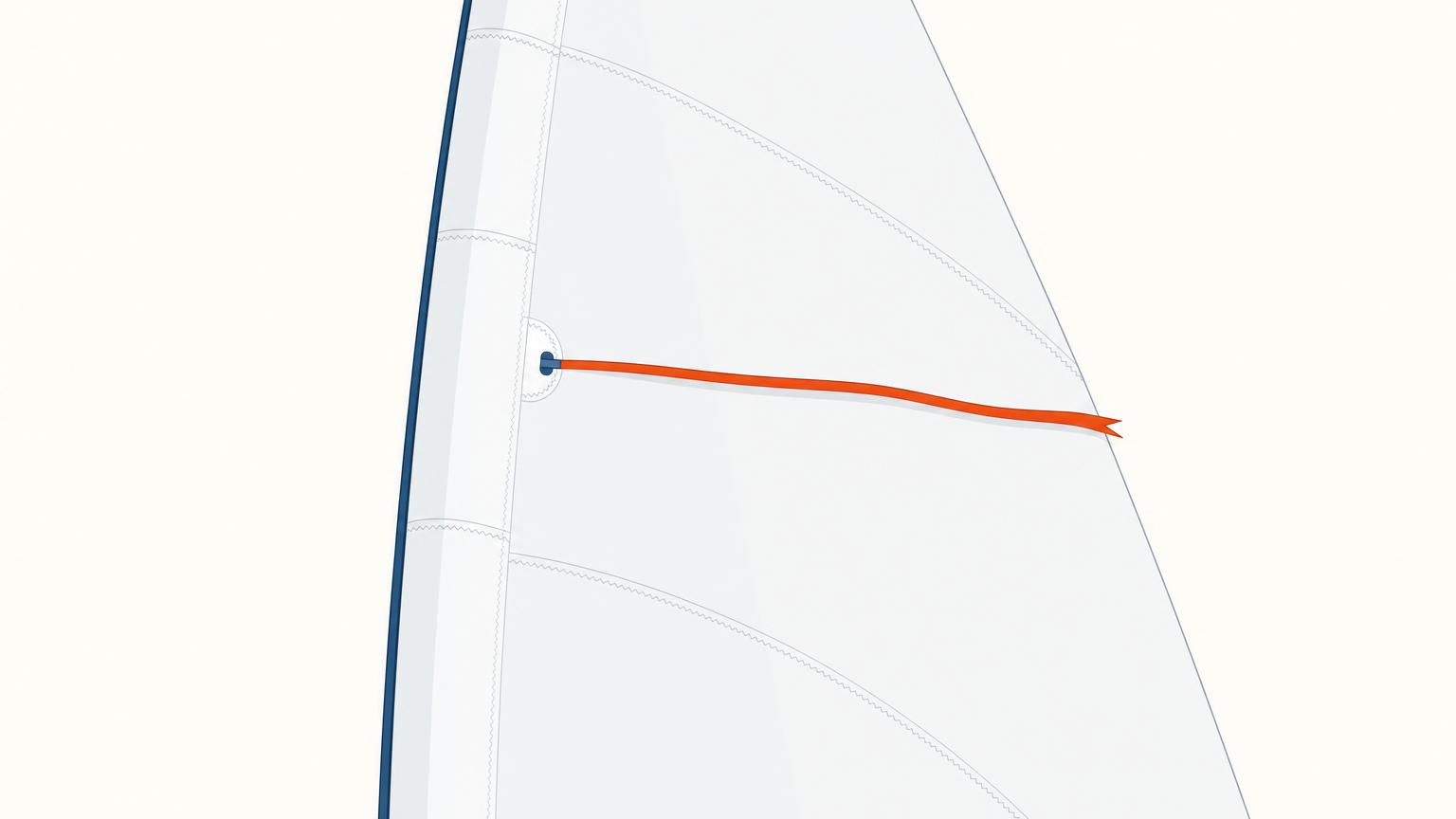
- Streaming: The ribbon lies close to the sail and points steadily aft (toward the back edge of the sail, called the leech). The airflow is attached to the sail.
- Fluttering: The ribbon dances, lifts away, or points forward. The airflow is disturbed or has separated from the sail.
- Limp: The ribbon hangs down. Little or no air is flowing across that spot.
On a jib, the windward ribbon sits on the side facing the wind, and the leeward ribbon sits on the sheltered side. Compare them rather than reading either one alone.
When the wind the moving boat feels comes from forward of its side, both ribbons should stream aft. If one flutters while the other streams, note which side is unsettled. Wind speed, wind direction, and boat speed rarely stay constant, so do not chase every flicker. Watch briefly for a repeated pattern before you change the sheet.
How Do You Adjust the Jib from Its Telltales?
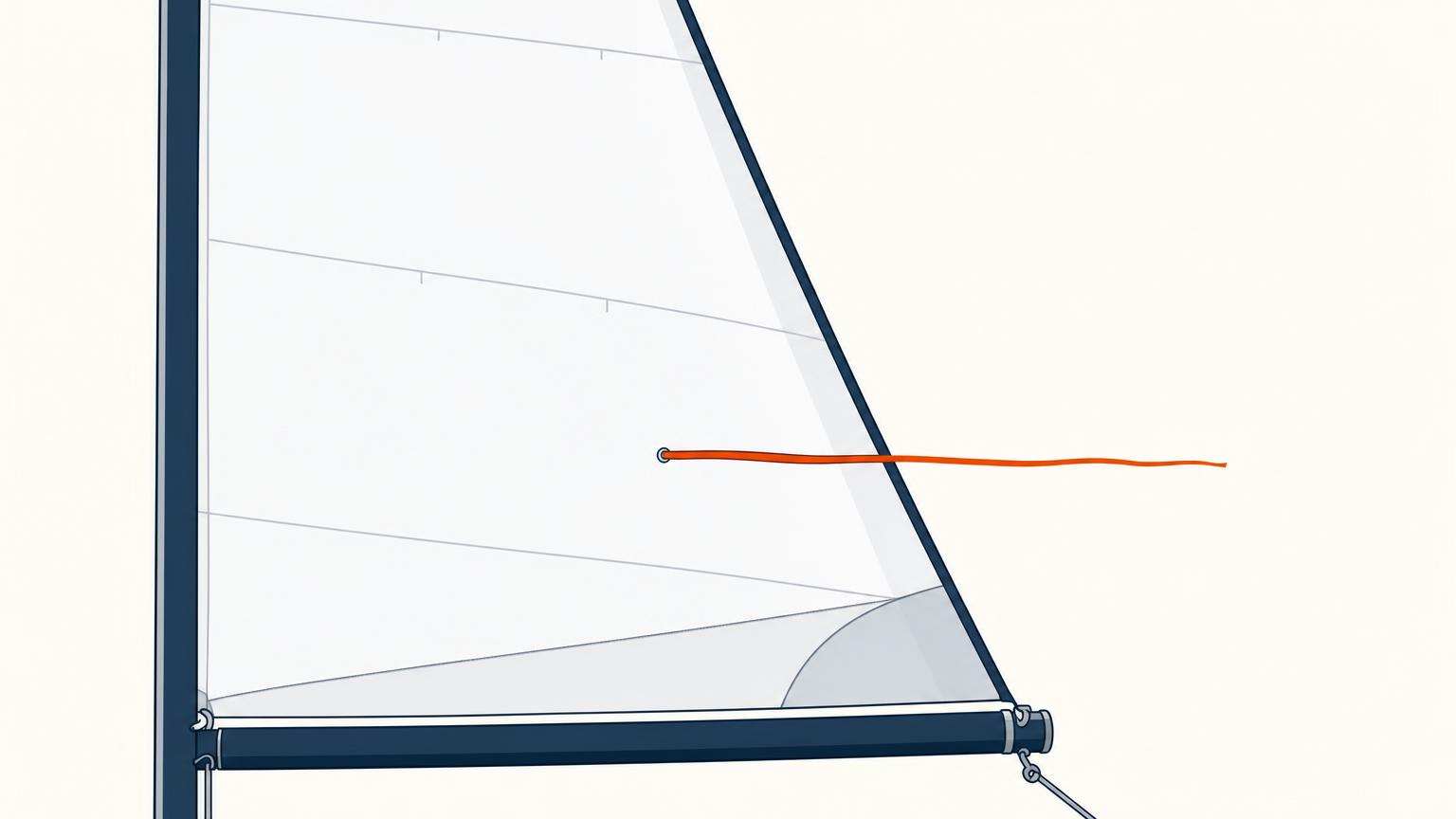
Use a simple loop: look, adjust, pause, look again. Watch the paired telltales on the jib. Change only the jib sheet, and move it a little at a time.
- If the windward telltale (the ribbon on the side facing the wind) flutters, trim the sheet in slightly.
- If the leeward telltale (the ribbon on the side away from the wind) flutters, ease the sheet slightly.
Pause after each change and give the ribbons time to respond, watching for both to settle into a steady stream aft.
If you are unsure, or think the jib may be pulled in too tightly, ease the sheet a little. Continue until the front edge of the sail just begins to flap. This is called luffing. Then trim in only enough to stop it.
Check the telltales with short glances. Keep looking and listening for boats, people, and changing conditions around you.
Start with the sail's luff
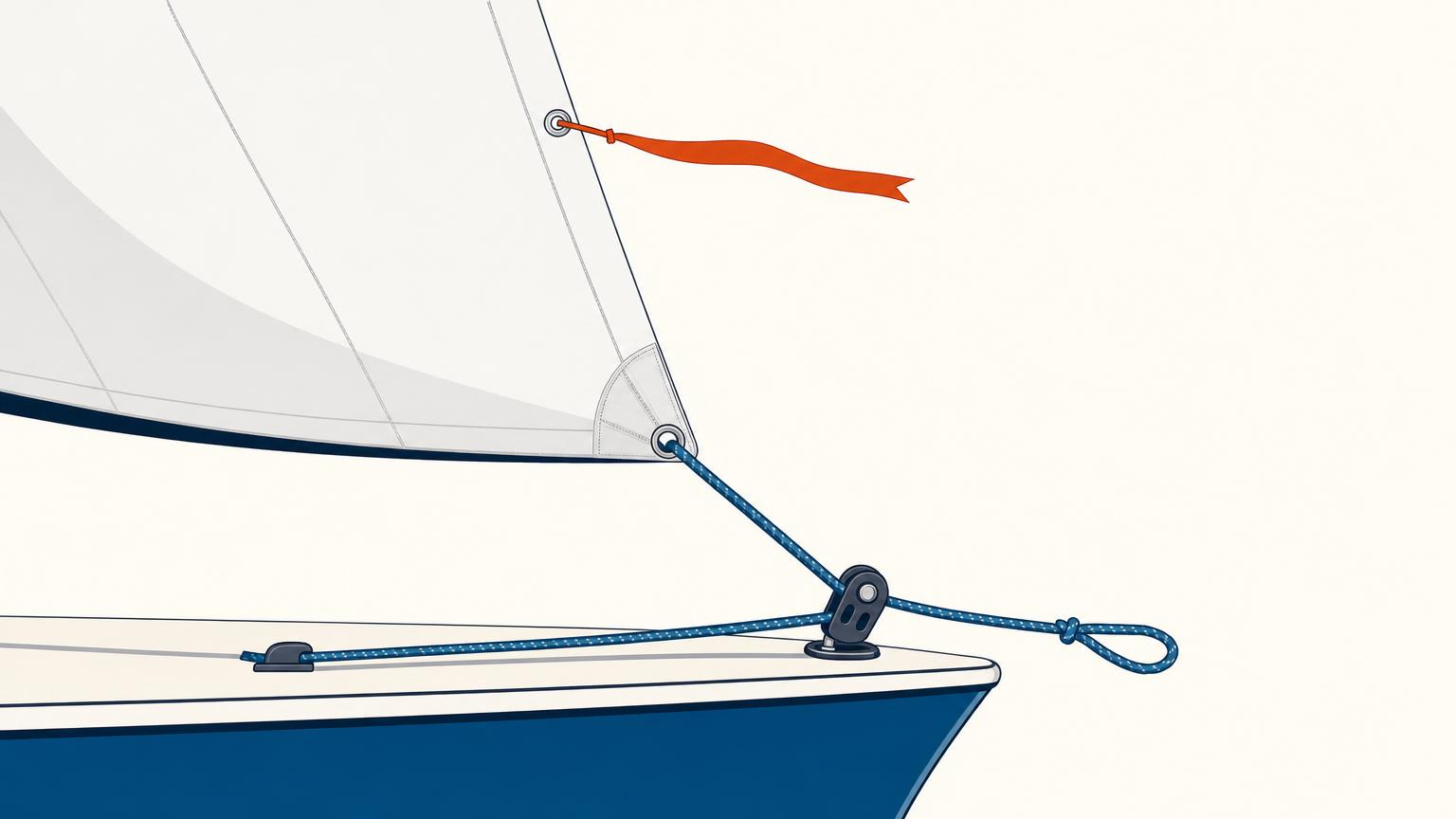
Before interpreting a ribbon, check whether the sail's front edge is smooth or luffing. A luff shows that the relationship between course, apparent wind, and trim is outside the sail's working range at that moment. Restore a suitable angle or trim before chasing a small telltale movement.
Then watch both sides together. Streaming telltales suggest attached flow at their local height. A lifting or fluttering windward telltale and a disturbed leeward telltale point to different changes in angle or trim. Use the pattern described for that sail and placement, not a rule copied from an unrelated rig.
Change one input
Hold a steady course while easing or trimming the sheet a small amount. Wait for the sail and boat to respond. If the helm changes course at the same time, you cannot know which input produced the new pattern. Say the change aloud so helm and trimmer share the experiment.
The common trim mistakes guide gives a full diagnostic loop. The sails explanation connects attached flow with lift and the boat's forward drive.
Read height as well as side
Telltales at different heights can show that one part of the sail behaves differently from another. If the lower ribbons stream while the upper ones do not, check the sail's twist and the controls that affect it on that boat. Do not pull a random line. Ask the skipper which control is appropriate and move it in a small measured step.
Keep the comparison fair. A telltale stuck by rain, salt, static, or the sail itself is not reporting airflow. Look at the sail shape and other ribbons before treating one limp strand as a trim command.
Know when the boat needs a larger change
Telltales help fine trim within a workable sail plan. They cannot make a boat point directly into the no-go zone, remove a strong current, or solve sustained excess sail area. If normal trim leaves the boat heavily heeled with a hard helm, follow the sail-reduction plan rather than chasing perfect ribbons.
The reefing guide covers that larger decision. After reefing, use telltales again to settle the reduced sail plan.
Run a short training exercise
Choose suitable open water and supervision. Hold one point of sail, note the luff and both telltales, make one sheet change, and describe the result. Return to the starting setting. Then let the helm make a small course change while the sheet stays fixed.
Comparing these two experiments shows how trim and steering can create similar symptoms for different reasons. Finish by looking outside and naming traffic, course, and conditions. Telltales are useful because they support the wider sailing picture. They should never narrow your attention until the ribbon is all you see.
A telltale gives you a local snapshot of airflow at one point on the sail. Compare the ribbons on both sides of the jib, then look for a pattern: streaming aft means the flow is attached; fluttering means it is disturbed; limp means there is no airflow at that spot.
Do not chase every flicker. Ease or trim the jib sheet a little, wait, and look again. In changing wind, repeated small checks are more useful than one large correction. Keep watching the water and your surroundings too, using short glances at the sail rather than a fixed stare.
Ready to practise the cycle of look, adjust, and check? Try SailStarter's short visual sailing lessons.
If the boat has several rows of telltales, choose one pair near the middle of the working sail for the first exercise. Learn how that pair responds to easing, trimming, heading up, and bearing away. Add upper and lower pairs only after the basic relationship is clear.
Photograph the sail from a safe fixed position when the crew is not busy, then compare the image with the written observation. The camera may capture twist and shape that were hard to hold in memory. It cannot replace watching the changing sail under way.
Clean or replace telltales according to the sailmaker's guidance when they stick or disappear. Keep their attachment from damaging the cloth. A missing ribbon is an equipment issue, not a reason to guess what it would have shown.
During a gust, look at the whole boat before making a fine adjustment. A short ease may manage the moment. Sustained load may call for reefing. State which problem you are solving so the crew does not confuse gust response, course correction, and normal trim.
Try it from the lesson
Can you spot the next move?
Both jib ribbons stream aft. What does that establish?
Why you can trust this guide
. We build each guide from public seamanship and safety sources, then teach the universal principle before any local difference.
- ussailing.org
- goodoldboat.com
- uksailmakers.com
- quantumsails.com
- practical-sailor.com
- sailingworld.com
- sailingworld.com
- sailcare.com
- davisinstruments.com
- westmarine.com
- productimageserver.com
- en.wikipedia.org
- en.wikipedia.org
- uksailmakers.com
- sailtrain.org.uk
- sailing-blog.nauticed.org
- sailing-blog.nauticed.org
- jworldannapolis.com
- en.wikipedia.org
- discoverysailing.org
- windexdevelopment.com
- imo.org