Chart your course
Sail Twist and Draft Explained
Quick answer
The short version
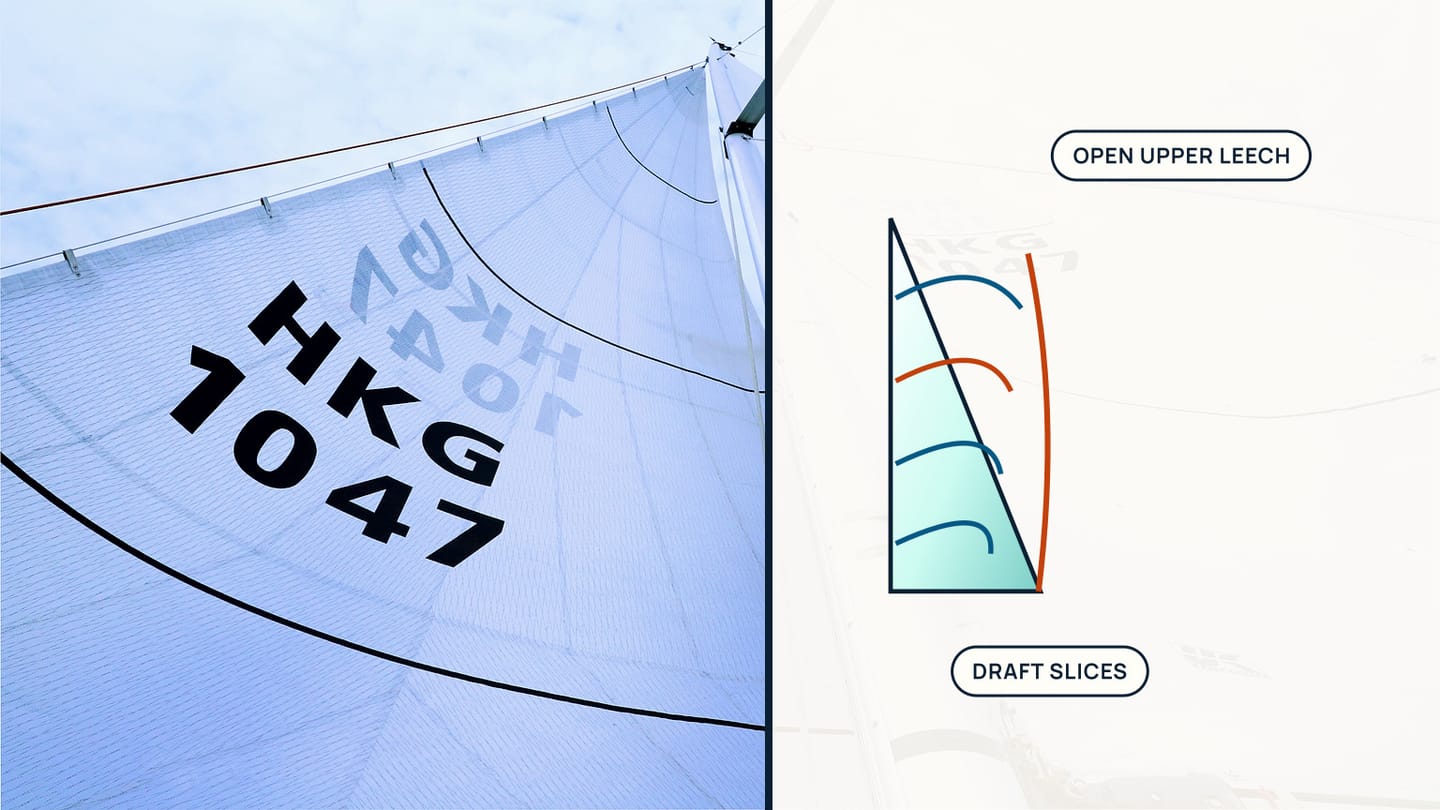
Draft is the sail's curved fullness when viewed across a horizontal slice. You can describe how deep it is and where the deepest point lies from luff to leech. Twist is the change in sail angle from bottom to top, visible as the upper leech opening away from the lower sail. Draft changes the foil's shape; twist changes how its angle meets wind at different heights. Read draft stripes, battens, leech shape, and telltales before choosing a control.
The two are linked but not interchangeable. Tightening a control can flatten one region while also moving draft or changing leech tension. Boat speed, heel, mast bend, sail cut, and point of sail all affect the final shape. Learn the visible definitions first, then use the boat's tuning guidance.
Connect this article with sail trim by point of sail, boom vang vs mainsheet vs traveler, and cunningham and outhaul explained. Loaded sail controls can move suddenly; practise with an experienced skipper and clear line paths.
See twist and draft as different dimensions
Stand in a safe place below the boom and sight upward. Draft appears in the curve from luff to leech. Draft stripes make that curve easier to compare at several heights. The deepest point might sit forward, near the middle, or farther aft, depending on sail and setting.
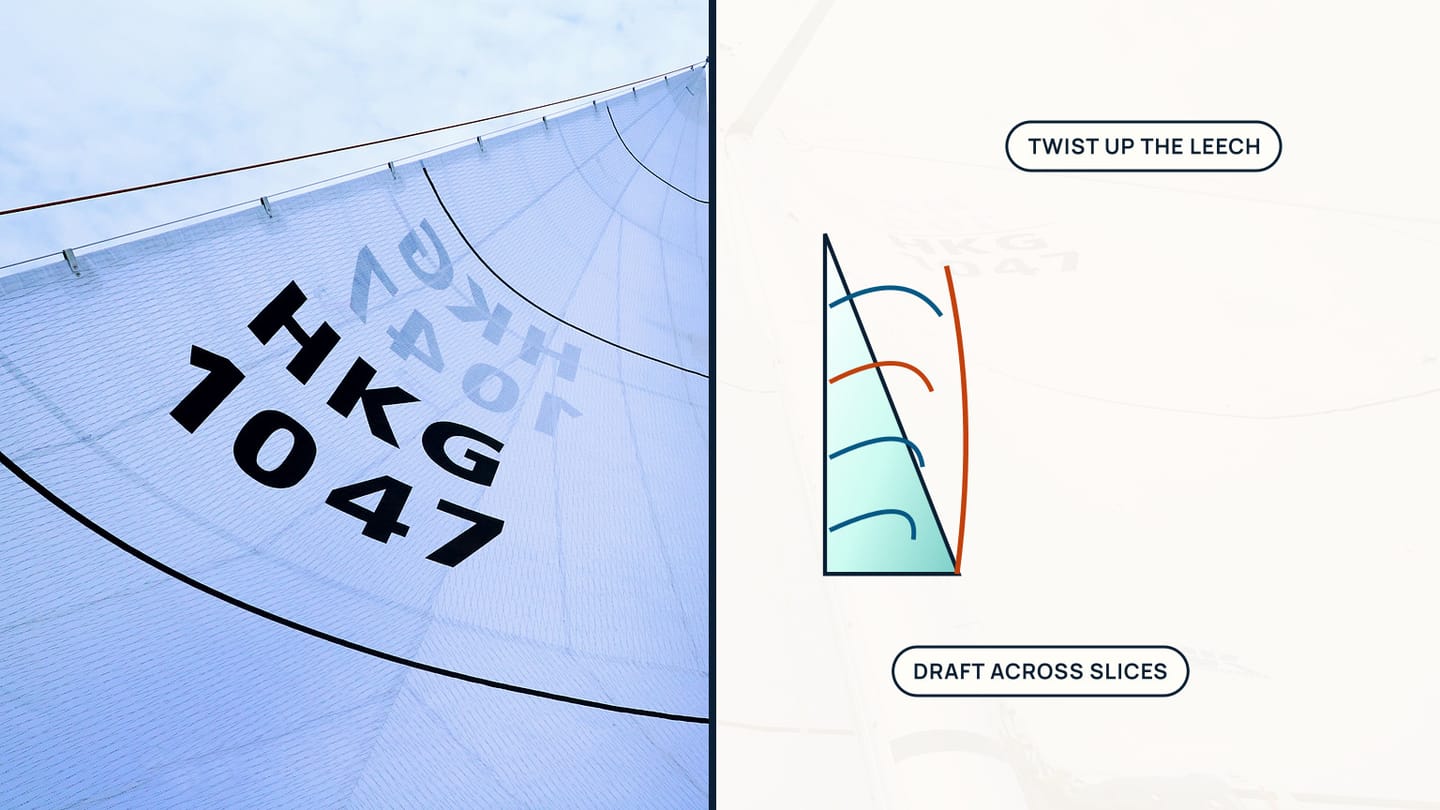
Now look along the leech. If the upper battens or trailing edge point farther away from the boat than the lower portion, the sail has twist. A completely aligned leech shows less twist; a visibly open top shows more. “Open” does not mean empty. It describes angular change by height.
Use a paper model. Curve the paper across its width and you create draft. Hold that curve while rotating the top edge and you add twist. Either can change without the other remaining perfectly fixed, but the model prevents you from calling every three-dimensional change “more belly.”
Different sections can carry different draft. The lower sail may be full while the upper sail is flatter from mast bend. Describe the location precisely: “deep low down with an open upper leech” gives the trimmer a useful diagnosis.
Read airflow at several heights
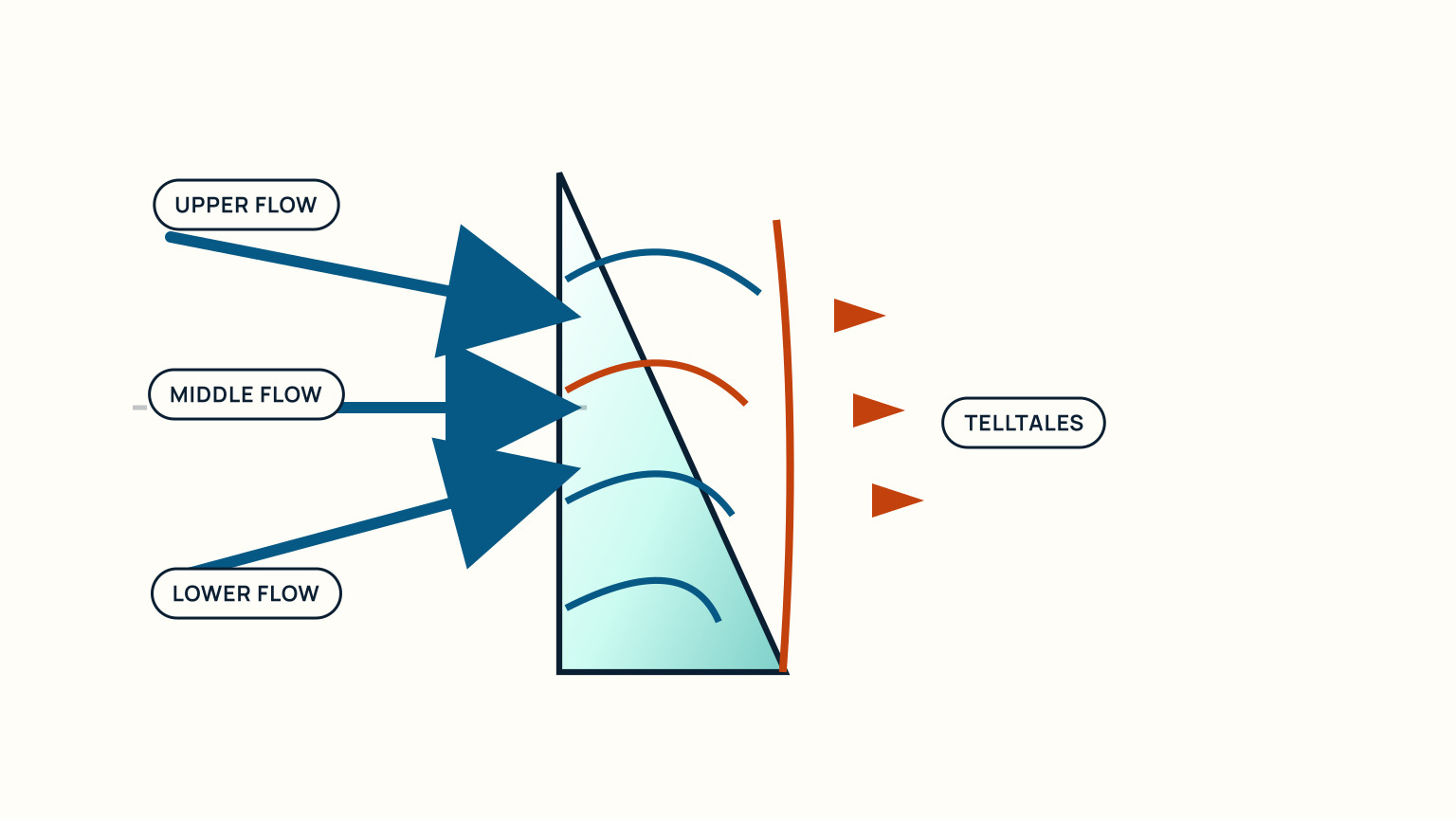
Wind is not identical from deck to masthead. Friction near the water, waves, heel, and the boat's own motion contribute to a different apparent-wind relation by height. Twist lets each horizontal part of the sail meet that changing flow at a useful angle.
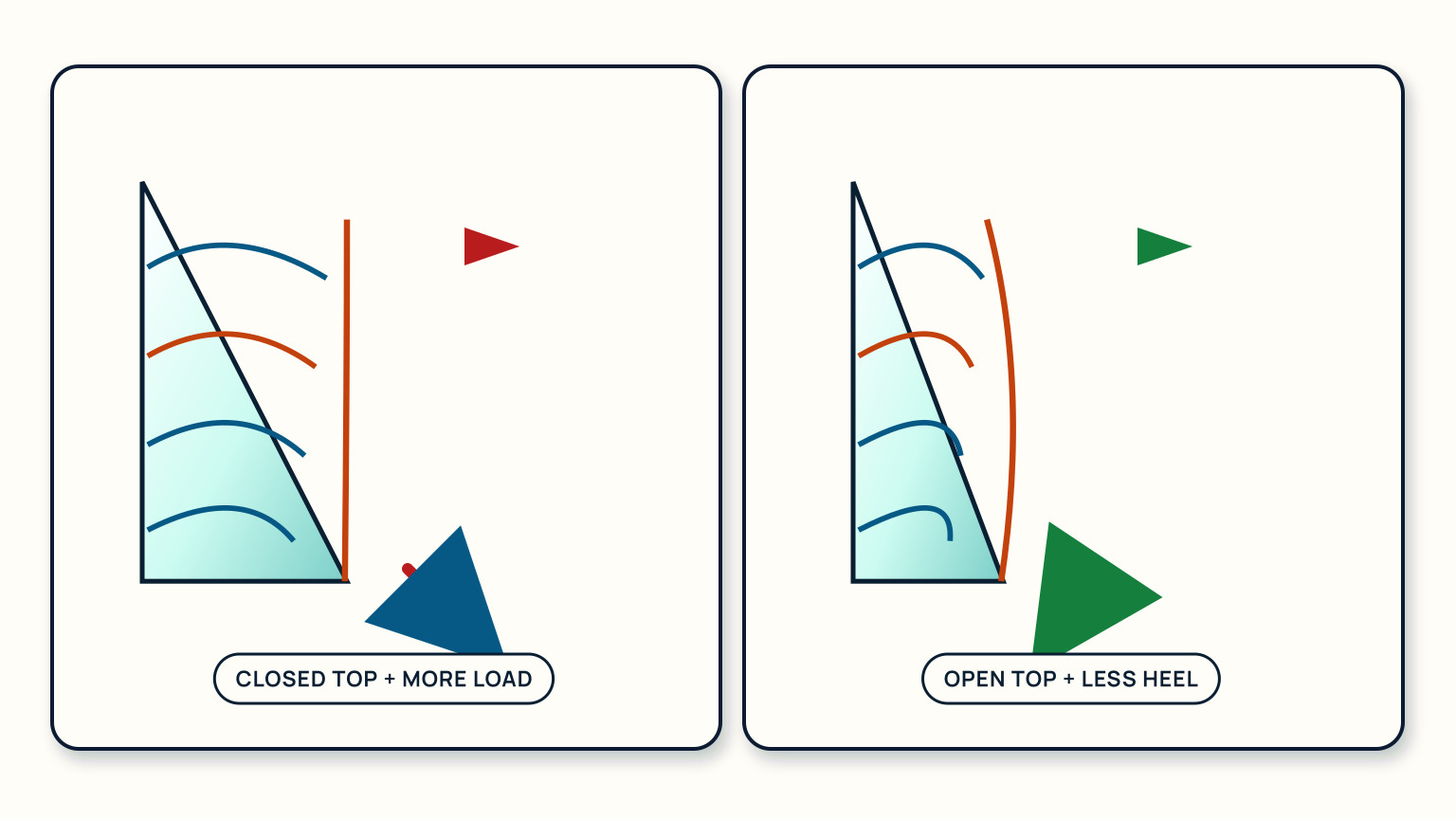
Telltales turn invisible flow into evidence. Read more than one set. Lower telltales may stream while the upper leech telltale hides behind the sail, suggesting the top is stalled or too closed. An upper telltale flying strongly while the top appears very open can indicate more twist than the current goal requires.
Avoid converting one telltale into a fixed formula. Sailmakers use different placements, and sea state changes the desirable shape. Watch the pattern over time. A ribbon that flicks during every roll says less than one that remains hidden while the boat slows.
Link airflow to feel. Excessive heel, heavy helm, or loss of speed can confirm that a visually tight shape is overloading the boat. Poor drive through waves can confirm that a very flat, open shape lacks power. The whole boat is the instrument.
Move draft with the appropriate controls
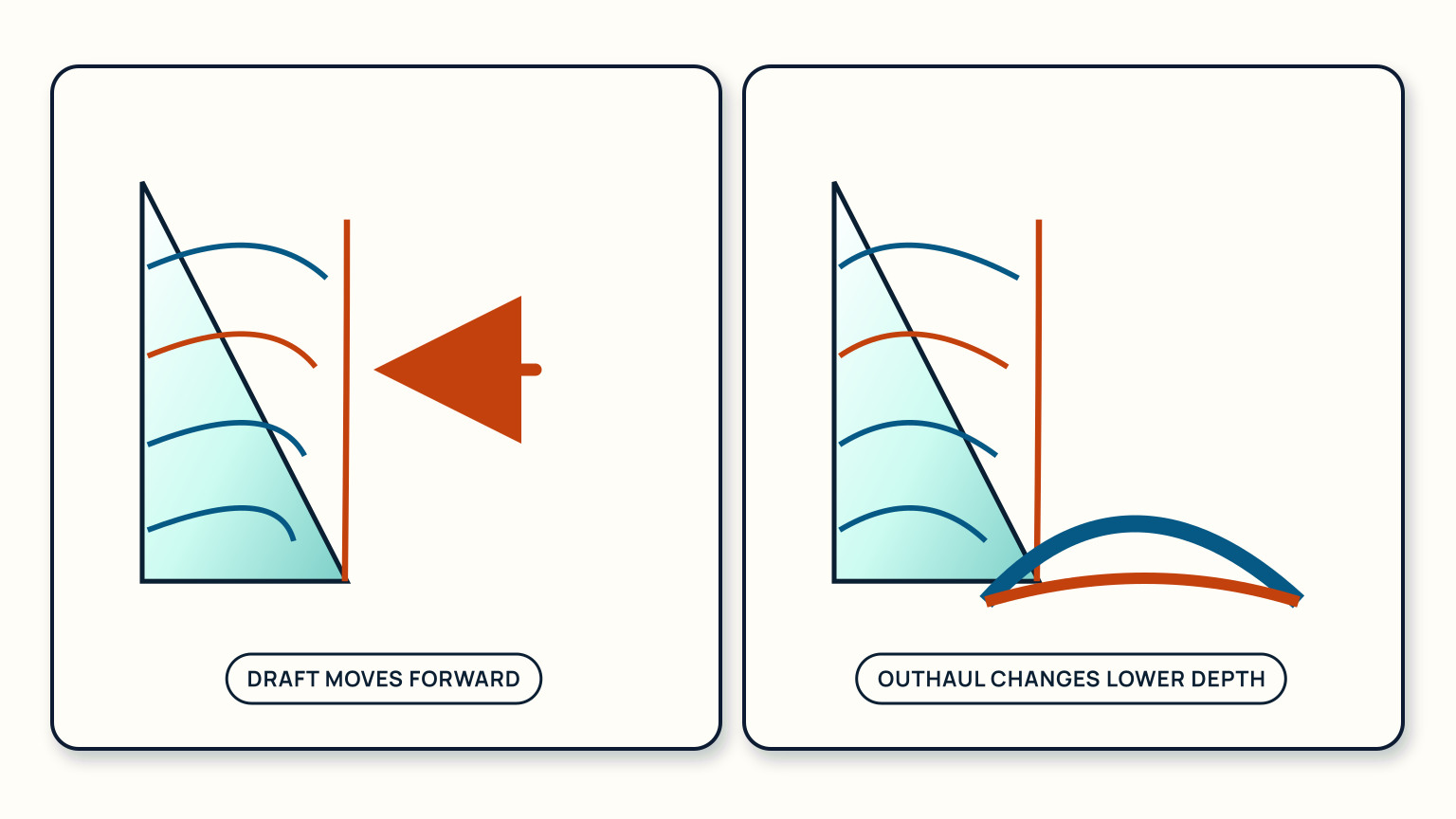
Draft depth and position respond to several controls. The outhaul mainly changes depth in the lower mainsail. Cunningham or luff tension helps move draft forward when load has carried it aft. Mast bend can flatten the middle and upper sail. Each rig has its own ranges.
Start from the observed fault. If the deepest point has moved aft while lower depth is acceptable, test a small luff-tension change. If the aft position is fine but the lower sail is too full for the pressure, test the outhaul. If the change appears mainly above the spreaders, consult the rig's mast-control guidance rather than forcing a foot control to solve it.
Use draft stripes to compare before and after. Hold heading and sheet trim steady, make one adjustment, and let speed settle. Then check the same stripe, heel, helm, and speed. The method matters more than guessing a perfect percentage.
Old or stretched sails may not return to an ideal shape through normal controls. More line tension can overload cloth and fittings without fixing the cut. When normal settings no longer produce a coherent draft, ask a sailmaker.
Balance power and control through twist
More twist opens the upper sail and can spill pressure, reducing heel and helm load. Less twist keeps the upper leech more closed and can add drive until flow stalls. The goal is enough power for speed with enough openness for attached flow and control.
Close-hauled, mainsheet tension strongly affects leech and twist. The traveler can adjust boom position with less change to that tension. On a reach, the vang becomes important because an eased mainsheet no longer holds the boom down as effectively. Those overlapping jobs explain why copying one control mark across points of sail fails.
In chop, a slightly more forgiving shape may keep flow attached while the boat pitches. In flat water, a tighter range may work. Treat these as observations to test on the boat, not universal settings. Telltales and speed decide.
If a gust produces sudden heel, ease the control the skipper has assigned for immediate depowering. Fine twist analysis comes after the boat is balanced. A safe trim sequence always outranks a perfect photograph of sail shape.
Use telltales as feedback, then confirm speed
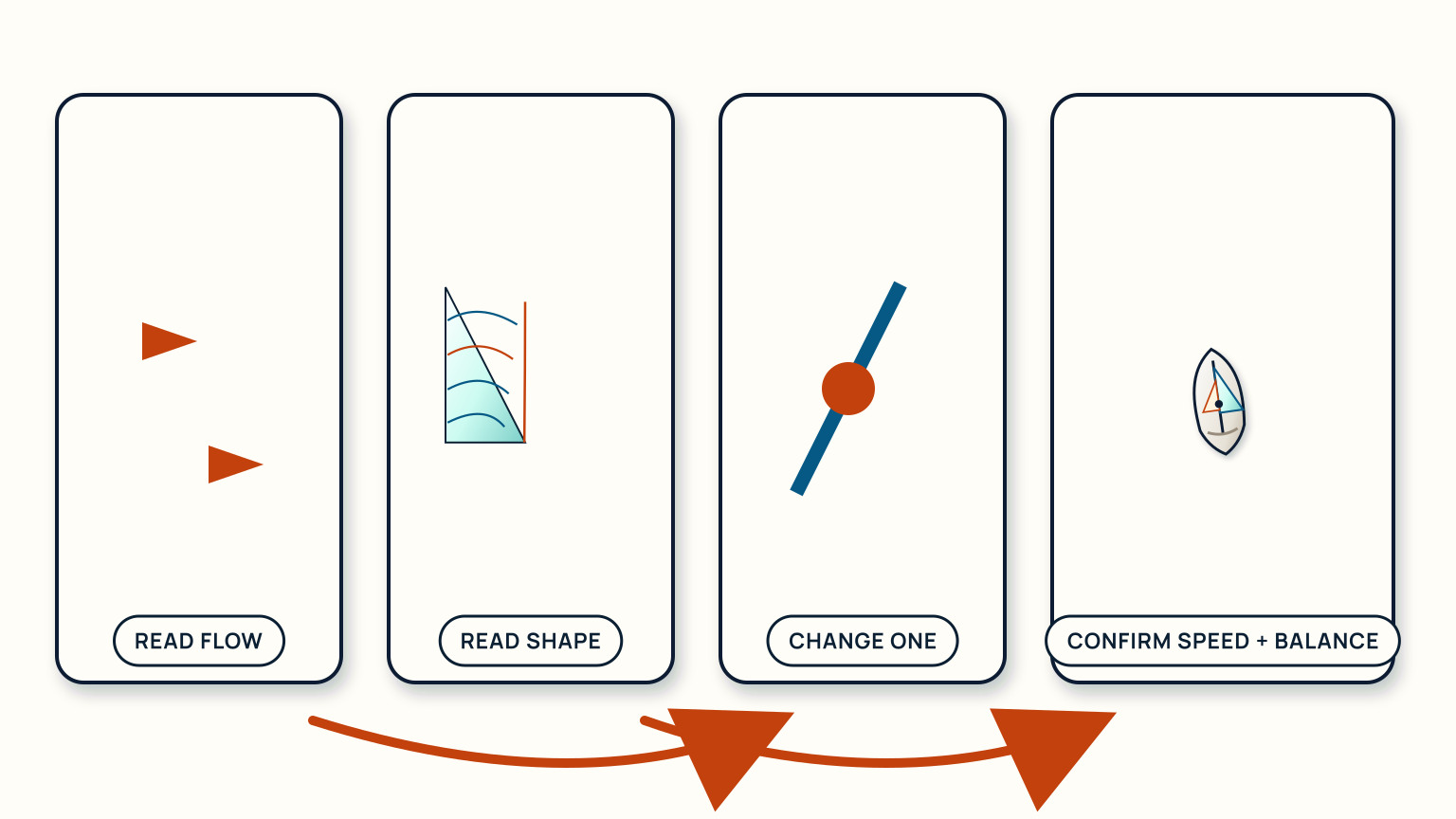
Begin a practice run on a steady course. Note lower luff telltales, upper leech telltale, draft stripes, heel, helm feel, and speed. Change one control by a small, recorded amount. Wait, then read the same set again.
If one indicator improves while two others worsen, the adjustment did not solve the whole problem. An upper telltale may fly after a large sheet ease, but the boom angle may now be too open and the lower sail may luff. Restore the baseline and try the control that targets the actual dimension.
Use language that keeps the dimensions separate: deeper or flatter for draft depth; forward or aft for draft position; open or closed for twist; in or out for boom angle. Clear words improve crew decisions and trim logs.
Finish by reproducing the result. Return to the baseline, then repeat the adjustment. If the same evidence follows, you have learned a control relationship rather than enjoyed one favourable gust.
Use a paired observation when the sail looks complicated. One crew member sights the draft stripes from the same low position and reports depth plus forward, middle, or aft. Another watches the upper leech and reports open, steady, or closed with telltale behaviour. Neither names a control. The trimmer selects one adjustment from the two descriptions. This prevents the loop in which every wrinkle triggers the same line.
A worked diagnosis might read: the lower stripe is deep, the maximum curve remains near the intended fore-aft position, the upper telltale streams, and the boat carries excess heel in steady wind. Lower depth is the clearest fault, so a measured outhaul change is a cleaner test than extra leech tension. In another case the stripes show acceptable depth but maximum curvature has migrated aft at several heights. Luff tension deserves the first test.
Compare shapes on both tacks. If the sail appears consistently different, check observation position, rig symmetry, and instrument bias before inventing an aerodynamic explanation. A camera held to leeward on one tack and windward on the other does not provide comparable evidence.
Create a four-cell trim card for the boat. Across the top, write “draft” and “twist.” Down the side, write “what I see” and “first control to test.” Fill it only from onboard observations and the sailmaker's guidance. Under draft, record stripe depth and position plus the outhaul or luff control that changed them. Under twist, record upper-leech and telltale behaviour plus the sheet, traveler, or vang setting that changed it on that course.
The card should preserve uncertainty. If a control changes both cells, write both effects. If a setting works only upwind, name that course. This prevents the simplified definitions from becoming rigid rules after the crew has seen the actual interactions.
SailStarter's visual trim lessons let you practise reading sail shape before handling loaded controls. Use them to prepare for an onboard session where a skipper can show how one particular mainsail turns twist and draft into speed and balance.
Try it from the lesson
Can you spot the next move?
Both jib ribbons stream aft. What does that establish?
Why you can trust this guide
. We build each guide from public seamanship and safety sources, then teach the universal principle before any local difference.