Chart your course
Cunningham and Outhaul Explained
Quick answer
The short version
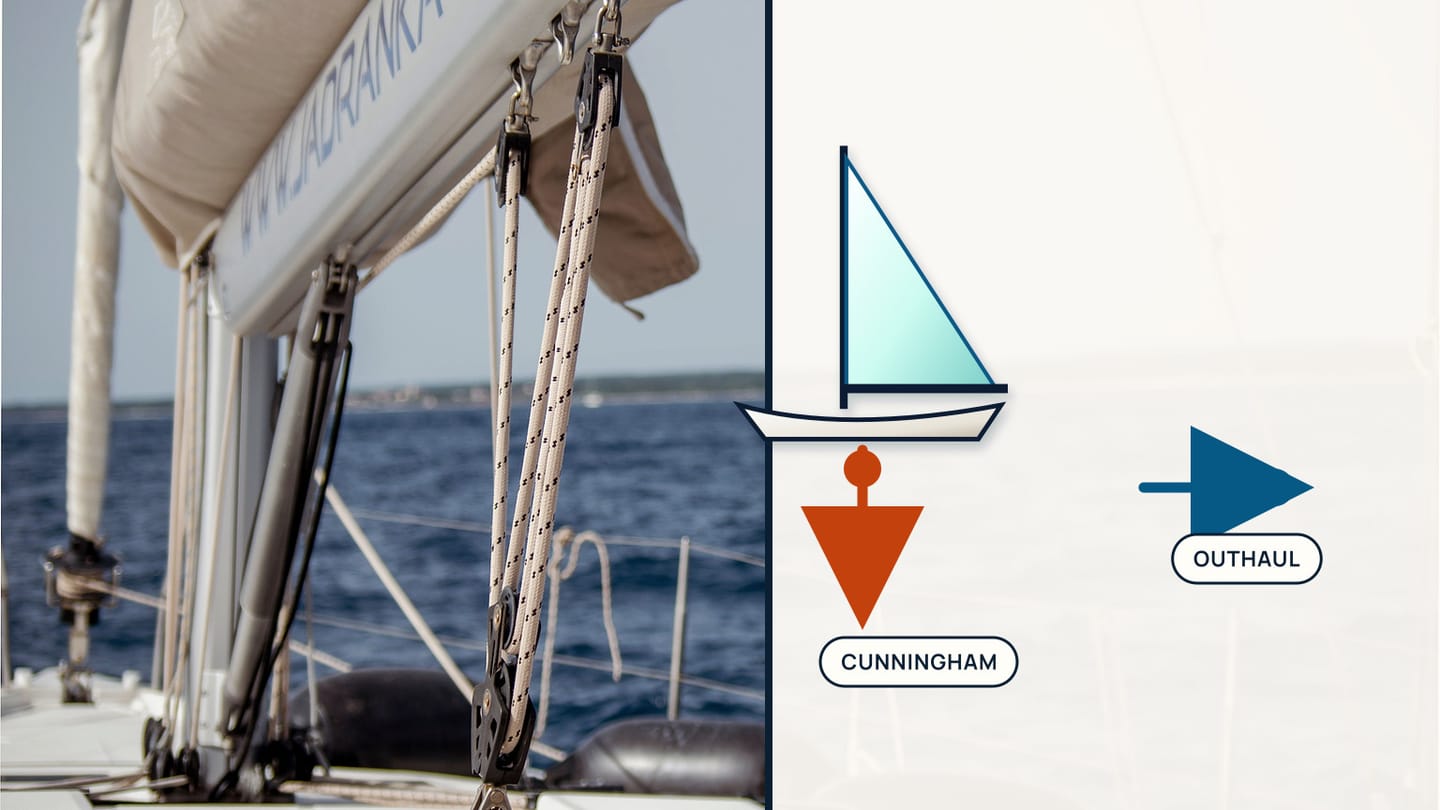
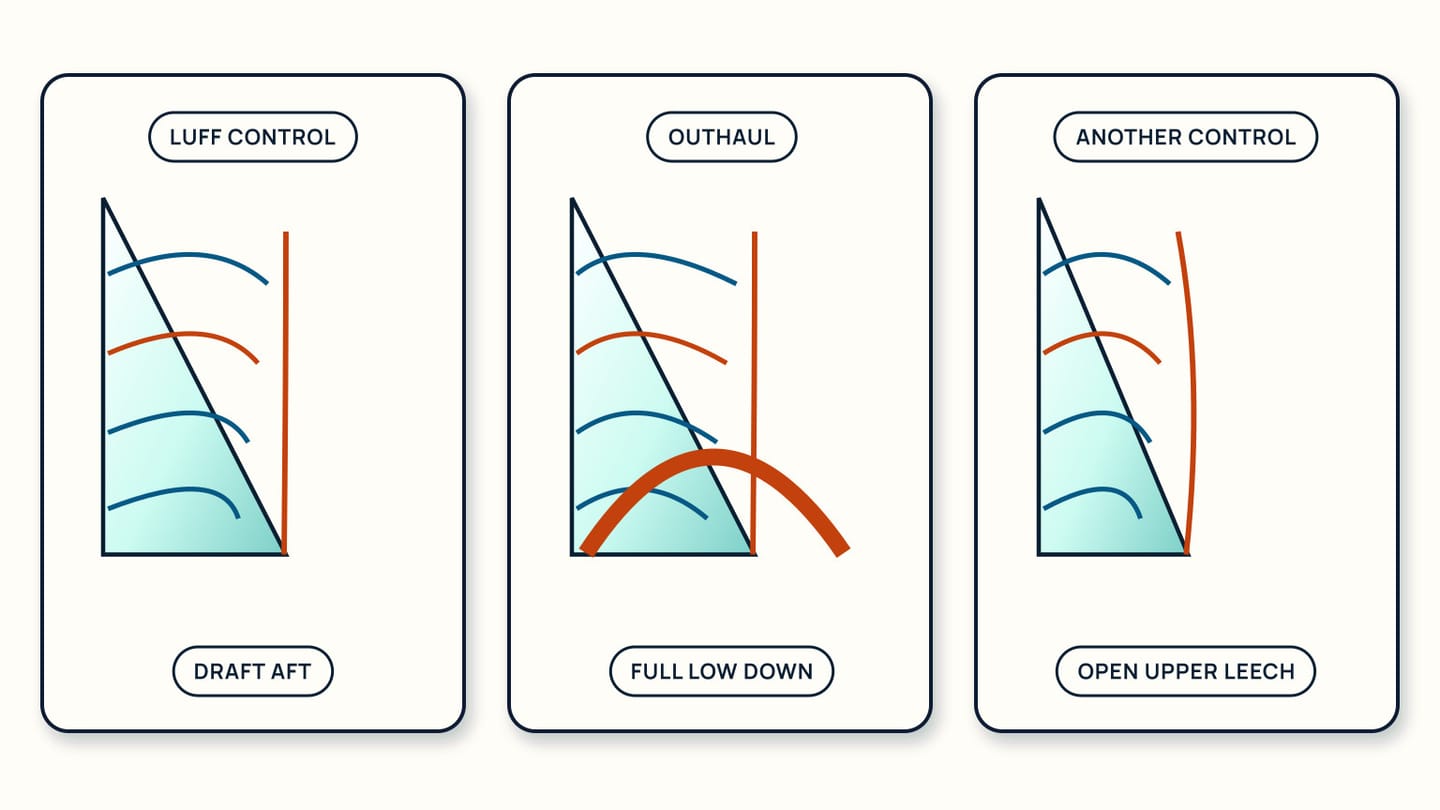
The cunningham and outhaul shape different regions of a mainsail. A cunningham pulls down on a cringle above the tack, adding luff tension and helping move draft forward when it has crept aft. The outhaul pulls the clew aft along the boom, changing depth in the lower sail. More outhaul generally flattens the foot; easing it allows more lower-sail fullness. Neither control is a universal “power” switch. Read wrinkles, draft position, lower-sail depth, heel, helm, and speed on the actual sail before adjusting.
The sailmaker's cut, cloth, mast bend, point of sail, and rig geometry affect the response. Class tuning guides often give exact marks, but those numbers belong to a particular design. A beginner learns more by tracing the hardware and watching one small change than by importing a measurement from another boat.
Use this article with sail twist and draft explained, boom vang vs mainsheet vs traveler, and sail trim by point of sail. Keep hands away from loaded cleats and moving booms, and use the manufacturer's or sailmaker's guidance for the boat.
Find the two controls and their load paths
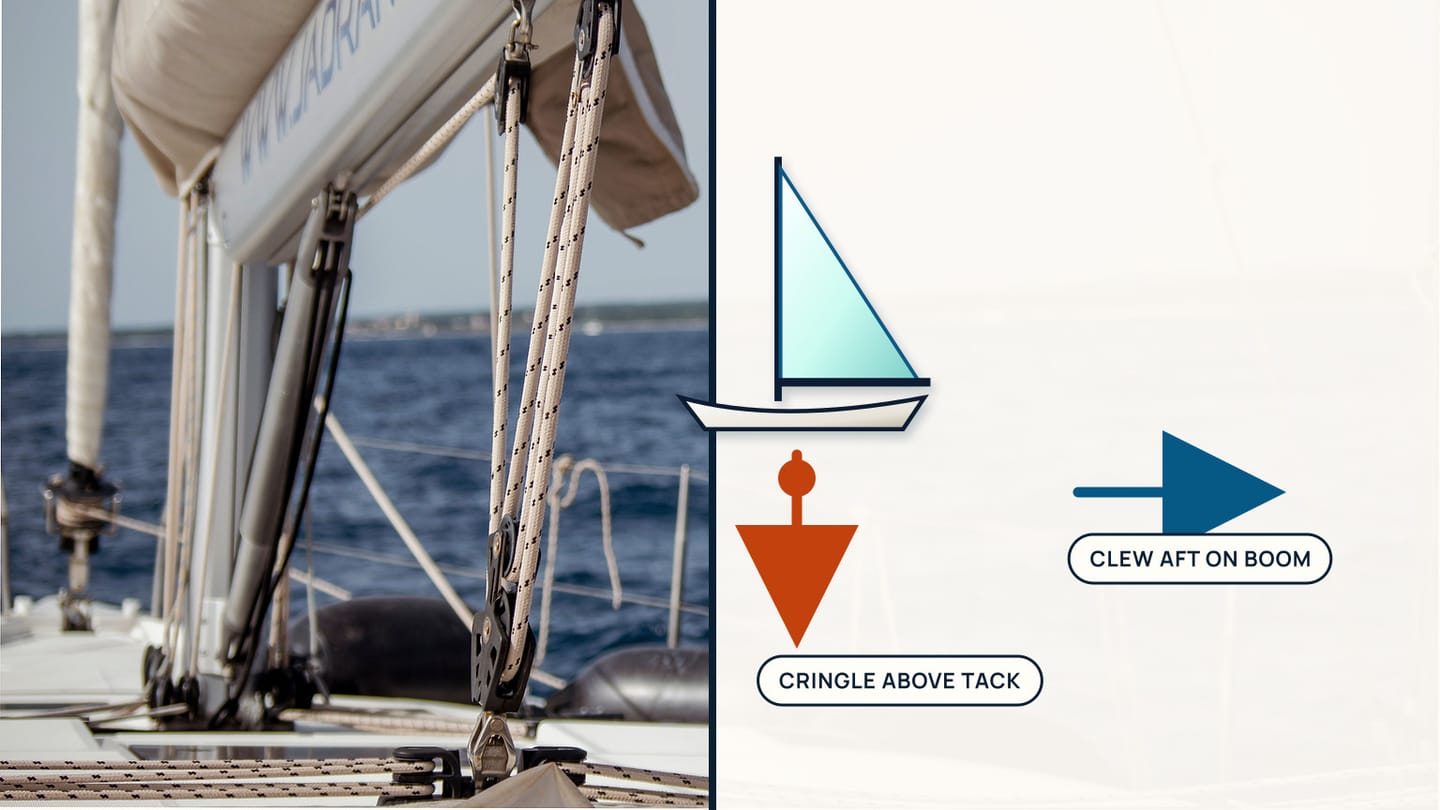
The cunningham begins at a reinforced eye in the lower luff, above the tack. Its tackle pulls that eye toward the deck. This is different from the halyard, which supports the sail from the head, although both affect luff tension. On some simple rigs, a downhaul or halyard adjustment may perform a related job and there may be no separate cunningham.
The outhaul attaches at the clew and pulls aft toward the end of the boom. Look for its purchase inside or alongside the boom and the control tail near the cockpit or mast. Moving it changes the relation between clew and tack along the foot.
Trace both lines while unloaded. Identify every turning block, cleat, and moving part. Confirm which direction adds tension and how to ease under control. A line disappearing into the boom should not become a licence to pull harder when nothing moves; stop and check for a stopper, jam, or load.
Mark the regions visually. Cunningham: luff tension and fore-aft draft position. Outhaul: depth in the lower portion near the foot. The controls interact with the rest of the rig, yet this map gives each adjustment a reason.
Use the cunningham to manage the luff
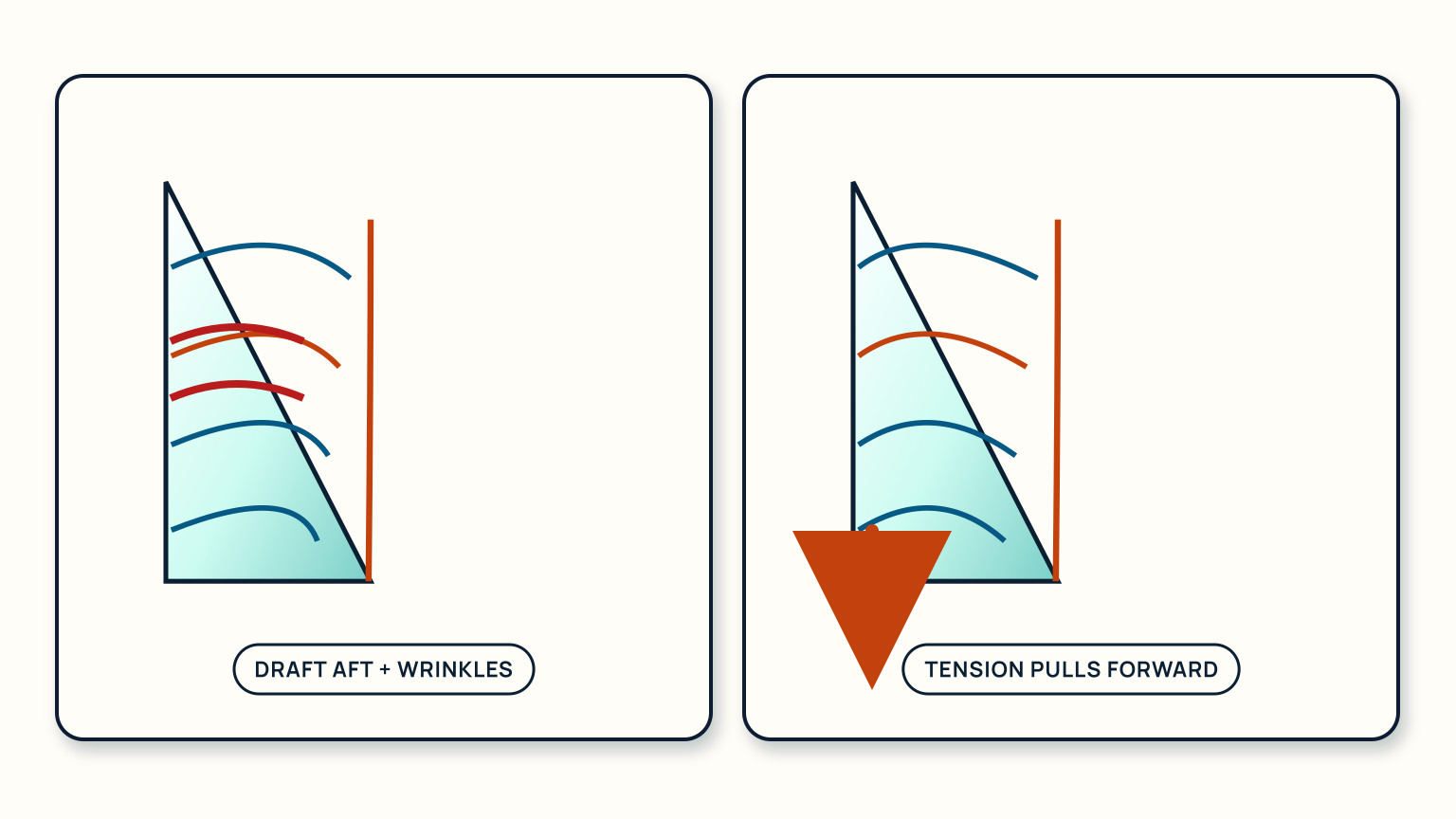
As wind load stretches the sail, the deepest part can move aft. Adding cunningham tension pulls cloth forward along the luff and can restore draft position. Sailmaker guidance also uses luff wrinkles as a clue: more tension smooths horizontal wrinkles, while too much may create an unnaturally hard, over-tensioned entry.
Do not pull every wrinkle out by reflex. Some sails are designed to show light wrinkles in particular conditions. The useful question is where the maximum depth sits and how the sail flows, not whether the luff resembles a flat sheet of paper.
Make a small change, then sight across the sail from below the boom or another safe position. Use draft stripes if fitted. Has the deepest point moved? Did the upper leech open? Did helm pressure or heel change? If only the line mark changed, you have not yet observed the result.
Ease the cunningham when the load and point of sail no longer call for it, according to the boat's trim practice. Leaving a heavy-air setting after bearing away can hold a shape that no longer suits the course. Coordinate with halyard and mast controls rather than using the cunningham to fight an unrelated setup error.
Use the outhaul to shape the lower sail
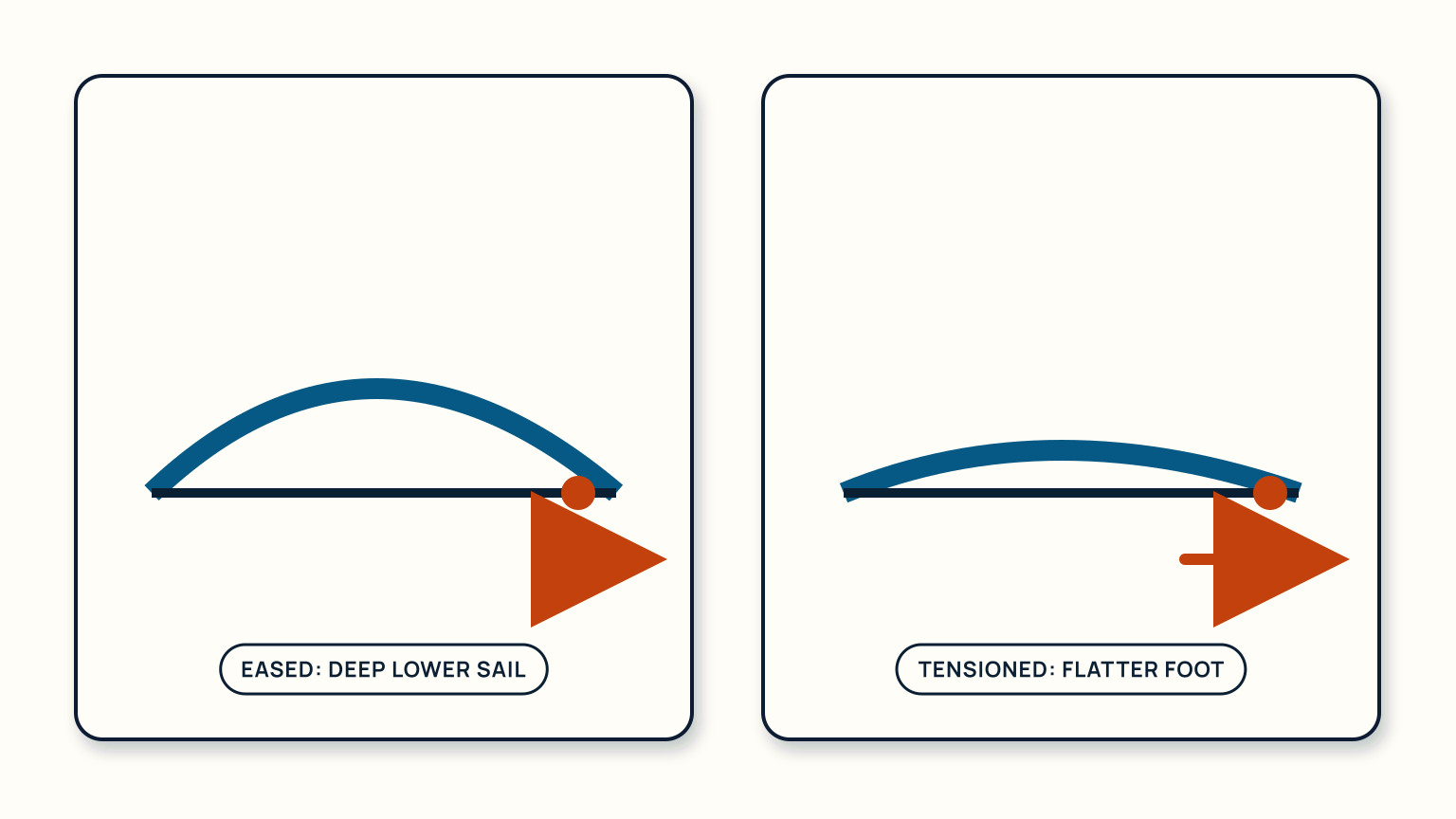
The outhaul changes the foot's tension and the fullness of the lower mainsail. Pulling the clew aft flattens this region. Easing allows more curve, within the limits of the sail and boom. The visible change is strongest low down; do not expect the outhaul alone to fix the entire leech.
Upwind in stronger pressure, a flatter lower sail can reduce excess power and help the boat stand more upright. In conditions where the boat needs drive, some sails use a less tight setting to retain depth. Exact choices differ by design, and very light air can require enough shape to keep cloth from collapsing without making it so deep that flow cannot stay attached.
Read the foot and the lower draft stripe. Excessive ease can make the lower sail baggy or close the slot between main and headsail. Excessive tension can remove useful depth and leave the boat underpowered in chop. Compare speed and balance after the boat settles.
The outhaul can be highly loaded. Ease it through the intended control while someone watches the clew and line path. Never place fingers near a moving clew car or inside a boom end.
Read the sail before choosing a line
Begin with the symptom. Draft too far aft points toward luff tension and therefore the cunningham or halyard system. Excess depth confined to the lower sail points toward outhaul. Excess twist, wrong boom angle, or poor upper-leech flow likely needs another control.
Suppose the boat heels in a gust and the lower draft looks deep while the luff position remains acceptable. Tightening cunningham may move draft forward but miss the lower fullness. A measured outhaul change addresses the visible problem more directly. In a different case, the foot looks reasonable but draft stripes bow deepest far aft; cunningham is the clearer test.
Change one line and hold the course steady. Record the control movement, then compare draft, telltales, heel, helm, and speed. If you adjust both controls together, the result may improve but the lesson is lost.
Avoid tuning by wrinkle alone. Wrinkles can reveal tension, mast bend, cut, or age. Use them with draft stripes and whole-boat feedback. If the sail shape remains abnormal across normal settings, ask the sailmaker or rigger rather than applying ever more load.
Reset controls when the course changes
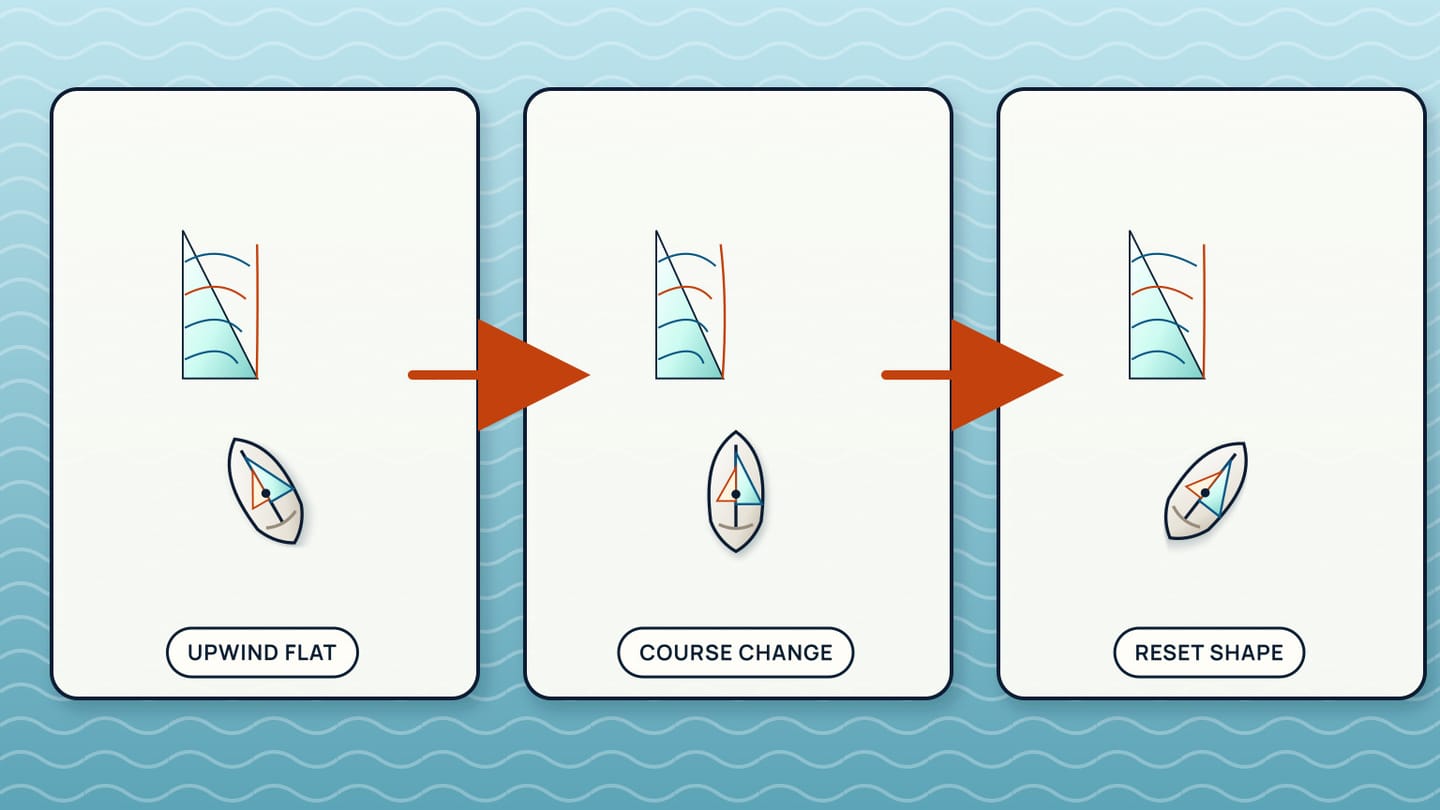
Trim is temporary. After rounding a mark, easing onto a reach, or returning to lighter wind, revisit both controls. A setting chosen to flatten and stabilise the sail upwind may not suit a broader course where the boat needs a different shape.
Use reference marks to return to known ranges, not to avoid observation. Marking the outhaul and cunningham makes repeatable tests possible. Write down the course, wind, sea state, and observed effect beside the mark; a bare number has little teaching value.
Before lowering the sail, ease controls according to the boat's procedure so the cloth and hardware are not stored under unnecessary tension. Inspect the cunningham cringle, clew, blocks, and line covers for chafe. A stiff control can hide damage or friction.
A disciplined trim log asks four questions: what shape was wrong, which control changed, what visible effect followed, and what happened to balance or speed? That sequence turns two similar-looking cockpit lines into distinct tools.
For a useful dockside lesson, release both controls within the boat's safe unloaded procedure and place removable reference marks on the tails. Add cunningham tension in small steps while a partner watches the luff cringle and draft stripe. Return to the starting mark. Then repeat with the outhaul while watching only the lower stripe and foot. The sail needs airflow to take its true aerodynamic shape, but the unloaded exercise establishes direction, purchase, travel, and communication before pressure makes the lines difficult.
On the water, test two mistakes within normal trim limits. First, apply cunningham to a lower-sail fullness problem and record why the foot remains wrong. Restore the baseline. Then apply outhaul to an aft-draft problem and observe that the deepest point higher in the sail may stay aft. Seeing the wrong control fail can be more memorable than receiving the correct name.
Keep sail age in the record. If successive seasons require more extreme line positions for the same observed shape, cloth, stitching, hardware friction, or calibration may have changed. Inspection is a better next step than extending the purchase beyond its designed range.
Finish the practice with a course change and ask both observers to predict the reset. The cunningham observer names whether draft position still needs the same luff tension. The outhaul observer names whether lower depth should remain flat or regain fullness. Make only the first supported change, settle the boat, and check before touching the second line. This closes the loop from equipment identification to independent diagnosis.
SailStarter's trim lessons help you see draft and lower-sail depth before memorising line names. Practise on one familiar mainsail with an experienced skipper, make small adjustments, and stop whenever hardware load or line routing is unclear.
Try it from the lesson
Can you spot the next move?
Both jib ribbons stream aft. What does that establish?
Why you can trust this guide
. We build each guide from public seamanship and safety sources, then teach the universal principle before any local difference.