Chart your course
Broach vs Knockdown vs Capsize
Quick answer
The short version
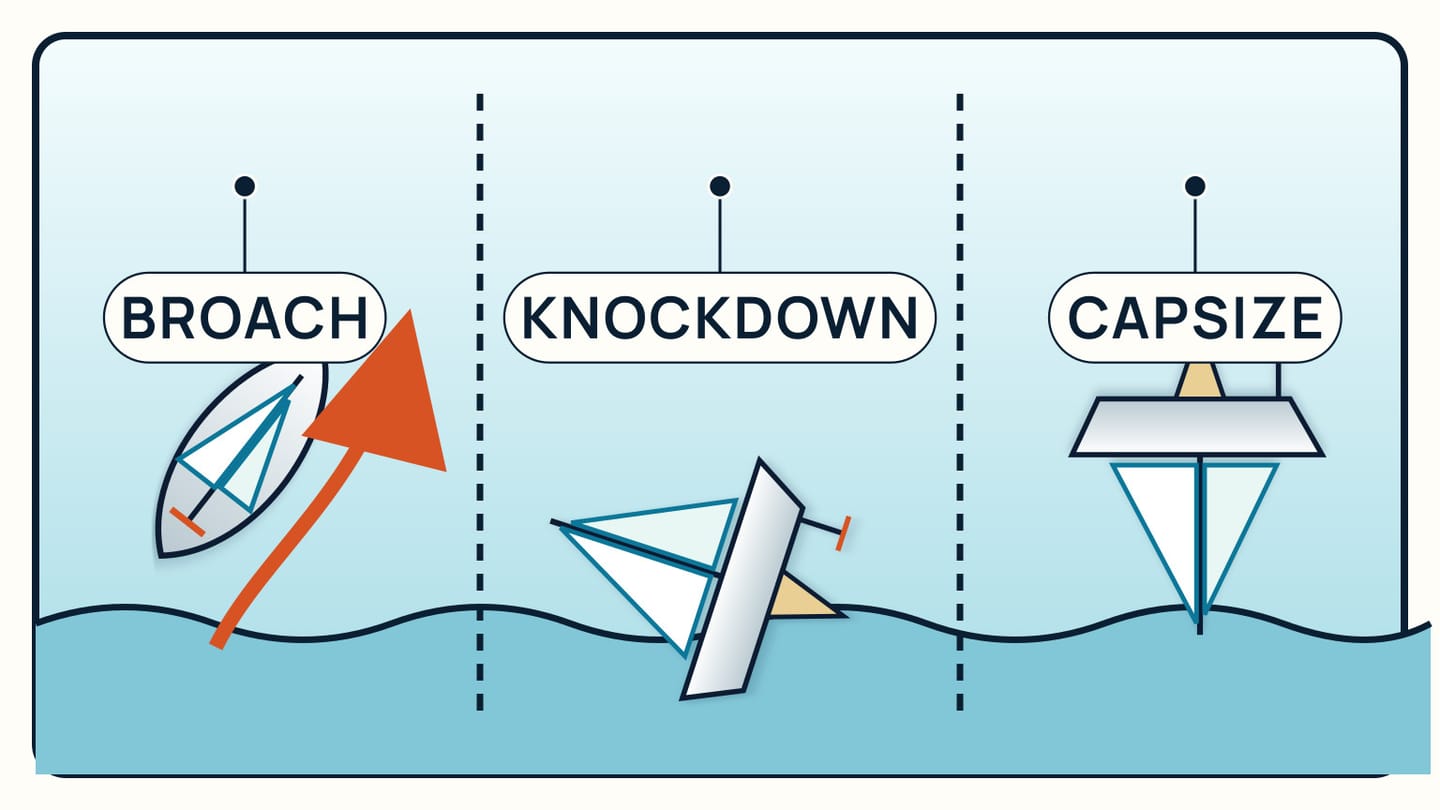
A broach is a loss of directional control. The boat turns sharply away from its intended course, often while heeling hard. A knockdown describes orientation: wind or a wave lays the boat far over, perhaps with the mast near or in the water. A capsize means the boat has overturned onto its side or beyond, sometimes fully inverted. One incident can earn two of those names because they describe different parts of what happened.
The words do not form a universal three-step scale. A broach may end after a wild turn with the boat still sailing. A knockdown may right quickly without a preceding broach. A broach in a following sea may progress to capsize. Boat design, ballast, openings, sea state, sail plan, and the duration of inversion all change the outcome.
What does each term actually describe?
Use two questions when reconstructing an event: did the boat keep control of its heading, and what orientation did the hull reach? Heading separates a broach from an ordinary strong heel. Orientation and recovery separate a short-lived knockdown from a capsize that leaves the crew beside an overturned boat.
A broach begins with the first question. The yacht yaws, meaning its bow swings quickly away from the intended track, and the helm cannot arrest the turn. The deck may become steep and sails may press against the water, but neither is required for the word to fit. Directional control is the evidence. Once control returns and the yacht answers the helm again, that part of the event has ended.
A knockdown begins with the second question. The hull is laid severely over by a gust or wave. A ballasted yacht may bring itself upright once the force passes, but “knockdown” does not guarantee quick recovery or no damage. The MAIB report on Ocean Madam records one event from which the yacht righted immediately and a later one that left it inverted. The same boat produced two very different outcomes.
Capsize is the broader overturning state. A dinghy may rest with its mast horizontal and need crew action on the centreboard. Another craft may turn completely upside down, often called turtling. A keelboat can also invert and remain there. The RYA warns that self-righting means different things for different vessels, so the label on a brochure or stability certificate cannot be turned into a promise about every wave, opening, loading condition, or damaged rig.
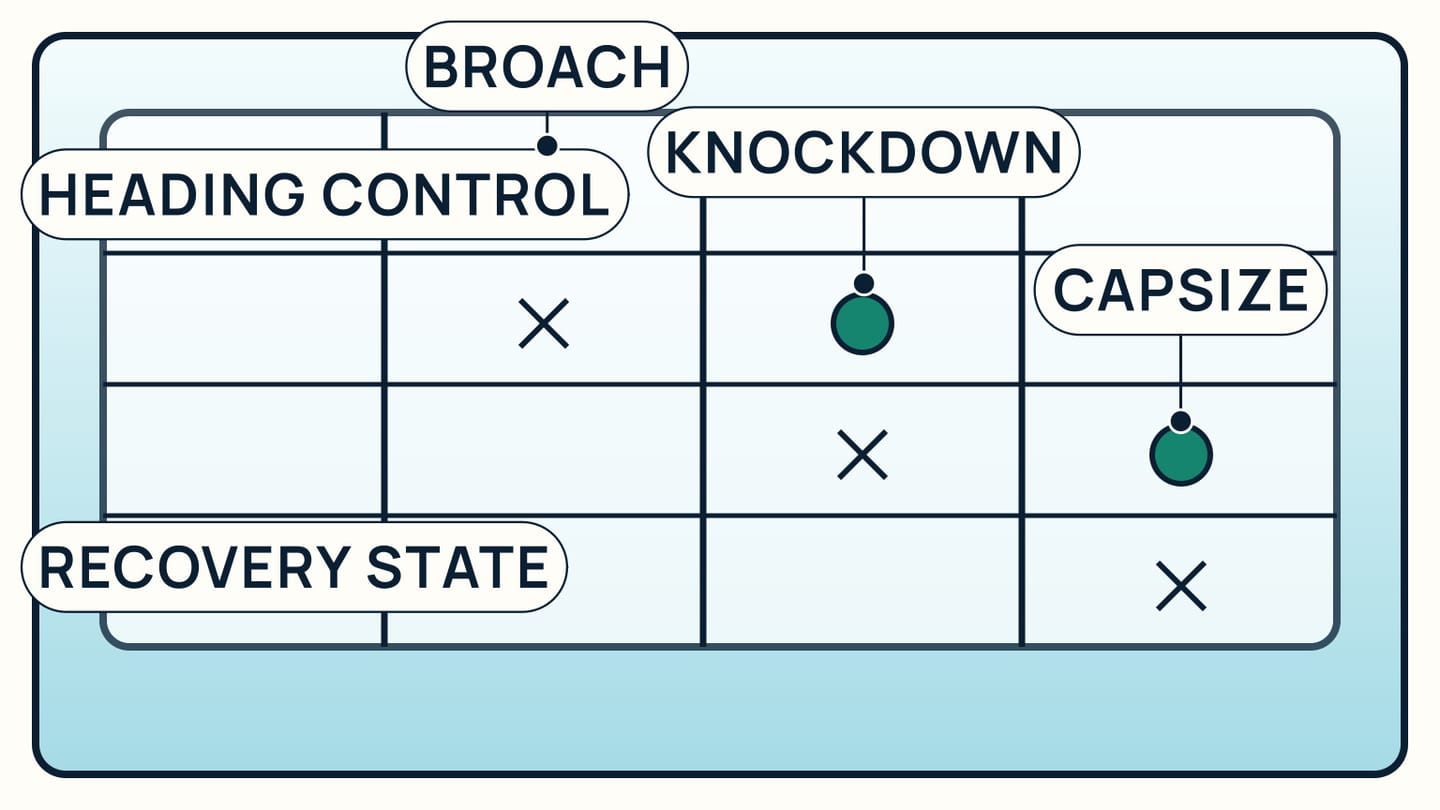
That common grid makes eyewitness accounts more useful. “We broached, the mast touched the water, then the boat came upright” describes control, orientation, and recovery. “We capsized” alone does not tell a rescuer whether the crew is on an upright hull, beside a boat resting at 90 degrees, or under an inverted hull.
How does a broach develop?
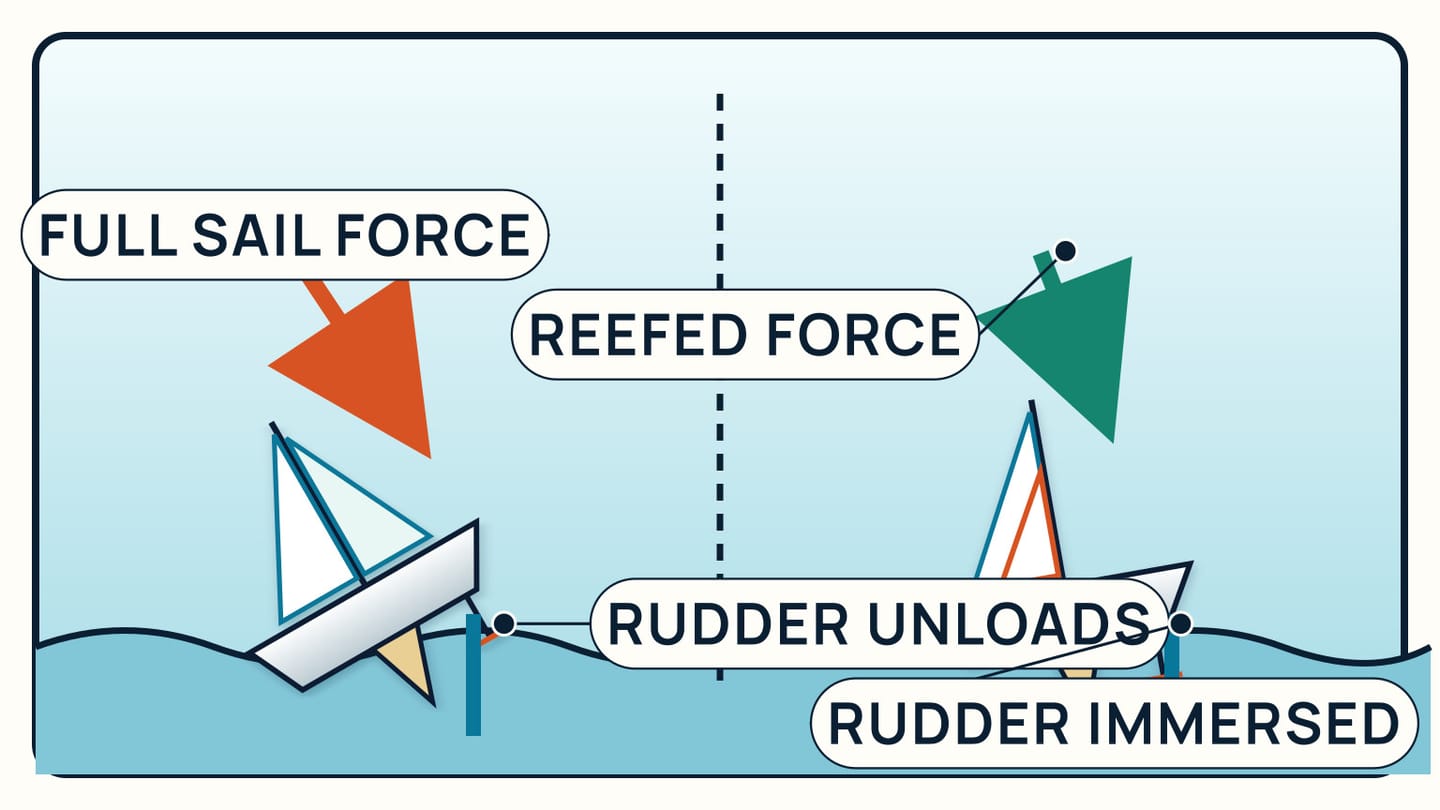
The visible clue is a course that curls away despite helm input. Downwind, a following wave can accelerate the stern or reduce steering as its crest overtakes the boat. The bow slews, the hull presents its side to wind or wave, and heel can build very quickly. Strong sail force can add to the turn. Upwind, heavy heel can lift part of the rudder from the water, leaving too little immersed blade to produce the steering force the helm expects.
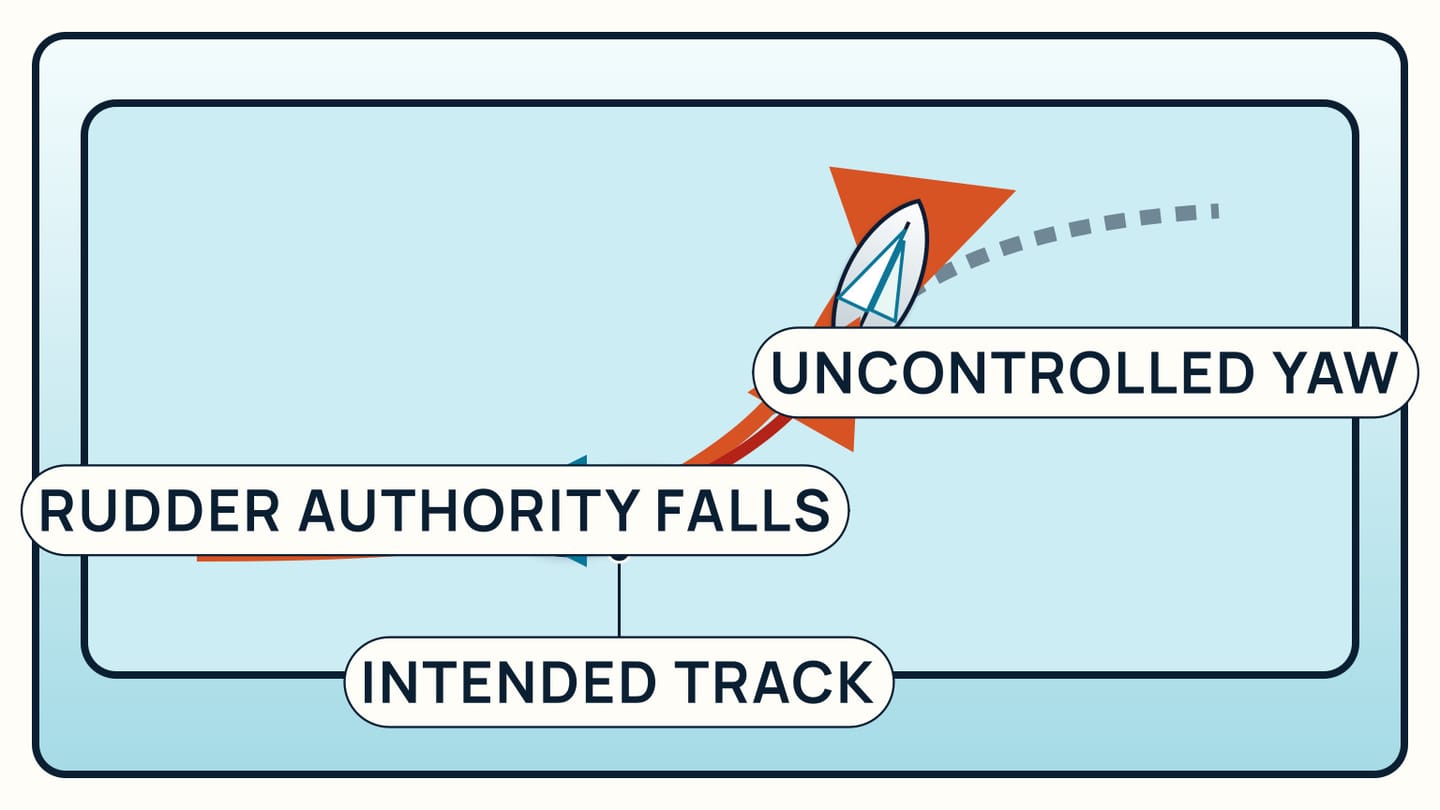
This is why turning the wheel or tiller farther is not proof that the rudder is working harder. A stalled or partly airborne rudder may add little control. The MAIB’s strong-wind guidance links reefing with keeping the yacht more upright and preserving steering. Sail reduction is most useful before the rudder unloads and the cockpit becomes a steep, chaotic workplace. Reefing the mainsail is therefore a control decision, not an admission that the crew cannot handle speed.
Sea room changes the consequence. A round-up in open water may be startling but recoverable. The same loss of heading beside a buoy, harbour wall, shoal, or another vessel can become a collision before the sails are eased. A strong-wind plan needs space for the boat to deviate while the crew reduces power and regains flow over the rudder. If a manoeuvre depends on the boat holding a perfect line in gusts, the margin is already thin.
Once control returns, do not assume the incident was only embarrassing. Check whether a loaded sheet ran violently, the boom crossed, a sail tore, steering stopped or bound, or someone was struck or thrown. A broach is a steering event first, but its secondary loads can create the next emergency.
When does a knockdown count as a capsize?
There is no single everyday angle that cleanly sorts every design. “Mast horizontal” is useful visible evidence, but the recovery state matters more than arguing over a degree. If the forcing gust or wave passes and a ballasted yacht rolls back upright, sailors commonly describe a knockdown. If the boat stays on its side, turns upside down, or needs a deliberate righting operation, capsize describes the situation the crew must manage.
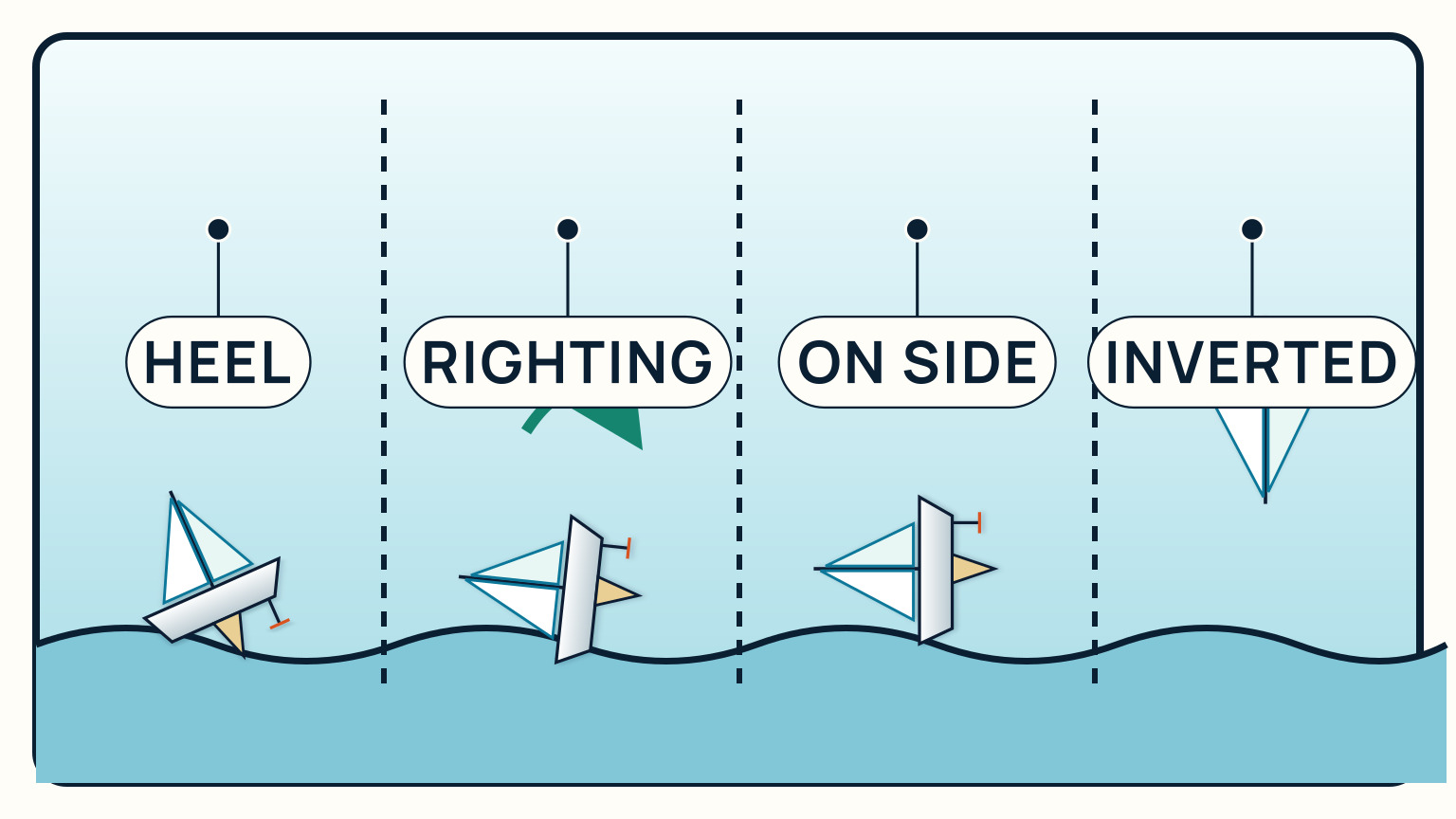
Design changes the righting mechanism. A deep fixed keel puts ballast below the hull and may produce a restoring moment through a large range of heel. A light centreboard boat relies much more on hull form and crew position, and its board may become the lever used for recovery. A multihull has another stability pattern again. None of those statements lets you infer a particular boat’s safe limit from its silhouette. Use the builder’s stability information and recovery procedure for the loaded boat in front of you.
Water entering through an open hatch can make the next few seconds worse. Flooding adds weight where it was not intended, reduces freeboard, and can damage equipment needed after recovery. Current World Sailing offshore rules require certain hatches and companionway closures to remain secured through inversion. Those are race rules, not universal law, but the physical lesson travels well: hatch boards, locker lids, and heavy gear cannot help if they are loose when the deck becomes a wall or ceiling.
The crew’s location also changes the account. Someone inside an inverted hull faces an entrapment problem. Someone separated from a small capsized boat has lost a large visible target and flotation. Someone clipped to a keelboat must manage a tether that can keep them aboard yet may place them underwater. The boat’s safety briefing needs to cover its actual cockpit, exits, flotation and righting plan rather than a generic definition.
What lowers the chance of all three events?
Start by matching sail area and course to the strongest conditions expected, not the quiet minute between gusts. Strong-wind preparation should happen while the deck is workable: shorten sail, secure gear and openings, brief the crew, and protect a route back to safer water. Reefing early reduces heel and can preserve rudder immersion. It also leaves attention for waves, traffic and the next manoeuvre.
Keep weight low and secured. Close or secure openings according to the vessel’s plan. Confirm that companionway boards cannot wash away and that pumps, radio, beacon and other emergency equipment remain reachable if the normal floor becomes a steep slope. Wear suitable flotation before conditions demand both hands for survival. Crew who wait until the boat is already out of control may not be able to reach or fasten it.
Steering deserves its own check. Feel for new play, binding or unequal response before departure. Under sail, notice whether weather helm is increasing and whether the rudder is beginning to ventilate or lose bite. Weather helm can be useful feedback that sail balance and heel are loading the helm. It should prompt trim, reefing or a course decision before full helm produces no answer.
Finally, preserve options. Avoid a downwind course that commits the boat to a shoaling entrance in breaking seas. Leave room to round up, bear away, heave to, reduce sail, or turn back as conditions and the vessel permit. No single tactic is correct for every boat and wave pattern. The transferable habit is acting while several controlled choices remain.
What should the crew do immediately afterward?
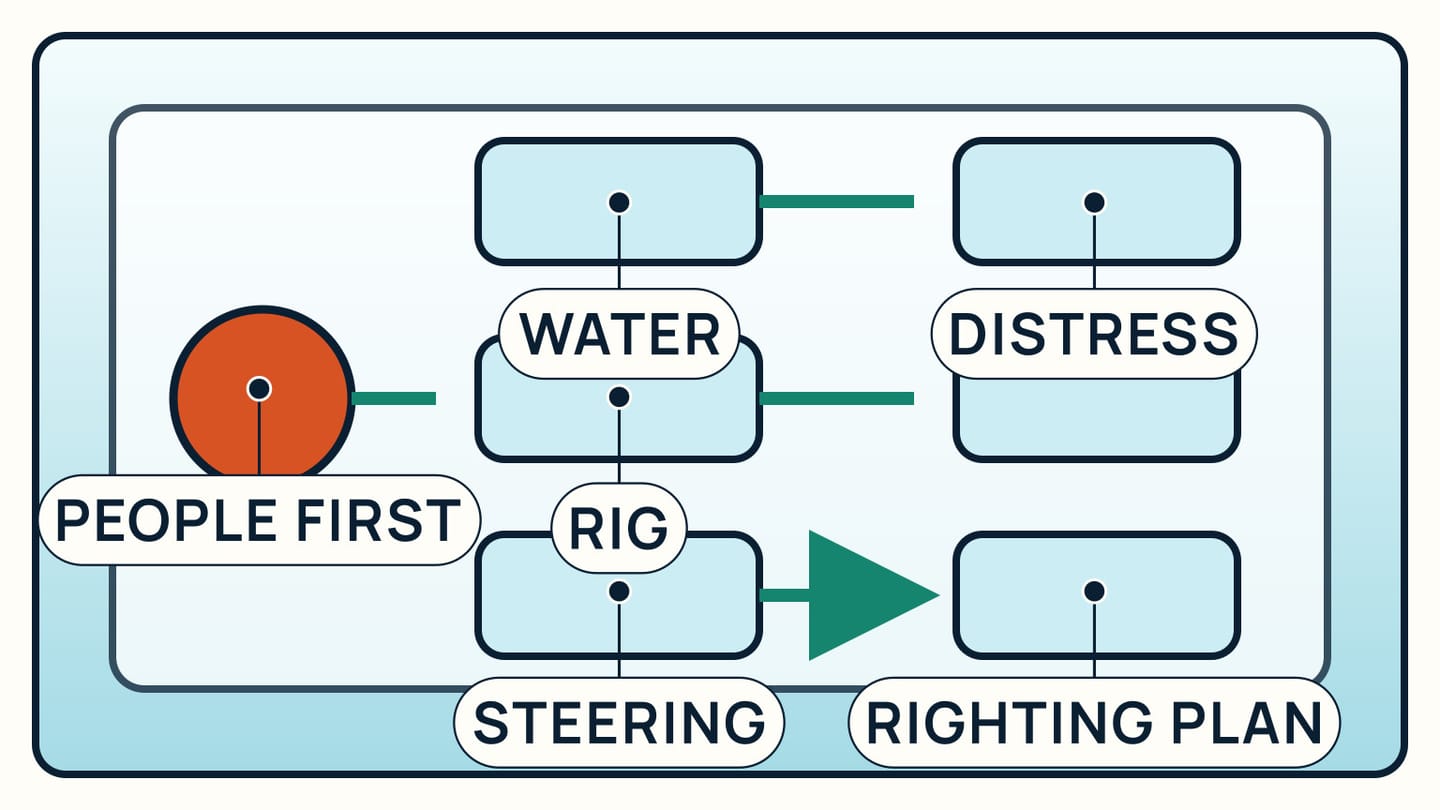
Count people by name and check injuries before inspecting equipment. Confirm that nobody is overboard, trapped, or hidden below. If the boat is upright, put on flotation if it was not already worn and establish who has the helm, who is looking out, and who is making the checks. Send a distress call or activate the appropriate beacon when lives are in grave and imminent danger; do not wait for damage to finish revealing itself.
Next look for water. Check bilges, through-hulls, ports, hatches, cockpit lockers, keel area and any place that took an impact or submerged. Then inspect the rig and steering from safe positions. A dismasted or partly detached rig, loose line near the propeller, damaged rudder, flooded battery or torn sail can turn recovery into another loss of control. Reduce sail further before resuming the passage, and choose shelter rather than continuing to prove the boat can still move.
If the boat remains capsized, stay with it when it is safe to do so. Maritime New Zealand’s current recreational guidance notes that searchers can spot a hull more readily than one person in the water and advises climbing onto an overturned boat where possible. Keep the group together, use carried communications and signals, and avoid an uncertain swim for shore. Fire, surf, entanglement, or a hull that is actively sinking can change that choice, so judge the immediate hazard.
Do not import a centreboard-dinghy righting sequence into a fixed-keel boat, a weighted training keelboat, or a multihull. The RYA’s recovery guidance makes the core limitation clear: self-righting and recovery arrangements are design-specific. Practise the maker’s procedure with competent support in controlled conditions. After any serious knockdown, inversion, grounding load or rig impact, a qualified inspection may be needed before the boat sails again.
The useful distinction is simple enough to brief: broach means the heading escaped the helm; knockdown means the boat was laid heavily over and may have recovered; capsize means the crew is managing an overturned boat. SailStarter’s lesson Leaks, capsize & fire: worst days, right moves lets you rehearse the first priorities before weather makes the vocabulary real.
Try it from the lesson
Can you spot the next move?
Water is rising and several crew can act. How should the first jobs be shared?
Why you can trust this guide
. We build each guide from public seamanship and safety sources, then teach the universal principle before any local difference.