Chart your course
Life Raft Basics for Coastal Sailors
Quick answer
The short version
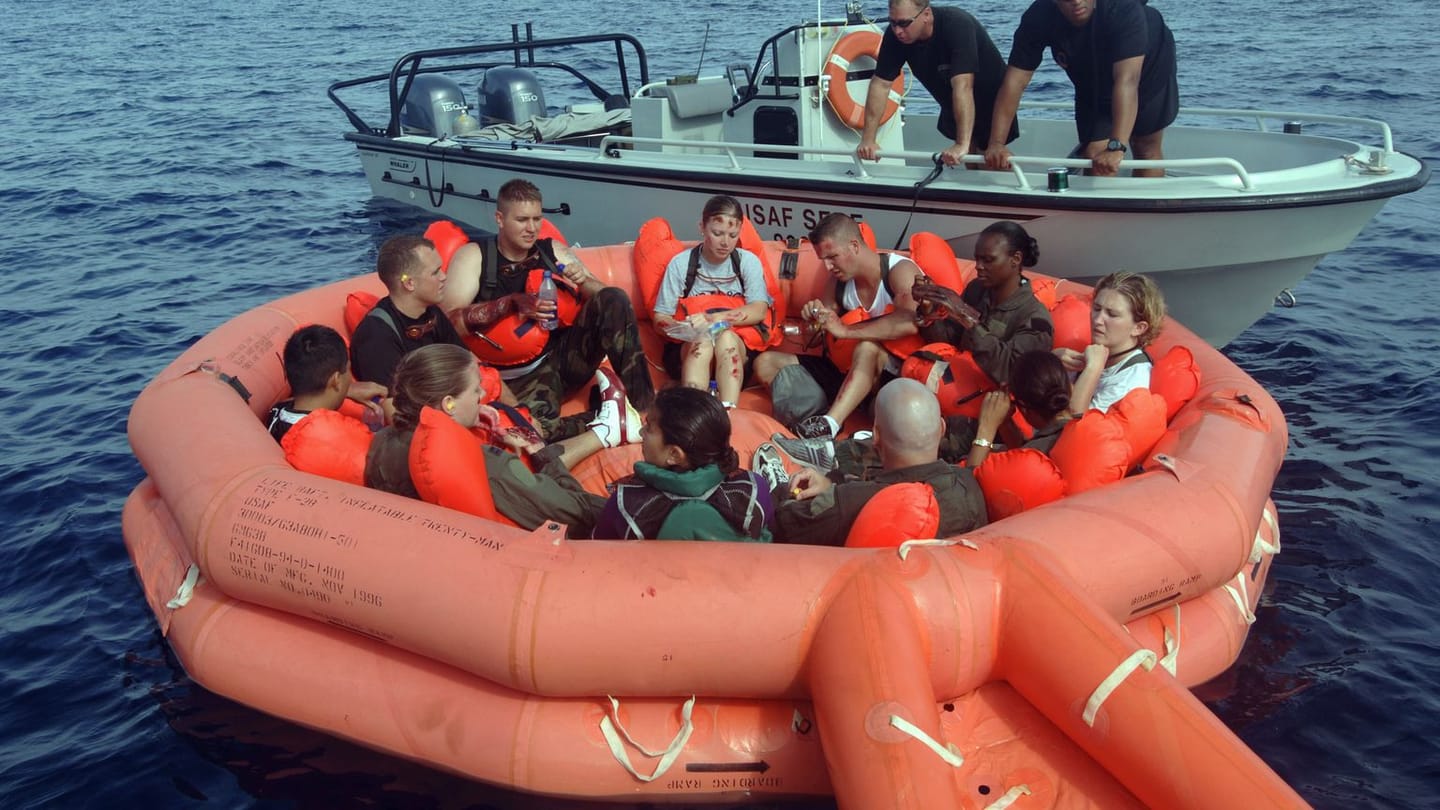
A raft is abandonment equipment, and abandonment is the last move in a long chain. The working rule taught by marine safety educators is to leave only when you are certain that staying aboard is more dangerous than being in the water. Until that point the boat, even a badly damaged one, is bigger, drier and easier for a searcher to find. When the decision is made, the order is fixed: distress call, lifejackets and warm layers, painter secured to a strong point, canister over the side, pull the painter hard to inflate, board from the deck without swimming if you possibly can, then cut the painter and stream the drogue.
Most coastal sailors buy a raft, have it strapped into a cradle, and never touch it again until a service falls due. That is understandable. It is heavy, sealed, expensive, and the one item aboard you genuinely hope stays shut forever.
The difficulty is that a raft is the only piece of safety equipment you cannot rehearse with. You can try a lifejacket, start an engine, practise a recovery. You cannot pull the painter on your own raft to see what happens. Everything you know on the day will be what you learned beforehand from the label, the manual, and where it sits.
Where the raft lives decides whether you get it over the side
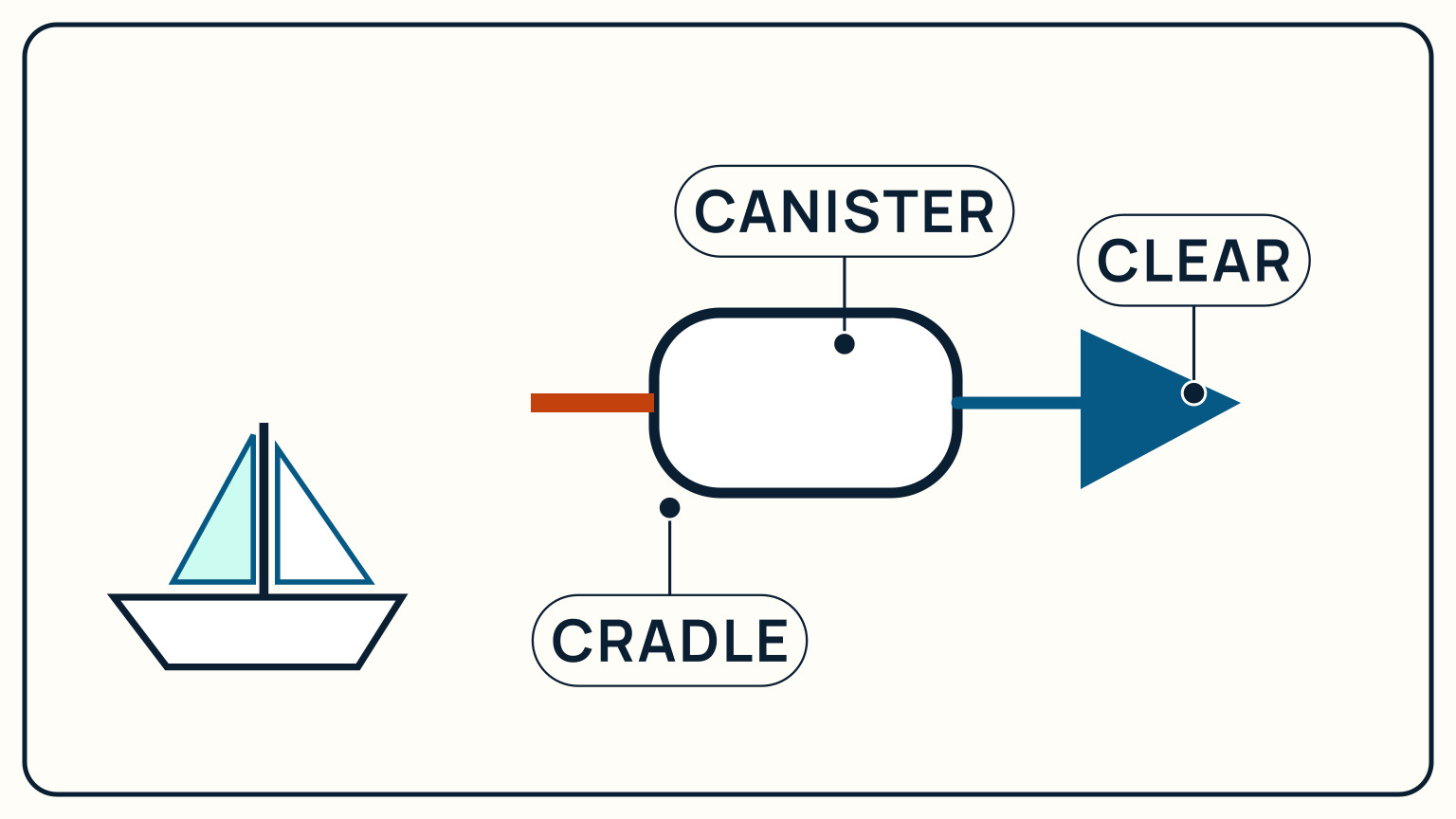
A raft you cannot get to the rail is a very expensive weight. Manufacturer stowage rules all point at that one moment.
Nothing may be stored on top of it. Whatever secures it must release without a key, so a padlocked strap disqualifies itself. It has to sit clear of overhangs, rigging, and anything else that could snag the container on its way to the water. It must not be a trip hazard where the crew works. It must never be used as a seat or stood on, which is exactly what a flat canister on a coachroof invites. And it belongs away from heat sources.
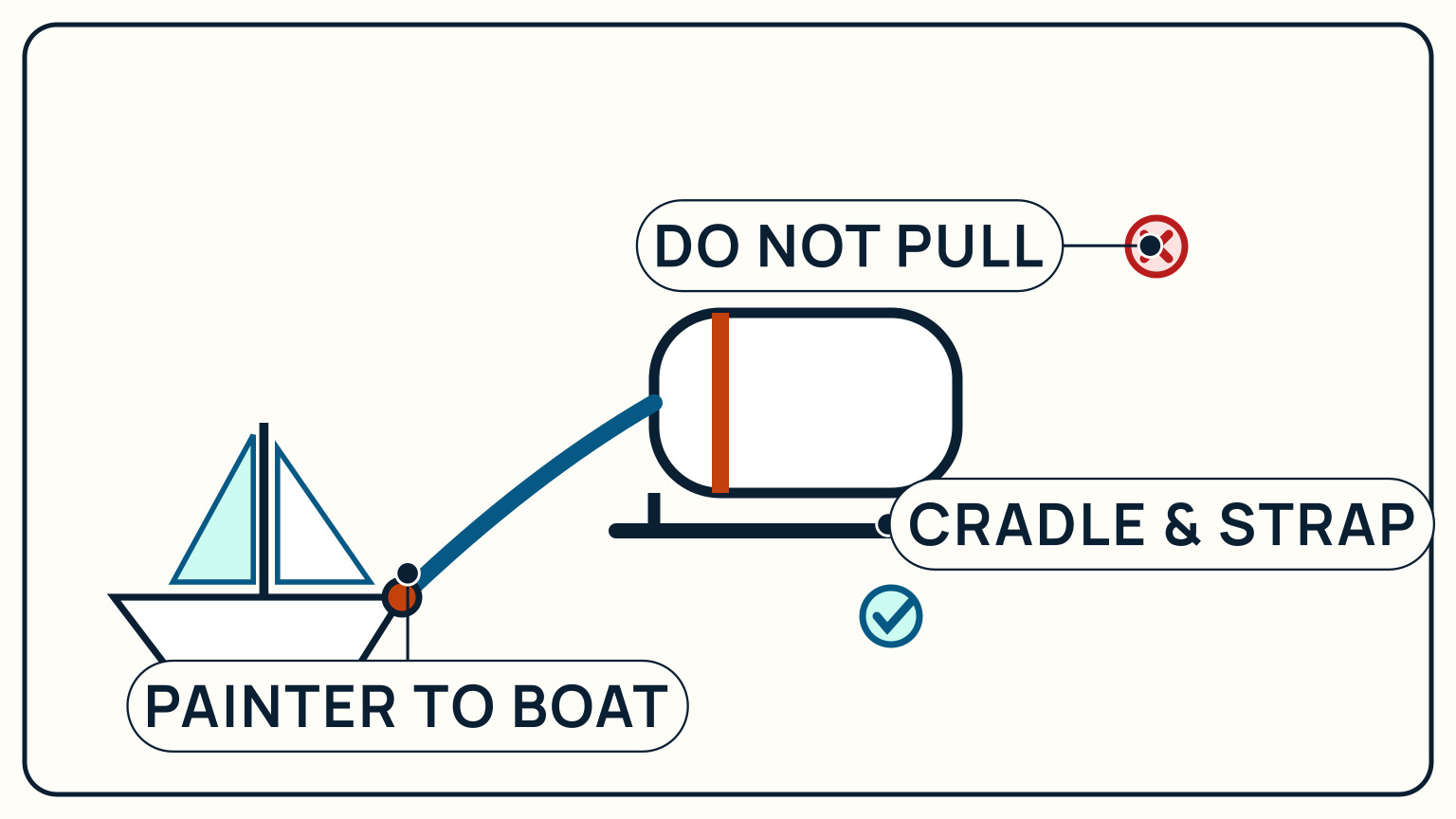
The cradle carries its own rules. It should be the right size for that container and fastened to a solid part of the boat rather than to a moulding. A container stowed on end needs the painter exit hole uppermost. One stowed on its side should be oriented with the gas cylinder close to the deck.
Then there is the route. Stand where the raft lives and walk the path you would take to the rail carrying roughly its weight, at night, heeled, with two other people trying to get past you. Coastal boats often stow the raft in a cockpit locker, which is a fair compromise, but only if that locker opens with the wheel turned and the sprayhood up. Find that out now rather than then.
Three things to find on the canister
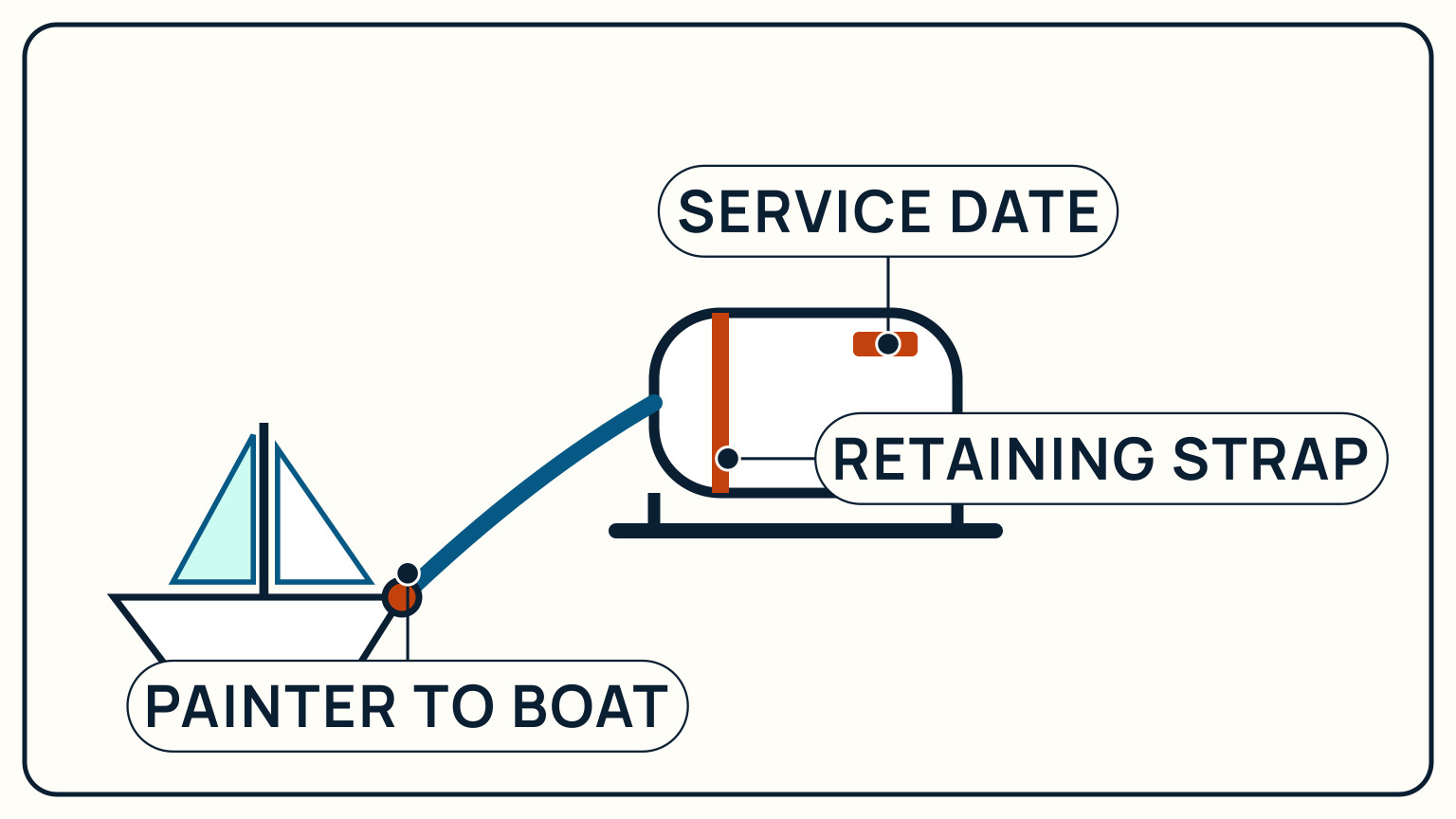
Three features on the outside of the container tell you most of what you need, and all three can be read from the dock.
The service label comes first. Service data is printed on the container itself, and the raft is meant to go to an approved station, which completes a service record card and issues a certificate of re-inspection for you to keep aboard. If the date on the container and the certificate in your folder disagree, believe neither and call the service station.
The retaining strap comes second. This is what holds the canister into its cradle, and it is the thing you release under pressure. Check that it is intact, that its buckle or slip hook works with cold wet hands, and that no part of it needs a tool.
The painter comes third, and it does two separate jobs. Pulled hard, it fires the gas cylinder. After that, it keeps the inflated raft attached to your boat while people board. Follow it with your eyes from the container to wherever it ends. It should be made fast to a genuine strong point, ideally through a hydrostatic release unit, and it should show no chafe. A painter tied to a stanchion base or a guard wire is a painter that will part.
The launch sequence, in the order that matters
The order matters more than the strength of anyone doing it.
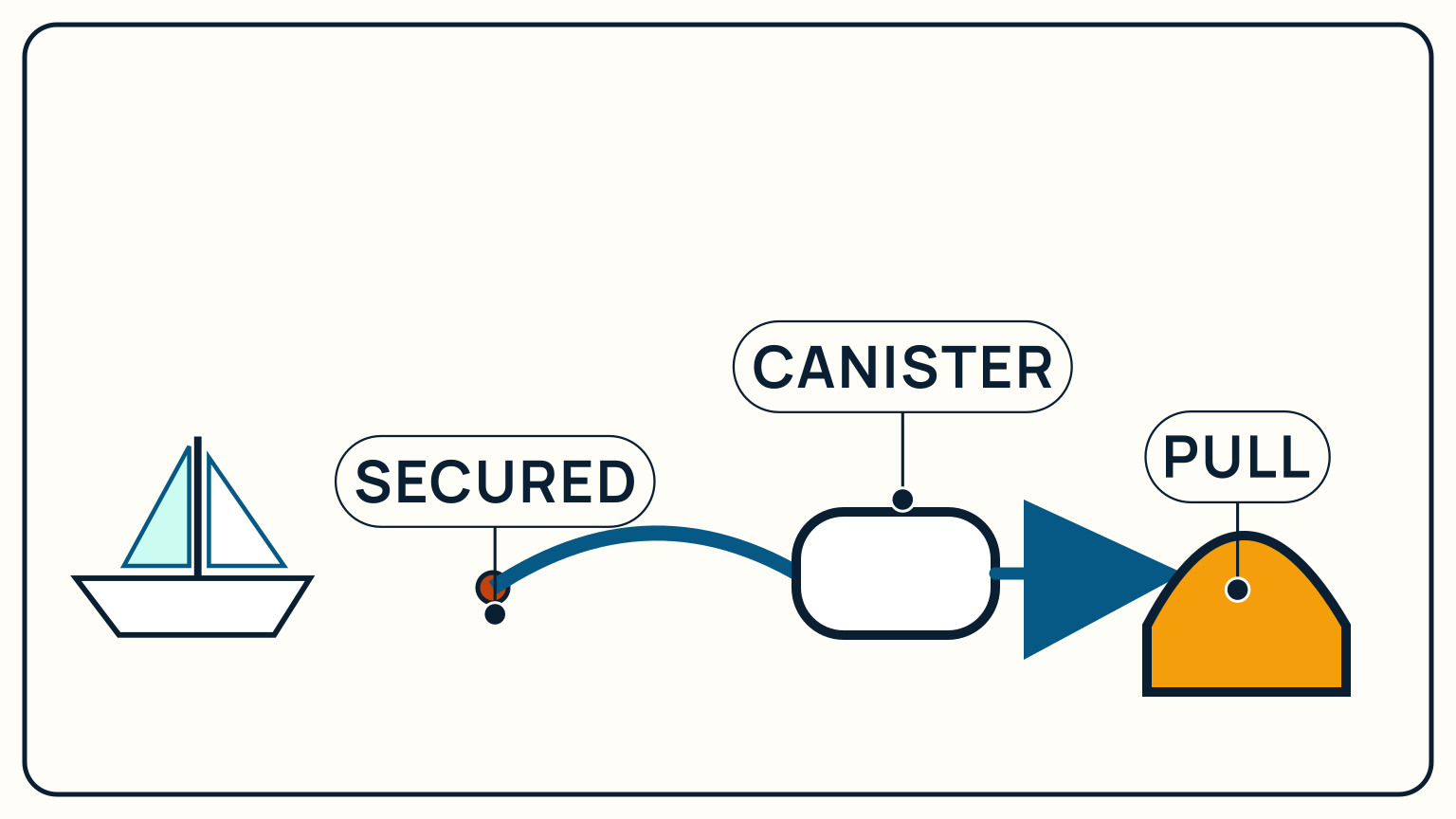
Before anything else, send the distress call and get everyone into lifejackets and whatever warm or waterproof layers are within reach. Take the grab bag if you have one. This is also the moment somebody counts heads out loud.
Attach before you throw. Where the painter is not already made fast through a hydrostatic release unit, pull out enough line and secure it to a strong point on deck. Pulling out all of it is unnecessary, because the rest runs out as the container falls.
Throw the container into the water. Never open it on deck. A raft inflating in a cockpit is dangerous, and the container is designed to open by itself once it is in the water and the painter is pulled.
Pull the painter firmly, all the way to its full extension. That fires the cylinder, which holds a mixture of carbon dioxide and nitrogen. Hissing, and gas venting through the relief valves during inflation, are both normal and neither means something has gone wrong.
Bring the raft alongside and hold it there. The aim is to board without entering the water: down a rope ladder, or a short drop from the deck if it is not too high. The boarding ramp exists mainly for people already swimming. Only when everyone is aboard do you cut the painter with the knife stowed at the canopy opening, paddle clear of the vessel, and deploy the drogue.
Checking it without setting it off
You can inspect a raft thoroughly every month without risking an inflation, and it takes about as long as coiling a halyard.
Confirm the container is strapped firmly into its cradle with no movement in it. Run your hands over the container looking for damage, cracks, chafing, or soft spots. Inspect the securing straps for cuts, abrasion, and damage to the webbing or the stitching, which is usually where they give way first. Follow the painter line: no abrasion, and still attached to its deck strong point. Where a hydrostatic release unit is fitted, check it is within its operational life, because those units carry a replacement date of their own, separate from the raft service.
The one thing you must never do is pull the painter to test whether it is attached. Pull it hard enough and you will inflate a raft inside a cradle. Test the connection by feeling the knot or shackle at the deck end instead of loading the line.
If the raft comes off the boat for winter, store it clean and dry, out of direct sunlight, somewhere between 10 and 30 degrees Celsius (50 to 86 Fahrenheit), where rodents cannot reach it, because they will eat the fabric, and away from oil, fuel and chemicals.
Service records and the annual abandonment drill
A raft runs on two calendars. One belongs to the equipment and one belongs to the crew.
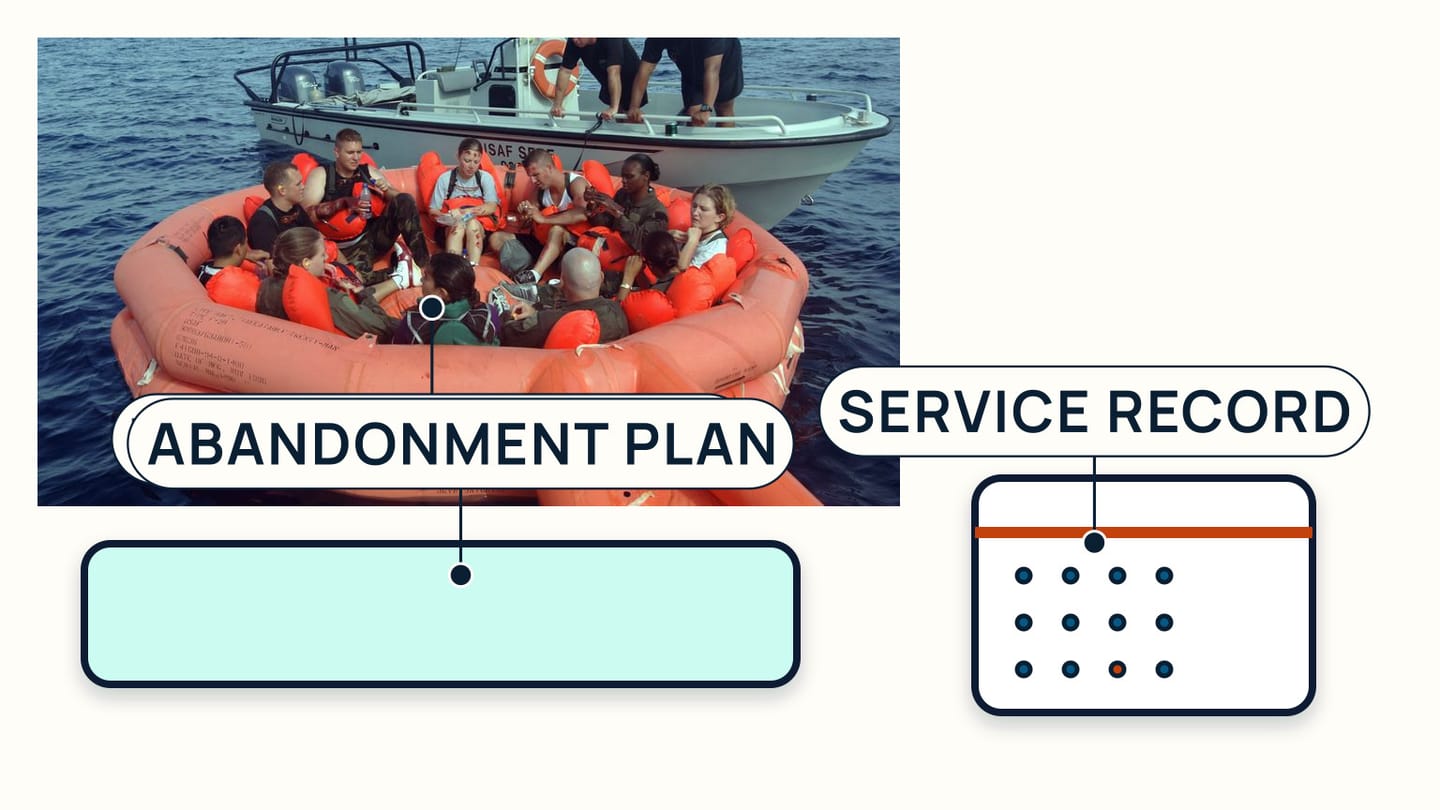
The equipment calendar is the service interval. Rafts go back to an approved station, where the raft is inflated, inspected, its pack contents replaced as they expire, and a fresh certificate issued. Intervals differ by manufacturer, by raft type, and by how the raft is packed, so the authority is the label on your container and the manual that came with it. Hydrostatic release units run on their own shorter clock. Keep the certificate on board rather than in a drawer at home, because it is also what shows a surveyor or a charter company that the raft is current.
The crew calendar is the drill. Offshore racing rules ask crews to practise abandonment of vessel at least annually, and the inspection card asks the person in charge to show proof of it. A meaningful version takes fifteen minutes alongside. Walk it through: who sends the distress call, who fetches the grab bag, who releases the strap, who secures the painter, where the knife is, and how many people the raft is rated for.
Carriage rules for rafts differ between countries and between leisure and commercial use, so verify what currently applies where you sail, and choose a raft specified for the water you actually cross.
The honest summary is that a raft rewards attention paid long before it is needed, and punishes the assumption that a strap plus a service sticker equals a plan. Nothing above requires you to open anything or spend anything.
Pick a calm morning, take the crew to where the raft lives, and go through it together: the strap, the label, the painter and where it ends, the route to the rail, and the order of the launch. Then agree out loud who does what.
The SailStarter lessons build the layers underneath, from crew briefings and distress calls through to the judgement that decides whether you ever reach for a raft at all.
Try it from the lesson
Can you spot the next move?
Water is rising and several crew can act. How should the first jobs be shared?
Why you can trust this guide
. We build each guide from public seamanship and safety sources, then teach the universal principle before any local difference.