Chart your course
Buying an Ex-Charter Sailboat
Quick answer
The short version
Buying an ex-charter sailboat starts with the same rule as buying any used boat: present condition matters more than the label. Identify the legal owner, base and use history, included inventory, available maintenance and incident records, current charter status, and the seller's phase-out promise. Make the offer subject to an acceptable independent survey and trial under a suitable written agreement. Ask your surveyor to define afloat inspection, haulout, trial run, rig, engine, and other specialist scope. Verify promised phase-out work after completion, then budget for storage, insurance, immediate findings, and changes needed for private use. A seller's maintenance program is useful context, but it is not proof that one boat is defect-free.
Ex-charter boats invite easy stories in both directions. One buyer sees a maintained fleet boat at an attractive price. Another sees hard use and assumes every system is worn out. Neither story inspects the candidate. Charter fleets, owners, bases, boats, records, and sale processes differ. Keep your language factual: engine hours shown, repair visible, invoice supplied, inventory missing, moisture reading taken, or item not tested. The used sailboat buying checklist provides the general buying sequence; this guide adds the questions raised by commercial use and phase-out.
Define the Candidate Before You Travel
Ask who owns the boat and who has authority to sell it. A major ex-charter seller states that its listings can be company-owned or privately owned. That affects which party supplies documents, signs the sale agreement, and answers for promised work. Request the registration and ownership trail, sale inventory, location, tax or import status where relevant, and any finance or lien information that local due diligence requires. Use qualified local help for legal and tax questions.
Build a short history. Which bases did the boat operate from? Is it still in active charter? When can it be viewed, surveyed, hauled, and trialled? What incidents, groundings, storm events, structural repairs, or insurance claims are disclosed? Which service invoices, defect lists, prior surveys, engine records, and rig reports are available? Ask what is unavailable as clearly as what exists.
Do not assume a large operator has a complete buyer-facing maintenance log. One major seller says scheduled maintenance occurs but maintenance logs are not available under its operating model. That is a provider-specific fact and a useful warning: marketing about a program and documents for a boat are different evidence.
Freeze the inventory at the right moment. List sails, tender, outboard, safety equipment, electronics, domestic equipment, spares, tools, bedding, and deck gear. Record serial numbers or photographs for important portable items. One seller says inventory present at survey remains with its boat. Your agreement should state the actual rule, especially if the yacht continues chartering between survey and closing.
Read Use Through Condition, Not Assumptions
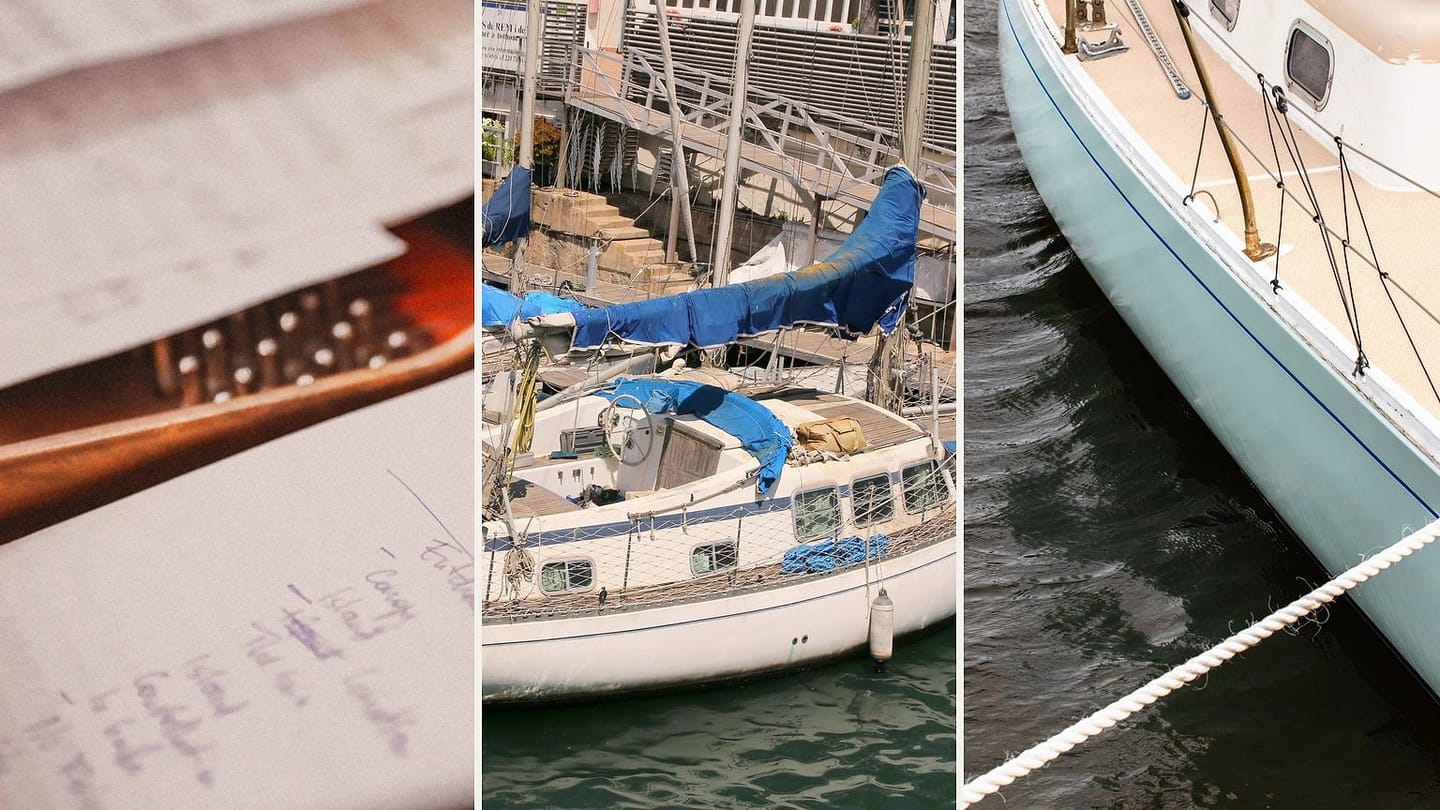
Commercial use changes the questions you ask, but it does not answer them. Look closely at high-touch items: companionway, hatches, doors, latches, upholstery, galley fittings, toilets, pumps, switches, winches, clutches, blocks, sheets, halyards, furling gear, anchor equipment, tender handling, and swim access. Repeated use can make condition easier to see. It can also mean a failed part was already replaced. Only inspection and records tell you which.
Examine repair areas without deciding in advance that a repair is bad. Ask what happened, who specified the work, who completed it, what materials were used, and whether invoices, photographs, or an inspection exist. A clean cosmetic surface does not prove the structure beneath it, while a visible professional repair is not automatically a reason to reject the boat.
Compare engine hours with service evidence and trial results rather than using one universal cutoff. Check cold starting when the survey arrangement permits, cooling, exhaust, leaks, controls, charging, mounts, and operation under load. A mechanic familiar with the installed engine may be needed because a general survey is not a full engine diagnostic.
Treat the rig the same way. Deck-level condition, dates, and invoices guide the question, but a general surveyor may not go aloft. Agree whether a rigger will inspect mast, standing rigging, terminals, fittings, and furling equipment. Review the standing rigging inspection checklist to understand the evidence, then leave technical acceptance to the appropriate professional.
Finally, inspect the boat against your private-use plan. Charter inventory may favour simple, durable, easily replaced equipment. You may need storage, power, heating, sails, tender, communications, or navigation equipment for a different cruising job. Those changes belong in the budget, not in a claim that the boat is incomplete.

Control the Survey and Trial
Choose the surveyor independently. BoatUS describes the surveyor as working for the buyer, not the seller, broker, lender, or repair yard. Ask insurers or lenders what qualifications they accept, review a sample report, and agree the scope in writing. The marine survey cost and process explains why a quote depends on boat, scope, location, access, and specialist work rather than one universal price.
For a larger sailboat, plan an afloat inspection, haulout, and trial run. Afloat access lets systems and interior condition be examined in normal position. Haulout exposes the hull below the waterline, keel, rudder, propeller, shaft or saildrive, anodes, and through-hulls. The trial lets the surveyor observe engine and running systems under use and may allow sails to be checked when conditions and agreement permit.
Define exclusions. Will the mast be inspected aloft? Will sails be opened? Will batteries be load-tested? Are engine diagnostics, oil analysis, gas systems, moisture mapping, tender, outboard, and electronics included? Who operates the boat? Which costs cover haulout and yard time? Arrange access before survey day so a missing key or occupied berth does not reduce an expensive inspection.
Keep the offer contingency alive until you receive and understand the report. Sort findings by consequence, evidence, recommended action, and timing. Ask the surveyor what was inaccessible or not tested. A survey is a condition snapshot, not a warranty. Use it to decide whether to continue, renegotiate under the agreement, specify work, commission another specialist, or leave.
If the boat remains in charter after the first inspection, agree how later damage, missing inventory, or additional hours are handled. A final inspection near closing can verify that the boat delivered is the one you agreed to buy.

Verify Phase-Out Work and Price the Handover
"Phase-out" is a program label until it becomes a written work list for the candidate. Ask which items the seller will inspect, service, repair, replace, clean, or leave as found. Separate fair-wear standards from survey findings and buyer-requested extras. Record who decides that work is complete, which invoices or reports you receive, and whether you may reinspect before closing.
One major seller describes pre-charter, post-charter, scheduled maintenance, and an end-of-program phase-out. Treat that statement as the seller's description of its process. Verify the actual boat through completed work records, photographs, test results, independent inspection, and the final inventory. A newly cleaned cabin cannot close a structural, rig, engine, or document question.
Build a first-year plan with three columns. The first holds purchase and closing items: survey, haulout, specialists, transport, tax or registration where applicable, and insurance. The second holds agreed immediate work and private-use changes. The third holds uncertain findings that need investigation or reserve. Add the real storage quote from the boat's destination. The first 30 days as a sailboat owner helps turn the closing documents into a maintenance baseline.
Do a final walk-through before money and possession fully change hands. Reconcile the inventory, start and operate agreed systems, review completed phase-out items, photograph condition, collect keys and manuals, and identify unresolved work in writing. Confirm who carries risk if delivery, transport, or final repair happens after closing.
The discount matters only beside the work. Compare the candidate with similar privately used boats on condition, equipment, evidence, and total first-year cost. An ex-charter boat can be the right purchase, but the reason should be that a specific inspected boat fits your job and budget, not that its history guarantees value.
Use SailStarter's beginner boat-choice lesson before requesting listings. Write the intended waters, regular crew, storage location, trip length, maintenance you can support, and systems you need. Send that brief to the broker and surveyor so the inspection answers your job rather than producing a generic list. Keep four records together: ownership and sale documents, inventory, survey and specialist reports, and the final phase-out work list. Verify current local rules before closing. If the evidence remains incomplete, price the uncertainty honestly or choose another boat. Walking away from a discount that cannot be inspected is a sound buying decision.
Try it from the lesson
Can you spot the next move?
A wide sailboat glides past on two side-by-side hulls, barely leaning at all. What type is it?
Why you can trust this guide
. We build each guide from public seamanship and safety sources, then teach the universal principle before any local difference.