Chart your course
Dinghy vs Keelboat for Beginners

Quick answer
The short version
A dinghy and a keelboat can both be good boats for learning to sail. A dinghy is small and light, usually with a centreboard or daggerboard that can be raised. It responds clearly when you move your weight or adjust a control. A keelboat is generally larger and carries a fixed, often ballasted keel, giving it more physical stability and room for shared crew roles. Choose a dinghy if you want direct feedback and small-boat independence. Choose a keelboat if you prefer a steadier platform or want experience that leads toward larger yachts. Local access and good instruction matter more than finding one universally “best” first boat.
The names describe important construction differences, but they do not divide sailing into a correct and incorrect path. Each can teach steering, sail trim, tacking, gybing, and leaving and returning.
Both are genuine beginner routes.
The better question is what kind of learning experience you want. Think about how the boat balances, how many people work together, where you hope to sail later, and which supervised practice is actually available near you.
Both routes begin with the same core relationship between wind, sail, steering, and balance. The platform changes how clearly and quickly you feel each response.
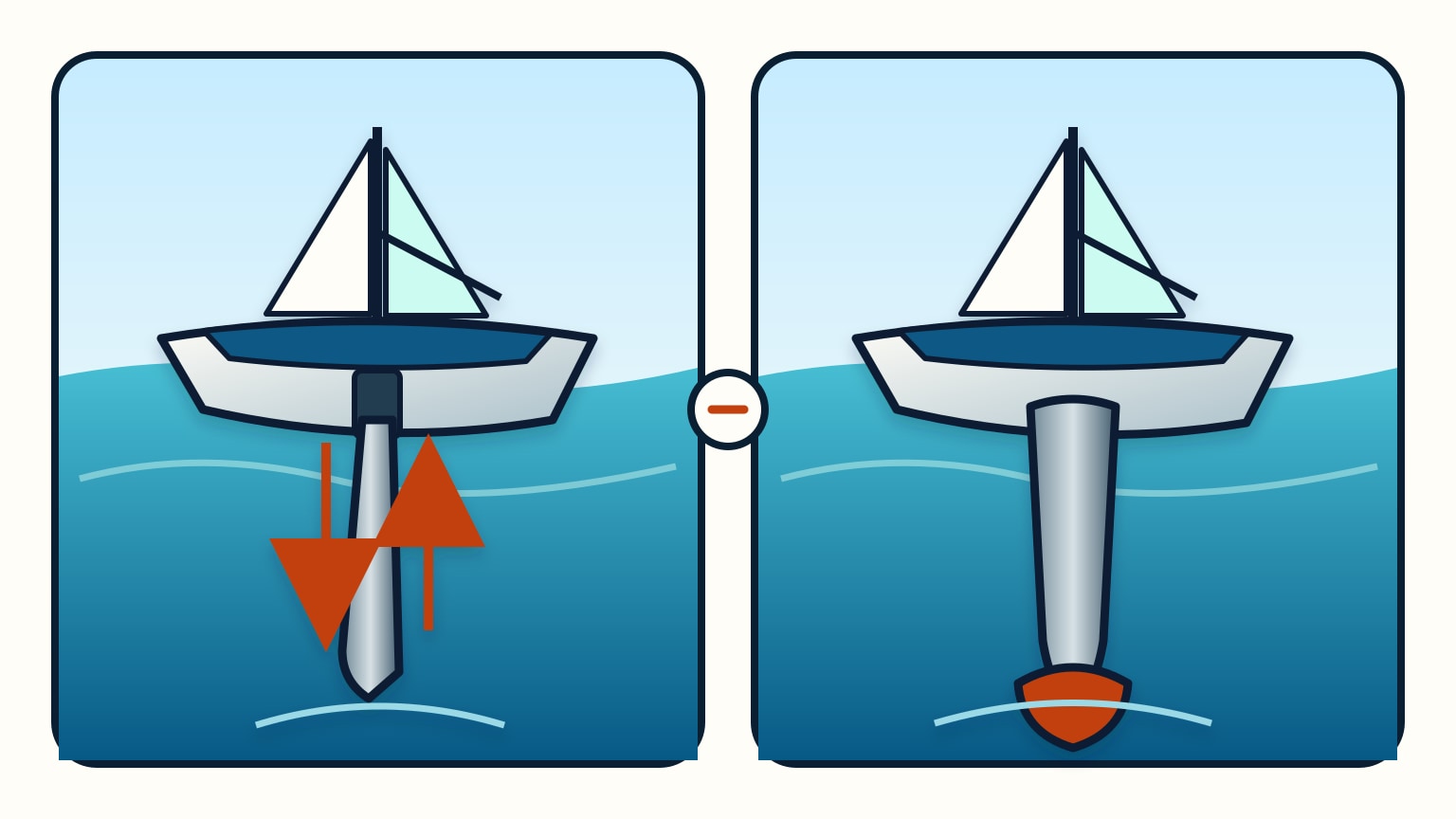
The underwater shape drives most of the difference in feedback, stability, and crew roles.
| Dimension | Dinghy | Keelboat |
|---|---|---|
| Underwater appendage | Centreboard or daggerboard, retractable, no ballast | Fixed keel, often ballasted |
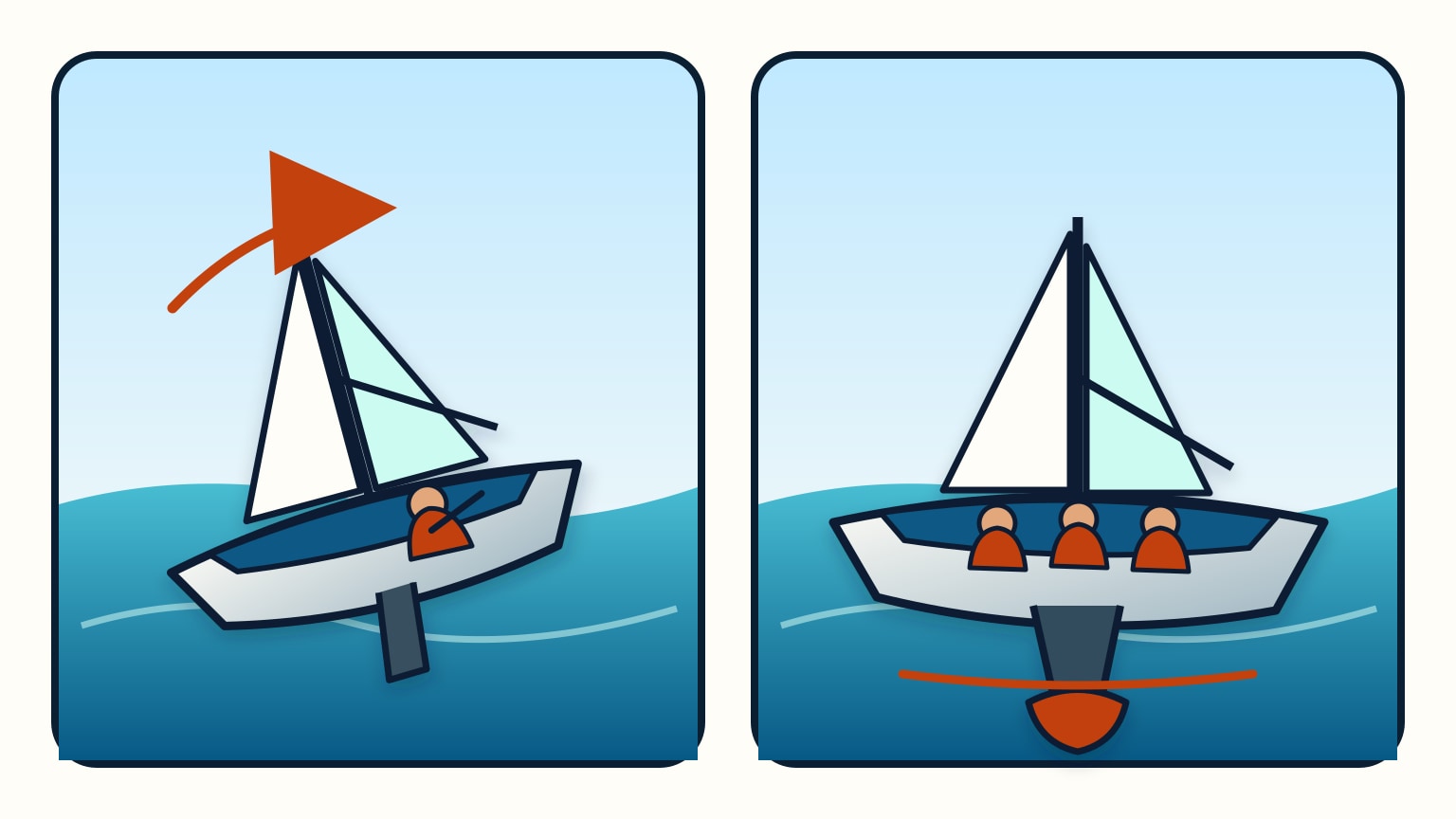
| Weight and stability source | Light; crew position drives balance | Heavier; ballast returns the boat toward upright |
| Feedback to the crew | Immediate — sheet, tiller, and weight shifts show at once | Steadier — a given movement usually feels less dramatic |
| Crew structure | Single-handed or two-person | Designed for two or more, with helm and crew roles divided |
| Fits this later goal | Small-boat independence, a local dinghy club or fleet | Crewing on yachts, coastal cruising |
Feel the Difference Under the Water
A dinghy commonly carries a centreboard or daggerboard. This underwater blade resists sideways movement and can be lifted for launching, landing, or shallow water. It is not a heavy ballast weight. The boat remains light, so crew position contributes strongly to balance.
A keelboat carries a keel along its centreline. The keel resists sideways force, and many keelboats place heavy ballast low down. That weight makes the boat heavier and gives it a stronger tendency to return toward upright after heeling.
These parts explain much of the different feel. A dinghy speaks quickly: move across the boat and the balance changes at once. A keelboat still heels and responds to crew placement, but a small movement usually feels less dramatic. Neither response is wrong. Each teaches you to connect wind, sails, hull, and crew weight.
Look at the real training boat and its diagrams. A retractable board and a deep fixed keel make the distinction easier to remember than a category name alone.
Direct feedback or a steadier platform?
Dinghies are lightweight and easy to rig and launch. Single-handers are sailed by one person, while larger double-handers are designed for two. Because the boat is responsive, you receive immediate feedback when a sheet is adjusted, the tiller moves, or your weight shifts.
That liveliness can make cause and effect easy to see. It can also feel busy during the first hour. You are closer to spray and may use specialist clothing supplied or recommended by the school.
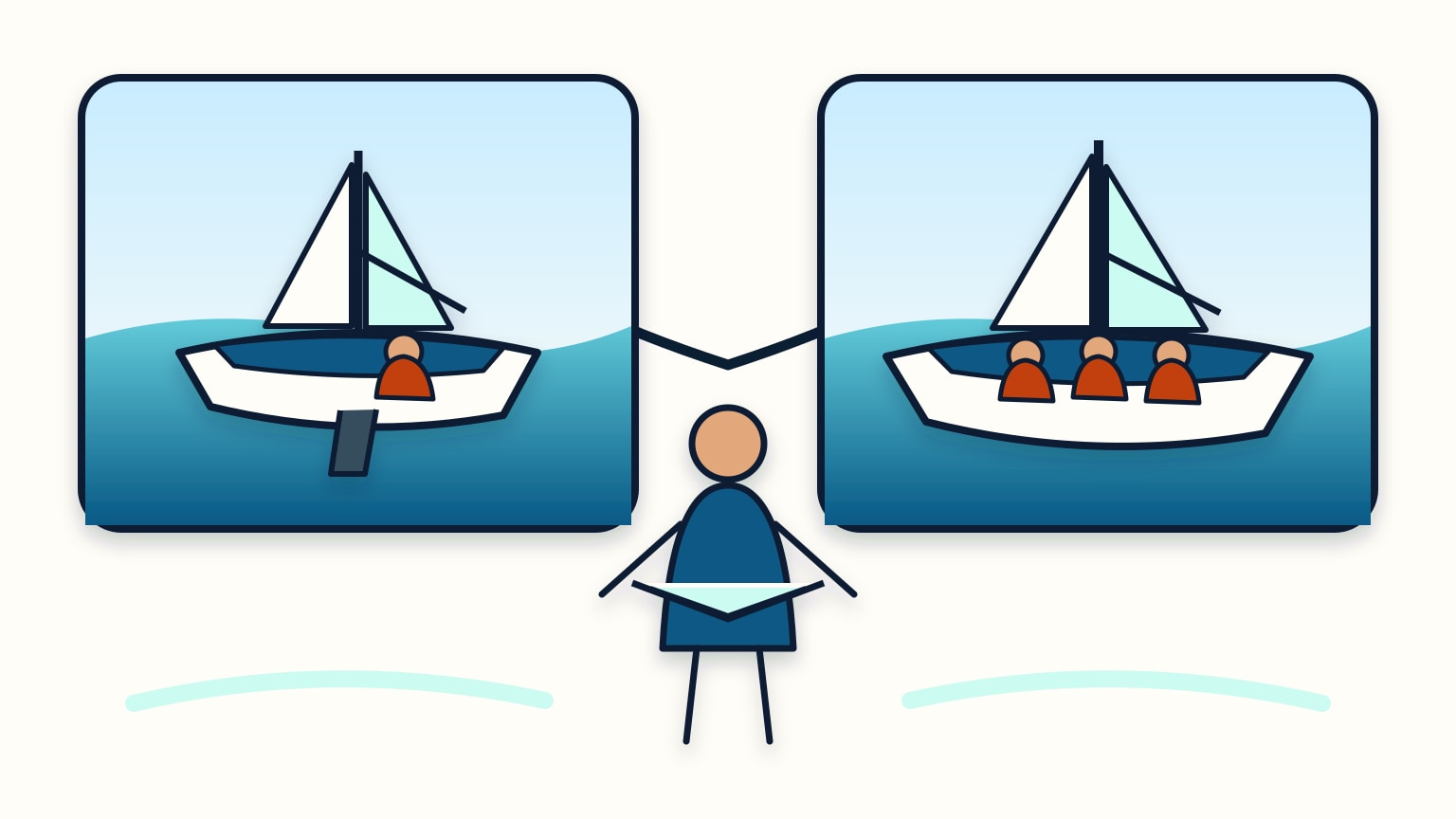
Small keelboats are designed for two or more people and are more stable because of their weighted keels. That crew setup lets an instructor divide jobs between helm and crew. It may feel closer to the yacht sailing you picture for future cruising. You still learn balance and trim, but through a boat with more mass and ballast.
That shared layout can let one learner steer while another handles a sheet, then swap. The dinghy may place more of those decisions within one person’s immediate reach.
Which boat matches your sailing goal?
Choose a learning path that resembles what you want to do next. A dinghy course fits well if you want to sail a small boat independently, join a local small-boat club, or explore responsive boat handling. Its simple scale keeps the main controls close and visible.
A keelboat course fits well if you expect to crew on yachts, share jobs with several people, or move toward coastal cruising. You practise communication and coordinated manoeuvres on a platform closer to those larger boats.
Your first choice does not lock you into one type. The same wind awareness, points of sail, trim language, and steering principles cross between them. What changes is the feel, scale, and way the crew manages stability. Learning both later can make those shared principles clearer because you experience them through two different designs.
If your longer-term aim is uncertain, choose the route with the clearest next practice opportunity. Repetition on an available boat will teach more than endlessly comparing specifications online.
Try the Course You Can Practise Afterward
Access often decides more than theory. A well-run local course with boats available for supervised practice is more useful than the perfect boat type that you cannot sail again. Ask what the centre uses, how many learners share each boat, what clothing is supplied, and whether you can return for club sessions or rentals.
Also ask how the programme handles changing conditions. A suitable beginner boat is matched to the learner, sailing area, and support available that day. The model name alone does not answer those questions.
If possible, take a short introductory session before committing to a longer course. Notice whether you enjoy the dinghy’s immediate movement or the keelboat’s steadier teamwork. The better starting point is the one that keeps you attentive, comfortable enough to learn, and able to practise again.
Compare a real lesson day
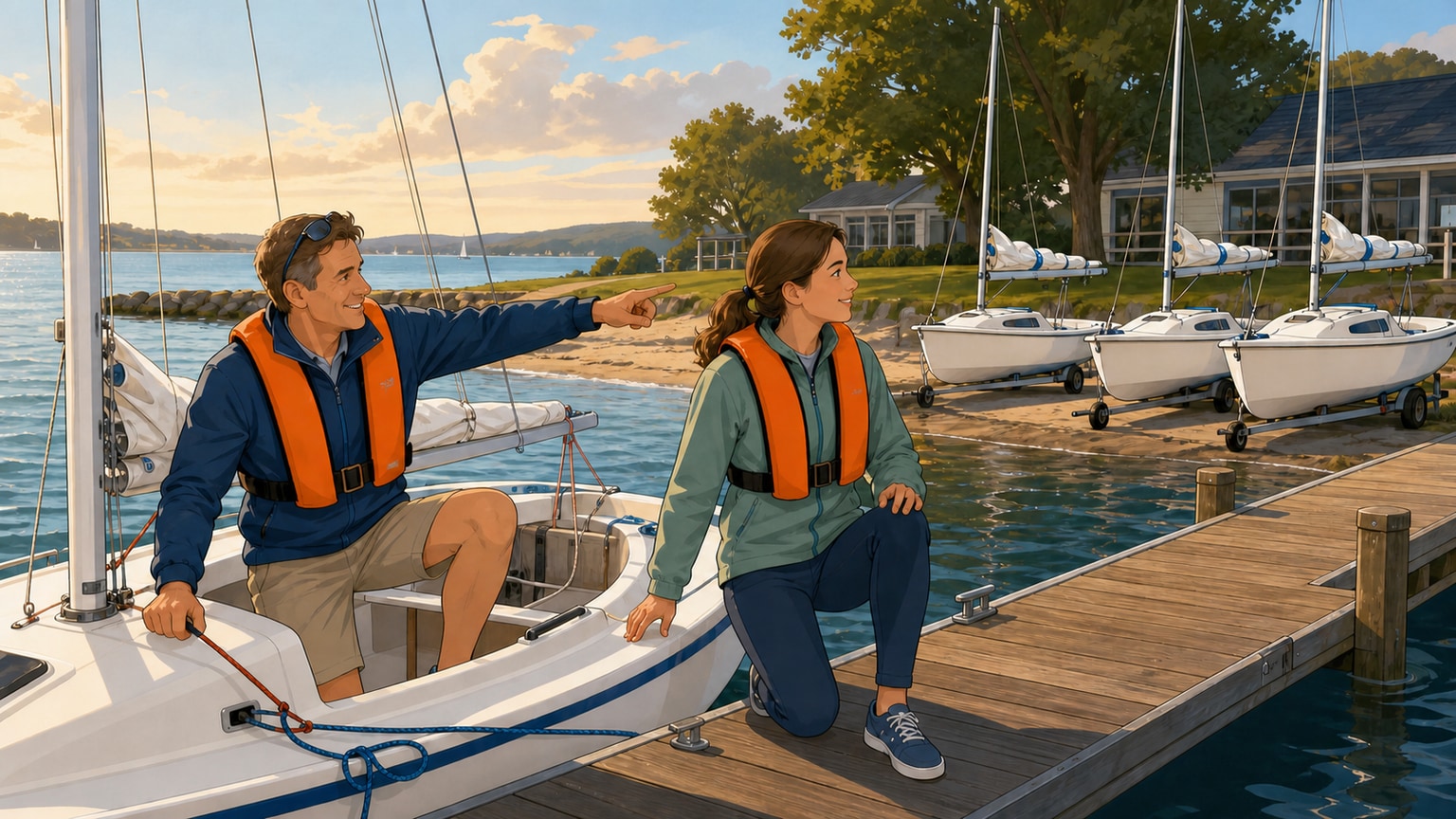
Ask the school what clothing and safety equipment it supplies, how learners launch, how many people share the boat, and what happens after a capsize or grounding. Then ask the same questions about its keelboat course. The broad labels do not tell you how much time you will steer, trim, or wait for a turn.
A dinghy can give direct feedback because crew movement and trim quickly change the boat. A keelboat usually gives a steadier platform and more room for several learners and an instructor. Neither description makes one route universally easier. Your comfort in the boat, the teaching setup, and the support available after the course matter more than a slogan.
Match the boat to the next season
Picture the sailing you can repeat for the next few months. If a local club has an active dinghy fleet and supported practice, starting there creates a clear path back onto the water. If most nearby opportunities are keelboat crewing, a course on that platform may connect more directly. Ask whether graduates can hire, share, or crew on the same type.
Keep hull form separate from rig and number of hulls. The catamaran versus monohull guide covers a different comparison. The trailer sailer guide shows how storage and launching can become part of the boat choice.
Plan a supported crossover
Skills such as wind awareness, steering, sail trim, lookout, and communication carry across boats. The response can feel different. Before switching, ask for a briefing on stability, crew movement, stopping, turning, recovery, and the controls fitted to that boat. Treat the first outing as familiar principles in a new system.
After each trial, record three points: how clearly the boat showed cause and effect, how much useful practice you received, and how easily you can sail it again. Choose the route with the best learning loop. You can cross over later with a stronger base and a clearer sense of which differences require fresh instruction.
SailStarter’s boat-types lesson gives you the visual foundation for this choice. Learn to recognise a centreboard, a keel, ballast, and the basic hull shapes before visiting a school. Then ask to see those parts on the actual training boats. Knowing what is under the water makes the difference in feel easier to understand. Ask how many learners share the boat, which clothing is supplied, and how you can practise again after the course. Whichever course you choose, focus on good instruction and repeatable practice. The transferable sailing principles matter far more than proving that one type of boat was the only correct place to begin. Both are genuine beginner routes.
Comfort and access also deserve direct questions. Ask how learners board, recover after capsize or a person-overboard drill, use toilet or changing facilities, and get help if they tire. A stable platform can improve access for some people, while a small responsive boat may give others clearer practice. The school should explain how its setup fits you rather than treating the hull category as the answer.
Try to observe a complete session before enrolling. Watch how much time students spend steering and trimming, how the instructor intervenes, and how boats return in changing wind. Then ask one current learner what practice is available between lessons. Those details show whether the advertised course becomes repeatable experience.
Try it from the lesson
Can you spot the next move?
A wide sailboat glides past on two side-by-side hulls, barely leaning at all. What type is it?
Why you can trust this guide
. We build each guide from public seamanship and safety sources, then teach the universal principle before any local difference.