Chart your course
Can Sailboats Sail Faster Than the Wind?
Quick answer
The short version
Yes. Some efficient sailboats can travel faster than the true wind when they sail across it, not with it. Apparent wind, the airflow actually felt on a moving boat, explains how. It combines the true wind with the headwind created by the boat's own speed. As a fast boat accelerates, its motion keeps apparent wind flowing over the sail from forward of the beam, even as the boat pulls ahead of the wind that is technically pushing it. The sail converts that airflow into force, while the keel, centreboard, or hydrofoil resists sideways slip and turns part of that force into forward motion. Acceleration stops only when aerodynamic drive balances total resistance, not at some fixed ceiling tied to the true-wind number. Nothing is created for free in this process. The boat continues to take energy from moving air the entire time, and its low drag simply lets that balance settle at a speed above the original true-wind speed.
The surprising part is that "faster than the wind" compares boat speed with wind measured at a stationary point on land or water. The sail itself never experiences that stationary measurement once the boat begins moving. It experiences apparent wind, and only apparent wind, from the moment the boat leaves the dock. A cyclist feels a headwind on a still, calm day for the same underlying reason: motion through air creates its own flow, independent of any wind that happens to be blowing. Add a real crosswind to that self-generated flow and the two combine into one apparent-wind vector. Efficient racing boats use that combined flow exceptionally well, extracting nearly everything useful from it, while ordinary cruising boats lose far more of that same energy to waves, water drag, rig drag, and simple hull weight.
Start With Two Different Winds
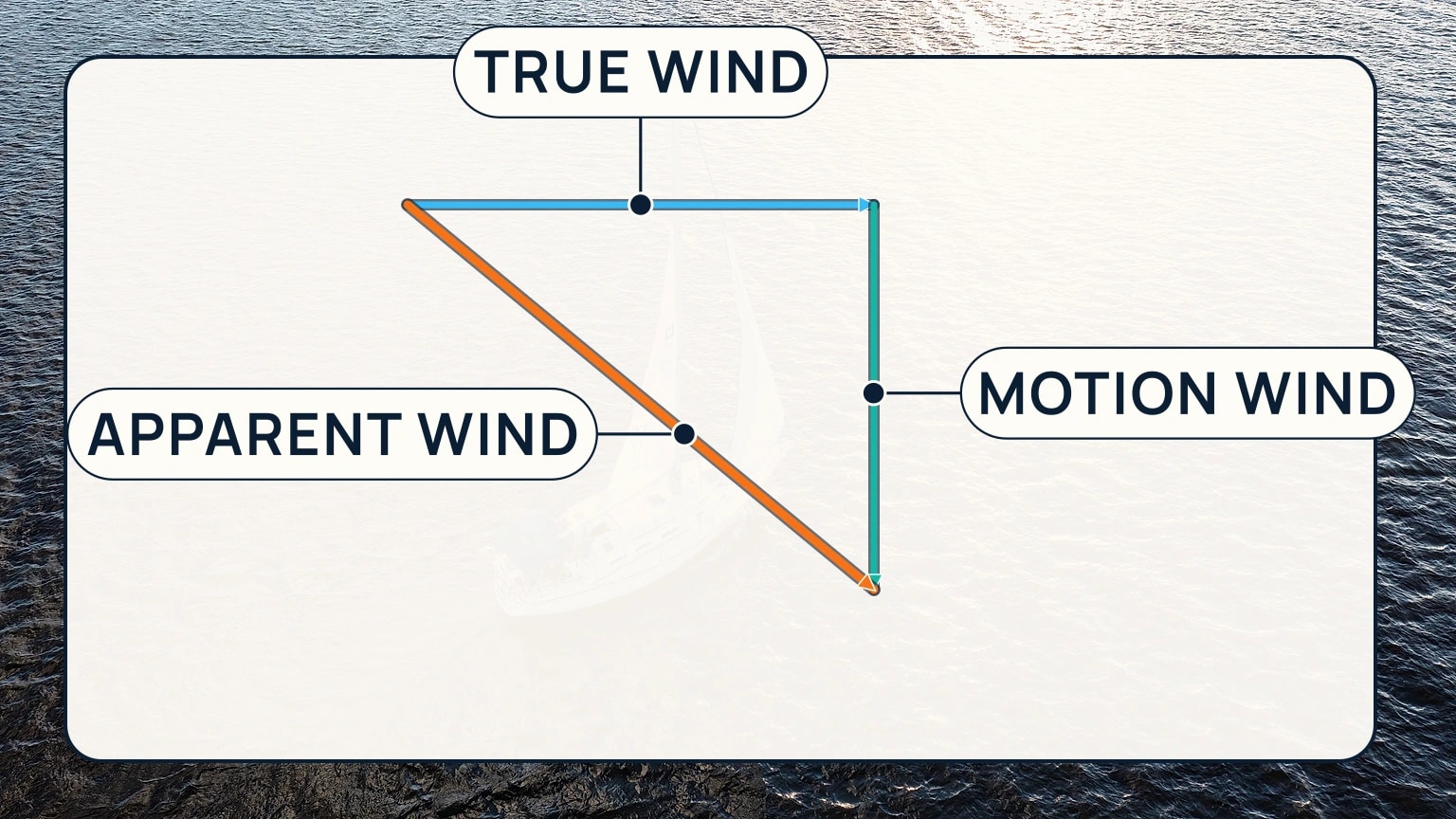
True wind describes air movement relative to a stationary point, the number a shore-based weather station would report. Apparent wind describes the airflow relative to the moving boat, which is the only wind the sails and the crew's faces actually feel once underway. At rest, tied to a dock, the two are exactly the same. The moment the boat moves, they start to differ, and they keep differing as speed builds.
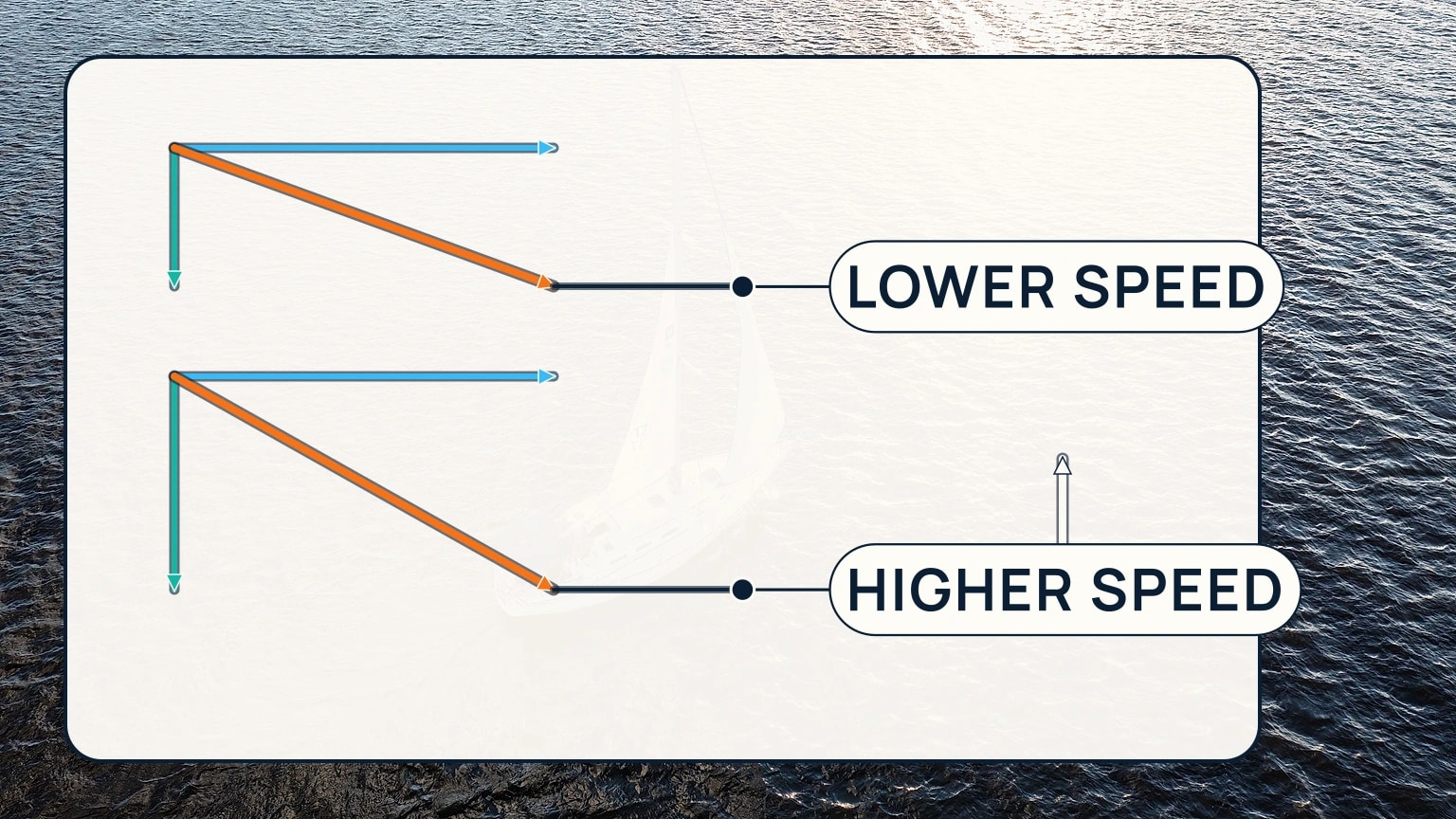
Imagine a steady breeze crossing from the side. The boat begins moving forward, and that forward motion creates its own headwind, purely as a byproduct of speed. Add that self-made headwind to the true crosswind, and the combined apparent wind arrives from a direction farther forward than the true wind alone. Increase boat speed further and the motion component grows larger, pulling the apparent-wind direction closer and closer to the bow.
The sails must be trimmed to this experienced airflow, not to the true wind a forecast would quote. A fast boat is therefore not leaving all useful wind behind the moment it reaches true-wind speed, the way intuition suggests it should. Across the wind, its own motion actively helps maintain a strong apparent flow over the sails right through that point and beyond it. That feedback loop, speed creating flow, flow creating more force, more force creating more speed, is the heart of the answer.
Speed Builds More Apparent Wind
With useful trim, apparent wind crossing the sail produces aerodynamic force, the same basic mechanism that keeps an aircraft wing generating lift. The underwater foil resists sideways motion, so part of that aerodynamic force gets converted and drives the boat forward rather than sideways. As the boat speeds up, the apparent wind changes angle again, and the sails need to be trimmed to the new angle to keep using it well.
This does not produce endless acceleration, however tempting that conclusion feels. Every increase in speed also increases resistance, both in the air moving past the rig and hull and in the water moving past the foils. Eventually the available driving force equals the combined drag pulling the other way. The boat then holds a genuine equilibrium speed, and it stays there unless wind strength, sea state, course, or trim actually changes.
Efficient craft reach that balance point at a high speed precisely because they turn more of the airflow into useful drive and waste less of it to drag along the way. The whole process is continuous rather than a one-time push from behind that eventually runs out. Air keeps moving over the sail, water keeps moving over the foil, and the boat keeps transferring force between the two for as long as the wind blows.
Low Drag Makes the Difference
Not every sailboat exceeds true-wind speed, and most never come close. A traditional displacement hull pushes through the water rather than over it, and it creates waves as it goes. As speed rises, that wave-making resistance becomes a major limit that no amount of extra sail area can fully overcome. The rig and hull also create aerodynamic drag of their own, while the keel and rudder add hydrodynamic drag below the waterline, and all of it stacks against the boat at once.
High-performance multihulls reduce wetted surface substantially and avoid carrying a heavy ballast keel, which is dead weight the boat has to drag through the water at every speed. Foiling boats go a step further and lift much of the hull clear of the water entirely, leaving only slender foils to carry the load. None of that removes drag altogether, but it can reduce the expensive parts of it dramatically. Efficient sail shapes and carefully shaped foils also create more useful force for the resistance they add, which compounds the advantage rather than simply offsetting it.
This is exactly why the honest answer includes the word "some." A family cruiser may sail beautifully, comfortably, and safely without ever approaching true-wind speed, and that is not a shortcoming, just a different design goal. A light racing multihull or a dedicated foiler can cross that line because its entire design, hull shape, weight, rig, and foils together, is organized around lift and low resistance from the keel up. If you want to see how far that design difference goes in practice, catamaran vs monohull for beginners walks through what it changes for an everyday sailor, not just a race boat.
Angle Matters More Than Chasing the Breeze
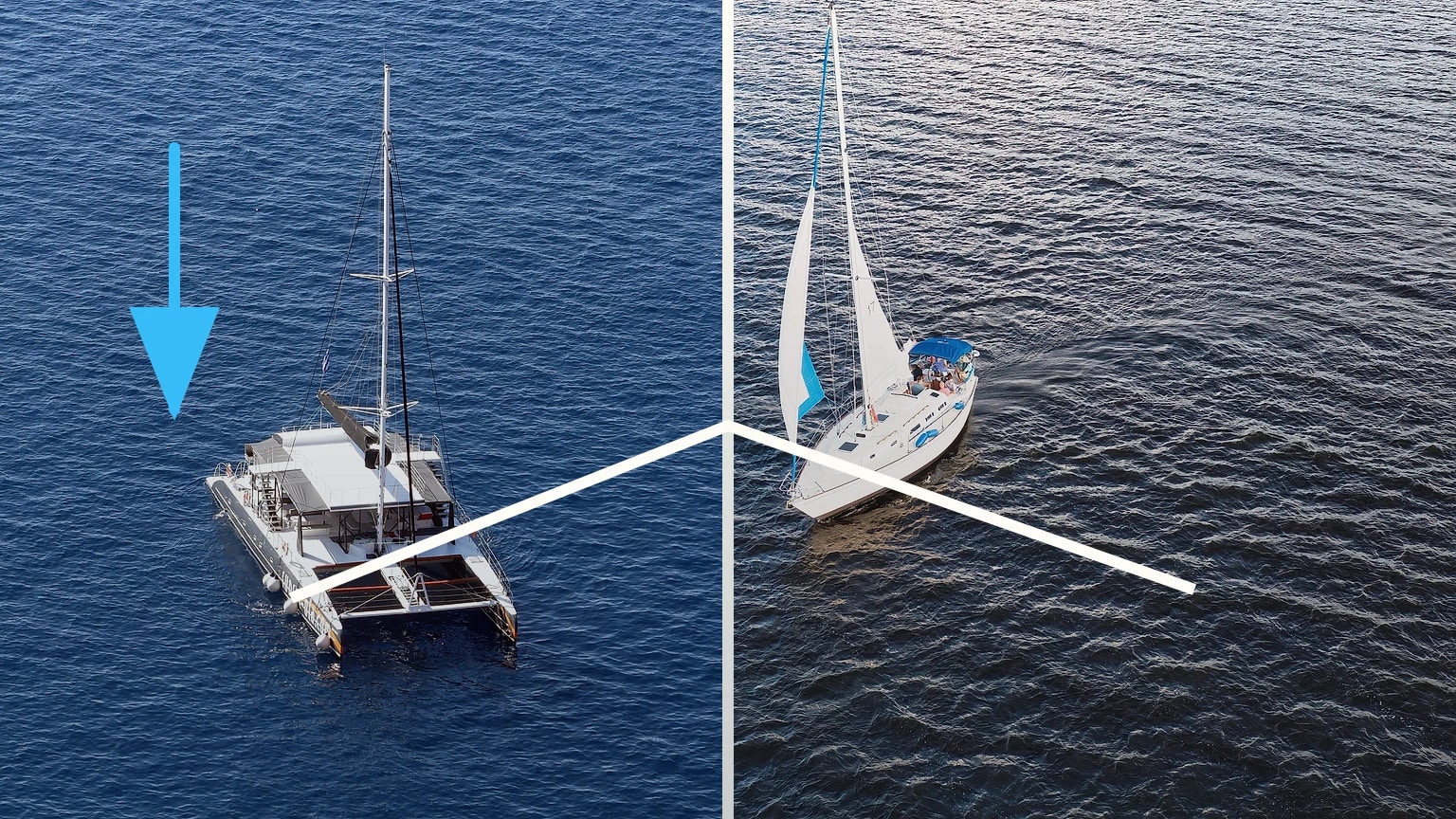
A conventional sailboat cannot simply run dead downwind through the air faster than the wind directly behind it, no matter how well it is trimmed. On that exact line, boat speed subtracts directly from the following wind rather than adding to any useful flow. As the boat's speed approaches the true wind speed, apparent wind from astern fades toward nothing, and the sail loses the very flow that was pushing it in the first place.
Fast boats solve a different problem instead of fighting that one directly. They sail at an angle across the true wind, deliberately keeping strong apparent wind over the sails rather than chasing the wind straight from behind. To reach a destination that lies downwind, they may sail one fast diagonal leg, turn, then sail another diagonal leg back toward the mark. The total distance covered is longer than a straight line, but the much higher speed on each leg can make the whole passage quicker overall, sometimes by a wide margin.
The same underlying idea appears upwind, where every useful sailing leg crosses the wind rather than pointing straight into it. Understanding your own points of sail makes this angle-first thinking concrete rather than abstract. Sailing speed, in both directions, comes from choosing an angle that preserves airflow and efficient force, then changing course when the actual route home requires it.
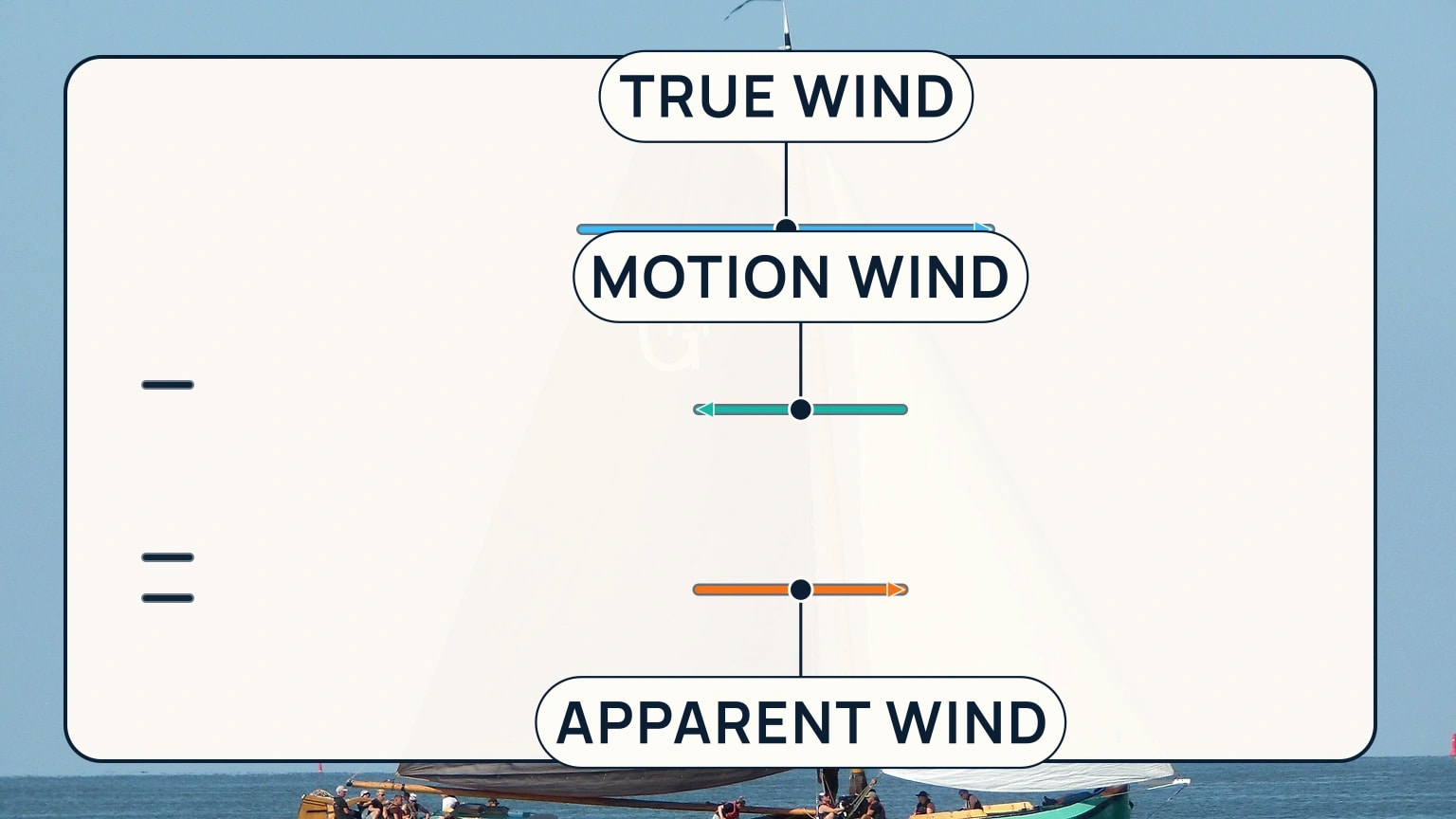
Apparent wind is the bridge between the ordinary breeze you measure ashore and the stronger, more forward flow a moving boat actually uses once it gets going. SailStarter's true-versus-apparent-wind lesson lets you build that vector step by step before connecting it to sail lift, points of sail, and trim. You do not need a foiling race boat to benefit from the idea, and you will feel its effects the first time you leave the dock. On any sailboat, a change in speed changes the wind the sails feel, which is also why your telltales can call for a trim change even when nothing about the actual weather has shifted. Learn to watch them and the masthead indicator together, trim to the apparent wind rather than the wind you expected, and expect their reading to shift the moment the boat accelerates or slows. The faster-than-wind example is dramatic, but the underlying habit belongs on every beginner boat, in every wind, on every point of sail.
Try it from the lesson
Can you spot the next move?
The boat is held stationary at anchor. Is the wind you feel true or apparent?
Why you can trust this guide
. We build each guide from public seamanship and safety sources, then teach the universal principle before any local difference.