Chart your course
Lifts and Headers Explained
Quick answer
The short version
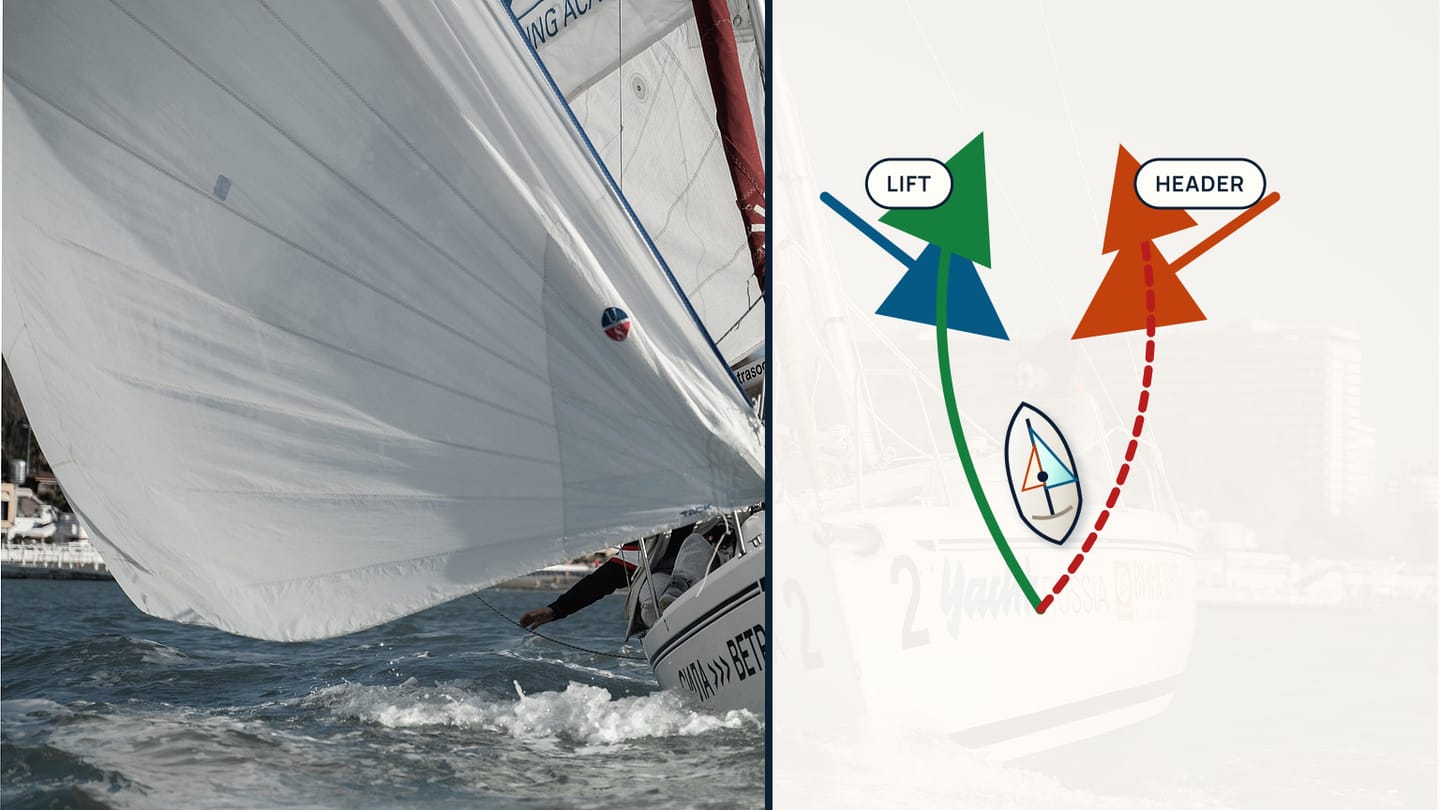
A lift lets an upwind sailboat point closer to its destination without tacking. A header does the opposite: the wind shifts toward the bow, so the boat must bear away to keep the same angle to the wind. The names depend on your tack and objective. A shift that lifts a starboard-tack boat can head a port-tack boat. Spot the change by comparing compass heading, sail trim, telltales, and other boats over time. Then choose whether to follow it by steering, preserve your course by trimming briefly, or tack when the new wind makes the opposite tack more useful.
Wind direction is named for where it comes from. Your sails respond to apparent wind, the flow created by true wind combined with the boat's movement. That means a compass change, acceleration, wave, or steering error can mimic part of a wind shift. Reliable decisions come from several clues, not from one twitching ribbon.
Use this guide with how apparent wind works, sail trim by point of sail, and the local patterns in land breeze vs sea breeze. Lifts and headers are descriptions, not promises about how long a shift will last. Keep navigating, watching traffic, and checking the current forecast while you use them.
Spot the change without chasing noise
Establish a baseline first. Sail close-hauled at a steady angle of heel and normal trim. Note the compass heading, which telltales stream cleanly, and where the boom sits. Look at another boat on the same tack if one is nearby. You now have a picture to compare with the next minute, rather than reacting to every second.
In a lift, the apparent wind moves aft relative to the boat. If you keep the same heading, the sails may feel slightly eased and the windward telltales may become less settled. You can head up while restoring the original close-hauled trim. The useful evidence is that the boat holds a new heading with the sails working normally, not that the masthead indicator flicked once.
In a header, the apparent wind moves toward the bow. A formerly clean close-hauled trim begins to luff unless you bear away or change tack. The compass heading you can maintain toward the wind becomes less favourable. Again, wait long enough to separate a genuine shift from a wave that knocked the bow aside.
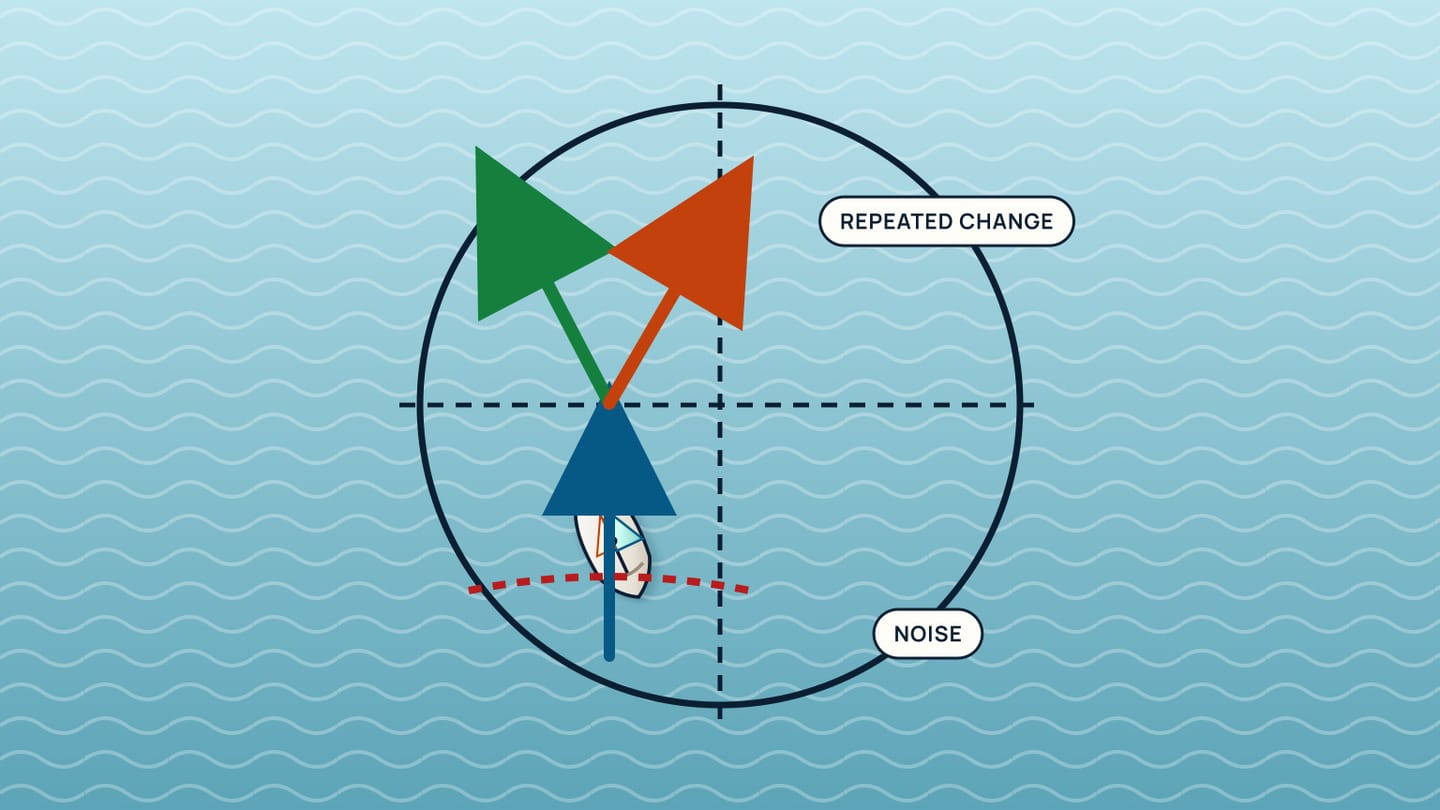
Watch a sequence, not a snapshot: heading, telltales, heel, nearby boats, then heading again. A shift seen across the water and confirmed on your instruments deserves more confidence than one isolated cue. If the evidence conflicts, keep the boat moving at a known trim while you observe. Speed gives the rudder and sails better feedback than pinching almost head to wind.
Separate true-wind shifts from apparent-wind changes
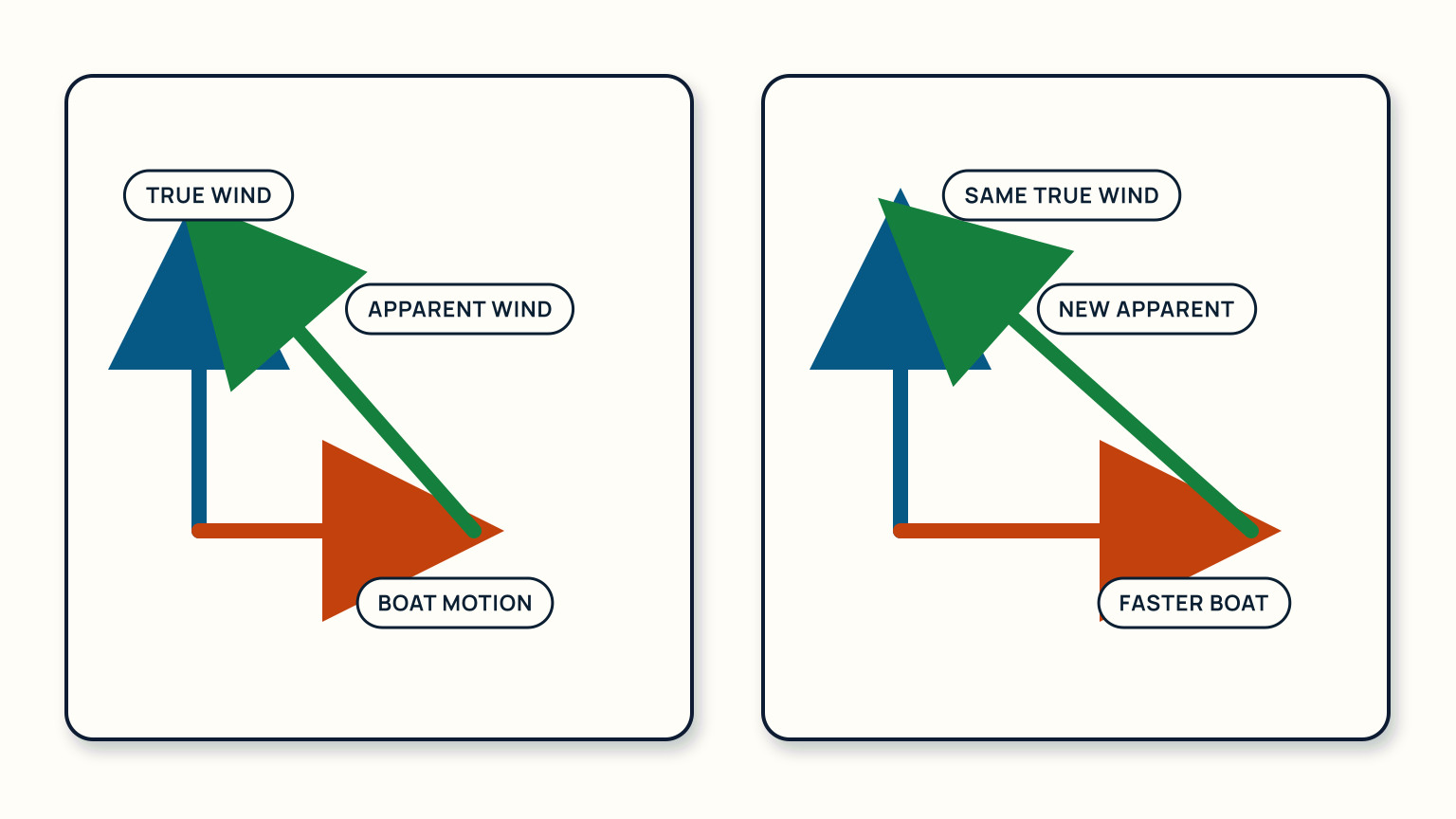
The apparent wind changes whenever boat speed changes. Accelerate in a gust and the apparent wind usually moves forward. Slow in a wave and it moves aft. Those changes can alter telltales even if the true wind direction remains steady. Steering can create the same effect because turning the bow changes the angle immediately.
Use independent clues. A true directional shift affects anchored flags, wind streaks, and other boats in the same area. A speed-driven apparent-wind change is strongest on your boat and often follows acceleration or deceleration. A steering error appears on the compass before it appears as a stable new wind direction. None of these clues is perfect alone; their order matters.
Consider a boat that hits flat water and accelerates. The apparent wind moves forward, the inside telltales flutter, and the helmsman bears away, believing the boat was headed. That extra turn may actually take the boat below its useful course. The better response is to let speed settle, make the small trim adjustment the sails ask for, and check whether nearby evidence shows a directional shift.
Current adds another layer by changing the boat's track over the ground without directly changing the airflow over the sails. Your compass heading may look good while the charted track slides sideways. Lifts and headers help with wind strategy, but navigation still uses position, course, current, and hazards. Do not call a favourable wind shift a favourable route until you compare both.
Use a lift without oversteering
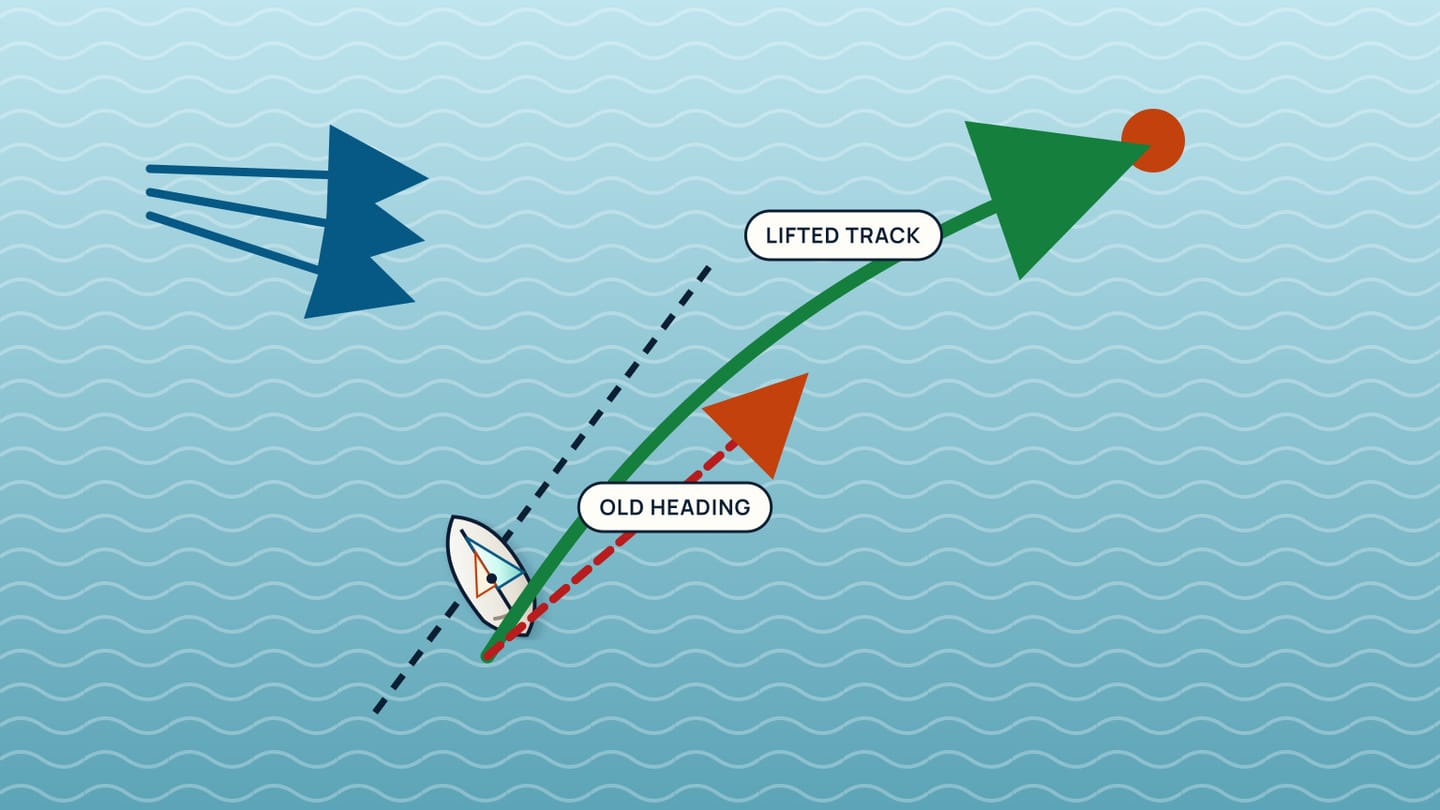
When the lift settles, head up gradually until the sails return to their normal close-hauled flow. The new heading is the benefit. If you keep turning after the telltales show the boat is at its efficient angle, you trade the lift for pinching and lost speed.
Trim in the right order for your boat. Often the helmsman follows the wind first and the trimmer makes a small sheet correction. Large simultaneous steering and trim changes hide which response worked. Keep the boat balanced, make one measured change, and wait for speed to rebuild before judging it.
A lift is useful only in context. It may point you closer to a waypoint, but it can also carry you toward shoal water, traffic, or the layline too early. Mark the destination bearing on the compass or chart and compare the new track. Tactical language should never displace navigation.
Imagine sailing toward a headland on starboard tack. A lift allows ten degrees of extra heading toward the waypoint, yet that track also closes the shore. Taking all ten degrees would remove the room needed for the next gust. Taking part of the lift while preserving an escape lane may be the stronger seamanship choice. “Lifted” describes the wind relation; it does not command the helm.
Keep watching for duration. Some lifts are momentary gust effects. Others mark a broader oscillation or a persistent change. You do not need to name the meteorology before acting, but you do need to notice whether the heading survives after the first pressure passes.
Handle a header as a choice, not an alarm
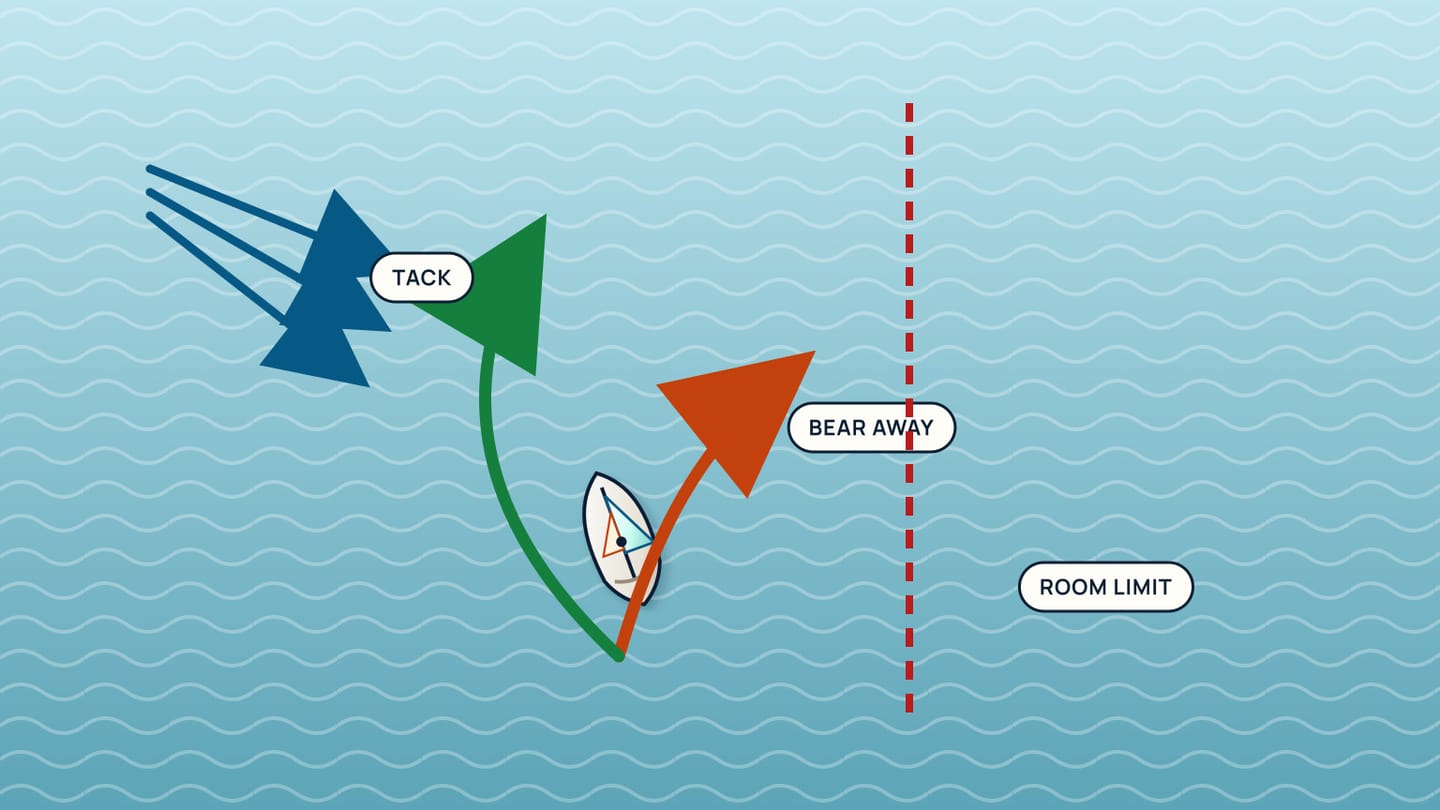
A header offers three broad responses: bear away and continue, tack, or wait briefly while maintaining flow. The correct one depends on destination, sea room, traffic, and whether the shift persists. An automatic tack at the first flutter lets noise steer the boat.
Bear away when the current tack still serves the route and a stable trim can be restored. This preserves speed and buys time to understand the new wind. Tack when the opposite tack clearly becomes more useful and the manoeuvre is safe. Wait when the shift is small, the evidence is mixed, or an immediate tack would create a traffic problem.
Before tacking, look through the turn. Check boats on both tacks, the water to leeward after the manoeuvre, crew readiness, and whether the new heading clears hazards. A tactically attractive tack can be poor seamanship if it forces someone else to react or leaves the crew scrambling with loaded sheets.
Suppose the compass shows a persistent header and a boat on the opposite tack is being lifted toward the mark. That shared evidence strengthens the case for tacking. If only your heading changed after a large wave, keep sailing and verify. The distinction is built from observation, not confidence.
After the tack, do not declare success from the first heading. Settle the sails, accelerate, and compare the new close-hauled course with the route. If the shift reverses, you can reassess from a stable boat rather than stacking one hurried manoeuvre onto another.
Keep boat balance ahead of wind strategy
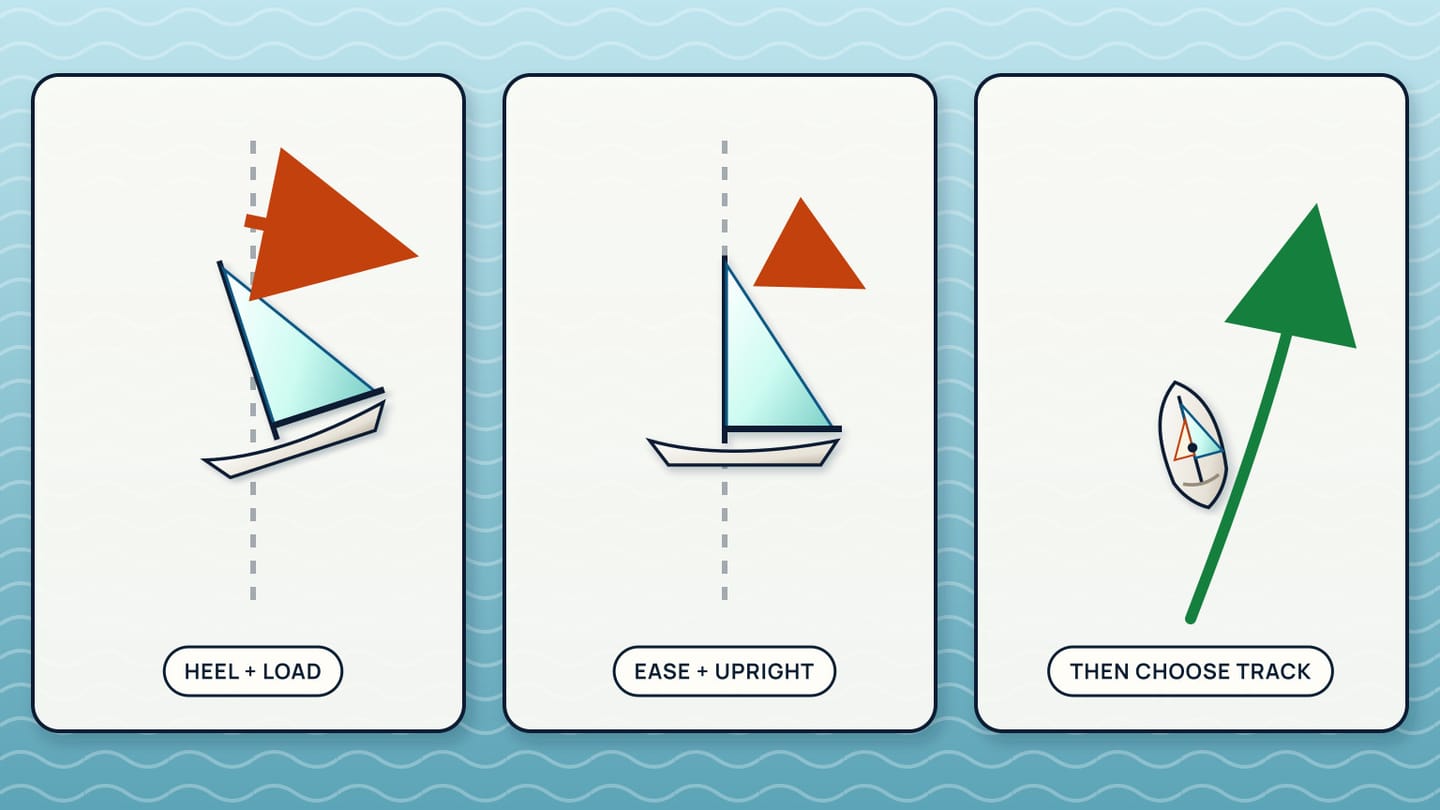
Shifts often arrive with pressure changes. A lift in a gust can heel the boat and load the helm. If the crew chases the heading while ignoring balance, extra rudder drag and poor sail flow erase the gain. Ease, steer, and move weight according to the boat's normal heavy-air practice before fine-tuning the course.
Assign roles during practice. The helmsman calls the compass change. A trimmer reports telltales and pressure. Another crew member watches traffic and the route. Separating those observations prevents everyone from staring at the same ribbon while the outside situation changes.
Use a simple log after several cycles: tack, close-hauled heading, pressure, and what happened next. The aim is not to predict every oscillation. It is to learn the stable heading range for that day and recognise when a new value falls outside it. A few clear entries are more useful than constant numbers shouted without context.
If the shifts become abrupt, the sky darkens, or gusts challenge control, stop treating the session as a tactics exercise. Reduce sail or return to shelter according to the skipper's plan and current official forecast. The crew's safe workload sets the limit.
The best sign of progress is quieter steering. You notice the lift or header, confirm it with two or three clues, and make one proportionate response. The boat stays fast enough to tell you whether the response worked.
SailStarter's wind lessons let you rehearse true wind, apparent wind, and points of sail before adding live compass work. Practise lifts and headers with an experienced skipper in open water, then use the same observation discipline without letting tactics outrank navigation or crew control.
Try it from the lesson
Can you spot the next move?
The boat is held stationary at anchor. Is the wind you feel true or apparent?
Why you can trust this guide
. We build each guide from public seamanship and safety sources, then teach the universal principle before any local difference.