Chart your course
True Wind vs Apparent Wind: Why the Wind on Your Face Isn't the Weather Report
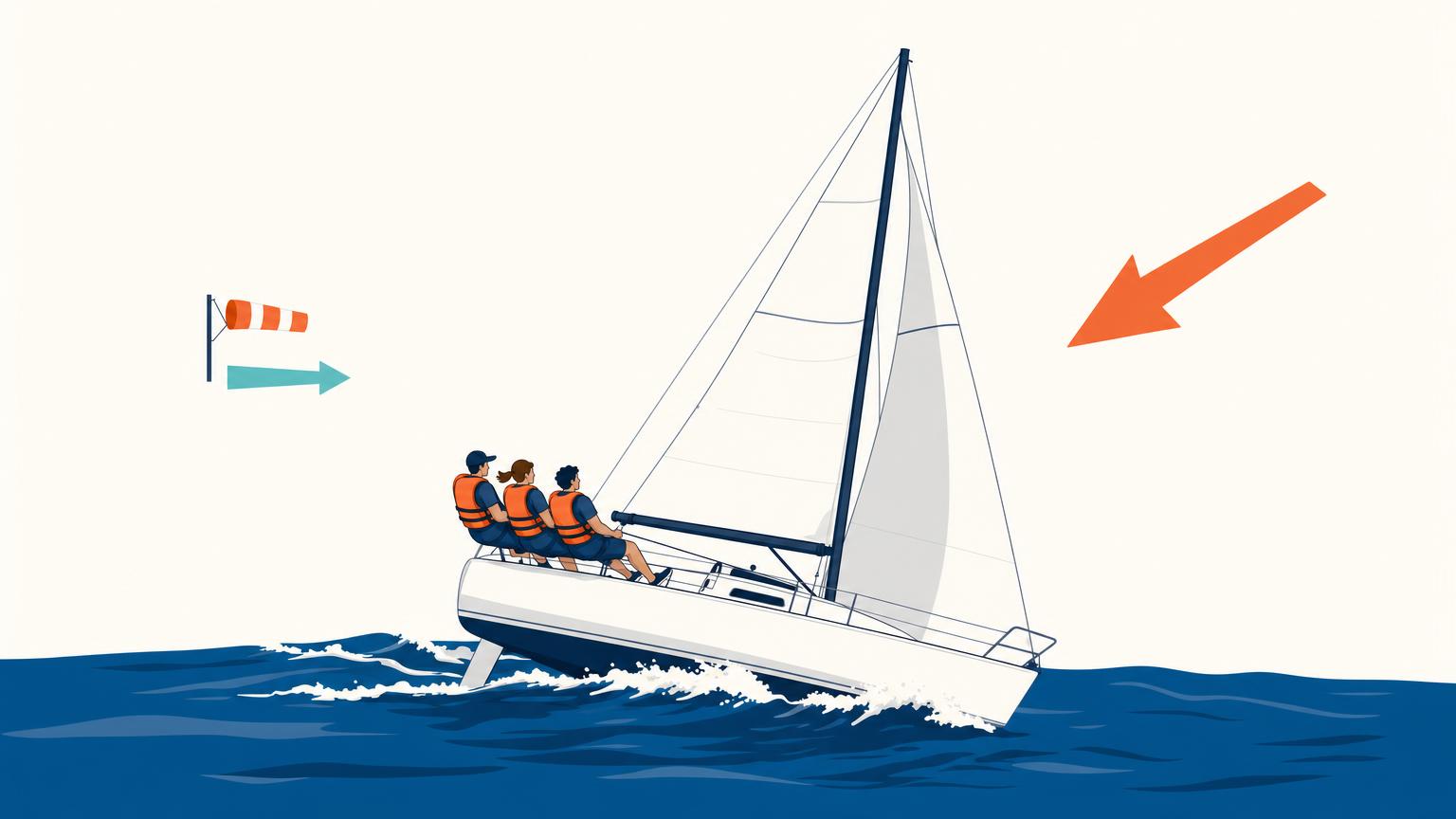
Quick answer
The short version
True wind is the wind relative to a fixed place, like the breeze you would feel if the boat stopped moving. Apparent wind is the airflow that reaches you and the sails while the boat is moving. It combines true wind with the headwind created by the boat's motion. Across or toward the true wind, boat speed usually makes apparent wind feel stronger and draws it toward the bow. Dead downwind, the boat moves with the true wind, so the apparent wind becomes lighter. Sail trim follows apparent wind because that is the air actually flowing over the sails.
Think of cycling on a still day. Pedalling creates a breeze on your face even though the true wind is calm. A moving sailboat creates the same headwind, then combines it with whatever the weather is already doing. That is why the forecast can be correct while the wind aboard feels different. The diagrams below build the idea in four steps: identify the two winds, see how speed pulls the combined flow forward, examine the dead-downwind exception, and connect the result to sail trim. Keep the bicycle example in mind whenever the arrows begin to feel abstract.
What Is the Difference Between True and Apparent Wind?
True wind is the wind relative to a fixed place. If your boat is not moving, the apparent wind equals the true wind. Once the boat moves, you experience apparent wind: the true wind combined with airflow created by the boat’s motion.
A bicycle gives you the clearest picture. Imagine pedalling on a still day. There is no true wind, yet you feel a breeze on your face. Your movement through the air creates a headwind. Pedal faster, and that breeze grows stronger.
A sailboat does the same thing. As it moves, it makes its own headwind. If true wind is already blowing, the two airflows blend. The result can arrive from a different direction and at a different speed from the true wind.
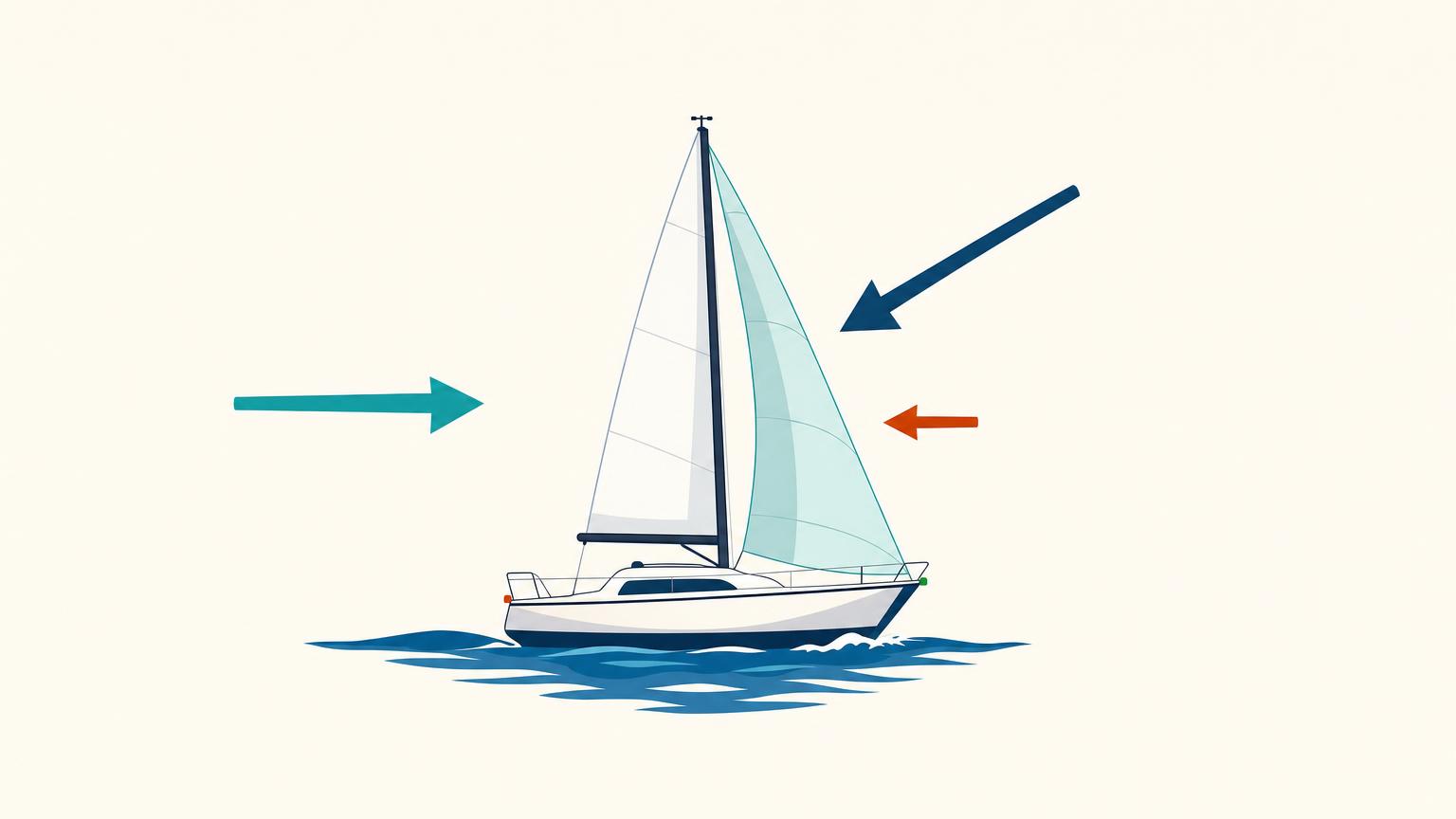
Keep the bicycle in mind: what you feel while moving combines the weather’s wind with the headwind your own movement creates. In the first figure, follow the numbered construction: blue true wind first, teal motion wind from its arrowhead second, and the orange apparent-wind result third. Each arrowhead shows the direction the air travels. The white course arrow points toward the bow, so the teal motion-airflow arrow correctly points the opposite way, toward the stern; that airflow is felt as wind coming from the bow.
How Do Course and Speed Change Apparent Wind?
As with the bike, moving through the air makes a headwind. When your boat speeds up, the wind the boat makes for itself gets stronger. That extra airflow combines with the true wind to change the apparent wind: the wind that reaches you and the sails.
When you sail across the true wind, the boat-made headwind changes both the strength and direction of that combined flow. The apparent wind becomes stronger and arrives from farther toward the front of the boat. If you are sailing partly upwind, your motion opposes more of the true airflow, so the strengthening can be greater.
A faster boat adds more motion wind, so the difference between true wind and apparent wind is easier to notice. On a slow, heavy boat, the effect may be less obvious. But "faster" does not always mean "stronger": on a broad downwind course, the boat moves partly with the true airflow, so apparent wind can be weaker than true wind even while its direction draws toward the bow.
Exactly dead downwind is the simplest downwind case. There, the boat moves in the same direction as the true airflow. Its motion works against that airflow, so the apparent wind eases instead of strengthening and continues to come from astern. In the speed comparison, the blue true-airflow vector stays fixed while the higher-speed panel lengthens the teal motion-airflow vector. The orange airflow result grows and its arrowhead swings farther aft; read the wind’s source from the opposite end, which has moved farther toward the bow.
Why Does Apparent Wind Feel Lighter Downwind?
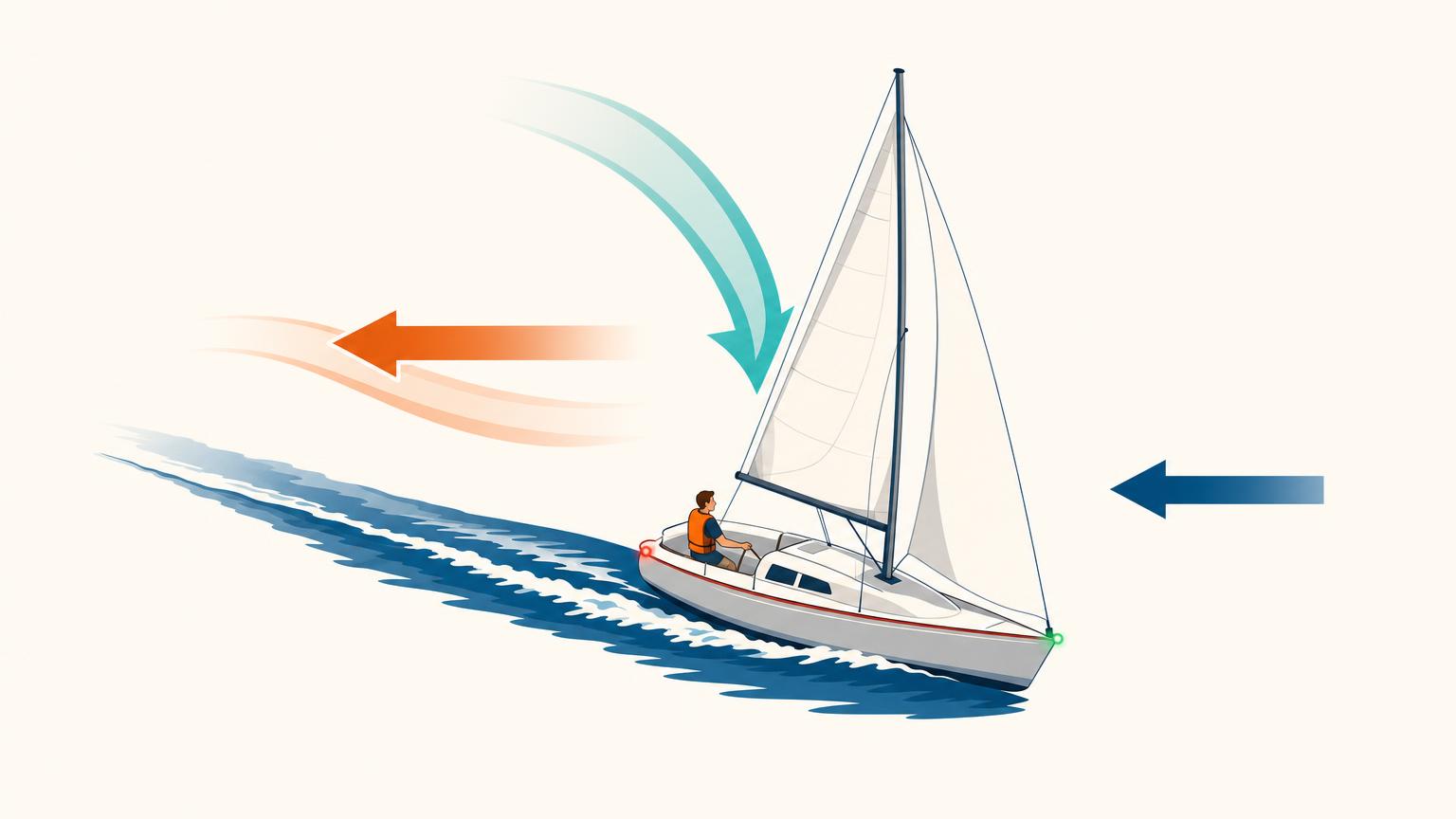
Dead downwind means the boat is moving in exactly the same direction as the true wind. Here, the bike example works in reverse. Imagine cycling with a breeze directly behind you. Your movement creates airflow against that following breeze, so the wind on your face becomes weaker.
The same thing happens aboard the boat. The true wind pushes from behind, while the airflow made by the boat’s motion points the opposite way. One subtracts from the other. The result is a weaker apparent wind. That’s the wind the moving boat actually feels.
When the boat and true wind are exactly aligned, only the strength changes. The airflow still comes from behind.
As boat speed gets closer to true wind speed, the apparent wind drops toward zero. That is why a quick boat sailing dead downwind can feel surprisingly calm even though the true wind has not disappeared. Read the diagram as a subtraction: the long blue true-airflow arrow points with the boat's course, the teal motion-airflow arrow subtracts in the opposite direction, and the shorter orange arrow is the apparent airflow left over.
Which Wind Should You Use for Sail Trim?
Separate navigation from immediate trim
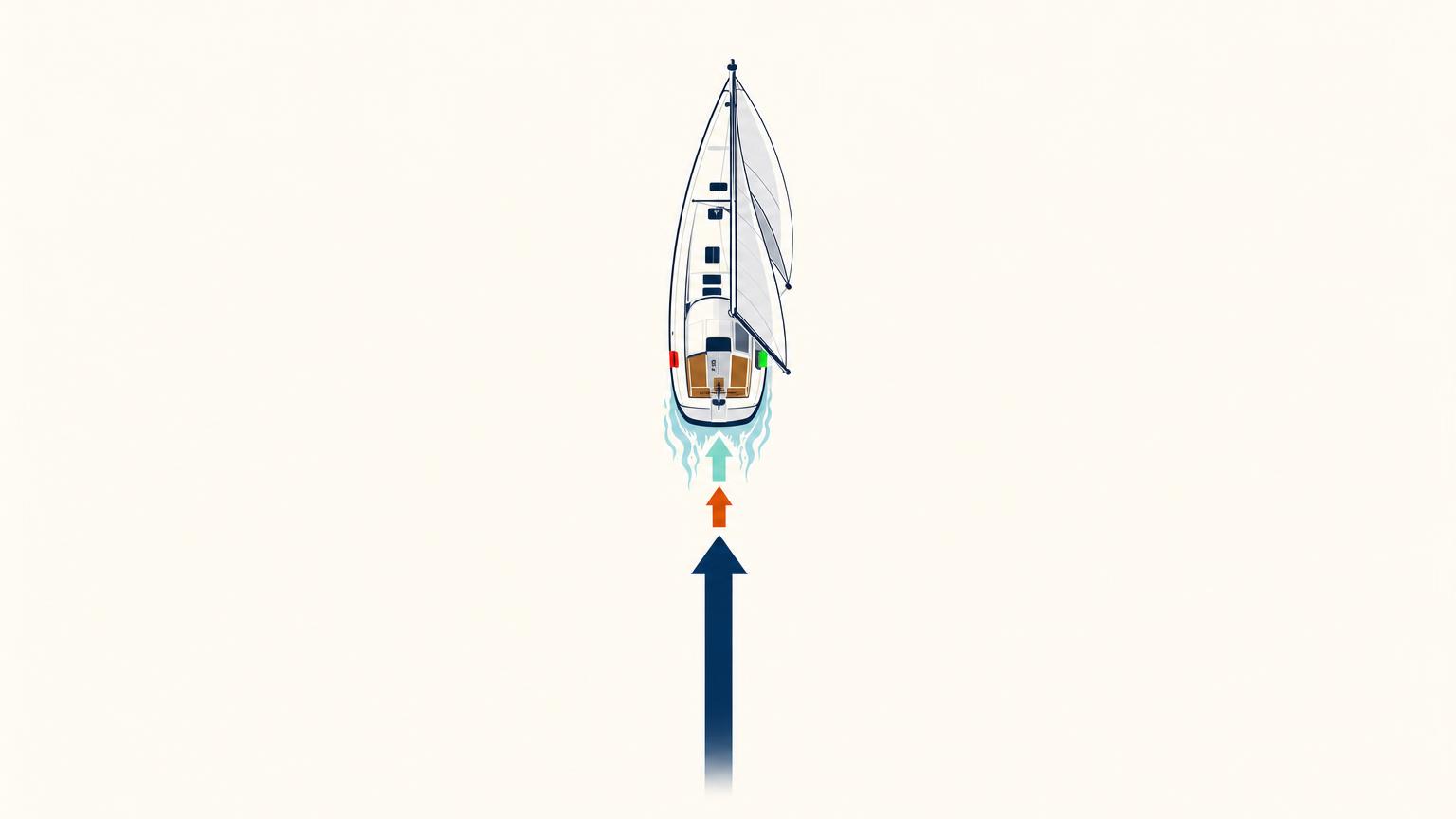
Use apparent wind for the sails because it is the airflow the moving boat actually feels. Telltales, luffing, sheet load, and masthead instruments respond to that combined wind. Use true wind for weather, route planning, sea-state expectations, and comparing conditions independent of the boat's current speed and course.
When the boat accelerates, apparent wind usually shifts forward. The helm may need to steer and the trimmer may need to adjust even though true wind has not changed. When the boat slows in waves, apparent wind can move aft and sails may need easing or a fuller course to rebuild speed.
Work through one course change
Imagine a steady true wind and a boat reaching away from harbor. Boat motion combines with true wind to create the apparent wind shown by the sails. Turn upwind and the boat's motion adds more directly to the true wind, so apparent wind becomes stronger and farther forward. Turn downwind and boat motion subtracts more, so it feels lighter and farther aft.
This is why a calm-feeling downwind leg can produce a hard upwind return without a change in the true weather. The Beaufort guide uses whitecaps to keep checking true conditions outside the boat's motion.
Diagnose confusing readings
If an instrument's true and apparent wind look wrong, check boat-speed source, heading source, calibration, sensor alignment, current, and whether the display is showing wind over the ground or through the water. Compare with masthead fly, flags, telltales, waves, and the boat's behavior.
Current changes track over ground without directly changing airflow through the water in the same way boat motion does. A system using ground speed may therefore calculate a different “true” wind from one using water speed. Know the instrument's definition before using the number for trim or planning.
The no-go-zone guide connects apparent wind to the closest useful sailing angle. Keep the roles simple: apparent wind trims the sails now; true wind describes the moving air mass you plan around.
A sail responds to the air that actually flows over it. On a moving boat, that flow is the apparent wind: the true wind blended with the headwind made by the boat’s motion. The forecast’s true wind may stay the same while the sail experiences something different.
That is why you trim for apparent wind, not true wind. Trim means adjusting the sail’s angle to the airflow. As the boat accelerates, its self-made headwind grows. Across and upwind of the true wind, apparent wind becomes stronger and comes from farther forward; on downwind courses it can become weaker. In either case, you adjust the sails to match its new angle. If the boat slows, the blend changes again.
Changing direction also changes how the boat’s motion combines with the true wind. Even if the weather does not change, the airflow over the sails can change in both strength and direction. Sail trim is therefore not a one-time setting. You keep adapting it as the boat speeds up, slows down, or turns. Read the figure from left to right: first use the telltale and orange arrow to read the airflow at the sail, then adjust the black working sheet around the winch to match it.
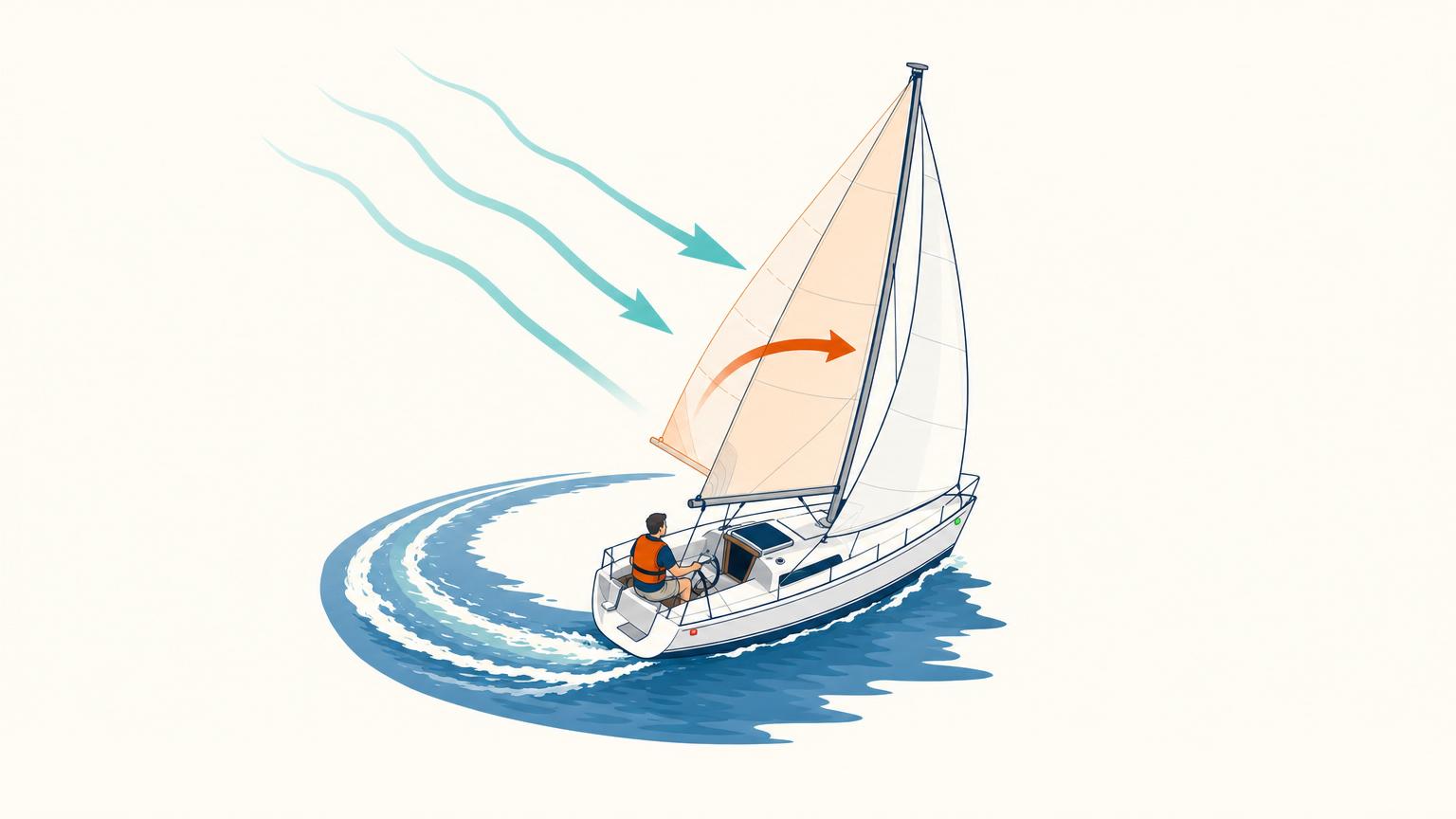
The durable idea is simple: the wind you feel on a moving boat is the true wind blended with the headwind your own motion creates. This combined flow is called apparent wind: the wind that actually reaches you and the sails. Think of riding a bike on a still day: pedalling creates a breeze on your face even though the true wind is calm. As a boat speeds up, its motion changes the apparent wind’s strength and draws its direction forward whenever true wind crosses the boat. It strengthens on upwind and crosswind courses but can ease on downwind courses. Since sails respond to that changing apparent wind, their trim must change too. Try SailStarter’s short beginner lessons to keep building this kind of sailing intuition before you are on the water.
Try it from the lesson
Can you spot the next move?
The boat is held stationary at anchor. Is the wind you feel true or apparent?
Why you can trust this guide
. We build each guide from public seamanship and safety sources, then teach the universal principle before any local difference.
- forecast.weather.gov
- forecast.weather.gov
- ussailing.org
- iopscience.iop.org
- newt.phys.unsw.edu.au
- en.wikipedia.org
- merriam-webster.com
- physics.icalculator.com
- image-ppubs.uspto.gov
- sailtrain.org.uk
- spinnakersailing.com
- uksailmakers.com
- sailing-blog.nauticed.org
- sailing-blog.nauticed.org
- sailmagazine.com
- yachtingmonthly.com
- cal-sailing.org
- wiyachts.com
- surfertoday.com
- surfertoday.com
- faa.gov
- aopa.org
- marinenavigation.noaa.gov
- weather.gov
- weather.gov
- en.wikipedia.org
- katamarans.com