Chart your course
Can You Learn to Sail Online?
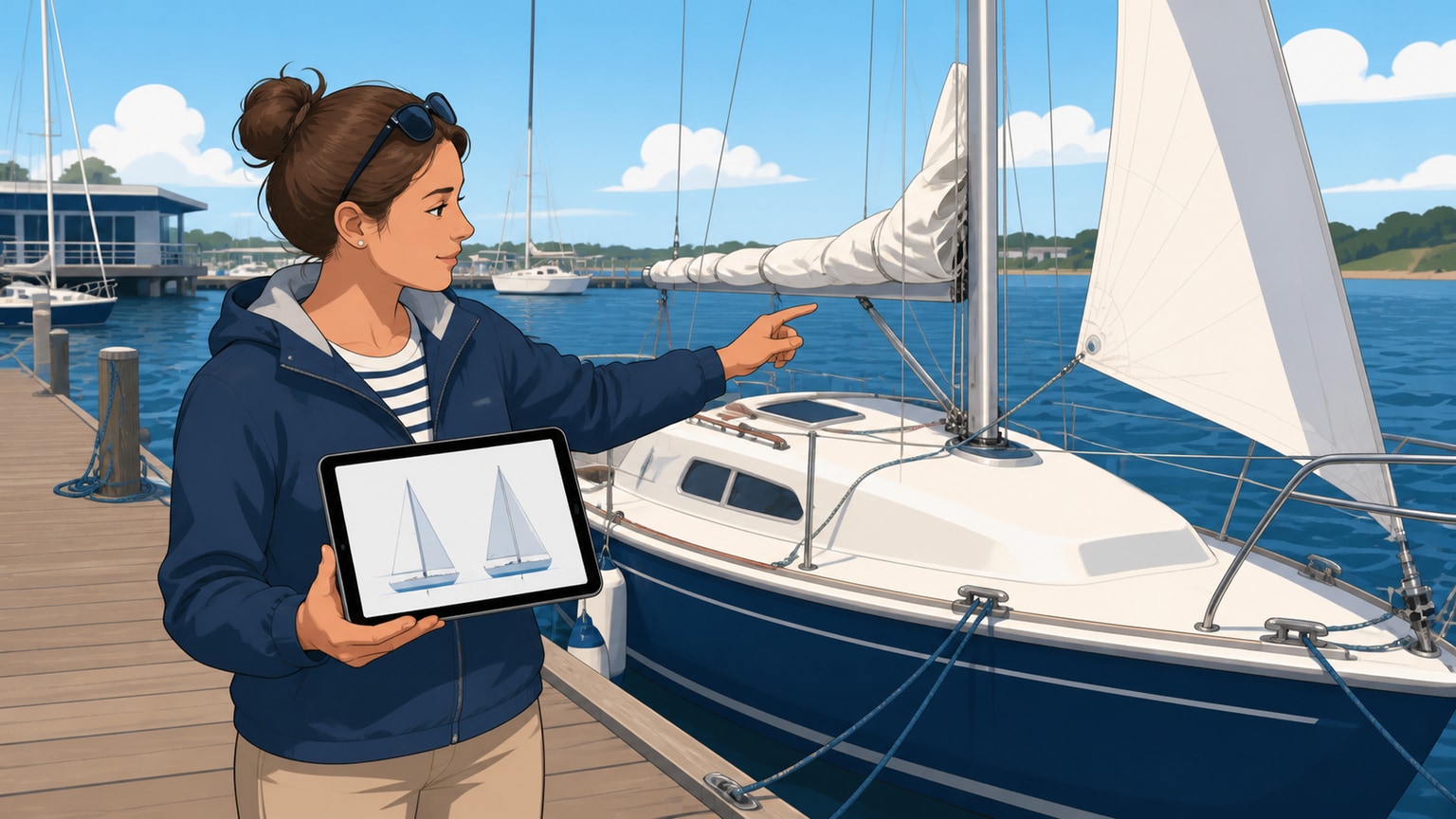
Quick answer
The short version
Yes, you can learn a valuable part of sailing online. Lessons can prepare you to recognise boat parts, understand wind direction, follow common commands, think through safety situations, and arrive with useful questions. They cannot give you the physical feel of steering, balancing, trimming a sail, or responding to a changing boat. Those skills grow through supervised practice afloat. The strongest route combines both: study one idea online, find or try it on a real boat, then review what happened. Online learning makes your practical time easier to follow. Practical time turns that knowledge into a skill you can actually use.
The phrase “learn to sail online” can sound like a choice between a screen and a boat. Sailing organisations treat them as two parts of the same process. World Sailing requires beginner programmes to cover background theory and practical work, while its instructor guidance says the real learning starts when students handle the equipment afloat.
That distinction is encouraging. You do not need to arrive at your first lesson already able to sail. You can use online study to make the boat less unfamiliar, then let an instructor, skipper, or club session introduce movement, timing, and feel in suitable conditions.
Learn the Knowledge Before the Boat Moves
Online sailing lessons work well for ideas you can inspect, pause, and revisit. You can learn the names of the bow and stern, see how a tiller moves a rudder, and compare close-hauled sailing with a beam reach. You can also rehearse vocabulary, safety awareness, weather concepts, and simple “what would you do?” situations.
This preparation reduces the amount of new language arriving at once on the boat. When someone says “ease the sheet,” you already know that the sheet controls a sail and that easing means letting it out. The practical session can then focus on watching the sail change rather than decoding every word.
Diagrams are especially useful here because you can rotate a boat mentally, compare two wind angles, and repeat a sequence without the real boat continuing to move while you think.
That division follows a practical learning pattern: preview the idea, try or observe the related task afloat, then review what happened. The online part is useful because it supports the next experience, not because it pretends the experience is unnecessary.
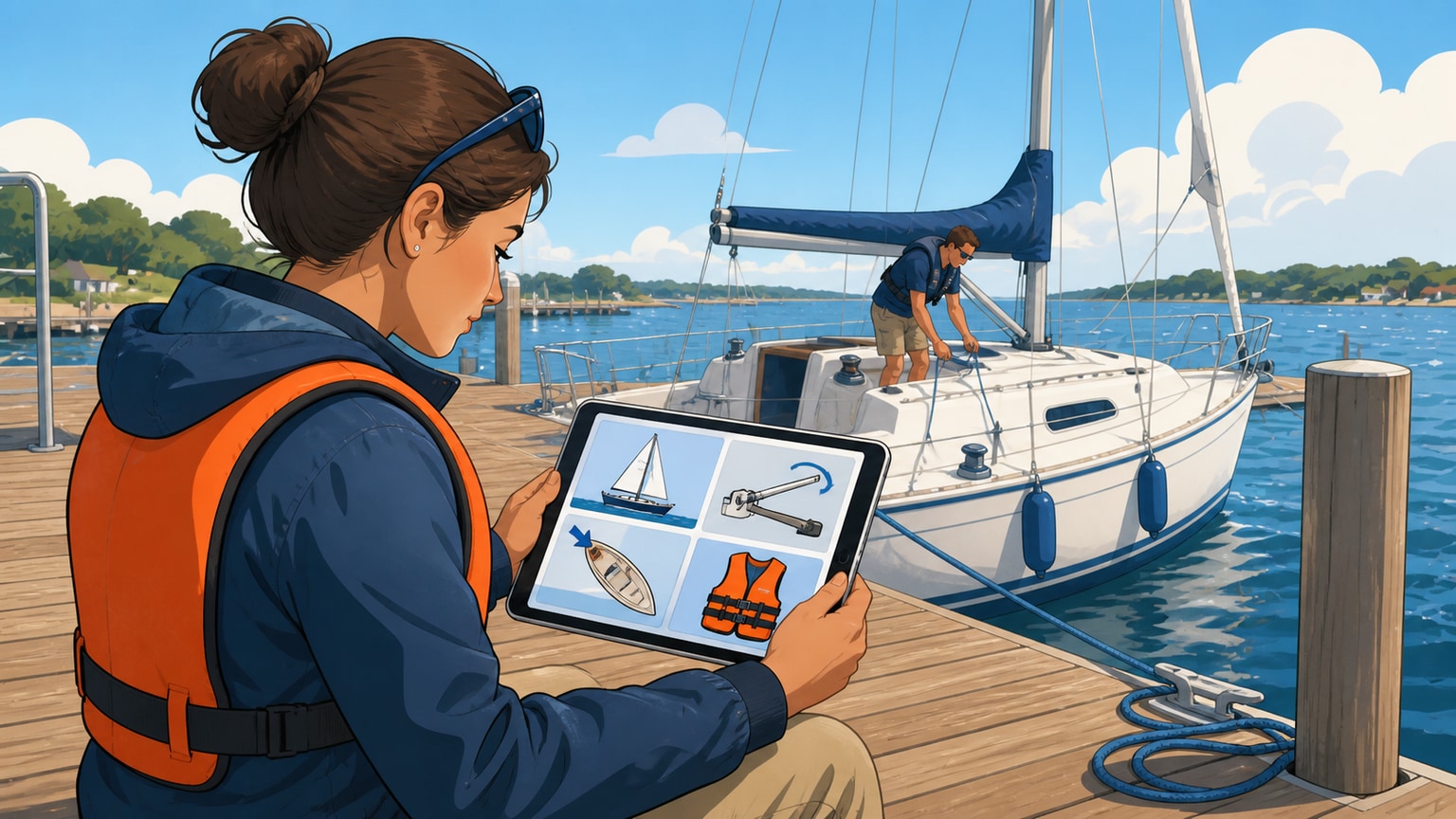
Save Feel and Timing for the Water
A screen cannot reproduce pressure building in a sheet, the delay between moving a tiller and seeing the bow turn, or the way balance changes when the crew moves. It cannot supply changing wind, waves, traffic, noise, or the small corrections that keep a boat moving smoothly.
World Sailing describes instruction as a cycle of briefing, doing a task, and debriefing it. Students handle the equipment, and the instructor keeps the experience safe and understandable. This is where theory becomes physical skill. You try a turn, notice what the sail and rudder did, then discuss the result.
Practical learning also reveals differences between boats. A control may be in a different place, a tiller may feel lighter, or one design may respond more quickly. Learn each boat from the person responsible for it rather than assuming an online diagram is an operating manual.
That person can also pause a task, change the exercise, or choose more suitable water when the conditions and your first response do not match the original plan.

Use a Learn, Sail, Review Loop
Connect online study to the water in small pieces. Before a session, choose one topic such as wind direction, points of sail, or the difference between a halyard and a sheet. Aim to recognise that idea afloat rather than trying to remember an entire course at once.
On the boat, tell the instructor or skipper what you have studied. Ask them to point out the real control or let you observe the related manoeuvre. If invited to try it, follow their briefing and notice what changes. Afterward, return to the diagram or lesson and compare it with what you felt.
This follows the same brief-task-debrief pattern used in practical instruction. The review is more meaningful because the words now connect to a sound, movement, or decision. Your next online topic can build on something real instead of remaining an isolated fact.
Keep a short note of the one cue you recognised and the one question that remained. Those two details give the next study session a clear purpose.
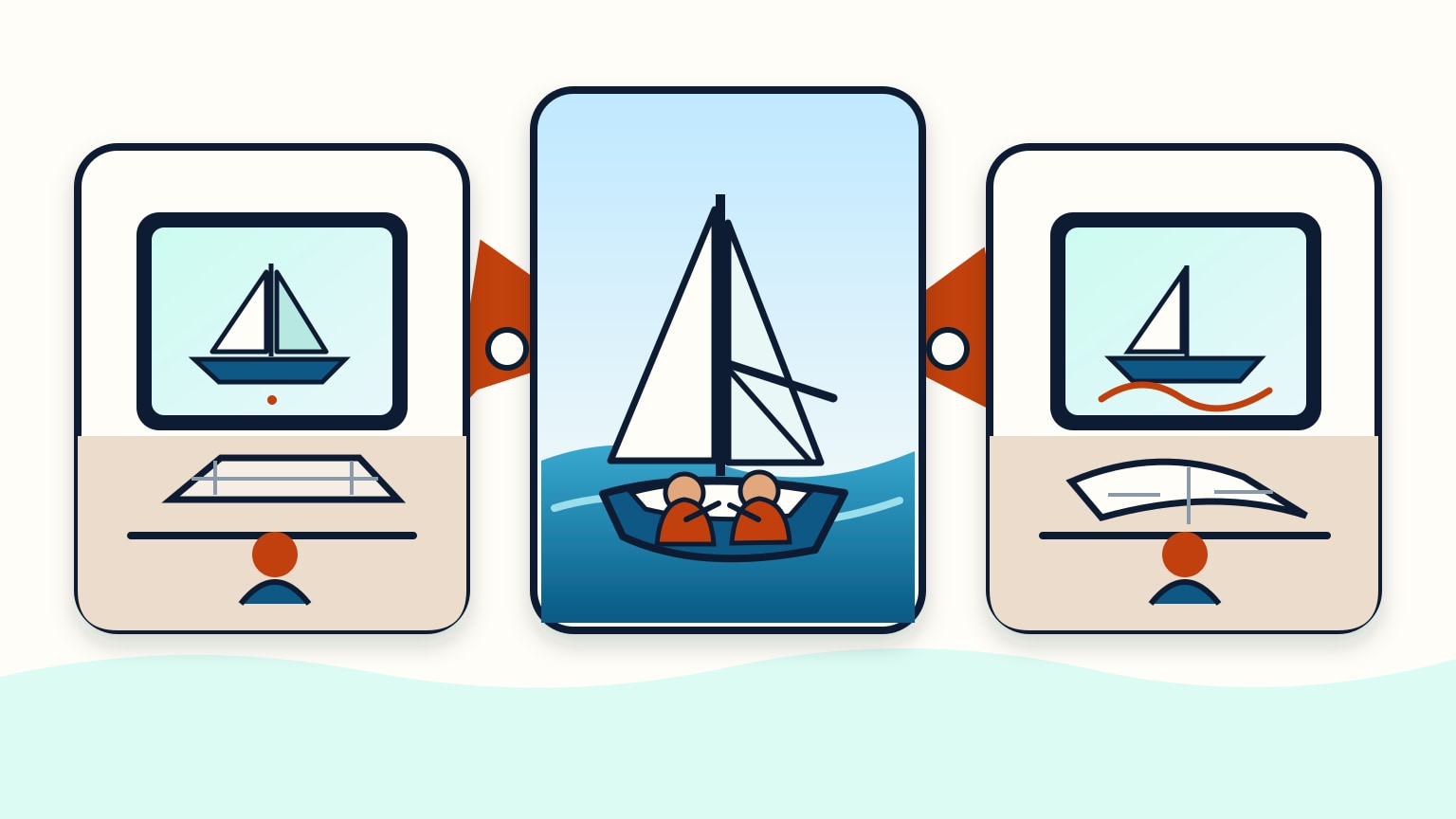
Know What Online Completion Means
Finishing an online course means you completed that body of study. It does not by itself show that you can handle a boat, make safe decisions in unfamiliar conditions, or meet a local qualification requirement. Course names and formal requirements vary, so check what a club, school, charter company, or local authority expects.
Use your online progress as preparation rather than proof of competence. A good next practical step might be a beginner course, a supervised club session, or an invitation to crew with an experienced skipper. Tell them honestly that you have studied the basics and are new to applying them.
That approach gives online learning a clear job. It helps you arrive ready to listen, recognise more of the boat, and make better use of the time when your hands are finally on the controls.
It also keeps the claim honest: preparation is progress, while practical competence still has to be demonstrated on the water. How long that practical competence takes to build depends more on practice frequency than on course length.
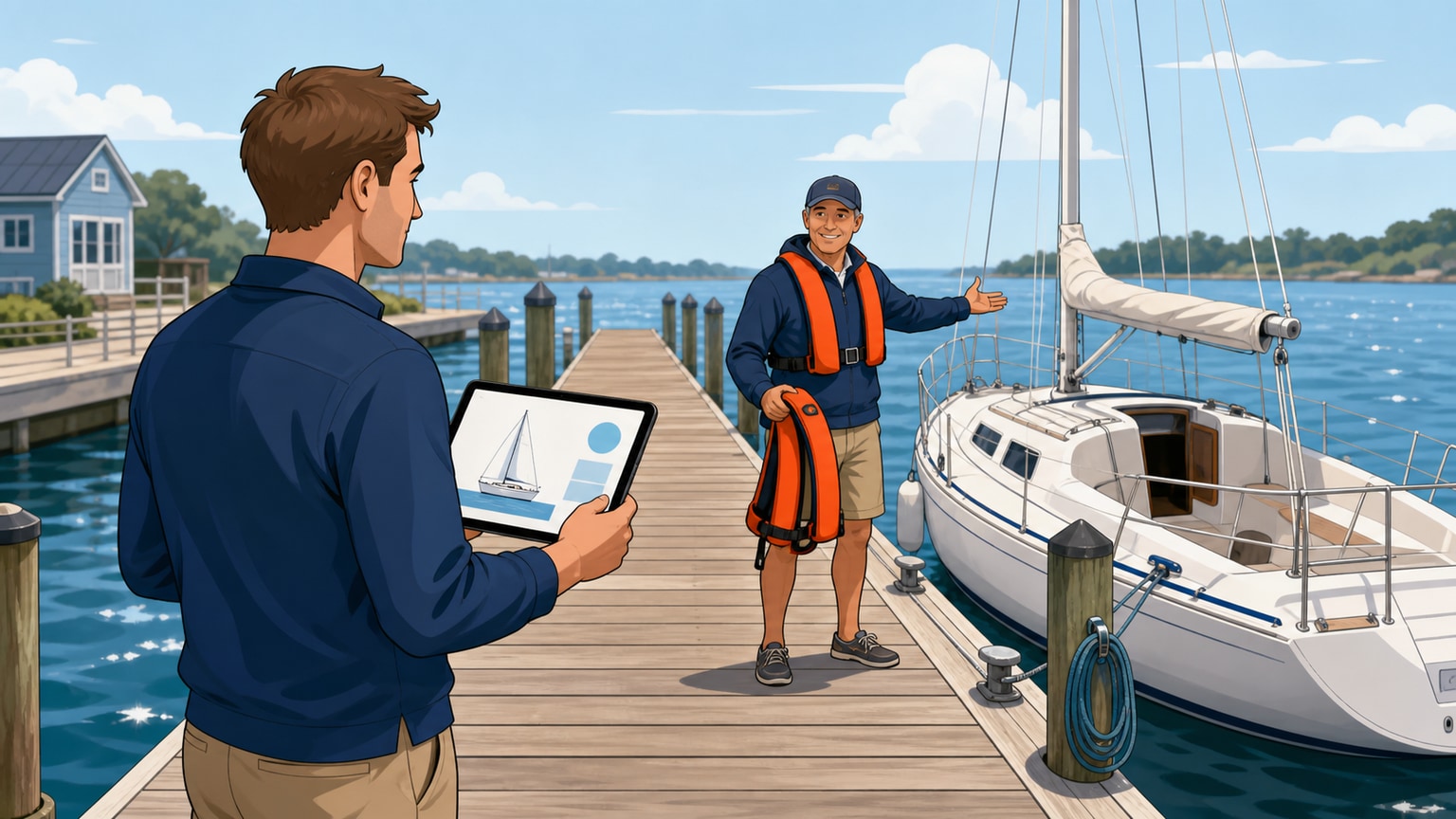
Give each study session a boat job
Choose one practical question before opening a lesson. You might want to identify the controls used in a tack, understand why a sail flaps, or follow a skipper's docking brief. Learn the names and broad sequence online, then write two things to look for on the real boat. This keeps study connected to a visible action instead of turning it into a list of definitions.
On the water, follow the skipper's instructions and compare the real setup with the lesson. Boats route lines and controls differently, so ask which part performs the same job. Notice what the helm, sheet load, and boat motion feel like. Those physical cues are the part a screen cannot supply.
Afterward, explain the action in your own words and note what surprised you. Return to the lesson only after making that first recall. The step-by-step tacking guide and sail-trim mistakes guide are useful examples because each gives you a small number of details to observe during a supervised sail.
Test understanding with decisions
Recognition questions are a start. Go further by asking what you would do next and why. Given a flapping sail, would you first change course or sheet position? Given a forecast that no longer fits the crew, what part of the plan changes? Check the answer against the lesson and source material. If you cannot explain the reason in plain words, review the concept before adding another one.
Keep local rules separate from universal sailing principles. Online material can teach shared language, boat parts, wind awareness, and broad procedures. Licensing, required equipment, and formal qualifications vary. Verify those current requirements with the relevant local authority, school, club, or charter provider.
Choose practical instruction for the gap
When you book water time, tell the instructor what you have studied and what you have never done. Ask for practice on the missing skill, not a declaration that online completion made you competent. A short supervised session can reveal timing, balance, workload, and communication gaps that were invisible at home.
Use the result to choose the next lesson. If the terminology was the problem, review it. If the sequence was clear but the timing was late, arrange more repetitions afloat. If the local boat differs from the diagrams, map its controls to the same functions. Online learning works best as one side of this loop: prepare, sail with suitable supervision, review, and return with a better question.
SailStarter’s short visual lessons are built for the knowledge side of this partnership. Start with the beginner overview, learn the main parts and language, and take one idea with you the next time you sail. When you step aboard, follow the skipper’s briefing and ask to connect that idea to the real boat. Then come back and review it while the experience is still fresh. Choose one concept at a time, keep the question that the session raised, and use it to guide the next lesson. You will understand more online because you have felt it afloat, and you will follow more afloat because the words are already familiar. That loop builds durable understanding.
Try it from the lesson
Can you spot the next move?
You turn to face the stern. A crewmate points at your right hand. Which side of the boat is that?
Why you can trust this guide
. We build each guide from public seamanship and safety sources, then teach the universal principle before any local difference.