Chart your course
Can You Learn to Sail If You Can't Swim?
Quick answer
The short version
You may be able to learn sailing even if you cannot swim confidently, but the sailing provider needs to know before you book. They can decide whether the boat, water, supervision, weather limits, and flotation equipment are suitable. Wear a correctly fitted device selected for a non-swimmer; a simple buoyancy aid may require you to reposition or swim to keep your face clear, and an inflatable model may rely on activation.
Choose a supervised first session in sheltered water and ask what happens if someone falls in. Learning to swim remains worthwhile because it adds an independent safety skill. Sailing with flotation does not remove the value of being comfortable in the water.
People often keep quiet about weak swimming because they expect sailing schools to reject them. Silence makes planning harder. A clear conversation gives the provider useful information and gives you a chance to judge their answer.
Ask specific questions instead of accepting “you'll be fine.” What flotation will you wear? Is it inherently buoyant foam or inflatable? Will you be on a stable keelboat, a dinghy that may capsize during training, or another craft? How close is support? Does the instructor know you may freeze or struggle if immersed? A careful provider should be able to explain the setup without embarrassment or bravado.
Tell the provider before you arrive
State plainly that you cannot swim, or describe the distance and conditions you can manage. “I can move in a pool but panic in deep water” is more useful than a vague yes. Also mention any mobility, breathing, or sensory issue that affects boarding or flotation fit.
The provider may recommend a different boat, a private or smaller session, calmer weather, or a pool-based introduction. They may also decide that a particular course is unsuitable. That is a safety decision about the session, not a judgment about whether you belong in sailing.
Ask who has final authority to cancel and how recovery support works. You are looking for a calm plan with named responsibilities, not a promise that nobody ever goes overboard.
Confirm the boarding arrangement too. A high step, moving pontoon, or transfer from a tender can be the most difficult part of the day for someone who is uneasy near deep water. The provider can plan assistance before the group is waiting.
Choose flotation for the actual wearer
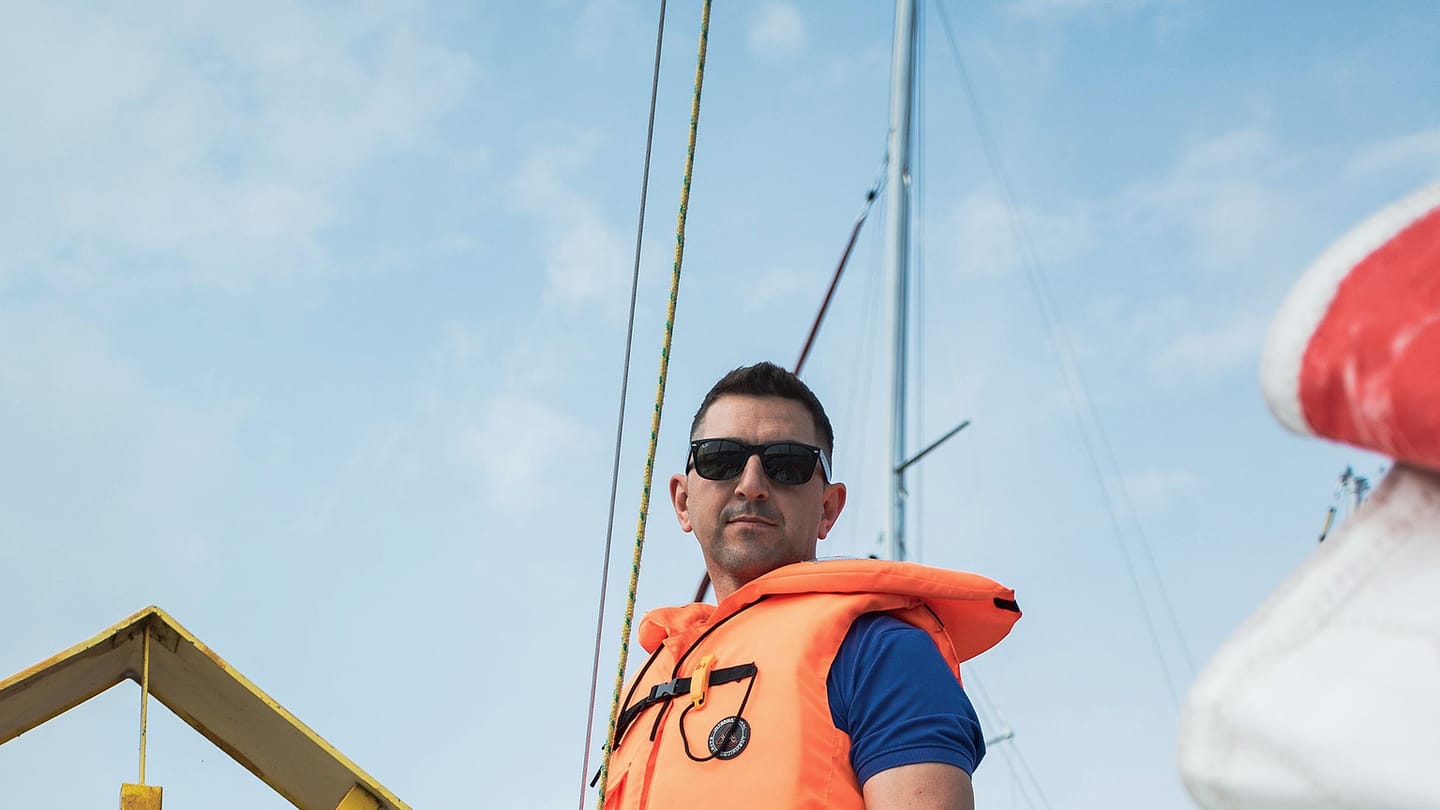
“Lifejacket” and “buoyancy aid” are used differently around the world, so focus on capability and fit. Some devices provide stronger face-up support. Others expect a conscious wearer to swim or adjust body position. An inflatable device adds questions about activation, maintenance, and whether it is already inflated when needed.
For a non-swimmer, an inherently buoyant foam device is often the clearer starting point because its flotation is present as soon as it is worn. The provider should select the appropriate model and size, fasten every strap, and check that it cannot ride over your head.
Try the device before boarding. Move your arms, sit down, and practise the hold or position the instructor wants you to use in the water. Verify current local equipment rules as well as the provider's policy.
Do not borrow a device merely because its label shows the right body weight. Body shape, clothing, and fastening change fit. The provider should check the complete worn setup, including any spray top or harness.
Pick a forgiving first sailing session
Sheltered water, moderate weather, direct supervision, and a boat suited to beginners reduce the number of new demands. A stable keelboat session may feel different from a dinghy course where capsize recovery is part of the syllabus. Neither choice is automatically right; the provider must match it to you.
Keep the first goal small. Learn where to sit, what to hold, how the boat heels, and how the crew communicates. You do not need to prove comfort by moving around the deck or volunteering for every task.
If anxiety rises, say so early. Good instruction leaves room to pause or return ashore. Your attention is part of your safety margin, and forcing yourself through panic does not teach useful boat handling.
Invite a trusted friend when the course permits it, but keep the instructor responsible for the session. A familiar face can make communication easier; it should not become a substitute for trained supervision or suitable flotation.
Build water confidence alongside sailing
Check the flotation on your own body
Do not stop at the size printed on the label. Put the device on over the clothing you will wear, close every zip and buckle, and tighten it according to its instructions. Ask the provider to check the fit. A device that rides high, slips over the head, restricts breathing, or cannot be secured is not ready for the session.
Ask what type it is and what it is designed to do in the water. A buoyancy aid may expect the wearer to swim or position themselves to keep the face clear. Some lifejackets provide more turning and face-up support. For a non-swimmer, an inherently buoyant foam device avoids depending on inflation before it begins supporting the wearer. The final choice still has to match the activity, boat, conditions, and person.
If safe supervised water testing is available, practise the device before sailing. Enter in a controlled setting, feel how it supports you, learn how to keep your airway clear, and follow the instructor's directions for moving and being assisted. Do not perform an unsupervised test to prove confidence.
Make the first session easier to manage
Tell the provider plainly that you cannot swim when booking, then remind the instructor on arrival. Ask whether the session uses a stable boat, how many people will be aboard, what rescue support is available, and what conditions would cause a postponement. A professional provider can then decide whether the boat, weather, supervision, and flotation are suitable.
Choose a short session in sheltered water and mild conditions. Stay where the instructor asks, keep one hand available when moving, and speak up before anxiety becomes panic. You can participate fully without pretending to be comfortable with every task. The first-time sailing guide explains the usual flow of a first outing, and the crew safety briefing guide shows what should be covered before departure.
Swimming lessons remain useful because they add an independent water-safety skill. They do not need to delay a carefully supervised introduction to sailing, but flotation and supervision are not substitutes for learning water confidence over time. Treat both tracks as practical preparation: sail in a setting chosen for your present ability, and improve swimming with qualified instruction at a pace you can manage.
Before confirming the booking, ask one final question: “Knowing that I cannot swim, is this session suitable as planned?” Give the provider room to change the boat, add supervision, select different flotation, shorten the session, or choose another day. A clear answer is more useful than arriving and hoping the instructor notices your concern at the dock.
Sailing instruction and swimming instruction solve different problems. Sailing teaches boat handling, crew communication, and recovery procedures. Swimming lessons teach breath control, orientation, movement, and confidence in water without depending entirely on the boat.
You can build the skills in parallel. A pool session while wearing suitable flotation can help you learn how the device supports you and how to keep your airway clear. Only do this with qualified supervision and with equipment permitted by the facility.
Revisit your plan as your ability changes. Greater swimming confidence may broaden the sessions you can enjoy, but experienced sailors still use flotation and avoid treating swimming as their primary recovery plan. The aim is layers of support rather than one perfect safeguard.
Practise telling someone that you need help. Clear words such as “I cannot swim to the boat” or “my face is not staying clear” give the crew something concrete to act on. Quiet endurance is not a safety technique.
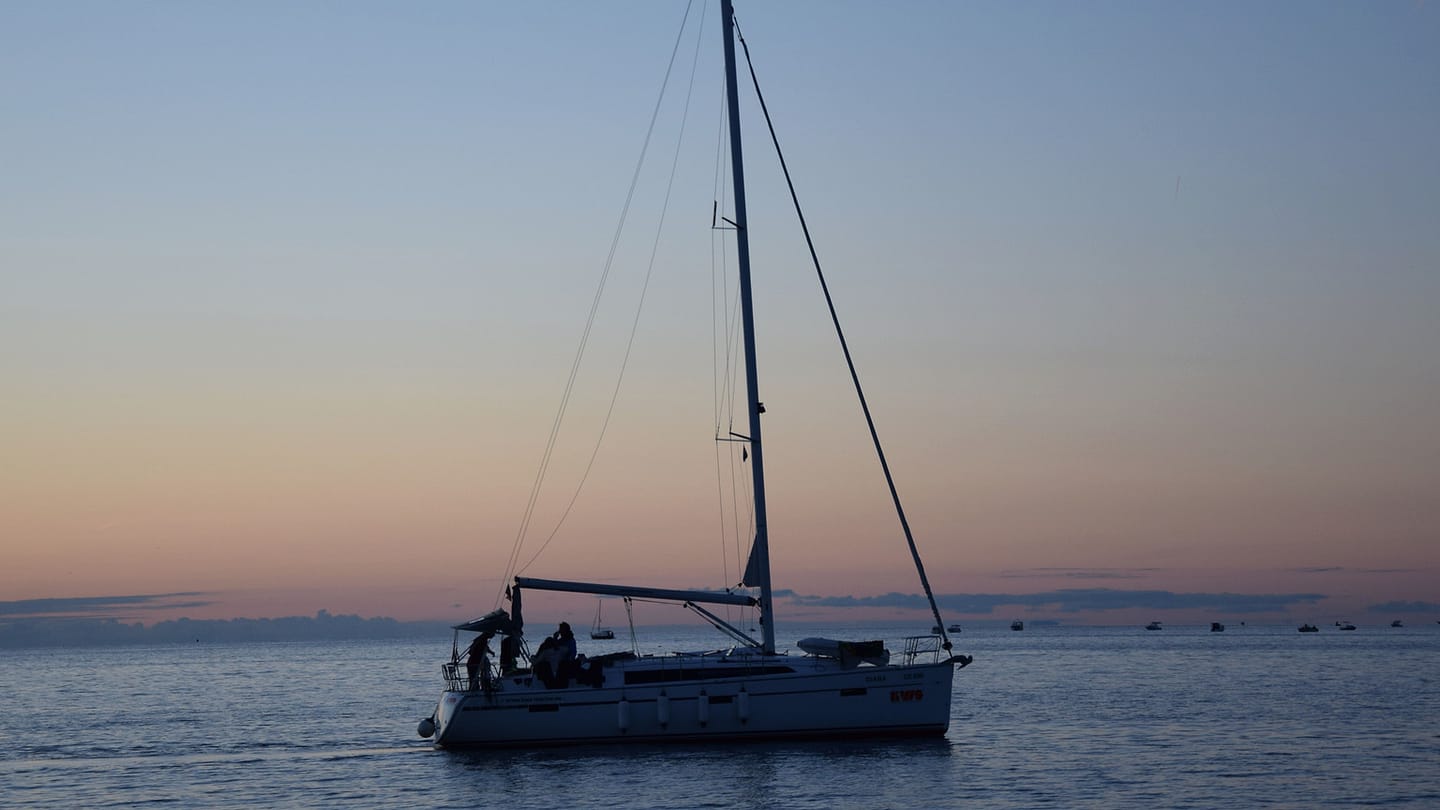
SailStarter's lifejacket lesson is a useful next step before you book. It explains fit, flotation types, and why the right device depends on the wearer and the activity. Use it to write down questions for the school, then let the provider assess the real session. You do not need to hide a weak swimming background or wait until you feel fearless. You need honest information, equipment that supports you as intended, a suitable learning environment, and permission to stop when the conditions or plan no longer feel sound.
Try it from the lesson
Can you spot the next move?
You're heading out for a quick sail on a dinghy that can capsize. Should you put your PFD on now, or once trouble starts?
Why you can trust this guide
. We build each guide from public seamanship and safety sources, then teach the universal principle before any local difference.