Chart your course
The Sailboat Safety Equipment Checklist Every Beginner Should Know
Quick answer
The short version
Start a sailboat safety equipment check with a correctly fitted lifejacket for each person. Then cover four jobs: a suitable marine fire extinguisher for a small onboard fire, a horn or whistle so other boats can hear you, visual distress signals that help rescuers find you, and buoyant equipment you can throw to someone in the water. Keep the gear working, in date where applicable, and easy to reach. Exact equipment, ratings, counts, and exemptions depend on the jurisdiction, boat, and operating area, so verify the current local requirements before departure.
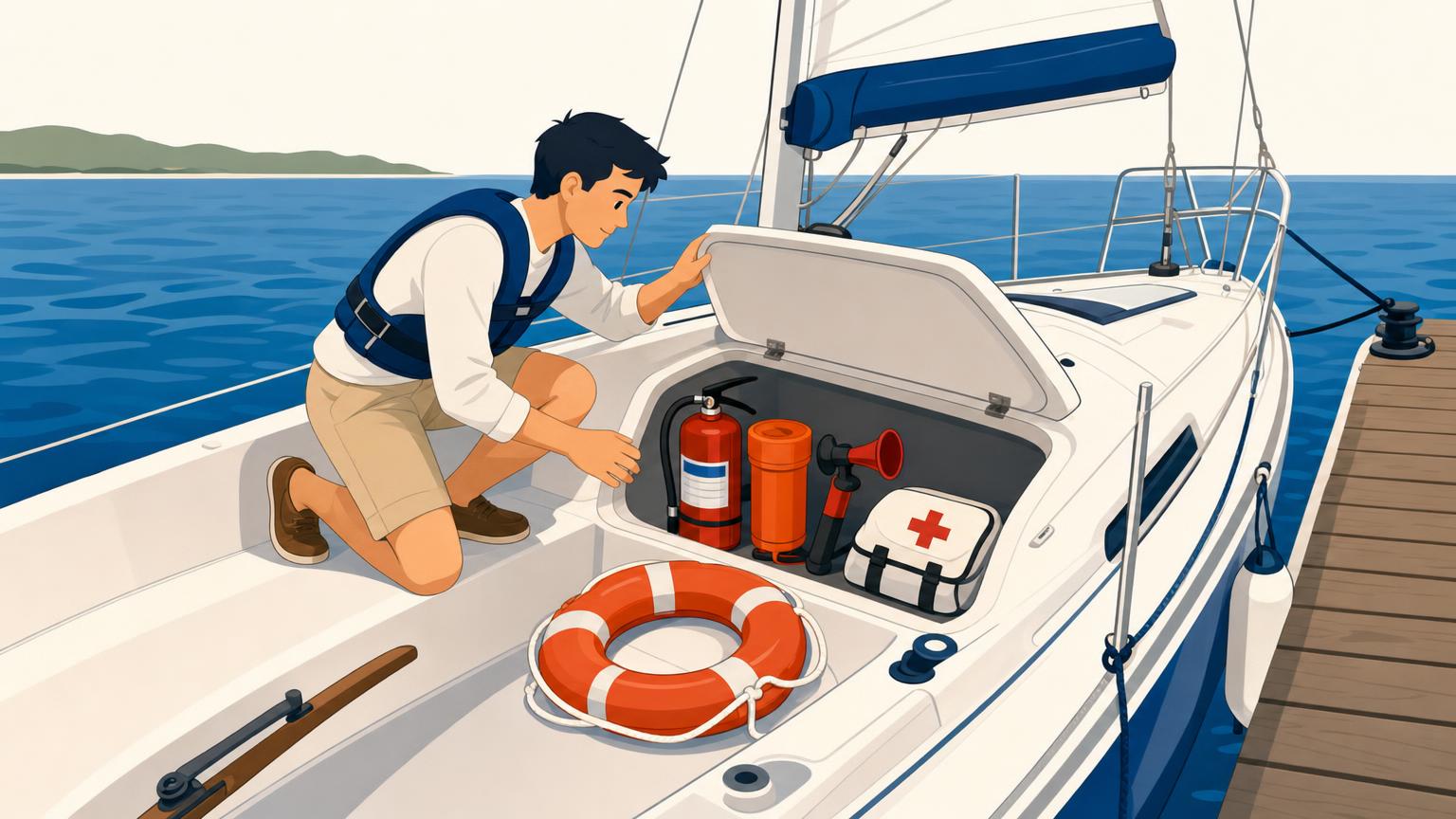
Before anyone thinks about wind or sail trim, open the cockpit locker and identify what is aboard. Knowing that an item exists is only the first check. You also need to know where it is, whether you can reach it quickly, and what job it performs. This guide organizes the equipment by purpose instead of presenting one country's legal list as universal. Use it to understand the gear, then compare the boat's actual inventory with the current rules for the waters where you will sail. Ask the skipper to show you each item before the boat leaves the dock.
Which Fire Extinguisher Does the Boat Need?
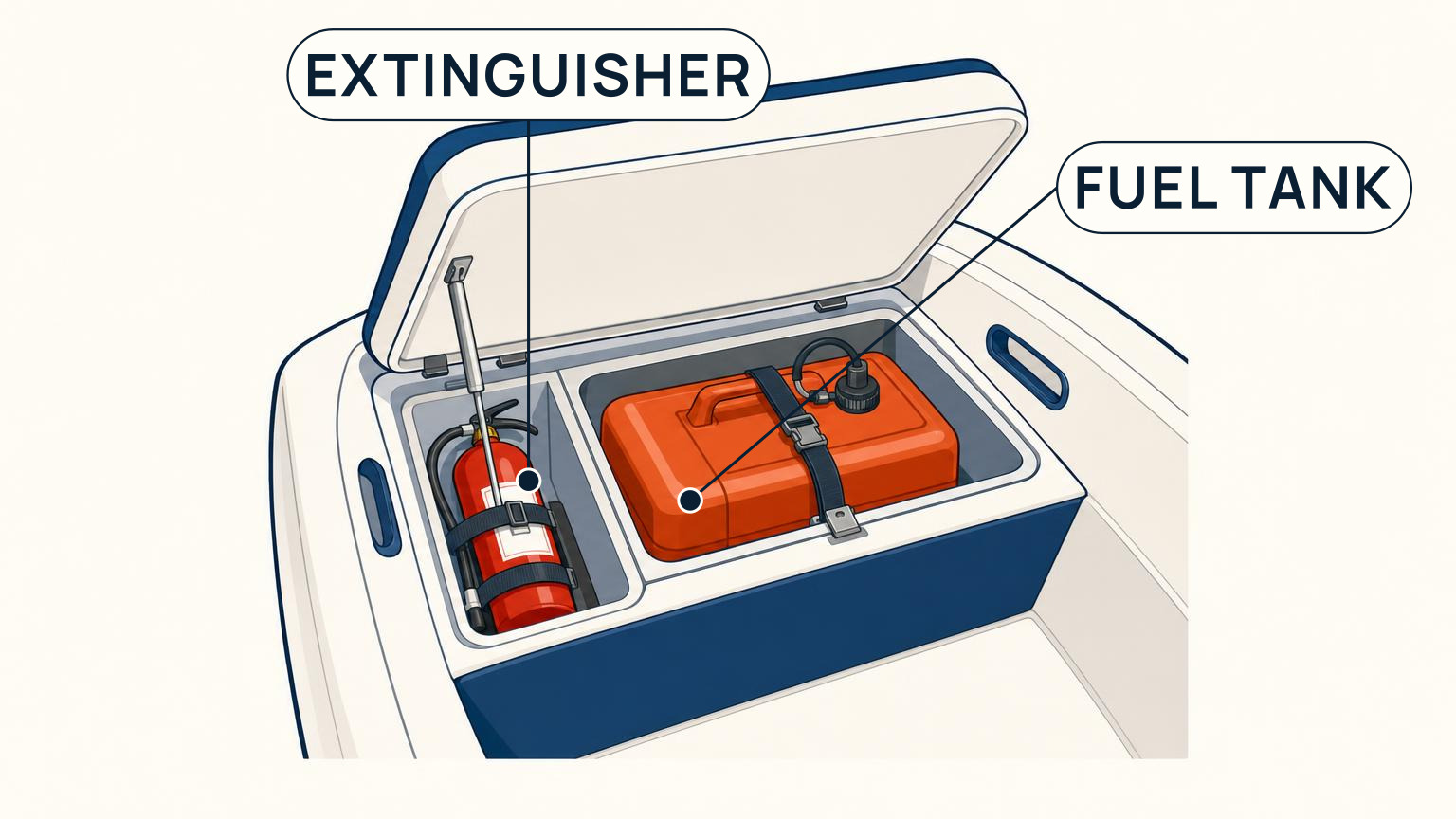
A fire extinguisher belongs on your sailboat safety equipment checklist because it gives you a way to tackle a small onboard fire. Marine extinguishers are selected for hazards such as fuel and machinery, but the accepted rating and quantity depend on the local rules and the boat.
Boat features matter because enclosed spaces, engines, fuel systems, and fuel-burning appliances change the fire risk. Do not copy a rating or count from a checklist written for another jurisdiction or a different boat.
You do not need to memorize every code today. Confirm the current local requirement, mount the correct extinguisher securely, and keep it where it can be reached without emptying a locker first.
How Can Your Boat Be Heard in Poor Visibility?
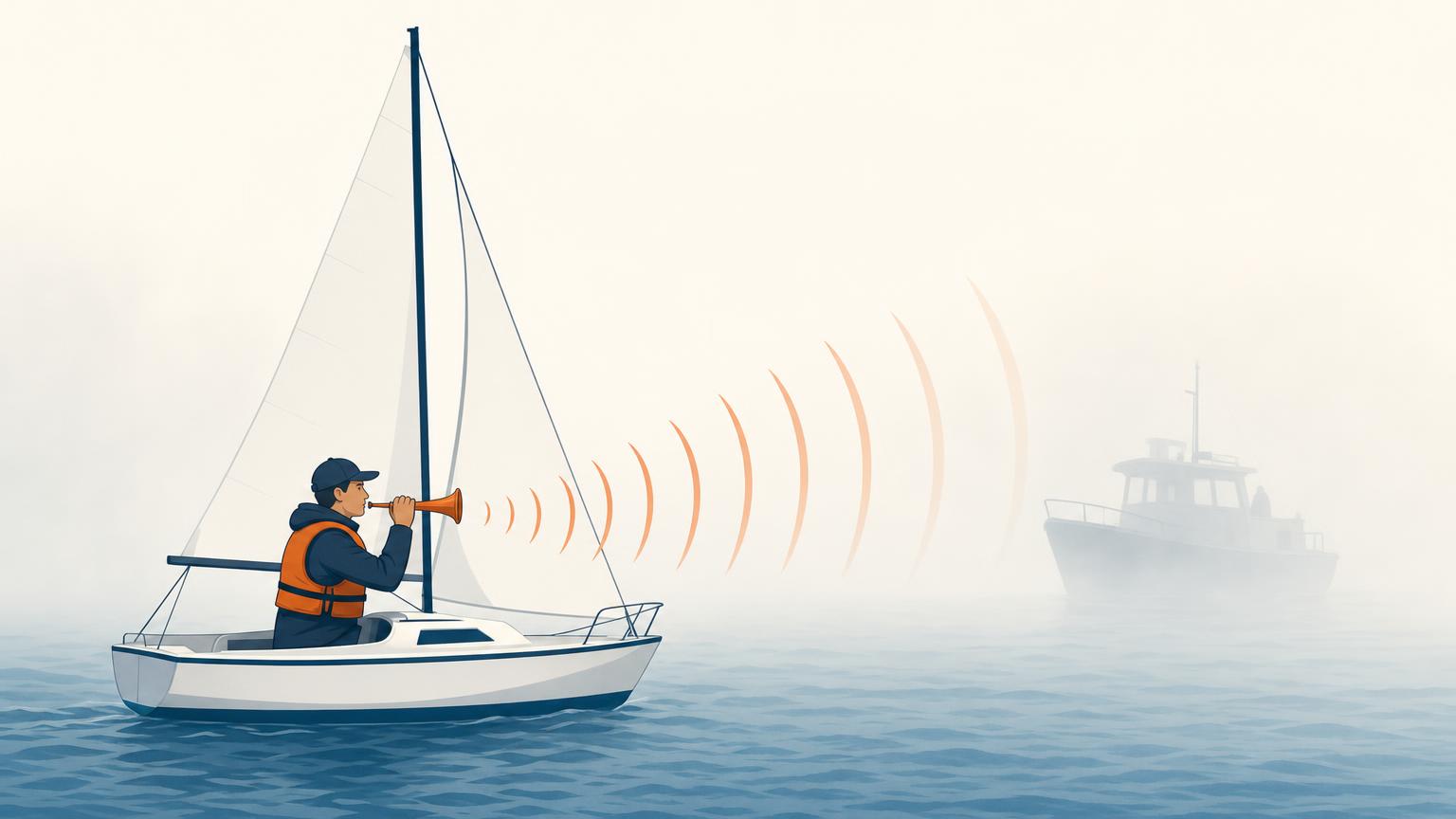
A horn or whistle belongs on your sailboat safety equipment checklist. In fog or poor visibility, its sound lets a nearby boat know you are there when its crew cannot see you.
The size thresholds share an international source. COLREGs Rule 33: the international rules for preventing collisions: requires a whistle from 12 m (about 39 ft) and adds a bell from 20 m (about 66 ft).
Below that first length, a vessel still needs some efficient way to make a sound signal.
For a beginner on a smaller sailboat, the practical choice is simple: keep a horn or whistle aboard and easy to reach.
Which Distress Signals Work by Day and Night?
Day and night signals do different jobs. By day, a search crew may look for a clear shape, strong colour, or smoke. After dark, a signal needs bright light. Some devices are intended for one period and others for both, so check the product label and the current local carriage rules.
The exact signals you must carry depend on where you sail, the boat, and when you operate it. Some places accept electronic devices as alternatives to pyrotechnic flares; some set exemptions by vessel type, size, or operating area. Check the current local list instead of assuming one kit fits every boat.
Dates matter too. Pyrotechnic signals carry a printed expiry date. Inspect it before departure and follow local guidance for replacement and disposal rather than assuming one fixed lifespan applies everywhere.

What Can You Throw to a Person in the Water?
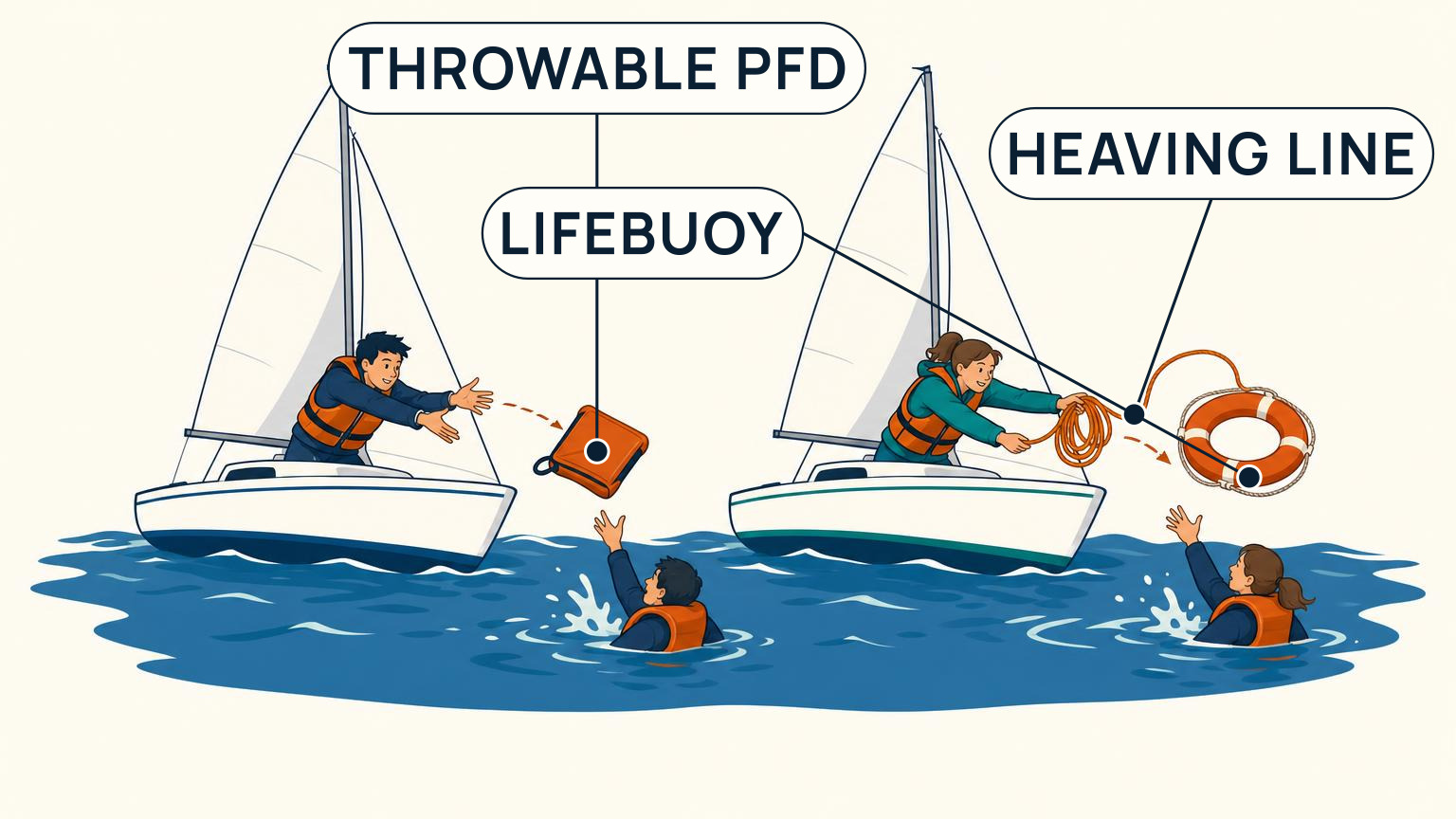
This is the throwable device on your sailboat safety equipment checklist. It gives a person in the water immediate flotation or a line to grasp while you bring the boat back toward them.
The accepted equipment varies. It may be a ring, cushion, lifebuoy, or buoyant line. Whatever the local rule calls for, this is equipment for reaching someone already in the water, not a replacement for a correctly fitted wearable PFD.
Don't bury whatever throwable device your boat carries beneath sails or lock it in a locker. In the moment you need it, a clear throw matters more than tidy storage.
Is the Equipment Working and Easy to Reach?
Build the checklist from boat, trip, and local rules
Start with the boat's type, length, propulsion, number of people, operating area, distance from shelter, day or night use, season, and planned activities. Then check current requirements for every jurisdiction on the route. One universal list cannot replace local carriage rules, expiry rules, or approved-equipment standards.
Add trip-specific risk. Cold water may call for more thermal protection. Offshore or overnight sailing changes communication, signaling, navigation, and survival needs. A person with a medical condition may change first-aid planning. Equipment should fit the actual wearer and be reachable from where the emergency begins.
Inspect condition and access
For each item, record location, quantity, size or rating, approval where required, expiry or service date, visible condition, and who can use it. Check flotation for fit and damage. Check extinguishers by their instructions and confirm that crew can reach them without passing a fire. Test sound devices and lights as permitted. Inspect distress signals without activating them.
Keep emergency equipment clear of stored gear. A throwable device buried below cannot help a person in the water. A VHF with a flat battery or an extinguisher behind a locked panel is present on paper but unavailable in use.
The crew safety briefing turns locations into assigned actions. The Mayday call guide helps confirm that communication equipment and vessel information work together.
Practise without consuming emergency items
Use training devices, manuals, and demonstrations rather than discharging pyrotechnics or extinguishers. Have crew locate flotation, throwable gear, fire equipment, first aid, emergency steering, bilge controls, radio, and position information. Ask them to explain the first action.
Replace expired, damaged, recalled, corroded, missing, or unsuitable equipment through the correct disposal and service process. Update the list after crew numbers, route, boat systems, or regulations change. A checklist is complete only when the equipment is suitable, serviceable, accessible, and understood.
Organize by emergency, not locker
Group the plan around fire, flooding, person overboard, medical problem, loss of steering, dismasting, grounding, collision, abandonment, and distress communication. For each event, identify the first alarm, equipment, location, assigned person, and backup. One item may support several events.
This view exposes gaps that a locker inventory misses. A boat may carry flares yet have no one who knows where the gloves or instructions are. It may carry a bilge pump without a way to find the leak, or a radio without vessel identity and position beside it.
Check fit for every person
Assign suitable flotation by wearer and activity. Check closures, crotch straps where fitted, lights or sprayhoods where required, and compatibility with clothing. Children's and adults' equipment is not interchangeable. Recheck when crew changes.
Include hearing, vision, mobility, medication, cold, and water-confidence needs in the brief. Emergency equipment only helps when the person can reach and operate it under the expected conditions.
Keep an inspection calendar
Use maker instructions and current local requirements for service and expiry. Add monthly or pre-trip visual checks where appropriate. Record inspections rather than relying on a tag whose meaning no one knows.
After an item is used, wet, dropped, deployed, or exposed to heat, fuel, chemicals, or impact, inspect and service it before returning it to storage. Replace consumed items immediately and update the list.
Carry the checklist aboard in a form the crew can access without network service. Keep a separate copy with shore contacts when the trip plan calls for it.
As you finish your sailboat safety equipment checklist, think about access as well as ownership. You cannot calmly search beneath sail bags while someone is in the water. Keep emergency gear where you can reach it, and make sure it works. Check date stamps, seals, batteries, pressure gauges, straps, and moving parts where fitted.
A first-aid kit belongs in the practical checklist even where it is not on the legal minimum-equipment list. Keep it dry, stocked, accessible, and matched to the trip. Know how to use what is inside.
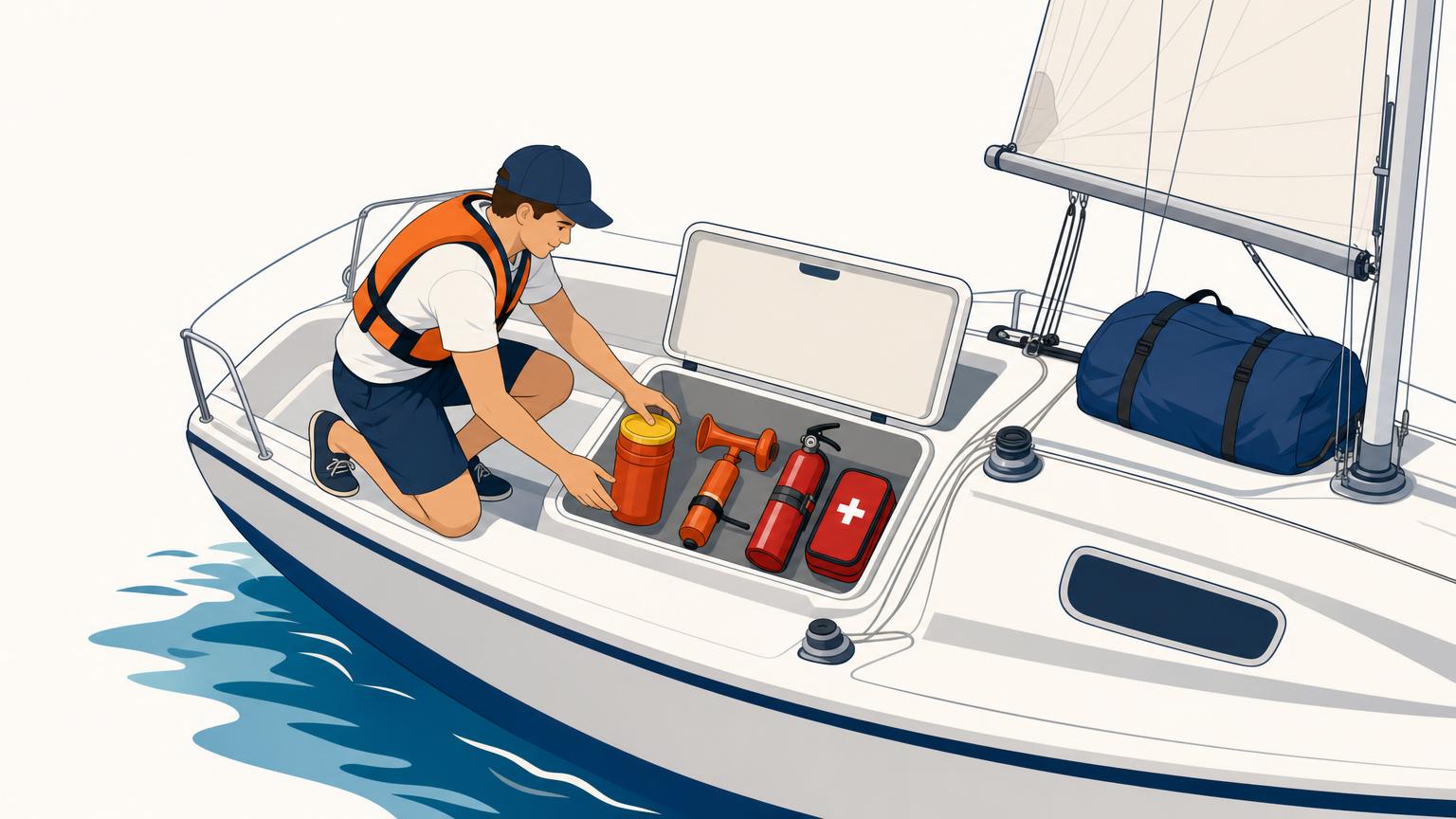
Your lifejacket is step one. Beyond it, four jobs matter: fighting a small fire, making sound, showing a visible distress signal, and throwing buoyant equipment to someone in the water. Use your sailboat safety equipment checklist to cover those jobs, then verify the current local rules for your boat and operating area. Keep every item working and easy to reach, replace expired equipment, and carry a stocked first-aid kit. For a clear next step, try SailStarter's beginner lifejacket lesson before exploring the rest of the safety series.
Try it from the lesson
Can you spot the next move?
Your distress kit contains an orange day flag, but the sail may continue after sunset. Does that one signal cover both periods?
Why you can trust this guide
. We build each guide from public seamanship and safety sources, then teach the universal principle before any local difference.
- ecolregs.com
- ialacolreg.com
- ialacolreg.com
- seafarerhub.com
- navcen.uscg.gov
- ecolregs.com
- allatsea.net
- ecolregs.com
- painswessex.com
- painswessex.com
- orionsignals.com
- sarsat.noaa.gov
- publicsafety.gc.ca
- cedengineering.com
- cmu.edu
- fireline.com
- withessential.com
- baltimoremarinesafety.com
- boat-ed.com
- betterboat.com
- thesilverlining.com
- sailing.org
- ussailing.org
- mercurymarine.com
- boats.net
- rya.org.uk
- clixfueling.com
- boatingfreedom.com
- safe-skipper.com
- spinsheet.com
- marketplace.safetyculture.com