Chart your course
How to Check a Used Sailboat for Liens and Title
Quick answer
The short version
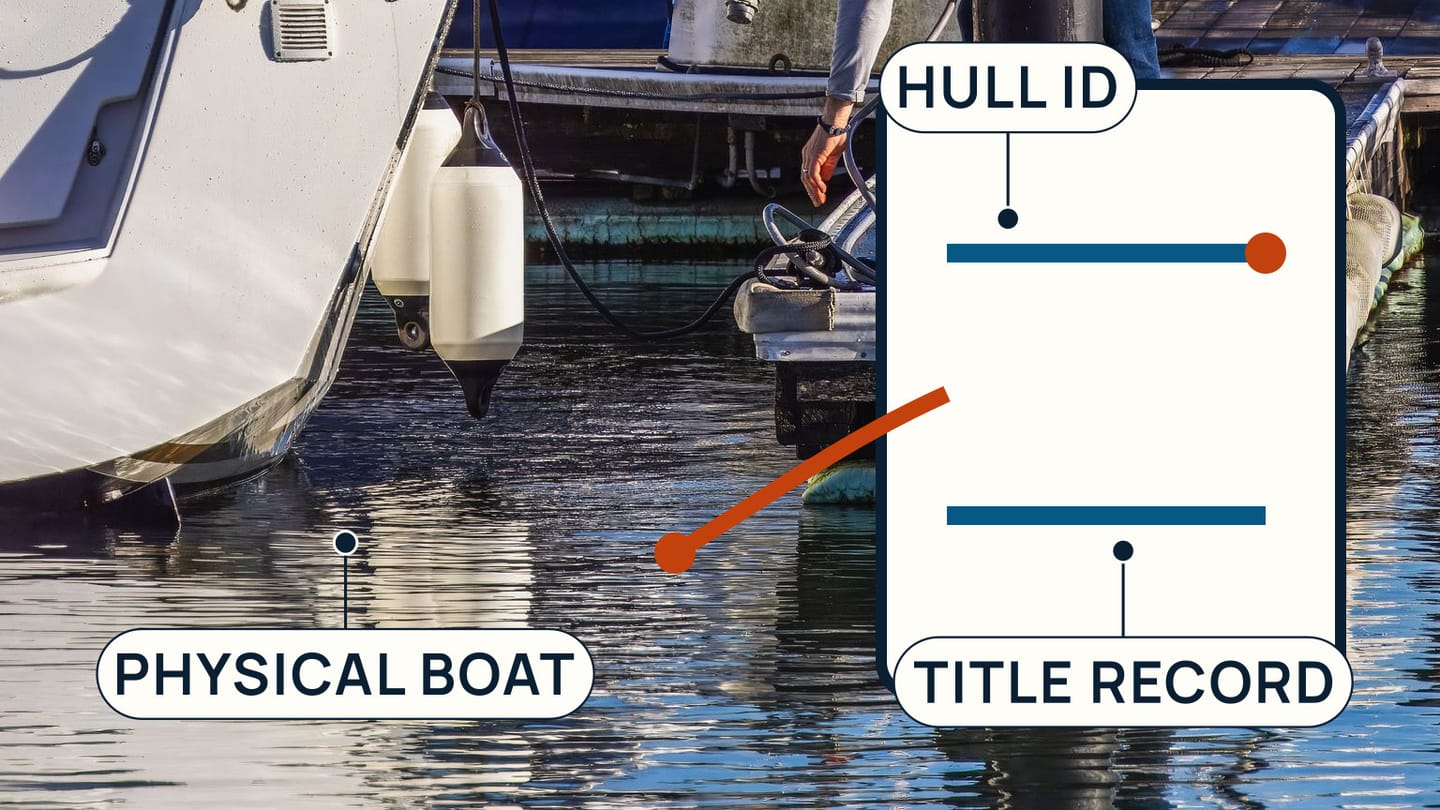
Checking a used sailboat for liens and title begins with the actual boat, not a listing description. Record the hull identification number, make, model, and any official number visible on the hull. Compare them with the seller's bill of sale, registry or documentation record, and finance-release evidence. When names, numbers, or authority to sell do not line up, pause the purchase. A discounted boat is not a reason to accept an unexplained ownership trail.
The record you can obtain depends on country and vessel type. This article gives a universal evidence process and a narrow US/Canada comparison. It does not decide whether a particular claim is legally enforceable. A lawyer, registry, lender, or other qualified local adviser is needed when a transaction has an unresolved title, lien, estate, company, or cross-border issue.
Match every paper to the hull
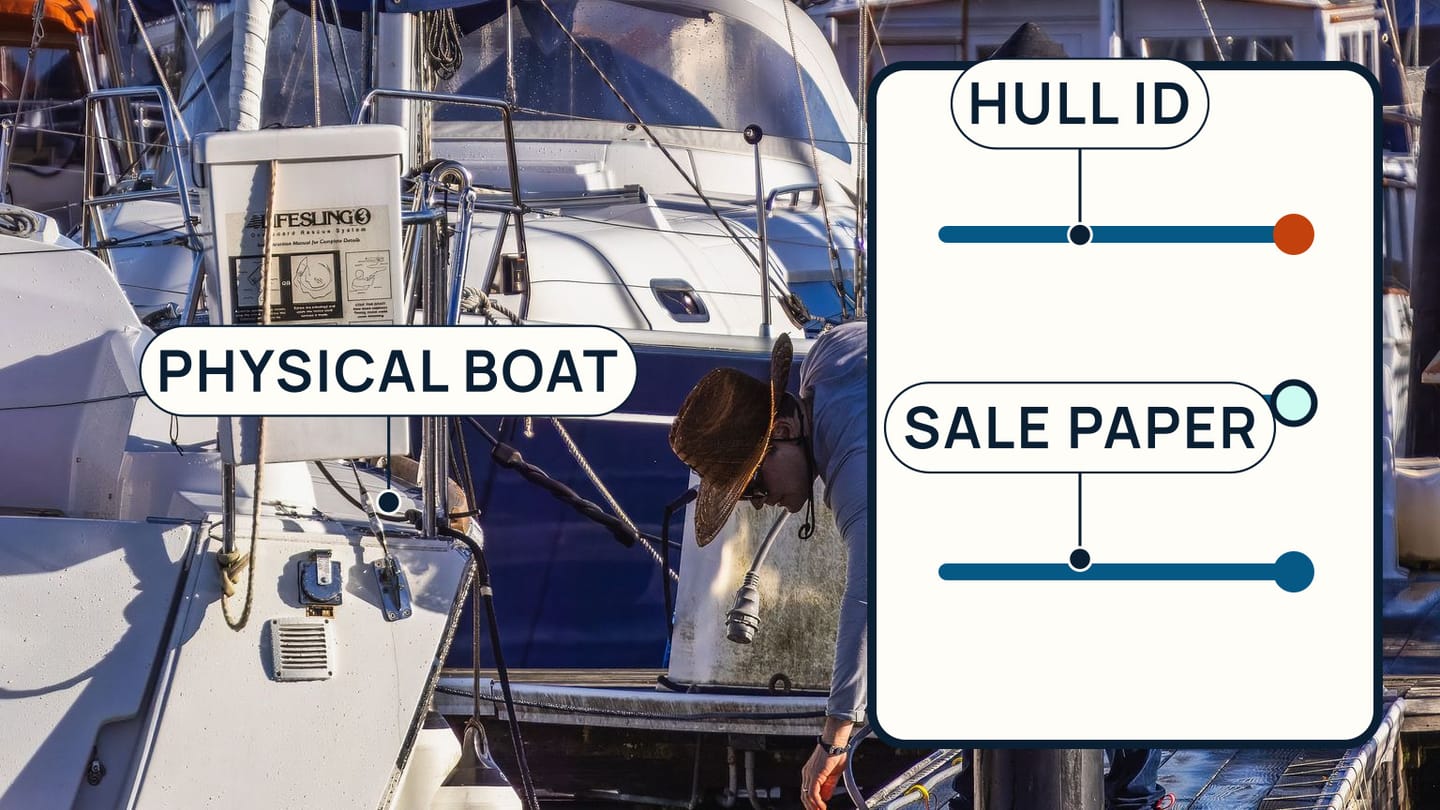
Start at the boat and photograph the identifiers you can lawfully inspect. A typed hull number in an email is not enough. Compare character by character, including any zeros, letters, and suffixes. Then compare the make, model, length, colour, and propulsion description. A small discrepancy can be a clerical error, but it can also show that papers from another boat have been carried forward.
Ask the seller to explain their authority to transfer the vessel. An individual seller may need to show the record that connects them with the boat. A company, estate, trust, or partnership may need different authority documents. Do not assume that the person holding the keys can sign away the boat. Write down which originals you have seen and which are still promised.
Keep a separate inventory of equipment and loose gear. Ownership of the hull does not answer every question about a tender, outboard, trailer, electronics, or leased equipment. If a major item is included in the price, name it in the written agreement and identify any separate serial number that matters.
What can a record search tell you?
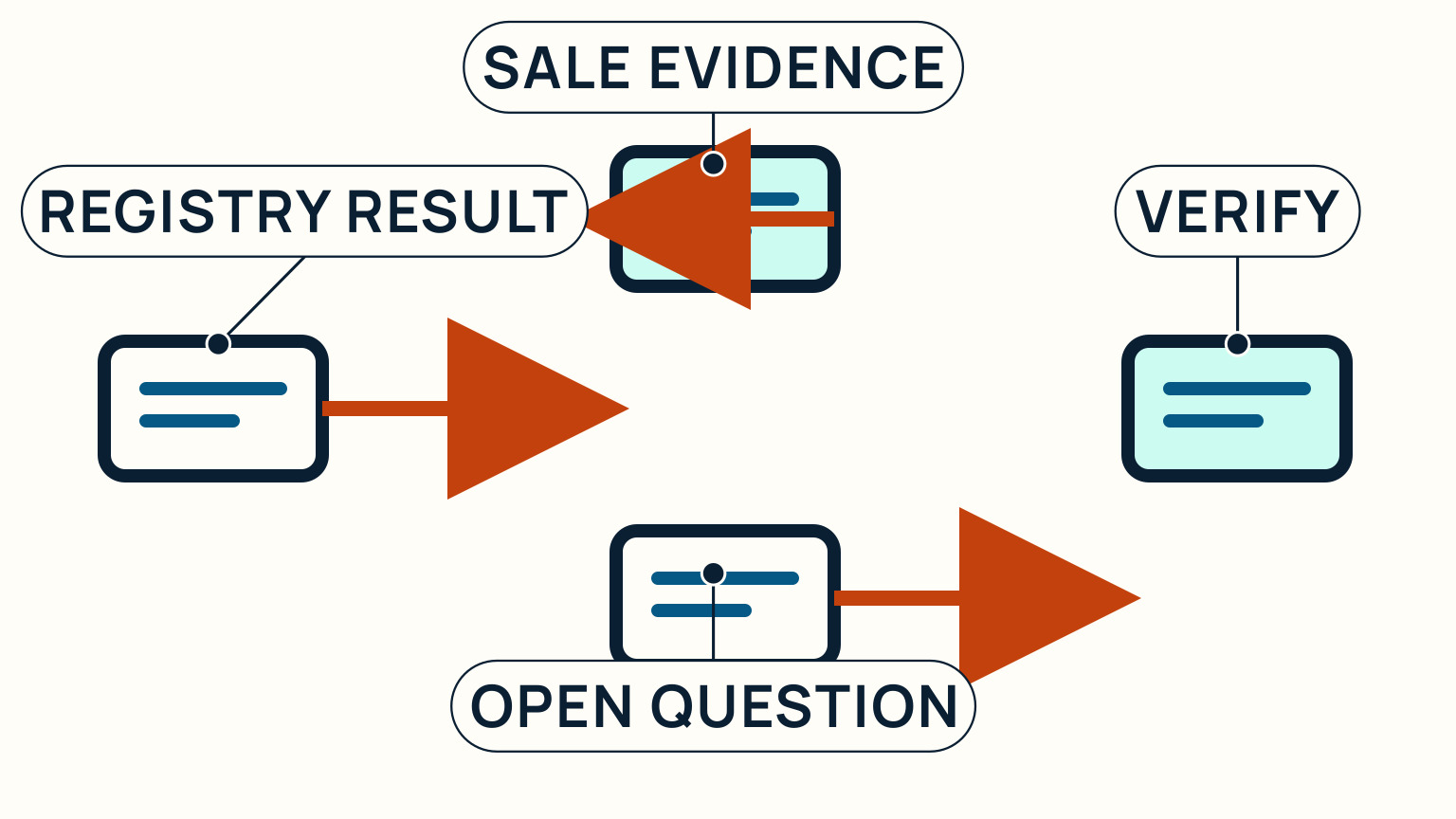
A registry or documentation search can reveal information held by that specific system. It cannot promise that no claim exists outside the system or replace the seller's chain of evidence. Ask what the result covers, the date it was produced, and whether it records encumbrances, transfers, or mortgages. Save the exact result instead of relying on a broker's summary.
United States: the Coast Guard National Vessel Documentation Center offers an Abstract of Title for documented vessels. Its own material describes the abstract as a historical record of transactions and encumbrances. It is useful evidence for the documented-vessel record, not a universal guarantee that every possible maritime or state-level claim has been eliminated. Ask a qualified US adviser how to use it for the specific purchase.
Canada: Transport Canada states that information in a Pleasure Craft Licence record is limited to what an owner provided, that the name in that record is not proof of current ownership, and that it does not keep bills of sale in those files. That makes the seller's transfer evidence and the boat's physical identity especially important. A Canadian registered vessel follows a different registry pathway, so use the relevant current service rather than assuming the pleasure-craft licence record answers every question.
Trace the transfer chain
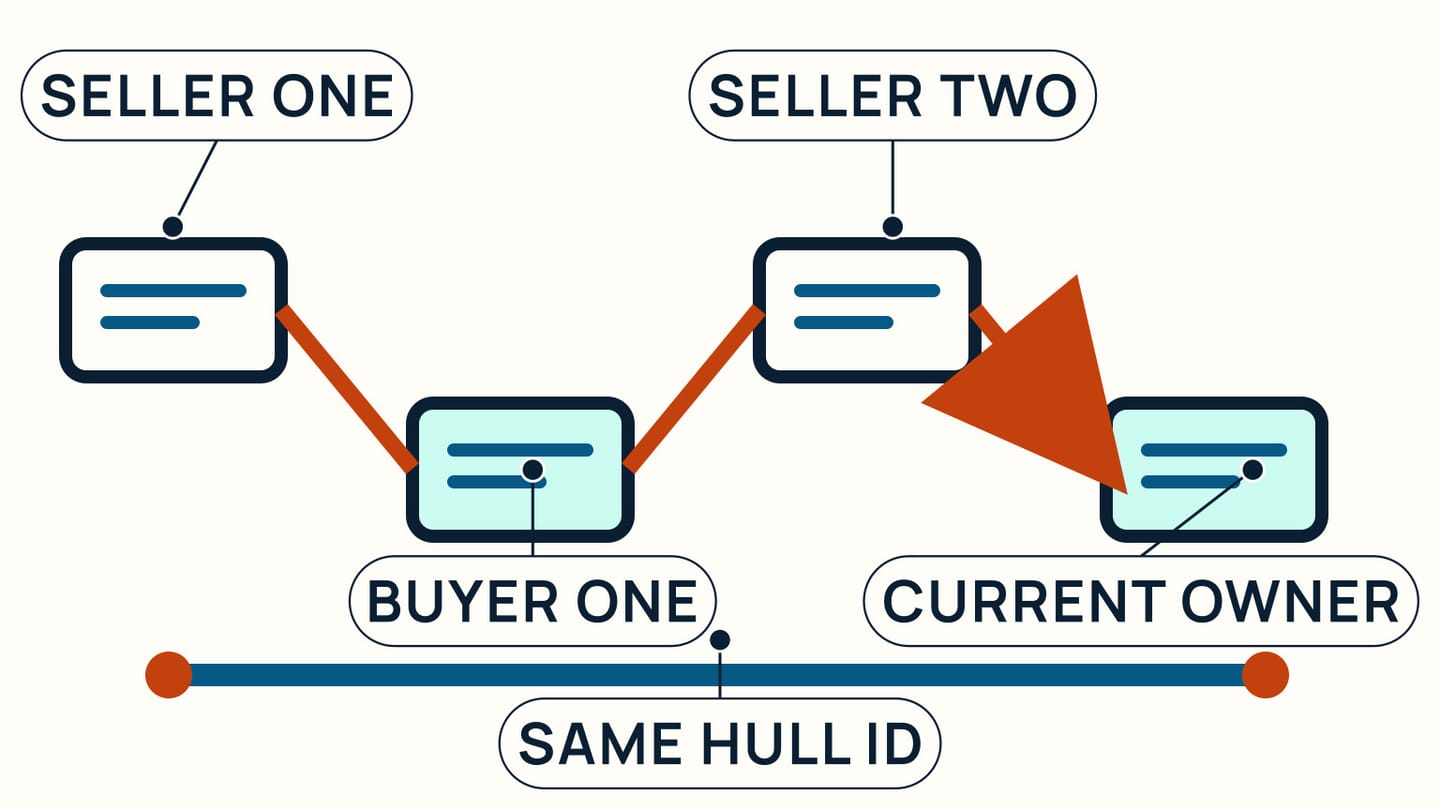
Read the ownership trail in order. Each transfer should connect the previous seller with the next owner, with the same boat identity carried through. A gap, unsigned page, unreadable copy, contradictory date, or unexplained name change deserves a question before closing. Keep questions factual: who transferred the boat, on what date, under what authority, and which record supports that transfer?
Check whether a lender, broker, marina, or insurer is named in a way that affects release or permission to sell. A seller may say a loan is being paid out at closing. That can be workable only if the written process identifies who receives funds, what release will be supplied, and when the buyer receives clear transfer evidence. Do not hand over money on the strength of a verbal assurance that a release will arrive later.
If the boat was imported, rebuilt, inherited, or held by a company, expect a more complicated file. That is not automatically a rejection. It is a reason to bring in a professional who understands the applicable jurisdiction before the deal becomes irreversible.
Ask who will close each open question
Make a written closing list with an owner beside every item. The seller may supply a bill of sale and a registry transfer form. A lender may supply a payoff statement and release. A registry may require an application. A lawyer or escrow professional may hold funds until documents are exchanged. Write the item, the responsible person, the required evidence, and the deadline.
This approach keeps you from trying to solve legal questions with a survey. A surveyor can inspect condition within the survey scope. A title or lien question needs records and the people who can interpret or release them. Both types of investigation matter, but they answer different questions.
Stop if an essential document cannot be produced, an identifier does not match, or the seller cannot show authority to transfer. Postponing a closing is cheaper than discovering later that the boat or a major component cannot be registered, insured, or sold on as expected.
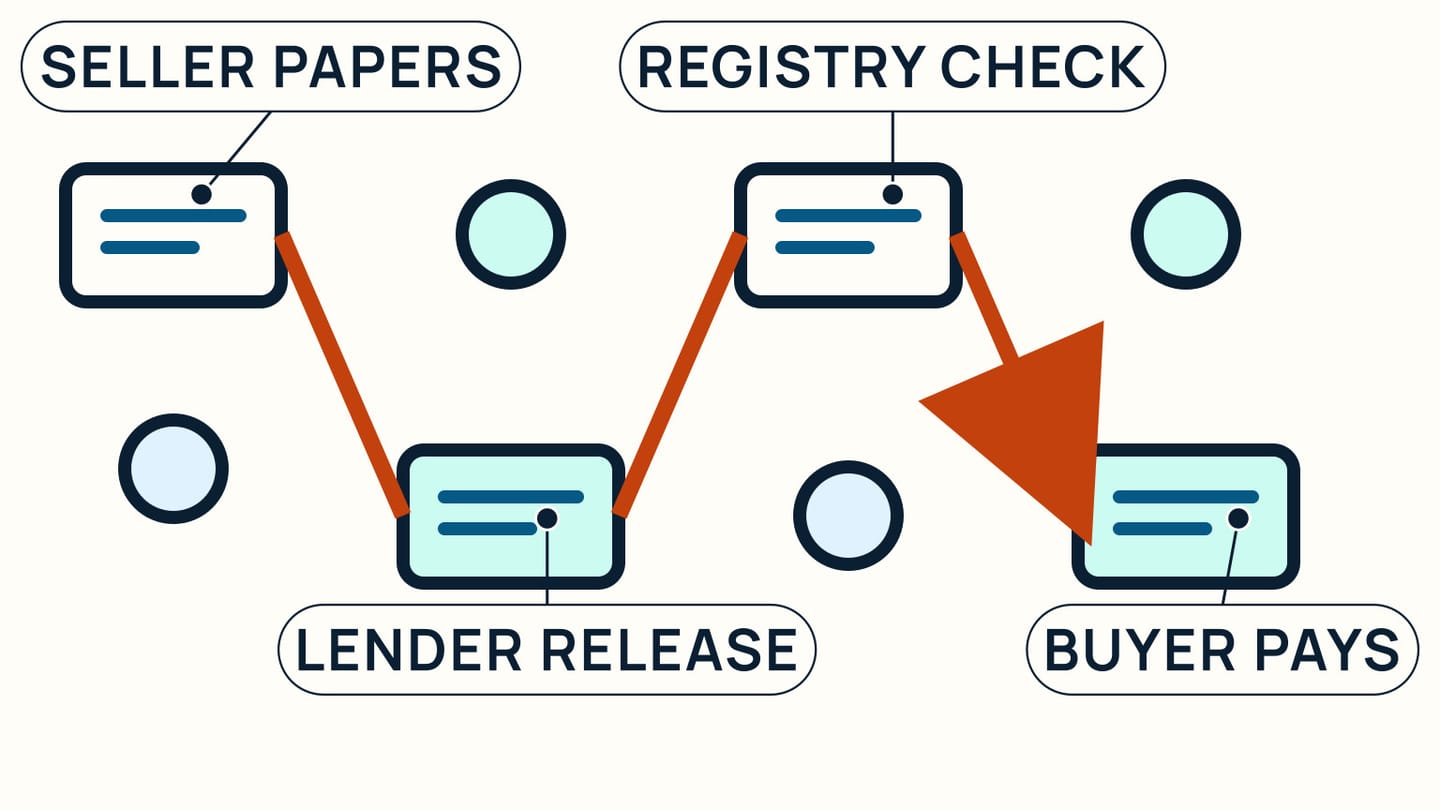
Keep an evidence file after purchase
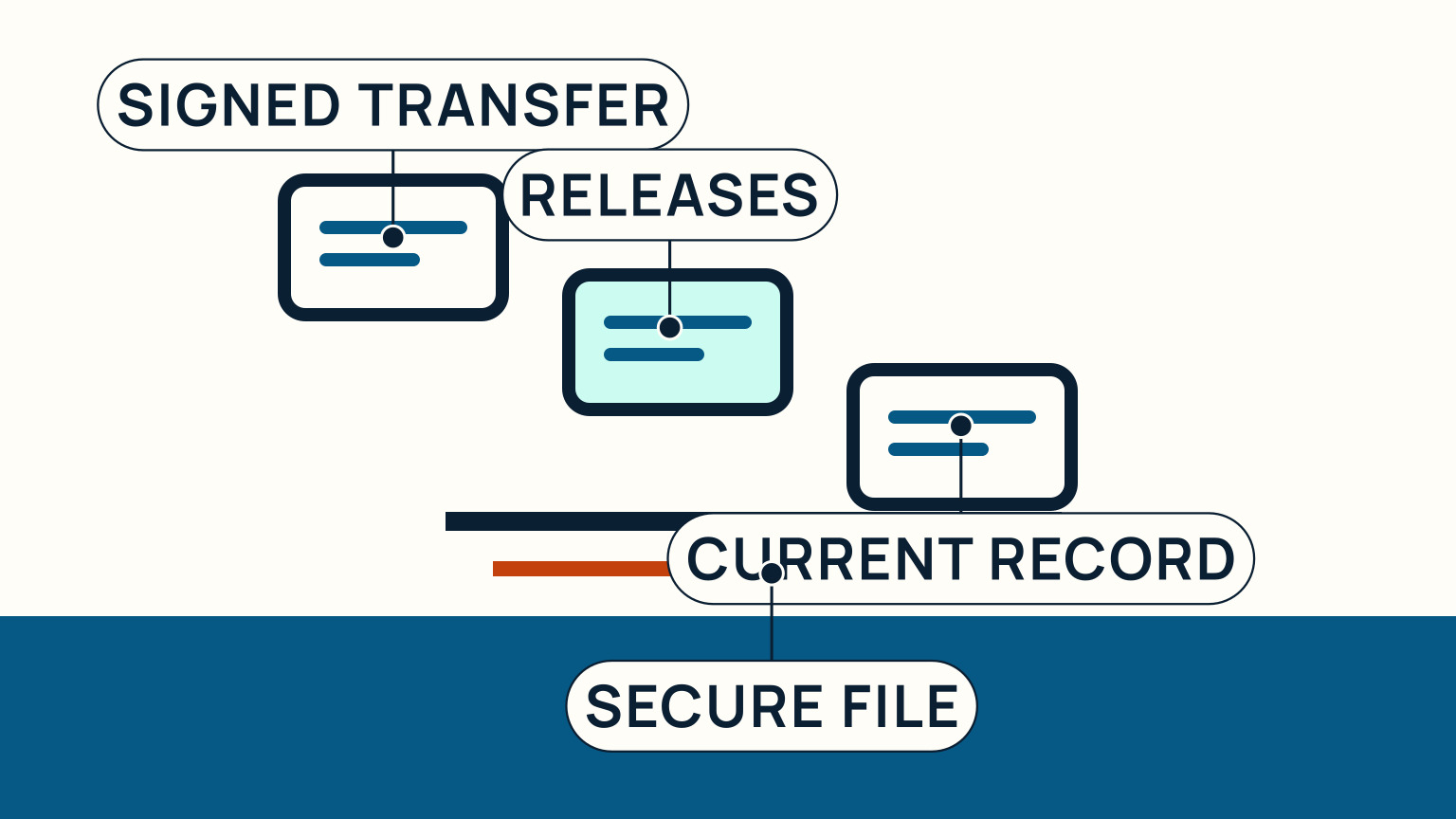
When the purchase completes, retain the signed agreement, payment evidence, transfer record, releases, registry confirmation, and photographs of the boat's identifiers. Store originals securely and make protected copies for operational use where appropriate. Update insurance, marina, radio, and safety records after the ownership step is actually complete.
That file becomes useful when you sell, insure, finance, travel with, or repair the boat. It also makes a future buyer's due diligence easier because the ownership trail does not have to be reconstructed from old emails. Do not add unsupported statements to the file. A short, accurate record of what happened is more valuable than a confident explanation built from memory.
Before you commit to travel for a viewing, ask the seller to send a list of the documents they expect to present. This is not a request to accept scans as final proof. It tells you whether there is a basic ownership story to inspect when you arrive. If the seller cannot identify the relevant record, release, or person who will sign, spend the travel time on a different candidate.
At closing, read the completed document before anyone leaves. Check spelling, dates, price, hull identifier, and the capacity in which each person signed. Ensure blank spaces cannot be filled later. If funds are transferred by a method with limited recovery, get local professional advice before relying on a casual handover. These are transaction controls, not sailing skills, and they deserve the same calm attention you give the boat's condition.
If evidence is partly in another language or from another country, ask the responsible registry or adviser what form of translation or certification is required. An informal explanation may help you understand the papers, yet it may not be accepted for a registry, lender, or border process.
Keep the question list separate from the seller's answers. Write the source of each answer: a document page, registry result, lender release, or named adviser. This makes it possible to see which important point is still only an assertion. If the transaction changes hands inside a family or company, ask which person has authority to bind that entity and request the record that establishes it.
Do a final identifier check at the boat on the day of closing. It is easy for an agreement to be negotiated weeks earlier and for everyone to assume the hull number was copied correctly. Rechecking the number, equipment inventory, and signed transfer before funds are released is a simple way to catch a preventable mismatch.
Keep the limits of each record visible in the file. A registry search, a bill of sale, a lender's release, and a hull identifier answer different questions. They become stronger together because they can be compared, not because any single sheet settles the entire transaction. When the answer depends on a local title system, an estate, a company, or an overseas record, stop treating the purchase as a checklist exercise and ask the relevant registry or qualified adviser what evidence is needed. That is a measured response to an unresolved fact, not an accusation against the seller.
For used-boat inspection, general paperwork planning, and remote buying questions, use the linked guides as preparation. SailStarter can help you understand the boat. The responsible registry and qualified advisers determine whether the ownership and lien evidence is sufficient for your transaction.
Try it from the lesson
Can you spot the next move?
A wide sailboat glides past on two side-by-side hulls, barely leaning at all. What type is it?
Why you can trust this guide
. We build each guide from public seamanship and safety sources, then teach the universal principle before any local difference.