Chart your course
Sailboat Depreciation and Resale Value
Quick answer
The short version
Sailboat depreciation is not a reliable percentage you can apply every year. A resale price depends on the individual hull, condition, equipment, maintenance evidence, location, season, buyer demand, and the work a buyer expects to do next. Treat any estimated value as a range supported by evidence, not as a promise that the boat will sell for a particular number.
This matters before purchase as much as before sale. A cheap boat can be expensive to make usable. A costly refit can be worthwhile for safe enjoyment without adding the same amount to a resale price. Keep the purchase decision, maintenance decision, and future-sale estimate separate so one hopeful figure does not justify all three.
Start with the boat you actually have
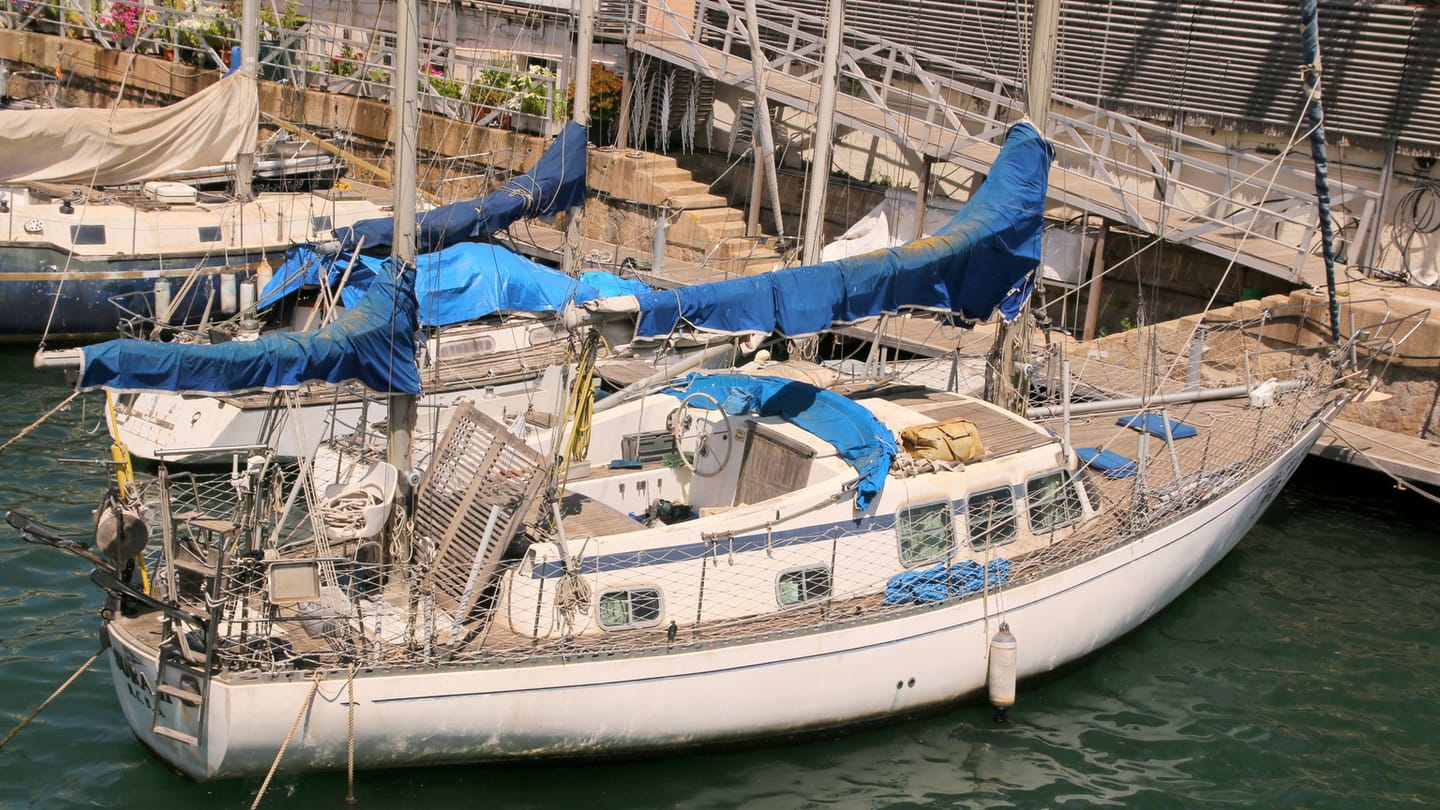
Describe the hull honestly. Include age, build, layout, rig, engine, sails, electronics, keel, storage location, and visible condition. Then add what is known rather than assumed: service receipts, survey findings, defects, dates of replacement, and work that remains. A buyer values evidence they can inspect more than a list of upgrades with no dates or invoices.
Do not hide deferred work inside a generic condition label. A tired standing rig, damp deck core, unreliable engine, worn sails, or neglected safety gear affects the next owner's decision differently. A surveyor or specialist can assess their own scope; a listing should not turn that assessment into a guarantee.
What affects the resale range?
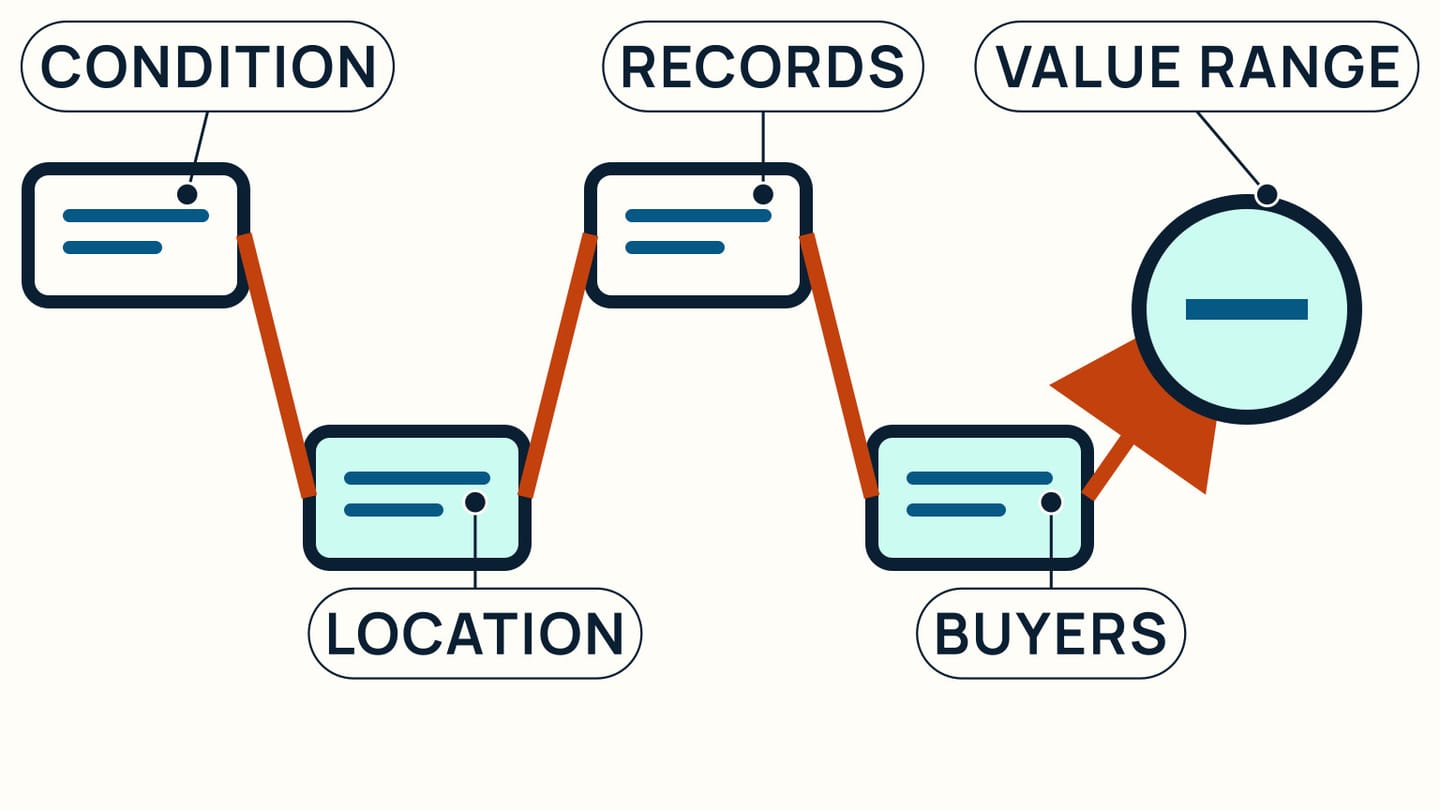
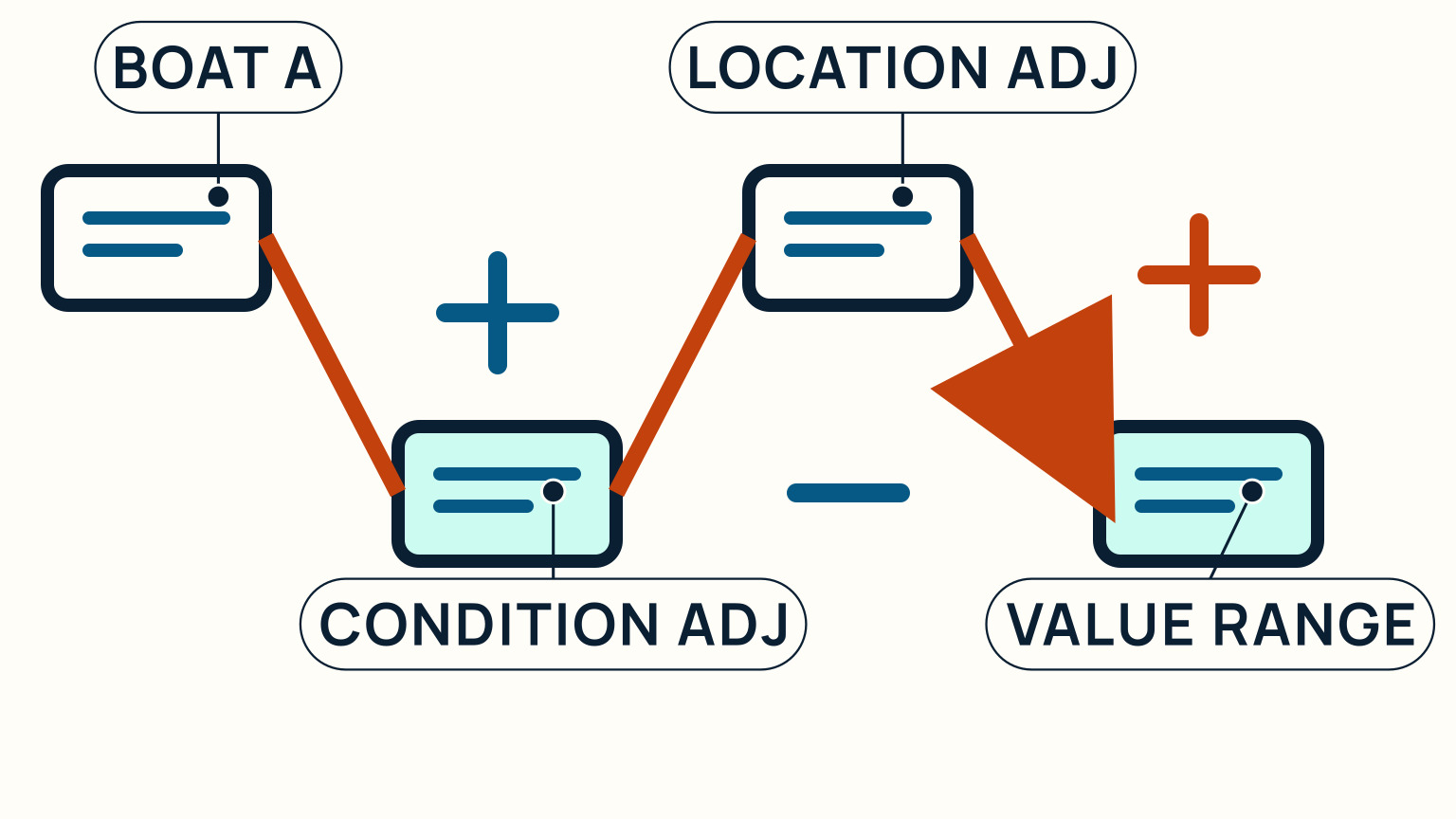
Location and season affect who can see the boat and what it costs them to move it. A boat already in a useful cruising area may attract a different buyer from the same model stored inland. Equipment can help if it is suitable, installed properly, and documented; a pile of old electronics does not automatically create value.
Comparable listings are clues, not completed sales. Compare boats with similar size, age, condition, equipment, and location. Note asking price, but do not assume it is the price accepted. A listing that remains visible for months may show that the market did not agree with the seller's expectation.
Keep the comparison honest about what cannot be seen. A photograph may show clean topsides, yet it rarely answers questions about a hidden system, a service interval, or a defect found by survey. Use the listing to make a follow-up question, not to assign a condition grade from a distance. When your own boat has incomplete records, say so in the working estimate rather than borrowing certainty from an attractive comparable. A narrower, evidence-based range is more useful for planning than a precise-looking price with no support.
Keep records a buyer can use
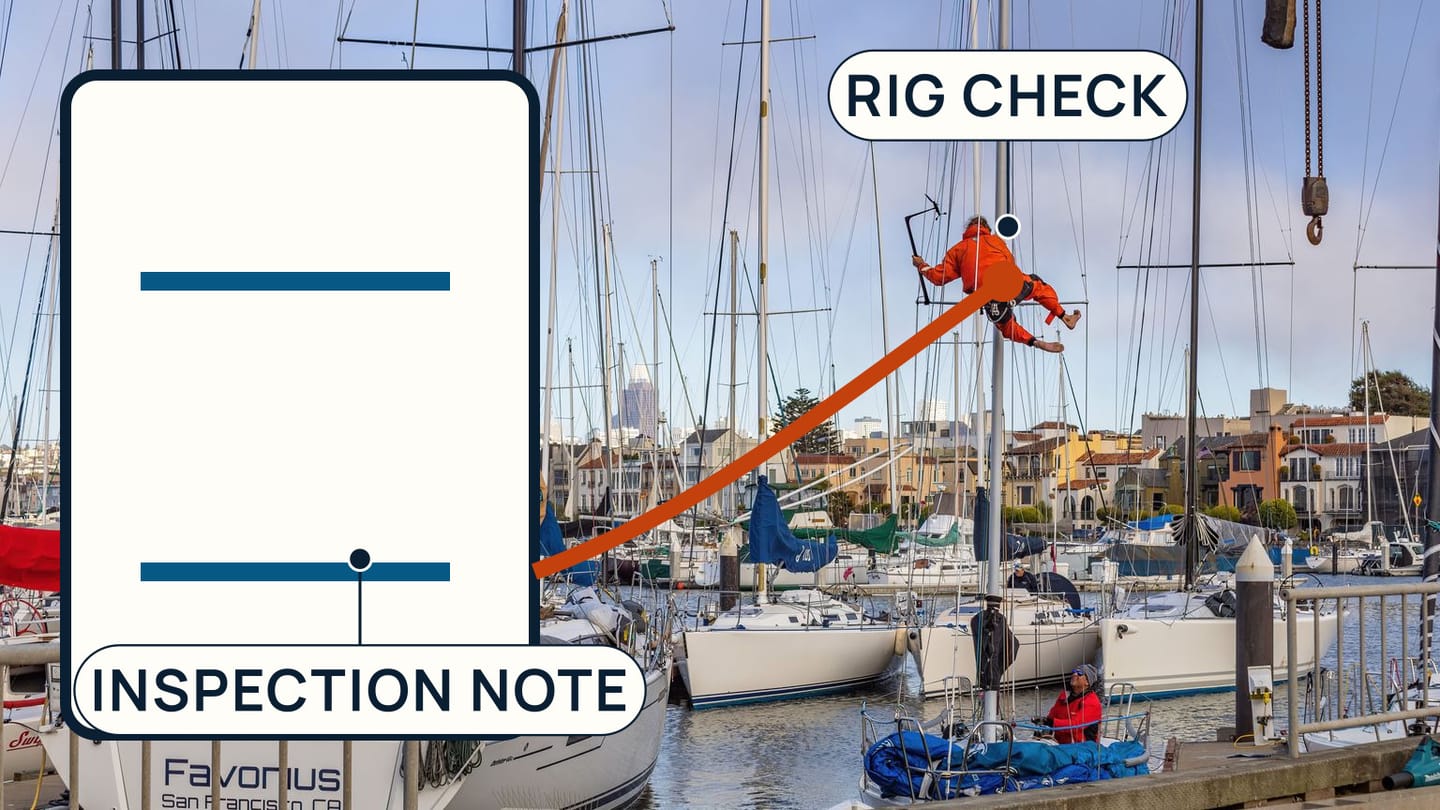
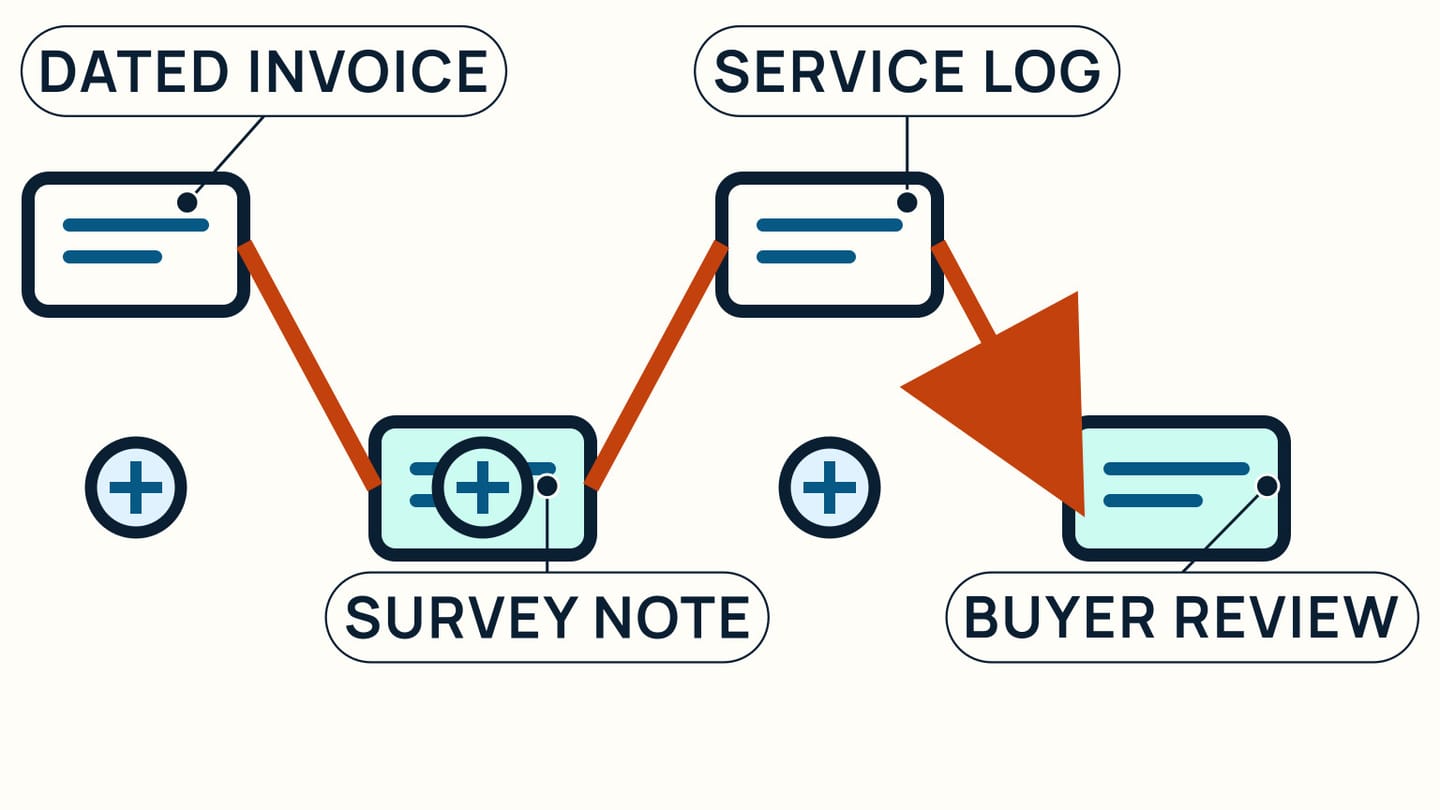
Store dated invoices, survey reports, manuals, photographs, and a maintenance log. Record what was observed, what was repaired, who did the work, and what evidence remains. This helps a buyer inspect the boat and helps you avoid forgetting a useful repair history. It does not convert maintenance spending into a guaranteed sale-price increase.
Before listing, review the file from a buyer's perspective. Is the hull identifier consistent? Are major systems described accurately? Are old defects marked as repaired only when evidence supports that statement? A clear record gives a buyer fewer reasons to guess.
Keep original manuals and note changes from the factory arrangement. If a battery bank, charger, rigging component, seacock, steering cable, or sail has been replaced, record the model, installer, date, and relevant service advice. A future owner may value the work, but more importantly they need to know what is aboard when they plan maintenance. A clear inventory also reduces the chance that a valuable loose item is quietly removed before handover.
Photographs help when they are dated and literal. Take them before a repair, during work where the hidden construction matters, and after completion. Avoid using a flattering old image as evidence of current condition. A buyer will notice the difference between a clean launch-day photograph and a boat that has spent three seasons exposed to weather.
How should you use comparable listings?
Build a small comparison set rather than selecting the highest price. Note similarities and differences: mast age, sail condition, engine hours where supported, trailer or berth status, recent survey, location, and visible work. Then explain why your boat may sit above or below the group. A broker can add local market knowledge, but their estimate is still an opinion based on the available market.
If a sale matters for a move or a new purchase, allow time for inspection, negotiation, survey findings, and paperwork. A price cut may be rational if it avoids storage, insurance, or repair costs, but it is a business decision to make with the full cost picture visible.
Ask a broker what evidence buyers in that area actually request. In one market, a current survey, local berth, or engine record may be especially useful. In another, seasonal timing or the availability of similar boats may matter more. Treat the answer as local market context, not a price guarantee. A broker is not an independent substitute for a buyer's survey or for the records you must keep.
When comparing a boat after a major refit, distinguish completed essential work from a project still awaiting commissioning. New parts in boxes do not provide the same evidence as systems installed, tested, and documented. Likewise, a cosmetic refresh can improve first impressions without settling a buyer's question about core moisture, propulsion reliability, rig age, or safety equipment.
Separate maintenance from speculation
Maintain the boat because it is safe, reliable, and enjoyable to use. Some work preserves value by preventing further deterioration; some makes the boat more suitable for you; some may not be valued by a future buyer at all. Do not defer needed work simply to protect a sale figure, and do not buy an upgrade solely because a spreadsheet assumes a buyer will repay every dollar.
At sale time, disclose known issues accurately and let a buyer's inspection do its job. A realistic condition file and fair price produce a better transaction than a polished description that collapses under survey. Keep the money spent during ownership as part of the cost of using the boat, separate from the eventual proceeds.
Prepare for sale in a sequence. First finish or clearly disclose safety and condition issues. Next clean and remove personal clutter so the buyer can inspect lockers, bilges, deck fittings, and systems. Then assemble records and decide which equipment is included. Finally, price the boat after the evidence is in order. Reversing that sequence encourages owners to defend a number before they have looked honestly at the boat.
During negotiations, keep the survey finding, requested remedy, and agreed result separate. A survey may identify an issue; it does not automatically dictate a price reduction, repair, or cancellation. The buyer and seller decide how to proceed within their agreement. Written changes to the deal are safer than a verbal recollection after the fact.
If you decide not to repair an item, state that plainly and adjust expectations. A buyer who can inspect a known defect may still choose the boat for their own reasons. A buyer who discovers an undisclosed defect after relying on a broad "ready to sail" claim has a different and avoidable problem.
At the end of the process, retain the final agreement, inventory, inspection communications, and evidence of any agreed work. Those records close your ownership file and may explain the sale outcome later without turning a negotiation into a story about what each person remembers.
Resist treating one strong comparable sale as the new value of every similar boat. A completed sale may have included a trailer, berth, unusual equipment, a buyer with a specific deadline, or condition details that were not public. Use several observations and describe their limits. The most credible asking range is one you can explain from the actual boat and the market evidence available, including work still required.
If you keep the boat after reviewing its value, use the same evidence to plan the next season. A record that shows recurring maintenance, storage pressure, or a large deferred project can inform whether to repair, simplify, sell, or change where the boat is kept. That is an ownership decision, not a depreciation calculation.
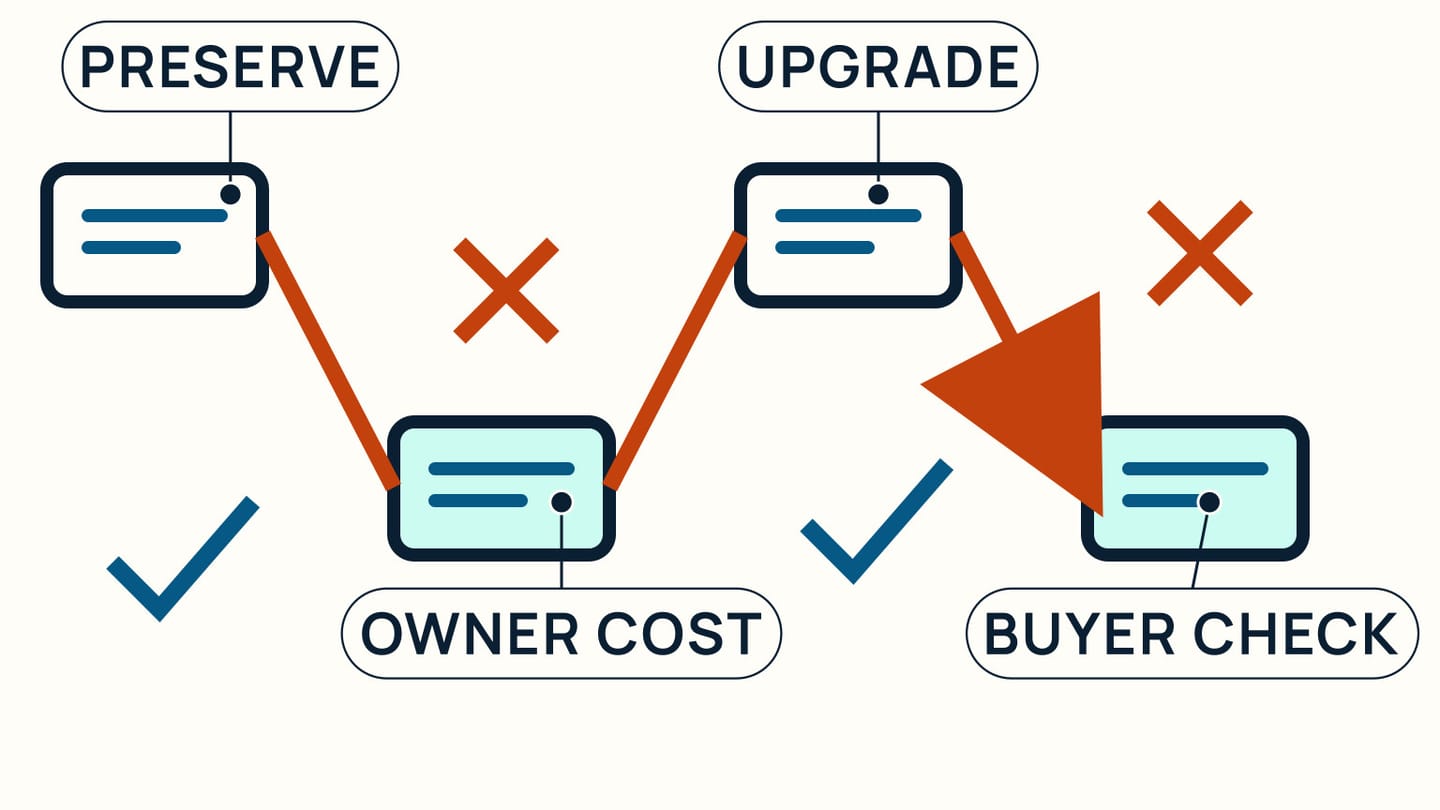
Use new versus used sailboats, survey red flags, and the true cost of a cheap sailboat to prepare the purchase decision. SailStarter can help you understand the systems named in a listing. A surveyor, broker, and local advisers provide the evidence and market context for a specific price.
Try it from the lesson
Can you spot the next move?
A wide sailboat glides past on two side-by-side hulls, barely leaning at all. What type is it?
Why you can trust this guide
. We build each guide from public seamanship and safety sources, then teach the universal principle before any local difference.