Chart your course
Clearing Customs and Immigration by Sailboat
Quick answer
The short version
Clearing customs and immigration by sailboat starts before you leave the previous country. Find the current procedure for your intended arrival port, check whether you must use a designated reporting site or contact a specific service, and make sure the skipper can reach it. Keep the information for every person aboard, the vessel's registration or documentation, and goods that must be declared together. The rules belong to the country you are entering. A method used successfully at one border is not a shortcut for another.
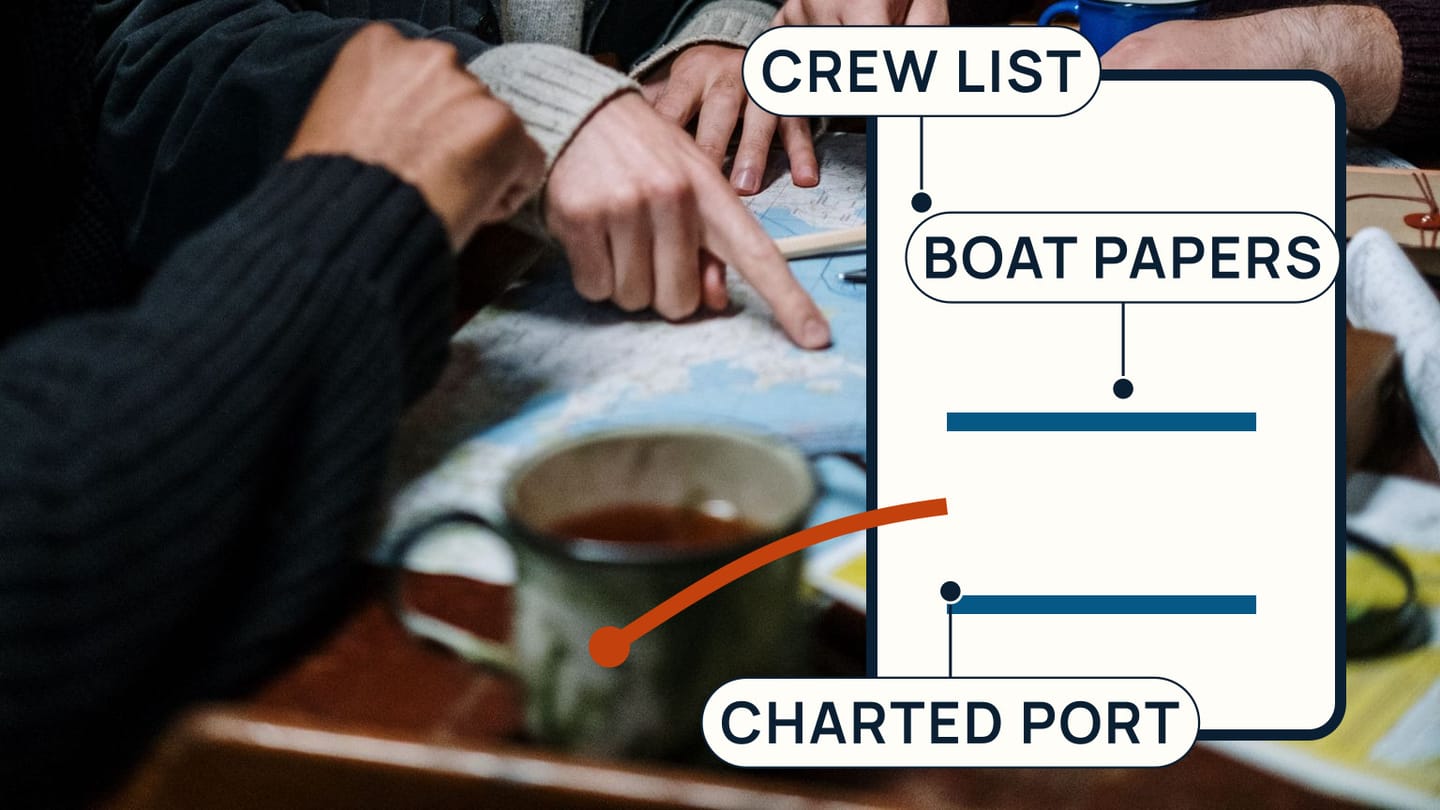
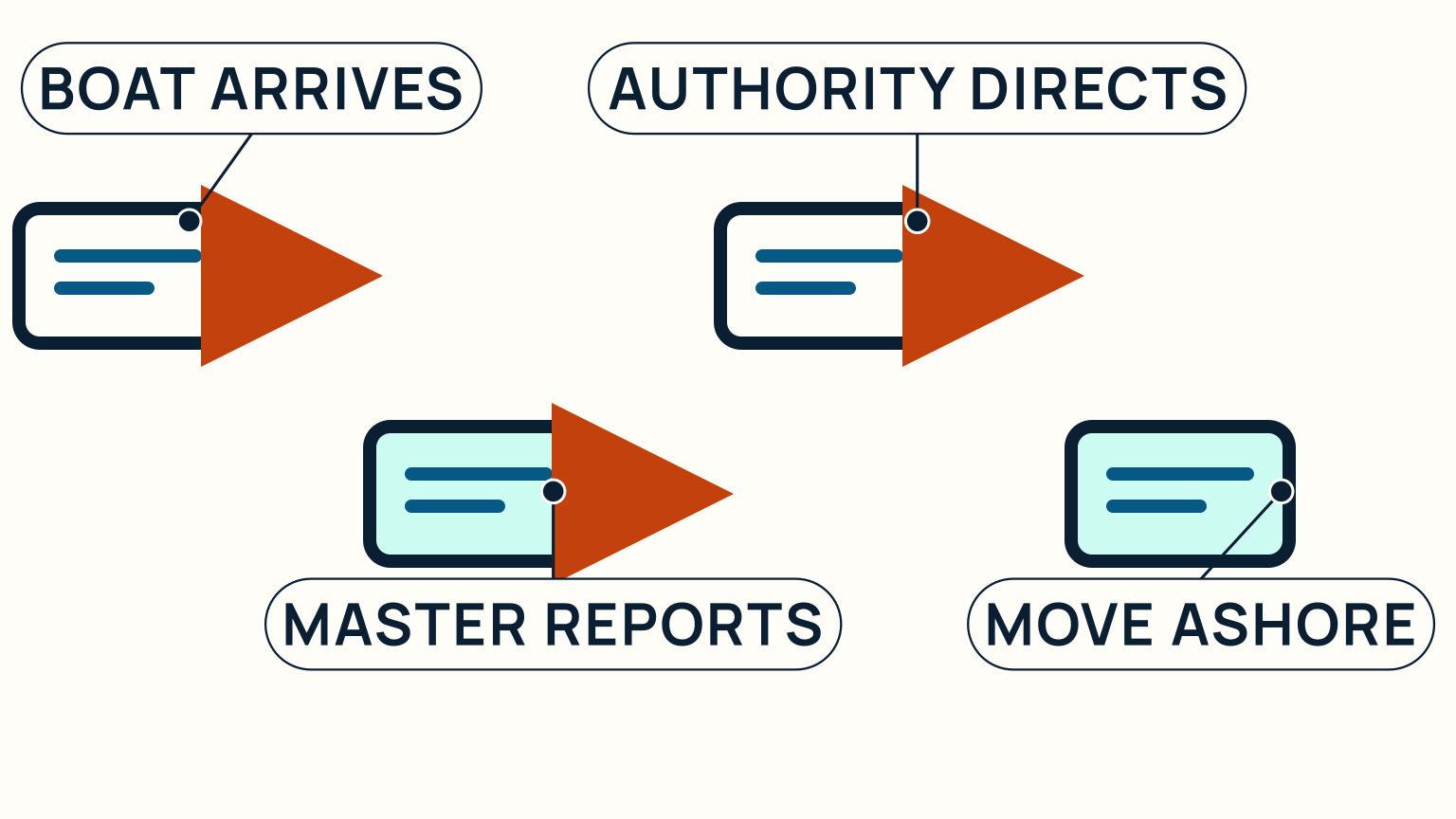
The universal habit is simple: plan the report, arrive where the authority directs, make the report promptly, and wait for instructions. Do not design a passage that needs everyone ashore immediately after the anchor drops. A weather delay, an unfamiliar harbour, a phone problem, or a changed reporting instruction needs time and a working alternative.
Build the arrival plan before departure
Put border reporting into the passage plan alongside weather, fuel, tide, and the first safe harbour. Confirm the destination country's current official information close to departure. Check the reporting location, opening arrangements, phone or digital process if any, and what happens if you arrive later than planned. Save the responsible authority's details offline as well as in a browser tab.
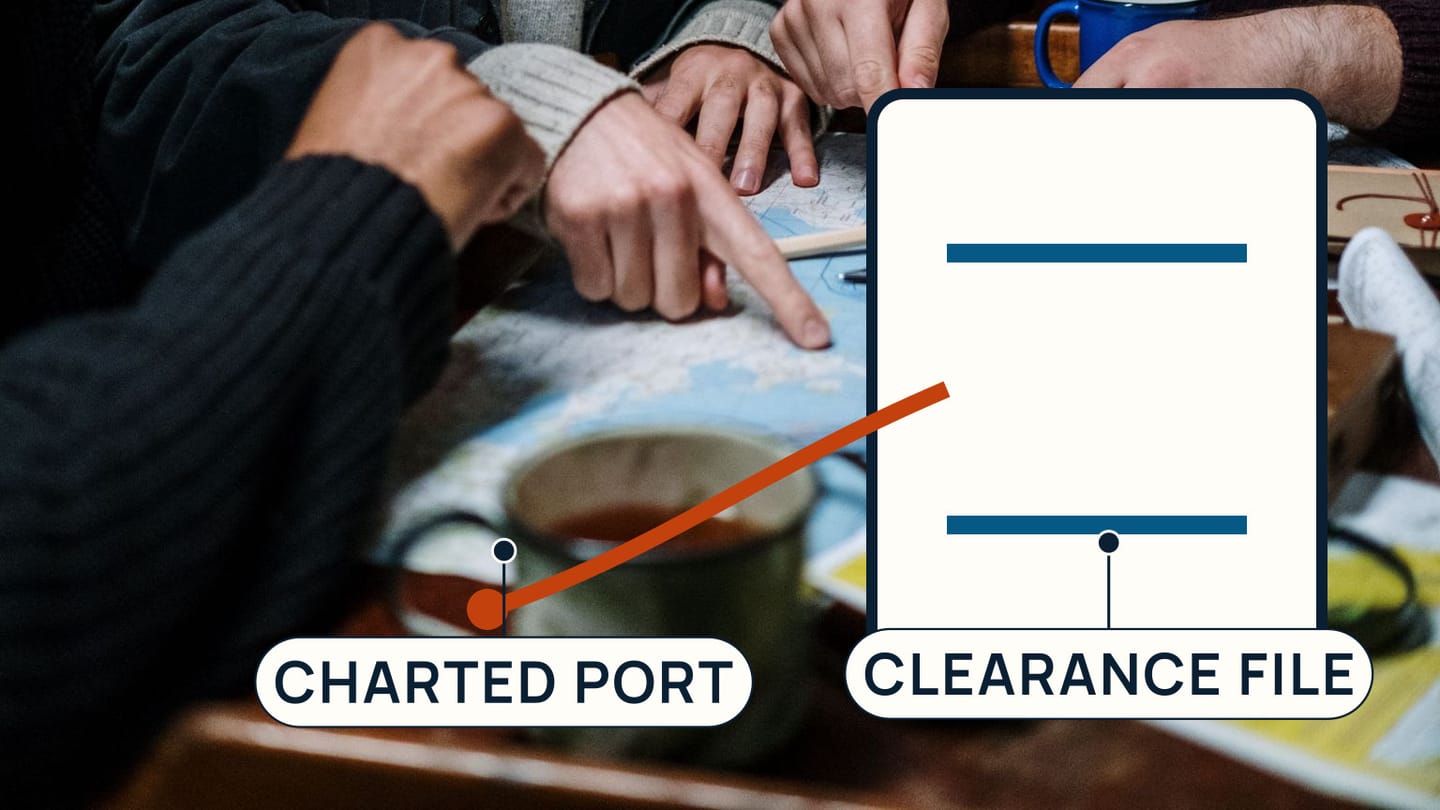
Make one crew list that can be read out without searching through bags. It should identify each person's name, date of birth, citizenship, travel document details, and any entry status information the destination requires. Keep vessel name, registration or documentation number, home port, current location, and a contact number in the same place. Declarations are a separate part of the plan: everyone should know who will describe goods, restricted items, and any purchase or import question to the officer.
Do not publish private passport or payment details in a shared crew chat. Use a protected file or paper record with access limited to the skipper and the person who may take over. Test that it can be opened without marina Wi-Fi. A document that exists only in an inaccessible email account is not ready for an arrival check.
What happens when you arrive by sailboat?
On arrival, follow the destination authority's instructions rather than the routine of the last marina. A report may require the operator to call from a designated site, go in person to a designated office, use an approved reporting option, or wait for an officer's direction. The skipper should be able to state where the boat is and keep it available if the authority needs to inspect it.
Until you have the relevant clearance, treat the boat as the place where the crew waits. Do not assume people, baggage, or goods can move freely because the crew is tired or the dock is nearby. This is not a dramatic restriction; it is the ordinary discipline of giving the border service a clean, accurate arrival. Brief visitors and children before landfall so no one creates confusion by leaving to find a shower or café.
Use plain language when reporting. Say the route actually sailed, the place of departure, the people actually aboard, and the goods that need declaration. If you do not know whether an item matters, ask the responsible authority. Guessing that a rule is probably the same as the previous country is the wrong kind of efficiency.
Keep people, vessel, and goods records separate
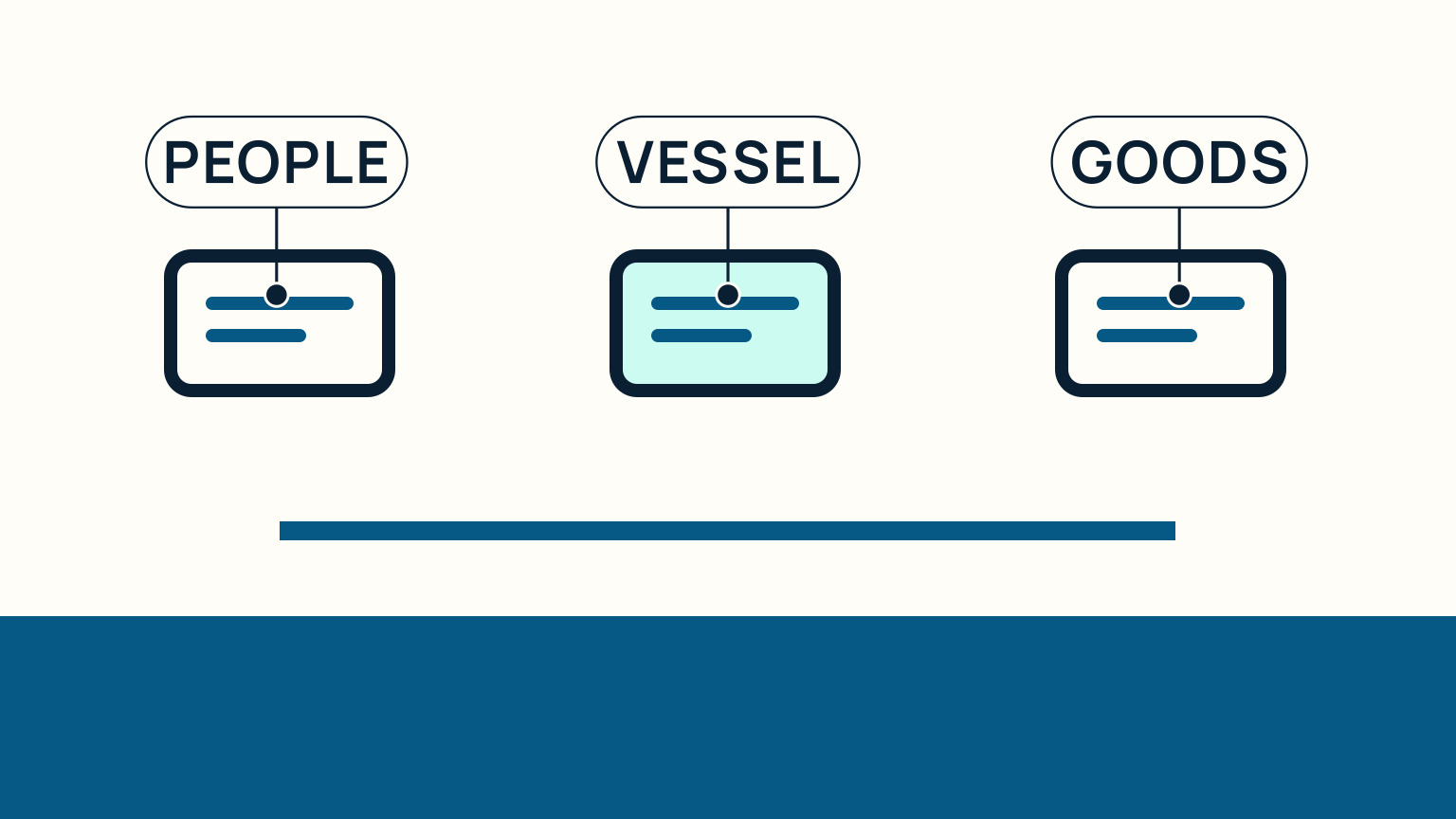
Border questions often involve three different records. Personal travel evidence concerns each person and their permission to enter. Vessel evidence concerns the boat's identity, ownership or operating authority, registration or documentation, and route. Goods declarations concern what is being brought in. Keeping these as separate folders or sections stops a crew from treating a vessel paper as proof of a person's entry status, or a passport as an answer to an import question.
For a borrowed, chartered, or co-owned boat, establish who has authority to speak for the vessel before departure. Keep the charter agreement or written permission where the skipper can find it, but do not pretend that a private letter replaces a border rule. The authority decides what it needs. Your job is to make the actual relationship and documents easy to explain.
Make a final pre-arrival check while still offshore or before the last approach: number of people aboard, any changes since departure, location, last foreign port or place, and goods to declare. This is the moment to discover that a crew member's document is in a bag below a wet bunk, not when the officer is waiting for an answer.
How do US and Canadian arrival procedures compare?
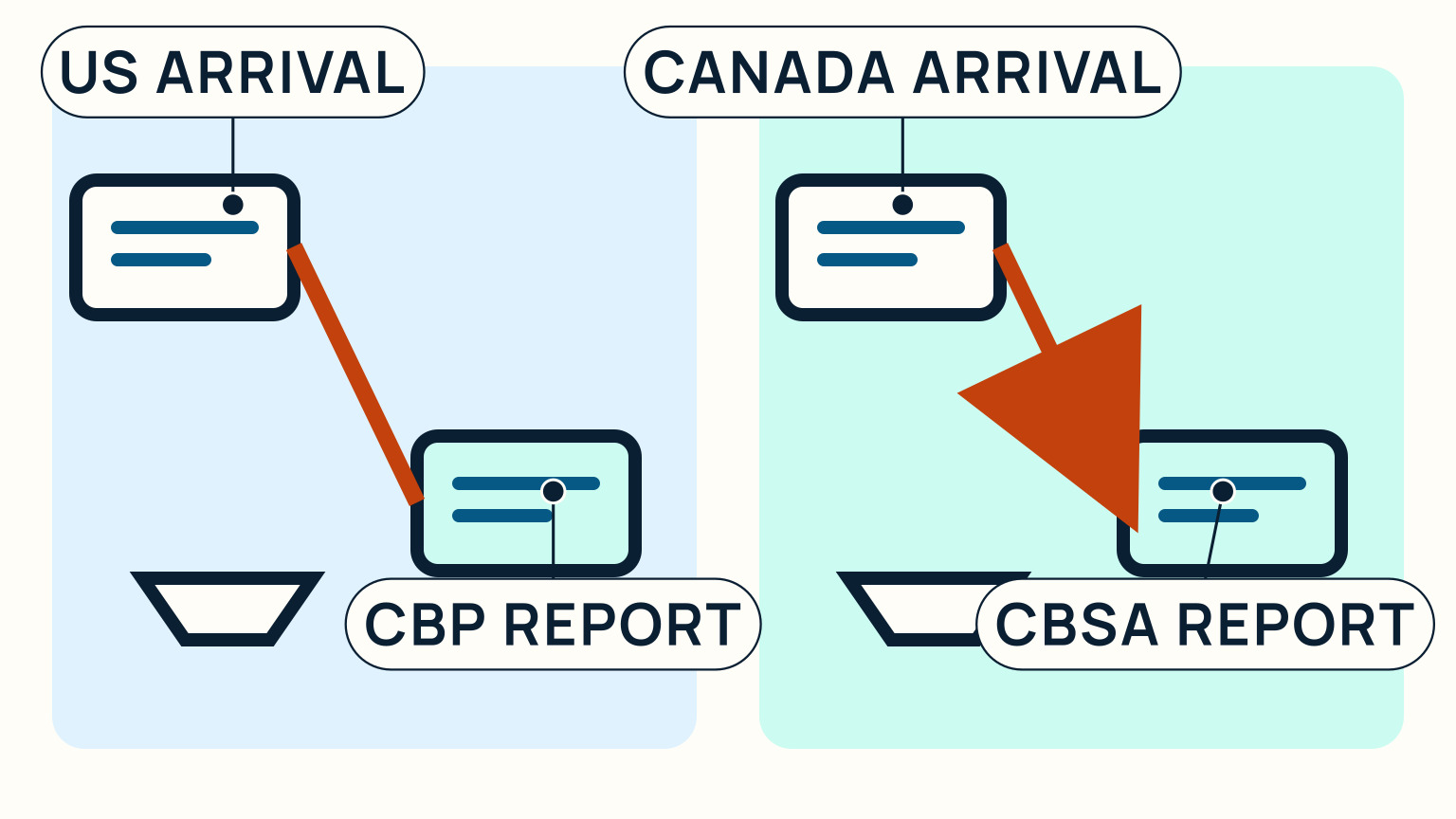
The United States and Canada both require current country-specific preparation, but their official arrival procedures are not interchangeable. In the United States, CBP says that the master of a small pleasure vessel arriving from a foreign port or place must report the arrival immediately. CBP's local instructions can identify where to report and what information the master must provide. Do not use an old phone number or an app assumption without checking the current official page for the intended area.
Canada: CBSA says that a private boat operator entering Canadian waters with the intent to disembark is responsible for reporting. Its current private-boat instructions describe designated marine reporting options and say that, at a telephone reporting site, only the operator may leave the boat to make the call while everyone else remains aboard until entry is authorized. Canada also lists limited reporting exceptions for particular transits. Read the conditions carefully rather than treating an exception as a general permission.
This comparison is deliberately narrow. It does not tell a reader which visa, document, permit, food item, firearm, tax status, or import outcome applies to them. Those details can change with nationality, vessel flag, goods, route, and law. Verify them with the responsible current authority before committing to the passage.
Wait for clearance, then record the result
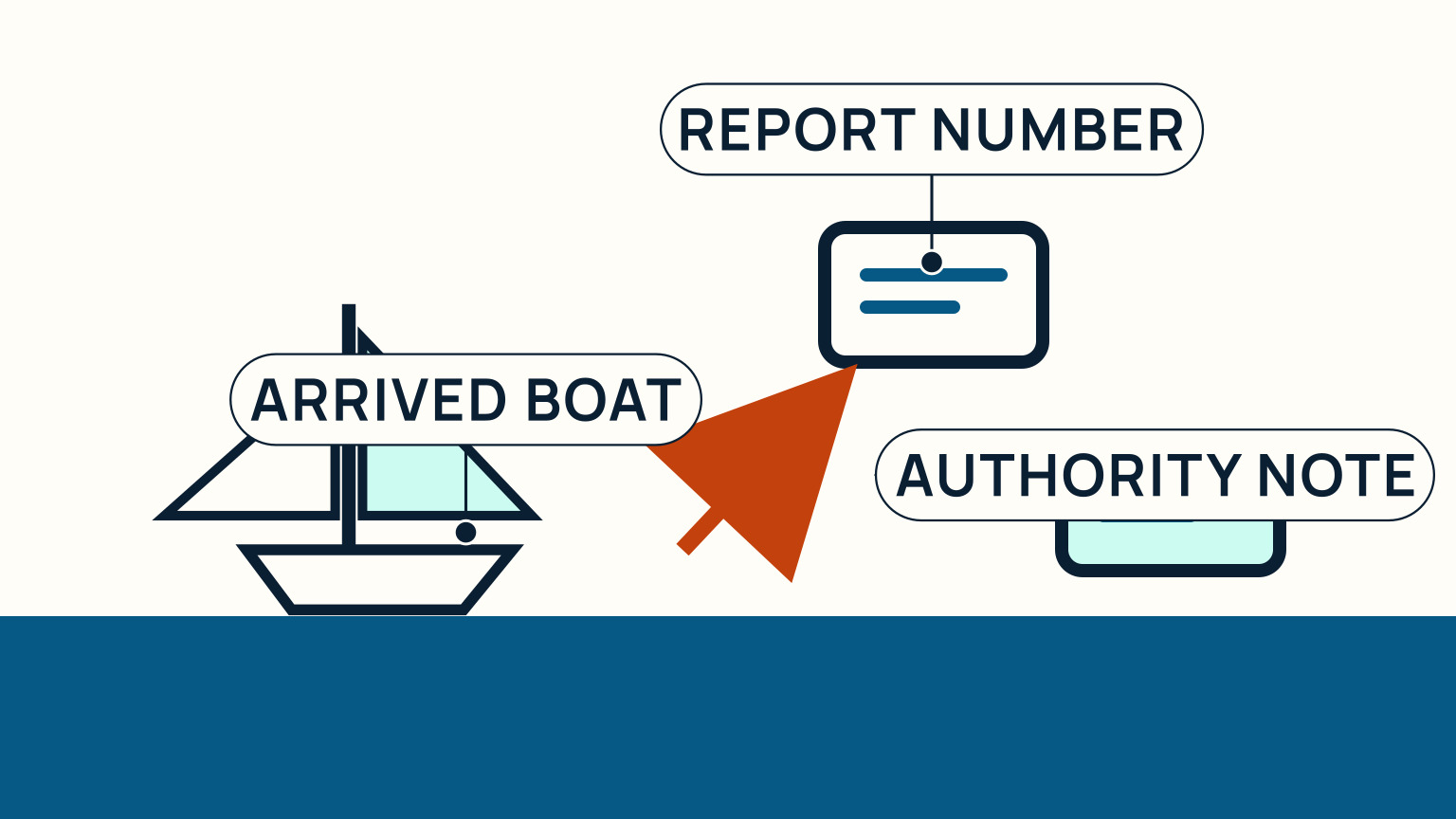
Once the authority has given instructions and clearance, write down the report or reference number, the time, the method used, and any conditions that were given. Keep it with the entry record rather than relying on memory. If an officer directs the boat to move, present documents, pay a fee, or report again later, add the action to the passage log and tell the whole crew what changes.
Do not let arrival paperwork erase the rest of seamanship. Secure the boat, maintain a lookout during the approach, follow harbour instructions, and account for fatigue. A crew that has completed a long passage may be especially tempted to rush the border step. Put the reporting time into the plan so the correct process is the easiest one available.
Before the next international leg, review the file and remove stale material. A previous receipt can be useful history, but it does not become permission for a new arrival. Update crew details, check the boat's current records, and confirm the intended country and port again. International movement rewards current information, not a thick folder of old assumptions.
If weather makes the intended reporting location impractical, do not improvise a different international arrival plan from the cockpit. Contact the responsible authority as early as communications allow and follow its direction. The same applies if the crew changes, equipment fails, or a medical issue changes the route. An honest early report gives the authority a chance to tell you what it needs next.
Keep the arrival plan separate from the question of whether the passage should continue. A reporting process can tell you where and how to arrive; it does not make an unsafe weather, fatigue, or navigation decision safe. If the boat changes destination, update the authority information before treating the new harbour as an automatic substitute. The skipper still needs a safe approach, communications margin, and a record of the boat's actual route. Clear reporting begins with an accurate account of what has happened, not with the destination originally written in a plan.
Treat a clearance plan as an operational brief. The skipper names the reporting task, a backup knows where the contact information is, and every person knows they remain aboard until instructed otherwise. This prevents the familiar arrival split in which one person hunts for a berth while another hunts for documents and no one knows who has spoken to the authority.
For related preparation, read the sailboat paperwork checklist, planning a coastal passage, and the weather check and float plan guide. SailStarter can help you build the passage habits around an arrival. The official border authority remains the only source that can tell you the current entry process for your crew and voyage.
Try it from the lesson
Can you spot the next move?
A wide sailboat glides past on two side-by-side hulls, barely leaning at all. What type is it?
Why you can trust this guide
. We build each guide from public seamanship and safety sources, then teach the universal principle before any local difference.