Chart your course
Cold Water Shock: What Happens, and What To Do In The First Minutes
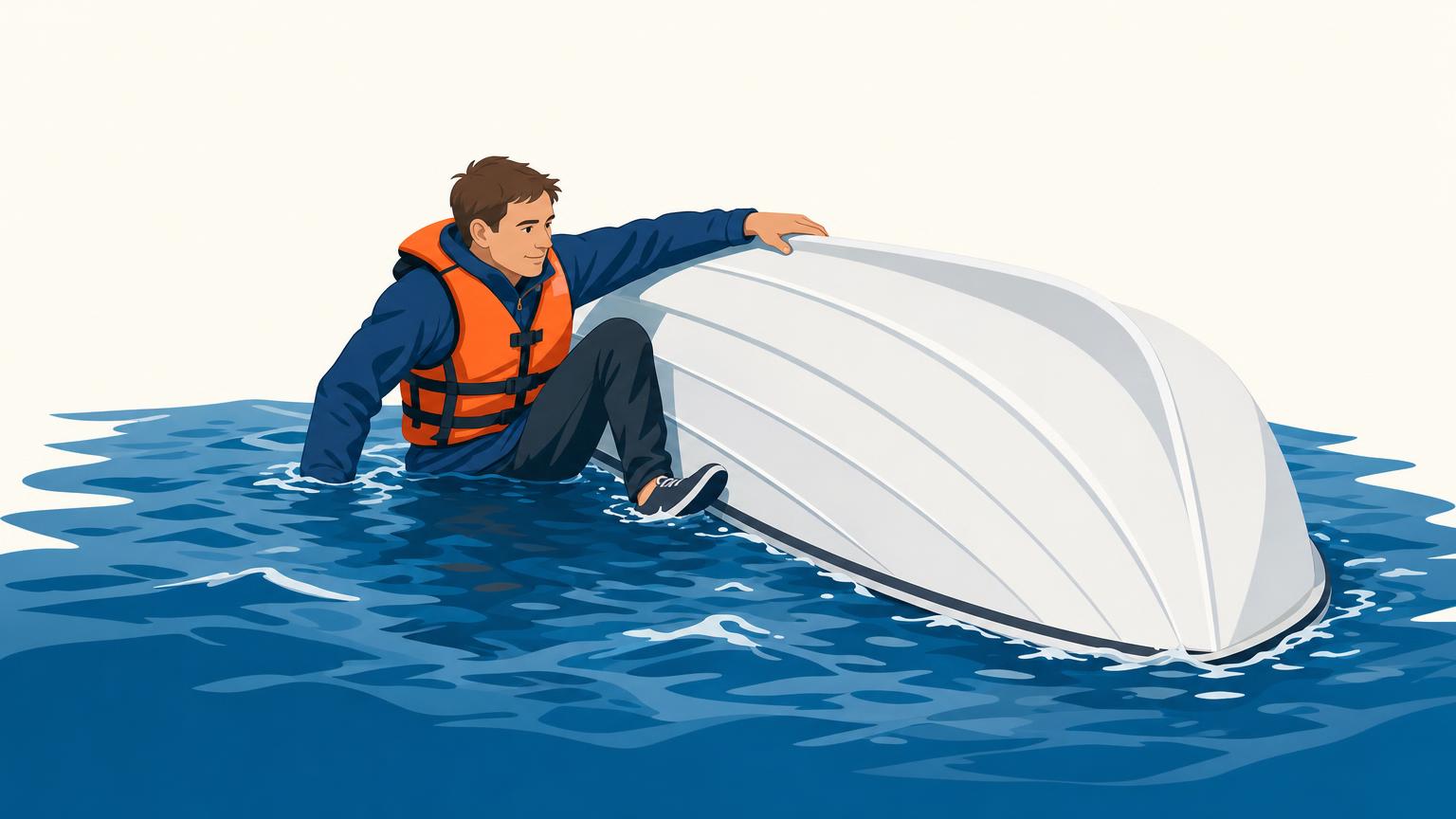
Quick answer
The short version
Cold water shock is your body's immediate reflex to sudden cooling of the skin. You may gasp, breathe very fast, and struggle to think clearly. This often eases within a few minutes, but the exact timing varies from person to person and dip to dip. Next, cooling muscles and nerves can weaken your hands, arms, and legs, making swimming or climbing harder even while you stay fully conscious. Hypothermia (dangerously low core body temperature) usually comes later.
Keep your airway clear and let your life jacket support you while your breathing settles. Then get as much of your body out of the water as you safely can, since even a partial exit slows heat loss noticeably. If you cannot get out, keep your life jacket on and use HELP: knees drawn up, legs together, arms held close, and head above water.
Many people assume the main danger after falling into cold water is hypothermia. Researchers who study cold-water immersion deaths describe it differently: over half of those who die in cold water die in the two stages that come before hypothermia even becomes a factor.
A rapid drop in skin temperature can trigger an involuntary gasp and fast, uncontrolled breathing. This is called cold water shock. Next, cooling muscles and nerves can weaken your hands, arms, and legs until swimming becomes difficult or impossible. This is swim failure. Hypothermia, when your core body temperature falls below 35°C (95°F), usually comes later, often after about 30 minutes for an average adult.
These times are not a fixed countdown, and treating them as one is itself a common mistake. Water temperature, clothing, body size, and conditions all change how quickly each stage develops, and physical ability does not suddenly drop at the end of a fixed number of minutes. It declines the entire time you are in the water. You will learn the stages in order, then see how to keep your mouth and nose clear of the water, get out if you can, and conserve heat if you cannot.
Cold shock starts at the skin; and disrupts breathing first
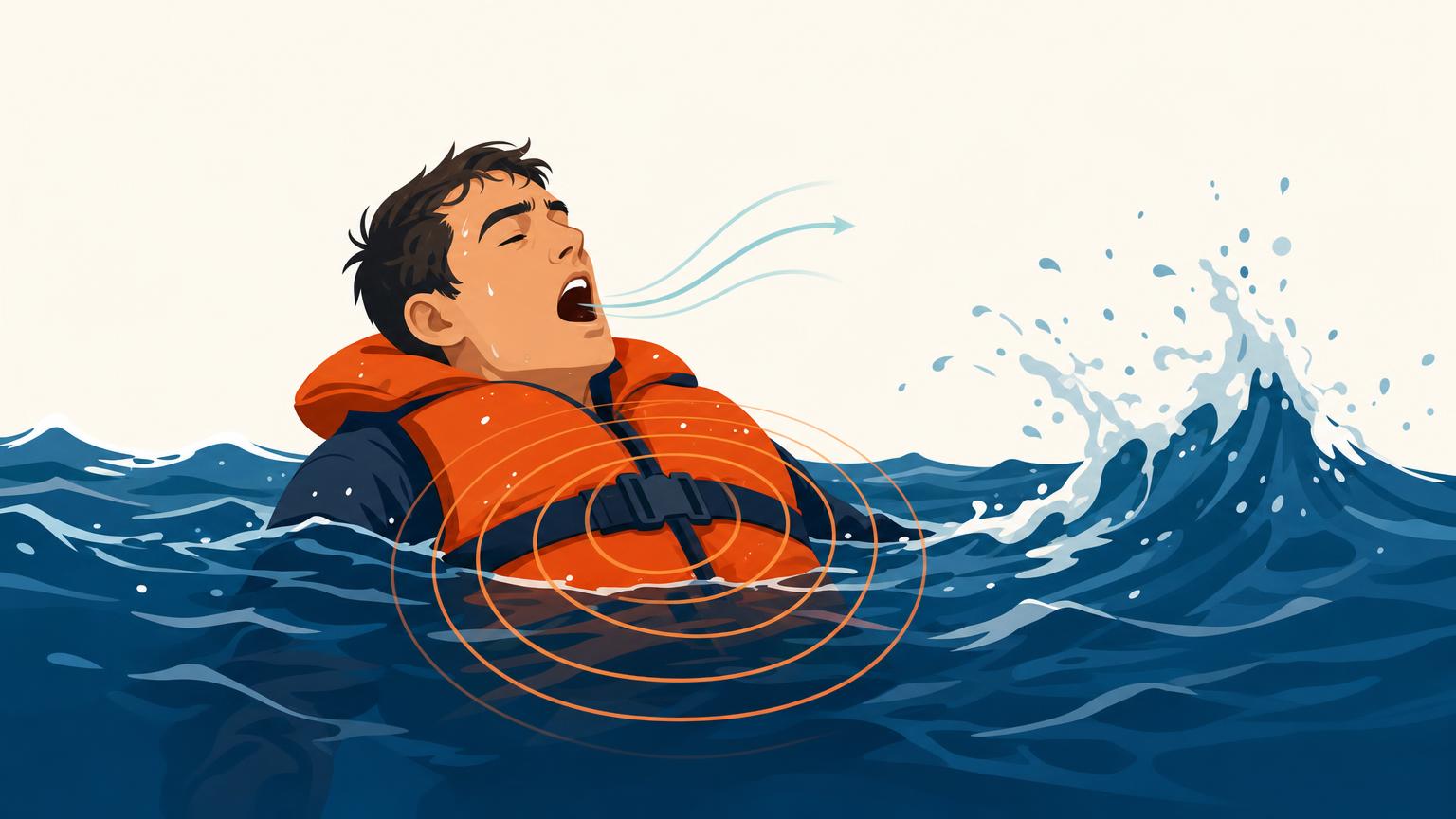
Cold water shock begins when a large area of your skin cools quickly. Your core body temperature does not need to fall first, and getting only your face or one arm wet is not enough to trigger it. The sudden skin cooling instead triggers an automatic reflex: a large inward gasp, followed by fast breathing that you cannot fully control. Your heart races, and your blood pressure rises. In the first minute alone, measurements from cold-immersion research have shown heart rate climbing from around 96 to 156 beats per minute and breathing rate climbing from around 12 to 66 breaths per minute.
This is not panic or a failure of willpower. The breathing response can override conscious control entirely, and it can even repeat, producing several large gasps in a row rather than just one. It is often strongest in the first thirty seconds and typically peaks and fades within two to three minutes, though the unsettled, short-of-breath feeling can continue a little longer before it eases. Staying as calm as the moment allows genuinely helps, not as a matter of willpower but because measured anxiety makes the whole response worse.
If your mouth is underwater when the first gasp comes, you can inhale water immediately, and very little is needed to start drowning. In rough water, rapid breathing can also be hard to match with waves, since coordinating a breath with a breaking wave is difficult even for a strong swimmer. A splash across your face at the wrong moment may enter your airway. While this reflex is active, hyperventilating hard enough can make even a short swim of six to ten feet impossible for a confident swimmer, which is why drowning can begin before hypothermia develops, even if you are a strong one.
The water does not need to feel ice-cold to trigger this. Cold shock responses have been reported in water as warm as 25°C (77°F), and can be just as severe around 10 to 15°C (50 to 60°F) as at 2°C (35°F), although colder water generally causes a stronger response overall.
Swim failure can arrive before hypothermia
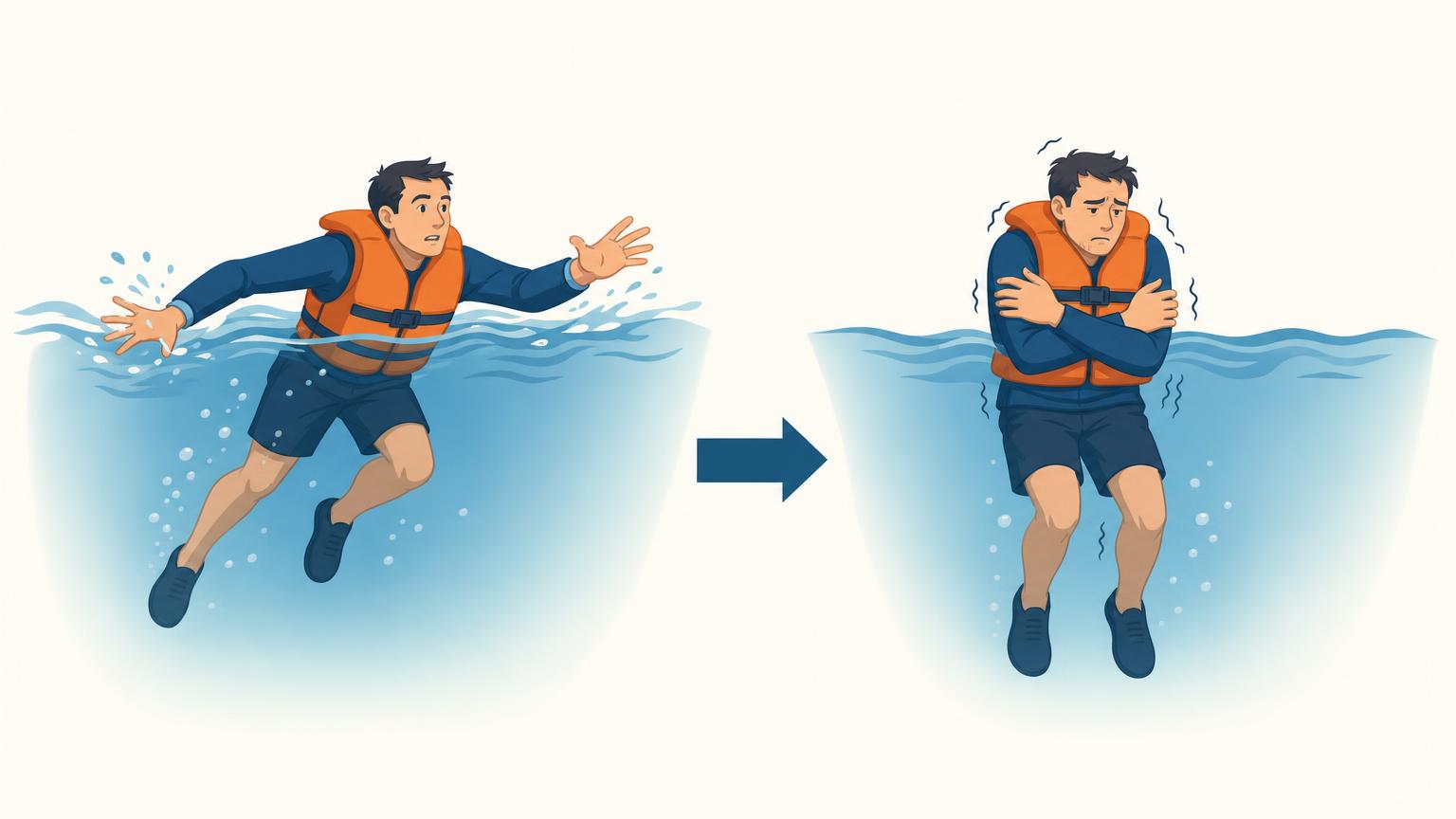
After the first cold-shock response, cooling begins to affect your nerves and muscles directly, not your core temperature. Your hands may stiffen and your fingers can splay apart, which further compromises your grip. Then your arms and legs lose strength and coordination. You can still be fully conscious and thinking clearly while becoming unable to hold a line, climb out, use a phone or VHF radio, or swim effectively, and in very cold water the use of your hands alone can be lost in under a minute.
This decline is progressive, not a sudden cutoff at a set time, and the colder the water, the faster it happens. It may begin within seconds and become dangerous over the following minutes. As your stroke breaks down, keeping your mouth clear of the water becomes harder, and you may lose the ability to keep your back turned to oncoming waves, which raises the risk of inhaling one. Controlled swimming trials show how fast this can turn serious: volunteers swimming at a comfortable pace all managed a full ninety minutes in 25°C water, most managed the same at 18°C, but fewer than half could still swim after ninety minutes once the water dropped to 10°C. Researchers concluded this early loss of physical performance, not hypothermia, is the major danger to most people who go into cold water unexpectedly, and drowning tied to this stage has been recorded anywhere from about three to thirty minutes after immersion, most often in people still trying to swim rather than staying still.
Hypothermia comes later still. It means your core body temperature has fallen below 35°C (95°F). For an average adult, this typically takes about 30 minutes or more, even in very cold water, and children cool noticeably faster than adults because of their smaller body size. Shivering is a useful early warning sign along the way: it means your body is already working to increase heat production, and while it does not mean you are hypothermic yet, it does mean you are heading that way. Water temperature, clothing, body size, and conditions all affect how quickly you cool, but the key order stays the same: cold shock first, swim failure next, and hypothermia later.
Protect your airway, then get out of the water if you can
Keep your mouth and nose clear of the water. This protects your airway (the path you breathe through) while the cold water shock response begins to ease. Stay with whatever is keeping you afloat, such as your life jacket or anything that floats. Your breathing often starts to settle within a minute or two, though it can take longer, and trying to force it faster rarely helps.
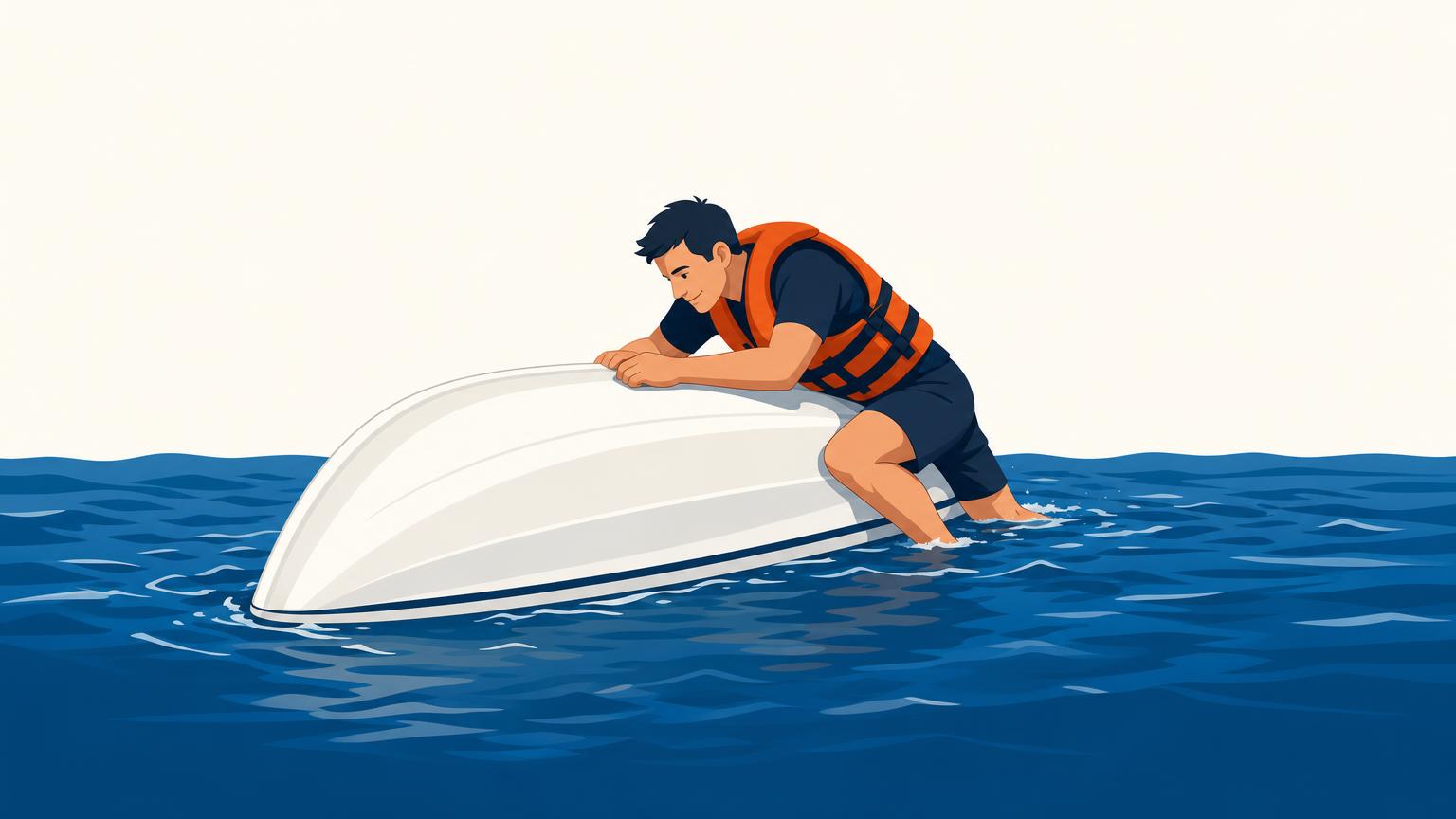
Do not begin a hard or aimless swim while you are gasping or breathing rapidly, since swimming itself can increase how fast your body cools by roughly a third. Once you can breathe more steadily, climb onto a nearby hull, floating object, or anything else that can support your weight if one is within reach. If you have capsized, your own boat is often the best resource available: it floats, it is large, and it is easier for rescuers to spot than a lone swimmer.
Get as much of your body out of the water as possible, even if you cannot get completely dry. Water can remove body heat roughly 25 times faster than air at the same temperature, so partial escape still helps slow heat loss substantially. Keep your clothing on. Its layers can hold some warmth, and clothed swimmers in cold-water trials showed a noticeably milder gasp and breathing response than swimmers in a bathing suit alone. If you cannot get out, stay supported by your life jacket or another floating object and save your energy rather than treading water.
If you cannot get out, use HELP and keep your life jacket on
Use the Heat Escape Lessening Position, or HELP, while you wait. Draw your knees toward your chest, keep your legs together, cross your arms tightly inward, and hold your head above water. This tucked pose specifically shields your armpits, groin, and head, which are areas that lose heat fast. Practise it once in a pool before you ever need it for real, since it feels different in open water than it does on dry land.
Your life jacket provides essential flotation (the support that keeps you at the surface). It buys time during cold water shock and as your muscles lose strength and control, sometimes within a minute or two. Keep it on. Cold water can make your hands and other muscles stop working very quickly, so putting on a life jacket after you fall in may be extremely difficult or impossible.
HELP must not put your face underwater. Your first priority is to keep your mouth and nose clear of the water. If the tucked pose submerges your face, use a stable face-up position instead, with your head back and your limbs held close. A life jacket helps you stay afloat, but it may not keep an unconscious person face-up. If others are with you, huddle close together, sides touching, to conserve heat and stay easier to spot than one person alone. You may have heard a rule promising a fixed number of minutes for each stage. Treat any such rule as a rough memory aid at best, since real ability declines continuously rather than holding steady until a deadline.
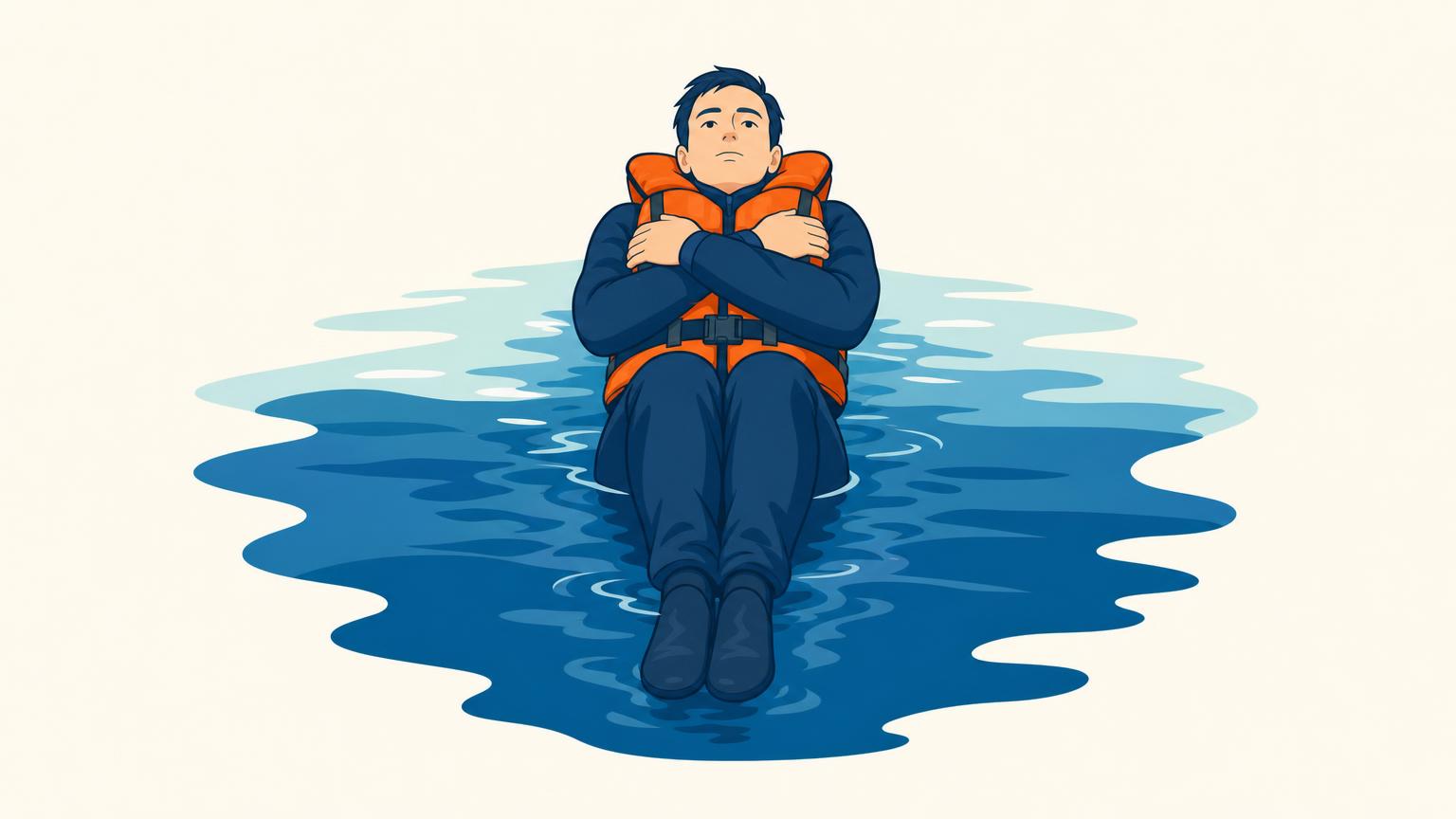
Cold-water immersion has no exact countdown, yet the first few minutes matter more than many people expect. Having a plan before you go in matters too, because cold shock makes it harder to think clearly enough to improvise one on the spot. Cold shock can disrupt your breathing first, and weakening muscles can make swimming harder before hypothermia develops. A few simple actions carry you through this dangerous early period: get as much of your body out of the water as you safely can, keep your life jacket on, and use HELP if you cannot get out. Even once you are out of the water, keep an eye on the person affected, since core temperature can keep dropping for a while afterward, so getting warm, dry, and sheltered as soon as possible still matters. The same logic applies before you ever fall in: wearing your life jacket and knowing your first response if someone goes over the side matter more than anything you can do once you are already in the water, and if your own boat capsizes with you, the get-out-and-stay-with-it logic behind recovering a capsized dinghy applies to your own survival too. To practise these ideas visually, start with SailStarter's five-minute beginner lesson When the water is cold: cold shock & hypothermia.
Try it from the lesson
Can you spot the next move?
You enter cold water and gasp uncontrollably while your breathing races. What is happening, and what comes first?
Why you can trust this guide
. We build each guide from public seamanship and safety sources, then teach the universal principle before any local difference.
- weather.gov
- dco.uscg.mil
- coldwatersafety.org
- coldwatersafety.org
- coldwatersafety.org
- coldwatersafety.org
- coldwatersafety.org
- coldwatersafety.org
- rnli.org
- rnli.org
- rnli.org
- pubmed.ncbi.nlm.nih.gov
- pubmed.ncbi.nlm.nih.gov
- pubmed.ncbi.nlm.nih.gov
- sciencedirect.com
- journals.physiology.org
- sciencedirect.com
- doaj.org
- ncbi.nlm.nih.gov
- ncbi.nlm.nih.gov
- researchgate.net
- port.ac.uk
- worksafebc.com
- parks.wa.gov
- army.mil
- dnr.state.mn.us
- seagrant.umn.edu
- uscgboating.org
- en.wikipedia.org
- safeboatingcourse.ca
- boatsmartexam.com
- driveaboatcanada.ca