Chart your course
One Hand for the Boat: How to Move Safely on a Sailboat
Quick answer
The short version
To learn how to move safely on a sailboat, start with three points of contact: two feet and one hand, or two hands and one foot. Follow the sailor’s rule, “one hand for yourself, one hand for the boat.” It may feel unusual when the deck first rolls or heels (leans to one side), but balance comes with simple, learned habits.
Move slowly with bent knees and keep your weight low. Stay inboard and away from the edge. When the boat heels, choose the windward side (the higher side, toward the wind). Grip solid rails or other firm handholds, not lifelines, the flexible wires along the deck edge.
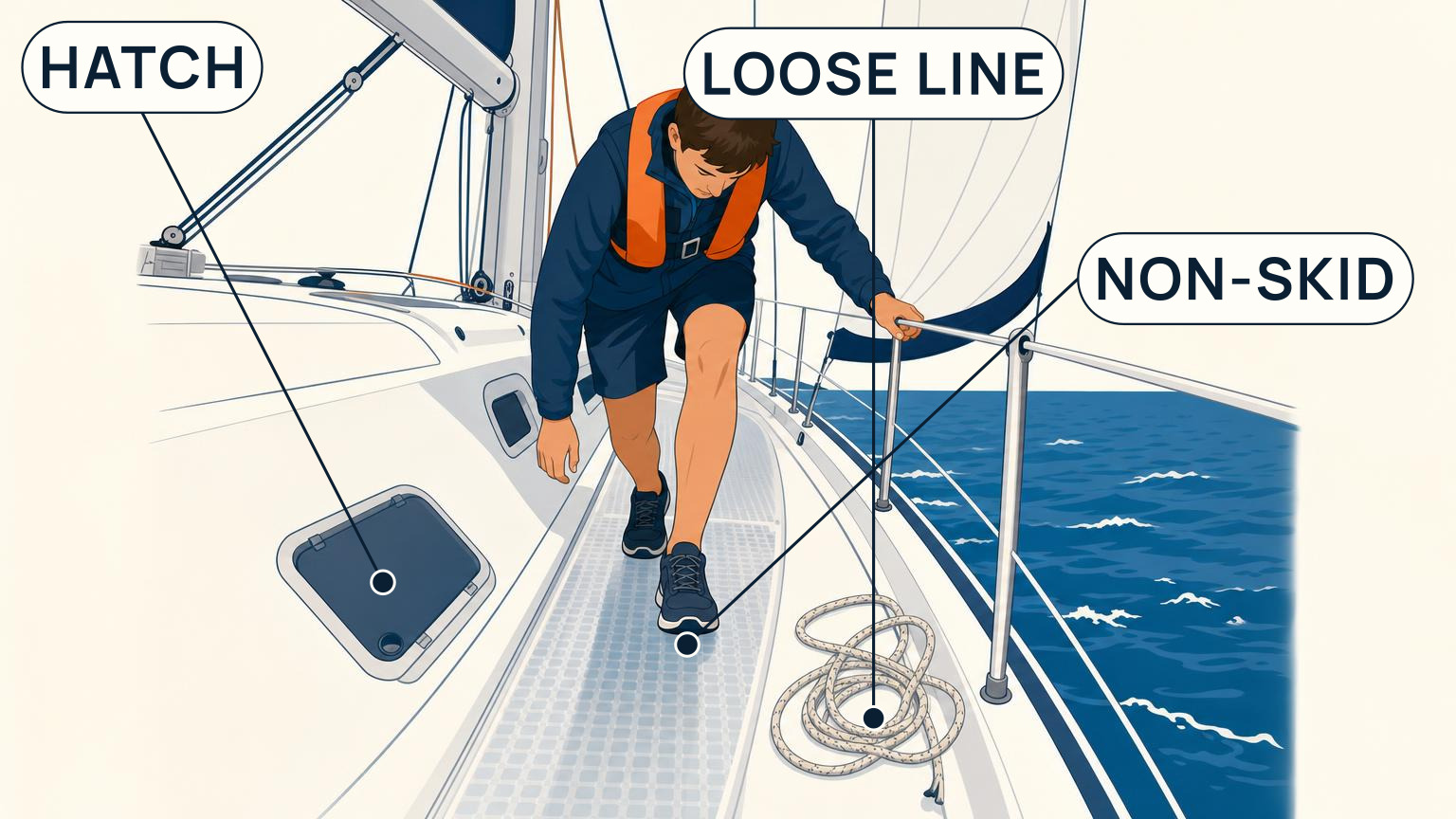
Before each step, check your footing. Hatches can be slippery, and round, loose line can roll under your foot.
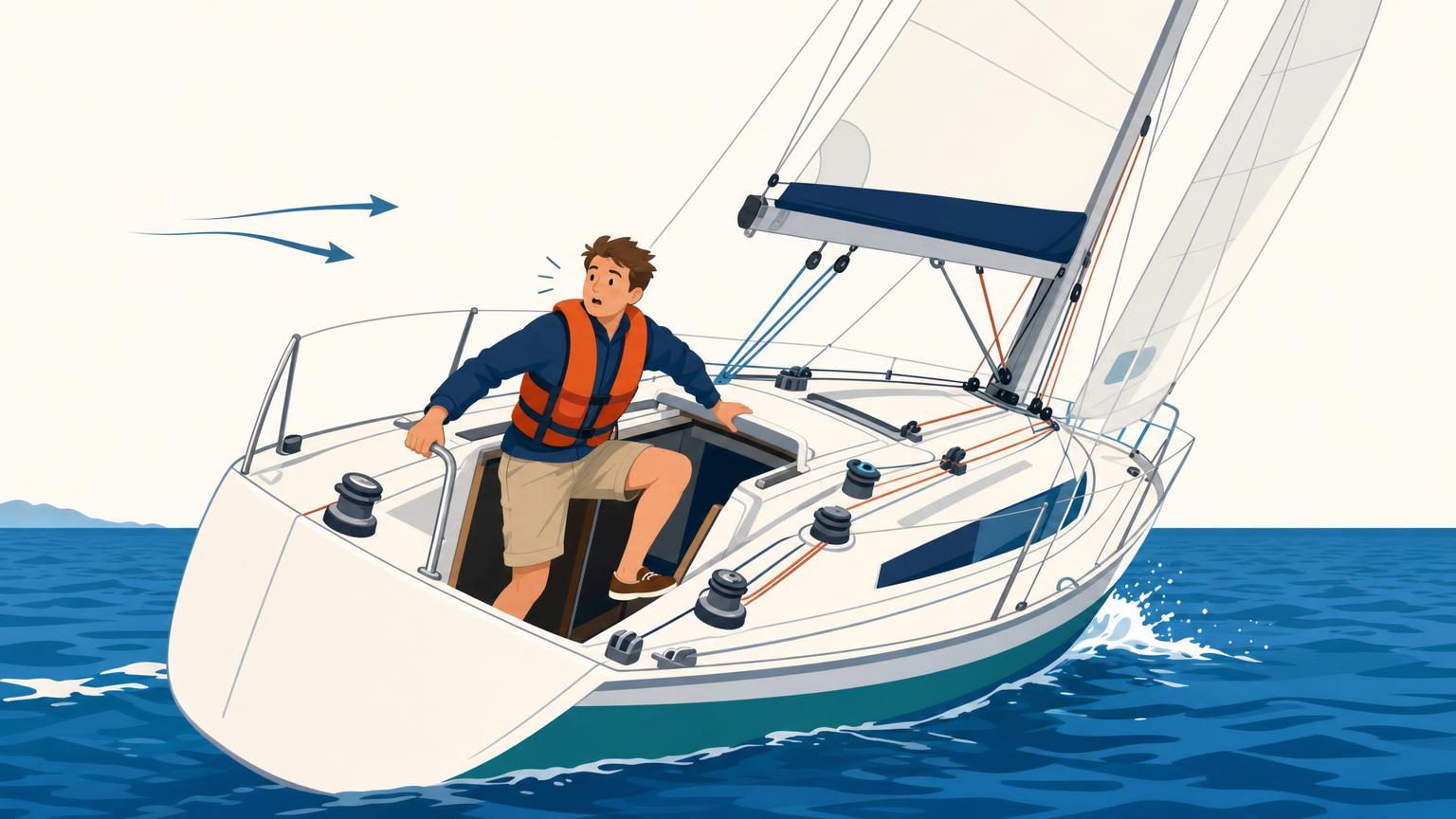
The first time you're aboard, you stand up, take a step toward the bow, and the deck rolls beneath your feet. Or the boat heels (leans away from the wind) and what looked flat becomes a slope. The surprise is normal. Experienced sailors do not rely on exceptional balance. They learn to anticipate the motion and use a few simple habits almost without thinking.
Learning how to move safely on a sailboat starts with staying connected to it. You keep three points of contact, leave one hand free for the boat, and lower your stance. You choose the windward, or uphill, side when the boat heels. You move between solid handholds instead of leaning on the flexible lifelines at the deck edge. Before each step, you look for hatches, hardware, and loose line underfoot. Together, these habits make movement calm and deliberate.
Keep Three Points Connected
To move safely on a sailboat, use the old guide: “one hand for yourself, one hand for the boat.” Keep one hand available to grip a solid hold while your other hand does the job. This is a practical habit, not a test of exceptional balance.
Aim for three points of contact. When you are standing still, plant both feet and keep at least one hand on a hold. When you step, use both hands and move one foot at a time. Three points keep most of your body connected to the boat, so a roll cannot easily set you off balance.
Move slowly from one stable position to the next, keeping a hand ready for the boat.
A handhold is anything rigid enough to trust with your weight, not only the obvious rails. A cleat, the edge of a seat, the top of a windscreen, even the wheel itself can serve if it is firmly fixed and does not flex when you pull on it. That last part is the real test: a solid handhold gives you nothing when you grip it, while a flexible one moves with your weight instead of holding you in place. Learning to tell the two apart at a glance is most of what this habit is.
Stay Low and Take the High Side
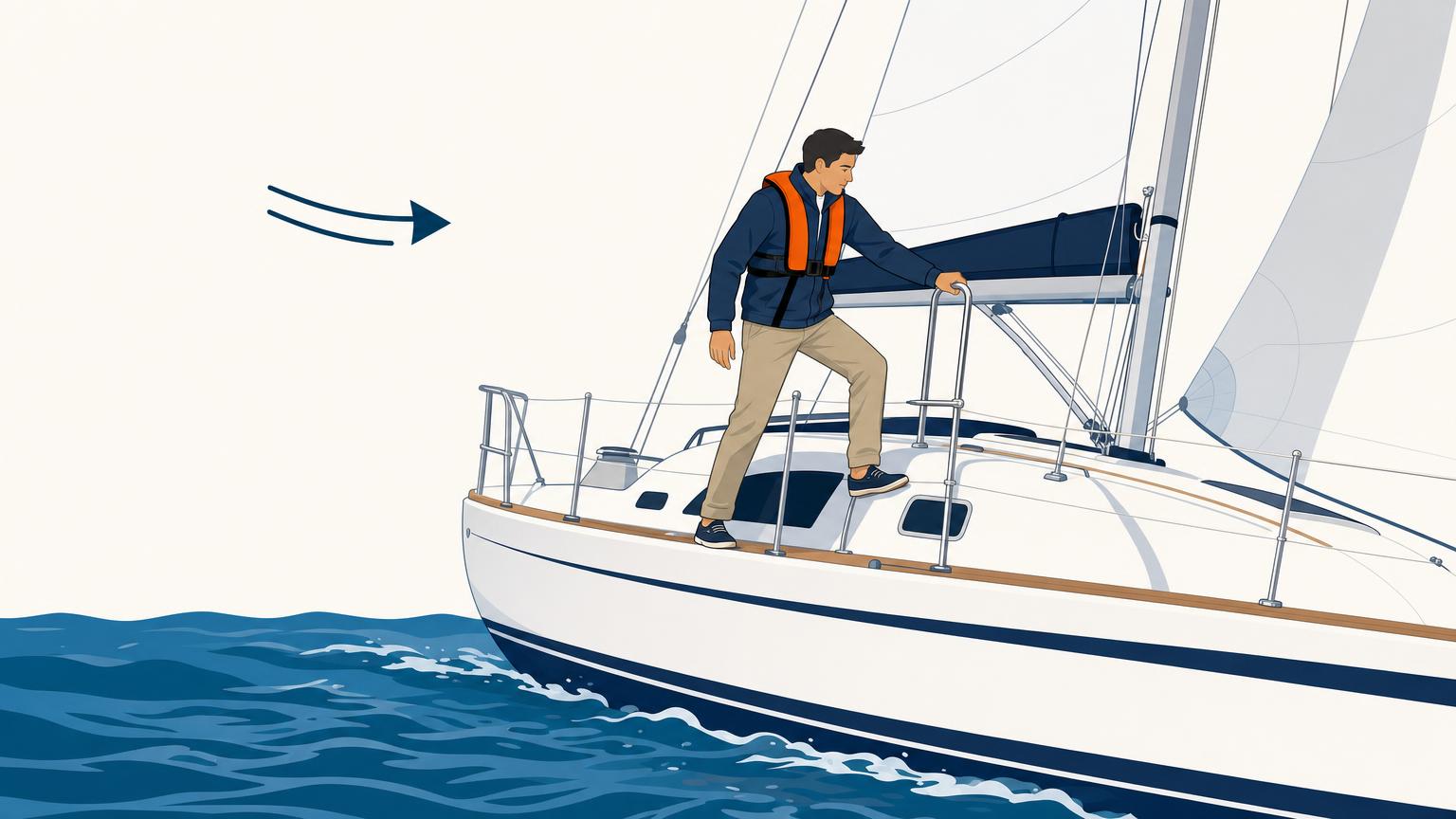
Your contact points work better when your body is ready to move with the boat. To move safely on a sailboat, bend your knees and keep your weight low. Stay inboard and away from the edge rather than standing tall beside the lifelines.
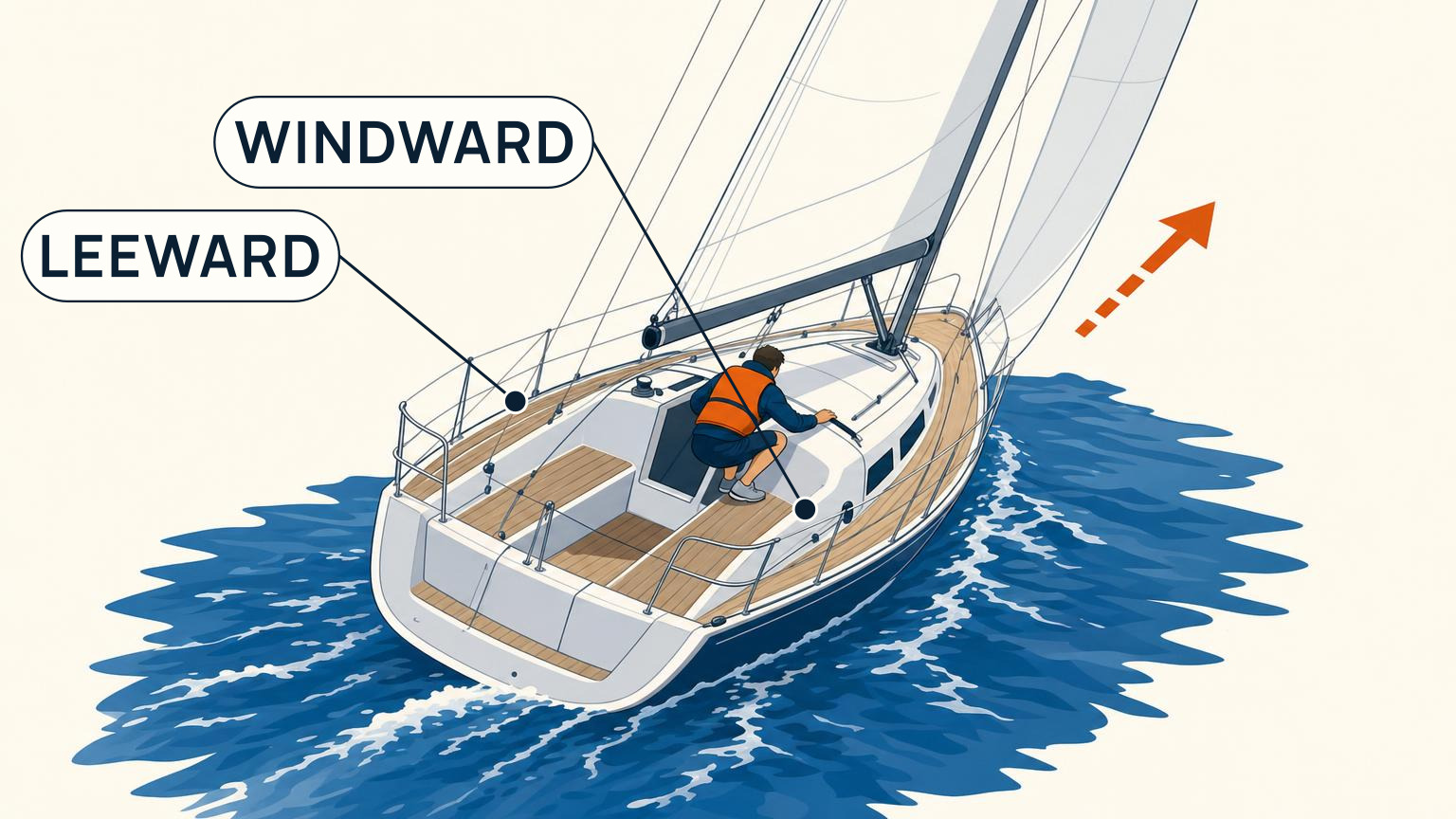
When the boat heels, or leans away from the wind, the windward side becomes the uphill side. That is usually your route forward. It helps you keep your body inboard instead of moving along the lower, leeward edge. On that low side, the lifelines sit right at the edge, so leaning on them puts your weight exactly where you do not want it. Wind pressing on the sails pushes the top of the mast away from the wind, which is what tips the whole boat onto that lower side in the first place, and the effect grows the closer you sail toward the wind.
This is the opposite of what you may have heard about big ships, where crew sometimes work the sheltered, downwind side in heavy weather to stay out of the wind and spray. A sailboat heeled over works the other way because gravity, not wind shelter, is the concern: on the high side you fall inward onto the deck, and on the low side you fall outward toward the lifelines and the water. Keep the two mental pictures separate; the sailboat rule is about which way you will fall, not about staying dry.
Do not assume the raised cabin top is a better path because it is near the middle. Standing there raises your body into a position where the boat's motion can pitch you over the lifelines, and its sloping surfaces are easy to slip on. Hold the grab rails on the cabin top while you walk along the side deck beside it, and stay aware of what is overhead as you go. The boom swings at roughly head height, and it is easy to forget about right when you have stepped up onto the cabin top and lost the cockpit's usual clearance.
If the motion gets rougher, your footing feels awkward, or you are leaving the cockpit, crouch, scoot, or crawl. Sailors choose the position that feels secure; standing is not the goal. How you move should be one of the first things you decide, not an afterthought once you are already unsteady on your feet. In the cockpit itself, bracing a foot against a solid surface serves the same purpose seated as a handhold does standing: it lets you keep working through a sudden lurch instead of just avoiding a fall.
Build a Route from Solid Handholds
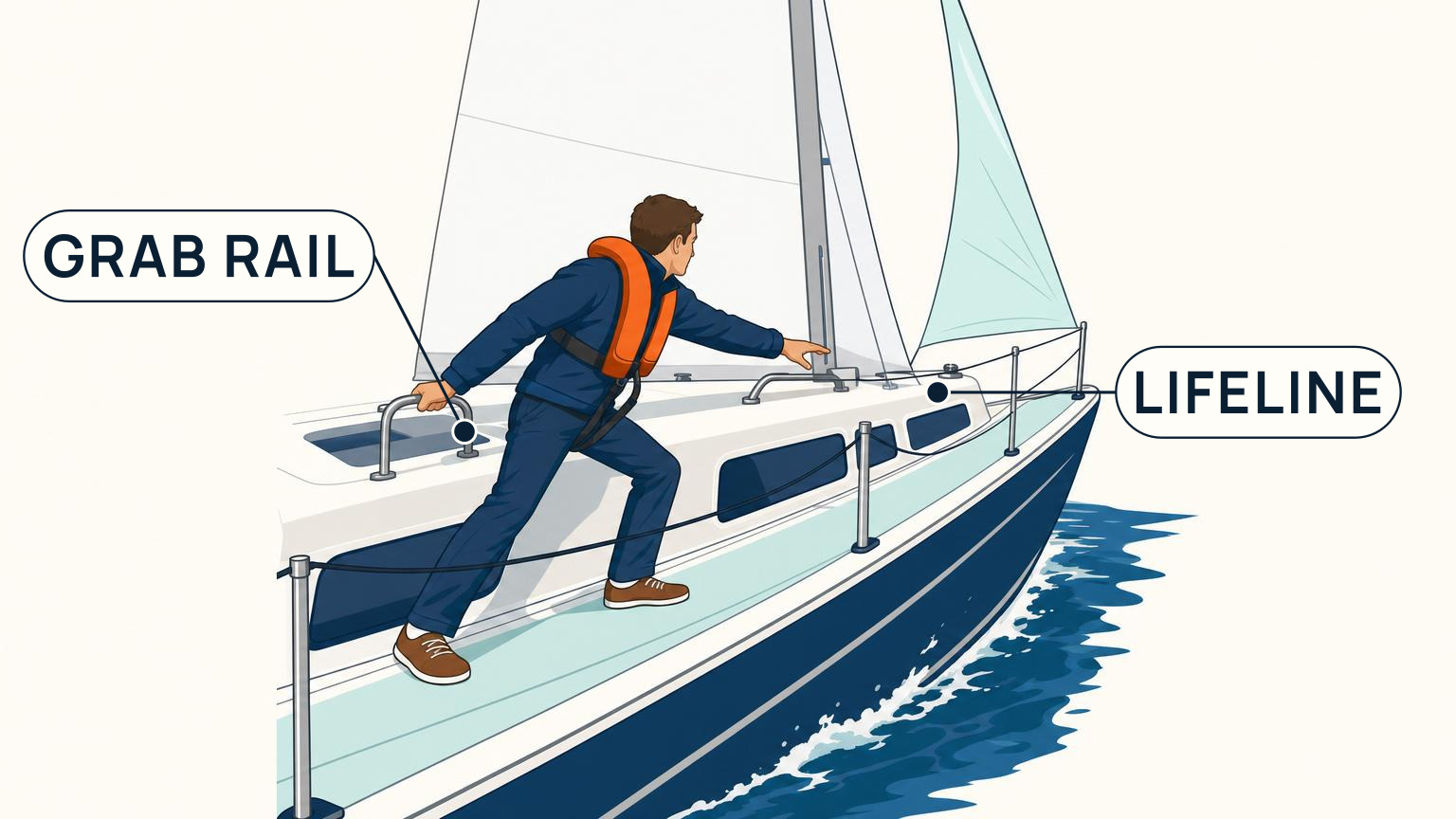
Learning how to move safely on a sailboat starts before you leave the cockpit. Pause and trace a hand-to-hand route toward your destination. Because every boat has a different layout, plan each move before you make it and look for a continuous chain of fixed holds.
Choose rigid grab rails and other parts that are firmly fixed. Move only when you know what your next hand will grip. Plan the whole move in advance, especially in rough weather or after dark, rather than reaching out and hoping something solid is there.
Do not depend on lifelines, the flexible wires running along the deck edge. They can bend or move under pressure. Treat them as edge barriers, not as dependable handholds. Using holds farther in keeps your body away from the edge, or outboard side.
Every boat lays out its handholds differently: some have a clear, wide side deck the whole way forward, while others narrow to a tight passage that takes more thought to cross. Before you leave the dock, walk the route once and notice where the reliable holds actually are on this particular boat. Below decks the same habit applies. Companionway steps, the stairway down into the cabin, are one of the more common places to lose your footing, so keep a hand on the rail there just as you would on deck.
Some boats rig a jackline; a line or webbing strap; near the centerline. A crew member clips a short safety strap, called a tether, to it. This helps keep the crew member nearer the middle of the boat.
Watch the Deck Before Each Step
Look where your next foot will land, then move it deliberately. Aim for the textured non-skid, the deck surface made to give your shoes more grip. Step around hatches and raised deck hardware rather than placing a foot on them.
Treat loose line as part of the route check. A line crossing your path can catch your foot. A line running in the same direction as your path can roll under your shoe. Step around it; handling and stowing lines is a separate skill.
Wear non-skid footwear suited to a wet, moving deck. A good deck shoe grips wet and dry surfaces about equally well, which is harder than it sounds; many ordinary athletic shoes turn slick the moment the deck gets splashed. Soles with deep, aggressive lugs, the kind built for trail running, can work against you too, catching on line and hardware instead of just gripping the deck. Shoe grip also fades with use well before the shoe looks worn out, so it is worth judging a deck shoe by how it feels underfoot on a wet surface rather than by how new it looks. In colder or rougher conditions, gloves are worth adding to that same kit: they hold your grip on wet rail and rigging and keep a sudden pull on something sharp from making you let go out of reflex.
Keep one hand on a solid hold, scan the next step, and move deliberately.
Moving safely on a sailboat is a learned habit, not a test of special balance. With a little practice, your movements become calm and automatic. You pause, look ahead, and keep three points of contact (two feet and one hand, or two hands and one foot) while the deck moves beneath you. The saying “one hand for yourself, one hand for the boat” reminds you to keep a secure grip as you work or move. Staying low, choosing solid handholds, and placing each foot deliberately help you feel confident on a boat that never holds still. You do not need to rush or move like an expert. You simply build the habit one careful step at a time, the same habit most skippers walk new crew through during a standard safety briefing before anyone leaves the dock. Next, try SailStarter’s short beginner lessons and practice another sailing fundamental.
Try it from the lesson
Can you spot the next move?
The boat leans away from the wind. Which side offers the safer route forward, assuming its handholds and footing are clear?
Why you can trust this guide
. We build each guide from public seamanship and safety sources, then teach the universal principle before any local difference.
- practical-sailor.com
- americansailing.com
- boatus.org
- modernsailing.com
- westmarine.com
- pantaenius.com
- 19january2021snapshot.epa.gov
- boat-ed.com
- practical-sailor.com
- practical-sailor.com
- boatus.com
- practical-sailor.com
- noonsite.com
- westmarine.com
- sailmagazine.com
- standards.iteh.ai
- osha.gov
- proptalk.com
- ussailing.org
- modernsailing.com
- mandurahyachtacademy.au
- yachtingmonthly.com
- keyassets.timeincuk.net
- rightboat.com
- yachtingworld.com
- boatus.org
- en.wikipedia.org
- en.wiktionary.org
- journals.plos.org
- scubaguru.com
- sailingvirgins.com
- amnautical.com
- goodhueboat.com
- boatstreets.com