Chart your course
Jacklines, Tethers, and Sailing Harnesses
Quick answer
The short version
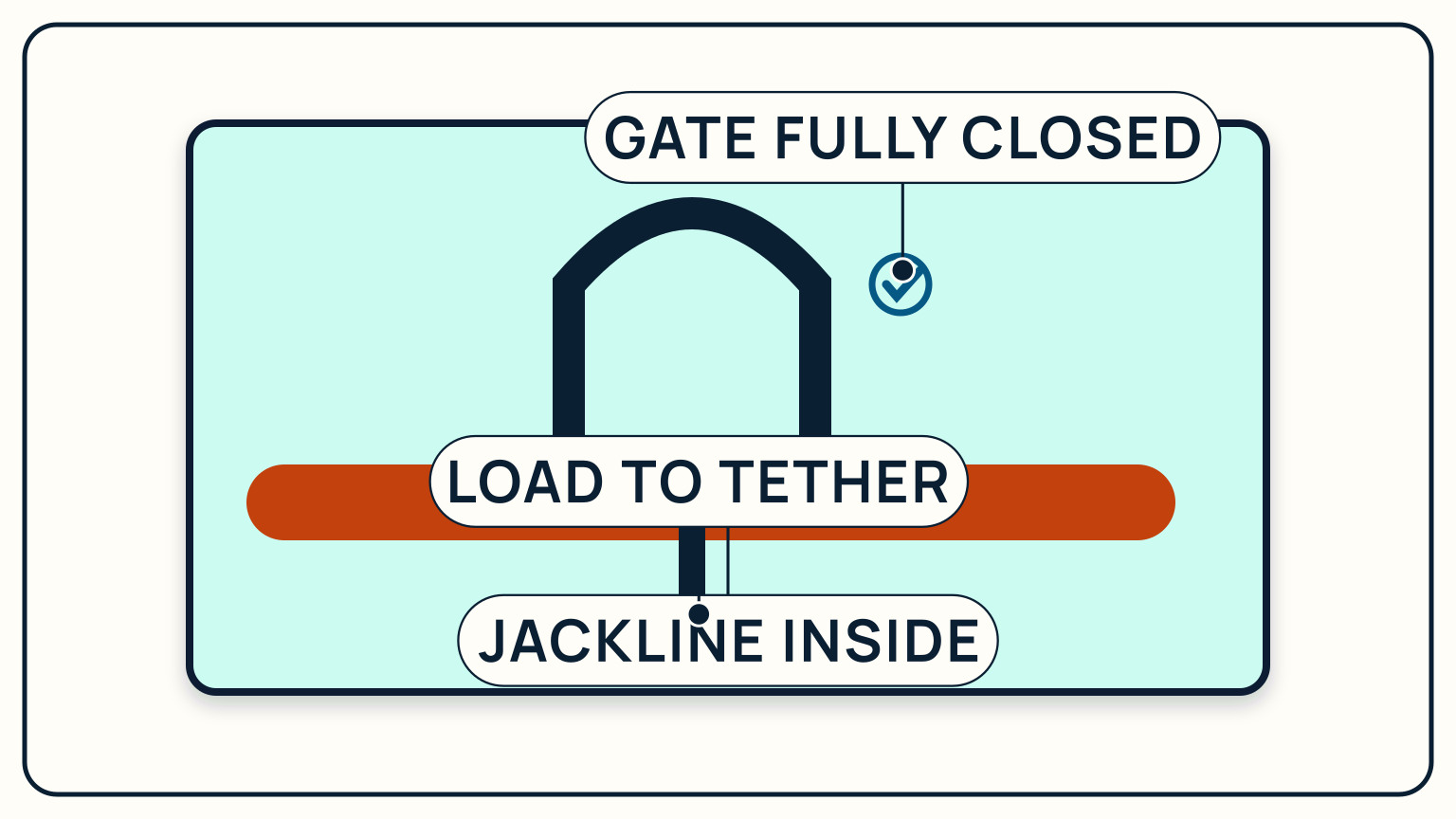
Three pieces of kit make one connection. The harness goes on your body with its attachment point high on the chest. The tether runs from that point to the boat and is capped at two metres including its hooks under the offshore racing standard. The jackline is the strong line running fore and aft along the deck that lets you walk the length of the boat without ever unclipping. Rigged properly, you clip on below or in the cockpit before you come on deck, and you stay connected until you go below again. Rigged badly, the same equipment can leave you in the water alongside a moving boat, which is why the routing and the length matter as much as the hardware.
This gear has an unglamorous reputation because most people meet it on the one day the weather turns. It is worth understanding earlier than that. The system is simple enough to check in a marina berth on a calm afternoon, and almost every failure mode is something you can see with your own eyes: a tether clipped to the wrong thing, a jackline run along the rail instead of the middle of the boat, or webbing that has been baking in sunlight for six seasons. None of that is obvious under way at night.
Three parts making one unbroken connection
The definitions used in the offshore rulebook are precise and worth borrowing. A jackstay, which most sailors call a jackline, is a securely fastened webbing or rope that lets a crewmember move from one part of the boat to another without having to unclip a deck safety harness tether. A tether is the line or webbing connecting that harness to a strong point or to the jackline. Everything else is detail hanging off those two sentences.
The purpose is continuity. The same rules require that clipping points let a crewmember clip on before coming on deck and unclip after going below, which tells you where the first attachment point belongs: at the companionway, within reach from inside. A person who has to climb into the cockpit before finding somewhere to hook on has already spent the most dangerous seconds of the trip unattached.
One family of attachment point is ruled out entirely. Guardrails are not built to take the loads imposed by a safety harness, so lifelines, stanchions and the pulpit are off limits, however convenient they look. And it pays to be honest about what the system actually promises. A person can drown while still tethered to a boat, and low freeboard makes that more likely. The gear is there to stop you leaving the deck, not to make going over the side survivable.
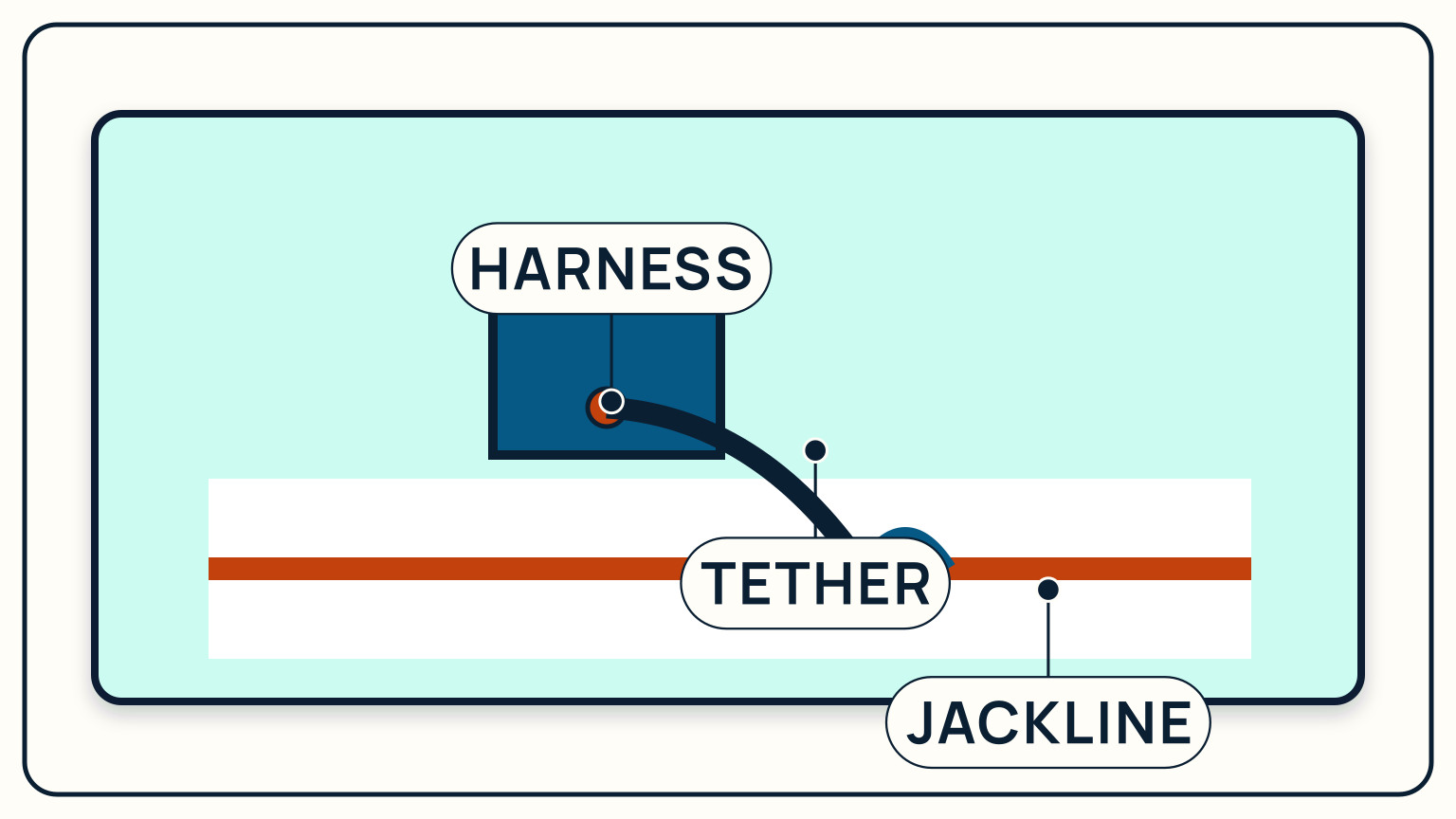
Reading the harness and tether before you trust them
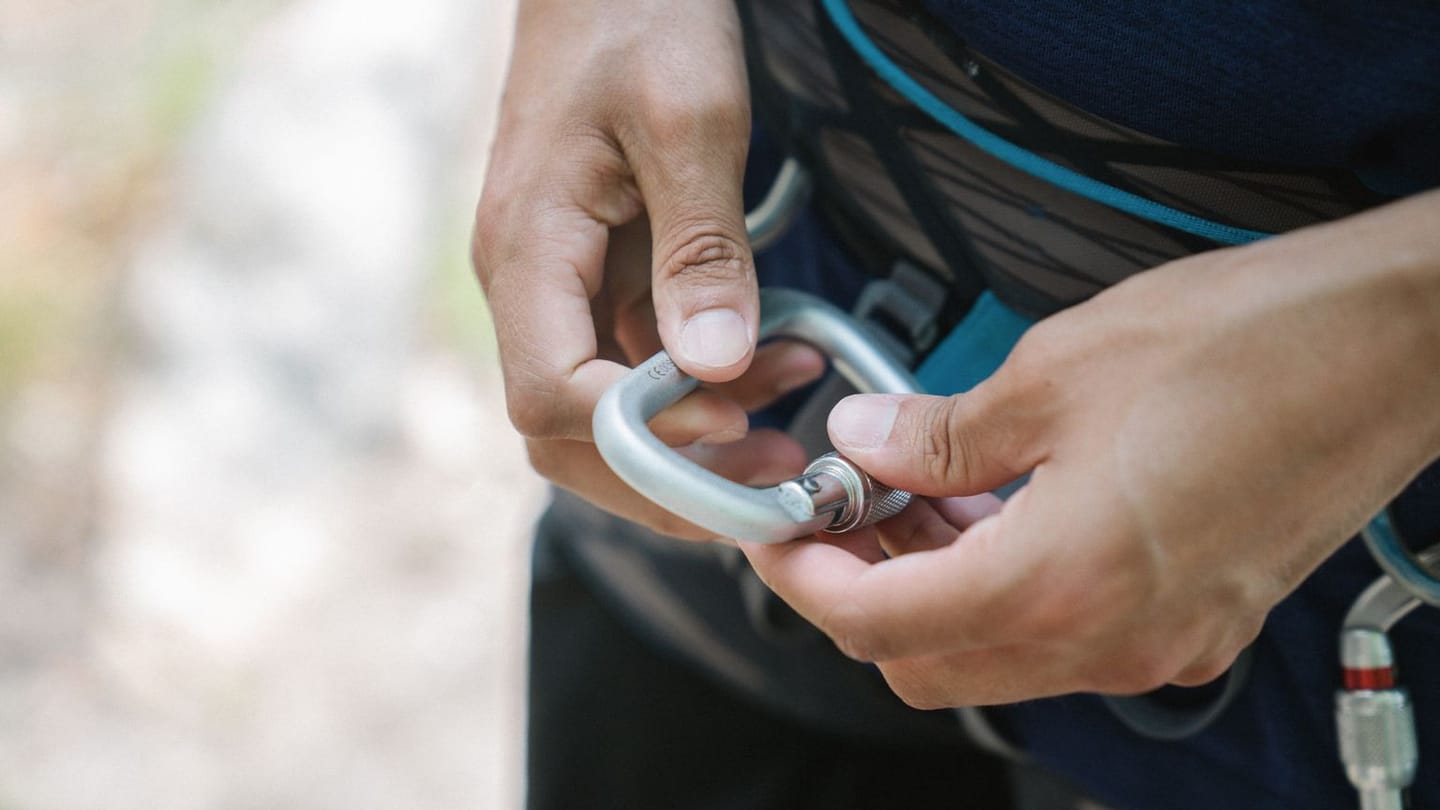
Start with fit. The harness attachment point sits above the lowest point of the breastbone, and the leg or crotch straps have to be strong enough to lift the wearer out of the water. A harness that can ride up over the shoulders when loaded has failed at the only moment it was needed. Adjust it before the trip, keep the same one for the duration, and check that it works with the lifejacket you will wear over or with it. Both are worn on the same torso, and they can fight each other.
Tethers are more standardised than they look. Offshore racing regulations call for a harness and tether complying with ISO 12401 or an equivalent, a tether no longer than two metres including the length of the hooks, self-closing hooks, and an overload indicator flag embedded in the stitching. That flag exists because a tether that has taken a real fall is finished: the rule says an overloaded tether shall be replaced, and the flag is how anyone can tell.
Test the hooks in your hands before you buy. You want to be able to open and close each one with a single gloved hand, because the other hand will be holding the boat. Some tethers are elasticised, which keeps slack off the deck where it would otherwise snag. And the whole thing should detach at both ends, for reasons the next section makes clear.
Moving around the deck without ever unclipping
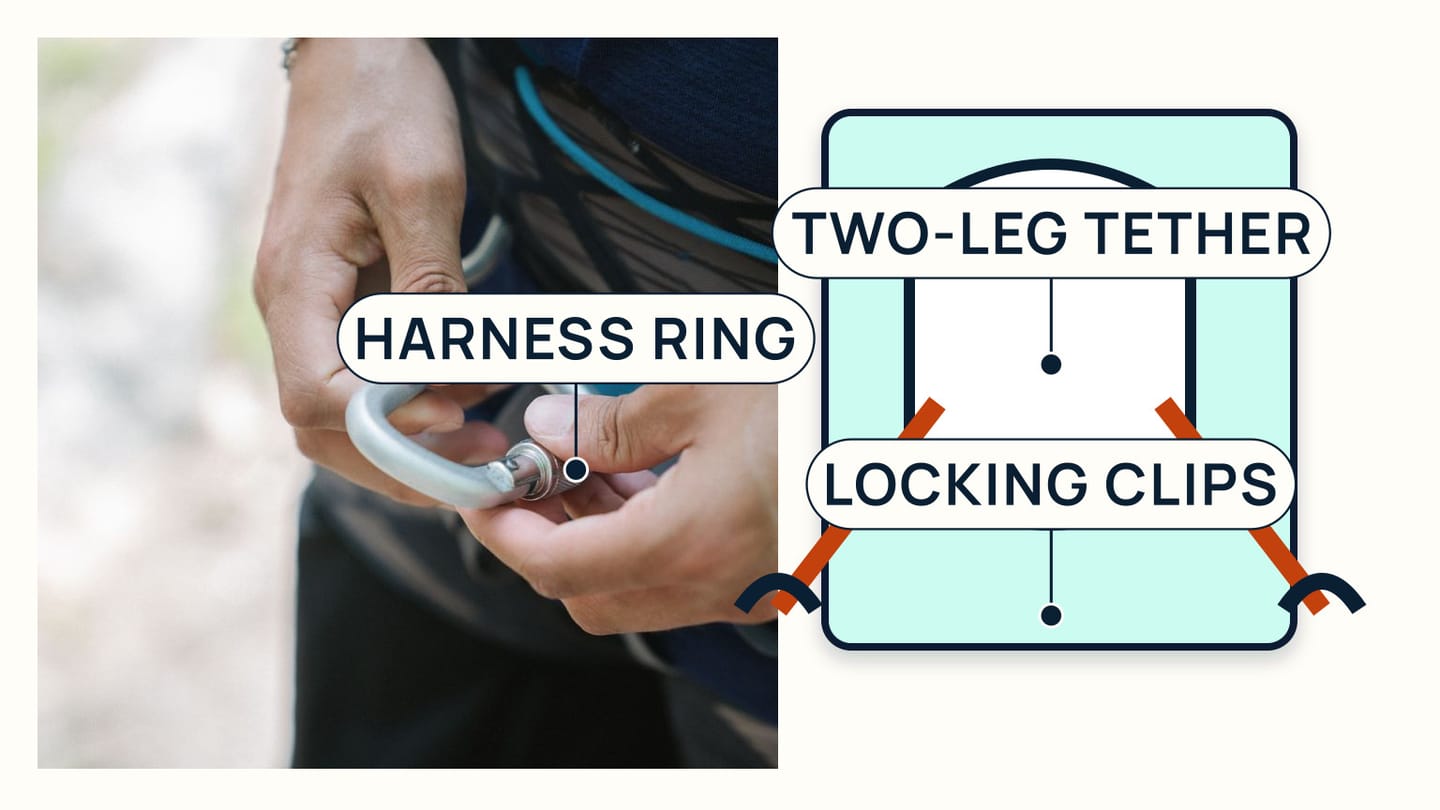
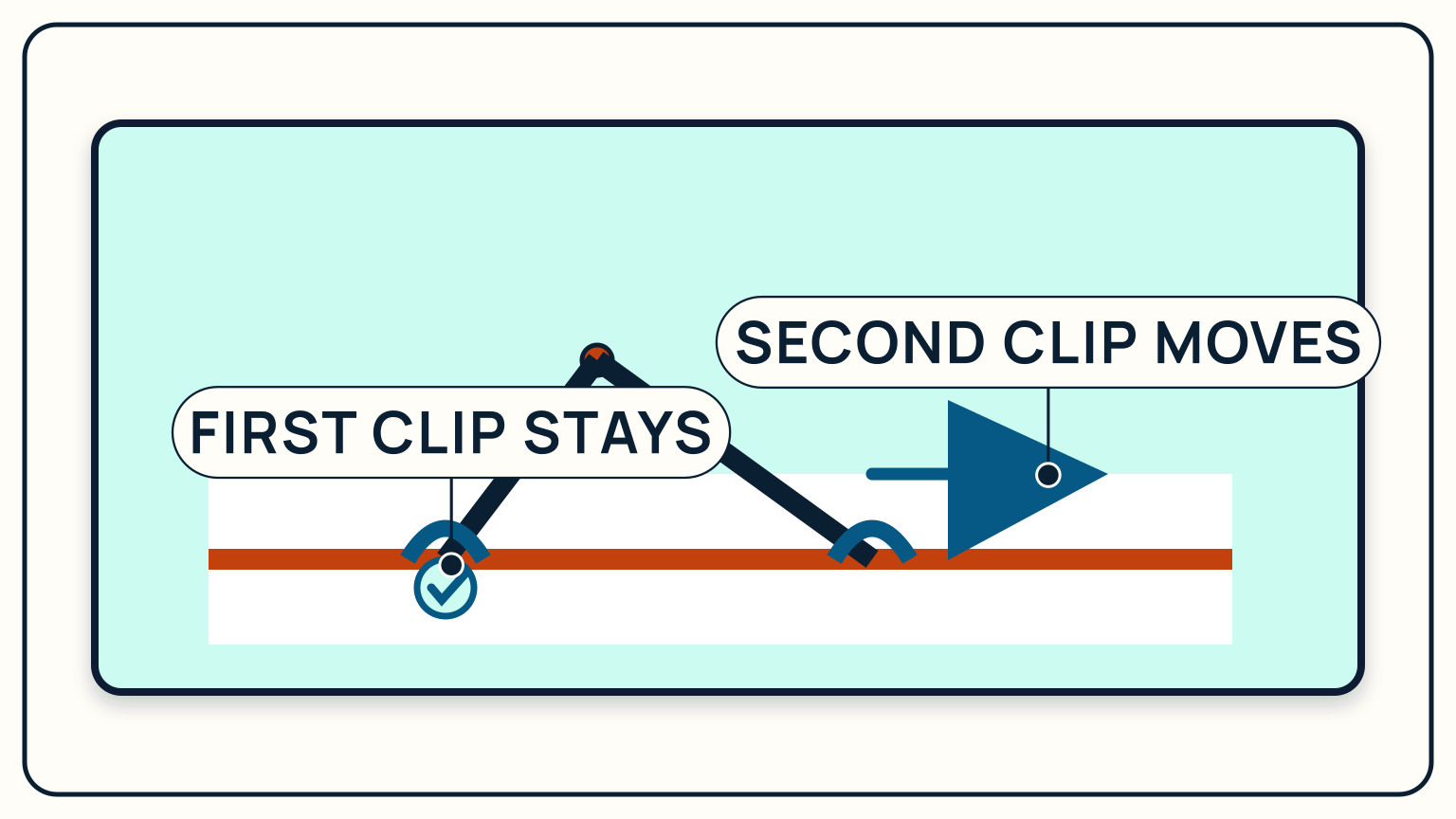
Here is the tension nobody can design away. The tether has to be long enough to let you move around the boat and short enough to stop you reaching the water, and no single length does both. The standard answer is two attachment options carried at once: either a second short tether of one metre or less, or an intermediate hook part way along the two metre line. With that mid-point hook you change effective length, or change what you are attached to, without there being a moment when you are attached to nothing.
Two legs also solve passing. When you meet another crewmember on a side deck, you unhook your own tether and step around, never theirs. Clip the hook openings facing upward on a jackline so they are quick to find and awkward to knock open, and lift hooks over obstructions rather than dragging them along the deck.
Hardware choice matters at the boat end. A plain snaphook can disengage from a U-bolt if the hook is rotated under load at right angles to the axis of that bolt, which is exactly the geometry you get when someone falls sideways. Hooks with positive locking devices are strongly recommended for that reason. At the body end the priority reverses: put a snap shackle there that can be released under load, so you can get free of a tether that is dragging you. Carrying a knife you can reach one-handed is the recognised backup to that shackle.
Where the jackline runs, and what it is made of
Run it down the middle. Position a jackline as close to the boat's centreline as possible, so that a fall lands you on the coachroof rather than over the rail. Ends attach to through-bolted or welded deck plates fitted port and starboard of the centreline, and the offshore rules call for jacklines that are independent on each side of the deck with a breaking strength of 2040 kg (4500 lb). Acceptable materials are uncoated non-sleeved stainless steel 1x19 wire of at least 5 mm, webbing, or high modulus polyethylene rope.
Wire and webbing each have a real argument behind them. Webbing is usually a contrasting colour and does not roll underfoot the way a wire does, which matters when you step on it in the dark. Wire resists chafe and ultraviolet damage far better, and webbing left rigged all season quietly loses strength to sunlight.
Stretch is the other trade-off. Webbing gives, estimated by some at around 20%, and a stretched jackline plus a full length tether can put a person over the side and towed astern. One suggested mitigation is to end the jackline well forward of the transom, so there is nowhere aft to be dragged to. Even the tension is contested. Some sailors rig taut and hold the line in the hand as a steadying third point of contact, others leave it slacker and treat it purely as something that catches a fall. The regulations allow both, so it stays an owner's decision.
Jacklines alone are not the whole layout. Clipping points belong adjacent to the places people actually work, at the helm, the sheet winches and the mast, and the offshore standard expects two-thirds of the crew to be able to clip on at those points without depending on the jacklines at all. One more piece of seamanship: when the boat is heeled, clip on the windward side, so a fall carries you across the deck instead of down it.
Inspecting the parts that fail quietly
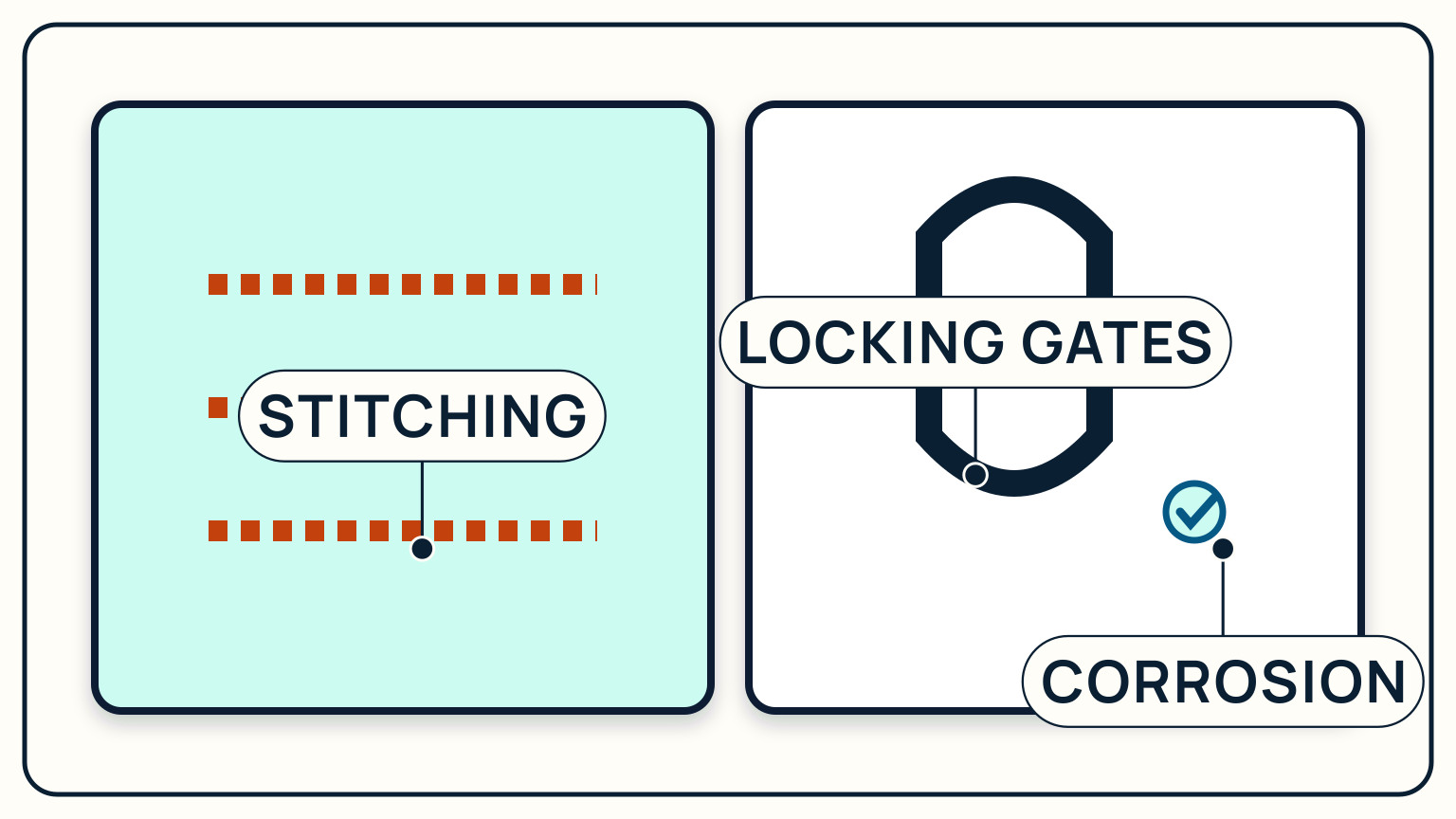
Webbing and stitching are where this system ages. Stitching in a colour that contrasts strongly with the surrounding material is recommended precisely so that wear, chafe and broken threads are visible at a glance, so look along every seam on the tether and both jacklines each season. Check the overload flag while you are there. If it is showing, the tether is done, and no amount of it looking fine changes that.
Give the metalwork the same attention. Work each hook open and closed to feel for grit or corrosion, confirm the locking mechanism still resists a sideways twist, and check the deck plates the jacklines attach to for movement, weeping sealant, or rust streaks below. A jackline is only as strong as the fitting at each end.
Then agree when the system gets used, because that decision should not be made individually in bad weather. The convention among experienced crews is to wear a harness whenever conditions warrant, and specifically when the boat is reefed, in rough weather, at night, in cold water, or when sailing short-handed. Add it to the crew briefing so everyone hears the same rule at the dock, and read what happens the moment someone goes over the side to see why preventing the fall is worth this much attention.
None of this equipment is complicated, and that is the trap. Jacklines, tethers, and sailing harnesses sit unused for months, then get rigged in a hurry by someone who has never had to think about where the line runs or how long the tether should be. Spend an hour in the berth instead: rig them, clip on, walk to the bow, and see where the line actually lets you go. Carriage requirements and equipment law differ from country to country, so check what applies where you sail. If you would like the wider habit that sits underneath all this, SailStarter's safety lessons cover moving around a boat and preventing a crew overboard in short visual steps, with a quiz after each one to show what stuck.
Try it from the lesson
Can you spot the next move?
The boat leans away from the wind. Which side offers the safer route forward, assuming its handholds and footing are clear?
Why you can trust this guide
. We build each guide from public seamanship and safety sources, then teach the universal principle before any local difference.