Chart your course
7 Sail Trim Mistakes Beginners Make
Quick answer
The short version
Seven common sail trim mistakes are over-trimming, leaving a sail luffing, ignoring telltales, using trim that does not match the point of sail, changing several controls at once, carrying too much sail for sustained wind, and staring at the sails instead of keeping lookout. Start with one reliable reset: ease the sheet slowly until the sail's forward edge just begins to flutter, then trim in only until the flutter stops. Look at the telltales, wait for the boat to respond, and adjust one thing at a time. If a gust creates extra heel, ease for immediate relief. If stronger wind lasts, reduce sail area. Good trim is not a frozen perfect shape. It is a calm loop of observe, adjust, wait, and observe again.
Beginners often pull a sheet until the sail looks firm, then leave it there. A full sail can still be stalled, and a flapping sail can remain under-trimmed long after it first gave the warning. Better trim starts by linking the sail to apparent wind and course. Turn toward the wind and the sails usually come in. Turn away and they go out. Telltales show what the airflow is doing, while heel and helm pressure show how much force the boat is carrying. Use those clues together rather than hunting for one magic rope position.
Fix the Wrong Angle First
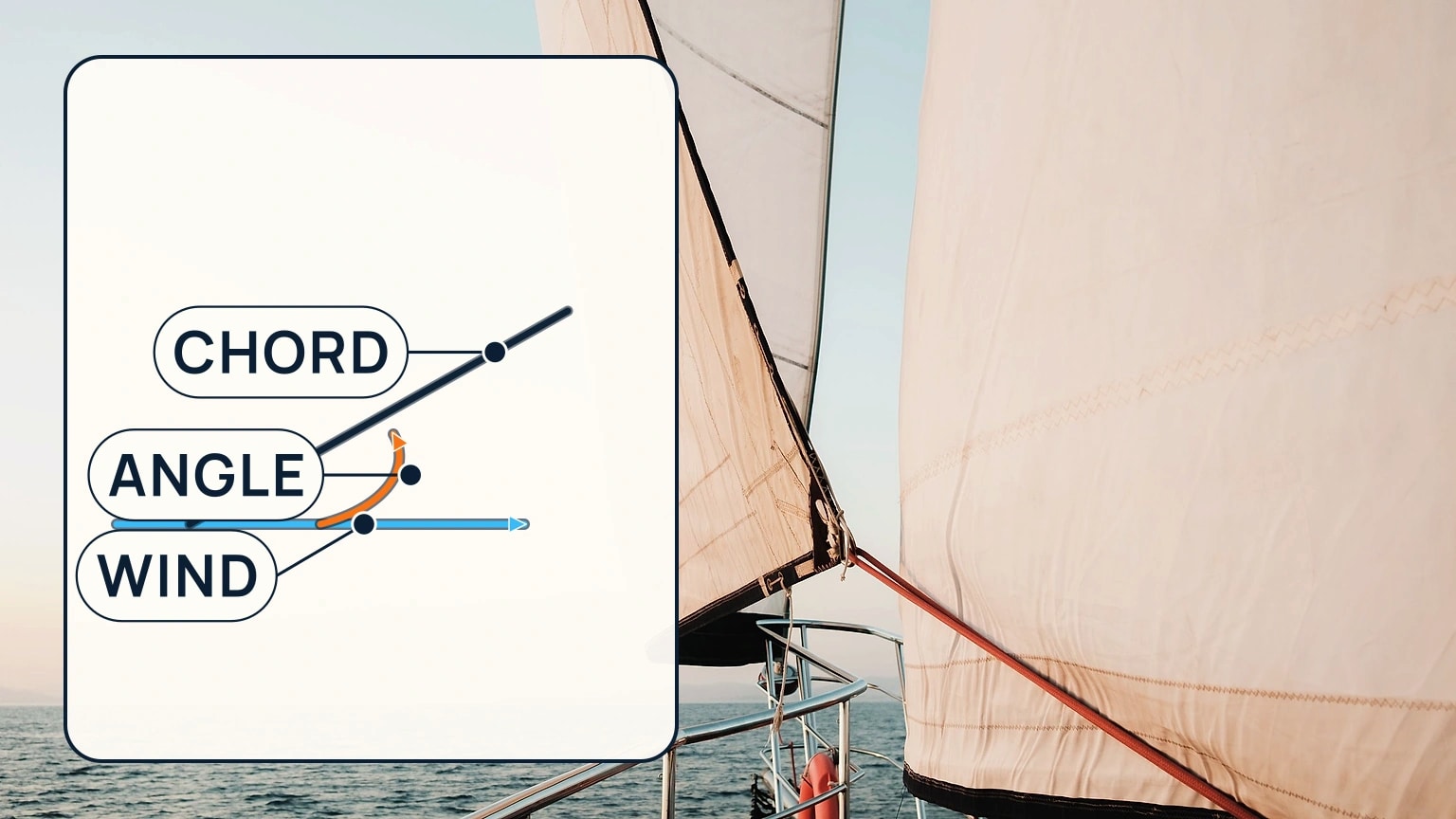
Mistake one is over-trimming. Pulling harder can place the sail at too great an angle to the apparent wind, separating airflow on the leeward side. The sail stays full, which hides the stall, but drag rises and useful drive falls.
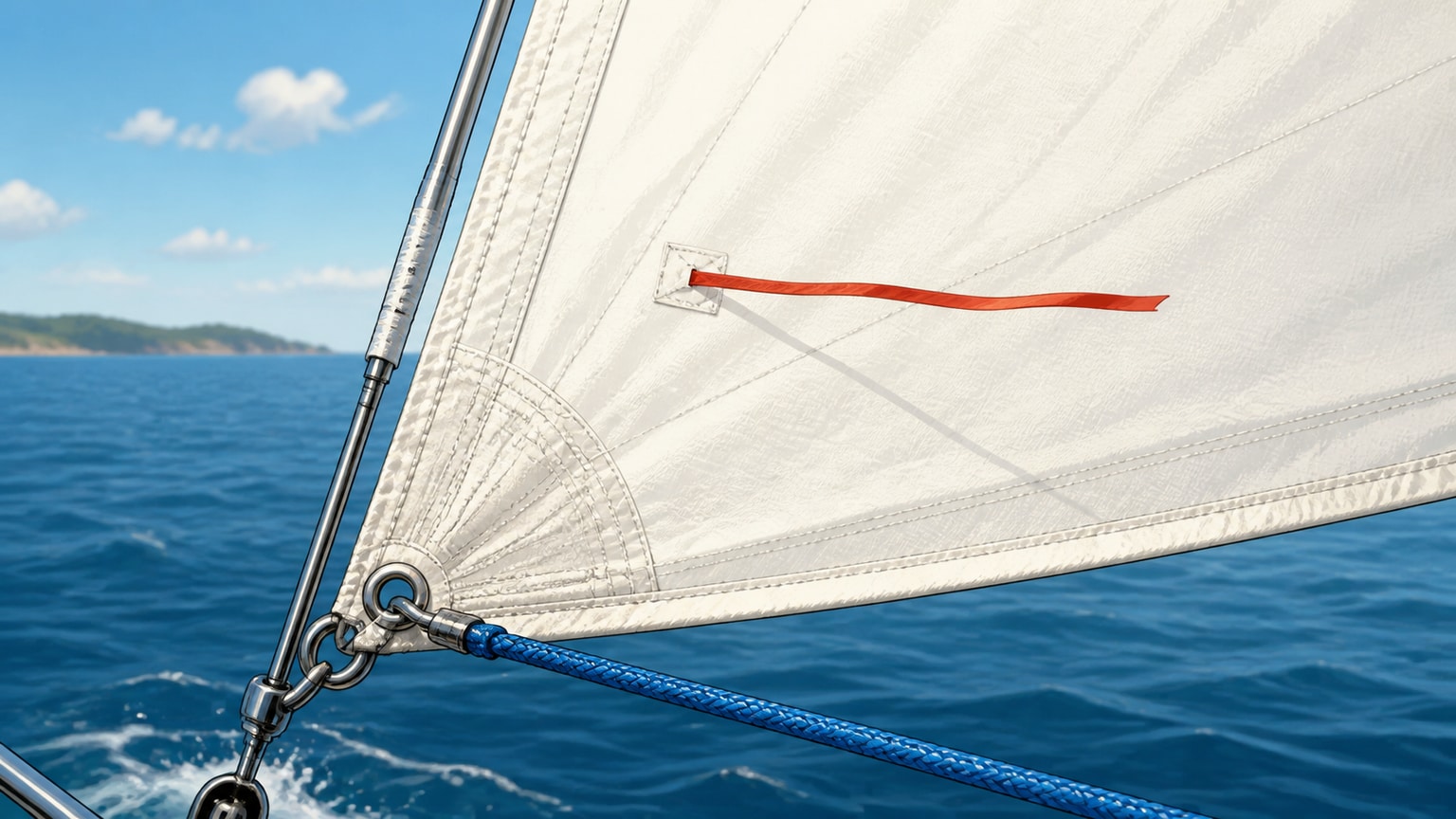
Mistake two is the opposite: allowing the luff, the sail's forward edge, to flap continuously. A brief luff is a useful signal during the trim test. Continuous luffing means the sail is not producing steady power.
Mistake three is keeping the same sheet position after changing course. A close-hauled sail belongs near the centreline. A reaching sail needs more room. Reset after every meaningful turn: ease until the first flutter, trim until it stops, then make smaller changes. That baseline is more useful than remembering a rope mark from a different heading.
Read the Telltales Without Chasing Them
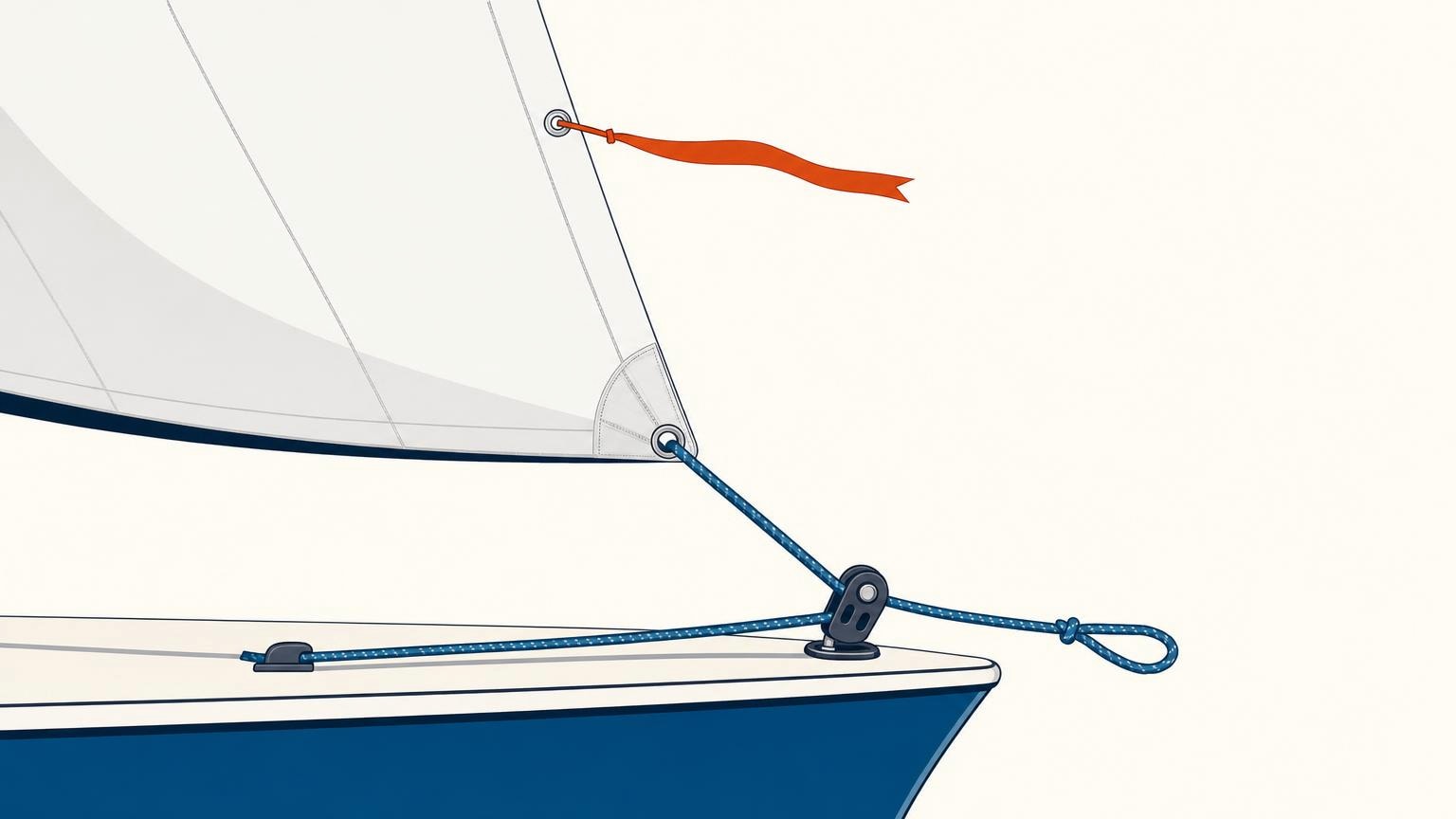
Mistake four is ignoring telltales. When the windward and leeward ribbons on a jib stream aft, airflow is attached on both sides. A fluttering windward telltale asks for a little more trim or a small turn away from the wind. A fluttering leeward telltale asks for easing or a small turn toward it. Choose the response that matches whether you intend to keep the heading.
Mistake five is reacting to every twitch. Boats move through waves and uneven wind, so one flick does not require a large correction. Glance, make one small change, and wait for a stable pattern.
Keep those glances short. Telltales are instruments inside a continuing lookout, not a screen that deserves your full attention. Look around the boat between checks. Trim has no value if it narrows your awareness of traffic, weather, or the next manoeuvre.

Change One Thing and Wait
Mistake six is moving the sheet, traveller, helm, and crew weight together, then guessing which change helped. Sailboats carry momentum. Telltales need a moment to settle, and a change in heel or helm pressure may arrive after the line moves.
Use a simple testing rhythm. Name the problem first: luffing, heavy helm, excess heel, or low drive. Choose the smallest control that addresses it. Move that control once, keep the heading steady, and watch the result. If the course also needs to change, make that a deliberate second decision.
This method is slower for a few seconds and faster for learning. It also makes communication easier. "Ease the jib two centimetres" gives the trimmer a clear action and gives the helm a stable boat to evaluate. "Try everything" produces motion without information.
Know When Trim Has Reached Its Limit
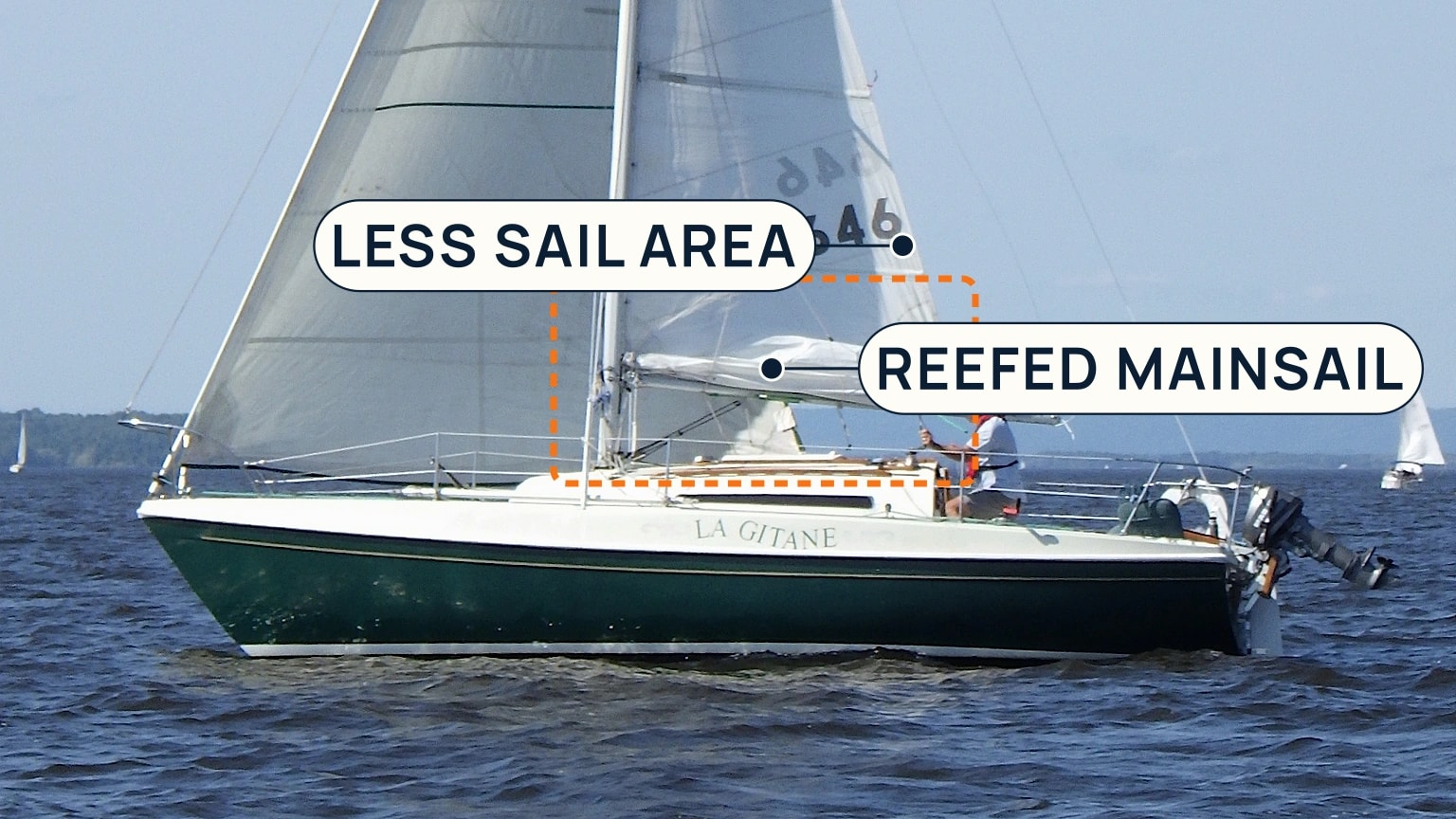
Mistake seven is trying to solve sustained excess wind with constant fine trim. Easing the mainsheet during a gust can spill power quickly and reduce heel. When the stronger breeze lasts, carrying less sail is the broader answer. Reefing the mainsail or reducing headsail area lowers the force the crew must manage.
Watch the whole boat. Excess heel can increase weather helm, the tendency to turn toward the wind. A heavy rudder then adds drag while the boat feels harder to steer. Shortening sail can make the boat more upright, lighten the helm, and restore control even though the sail area is smaller.
There is no universal wind number for that decision. Boat, crew, waves, course, and forecast matter. The practical cue is earlier than loss of control: when ordinary trim no longer keeps heel and helm comfortable, prepare to reduce area before the job becomes difficult.
Run one simple trim loop
Start by naming the course relative to the wind. Then look at the sail's front edge and its telltales. Make one small sheet change, keep the helm steady, and wait long enough to see the result. If the sail still cannot settle, ask whether the course is outside the useful range for that trim. This order prevents a trimmer from chasing symptoms caused by a changing helm.
Say each change aloud. "Ease the jib a little" tells the crew what moved. "The inside telltale now streams" records what followed. If the result is worse, return toward the previous setting before trying a different control. The telltales guide gives you the airflow clues to use in this loop.
Separate helm, trim, and sail area
When a sail luffs because the boat is too close to the wind, pulling harder may only add tension without restoring attached flow. When both telltales stream and the boat feels balanced, constant movement can make the setting worse. When sustained wind creates too much heel and a heavy helm, small sheet corrections may no longer solve the larger load problem.
Ask one diagnostic question at a time: Is the course suitable? Is the sheet setting suitable for that course? Is the sail area suitable for the lasting wind? The answers point to different actions. The reefing guide covers the broad sequence for reducing mainsail area before the job becomes difficult.
Practise with a stable reference
Choose open water with suitable supervision and hold one point of sail. Note the wind cues, sheet position, telltales, heel, and helm feel. Make a small adjustment and compare the same cues again. Then return to the starting position. Repeating the change makes cause and effect easier to recognize than sailing through several turns while moving every control.
Avoid turning the exercise into a race for a single instrument number. Waves, steering, and gusts keep changing the boat. Look for a repeatable combination of quiet sail shape, readable telltales, manageable heel, and a helm that is not fighting the course. If the crew cannot keep the boat settled, simplify the exercise or shorten sail.
At the end, record the mistake that appeared first. It might be steering too close to the wind, trimming before the boat settled, making a large change, or continuing to fine-tune after the wind called for less sail. Give the next practice session one target. A narrow target helps you build judgment instead of collecting seven corrections that you cannot remember under way.
Sail trim improves through short feedback loops, not through force or constant fiddling. SailStarter's trim lesson lets you practise the point-of-sail pattern and telltale decisions before you handle a loaded sheet. Follow it with the reefing and helm-balance lessons so you can tell the difference between a small trim problem and a sail plan that is too large for the lasting breeze. Then use the same routine afloat: ease to the first luff, trim until it stops, read both telltales, change one thing, and look up. That gives you a boat that is easier to understand, plus a repeatable way to recover whenever the trim starts to feel wrong.
When the crew disagrees about trim, return to a shared observation. Hold the course, name which telltale or edge is disturbed, and make one agreed change. Check heel and helm as well as the sail. If nobody can see a useful improvement, restore the earlier setting. This keeps the discussion tied to evidence and stops several people from moving different controls at once.
Keep the last useful setting in mind before every experiment. Returning to it is part of good trim practice, not a failure to improve.
Try it from the lesson
Can you spot the next move?
The boat turns away from the wind from close-hauled toward a beam reach. What is the sheet trend?
Why you can trust this guide
. We build each guide from public seamanship and safety sources, then teach the universal principle before any local difference.