Chart your course
Sail Trim by Point of Sail: A Beginner's Simple Guide
Quick answer
The short version
Your point of sail is your boat’s direction compared with the wind. As you steer closer to the wind, trim the sails in. As you steer farther away, ease them out. You cannot sail directly into the wind; when you point too close, the sails flutter and the boat slows.
For a simple trim check, ease a sail until its forward edge begins to flutter, then trim it in just enough to become smooth. If the sail has telltales (small ribbons near its forward edge), look for them to stream back evenly.
Keep checking after changes in course, wind, waves, or boat speed. Sail plan and boat shape vary, so these are starting principles, not fixed settings.
Sail trim by point of sail starts with one simple relationship: your boat’s direction relative to the wind sets the sail angle. Sail closer to the wind and you trim the sails in. Turn farther away and you ease them out.
But sail trim is never a list of fixed measurements. Sail shape, boat geometry, wind, and waves all change what works. Instead, you will learn to read the sail. Ease it until the front edge begins to flutter, then trim just enough to make it smooth. Small ribbons called telltales can help you check the airflow.
This guide shows you how to match sail angle to your course, recognize when you are too close to the wind, keep adjusting for the wind you feel on the moving boat, and control the boom when sailing downwind.
Match Sail Angle to Your Course
Your point of sail is your direction relative to the wind. Sail trim by point of sail follows one continuous pattern: the closer you sail toward the wind, the closer you pull the sails toward the middle of the boat. As you turn away from the wind, you ease them farther out.
On close-hauled, you sail as close to the wind as the boat can manage, with the sails trimmed in tightly. On a beam reach, you sail across the wind, with the sails eased about halfway. Turn farther away onto a broad reach, and you ease them progressively wider. On a run, with the wind coming from behind, the sails go well out. If the names for these headings feel new, Points of Sail Explained walks through the same clock-face model from the start.
You control a sail with its sheet, the line used to pull the sail in or ease it out. Treat any sail position you see drawn as a starting point. Sail plan, boat geometry, wind, and waves all affect the best position. A small sheet adjustment may be enough to keep the sail working smoothly.
Recognize the Upwind Limit
A sailboat cannot sail directly into the wind. Around the wind direction is a wedge called the no-go zone. Inside it, the sails cannot fill. They luff; their forward edges flutter; and the boat slows or stops.
As an illustration, this zone often extends roughly 30-45° on either side of the wind. That range is not a fixed setting. The real limit changes with the hull, keel, rig, sails, wind, and waves.
The closest workable upwind point of sail is close-hauled. Here, you trim in: pull the sheets so the sails move closer to the boat’s centerline. If the sails keep luffing even when trimmed in, the bow may be inside the no-go zone. Steer slightly away from the wind until they fill again.
Because the no-go zone lies on both sides of the wind, you make progress upwind by tacking: sailing a zig-zag course from one side to the other. In waves, changing boat speed can shift the apparent wind, so your steering and sail trim by point of sail need small, continuing adjustments.
Use the Ease-and-Trim Check
The aim is the right sail angle for the direction you are sailing. Too loose, and the sail flutters. Too tight, and airflow can stall. Pulling harder is not automatically better.
Repeat this check on every point of sail:
- Ease the sheet (the line that controls the sail) slowly.
- Watch the luff, or leading edge, until it just begins to flutter.
- Trim the sheet only enough to make the sail draw smoothly again.
Then check the telltales, the small ribbons near the luff. When the ribbons on both sides stream aft, they show smooth flow. On a reach, focus mainly on the middle telltales. Beyond roughly 140° off the wind, telltales give little useful information because the wind is pushing the sail more than flowing across it.
A stalled sail may look full and quiet, but heavier steering and more heel can reveal that it is too tight. If the boat heels too far or wants to round up (turn toward the wind), ease the sail to shed power. A common beginner mistake pulls the opposite direction from what feels natural: sheeting in harder to "fix" a boat that feels sluggish or hard to steer, when an over-trimmed sail is often the actual cause. Extra sheet tension beyond what the telltales call for adds heel and weather helm rather than drive, and it makes the boat harder to control, not easier. Exact trim varies with the sail plan, wind, waves, and boat shape.
Keep Adjusting to Apparent Wind
Your sails respond to apparent wind: the wind direction they feel while the boat is moving. It does not stay fixed. When you turn, speed up, slow down, or travel over waves, the apparent wind changes too.
As boat speed increases, the apparent wind moves forward. When the boat slows while climbing a wave, it moves aft. As the boat accelerates down the other side, it moves forward again. This is why sail trim is never “set and forget.”
Try this in a moderate breeze of about 8-10 knots. Sail a broad circle and adjust the sheets, the lines that control the sails, throughout the turn. As you steer closer to the wind, trim the sails in. As you steer farther away, ease them out. If a sail begins to flutter at its forward edge, trim in only enough to make it smooth again.
Notice the pattern rather than memorizing angles. Sail plan, wind, waves, and boat shape all affect the best setting. Your goal is continuous adjustment, guided by what the sail shows you.
Control the Boom on Deep Courses
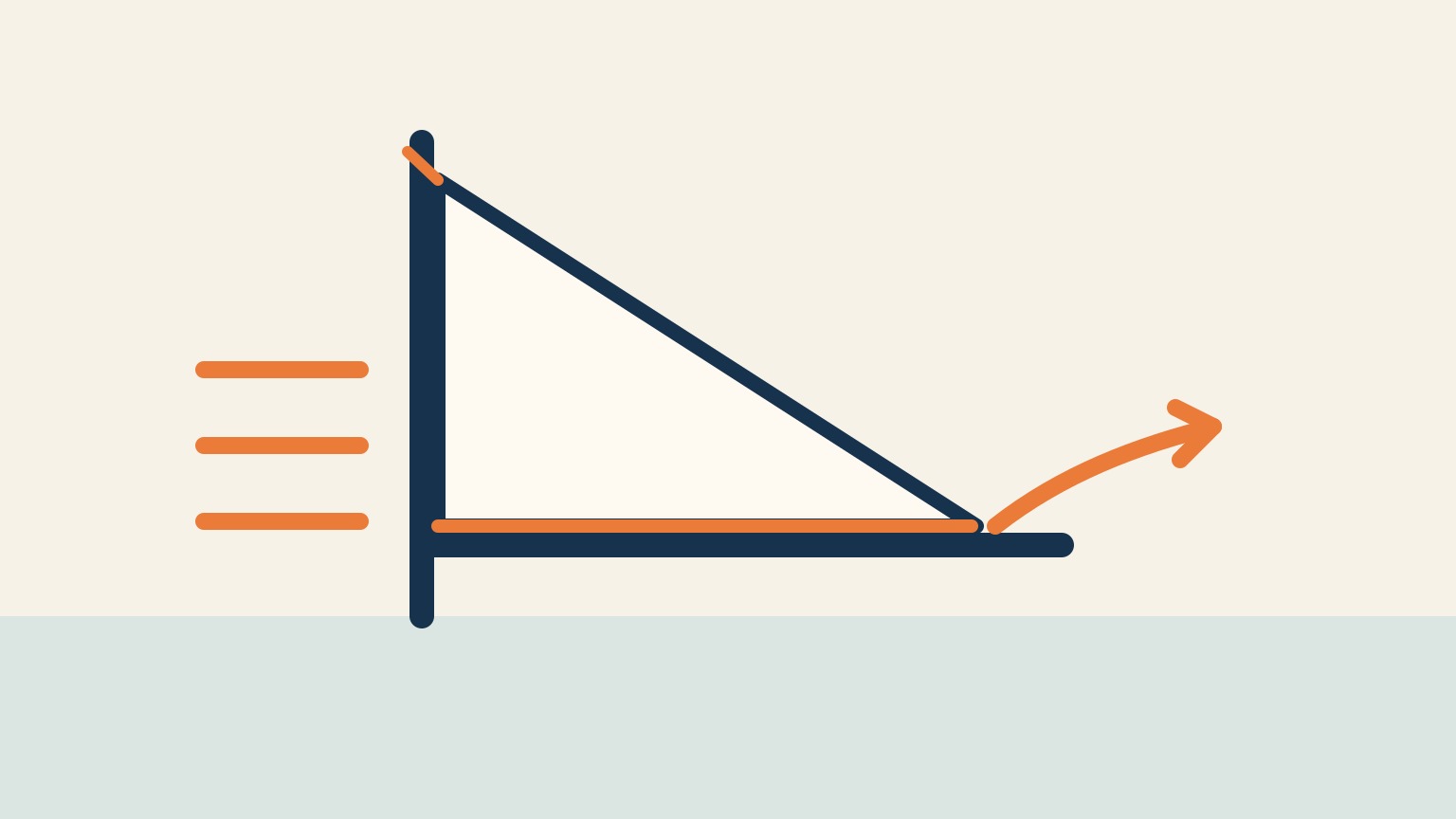
On a broad reach or run, sail trim by point of sail puts the mainsail well out. The boom sits far from the boat’s centreline. A long length of mainsheet also lies across the cockpit, so both the boom and the sheet can sweep across the crew during a gybe. Because the sail is eased so far out on these deep courses, it can cross with real speed and force once the wind gets behind it, which is exactly why a blow from either the boom or the sheet is a leading cause of serious sailing injury and why good boom control matters. On a dead run, some boats set the headsail on the opposite side from the mainsail, sometimes held out with a whisker pole, so each sail catches clean air instead of one blanketing the other.
Steer a steady course. Avoid wandering “by the lee”: this means the wind has moved behind the mainsail and begins pushing its other side. The sail can then fill suddenly and drive the boom across the boat in an accidental gybe.
Keep every head and body outside the path of the boom and mainsheet. For a planned gybe, control the mainsheet throughout the turn rather than letting the boom cross freely.
A preventer is a line that restrains the boom. Its loads and working angles depend on the boat, so set it up following guidance for your specific boat.
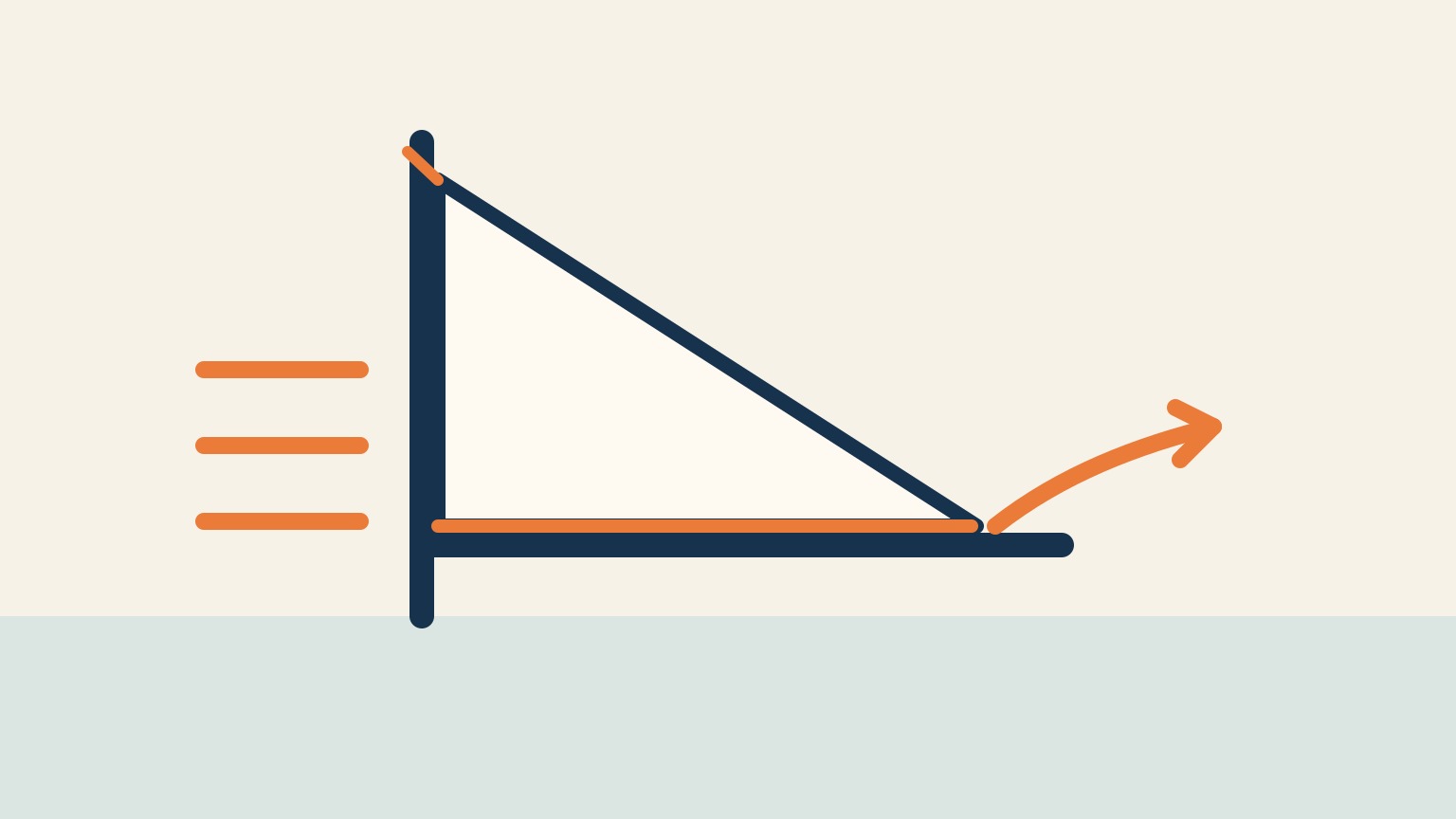
Sail trim by point of sail is one changing relationship, not a table of fixed settings. As you turn closer to the wind, trim the sails in. As you turn away, ease them out. Then ease each sail until its forward edge flutters and trim just enough to stop it.
Use telltales, the small ribbons near the sail’s forward edge, to refine the trim when they stream clearly. On deep courses, the sail is pushed more than flown, so telltales become less useful. Steer well clear of dead downwind so the wind cannot get behind the mainsail, and keep heads clear whenever the sail and boom cross the boat.
Your sail plan, boat shape, wind, and waves all change the result. Try the SailStarter lessons to practise the ease-to-flutter check across each point of sail in short visual steps.
Try it from the lesson
Can you spot the next move?
The boat turns away from the wind from close-hauled toward a beam reach. What is the sheet trend?
Why you can trust this guide
. We build each guide from public seamanship and safety sources, then teach the universal principle before any local difference.
- spinsheet.com
- spinsheet.com
- sailingworld.com
- ussailing.org
- catamaranguru.com
- northsails.com
- northsails.com
- northsails.com
- sailmagazine.com
- sailmagazine.com
- morganscloud.com
- bwsailing.com
- yachtingworld.com
- speedandsmarts.com
- en.wikipedia.org
- en.wikipedia.org
- physicstoday.aip.org
- iancadams.com
- dummies.com
- naosyachts.com
- nwboatschool.org
- wandertheblue.com
- sailingvirgins.com
- sailing-blog.nauticed.org
- uksailmakers.com
- davisinstruments.com
- yachtingmonthly.com