Chart your course
Sailing Terms Beginners Actually Need
Quick answer
The short version
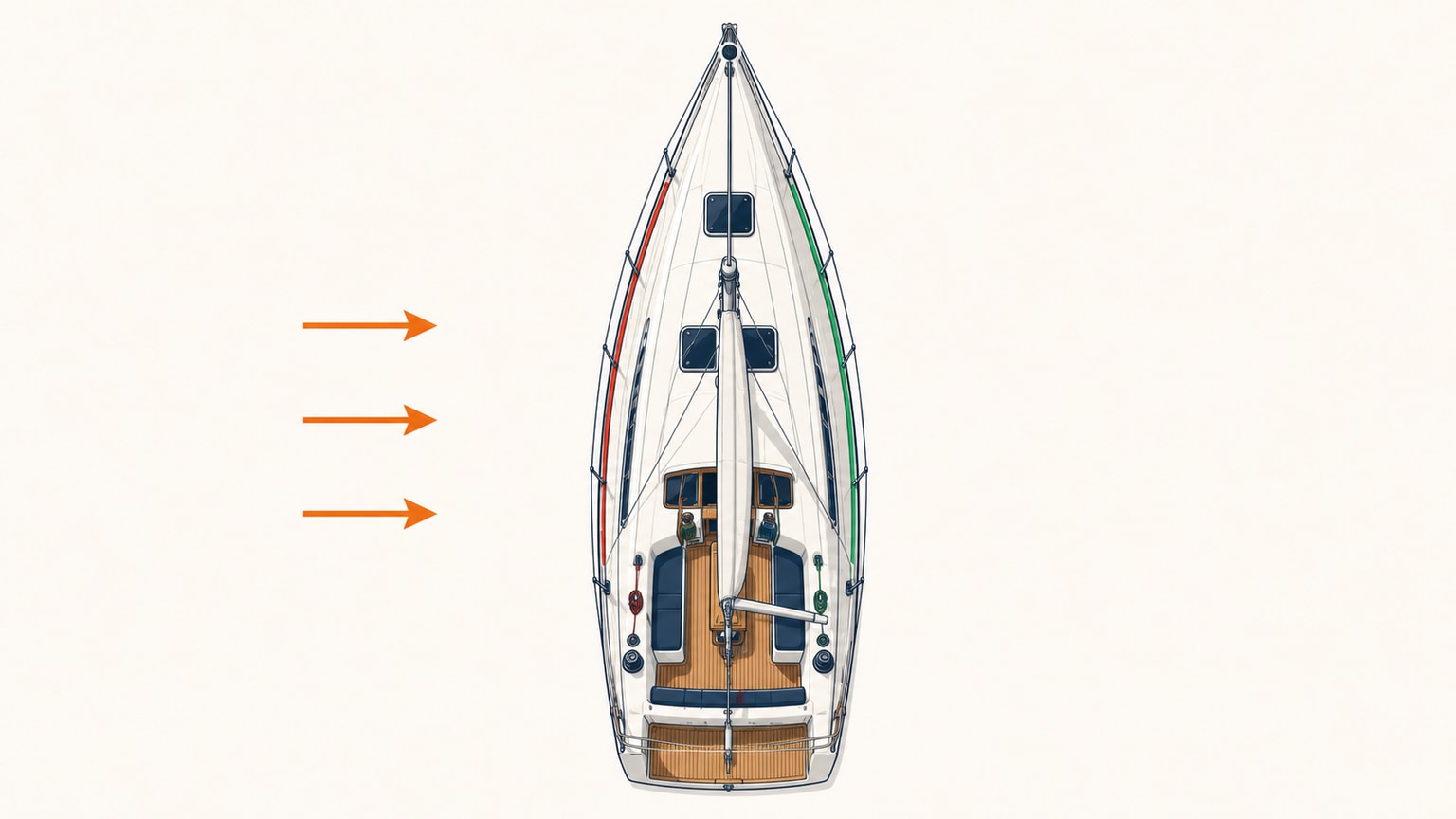
Begin with terms that help you locate something or respond to an instruction. The bow is the front, stern the back, port the fixed left side facing forward, and starboard the fixed right. Windward is the side the wind comes from; leeward is the opposite side. A halyard raises a sail, while a sheet controls its angle. Trim means bring a sail in and ease means let its sheet out. Heading up turns the boat toward the wind; bearing away turns it away. A tack takes the bow through the wind and a gybe takes the stern through it. When a sail luffs, its front area begins to flap.
An alphabetical glossary makes sailing sound larger than it is. On your first outings, words arrive in small working groups. Boat directions tell you where to look. Wind words describe what the air is doing relative to the boat. Action words tell you what to change. Learn those groups and you can follow a surprising amount of cockpit conversation without memorizing specialist rigging or racing language. Say the terms while pointing at a real boat or diagram because location makes them easier to retrieve. Always ask which line or object the skipper means before acting. Precise language coordinates a crew; it should never be used to make a beginner feel excluded.
Directions Fixed to the Boat
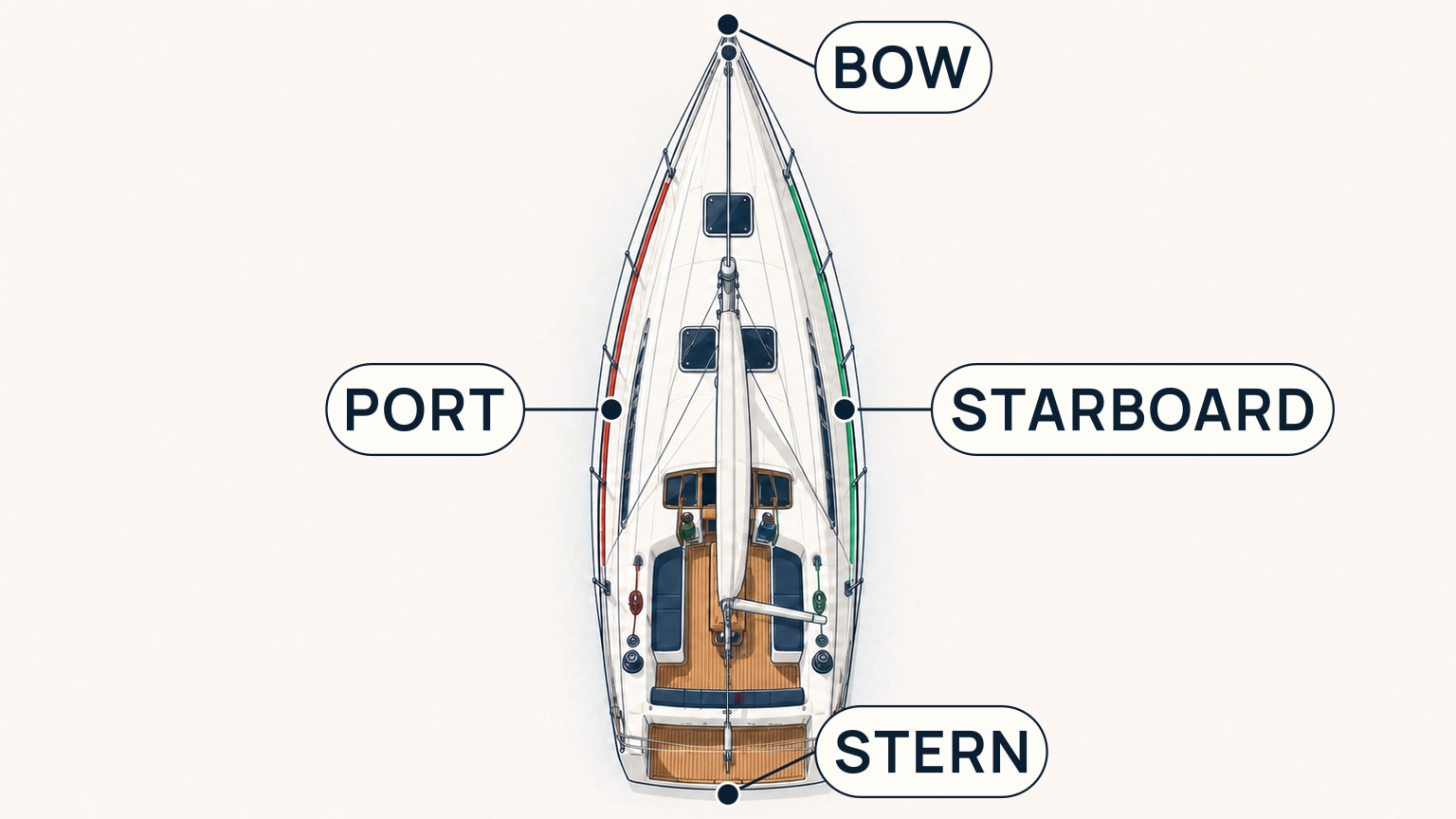
The bow is the front of the boat and the stern is the back. Face the bow: port is on your left and starboard on your right. Turn around and the named sides stay where they were. That is why a skipper can say “sit to port” without knowing which way you are facing.
Forward means toward the bow; aft means toward the stern. An object beyond the bow is ahead, and one beyond the stern is astern. Abeam means directly out from either side, roughly at a right angle to the boat's centreline. These words let crew describe a location without pointing through sails or around other people.
Use a simple mental picture: stand in the cockpit facing the bow, then anchor port and starboard to the hull. “Port” and “left” both have four letters, which helps many beginners. Point to a seat forward and another aft before reversing your own direction. Treat the memory aid as a prompt, then practise naming the sides from different seats until the boat itself becomes the reference.
Words for Wind and Sails
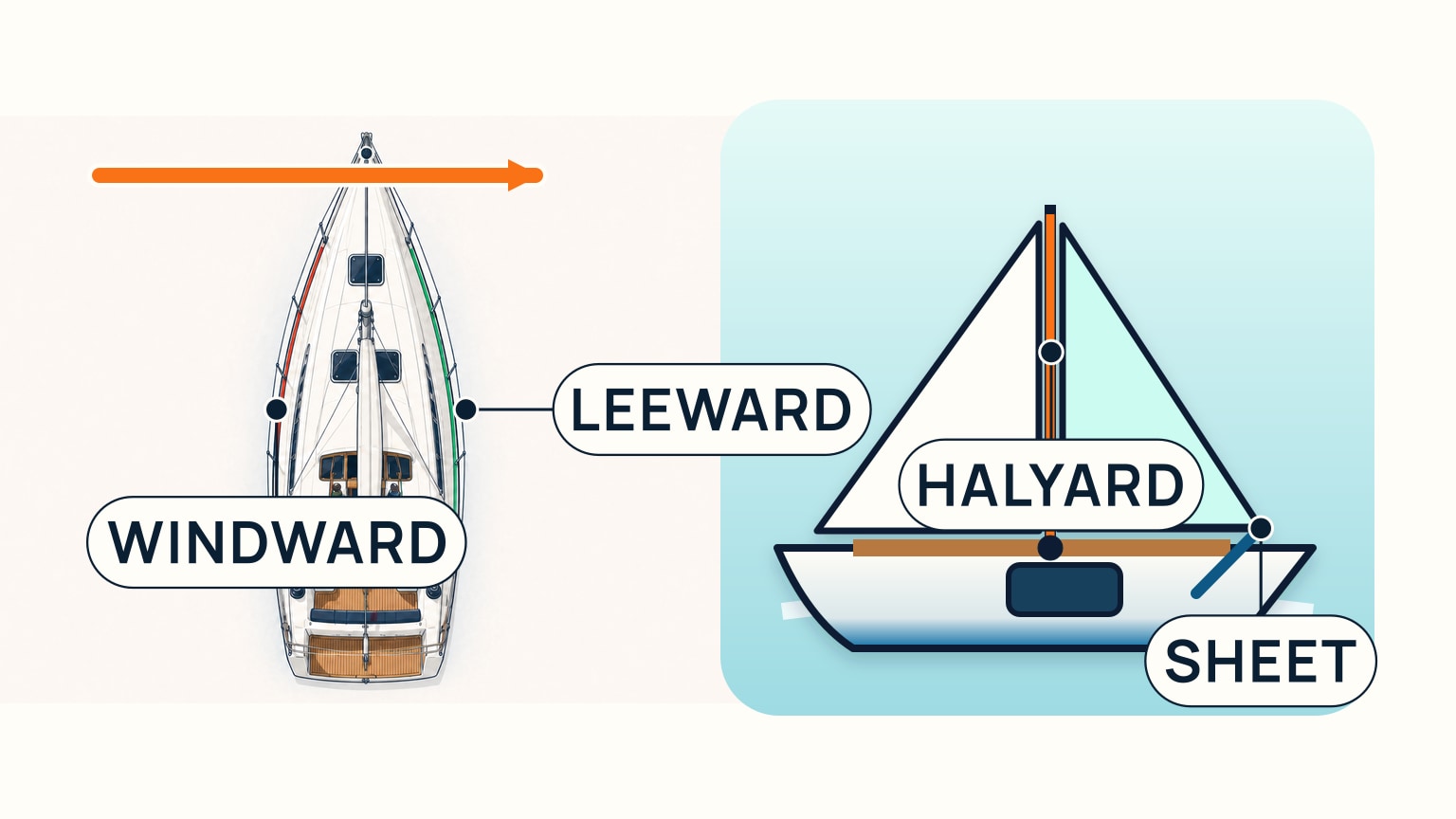
Windward is the side the wind comes from. Leeward is the side away from the wind. Those sides can change when the boat turns because they belong to the wind relationship rather than being fixed to the hull. The boom and sails normally sit toward leeward when the sails are drawing.
On a common sloop, the mainsail is behind the mast. The jib is the triangular sail forward of the mast. A halyard raises one of those sails. A sheet controls its angle after it is raised. The mainsheet controls the mainsail; jib sheets control the jib. Calling every line a “rope” hides its job, while the proper name often tells you what the line does.
When a skipper says trim, bring the named sheet in under their direction. Ease means let it out under their direction. The skipper may add an amount or a visible target, so listen for the whole call. If you have not been shown how that sheet is handled on this boat, name the line and ask before acting. The word is only useful when paired with the correct line and the boat's demonstrated technique.
Words for Turning and Flapping
Add the line names you will hear first
A halyard raises or lowers a sail. A sheet controls a sail's angle. The mainsheet controls the mainsail and boom; jib sheets control the headsail. A reefing line helps reduce sail area on systems designed for it. A dock line secures the boat, while an anchor rode connects boat and anchor.
“Ease” means let a line out under control. “Trim” or “take in” means bring it in. “Make fast” means secure it to the proper fitting. “Cast off” means release it. These are actions, so repeat the whole instruction when unsure: “Ease the port jib sheet?”
Loaded lines can injure. Keep hands away from winches, blocks, clutches, and cleats, and never stand in a loop. The winch guide shows how language and safe handling meet on one common control.
Learn terms in pairs and actions
Pair port with starboard, bow with stern, forward with aft, windward with leeward, luff with leech, and tack with gybe. Then point to each on a real boat. Terms become useful when they locate a person, line, sail edge, or direction quickly.
Practise with a short call-and-response. One person says “starboard side,” and the other points. Say “head up,” and identify the turn toward the wind. Say “bear away,” and identify the turn away. Say “luffing,” and look for the sail's leading edge fluttering.
Ask for plain language when needed
Sailing vocabulary saves time, but it should never hide an instruction. A skipper can say “move toward the front, the bow” or point to the correct line. Beginners should ask before acting on an uncertain word.
Boat-specific names vary. Some boats use a tiller, others a wheel. A headsail may be called a jib or genoa based on its size and overlap. The parts-of-a-sailboat guide gives the physical map, while the jib-versus-genoa guide explains one common naming distinction.
Keep a personal list after each sail with the word, what you touched or saw, and the action. Five terms learned aboard are more durable than fifty memorized without context.
A ten-word starter set
Begin with bow, stern, port, starboard, helm, mainsail, jib, halyard, sheet, and cleat. Those words locate the ends and sides, identify the steering position and two common sails, then name the lines that raise and trim them and a fitting that may secure a line.
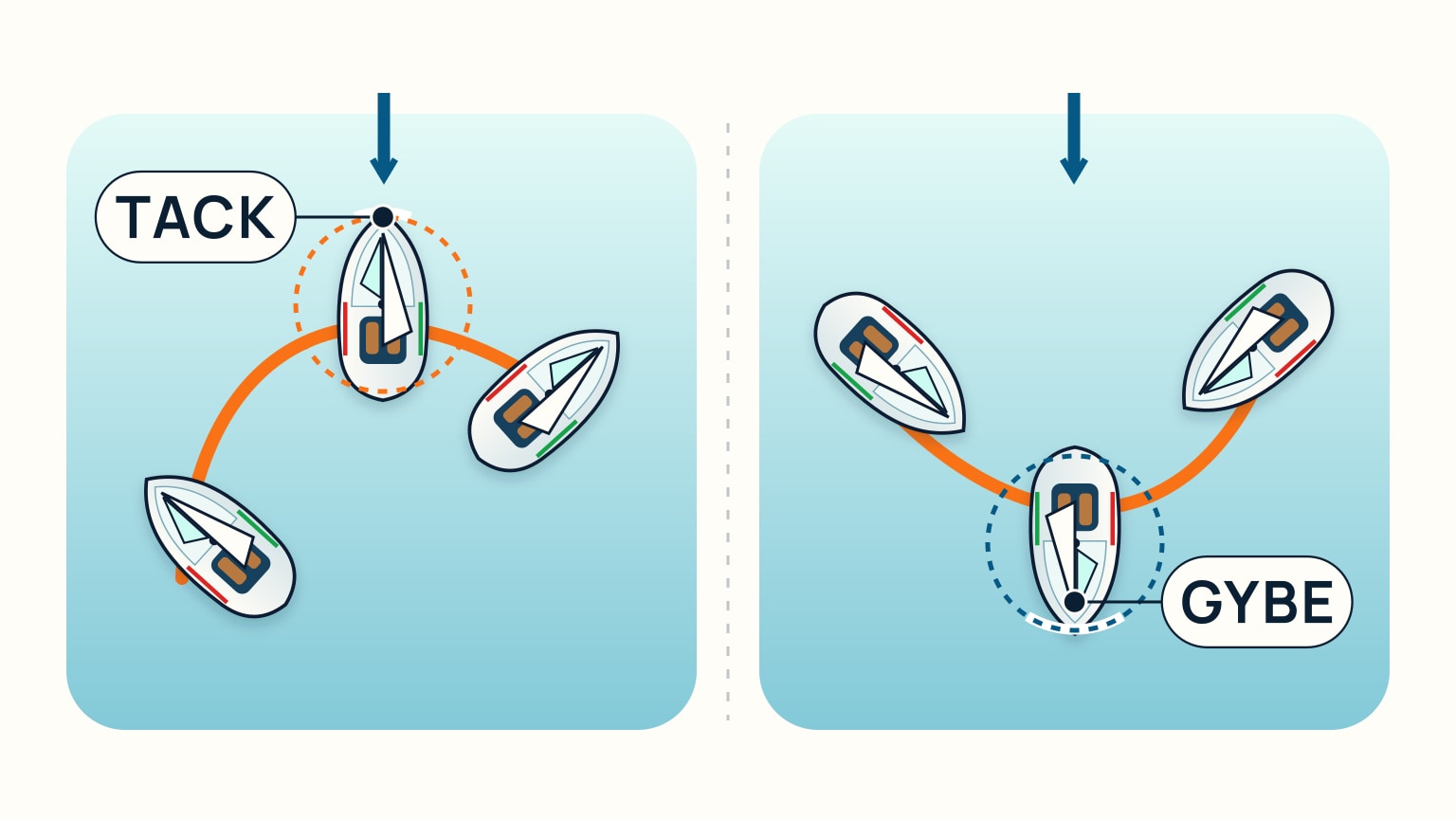
Add windward and leeward before manoeuvre practice. During a tack, the bow turns through the wind and the sails move to the other side. During a gybe, the stern passes through the wind and the boom may cross with force. Use the exact procedure and calls taught on the boat.
Do not worry about knowing every fitting before your first sail. Learn the words needed for the next safe action, use them aloud, and attach each to something visible. Vocabulary grows naturally when it solves a real communication problem.
Heading up means turning toward the wind. Bearing away means turning away from it. As you head up, sails generally need to come in. As you bear away, they generally need to ease out. These two pairs connect course and sail trim in a compact instruction.
A tack turns the bow through the wind so the wind changes sides. A gybe, also spelled jibe, turns the stern through the wind. Both maneuvers move the boom from one side to the other, which is why the crew listens for the call and keeps clear of its path. The skipper controls when the maneuver begins.
Luffing is the flapping that starts when a sail loses useful airflow, often because the boat has headed too close to the wind or the sheet has been eased too far. It is information rather than a mysterious failure. The skipper may tell the helm to bear away or ask the crew to trim the sheet. Notice whether the boat changed direction or the line changed first. Learn the sound, then wait for the clear instruction that tells you what to change.
SailStarter's first lesson turns these words into a visual map of the boat. Work through it before you crew, then test yourself without looking at the labels. The goal is practical recognition: when someone says “move aft,” you look toward the stern; when the skipper asks for the jib sheet, you know they mean a control line rather than the sail itself. Continue learning aboard with an experienced skipper or qualified instructor. Repeat new calls back before acting, and add unfamiliar terms only after you know their job. Their boat may use additional terms and its equipment layout will be specific, but this small vocabulary gives you a strong, calm place to begin. Sketch the boat from memory and place each new word where you used it. Then check the drawing against the lesson and correct only the terms you missed.
Try it from the lesson
Can you spot the next move?
You turn to face the stern. A crewmate points at your right hand. Which side of the boat is that?
Why you can trust this guide
. We build each guide from public seamanship and safety sources, then teach the universal principle before any local difference.