Chart your course
Sailing Etiquette for Beginners

Quick answer
The short version
Good sailing etiquette is practical teamwork, not a collection of secret yacht-club manners. Listen to the skipper’s briefing, ask when you do not understand, and respond promptly to time-sensitive instructions. Do not operate unfamiliar gear without being shown. Keep bags and loose line out of working paths, and offer help while accepting that the skipper coordinates the boat. On the water, remain aware of swimmers, wildlife, paddlers, and other vessels. Courtesy never replaces the collision rules or local instructions. The aim is simple: make it easier for everyone to communicate, move safely, and enjoy the sail without guessing what you are about to do.
Your first sail may contain unfamiliar words, quick changes, and several people sharing a small working space. Etiquette gives that group a predictable rhythm. You know who is coordinating, the skipper knows when a call was heard, and nobody has to wonder whether a line or person will suddenly move.
You do not need to perform nautical tradition. Arrive ready to listen, be honest about your experience, and treat the boat and surrounding water as shared spaces. Those habits are useful on a training dinghy, family yacht, or larger crewed boat.
They also make your actions easier for the skipper and other crew to anticipate.
Begin With the Briefing
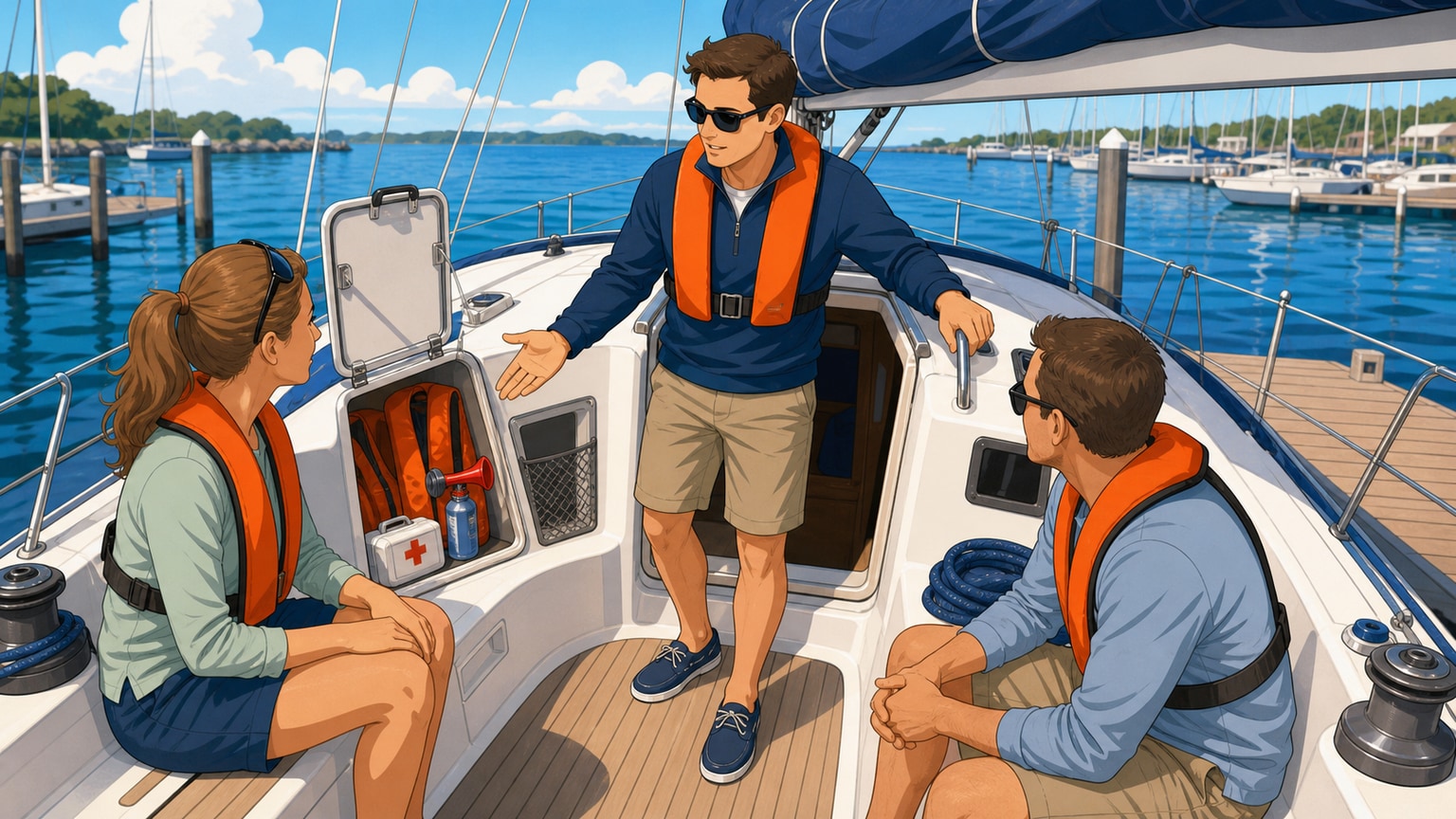
A good skipper starts with a short pre-departure briefing. Listen even if part of it seems obvious. The briefing should show where lifejackets and key safety equipment are, explain the basic emergency plan, and identify how the crew will communicate.
Say that you are new. This helps the skipper choose plain instructions and demonstrate any job before handing it over. If a term is unclear, ask. A useful safety briefing makes room for every crew member to raise a question or concern. Staying silent to appear experienced works against that shared safety culture.
Repeat important instructions back in a few words when noise or distance makes them hard to hear. The goal is confirmation, not ceremony. Before departure, also learn where to sit, which handholds are suitable, and which controls should be left alone until someone explains them.
Pay attention when the backup person is identified as well. The briefing is shared knowledge, so important locations and basic actions do not exist only in the skipper’s head.
Help Without Taking Over
The skipper is responsible for coordinating the boat. Crew support that job by following calls for safe operation and completing agreed tasks promptly. A request such as “ease the sheet” may be tied to a turn already in progress, so acknowledge it and act as shown.
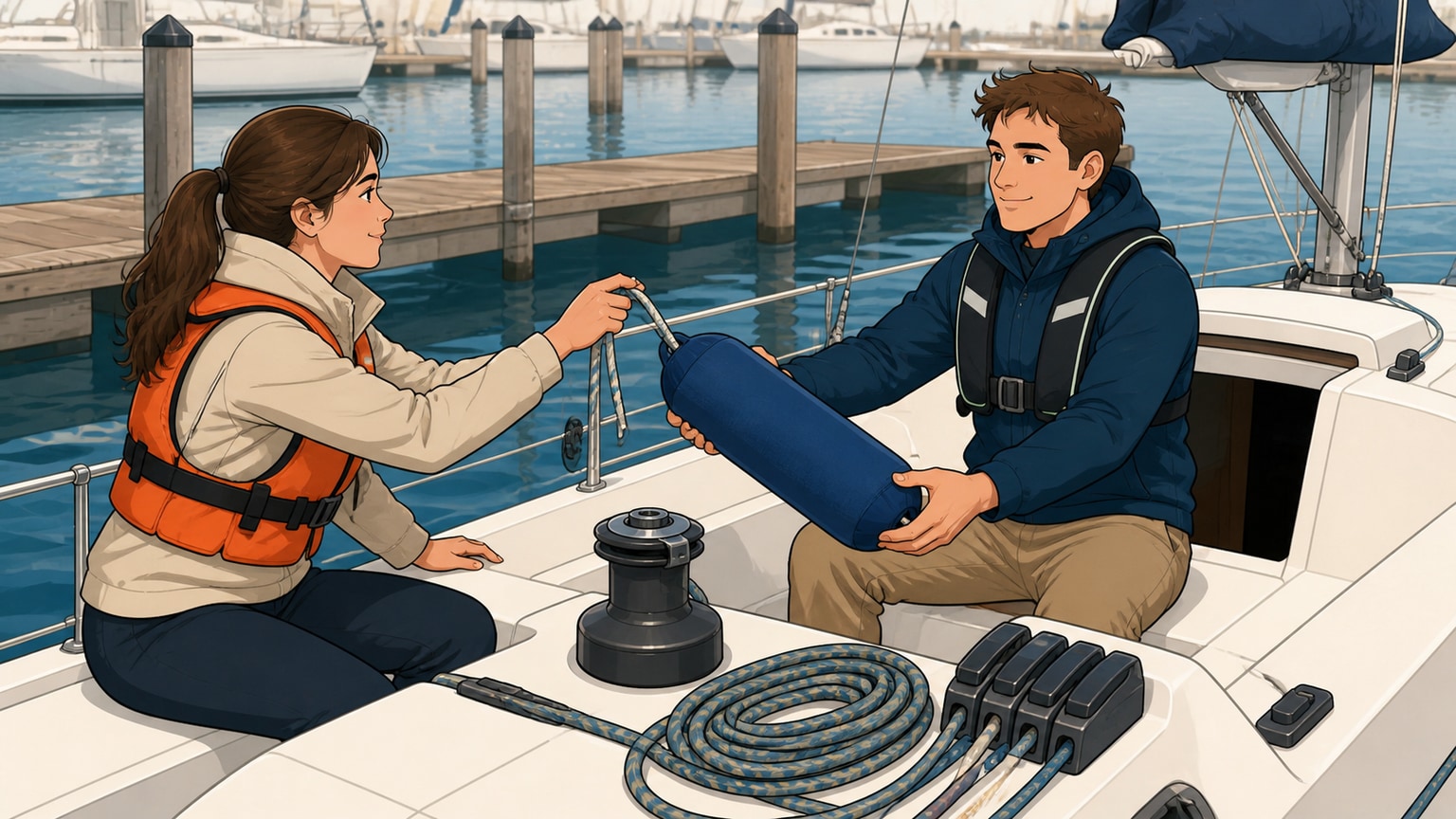
Helpful crew also notice ordinary needs. You can offer to pass a fender, tidy your own bag, or hold something when asked. Check before changing a line, opening a clutch, moving a winch handle, or adjusting a control you do not know. Initiative is useful when it stays inside the plan.
Do not take a short tone during a manoeuvre personally. Timing and wind noise can make instructions brief. Questions and explanations can follow once the boat is settled. Likewise, if you make a mistake, say what happened plainly. The crew can correct a known problem faster than one hidden by embarrassment.
When the job is finished, say so. A simple confirmation lets the skipper move attention to the next part of the manoeuvre without looking back to check.
Keep Shared Space Clear
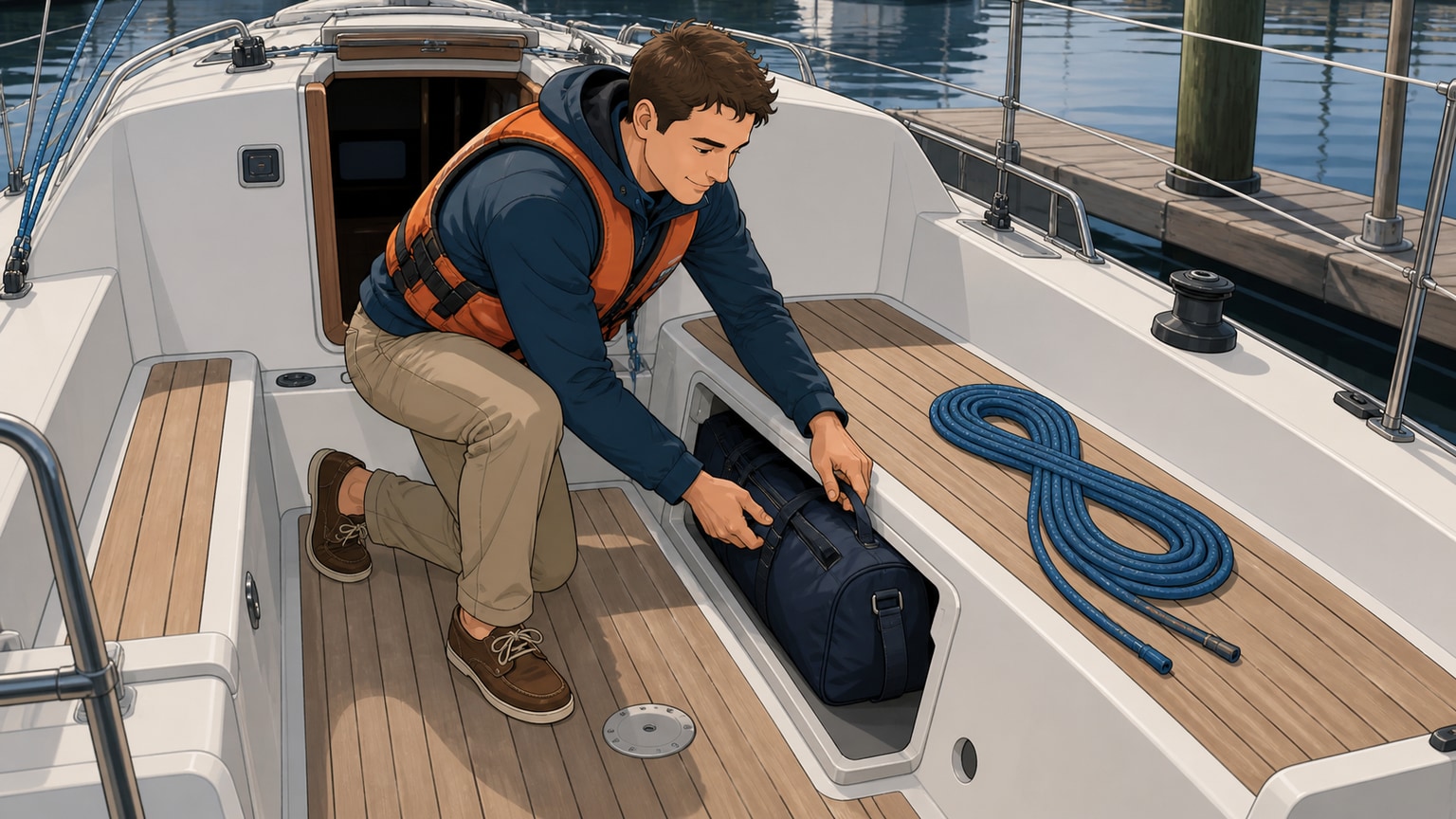
A sailboat’s cockpit and deck are work areas as well as places to sit. Put your bag where the skipper directs, keep drinks secure, and avoid blocking a companionway or control. Loose line across a walking route can catch a foot; line running along the route can roll underfoot.
When someone is handling a sheet or halyard, give their hands and the loaded line room. Do not stand on rope or wrap it around your hand. If you are asked to tidy a line, first confirm that it is no longer being used and follow the boat’s method.
Personal movement matters too. Stay low, use fixed handholds, and tell someone before moving forward if the skipper has not already directed you. These actions are considerate because they let the working crew predict where people and gear will be during the next change.
Keep your own belongings in the place the skipper chose. That preserves the clear walking and working area throughout the sail, including the quieter periods after departure.
Share the Water Respectfully
Ask before acting aboard
Every boat has established methods for lines, winches, fenders, hatches, footwear, food, and safety equipment. Ask before moving a line, changing a control, opening a locker, or taking the helm. An item may be loaded or positioned for a reason that is not obvious.
Repeat instructions when noise or unfamiliar terms create doubt. Speak up about a hazard, unclear command, illness, damage, or mistake early. Hiding an error to avoid embarrassment can make the repair or manoeuvre harder.
When another crew member is learning, give them room to complete the assigned task. Offer help through the skipper or ask first. Taking a line from someone's hands without warning can change load suddenly and remove the lesson they were meant to practise.
Keep work areas usable
Coil or flake lines in the boat's preferred way, keep bags and clothing out of walkways, and return shared equipment to its location. Secure phones, bottles, and tools. Leave the companionway, emergency gear, controls, and working side deck clear.
Manage personal needs before they become a crew problem. Tell the skipper about seasickness, cold, fatigue, or a toilet question. Use water and food arrangements considerately in a small shared space. Clean up promptly and respect sleeping or off-watch crew on longer trips.
The first-time sailing guide explains useful beginner jobs, and the crew safety briefing shows why questions and speaking up are expected.
Respect other water users without inventing rights
Maintain lookout, control wake where relevant, avoid crowding, and give working, anchored, swimming, paddling, fishing, and training activity sensible room. Follow the collision rules rather than informal ideas about who “owns” a patch of water. The right-of-way guide explains give-way and stand-on roles.
At a marina or anchorage, keep noise, lights, dinghy movement, and generators considerate. Do not use another boat's lines, deck, or mooring without permission. If an approach or anchoring choice may affect someone, communicate early and calmly.
Good etiquette is predictable behavior. Brief the plan, do your assigned job, protect shared space, communicate changes, and leave the boat ready for the next person.
At the end, help with the jobs the skipper assigns: lines, fenders, sails, rubbish, and a quick gear check. Report damage or lost equipment directly. Thank the crew and confirm any cost-sharing or next booking rather than leaving assumptions for someone else to resolve.
If you borrowed clothing or equipment, return it dry or as instructed. Small follow-through is part of being invited back.
Courtesy extends beyond your own cockpit. Transport Canada’s current boating guidance reminds everyone to share waterways with wildlife, swimmers, divers, paddlers, and other boats. Stay alert and help the skipper maintain a proper lookout when asked.
Be predictable around other vessels. Large ships may have blind spots, need a long distance to stop, and have little room to alter course. A small sailboat should never assume that having sails gives it permission to obstruct a constrained vessel. The collision rules and local directions govern the encounter; polite intention alone does not.
If people are in distress, SOLAS Chapter V sets a general obligation for masters to proceed to their assistance. The skipper decides what the boat can safely do and how to contact help. Crew support that plan rather than starting an uncoordinated rescue attempt.
The same principle runs through ordinary courtesy: stay observant, communicate your actions, and leave enough room for other people to act predictably.

SailStarter’s crew-briefing lesson is a useful next step before you accept an invitation or arrive for a course. It shows what the skipper should cover and why every person needs to know the plan. Learn the basic crew language, then bring a simple attitude aboard: listen, confirm, ask, and help within the skipper’s direction. Before departure, learn where your bag belongs and which controls you should leave alone. During a manoeuvre, acknowledge the call and report when your task is complete. You will not need to fake experience. Clear communication and respect for shared space make you useful from the first day, while practical knowledge grows one task at a time.
Try it from the lesson
Can you spot the next move?
You sailed with this skipper last month and know the boat well. Does today still get a full briefing?
Why you can trust this guide
. We build each guide from public seamanship and safety sources, then teach the universal principle before any local difference.