Chart your course
Marina Slip vs Mooring vs Dry Storage
Quick answer
The short version
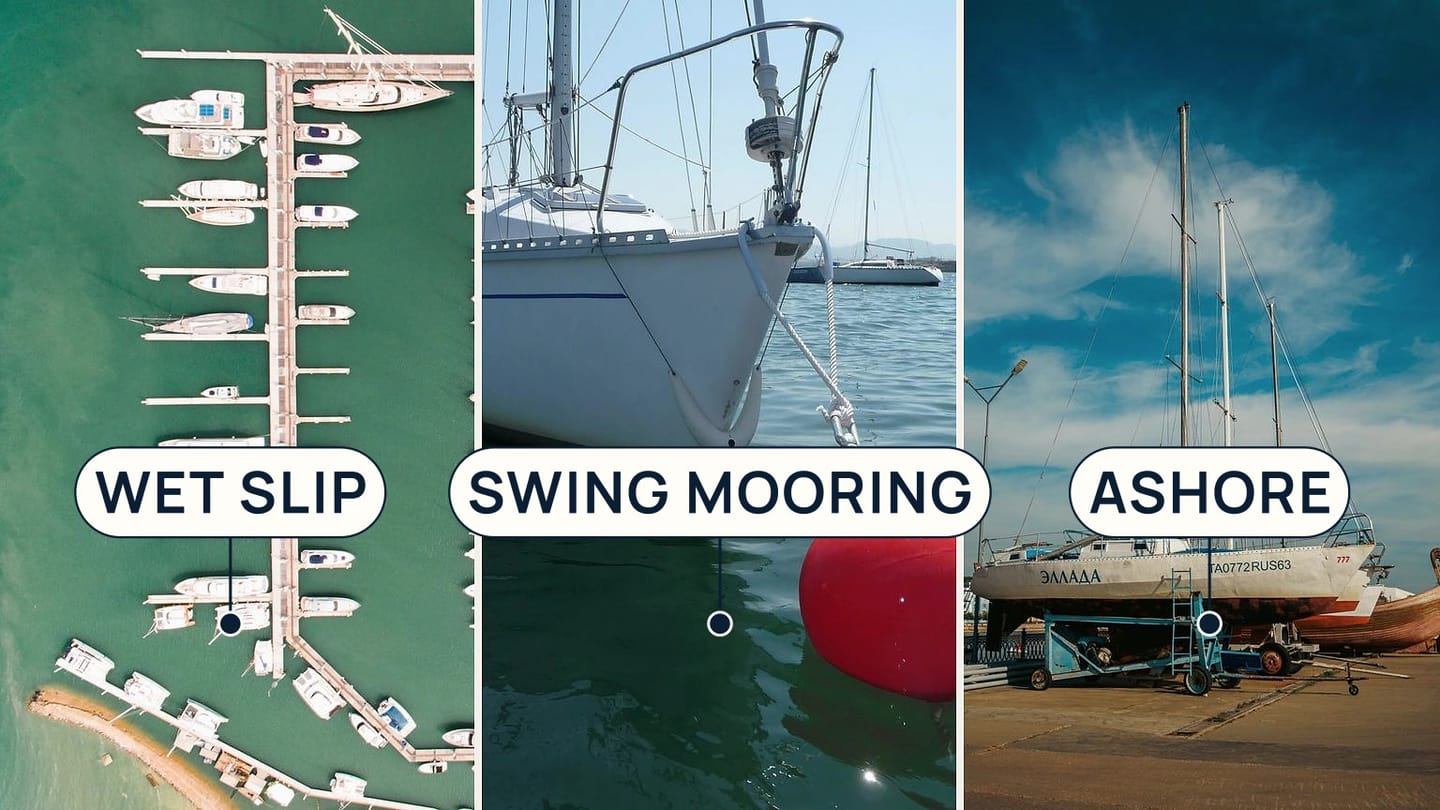
A marina slip keeps the boat afloat beside a dock, often with direct shore access and optional services. A swing mooring keeps it afloat on a buoy away from the dock, so you need a tender or launch plan. Dry storage keeps the hull out of the water, either on a trailer, cradle or stands, or in a rack designed for suitable boats. Choose by checking whether the boat physically fits, how quickly you want to sail, which services are included, how you will inspect and maintain it, and what weather exposure the site carries. Compare complete written quotes for the same boat and term. The lowest storage line can become expensive once lifting, access, utilities, and setup are added.
The labels are only a starting point. One marina slip may include water, electricity, secure gates, and staff; another is simply a berth. One mooring field may have a launch service and regular inspections; another leaves access and tender storage to the owner. "Dry storage" can mean a trailer in an open yard, a keelboat on stands, or forklift-operated racks that cannot accept a deep keel or tall mast. Define the actual service before comparing convenience or price. The wider cost to own a sailboat guide helps place storage beside insurance and maintenance rather than treating it as a separate decision.
Boat state and boarding effort drive most of the practical difference between the three.
| Dimension | Marina slip | Swing mooring | Dry storage |
|---|---|---|---|
| Boat state | Afloat, beside a dock | Afloat, on a buoy away from the dock | Ashore — trailer, cradle/stands, or rack |
| Boarding | Direct from shore | Needs a tender or launch plan | Needs a lift, ramp, or staff-operated launch |
| Typical services | Water, electricity, gates, staff (not guaranteed) | Ground-tackle inspection, tender storage | Support cradle or stands; a dry stack often includes operator launch and recovery |
| Exposure risk | Growth, lines, fenders, unattended leaks | Growth, lines, fenders, unattended leaks | Wind loads on stands, covers, and rig |
| Typical evening-sail convenience | Quick — park, board, leave | Adds tender launch, loading, and the trip out | May require booking staff, a lift, or stepping the mast |
What does each option provide?
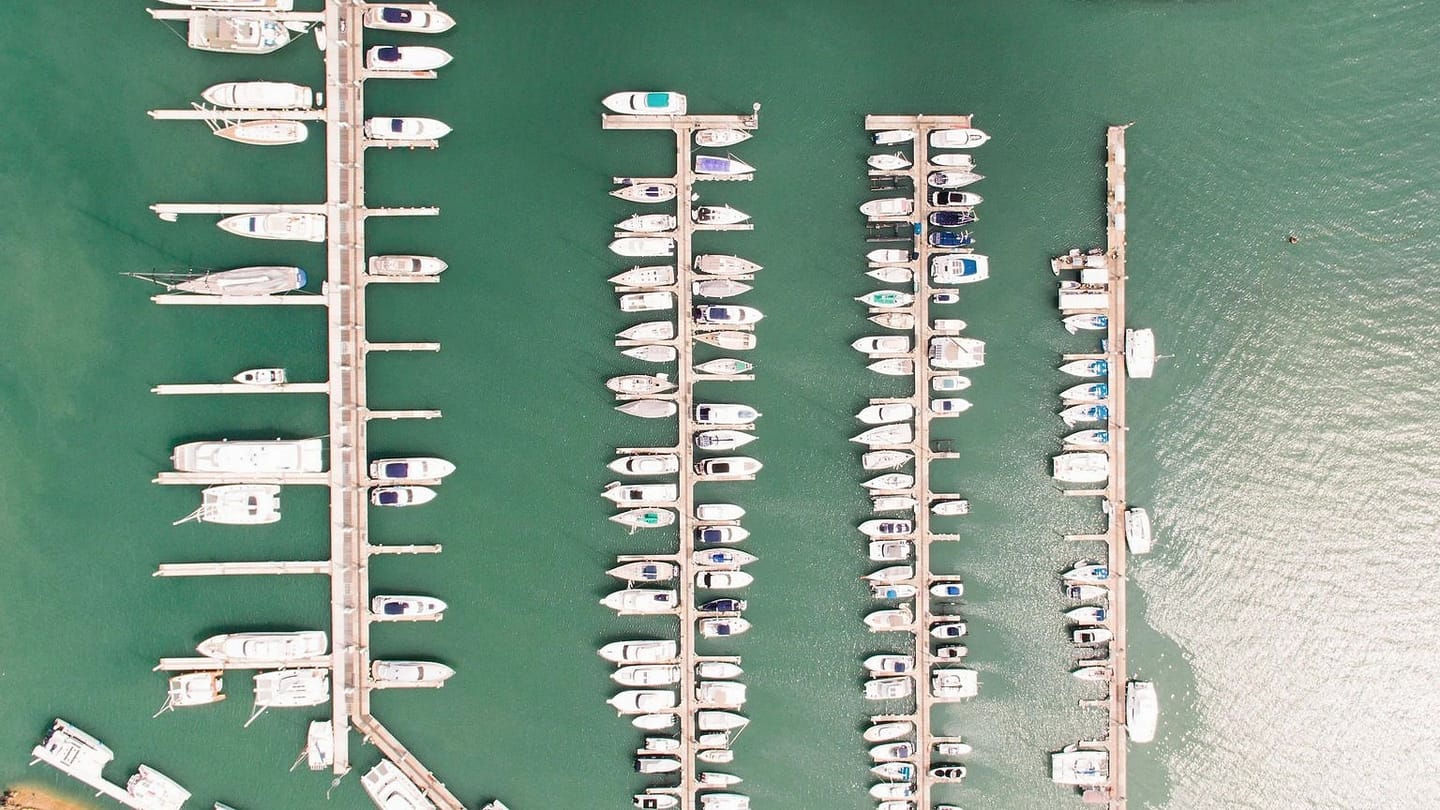
A wet slip gives the boat a fixed place alongside or between pontoons. You can usually board from shore and may have water, electricity, lighting, parking, toilets, fuel, lifting, or repair nearby. None of those extras is guaranteed by the word "marina." Ask what reaches the specific berth and whether use is included, metered, or separately billed. Also check berth orientation, fairway room, depth through the full local range, wake, security, and staff hours.
A traditional swing mooring consists of a seabed anchor or block, chain or rode, and a float. The boat swings around that point with wind and current. Direct dock access disappears, so daily use depends on a tender, shore dinghy space, launch service, parking, and weather that permits transfer. Ask who inspects the ground tackle, what boat size it is rated for, whether the mooring is seasonal, and what happens during severe weather.
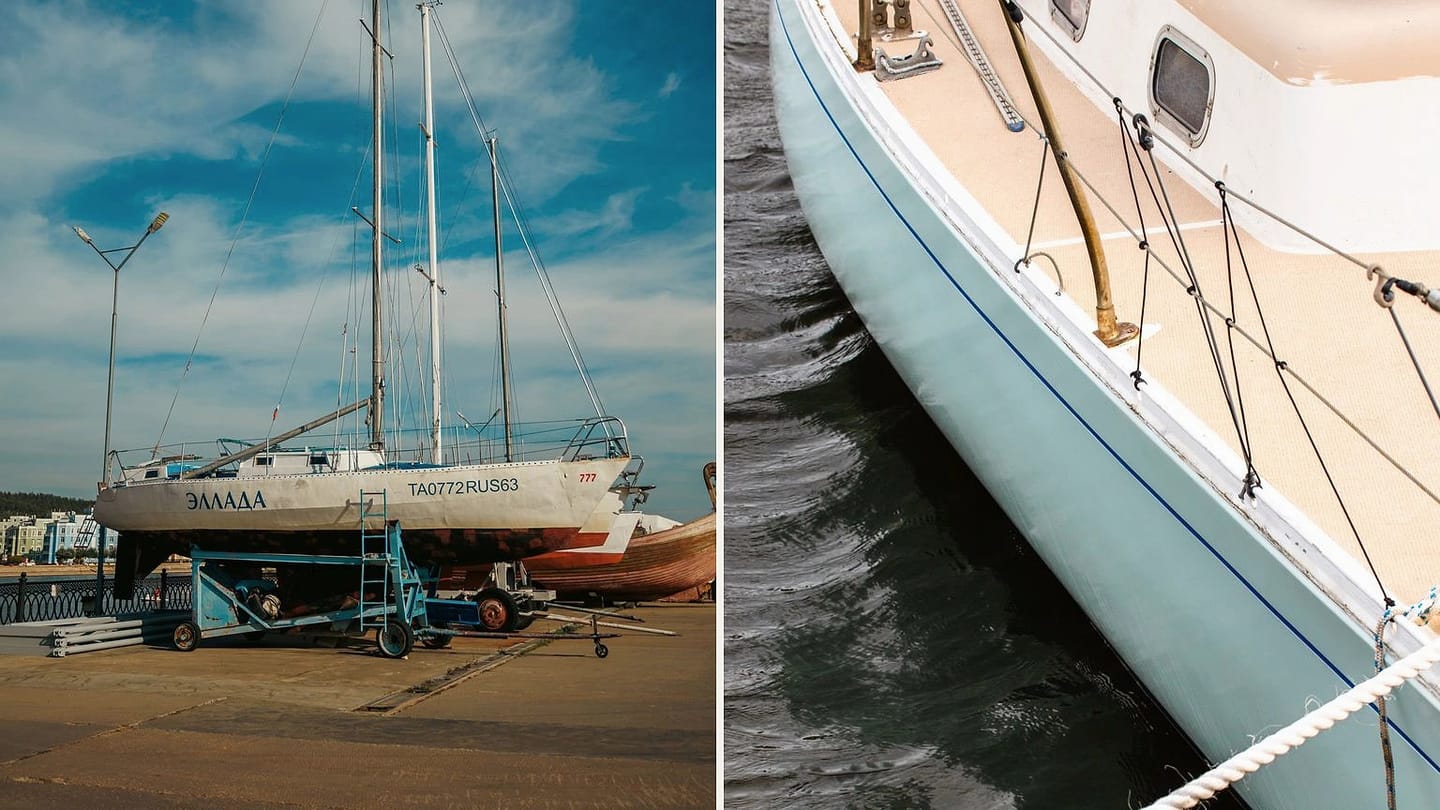
Dry storage is several products. A trailer or yard space keeps a boat ashore but makes launch, rigging, stands, or a cradle part of the plan. A dry stack uses purpose-built racks and commonly includes operator launch and recovery. It is often aimed at boats whose hull, weight, and dimensions suit the machinery. A fixed-keel sailing yacht with a standing mast may need hardstanding and a travel lift rather than a powerboat rack.
Do not assume one method is always gentler. Afloat storage increases exposure to water, growth, lines, fenders, and unattended leaks. Ashore storage changes support loads and can expose covers and rigs to wind. The provider, boat, climate, and owner routine decide the result.
Match the Storage to the Sailboat
Give every provider the same boat data: overall length including fixed projections, beam, draft, displacement or weight, keel type, mast height, and any cradle or trailer dimensions. Ask which measurement controls billing. One current municipal marina uses the greater of overall boat length and slip size for some terms. That is a local example, but it shows why a quoted rate per unit of length is incomplete without the measurement rule.
For a slip, confirm usable depth and width as well as its advertised length. Check whether pilings, finger pontoons, tidal movement, and neighbouring beam leave workable fender and line geometry. Ask whether the berth accepts liveaboard use, contractors, sail work, or owner maintenance if those matter. The dock-line setup in dock lines and spring lines helps you inspect whether the proposed berth can restrain the boat in its normal wind and wake.
For a mooring, confirm the approved boat range, inspection responsibility, pickup arrangement, and swinging room. Work out how people and gear reach the boat. A long tender trip can change how often you sail and how comfortably you carry batteries, sails, food, or children. Review how to pick up a mooring buoy before assuming every buoy works like the one at your training centre.
For dry storage, ask how the hull is supported and who approves the support plan. A rack made for typical motorboat hulls may not suit an unusual hull. A keelboat on land needs appropriate stands or a cradle, stable ground, and clear responsibility for setup. Confirm whether the mast stays up, whether rigging work is allowed, and how the boat moves between storage and water.
What work sits behind each sailing day?
Imagine a normal two-hour evening sail. From a slip, you may park, board, disconnect shore power, run checks, and leave. That convenience is useful only if travel to the marina and access hours suit your life. A full-service berth far from home can create fewer sailing days than a modest arrangement nearby.
From a mooring, add tender launch or shore-service timing, loading, the trip to the boat, transfer, tender security, and the return ashore. The boat is already afloat and clear of a narrow slip, which may simplify departure. The trade is that every visit begins over water and quick checks from the dock are impossible. Work out who checks the boat after strong wind when you cannot reach it.
Dry storage can keep the hull accessible and reduce continuous water exposure, but launch may require booking staff, waiting for a lift, stepping the mast, or using a ramp. Ask whether launch and recovery are on demand, limited to opening hours, included, or charged each time. Also ask where the boat waits afloat before pickup and whether late return creates a fee.
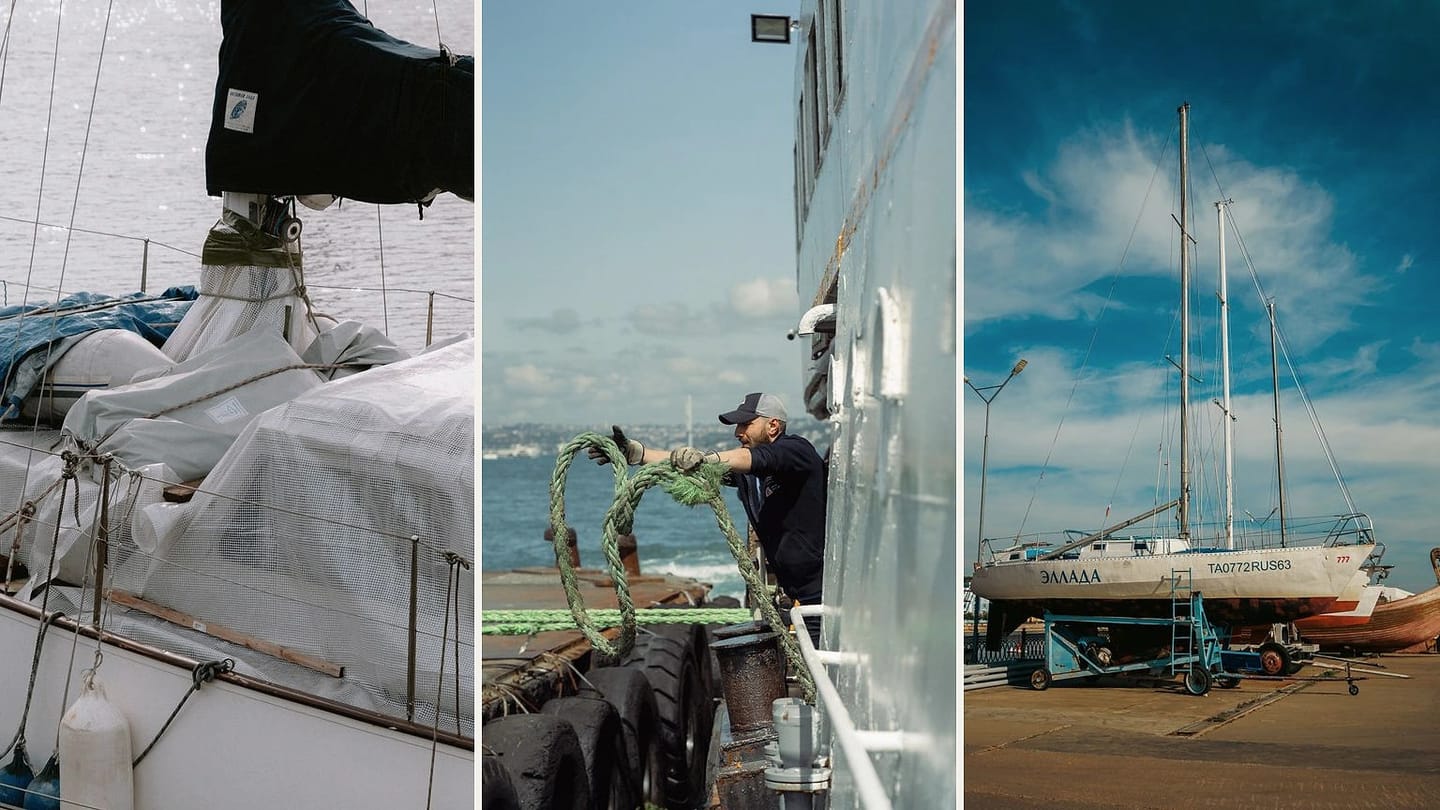
Maintenance work changes too. A boat afloat needs lines, fenders, through-hulls, bilge, shore power, and underwater condition watched. A boat ashore needs support, cover, ventilation, drainage, and weather security watched. Neither is "no maintenance." Use the sailboat maintenance checklist to mark which checks are easier, harder, or provider-controlled in each option.
Finally, compare storm procedures. Ask who moves, hauls, secures, or monitors the boat, which actions are optional, which are mandatory, and who pays. Follow the site's current written plan and your insurer's conditions rather than assuming dry or wet storage automatically settles the risk.
Request Quotes You Can Compare
Send one written request to each provider. State the same boat, dates, intended use, and required services. Ask for storage, tax, utilities, access cards, parking, tender space, launch or haulout, pressure washing, stands or cradle, mast handling, storm services, cancellation, deposit, waiting-list payment, and price-change terms. Leave an unanswered line blank rather than entering zero.
Normalize the offers to one period and currency. Separate refundable security from money you expect to spend. If a marina quotes by length, record which length and minimum it uses. If a mooring price includes launch service, record its operating dates and passenger or gear limits. If dry storage includes a number of launches, price the sailing days beyond that allowance.
Build three use cases. First, price a normal season with your expected sailing days. Second, price a first year that includes setup such as a cradle, tender, cover, or access equipment. Third, price one inconvenient event: a storm haul, late lift, missed launch window, or extra month. You are testing the contract's shape, not predicting every problem.
Then score access, boat fit, provider support, maintenance control, weather plan, and total cost. The best choice may not have the lowest invoice. It should make the boat safe to keep, practical to reach, and realistic to use. Verify current local rules and contract conditions before committing because mooring permissions, work policies, and insurance requirements differ.
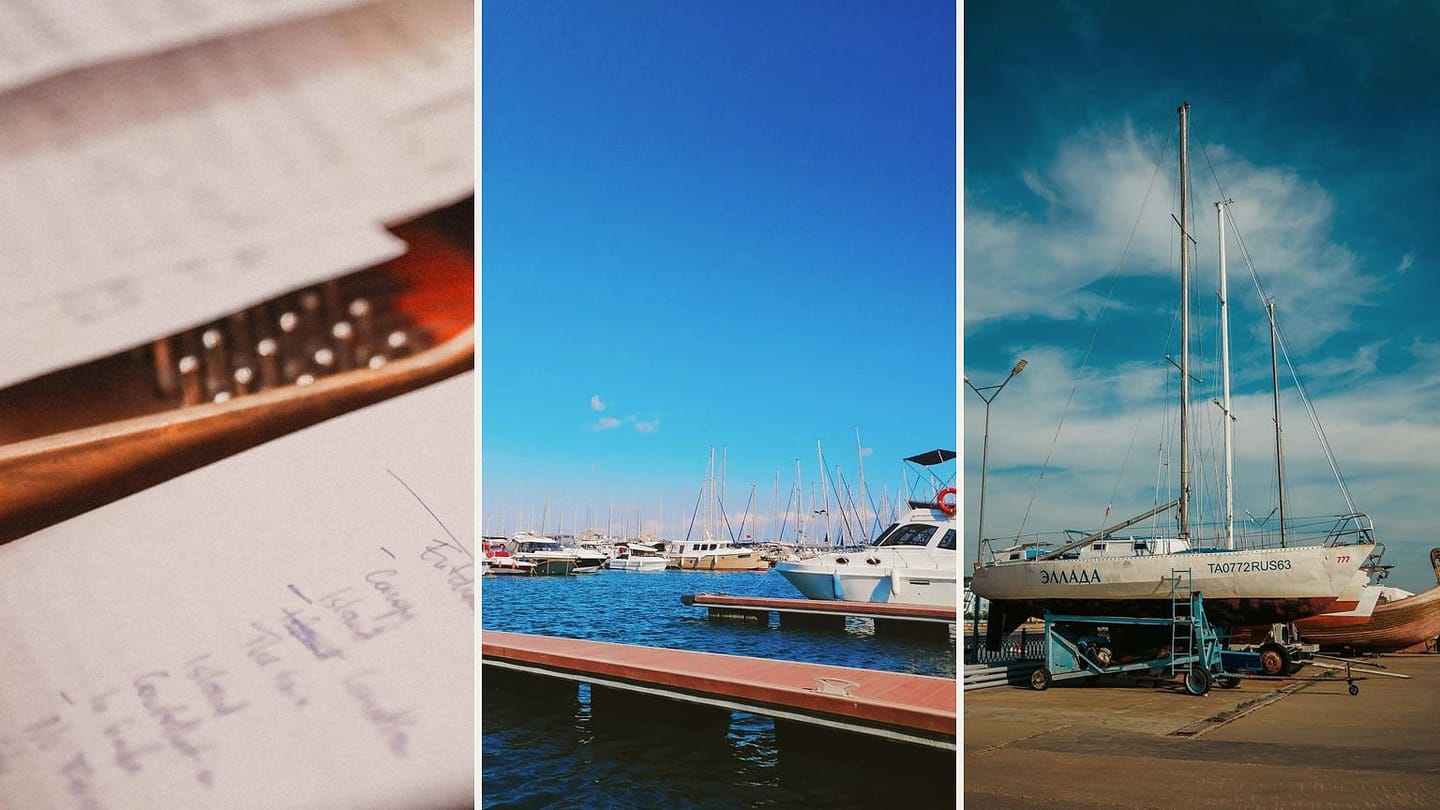
Use SailStarter's boat-choice lesson to write a storage brief before shopping for a sailboat or berth. Include the boat's dimensions, keel, mast, launch method, regular crew, likely sailing times, distance from home, and maintenance you intend to do. Get at least two real local options onto the same quote sheet. Then run one honest week through each: how you board, how you leave, how you return after hours, and how you check the boat after bad weather. This will not produce a universal winner. It will show which storage method supports the sailing you expect to do. If no available option fits, change the boat, location, or ownership timing before the purchase locks in the problem.
Try it from the lesson
Can you spot the next move?
A wide sailboat glides past on two side-by-side hulls, barely leaning at all. What type is it?
Why you can trust this guide
. We build each guide from public seamanship and safety sources, then teach the universal principle before any local difference.