Chart your course
Distress Flares for Sailors
Quick answer
The short version
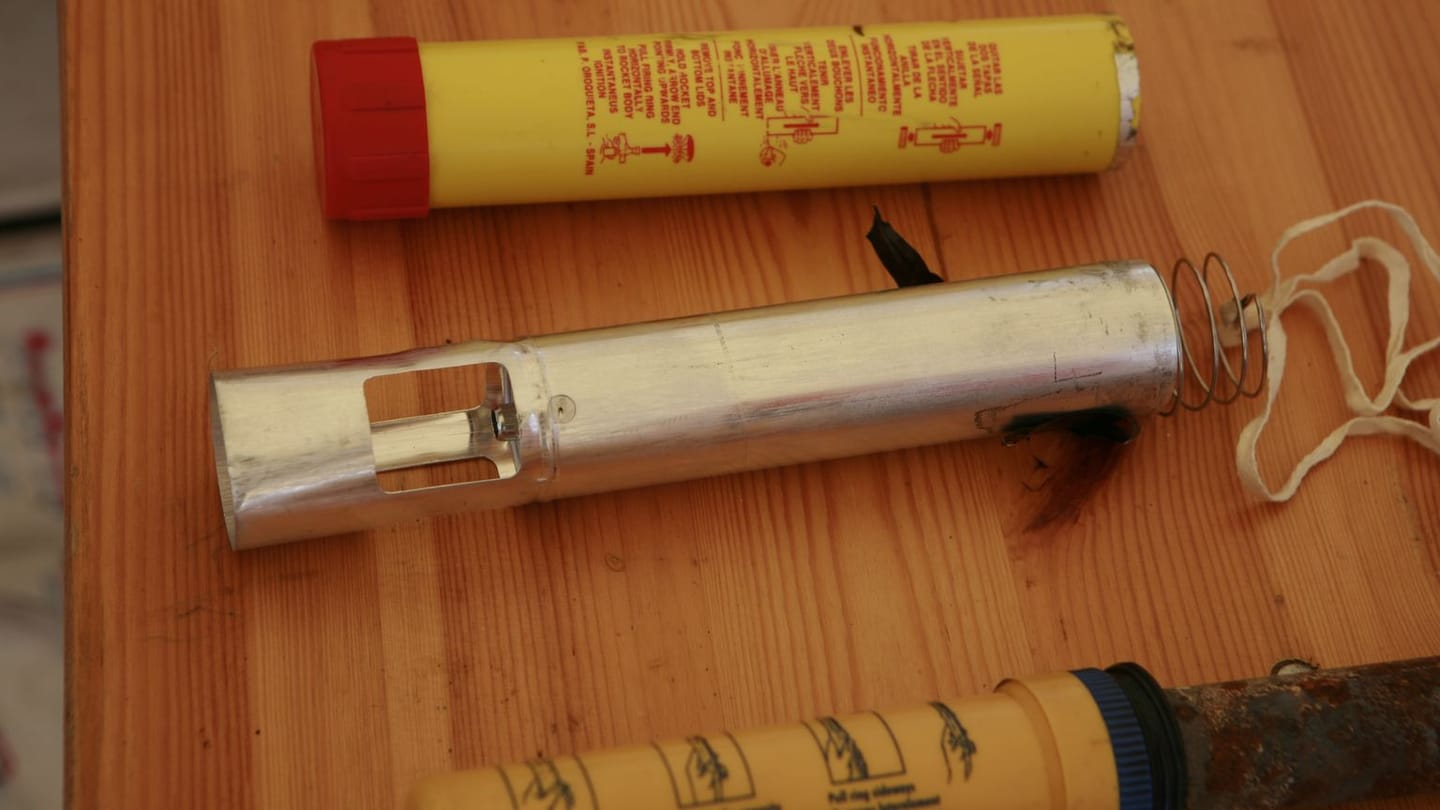
A flare is a short, bright message that says a boat needs help and shows exactly where it is. Three types cover most small craft. A red hand flare burns for around 60 seconds and pinpoints your position for anyone already looking your way. A red parachute rocket climbs to roughly 300 m (985 ft) and burns for about 40 seconds, so it reaches over the horizon. Buoyant orange smoke gives at least three minutes of dense colour and works only in daylight. All three appear in Annex IV of the international collision regulations as recognised distress signals. Fire the one that suits the light and the range, hold it downwind and outboard, and replace it before the date printed on the casing.
Pyrotechnics feel intimidating because you never get to rehearse with them. You buy them, stow them, and hope the packet stays sealed. That gap between owning the equipment and understanding it is where most beginners sit.
The fix is unglamorous. Learn what each signal in your locker does, read the pictograms printed on the body while you are tied up and the light is good, and agree with your crew who reaches for which one. A signal only works if somebody is looking in your direction, so treat it as the thing that guides a searcher to you after a radio call has already told them roughly where to search.
Hold it downwind, outboard and away from your face
Every pyrotechnic aboard burns hot enough to injure you if it points the wrong way. The manufacturer sequence for a telescopic red hand flare runs like this: pull the end out until the tube is fully extended and locked, unscrew the cap, point the firing end away from you, then pull the ball sharply. Hold the burning flare at arm's length over the side and downwind. On many designs an end plug ejects about two seconds after ignition, which is one more reason nothing of yours should be in front of it.
Downwind matters for a second reason. A hand flare drips hot residue as it burns, and where there is fuel in the water or on deck, that residue can ignite it. Tilt the flare away from the hull and away from your body.
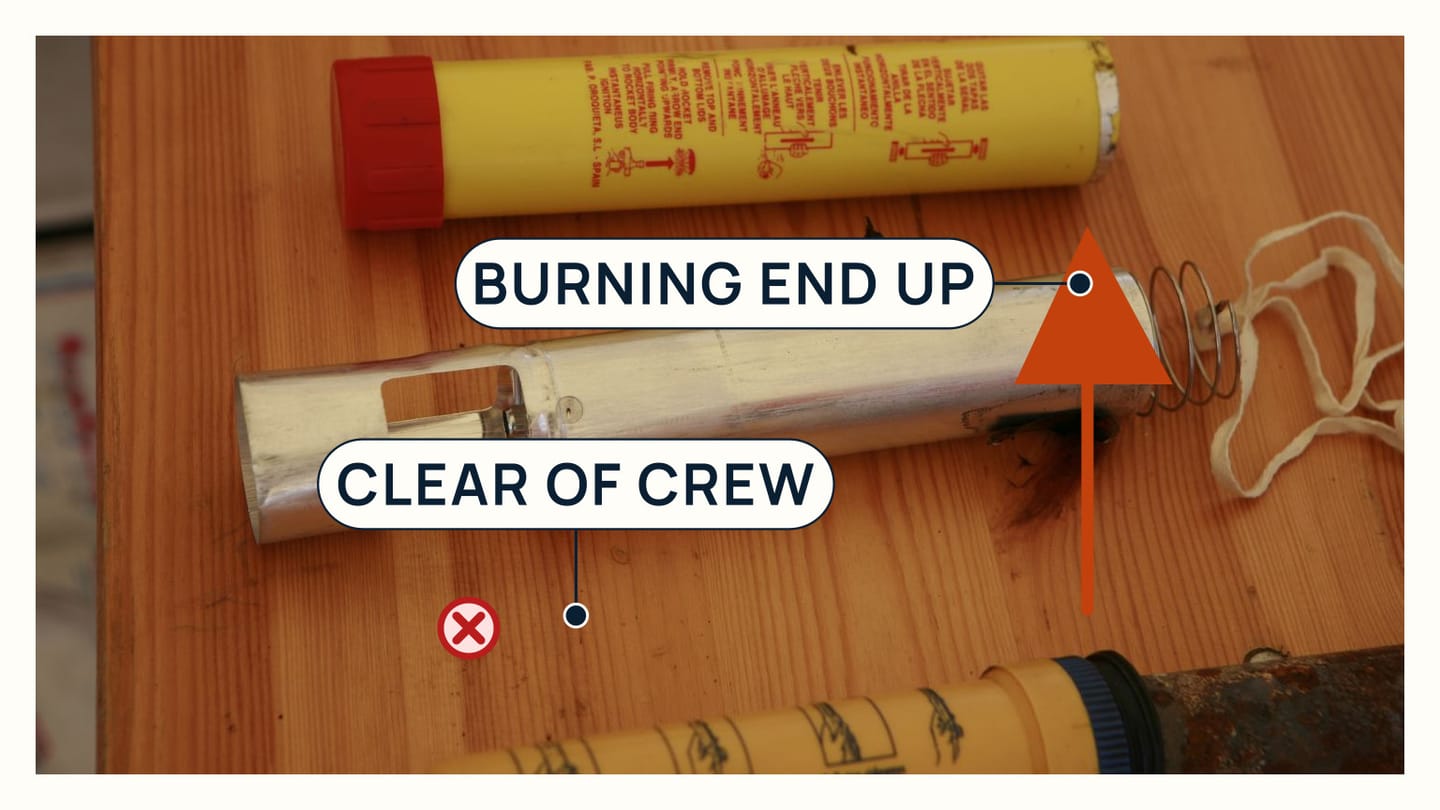
A parachute rocket has its own drill. Hold it firmly by the ribbed grip, keep it vertical above your head, point it away from your body, keep your hands clear of the top, and pull the firing ball sharply down. Never aim it at another vessel, a building, or a person. One extra rule catches people out. Do not fire a parachute rocket when a helicopter is nearby, because a rocket climbing to 300 m puts a projectile into the airspace that crew is working in.
Read the casing while it is still daylight
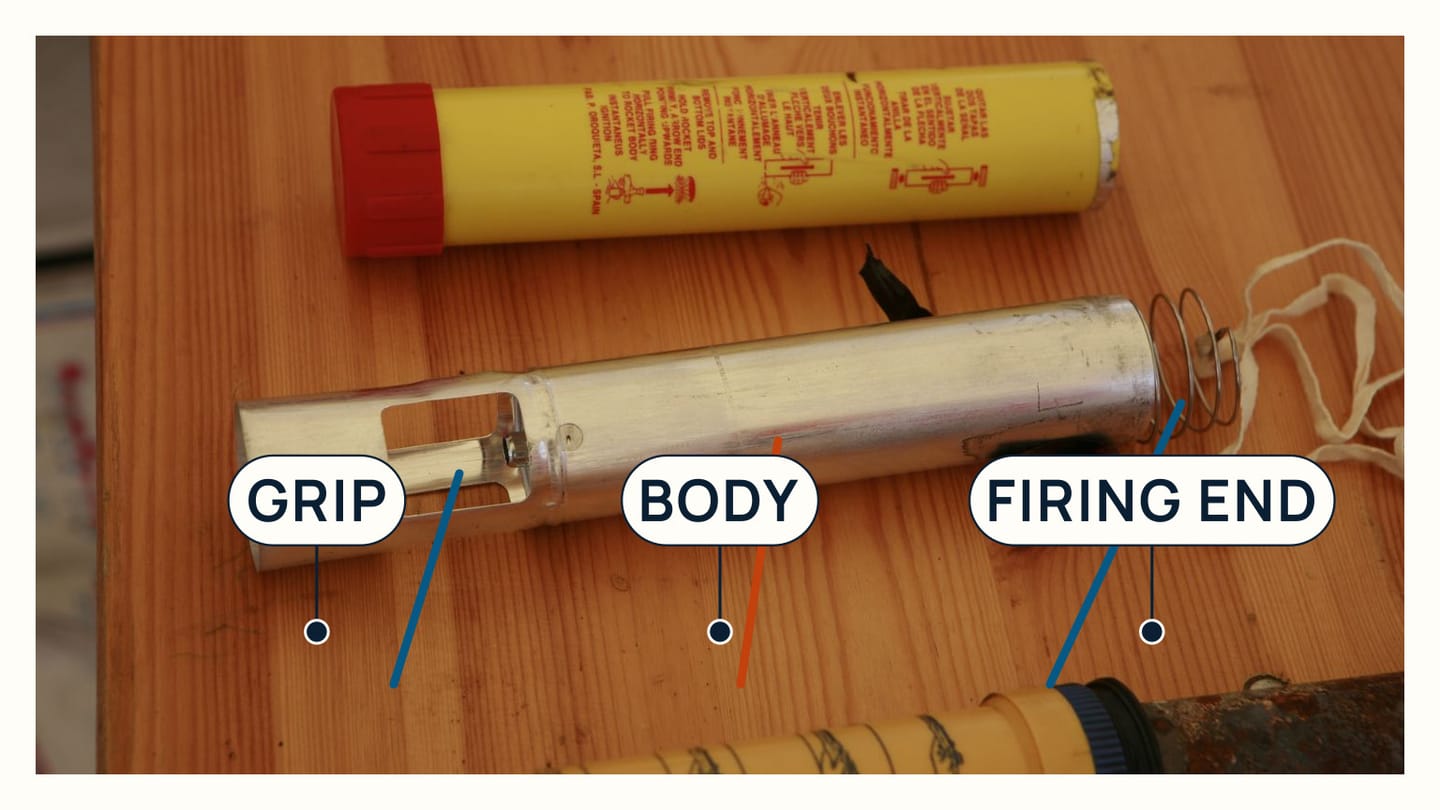
Marine pyrotechnics carry their instructions printed on the body, usually as a strip of small pictograms with a line or two of text in several languages. That printing is the manual. Nobody reads it well by torchlight in a seaway, so read it at the dock.
Three things are worth finding on each unit before you stow it. First, which end fires. On a telescopic hand flare the grip extends from one end and the flame comes from the other, and in a locker the two can look alike. Second, the firing method, because some units use a pull ring, some a pull wire under a screw cap, and some a percussion tab. Third, the printed warnings, which on most brands read: do not fire in a confined space, keep away from any source of heat, do not use if the unit is damaged or dented, do not dismantle, and do not use after the expiry date.
While you are looking, separate out any white hand flares. A white flare is a collision warn-off signal, used to make yourself obvious when another vessel is standing into danger. It is not a distress signal, and firing one in an emergency costs you a free hand and tells nobody that you need help.
Daylight wants smoke, darkness wants red
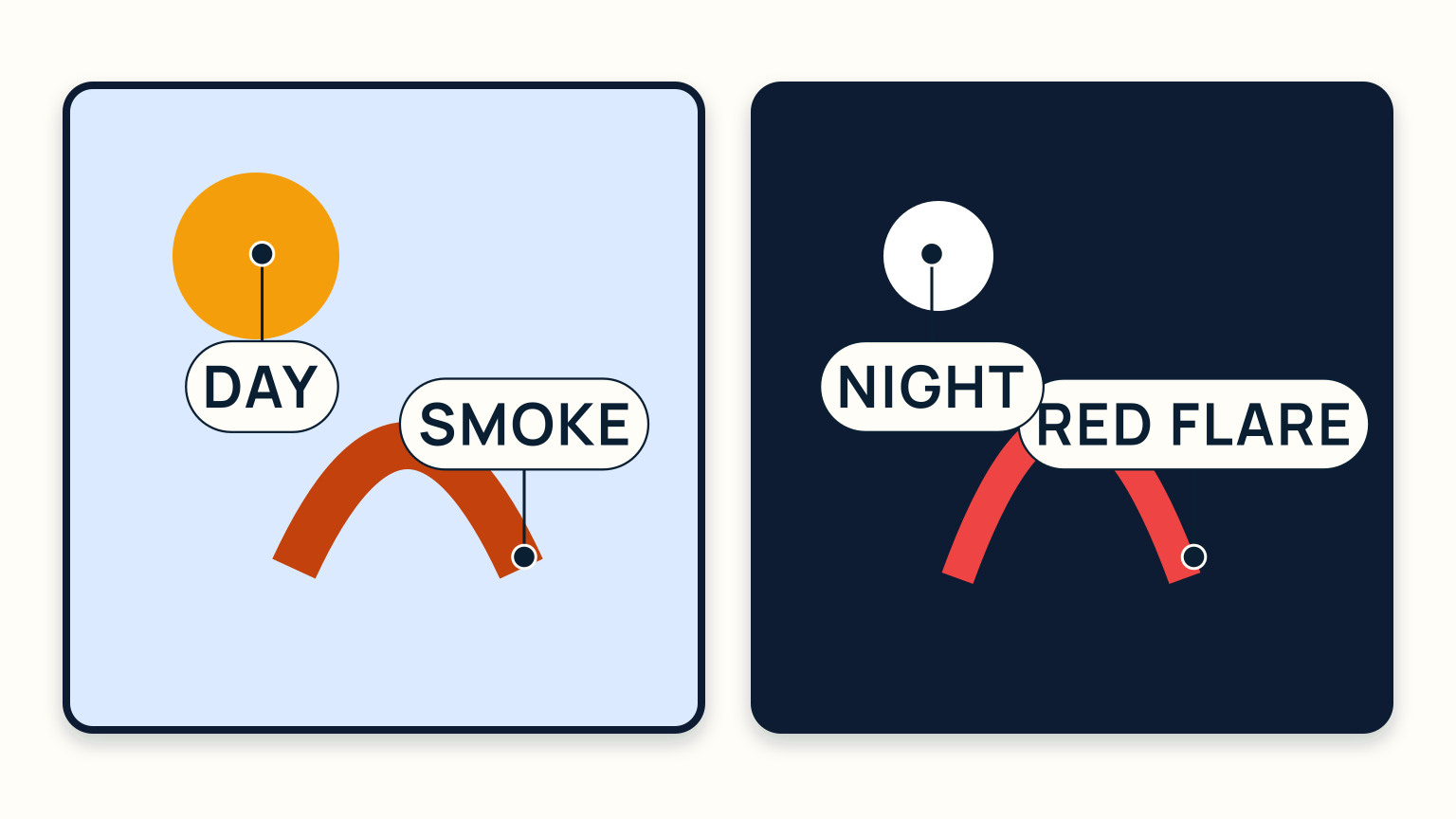
Light level decides which signal earns its place. Buoyant orange smoke is a daylight signal. Its whole effect comes from a dense coloured plume against sea and sky, and after dark that plume is invisible. Open it, keep your hand clear of the hot end, and throw it into the water downwind of the boat, where it will smoke for at least three minutes. It is safe to use on water carrying oil or fuel, and the drifting plume also shows a searching aircraft which way the wind is blowing.
Red is the night colour, and red also works by day. A hand flare has a visibility range of a few miles, so it suits the moment when you can already see a boat, an aircraft, or the shore. A parachute rocket is the long-range option. In favourable conditions it can be observed as far as 28 miles, which is why it goes up first when nobody is yet in sight.
A workable order for a small crew is to send the radio alert, use a parachute rocket to draw attention to a general area, then keep a hand flare in reserve to pinpoint the boat once a searcher is close enough to see it. Firing everything at once leaves you with nothing for the moment that counts.
Stow them dry, together and within reach
Pyrotechnics that have rattled around a damp locker for four seasons are a different product from the ones that left the factory. Keep them in a cool dry place, out of temperature extremes and away from vibration, and keep the types separate so you can pick the right one by feel. Most manufacturers supply or sell a rigid watertight container for exactly this, and it doubles as protection for the firing ends.
Reachable matters as much as dry. A container buried under the sail bag in a cockpit locker is a container nobody opens in a hurry. Racing rules for offshore boats ask for a safety equipment location diagram in durable waterproof material, displayed in the main accommodation and marked with where the principal items live. That is a good habit for any cruising boat: one laminated card, one honest diagram, and every person aboard shown it before you leave.
You cannot practise firing a live signal, so practise everything up to the trigger. Hand each crew member a unit still capped, and have them find the grip, say which end fires, and describe the first two actions out loud. Then put it back. Two minutes of that on a calm afternoon is worth more than any amount of reading.
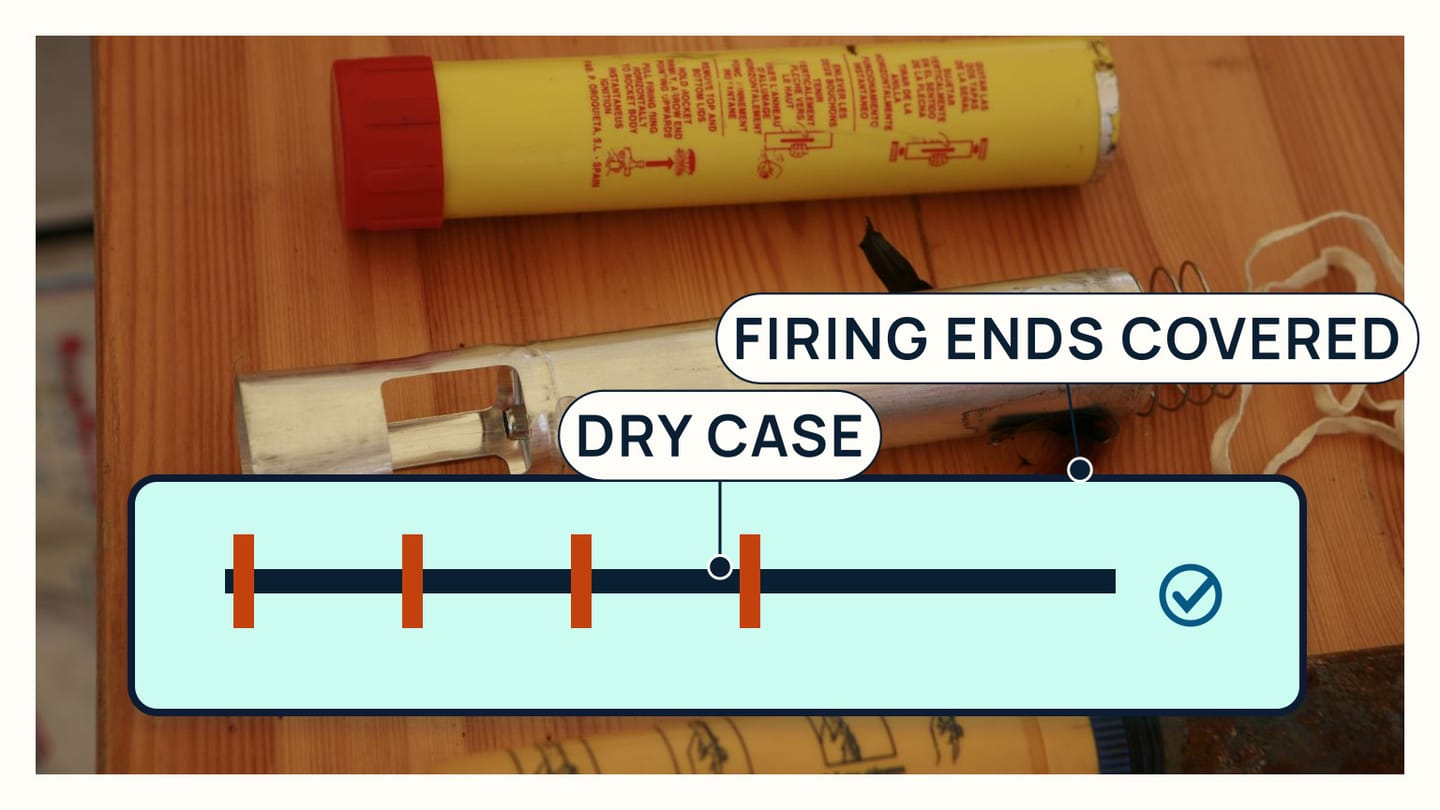
Dates, replacement and lawful disposal
Every signal has a shelf life, and the chemistry behind the light is what ages. Out-of-date units lose their colour, brilliancy and burn time, so the one property you were relying on quietly degrades. Keeping them aboard as a backup is a habit worth dropping, because in the moment nobody checks dates.
Offshore racing rules give a clear benchmark for how old is too old. They require pyrotechnic signals to conform to the international life-saving appliance standard and to be no older than the expiry date stamped on the unit, or where no date is stamped, no older than four years. Carriage requirements and permitted signal types are set locally and they vary, so verify the current rules where you sail and record your dates somewhere other than your memory.
Disposal is the part people get wrong. Expired pyrotechnics are hazardous items and must be disposed of responsibly under the regulations that apply in your area. Firing them off for practice, for fun, or simply to use them up is not disposal. It can trigger a search, and a lifeboat crew launching for a signal that was never real is the outcome everybody wants to avoid. Ask your chandler, marina, or local authority where the current collection point is, and confirm it before turning up with an armful.
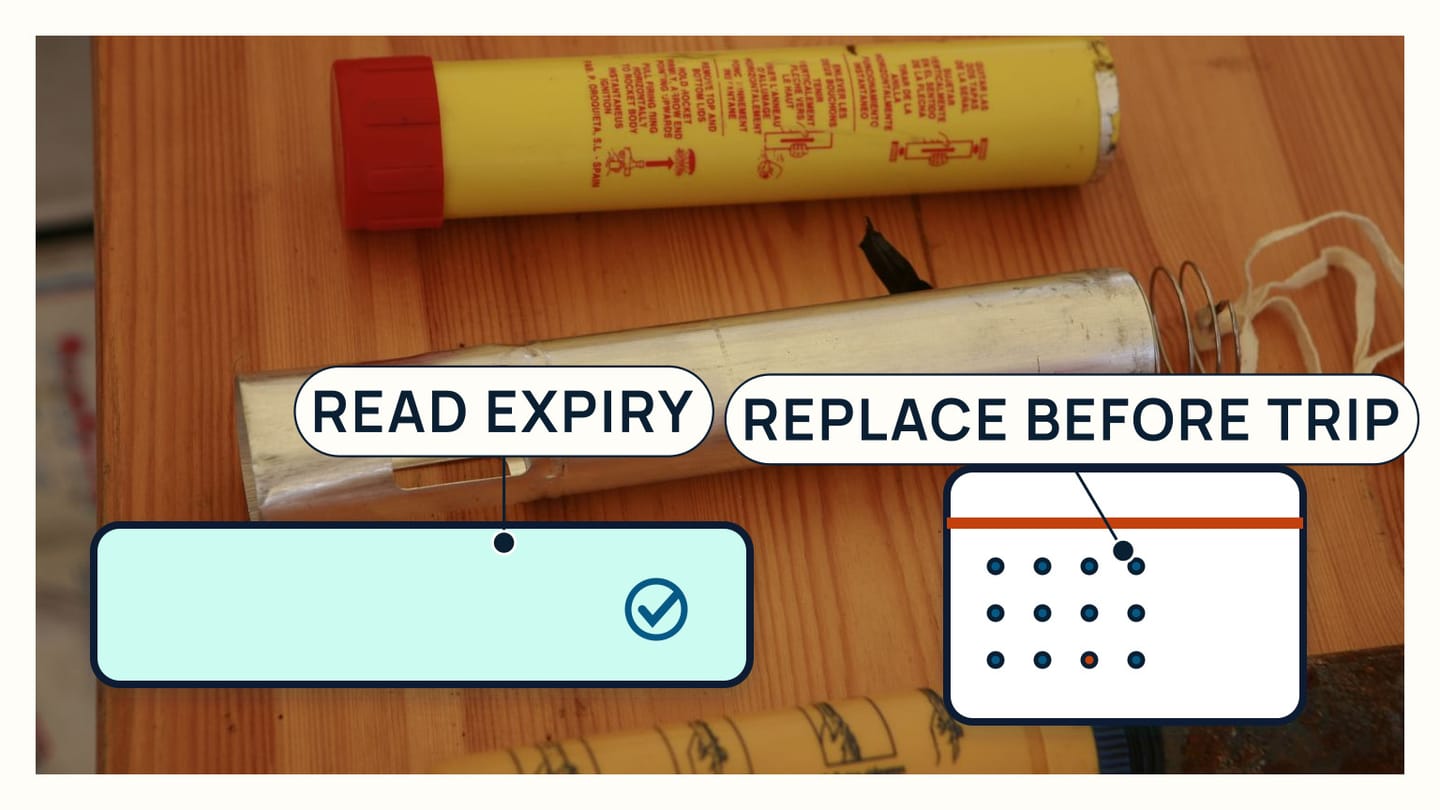
None of this is difficult, and none of it needs the boat to leave the dock. Pick a quiet evening, get the container out, lay everything on a bunk, and go through it with whoever sails with you: what each unit is, which end fires, where it lives, and when it expires. Write the earliest expiry date on the outside of the container so the next check takes five seconds.
If you want the wider picture this sits inside, the SailStarter lessons work through calling for help and reporting your position as short visual steps between trips. That background is what turns a locker full of equipment into a plan.
Try it from the lesson
Can you spot the next move?
Your engine has died and you're drifting in a calm, safe anchorage with no other traffic nearby. Is that a MAYDAY?
Why you can trust this guide
. We build each guide from public seamanship and safety sources, then teach the universal principle before any local difference.