Chart your course
Do Sailboats Always Have Right of Way? (No — Here's When They Don't)
Quick answer
The short version
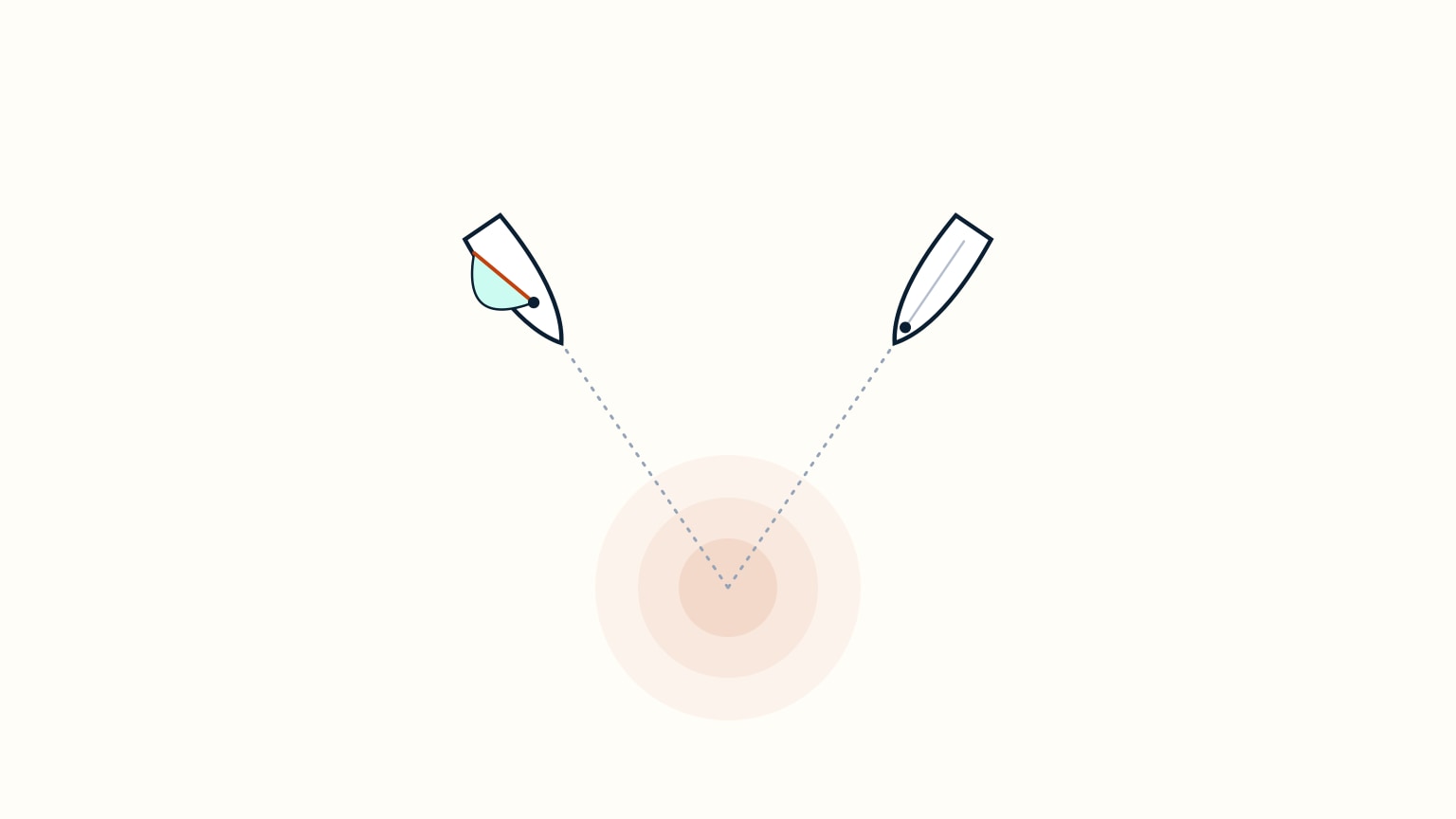
Not always. The everyday rule of thumb (a powerboat gives way to a sailboat) is real: COLREGs Rule 18(a) makes a power-driven vessel underway keep out of the way of a sailing vessel underway. But it's a default, not a blanket right, and specific situations override it. Any vessel overtaking another, sail included, has to keep clear of the vessel ahead. A sailing vessel must not impede a ship confined to a narrow channel or a marked traffic lane. Vessels not under command, restricted in their ability to maneuver, constrained by draught, or fishing all still outrank a plain sailboat regardless. And the moment a sailboat's own engine is doing any of the driving, she's a power-driven vessel herself, sails up or not.
Ask most new sailors and you'll get the same one-liner: sailboats have right of way over powerboats. It's close enough to true to be dangerous, because "close enough" is exactly the gap that catches people: the sailor who assumes the default always holds, right up until she's the one who should have moved. COLREGs, the international rules every vessel sails under, don't hand anyone a blanket right of way; they set a default and then carve out the situations where it doesn't apply. Rule 18's actual default comes first, then the specific situations that flip or override it: overtaking, narrow channels and traffic lanes, the priority ladder above sail, what running your engine does to your status, and why none of it matters much once a genuinely large vessel is involved.
Overtaking Beats the Default: Sail Included
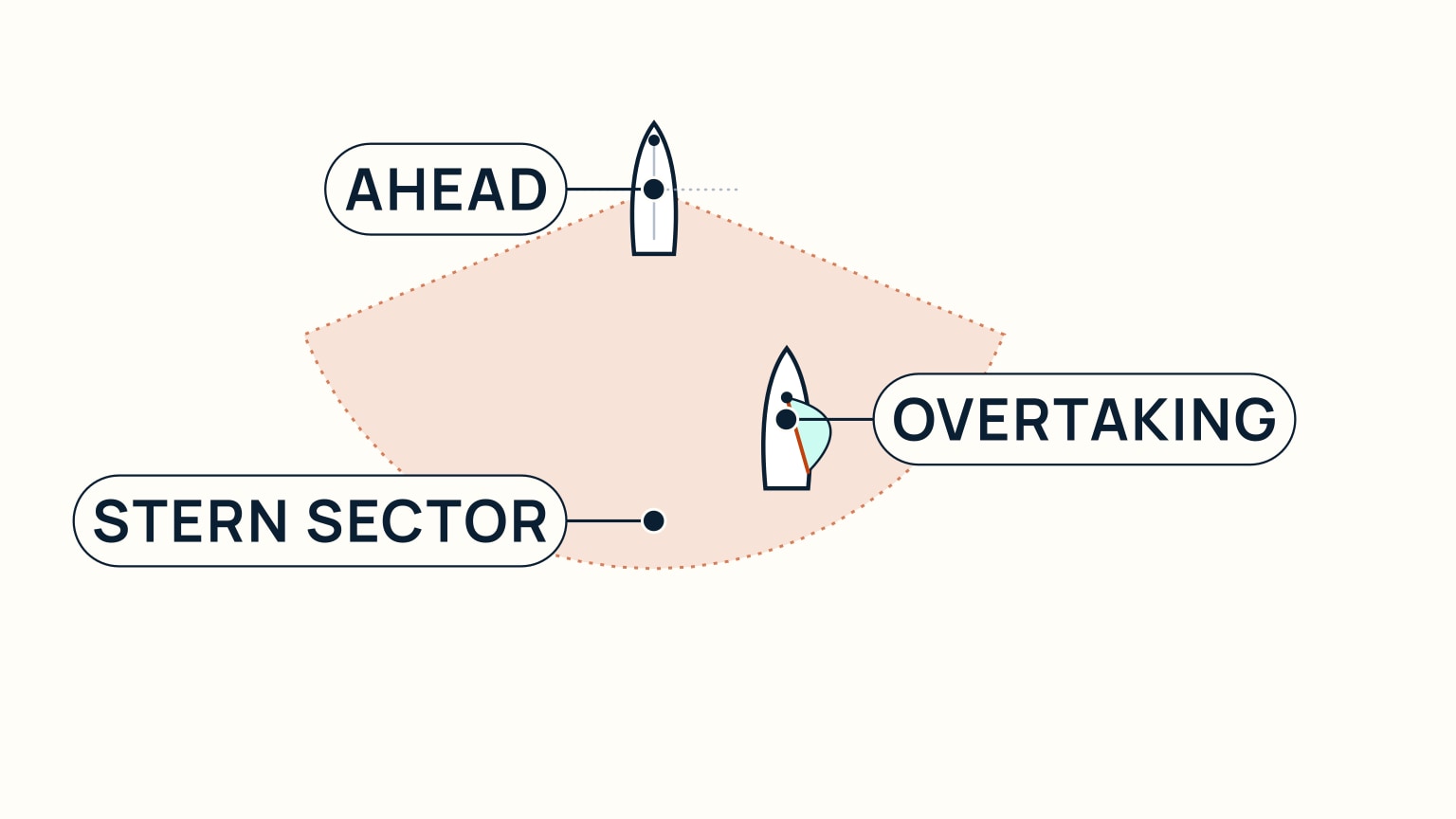
Rule 18's default assumes two vessels meeting head-on or crossing. Overtaking is a separate rule entirely, and Rule 13 opens by overriding everything above it: any vessel overtaking another keeps out of the way of the vessel being overtaken, whatever type either vessel is. A sailboat catching up on a slower powerboat from behind is the give-way vessel. Being under sail doesn't put the powerboat in that seat instead.
"Overtaking" has a precise definition, not a rough one: coming up on another vessel from more than 22.5 degrees abaft her own beam. Since the beam sits 90 degrees off the bow on each side, that bounds a stern sector 135 degrees wide, centered dead astern: the shaded zone below. Catch up on someone from inside it and you're overtaking, full stop. If you're ever unsure whether you're overtaking, the rule resolves the doubt for you: assume you are, and act accordingly. A later change in bearing doesn't turn you into a crossing vessel or end your duty. That runs until you're finally past and clear.
Narrow Channels and Traffic Lanes: Don't Impede What Can't Move
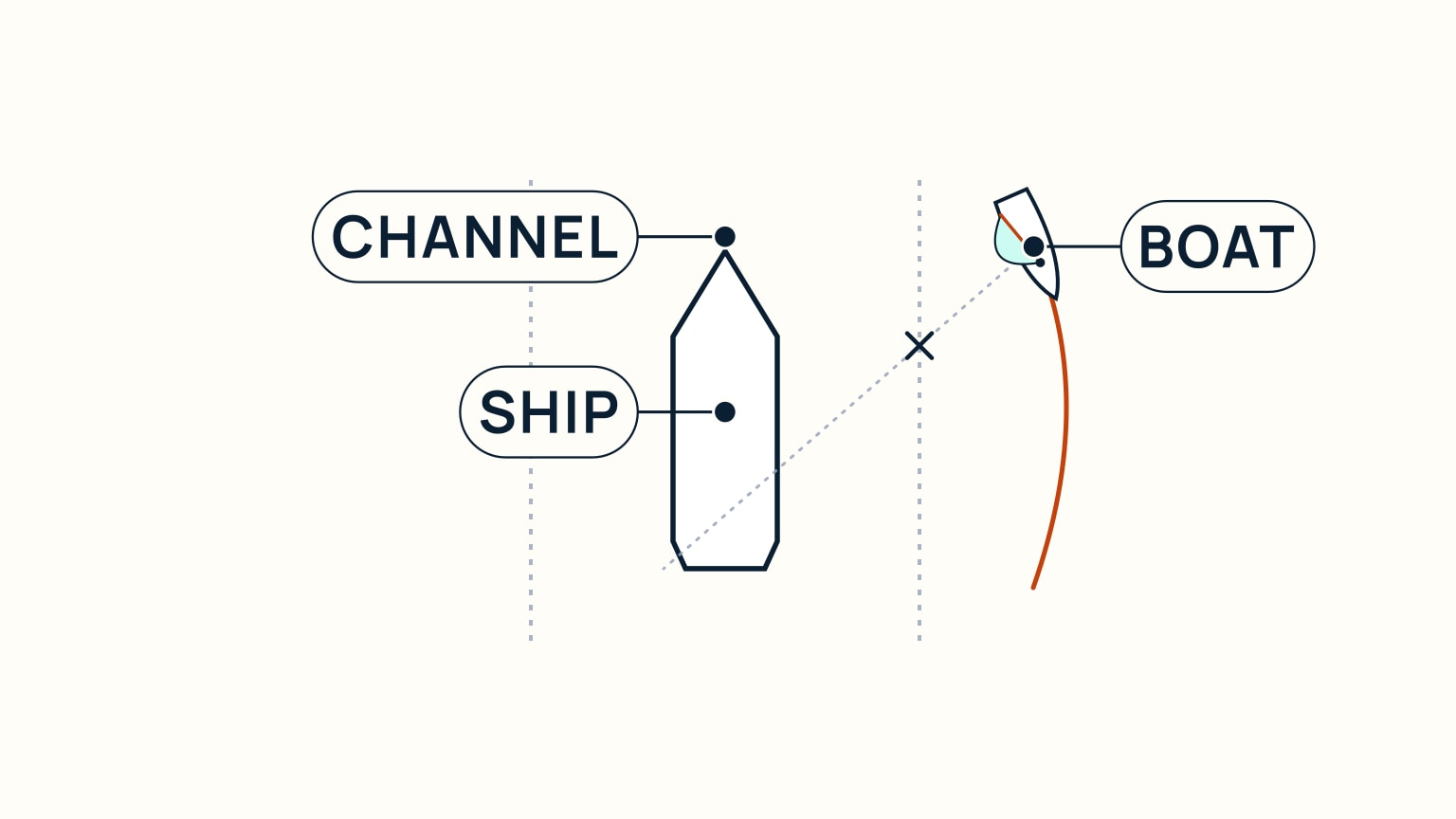
A deep-draft ship confined to a marked channel can't simply steer around a sailboat the way Rule 18 might otherwise expect of a powerboat in open water. She may not have the depth to leave it. Rule 9 accounts for that: in a narrow channel or fairway, a sailing vessel (and any vessel under 20 meters) must not impede the passage of a vessel that can only navigate safely within that channel. Being under sail doesn't give you the right to cross her bow just because she'd technically owe you room anywhere else.
Marked shipping lanes (traffic separation schemes) work the same way under Rule 10: a sailing vessel owes a power-driven vessel following its lane the same not-impede duty a narrow channel requires, and a small boat can generally just avoid crossing one when a practical alternative route exists.
The Priority Ladder Still Outranks a Plain Sailboat
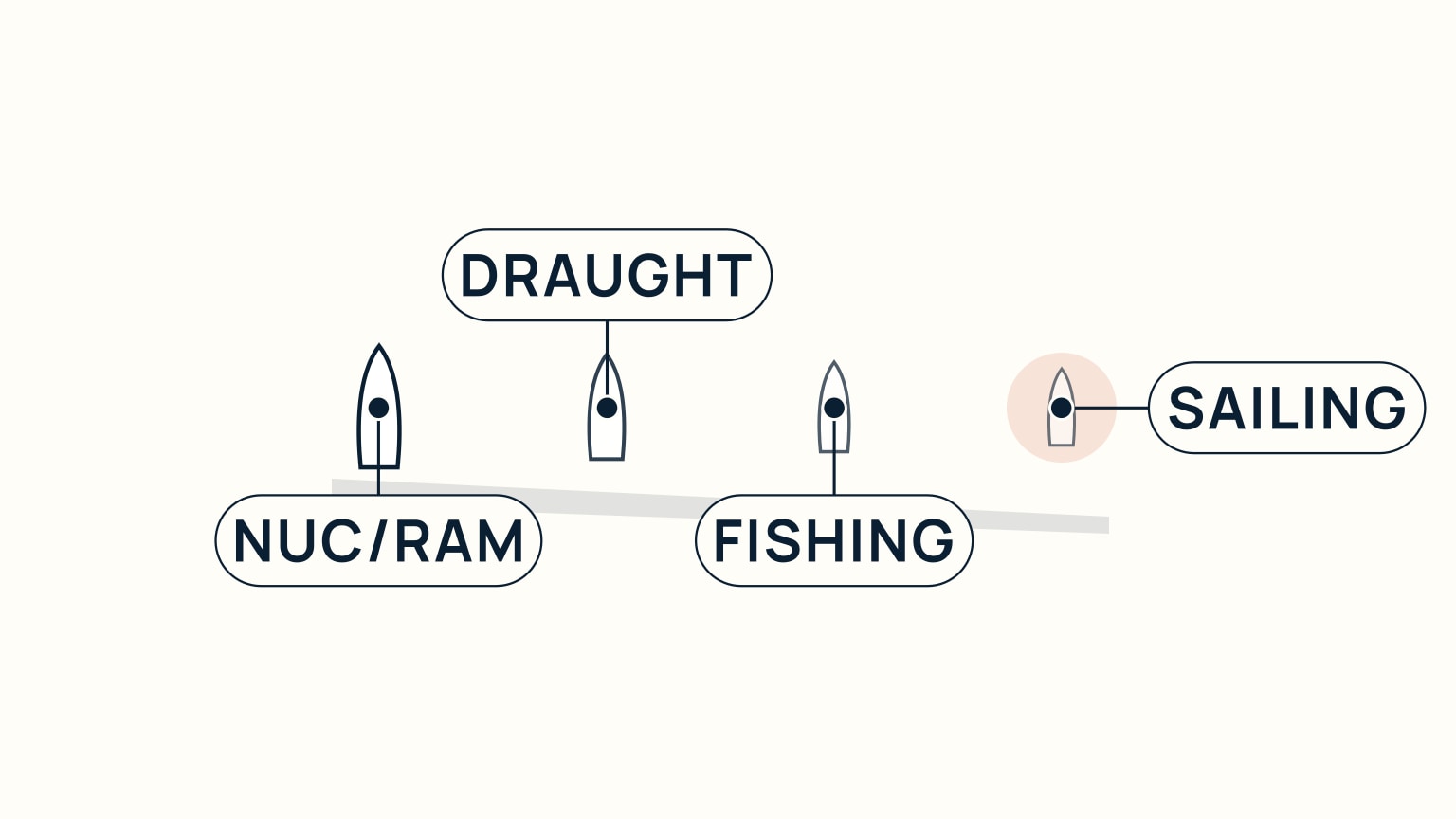
Rule 18 doesn't only rank sail above power: it stacks several other categories above sail too, and none of the exceptions above touch that ranking. A vessel not under command (something's genuinely broken and she can't maneuver as required) and a vessel restricted in her ability to maneuver (tied to work like dredging, towing, or a survey line) both still outrank a plain sailboat. So does a vessel engaged in fishing with gear that limits her moves. A vessel constrained by her draught (too deep for the water she's in to leave her own channel) is owed a narrower "avoid impeding" duty from everyone else, sail included.
A sailboat coming up on a fishing boat working her nets doesn't suddenly outrank her just because Rule 18(a) would normally have a powerboat give way to sail. The ladder is about vessel category, not about who's under sail.
Engine On, Sails Up? You're Power-Driven Now
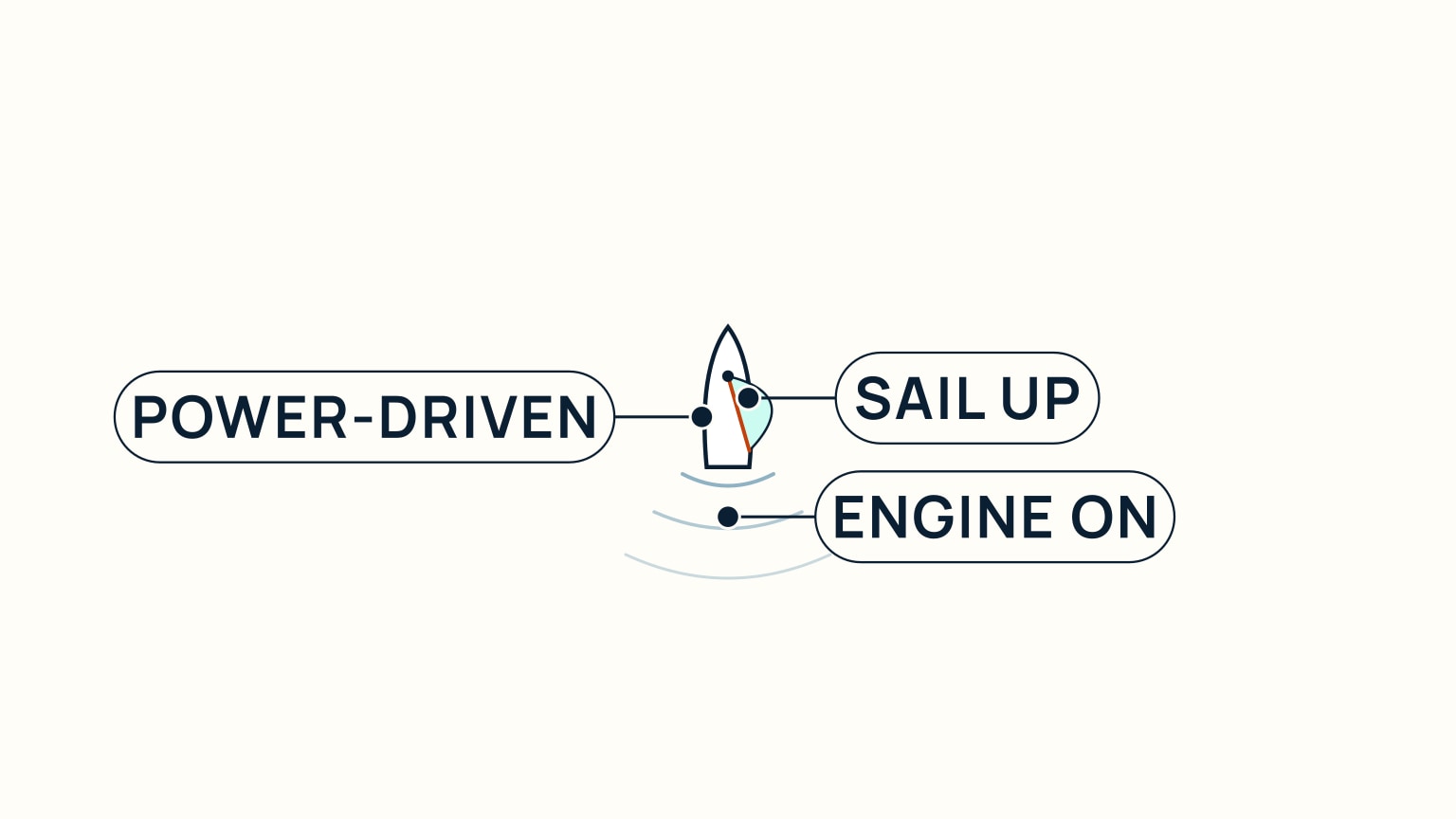
Motor-sailing (running the engine with the mainsail still hoisted) is a normal combination, not a rules gray area. COLREGs define a sailing vessel as one under sail "provided that propelling machinery, if fitted, is not being used." The instant your engine is doing any of the driving, you count as a power-driven vessel instead, regardless of how much canvas you have up.
That status change matters exactly where Rule 18's default lives: a motor-sailing vessel doesn't get to claim the sail-over-power default against another sailing vessel, or lean on anyone else's default duty toward sail. If your engine is in gear and pushing you along, treat yourself as power-driven for every collision-avoidance decision you make: the rules already do.
Big Ships Can't Stop Fast: Stay Clear Regardless
Run the exceptions before the default
When a powerboat and sailboat meet, do not jump straight to “power gives way to sail.” Check in order. Is either vessel overtaking? Are you in a narrow channel or traffic lane? Is either vessel not under command, restricted in ability to manoeuvre, engaged in fishing, or constrained by draught? Is the yacht's engine propelling it? Only when those questions do not change the situation does the familiar sail-over-power default describe the roles.
Keep watching after deciding. A give-way vessel must make an early, substantial change and remain clear. A stand-on vessel holds course and speed so the encounter stays predictable, but must still avoid collision if the other vessel does not act. The practical give-way and stand-on guide explains that shared responsibility.
Around large ships, create room before the encounter becomes close. Their stopping, turning, and visibility limits mean a small yacht may disappear from the bridge view and cannot assume the ship can solve the problem. Make a clear alteration, avoid crossing close ahead, and confirm that the bearing opens. The correct rule matters, but it never makes a close pass with a ship a good plan.
If you are unsure whether you are overtaking, the rule requires you to assume that you are and act accordingly. Remain clear until finally past. Do not reclassify the encounter as crossing simply because the bearing changes during the pass.
The lookout and safe-speed guide explains how repeated bearings and enough stopping room support that decision.
In a narrow channel, a sailing vessel must not impede a vessel that can safely navigate only there. In a traffic lane, a small vessel or sailing vessel must not impede a power-driven vessel following the lane. These duties answer the practical question before the ordinary sail-over-power default becomes relevant.
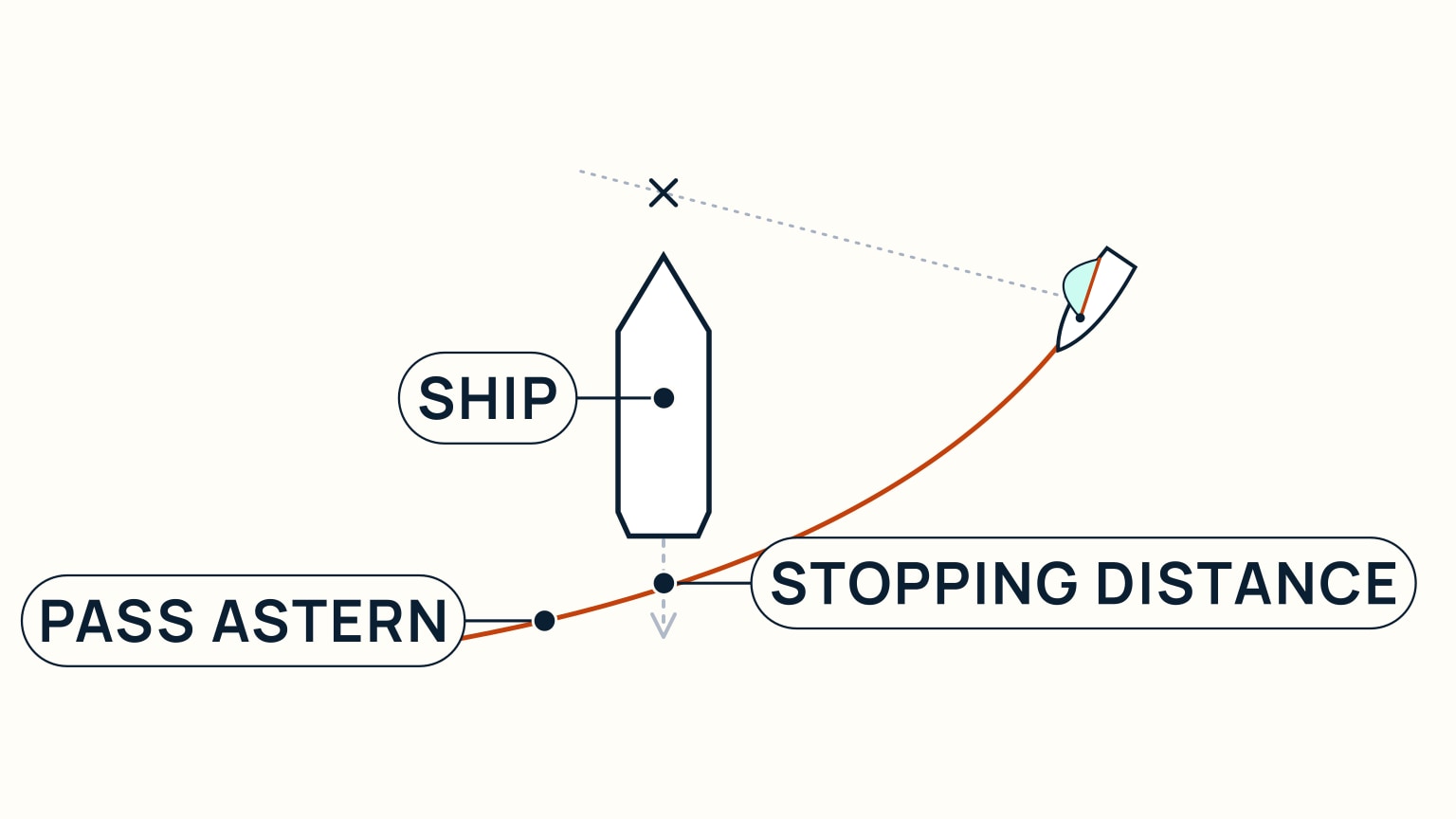
Everything above is still a rule written for vessels that can actually maneuver. A large commercial ship's own stopping distance, turning radius, and visibility are all severely limited by her size: her plans to slow down are made miles in advance, and her bridge crew can lose sight of a small boat crossing ahead of her at half a mile or more, well before the small boat would call the encounter clear. A loaded ship can take a mile or more to stop once her engines are put full astern, and once that's happened there's little more her pilot can do.
None of the rules above change that reality. Give a large vessel plenty of room, make any avoiding move early enough that she can actually see it, and pass astern of her rather than try to cross ahead: a close-quarters encounter with a much bigger vessel is never a rules argument worth winning.
Sail-over-power is a fine rule of thumb for a first pass, but "usually" is exactly the word that gets people in trouble once they stop checking for the specific situation in front of them. Overtaking, narrow channels, traffic lanes, the priority ladder, and your own engine status all change the answer, and a confident sailor learns to recognize each one on sight rather than defaulting to "I'm under sail, she moves." SailStarter's lesson on this exact topic walks through the same default and the same exceptions with interactive diagrams you can tap through scenario by scenario, building on the give-way and stand-on roles and the priority ladder from the lessons right before it. If "do sailboats have right of way" still feels like a question with one flat answer, that's worth clearing up before you're on the water finding out the hard way.
Try it from the lesson
Can you spot the next move?
A sailing vessel under sail alone and a power-driven vessel are in sight with collision risk. Neither is overtaking, and no channel, traffic scheme or qualifying restriction changes the encounter. Who keeps out of the way?
Why you can trust this guide
. We build each guide from public seamanship and safety sources, then teach the universal principle before any local difference.