Chart your course
Overtaking Rules Between Boats
Quick answer
The short version
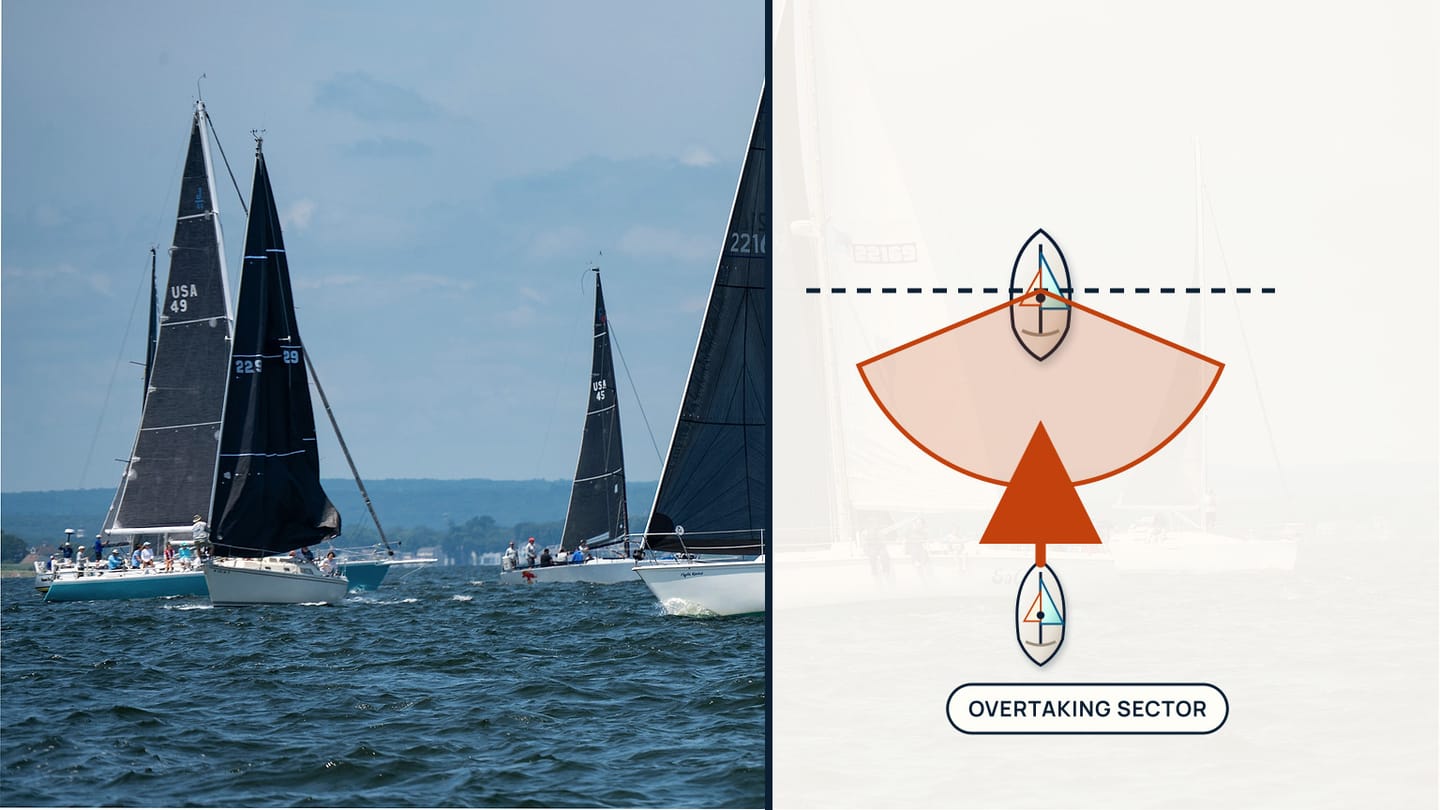
Under COLREG Rule 13, a vessel overtaking another vessel must keep out of the way. That duty applies regardless of whether either boat is sailing or motoring, and it continues until the overtaking vessel is finally past and clear. If you are unsure whether you are overtaking, the rule tells you to assume that you are and act accordingly. Recognise the situation from the relative approach, choose a side with enough room for the whole pass, make an obvious move, and keep monitoring until returning toward the original track cannot affect the other boat.
Overtaking feels simple on a road because lanes define the geometry. On water, both vessels can change speed and heading, wind may move a sailboat sideways, and the safe passing space has no painted edge. A faster boat can also spend a long time alongside a slower one. That makes the beginning of the pass only one part of the decision.
This guide develops the overtaking part of the wider boat right-of-way rules. It works with the lookout and bearing checks in how to avoid collisions at sea and the confined-water planning in narrow channel rules for sailors. The COLREGs are international, while local authorities may add traffic or sound-signal requirements. Verify current local rules before manoeuvring in an unfamiliar waterway.
Recognise overtaking from the approach
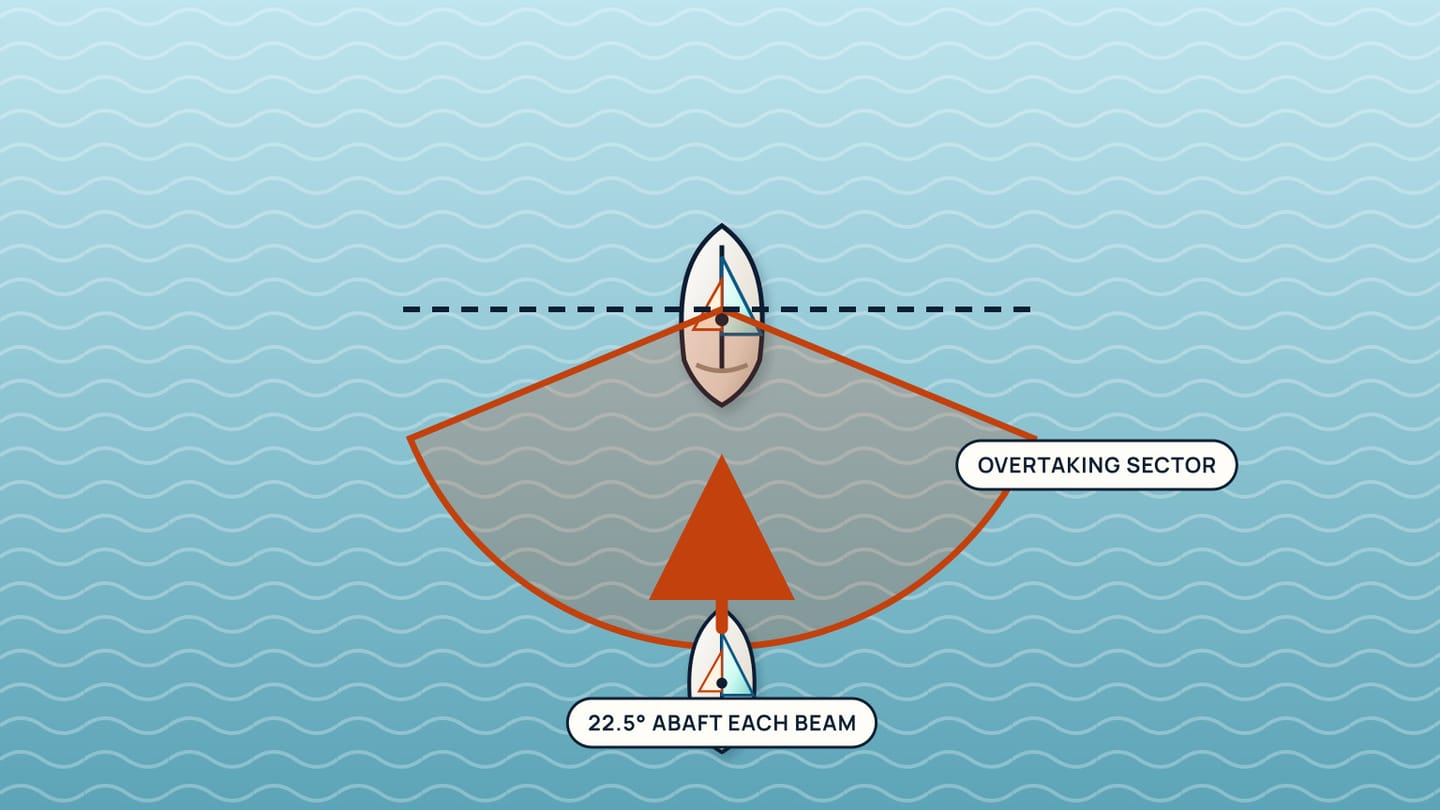
The formal test in Rule 13 uses a sector more than 22.5 degrees abaft the other vessel's beam. In practical terms, you are overtaking when you are coming from behind and closing. At night, the rule describes the same geometry through the other vessel's sternlight without seeing either sidelight. A beginner does not need to estimate the angle with a hand-bearing compass before taking safe action. If the view and relative motion leave doubt, treat yourself as the overtaking vessel.
Do not substitute sailing categories for that test. A sailboat overtaking a power-driven vessel still keeps out of the way. A yacht under sail passing another yacht on the same tack does not get to restart the decision with windward-leeward rules. Rule 13 begins with “notwithstanding” the preceding conduct rules because overtaking keeps its own obligation.
Build the picture over several observations. Is the other vessel remaining ahead while growing larger? Can you see mainly its stern quarter? Is the separation reducing even though the bearing changes slowly? Check from a steady heading when possible and include your own speed changes. A surf down a wave or a fresh gust may briefly increase the closing rate without changing the underlying situation.
The most costly mistake is debating the label while the gap shrinks. Assuming the overtaking duty gives you a clear task and removes ambiguity for the other crew. You can always delay the pass, slow down, or open the distance while you gather better information.
Stay responsible until finally past and clear
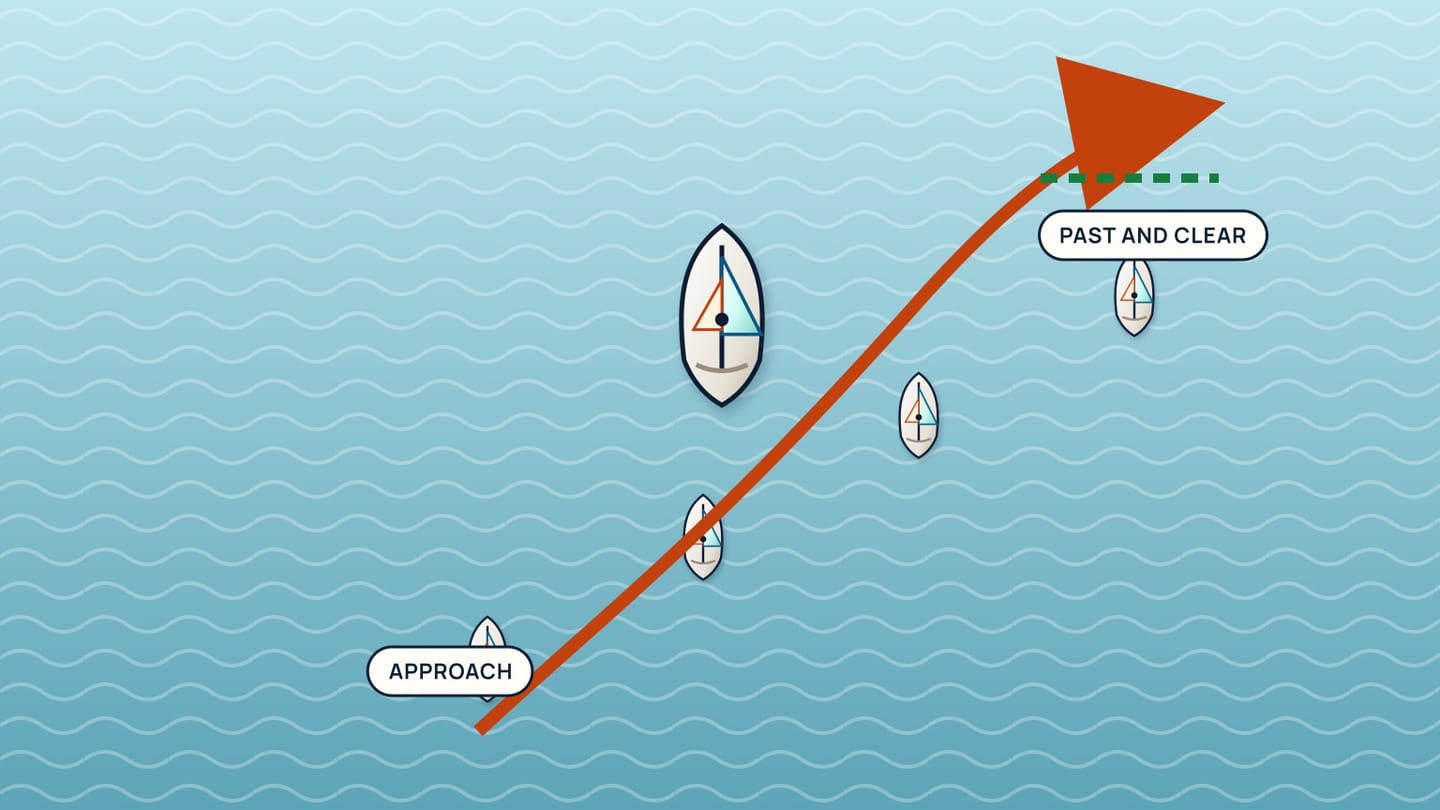
Your obligation does not end when your bow crosses the other vessel's stern. It does not end when you are abeam. Rule 13 says a later change in bearing does not turn the overtaking vessel into a crossing vessel or relieve it of the duty until finally past and clear. That wording blocks a tempting but unsafe shortcut: passing close, reaching the other boat's quarter, then claiming a different rule now applies.
Think of “clear” as enough separation for both boats' normal movement. Your wake, sails, stern, and expected course all matter. If you turn back toward the original track too early, the other vessel may have to alter or slow. If it is a sailing boat, you must also allow for normal movement in waves and a possible change in trim. There is no universal distance that suits every vessel and condition, so use visible effect as the test: your manoeuvre should no longer constrain the boat you passed.
A worked example helps. You pass a slower cruiser to leeward with a small speed advantage. Once your mast is ahead of its bow, you want to resume your earlier course. Yet turning now would carry your stern across the cruiser's track while the boats are still close. Continue on the passing course until the whole cruiser is astern with an opening bearing. Only then make a gradual return that cannot force a response.
Keep a lookout behind after the pass. The helm's forward view may make the interaction feel finished before the stern is clear. Assigning one crew member to report the opening gap gives the helmsman better evidence than a quick glance around a sail or cabin.
Make the passing move early and obvious
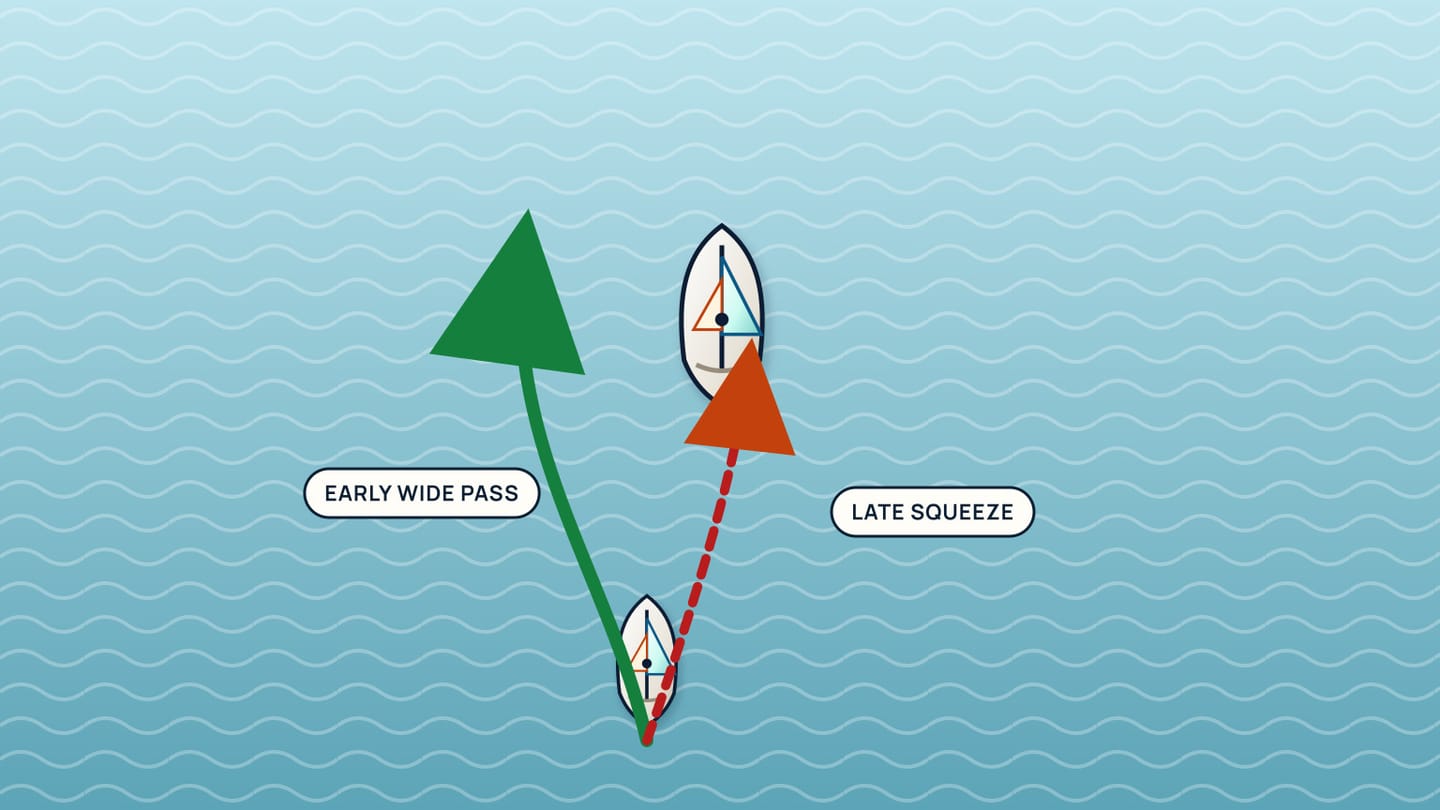
An effective avoiding action is easy for the other crew to read. Choose a passing side only after checking traffic, depth, obstructions, wind, current, and where the two boats will meet. Then make a substantial enough course change that the new track is apparent. A series of hesitant turns can look like normal wandering and leaves both crews guessing.
Speed is part of the plan. A tiny speed advantage creates a long period of close interaction. A very large speed difference can create wake and reduce reaction time. The sensible choice depends on the craft and conditions, but the principle is stable: arrange speed so you can maintain useful separation through the full manoeuvre. If you cannot do that, wait astern rather than entering a pass you cannot complete cleanly.
Before altering, look beyond the target vessel. Passing to port may put you into oncoming traffic. Passing to starboard may use shoal water or take you toward moorings. A yacht ahead may be lining up for a mark, bridge, or berth even if it has not begun to turn. You are responsible for the safe geometry, so do not build the move around an unconfirmed assumption about its next action.
Communication aboard should be brief: intended side, closest part of the pass, traffic to watch, and the condition that cancels it. Avoid asking crew to handle lines or fenders where a sudden turn could put them off balance. If uncertainty grows after you begin, open the distance instead of squeezing through to protect the original plan.
Recheck the aspect while both boats move
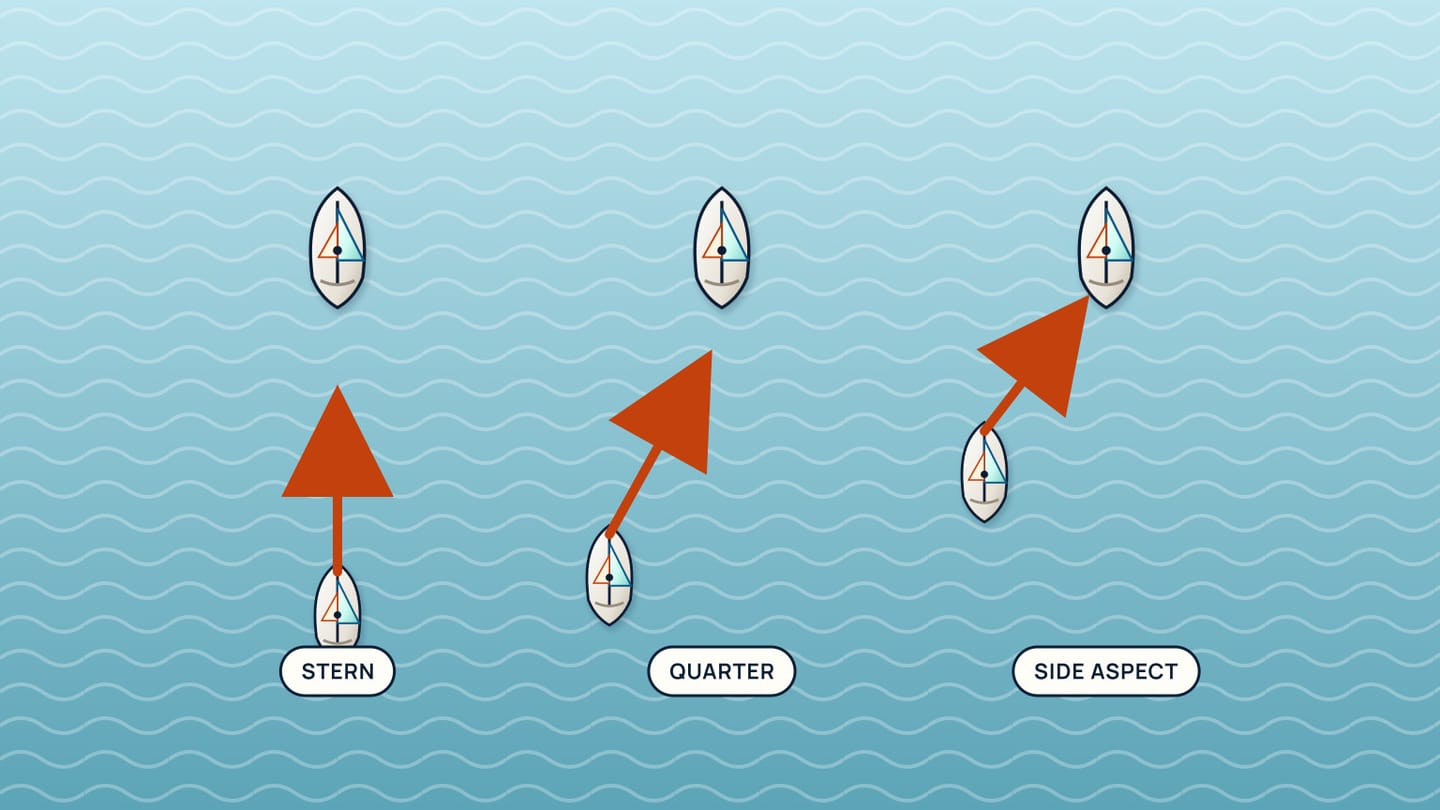
Aspect is the part of the other vessel you can see: stern, quarter, side, or bow. It changes as the boats move and gives useful feedback about the pass. A stern view that slowly becomes a broad side view shows you drawing alongside. After you are ahead, the other boat should shift toward your aft quarter and the separation should open.
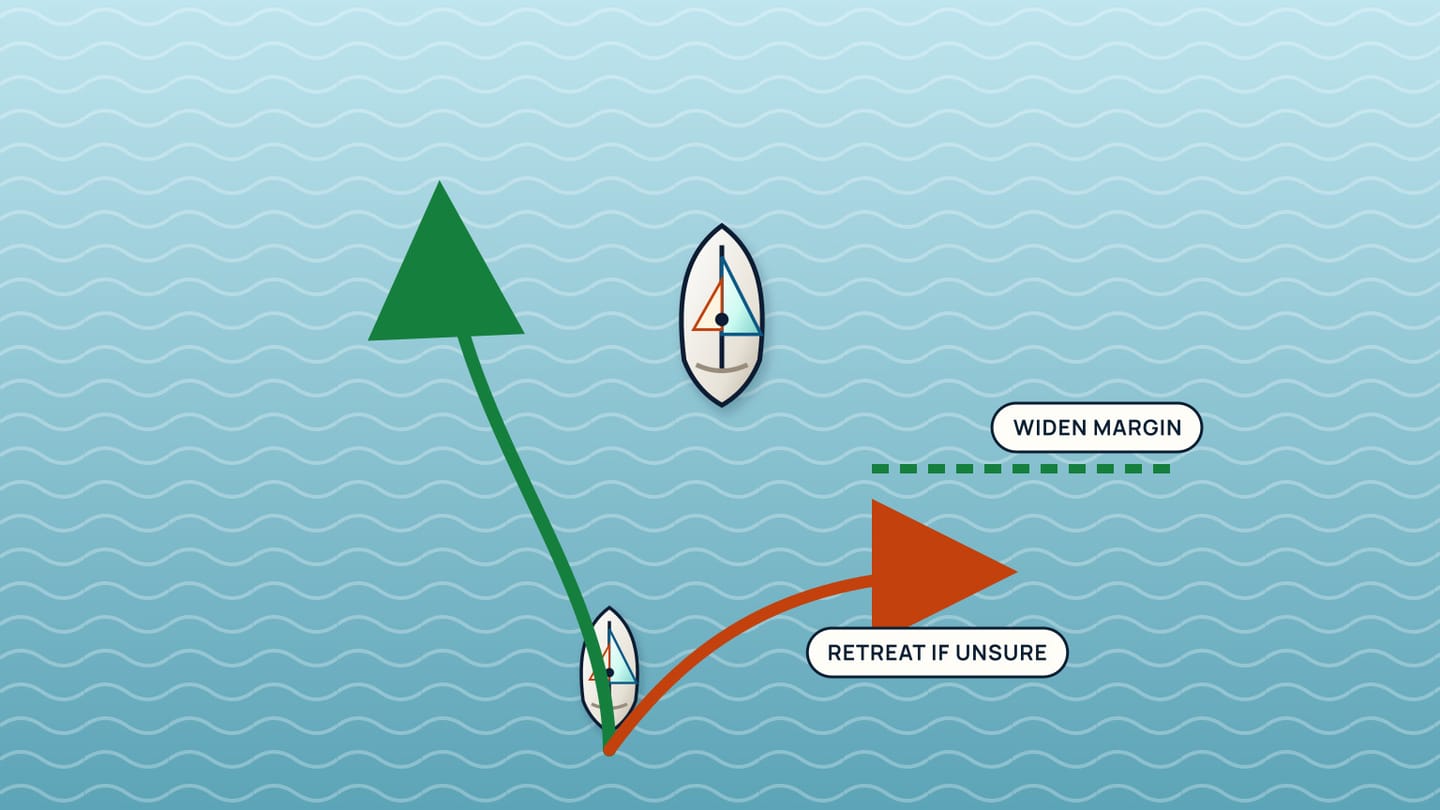
Do not read aspect alone. A curved channel, current, or a turn by either vessel can produce the same visual change for different reasons. Pair it with range, bearing, and the available water. Ask three separate questions: are we still closing, where will our tracks be closest, and is there a clear retreat if the other boat turns?
Suppose the boat ahead begins edging toward your chosen passing side. It may have seen an obstruction, be setting up for a manoeuvre, or simply be steering imperfectly. You do not need to know why before responding. Reduce the closing rate, move back toward a clearly safe sector, and rebuild the plan. Pressing on because you “announced” the pass does not transfer the overtaking duty.
At night or in poor visibility, the limits of what you can observe become central. Navigation lights and radar procedures carry specific rules beyond this beginner guide. Slow the situation down and use trained, locally compliant practice. Never infer that a single light or electronic target gives the complete picture without maintaining the required lookout.
Let seamanship set the margin
Rule 13 names who keeps out of the way; it does not promise that the other vessel will hold a perfect line. Machinery can fail, a helmsman may not see you, and a sailboat can be slowed or headed by a gust. Good seamanship leaves enough room that one unexpected movement does not create immediate danger.
Do not use another vessel's apparent mistake to justify a close pass. The COLREGs require action to avoid collision, and every skipper still has that responsibility. If the vessel ahead turns unexpectedly, protect people and boats first. Sort out which rule applied only after the risk has passed.
There are three calm ways to abandon an overtake: reduce speed and remain astern, turn away into verified clear water, or delay until a wider reach. Pick the option you prepared before closing. Sudden improvisation is hardest when crew attention is already divided between the other boat, sails, and nearby traffic.
Afterward, review the evidence instead of judging the crew's nerve. Was the overtaking sector recognised early? Did the passing side remain clear? At what point was the other vessel finally past and clear? Could the lookout describe the opening gap? Those questions turn a routine pass into a reliable method you can repeat on a different boat.
SailStarter's visual lessons help you practise classifying encounters and choosing readable action before you need the skill in traffic. Use that foundation with supervised time afloat, and confirm the current collision regulations and local directions for the water where you sail.
Try it from the lesson
Can you spot the next move?
A sailing vessel under sail alone and a power-driven vessel are in sight with collision risk. Neither is overtaking, and no channel, traffic scheme or qualifying restriction changes the encounter. Who keeps out of the way?
Why you can trust this guide
. We build each guide from public seamanship and safety sources, then teach the universal principle before any local difference.