Chart your course
Entering an Unfamiliar Harbor at Night
Quick answer
The short version
Entering an unfamiliar harbor at night is a passage-planning problem before it is a helming problem. Commit only when current official information, weather and tide, boat condition, crew readiness, visible aids, position checks, traffic, and the available contingency all agree. Darkness removes easy visual context. It does not lower the evidence needed to enter.
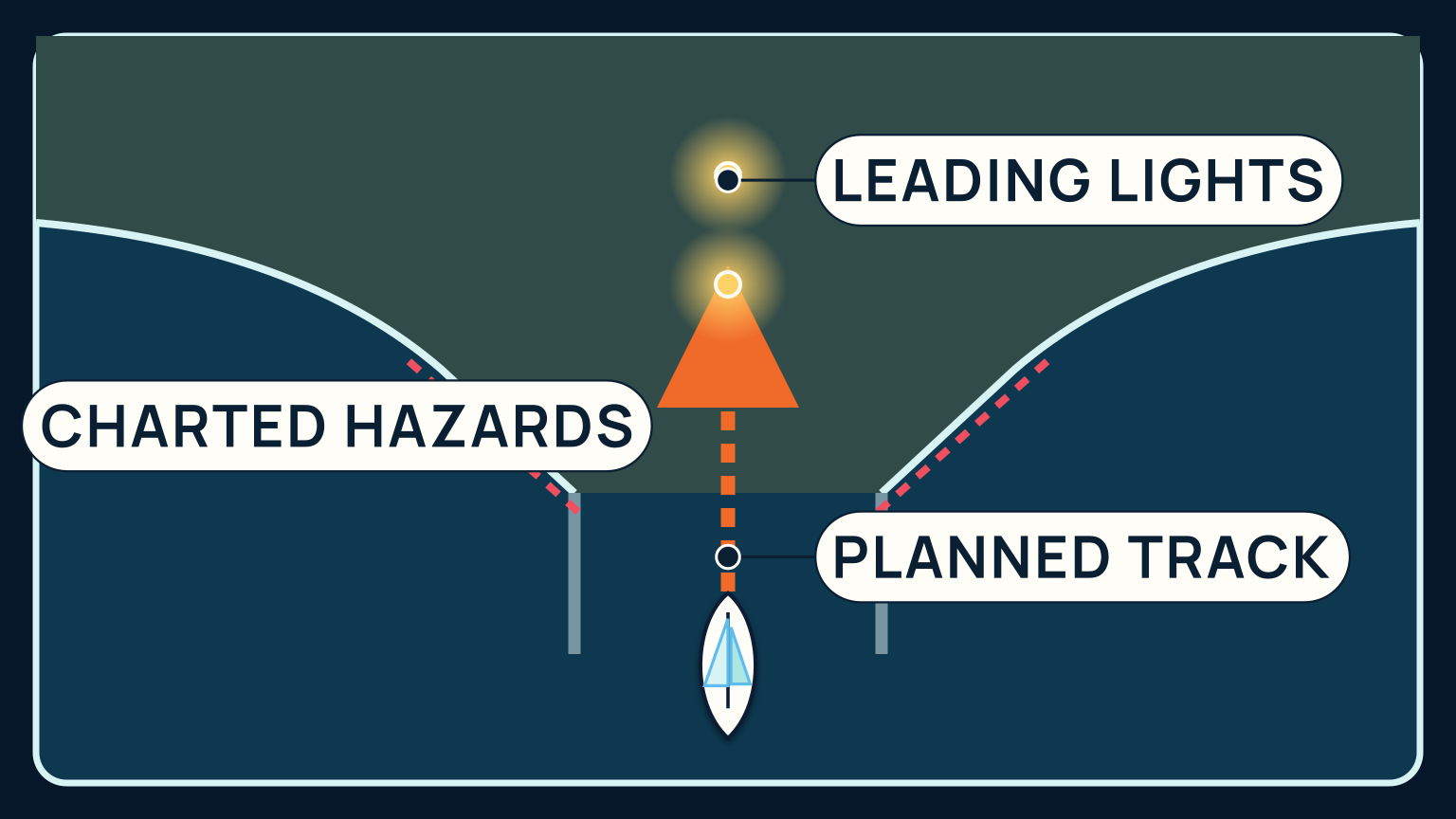
A safe plan runs from open water to the actual berth, not merely to the breakwater. It marks where the route narrows, which lights should appear and in what geometry, how position will be checked, where speed must change, what traffic can be encountered, and where a turn, hold, diversion, or delay is still possible. Local harbour directions and reporting requirements belong in that plan because there is no universal approach procedure.
Should you enter now or wait for daylight?
Begin with the least romantic question: does the entry need to happen now? Daylight may make unlit hazards, shoreline shape, small craft and the berth easier to interpret. Waiting is often the simpler option when the crew is tired, the forecast is deteriorating, the tide window is poor, the engine or steering is uncertain, a chart update is missing, or the expected lights cannot be identified. A booking or planned arrival time does not improve the evidence.
Waiting also needs a safe plan. “Stay outside” is incomplete if the coast is exposed, traffic is dense, the water is too deep to anchor, or the tide is setting the boat toward danger. Before arrival, identify a lawful and practical alternative: a known waiting area, a different harbour, continued sea room, or another action supported by the chart and local directions. Calculate fuel and crew endurance for that alternative rather than assuming the boat can circle indefinitely.
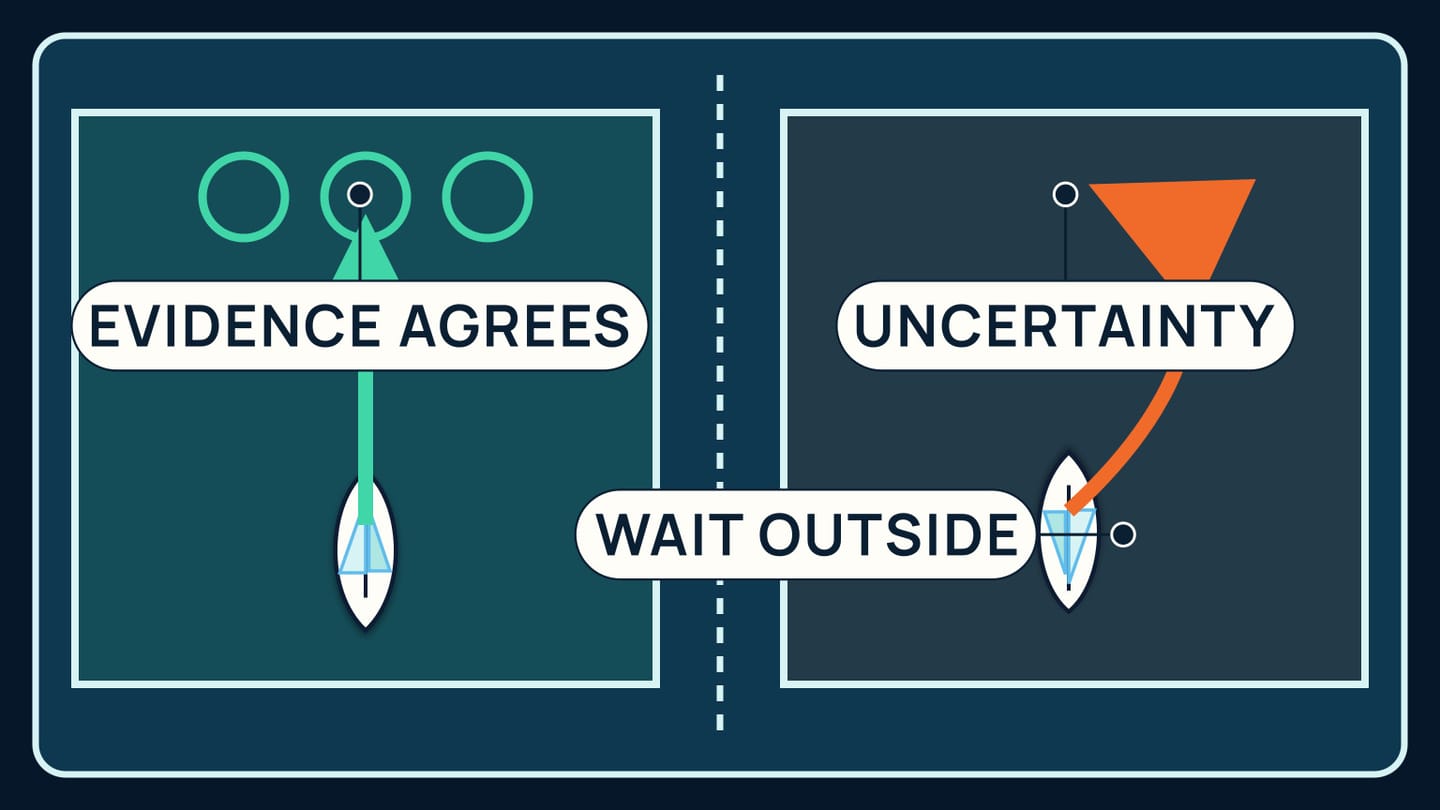
Make the go decision at a named point while room remains. Confirm current weather, visibility, tide and current against the plan. Check propulsion, steering, depth sounder, navigation lights, communications and the equipment used for fixing position. Brief the expected first light, first alteration, minimum depth criterion, traffic call, abort cue and destination. If a critical item has no answer, delay outside the constrained water rather than discovering the omission inside it.
Fatigue deserves the same weight as hardware. The IMO passage-planning framework explicitly includes a competent, well-rested crew and requires execution to account for fatigue. A skipper who has been awake for a long passage may be the least reliable person to identify a weak flash against shore lights. Use rested people where available, or choose the safer delay.
What must be verified before the entrance?
Use the largest-scale current official chart available for the harbour, then apply current Notices to Mariners, navigational warnings, sailing directions, light information and harbour instructions. Chart reading starts the work, but currency completes it. Buoy positions, light characteristics, wrecks, temporary works and dredged depths can change while the coastline looks exactly as it did last season.
Draw the route outward from the berth to open water. This exposes awkward turns, shallow patches and dead ends that are easy to miss when planning only in the direction of arrival. Mark each course alteration, danger, traffic pinch point and position check. Define the depth or under-keel-clearance criterion for the loaded boat using the chart datum, predicted tide, expected squat or heel where relevant, and a margin chosen for the vessel and conditions. Do not borrow a generic number from another boat.
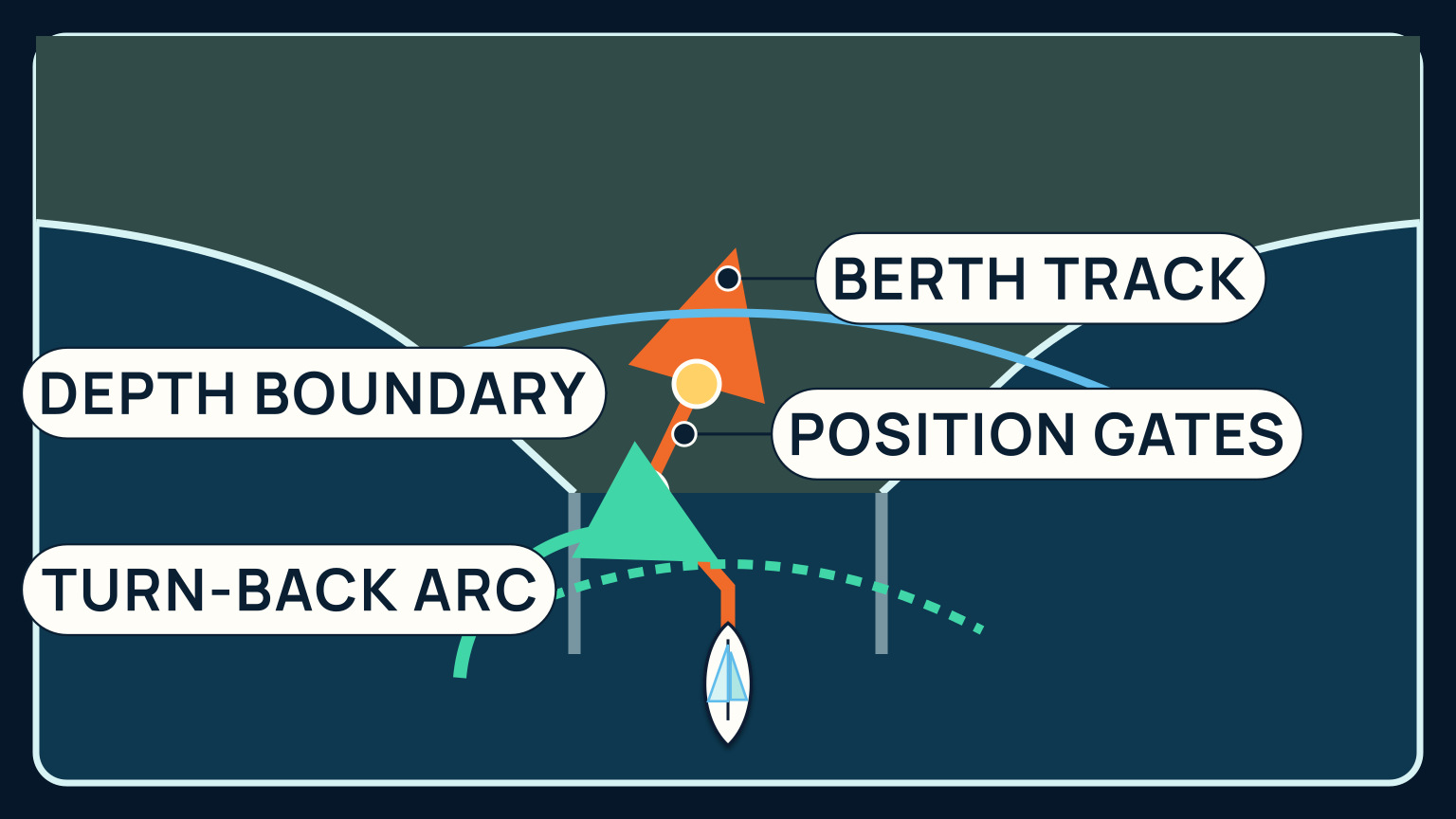
Write down what should be visible at each gate. The first pair of lateral marks might open on a stated bearing. A leading line might become aligned before the breakwater. A sector light may change colour at a charted boundary. A headland, radar return, depth contour or fixed light can provide an independent check. The plan is stronger when different evidence agrees; three values copied from the same electronic position source are not three independent fixes.
Check the whole arrival window rather than looking only at high or low water. Timing a harbor entrance includes tidal height, current, weather, visibility and crew condition. A fair current may improve progress but reduce the time available to recognize a mark or stop. A foul current can push a slow yacht sideways near a breakwater. Put the expected set and drift beside each critical leg so the helm knows what correction is normal and what deviation means the plan is failing.
How do you distinguish harbor lights from the shore?
Predict before searching. For each required aid, note its charted bearing and position, colour, rhythm and nominal sequence. Then observe long enough to match the full characteristic. A red point in the right general direction is not yet the red aid in the plan. It could be a vehicle, building, vessel sidelight or another mark. Bearing plus colour plus timing plus chart relationship provides a much stronger identification.
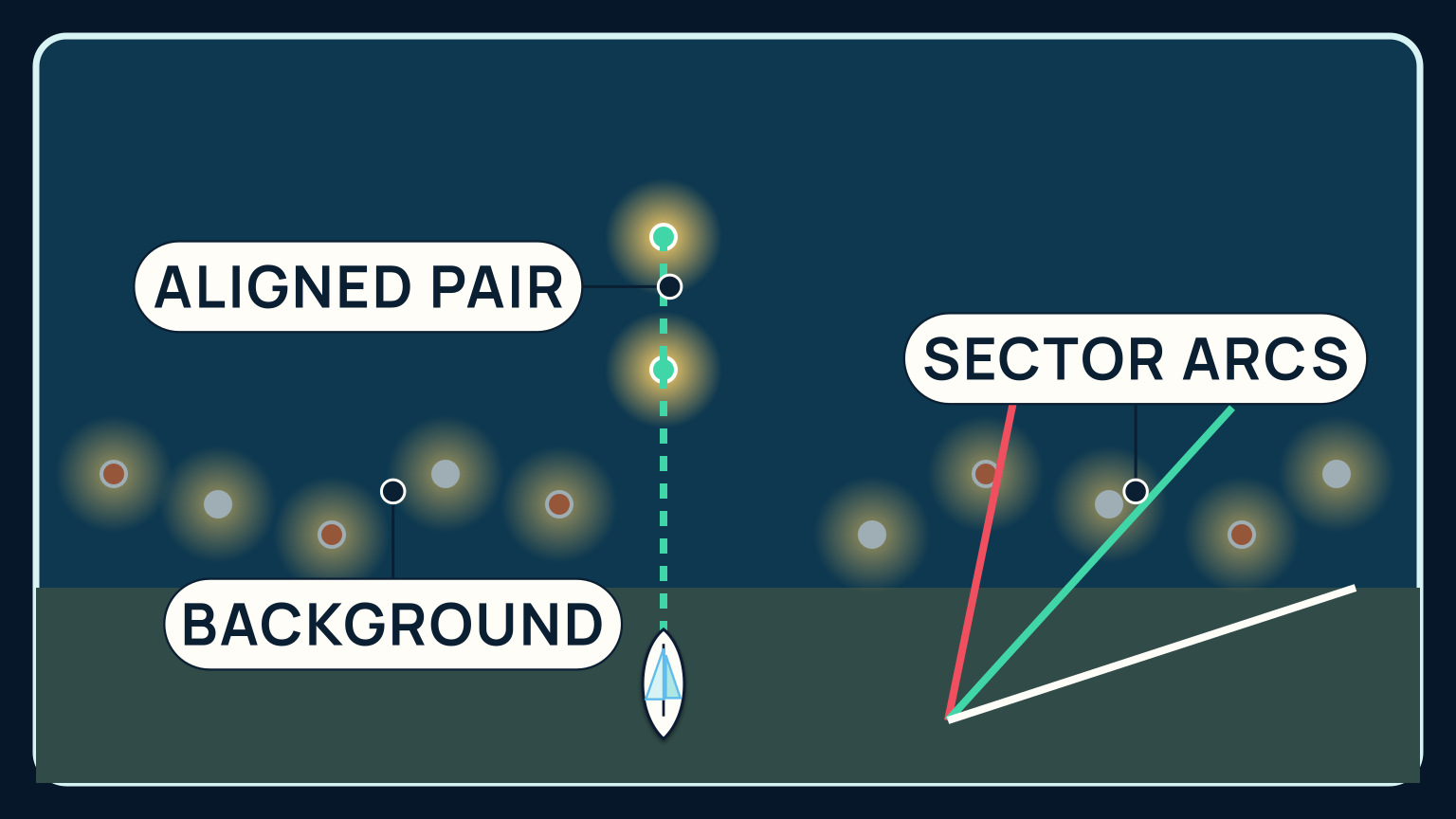
Leading lights, also called ranges in some regions, use a front and rear light on one charted line. When the two appear vertically aligned, the boat is on that line. If the rear light appears to one side of the front, the vessel is off it; the chart and local directions tell you which correction is safe. Do not invent a steering rule from a generic picture because the route, buoyage and hazards differ by harbour.
A sector light displays different colours or rhythms across designated arcs. The observed sector gives directional information only when matched to the charted sector boundaries and the boat’s position. A colour change is evidence that a boundary has been crossed, not a universal command to turn toward a colour. IALA also notes that synchronized leading lights can help them stand out from background lighting, which is another reason to read the characteristic rather than choose the brightest pair.
Preserve outside vision. Keep unnecessary white light off the helm and lookout, shield instrument brightness, and put detailed chart work with a crew member who can do it without pulling the lookout’s eyes into the cockpit. If the expected rhythm cannot be confirmed, say “unidentified light” rather than letting a guess harden into fact. Slow or take the planned contingency while the mismatch is investigated.
How should speed and cockpit workload change?
Choose a speed that preserves enough time and distance to avoid collision and stop appropriately in the actual conditions. At night that judgment includes visibility, traffic, manoeuvrability, background lights, wind, current and nearby hazards. It is not automatically dead slow. Too little speed can remove steering control in current or wind, while too much compresses every observation and makes a late turn irreversible.
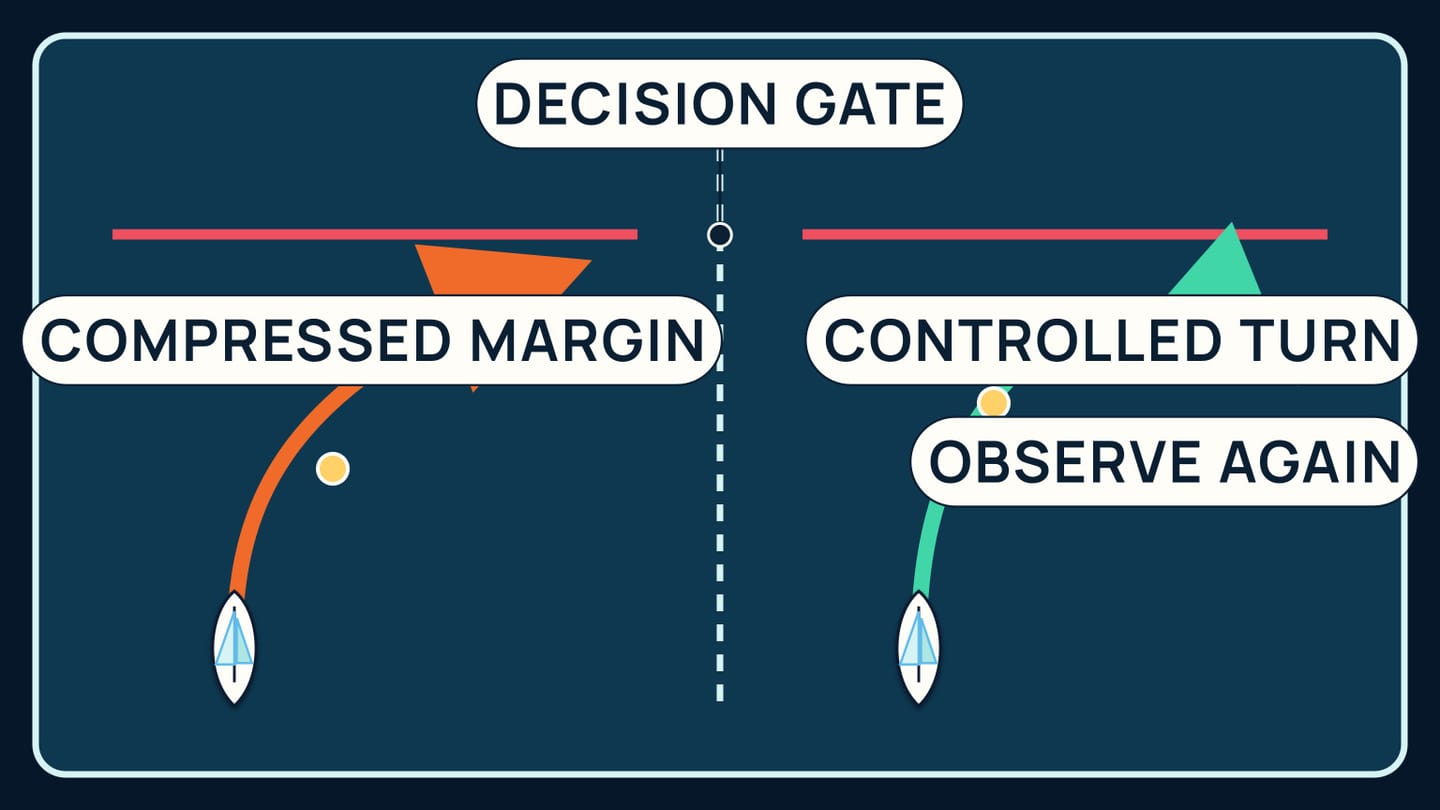
Assign jobs before the entrance: one person has the helm, one maintains an active outside lookout, and one monitors the chart, depth, position and communications when crew numbers permit. Each person reports in plain, closed-loop language. “Green flashing light, ten degrees to starboard, rhythm not yet confirmed” is useful. “There it is” is not. The helm repeats course and speed changes so the navigator can verify that the planned leg has begun.
Keep electronic tools in their proper roles. Radar can detect coast, traffic and some marks when fitted and used competently. AIS can add identity and movement information for transmitting vessels. Neither proves that the water between two displayed points is clear, and small craft or unlit objects may not appear. The collision rules require all appropriate available means and prohibit conclusions from scanty information. Continue looking and listening outside while comparing depth, compass, radar and charted position.
In a narrow channel, keep near the starboard outer limit as safe and practicable. A yacht or other vessel under 20 metres must allow clear passage for traffic confined to that channel. Check the harbour’s traffic procedures, VHF channels, speed limits and reporting points. Avoid making a last-minute radio call that distracts the entire cockpit at the most constrained turn; place required calls in the written sequence.
When is it time to abandon the approach?
Set evidence gates before departure and repeat them aloud on arrival. Typical gates ask whether the expected aid has been positively identified, position checks agree within the plan’s tolerance, depth behaves as forecast, propulsion and steering remain reliable, traffic is understood, and the next leg still has its contingency. The precise tolerance and action belong to the vessel-specific plan. The method is universal: decide before uncertainty removes the room to decide.
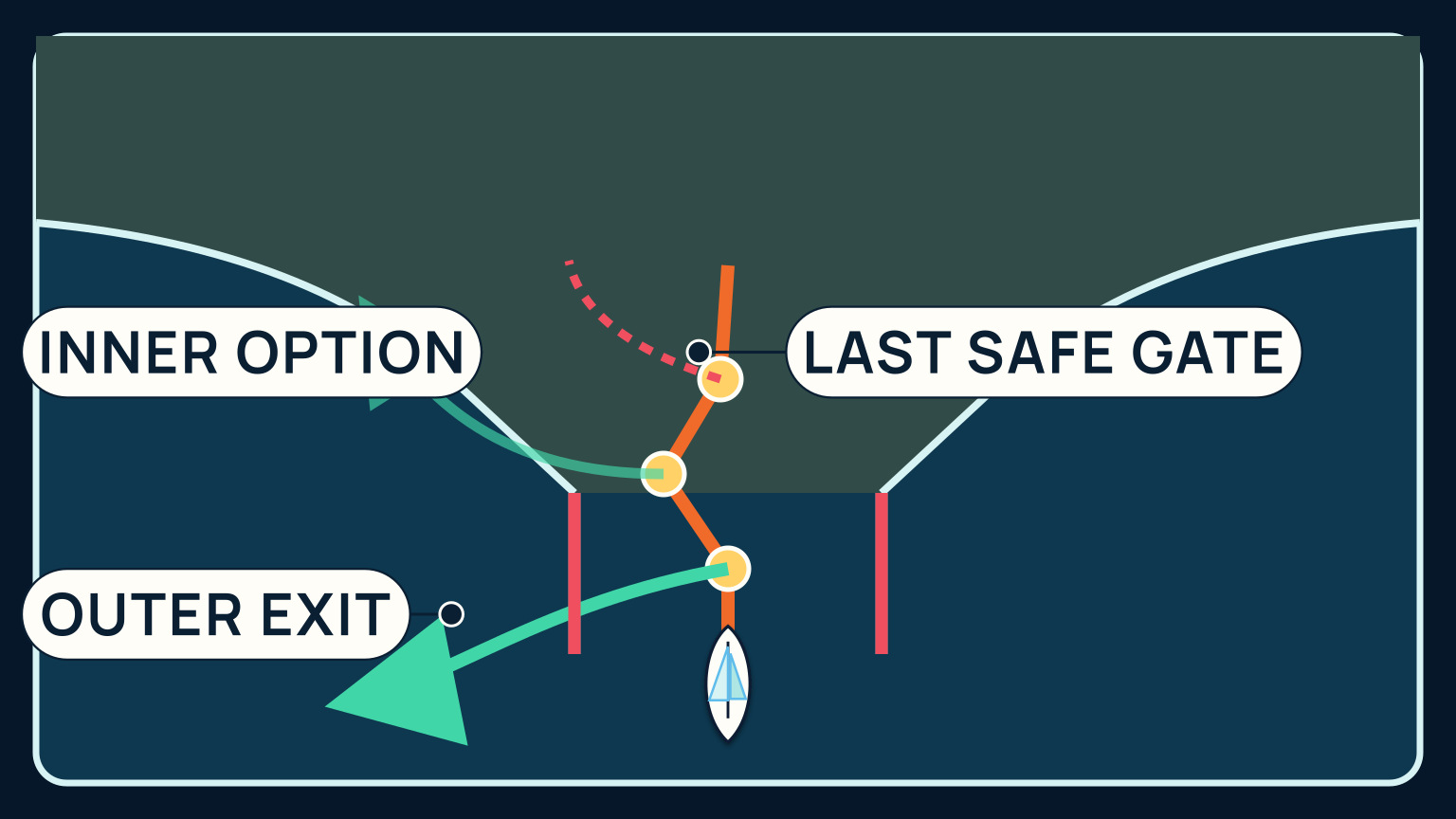
One mismatch calls for confirmation. Several mismatches call for action. An expected light missing, a depth trend shallower than planned, and an unexplained cross-track error should not be averaged into confidence. Reduce workload, slow as conditions permit, and move to the prepared contingency before crossing the last safe decision point. Contact harbour control or another competent local authority when that is part of the local procedure, but do not transfer command of the boat to a radio voice.
Turning around is not automatically safe. The channel may be too narrow, traffic may be following, current may prevent the turn, and water outside the track may be shallow. Anchoring can be equally wrong in a cable area, traffic lane, poor holding ground or excessive depth. That is why the contingency is drawn on the chart in advance. It might be a turn in a charted basin, a retreat along the reciprocal track, a safe holding area, or continuing to a defined point where manoeuvring room returns.
Once the harbour is entered, keep monitoring until the boat is secured. Berth lights can be hidden, marina fairways may contain unlit craft, and the final turn may be the tightest. If the assigned berth cannot be identified, use the harbour’s agreed waiting or contact procedure rather than choosing an empty-looking space.
Night pilotage should feel deliberate rather than brave. A current chart, a predicted sequence of lights, independent position and depth checks, enough speed for control but enough margin to stop, and an exit chosen before the entrance turns darkness into manageable evidence. Continue with SailStarter’s lesson The map that floats: reading a chart to practise the chart language behind the plan.
Try it from the lesson
Can you spot the next move?
On a NOAA paper chart, you see buff, green, and blue close to shore. What does each colour mean?
Why you can trust this guide
. We build each guide from public seamanship and safety sources, then teach the universal principle before any local difference.