Chart your course
Radar vs AIS for Sailboats
Quick answer
The short version
Radar and AIS are complementary, not competing, tools. Radar can show a reflected return from a target whether or not it is broadcasting AIS. AIS can show reported identity, position, course, speed, and other data for an equipped transmitting vessel. Both can help a sailor assess traffic, yet neither sees or explains everything. A proper lookout by sight and hearing remains the foundation.
The most useful question is not "which is better?" It is "what evidence do I have right now?" A radar echo, an AIS report, a visual bearing, a light pattern, and a chart can reinforce one another. When they disagree, slow down mentally before you act and find out why.
Each tool gives a different kind of evidence, with its own gap and its own vulnerability.
| Dimension | Radar | AIS |
|---|---|---|
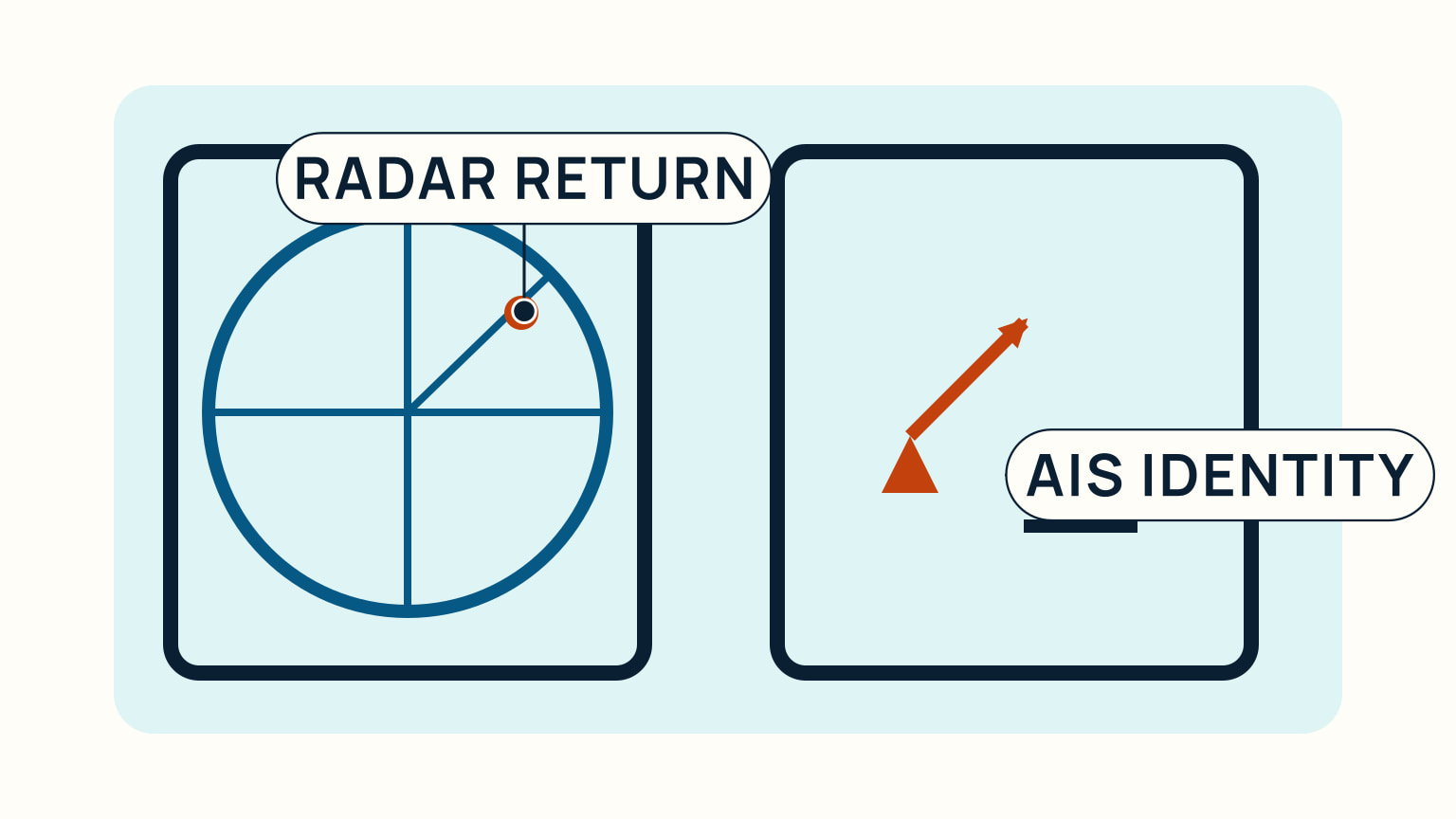
| What it detects | Reflected returns from any object, transmitting or not | Reported data from equipped, transmitting vessels only |
| Information shown | Presence, range, bearing | Name, course, speed, type, navigational status |
| Coverage gap | Can't identify what a return is | Misses non-transmitting vessels and other objects |
| Main vulnerability | Rain, wave, and land clutter; small-target detection | Incomplete carriage; inaccurate input data |
| Best used for | Finding physical objects and land shapes | Recognising traffic and deciding whether to call |
What different evidence do radar and AIS give?
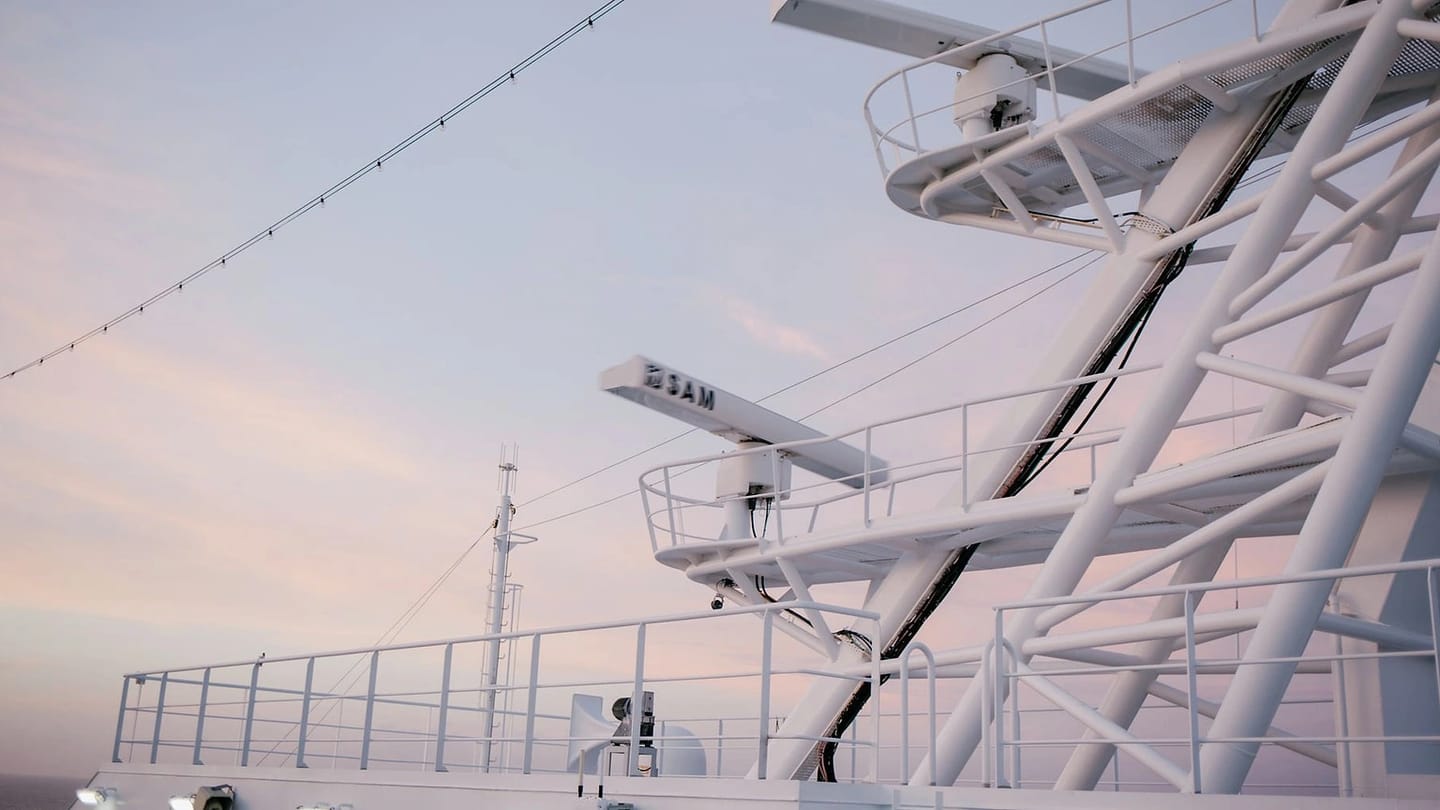
Radar transmits radio energy and displays returns reflected from land, rain, waves, aids, and vessels. A target does not need to carry AIS for a return to appear. That makes radar valuable for finding physical objects and land shapes, subject to its setup, range, sea state, rain clutter, target size, and the operator's skill.
AIS is a broadcast system. A transmitting equipped vessel can report information that radar alone may not identify, such as its name, course, speed, type, and navigational status. Those details can make it easier to recognise traffic and decide whether a radio call is appropriate.
The distinction matters in practice. Radar may show something without telling you what it is. AIS may identify a vessel without showing other nearby non-transmitting objects. Neither result should be treated as the whole scene. The best result is agreement between several sources.
If AIS itself is new to you, read AIS for recreational sailors first. It explains what a reported target can and cannot represent before you compare it with radar.
What are the limits of radar and AIS?
Radar can be affected by setup and conditions. A small target can be hard to detect. Rain, breaking waves, land, and other returns can create clutter. A poorly adjusted display can hide information or encourage an operator to see a pattern that is not there. This is why radar takes practice in familiar conditions, not only a quick look during a difficult night passage.
AIS can also be incomplete. Not every vessel carries it, and a vessel that carries it may not always transmit. Its information can be inaccurate because the input, sensors, or settings are inaccurate. A clean symbol with a name can look more certain than it is.
The collision regulations warn against assumptions based on scanty information, especially scanty radar information. That warning applies to the wider habit too: do not decide that one isolated source has solved the encounter. Build a picture from the available evidence and keep updating it as the boats move.
Weather can reduce both visibility and electronic clarity. In those moments, safe speed, a close watch, and a willingness to change plan matter more than trying to make a screen deliver certainty. Use the equipment you have, then respect its operating limits.
Build one collision-avoidance picture
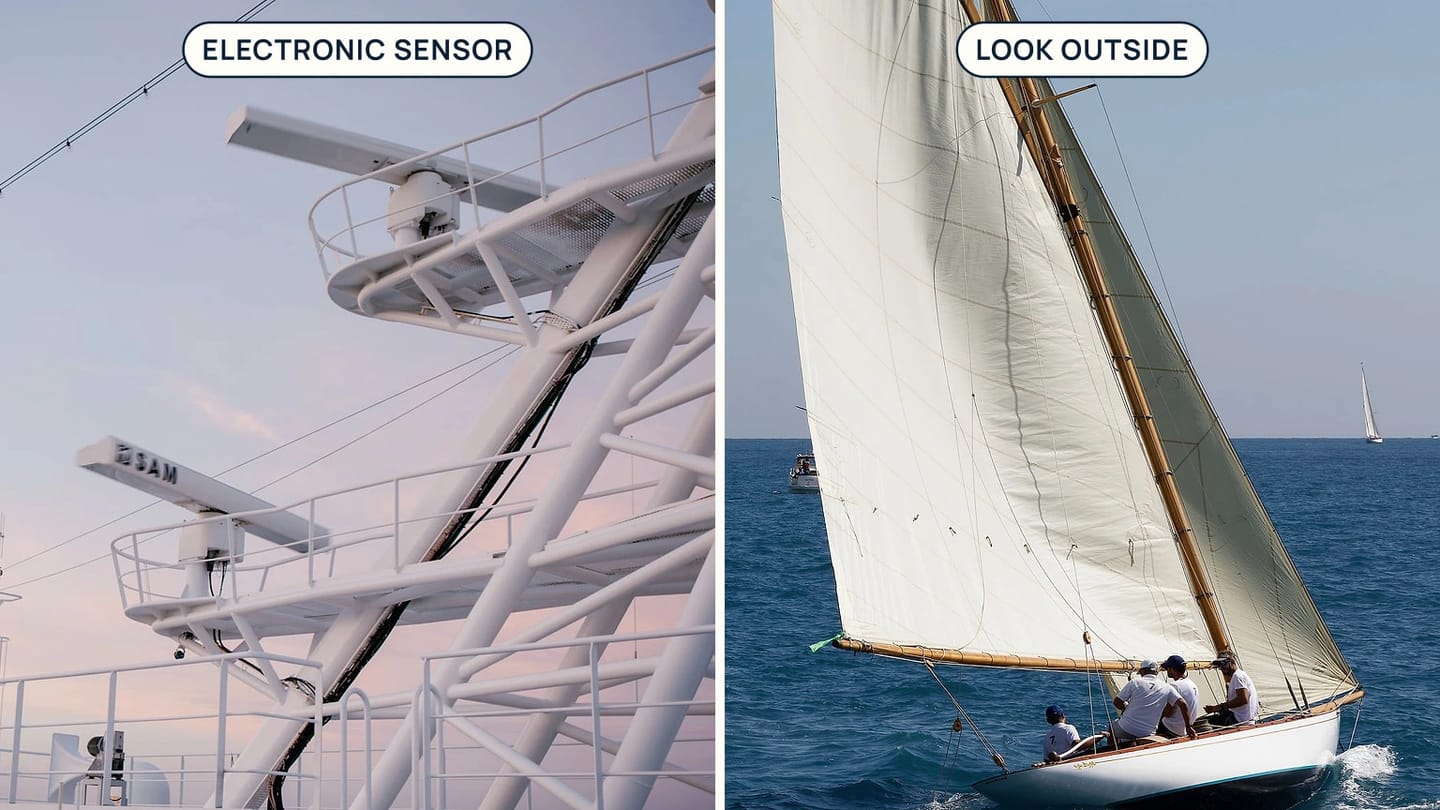
When you see a target, look out first. Take a visual bearing if possible and watch whether it changes. Compare the target's aspect, lights, wake, and movement with the radar or AIS presentation. Check your chart for land, channel edges, marks, and areas where traffic may be constrained.
Then ask the practical questions. Could the tracks cross? Is the range closing? Is the other vessel limited by a narrow channel, draft, traffic lane, or its own manoeuvre? What early, obvious action keeps you clear? Your answer should still make sense if the device data becomes unavailable.
Avoid fixation on the closest-point number alone. Calculations help you notice a developing encounter, but they depend on data and assumptions. Look at the changing real situation. A large vessel's visibility and stopping distance can make an early course change or passing astern more sensible than an argument about who technically stands on.
Boat right-of-way rules gives the role-based collision framework. Combine that with navigation lights so a display is always interpreted alongside what you actually see.
Choose equipment around your actual sailing
Your sailing area, usual visibility, traffic density, power budget, mounting options, and confidence with the controls all affect whether radar, AIS, both, or neither are useful aboard. There is no universal equipment list for every sailboat. A small day sailor in open clear water faces a different information problem from a boat regularly crossing a busy commercial approach.
Before purchasing, identify what you are trying to improve. Do you need better target identification, more confidence in poor visibility, an aid for a frequent route, or a display that combines existing information? Consider installation, antennas, power, maintenance, data accuracy, and training time. A feature you never practise with can create false confidence.
Set aside time to learn in daylight. Compare radar returns with known landmarks and boats. Watch how AIS targets appear, update, and disappear. Try the controls in calm water, then decide how alarms and display ranges will be used on a real watch. This learning has more value than memorising a product feature list.
The route plan still begins with basics: a current chart, weather awareness, a lookout, and enough margin to act. Electronic tools become powerful when they support those habits rather than replacing them.
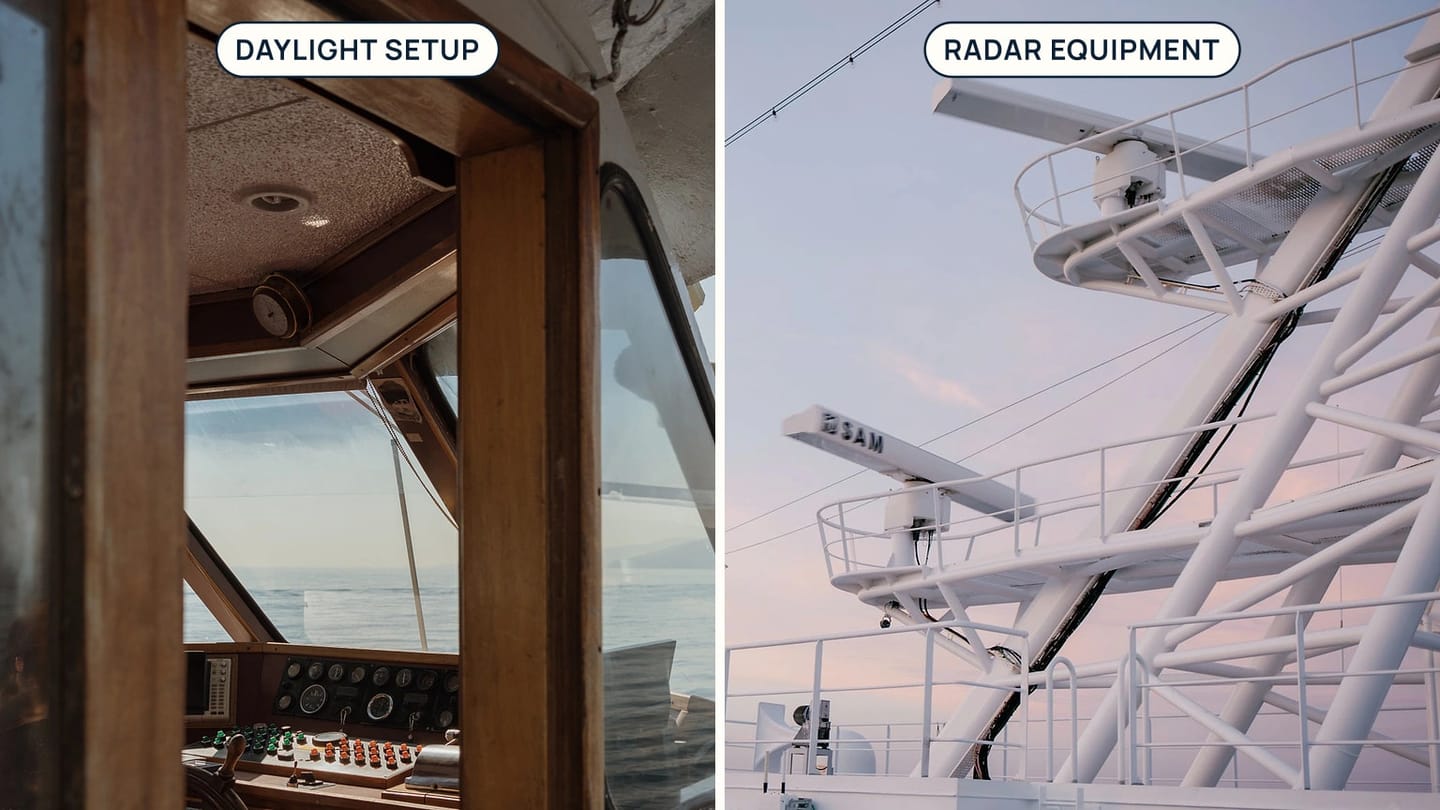
Radar detects reflected objects. AIS reports information from equipped transmitters. Use both, when available, as parts of a wider watch, and let your eyes, ears, chart, and early decisions keep the boat safe.
When a route includes night, fog, rain, or busy shipping traffic, decide in advance how the watch will be shared. Who looks outside? Who reads the display? Who checks the chart? A single person may move between those jobs, but naming them prevents the screen from taking all attention. Keep the display range and brightness appropriate to the immediate task, then change them as the situation changes. A close target can be lost in a very wide view, while a narrow view can hide the wider traffic pattern that explains where it is going.
Use training and quiet-water practice to learn the normal appearance of your own coast, marks, boats, rain, and sea clutter. That experience makes anomalous returns more noticeable. It also gives you confidence to say "I do not understand this target yet" and choose more space. Electronics add evidence; they do not remove the need for time and margin.
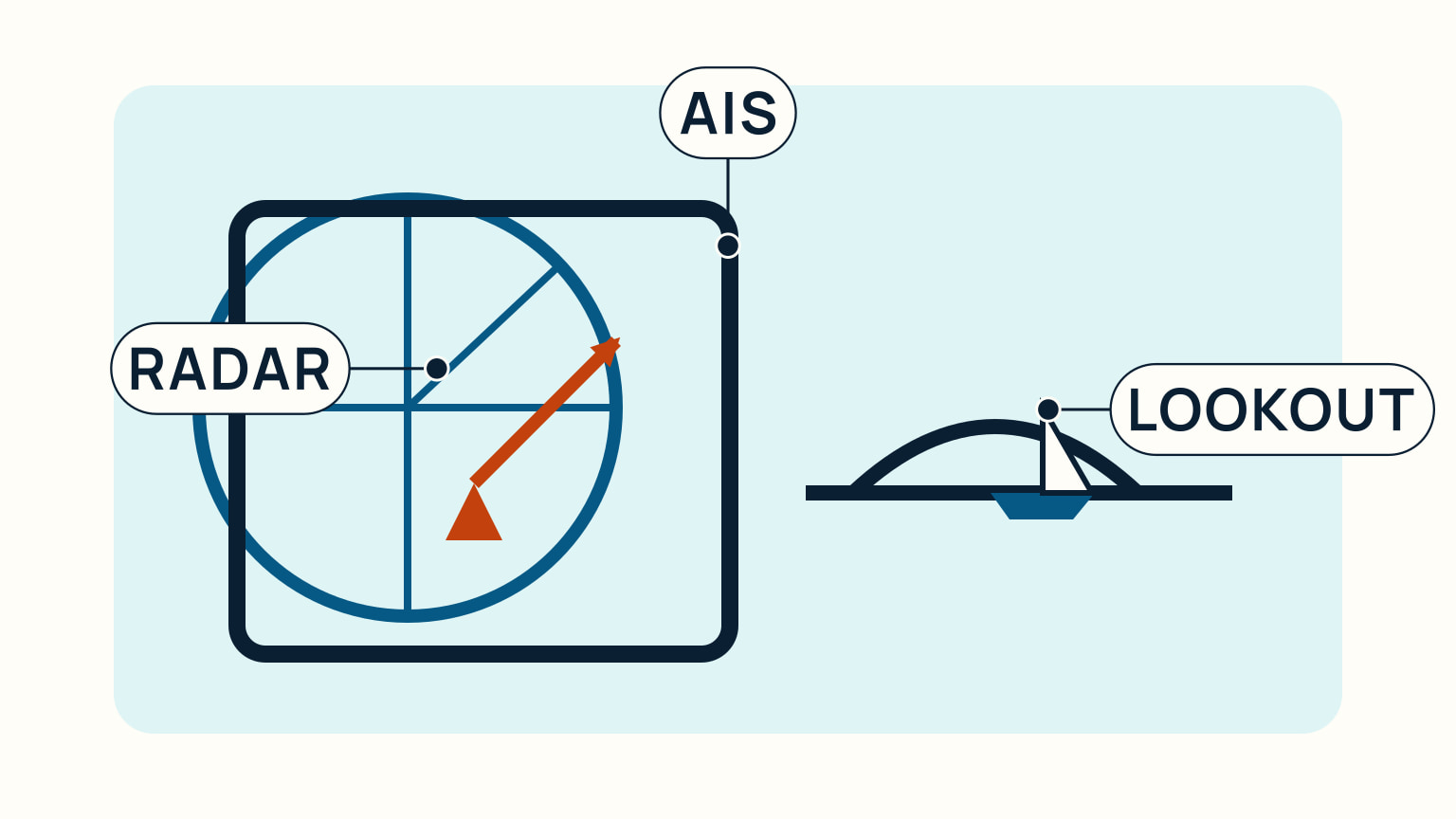
When you have both tools, compare their timing and location against the outside view instead of assuming an overlay makes one combined fact. A radar echo might sit differently from an AIS symbol because the data sources, update timing, or vessel movement are different. Use the difference as a prompt to continue observing. The goal is not a tidy screen. It is an accurate enough picture to choose a safe, early action.
Plan for a failure too. Know how to navigate and keep watch if the display, antenna, power, or network connection disappears. A spare light, current chart, compass, and disciplined lookout preserve options when an electronic aid goes quiet.
Keep the final decision outside the display. If the route, weather, or traffic picture asks more of the crew than they can confidently interpret, choose a simpler plan. Returning early, waiting for clearer conditions, or asking for local advice can be the best use of every tool aboard.
Use a written pre-departure check for any electronic aid you plan to rely on. Confirm power, display, source data, alarms, and the view from the operating position. Then make a plan for the same route if one item fails. This is not distrust of the equipment. It is a recognition that a radar return, an AIS target, and a visual bearing each give different evidence, and a safe watch should not collapse when one piece disappears.
After a passage, review any target that was confusing. Compare notes with crew while the route is fresh, and if possible compare the display history with charted geography and what was seen outside. This turns a vague worry into a training point. It also helps refine settings without learning through a close encounter on the next trip.
Keep radar and AIS terminology clear during a watch. Say whether you mean a reflected radar return, an AIS report, or a visual target. That simple distinction helps crew avoid treating a name on screen as proof of a physical object in exactly the same place. Clear language supports clear decisions when traffic is moving.
Try it from the lesson
Can you spot the next move?
On a NOAA paper chart, you see buff, green, and blue close to shore. What does each colour mean?
Why you can trust this guide
. We build each guide from public seamanship and safety sources, then teach the universal principle before any local difference.