Chart your course
Your First Overnight Sailing Trip

Quick answer
The short version
Make your first overnight sailing trip a short, familiar passage with a capable skipper, a suitable boat, and an easy alternative. Plan the route, weather decision, expected arrival, watches, meals, clothing, sleeping places, communications, safety gear, and shore contact before departure. Keep the trip within the crew's experience and the boat's operating limits. An overnight stop does not need an overnight passage; arriving in daylight and sleeping aboard is a useful first step.
Discuss the whole arrangement when joining an unfamiliar boat: duties, costs, equipment, route, conditions, bunks, and how you can leave. Give a trusted shore contact the itinerary and the process for overdue concern. Verify current forecasts, local rules, marina or anchorage information, and the skipper's plan. If you have not yet spent a full day aboard, start with what to expect on your first sailing trip before adding the night.
Choose a simple first passage
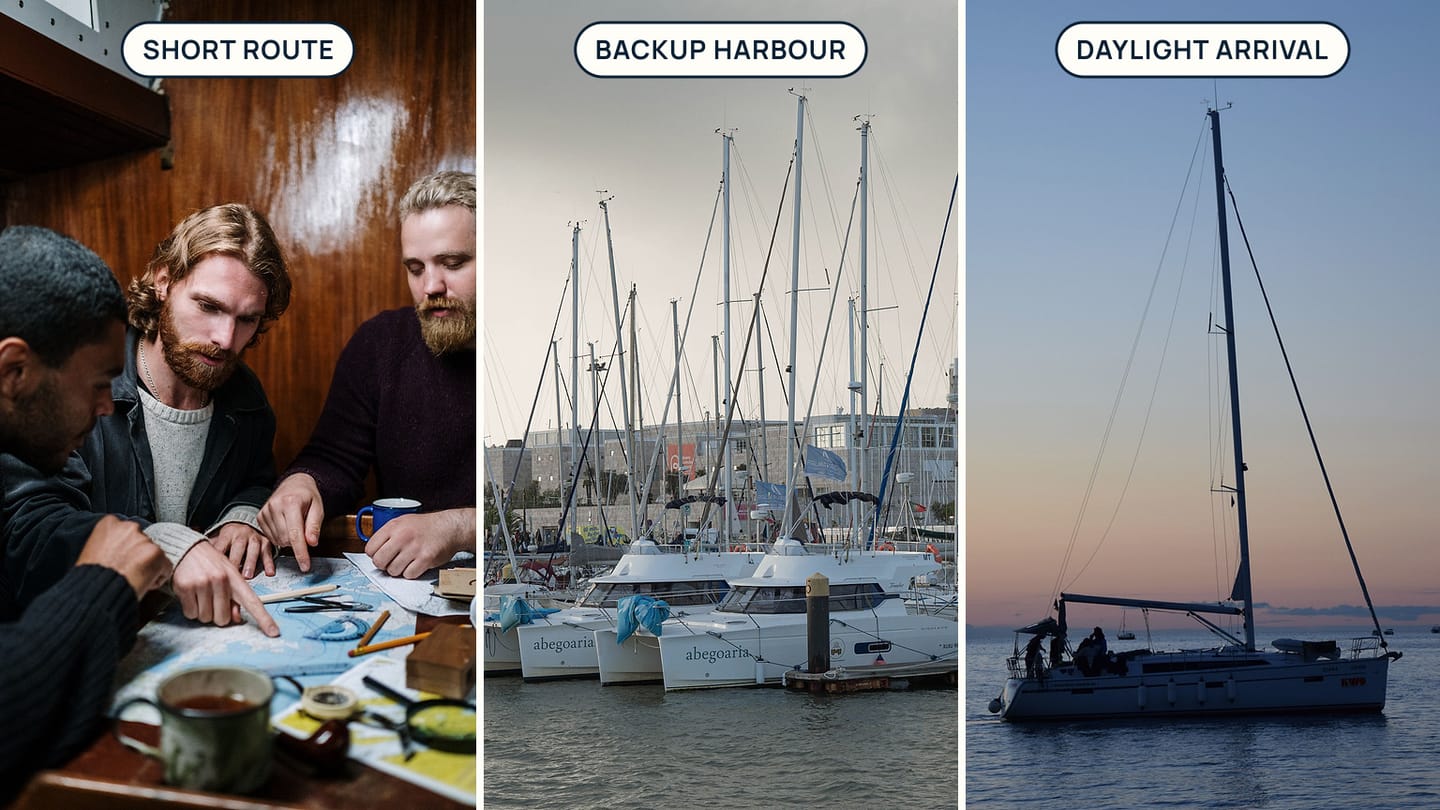
Select a destination the skipper and boat can reach without making the schedule tight. A short route leaves time to solve a gear problem, help a seasick crew member, or turn back before darkness. Identify a backup harbour or return option and check that it remains suitable under the expected conditions.
Plan a daylight arrival. Darkness makes unlit objects, shore detail, line preparation, and unfamiliar deck movement harder to judge. If the learning goal includes night sailing, separate that coached exercise from the first approach to an unknown berth. The skipper should decide how much darkness the crew and route can safely handle.
Review the current forecast and the local factors that affect the passage. Note wind, visibility, sea conditions, current or tide where relevant, and any warning that would change the plan. Use authoritative local weather and navigation information. Set a departure decision time and a later point when the route will be shortened or abandoned.
Work through the arrival before leaving. Who contacts the marina or prepares the anchor? Which lines and fenders are needed? Where will each person stand? What is the alternative if the intended place is unavailable? A clear arrival plan reduces hurried instructions at the end of a long day.
Tell the crew the expected duration as a range, not a promise. Sailing speed and route can change. Food, warm clothing, medication, and shore-contact timing should allow for a sensible delay.
Check the destination's practical arrival information directly. Confirm booking or anchoring expectations, communication method, depth information used by the skipper, access after office hours, and any limits that affect the boat. Keep telephone numbers and navigation information available offline where appropriate. A restaurant reservation should never become the reason to continue an unsuitable passage.
Pack for the boat and night
Ask the skipper what the boat already carries and how much personal storage is available. Use a soft bag that can be stowed, not a rigid suitcase that blocks a berth or passageway. Put items that must stay dry inside appropriate protection and label medication that another person may need to find.
Bring layers suited to the forecast and water environment. A warm day can become cool after sunset, especially when you stop moving. Pack a dry base layer, insulating layer, and weather protection recommended by the skipper. Include a warm hat where appropriate, sun protection for the day, and footwear accepted on that boat.
Wear or carry the personal flotation equipment specified in the briefing. Learn how it fits and where any light, harness attachment, or other included feature is located. Equipment requirements vary by vessel and place, so follow current local rules and the skipper's instructions rather than a generic packing list.
Keep a small night kit reachable: headlamp or approved light, spare power if requested, water, warm layer, and any personal item needed during a watch. Ask how lights may be used without affecting the helm's night vision. Avoid shining a bright beam across the cockpit or into another person's face.
Plan simple food that the crew can prepare safely in the expected conditions. Confirm drinking-water supply, allergies, cooking arrangements, and who cleans up. Secure loose bottles and utensils before departure. A complicated first-night meal creates work when everyone most needs rest.
Pack for sleep without assuming a private cabin. Confirm the berth, bedding, ventilation, and quiet expectations. Bring ear protection only if it will not prevent you hearing an alarm or watch call; discuss this with the skipper.
Manage personal power carefully. Ask whether charging is available underway and what the boat's energy plan permits. Put essential contacts and route information on the device the skipper expects, but do not rely on one phone for navigation, light, alarm, and communication. Keep it secured against water and falling overboard. Downloading entertainment matters far less than preserving power for the agreed use.

Share the plan and watch
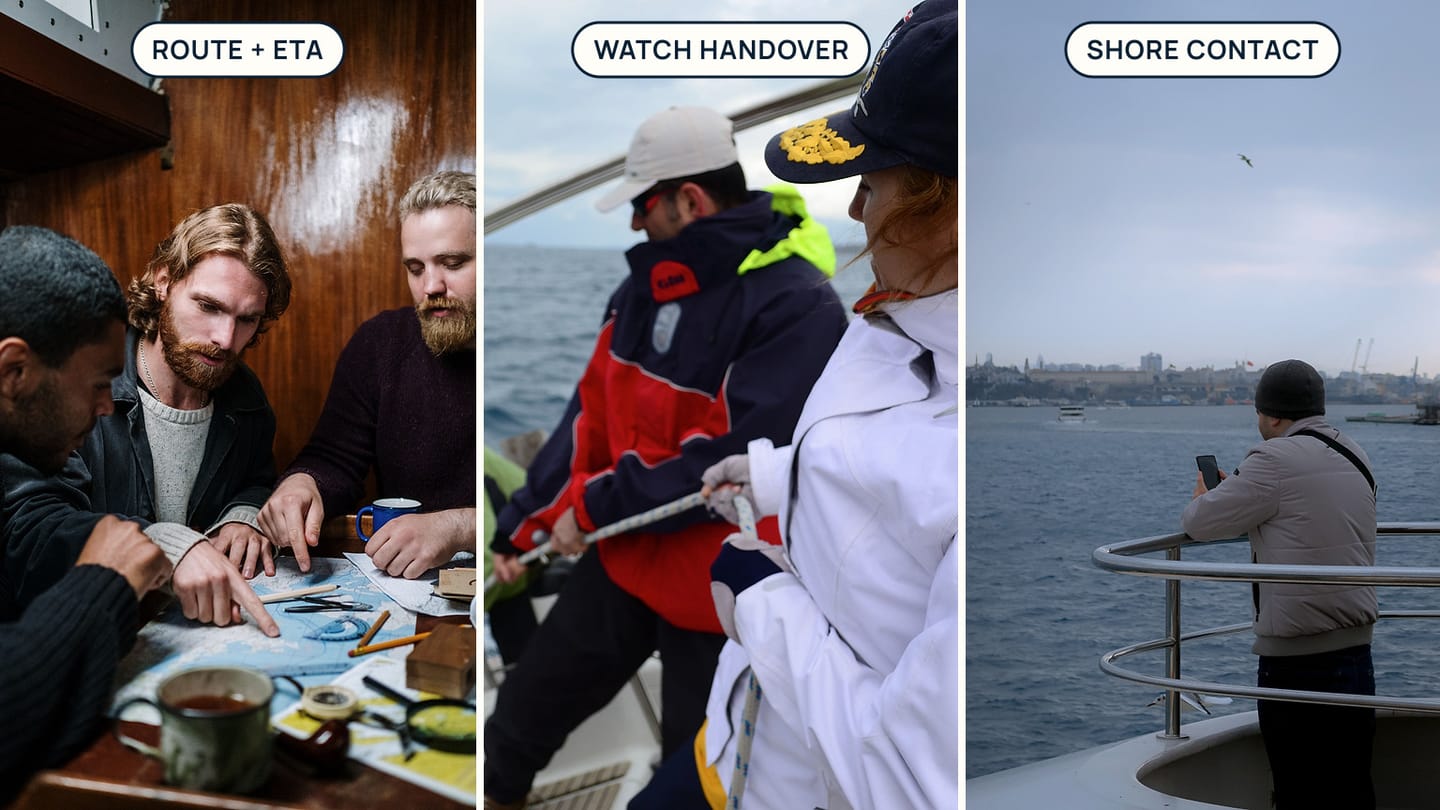
Give the shore contact the boat name, crew list, departure point, destination, route outline, expected check-in, and whom to contact if overdue. Agree on one person aboard who sends updates. Explain that a delayed message is handled through the agreed process, not improvised public alarm. The skipper should set the content and timing.
If watches are needed, write them down before fatigue begins. A watch plan names who is responsible, who supports them, when relief happens, and when the skipper must be called. New crew should not be left with responsibility beyond their experience. Even at anchor or alongside, the skipper may assign checks appropriate to the place and conditions.
A handover covers more than the compass course. State position, traffic, weather changes, sail or engine state, navigation concerns, equipment issues, and the next expected event. The incoming person should be dressed and ready before taking over. The outgoing watch remains until the handover is understood.
Agree on call points. Examples may include uncertain position, reduced visibility, traffic concern, unexpected depth, weather change, equipment trouble, or simply doubt. The skipper defines the actual list. “Call me if unsure” only works when beginners know that uncertainty is itself enough reason.
Protect rest. Keep off-watch noise low, stow wet clothing where agreed, and avoid waking the whole boat for a problem one person can solve safely. At the same time, never preserve sleep by hiding information the skipper needs.
Fatigue changes simple work. Use the handholds and movement rules from the briefing, wake the next watch early enough to dress, and make hot drinks only when the galley can be used safely. If you cannot stay alert or become unwell, tell the watch leader. Quietly enduring the problem leaves the plan based on a crew member who is no longer able to perform the assigned role.
Settle in and review the trip
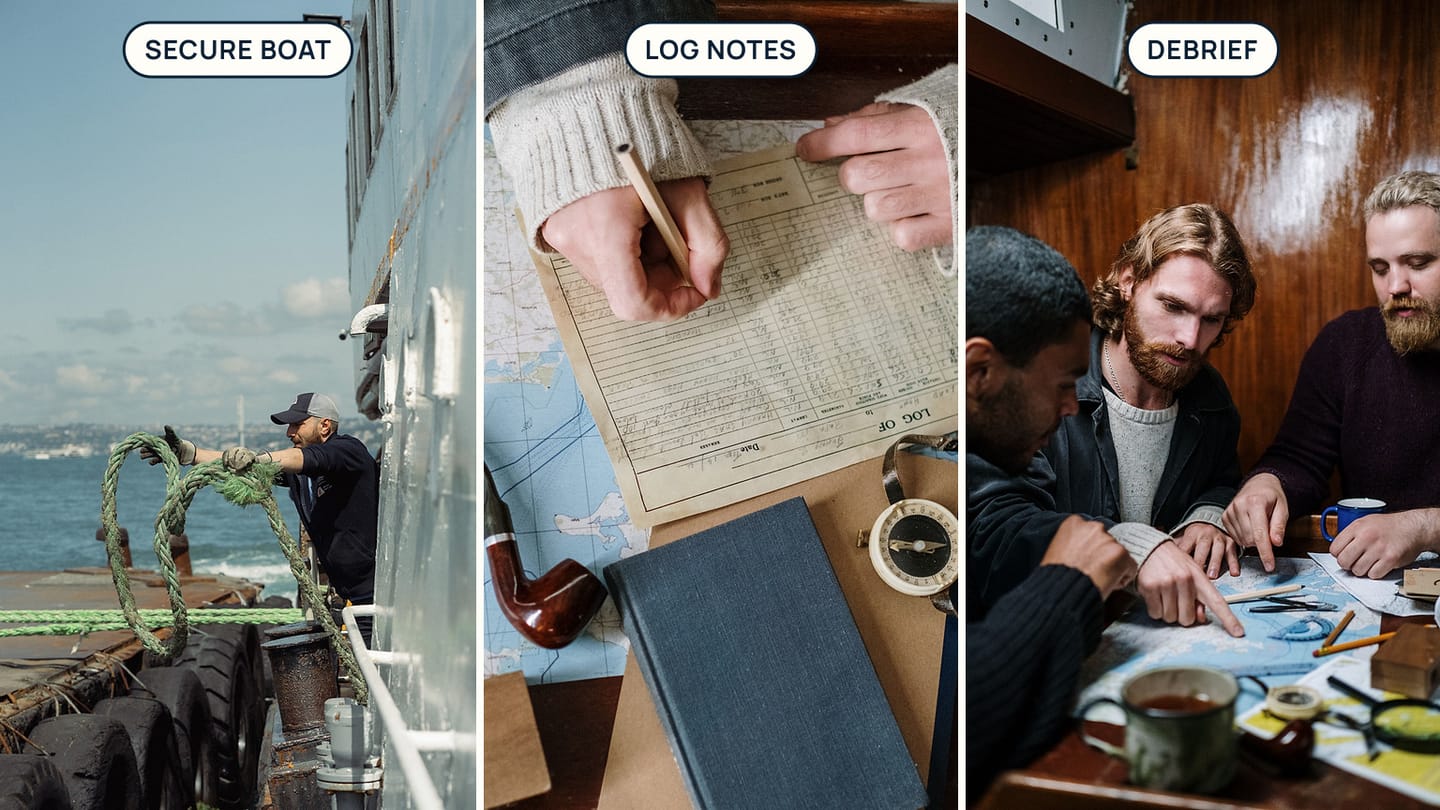
Secure the boat before changing into dry clothes or starting dinner. Complete the skipper's arrival checklist: lines or anchor, engine state, navigation lights where required, deck gear, hatches, charging, and any shore connection. One person should verify critical items rather than assuming another crew member handled them.
Show everyone how to move between berth, heads, galley, cockpit, and deck at night. Keep exits and passageways clear. Place shoes, warm layers, and lights where they can be reached without searching through bags. Explain quiet hours and the next watch or morning departure time.
Send the agreed arrival message to the shore contact. If the destination or timing changed, give the updated facts. Do not let a social message substitute for the planned check-in when the contact is waiting for a clear status.
Hold a short debrief while details remain fresh. Ask what took longer than expected, which item was hard to find, how the watch handover worked, and whether anyone was too cold, tired, hungry, or unwell to perform comfortably. Fix simple problems before sleep or the return trip.
Record the actual route, timing, tasks, conditions, and decisions. Note whether darkness was part of sailing, arrival, or only the overnight stay. This keeps a future sailing resume accurate. The next trip should change one variable at a time, perhaps a slightly longer route while keeping familiar crew and water.
After returning, inspect and dry personal gear, replace used supplies, and thank whoever organised the boat. A calm review turns one night aboard into a reliable plan for the next.
Use SailStarter to review sailing safety equipment and how to read a marine weather forecast before the crew meeting. Bring questions about the actual boat and route to the skipper. The lessons help you recognise the plan's parts; supervised experience teaches how those parts fit through a full day and night aboard.
Try it from the lesson
Can you spot the next move?
You turn to face the stern. A crewmate points at your right hand. Which side of the boat is that?
Why you can trust this guide
. We build each guide from public seamanship and safety sources, then teach the universal principle before any local difference.