Chart your course
What to Expect at Your First Sailing Lesson

Quick answer
The short version
A first sailing lesson normally starts ashore, moves through a safety briefing and boat orientation, then gives you practical time on the water. You do not need previous experience. The instructor will explain where to sit, what to hold, and what each simple instruction means before asking you to act. Depending on the boat and conditions, you may steer, help control a sail, or practise leaving and returning. Wear comfortable layers and secure shoes, and bring sun protection plus dry spare clothes. Ask the school whether it supplies waterproofs and a lifejacket. Your exact session will vary, but you should expect to participate rather than watch all day.
The unknown parts of the day can feel larger than the sailing itself. In practice, beginner sessions are built for people who have never handled a boat. You will hear new words, the deck may move beneath you, and the plan may change with the weather. None of that means you are behind. A useful goal for lesson one is simply to understand the boat, respond to a few clear instructions, and notice how steering and sail position change what happens. Read the provider's joining message carefully because it tells you when to arrive, what facilities are available, and what kit is included.
Before You Leave the Shore
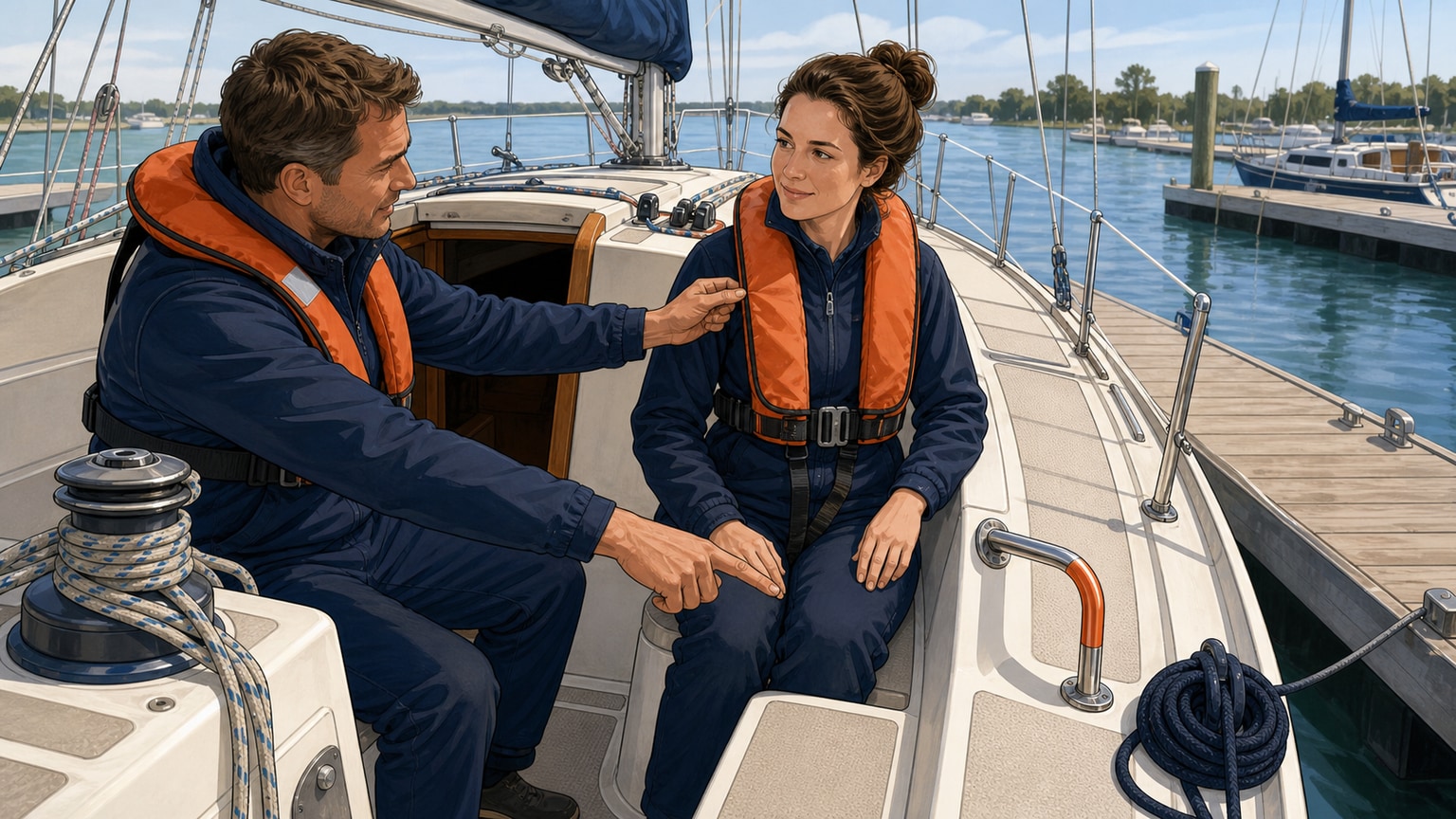
Arrive early enough to change and meet your instructor without rushing. Wear thin layers you can add or remove, a windproof outer layer, and secure footwear that can get wet. A hat, sunscreen, water, towel, and dry change of clothes cover the common first-day needs. Ask whether the venue supplies a buoyancy aid or lifejacket, and confirm that before you travel.
The instructor will introduce the session, look at the weather, and explain the boat. Expect a short safety briefing before anyone casts off. It should cover safe places to sit or stand, useful handholds, movement hazards, and what to do if the instructor gives a firm instruction. This is also the right moment to mention a medical need, ask about accessibility, or say that you are nervous. A clear question helps the instructor adapt the explanation to you.
You may also learn four orientation words before stepping aboard: bow, stern, port, and starboard. You do not need to memorize the whole boat. Learn enough to follow the first task, then let the rest build during the session.
What You May Do Afloat
Sailing instruction commonly follows a brief, task, and debrief pattern: the instructor explains and demonstrates a skill, you try it, and then you review what happened. Your first turn steering may be as simple as aiming the bow toward a landmark while the instructor stays beside you. Small corrections are enough. The boat needs time to respond, so the task rewards looking ahead rather than staring at your hands.
You may also hold a sheet, the line that controls a sail's angle. The instructor might ask you to ease it, meaning let some line out, or trim it, meaning bring it in. They will show you how to hold and release it safely before it carries load. On another session, the early focus may be rigging, sailing across the wind, or practising an approach to the dock. Boat type, weather, and local water all shape the order.
The boat may lean as the sails fill. That controlled lean is called heel. Tell the instructor if the motion worries you or if you feel unwell. The lesson works best when the instructor knows what you are experiencing.

How the Lesson Ends
What useful progress looks like
You may finish able to name the main controls, steer toward a reference, feel the difference between heading up and bearing away, help with a tack, and keep a basic lookout. That is a productive first lesson. It does not need to include every point of sail or an independent docking manoeuvre.
Ask the instructor to name one thing you did reliably and one thing to repeat next. Write down the boat type, conditions, tasks, new terms, and correction while they are fresh. If the lesson was shortened by weather, ask which shore exercise or rescheduled practice replaces the missed time.
Questions to ask before booking
Ask about boat type, group size, instructor role, expected hands-on time, flotation, clothing, accessibility, swimming concerns, weather cancellation, and the next course or practice option. Tell the provider about medical, mobility, water-confidence, or language needs before arrival.
A first lesson should begin with a briefing and a boat walk. You should know how to move, where to sit, which lines can load, how to raise a concern, and what to do in an emergency. The first-time sailing guide covers the broader social and practical experience.
Turn one lesson into retention
Book or plan the next suitable session before too much time passes. Repetition helps steering, trim, and vocabulary become less demanding. Choose one target, such as steering a steady course or completing the tack sequence from both sides.
Use the adult-starting guide to compare courses, crewing, clubs, and shared access. Avoid buying equipment beyond what the provider requests until you know the sailing style you will continue.
If a task felt frightening or unclear, describe the exact moment to the instructor. “I lost track of which jib sheet would load during the tack” can be practised. “I am bad at sailing” cannot. A good debrief turns one confusing event into a specific next exercise.
What you are unlikely to master in one lesson
Independent weather decisions, close-quarters docking, navigation, anchoring, reefing in stronger wind, person-overboard recovery, and emergency judgment all need more than a brief introduction. You may see or assist with them, but observation is not the same as repeatable skill.
Ask which tasks the instructor performed without your noticing. They may have monitored traffic, depth, wind shifts, route, crew position, and escape options while you focused on steering. Understanding that hidden workload helps you judge the gap between taking the helm and running the boat.
If the weather changes the lesson
Too little wind can support boat orientation, knots, steering under power, or shore exercises. Too much wind may call for reefing demonstrations, protected-water work, or postponement. A responsible change is part of sailing judgment, not a failed lesson.
Ask how the provider decides and what credit or rescheduling applies. Bring clothing for the forecast, but do not pressure an instructor to sail outside the school's operating plan because you traveled a long way.
A shore-based change can still teach useful preparation. Judge the provider by the quality of the safety decision and instruction as well as whether the boat left the dock.
The final part usually brings the boat back, secures the sails and lines, and reviews what happened. You may help tidy the cockpit or put equipment away. These jobs are part of practical sailing because a session does not end when the boat touches the dock.
During the debrief, name one action that made sense and one point you want to revisit. Perhaps the boat turned more slowly than expected, or the difference between a halyard and a sheet finally became clear. Specific observations give the instructor something useful to build on. They can also explain whether your next step is another taster, a multi-session course, or practice through the club.
Do not measure the day by how many terms you remembered. A good first session gives you a safe introduction, active time aboard, and a clearer idea of whether you want to continue. Sailing skill comes from repeated practical experience. If weather changes the planned exercise, notice how the instructor adapts the session rather than treating the change as lost time. The first lesson only has to make the second lesson feel less mysterious.
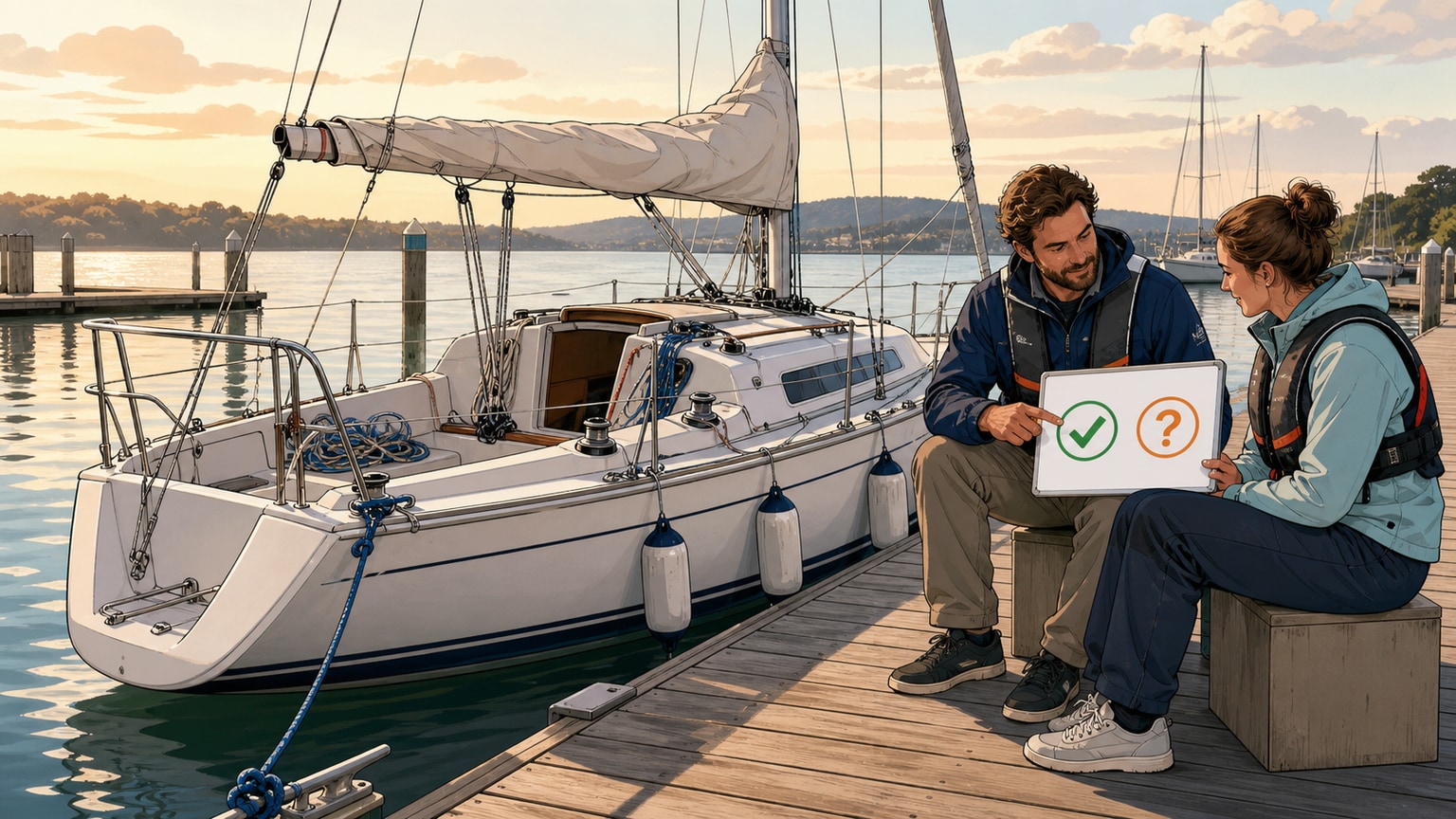
SailStarter can prepare the knowledge layer before you arrive. Start with the first lesson to learn the basic parts and directions you are likely to hear. The short visual checks help you recognize the words without pretending that screen practice replaces steering, line handling, or judgment on the water. When the instructor says “look toward the bow” or hands you a sheet, you can spend less attention decoding the sentence and more attention noticing the boat. Review the words once before you travel, then stop studying and arrive ready to observe. Use the lesson as preparation, bring your questions to a qualified local instructor, and verify the centre's current joining instructions. After the lesson, sketch the boat from memory and write down one instruction you understood, one motion that surprised you, and one question for next time.
Try it from the lesson
Can you spot the next move?
You turn to face the stern. A crewmate points at your right hand. Which side of the boat is that?
Why you can trust this guide
. We build each guide from public seamanship and safety sources, then teach the universal principle before any local difference.