Chart your course
Gust Fronts and Sudden Wind Shifts
Quick answer
The short version
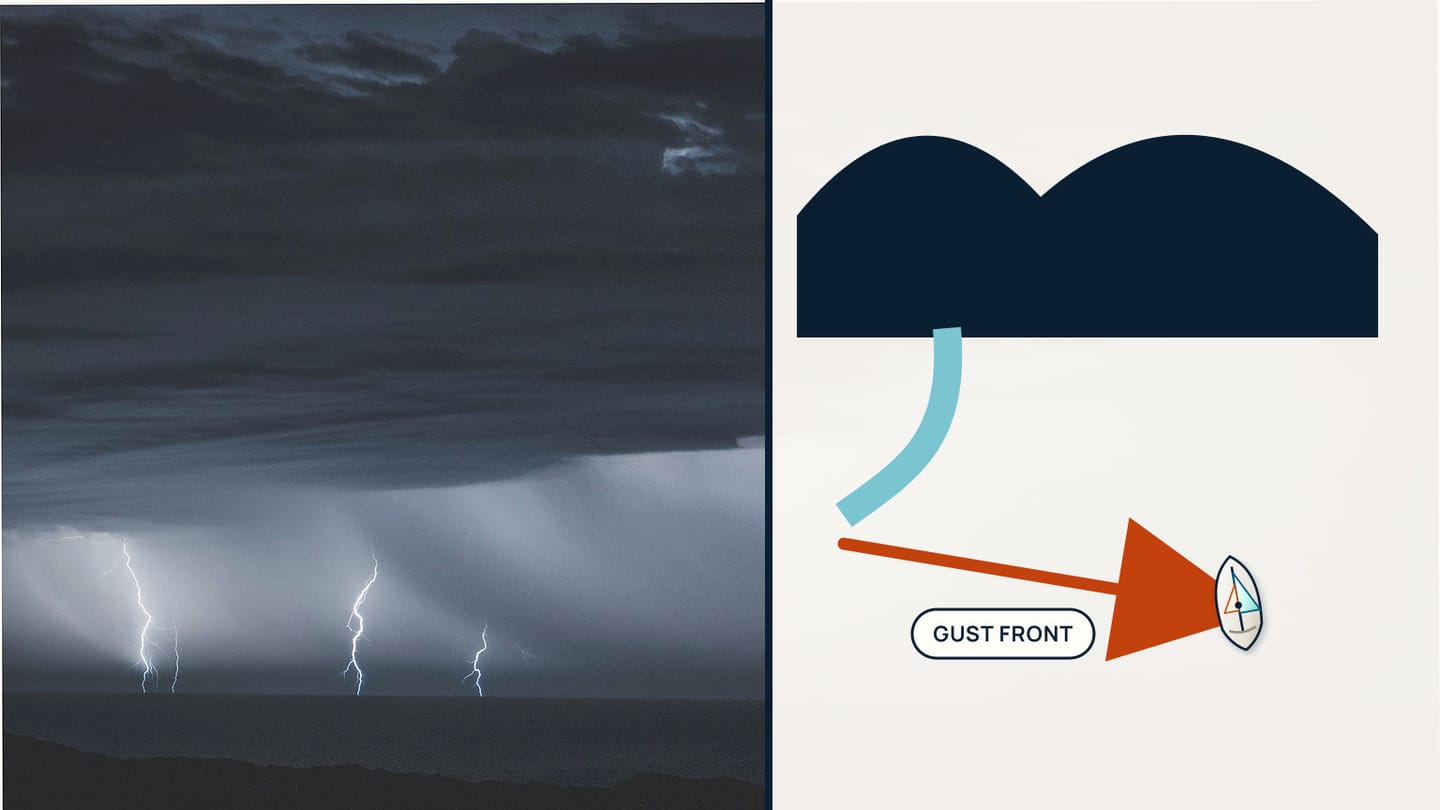
A gust front is the leading edge of gusty surface wind produced by thunderstorm downdrafts. It can arrive ahead of the rain with a sudden change in wind speed and direction. Do not wait for the first violent heel to decide what to do. Follow official forecasts and warnings, watch the cloud base and water, shorten sail while there is still working room, secure the crew and deck, and keep an escape route. When the boundary arrives, steer for control, ease load promptly, and follow the skipper's pre-briefed heavy-weather plan.
Not every gust is a gust front. Ordinary puffs, topographic effects, sea-breeze boundaries, and larger weather fronts can all shift the wind. The National Weather Service specifically defines a gust front as the leading edge of thunderstorm downdraft winds, sometimes accompanied by a shelf or roll cloud. That connection matters because thunderstorms also bring hazards that sail trim alone cannot manage.
Pair this guide with how to read a marine forecast, how to reef a sailboat, and lifts and headers explained. Warning products and safe actions vary with location, vessel, and shelter. Use the current official service and the skipper's established procedures.
Recognise the boundary, not just the dark cloud
Begin with the forecast. Check the timing and movement of thunderstorms, not only the general wind line. A marine warning or thunderstorm warning is stronger evidence than an attractive patch of sky near the marina. Recheck during the trip because storm cells and outflow can develop faster than an old screenshot suggests.
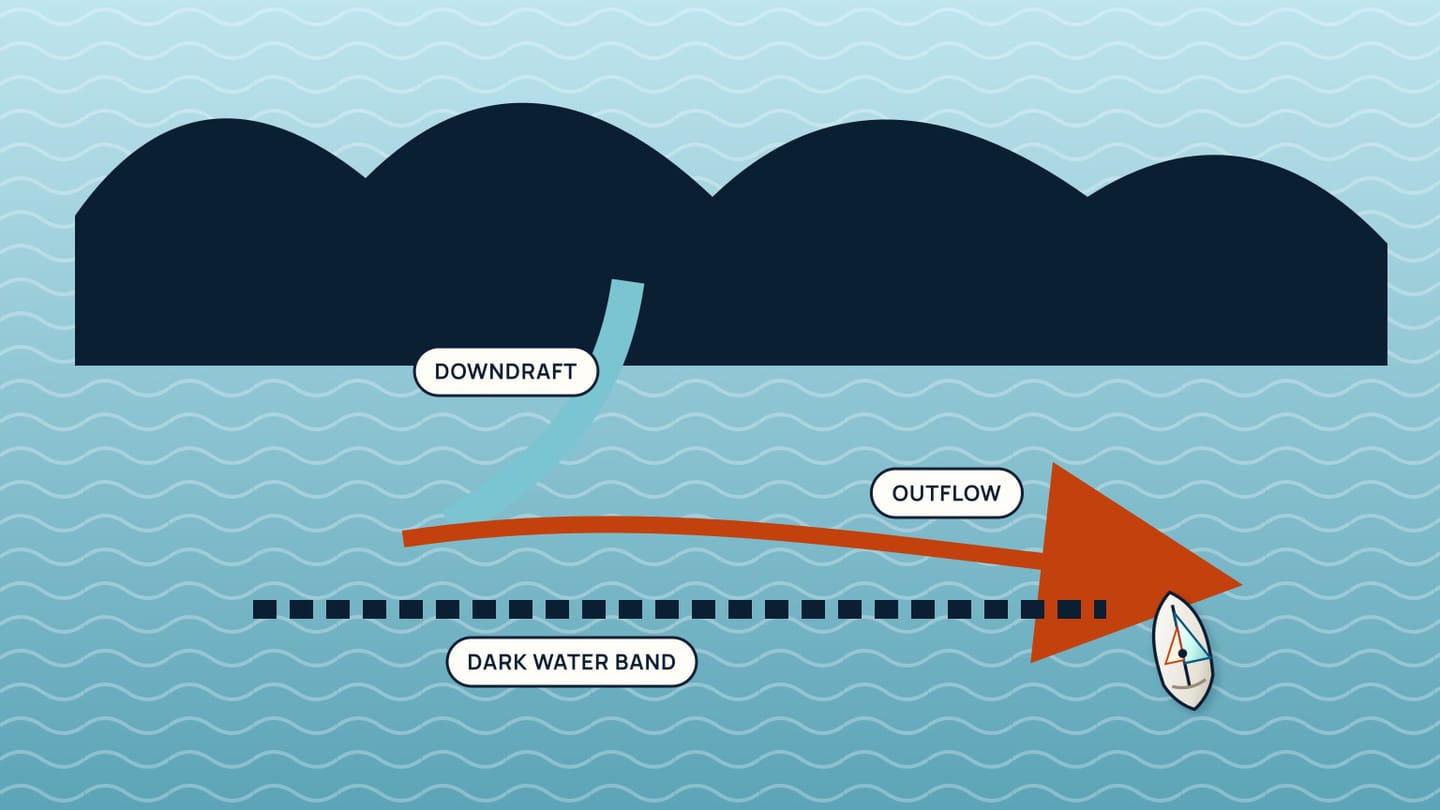
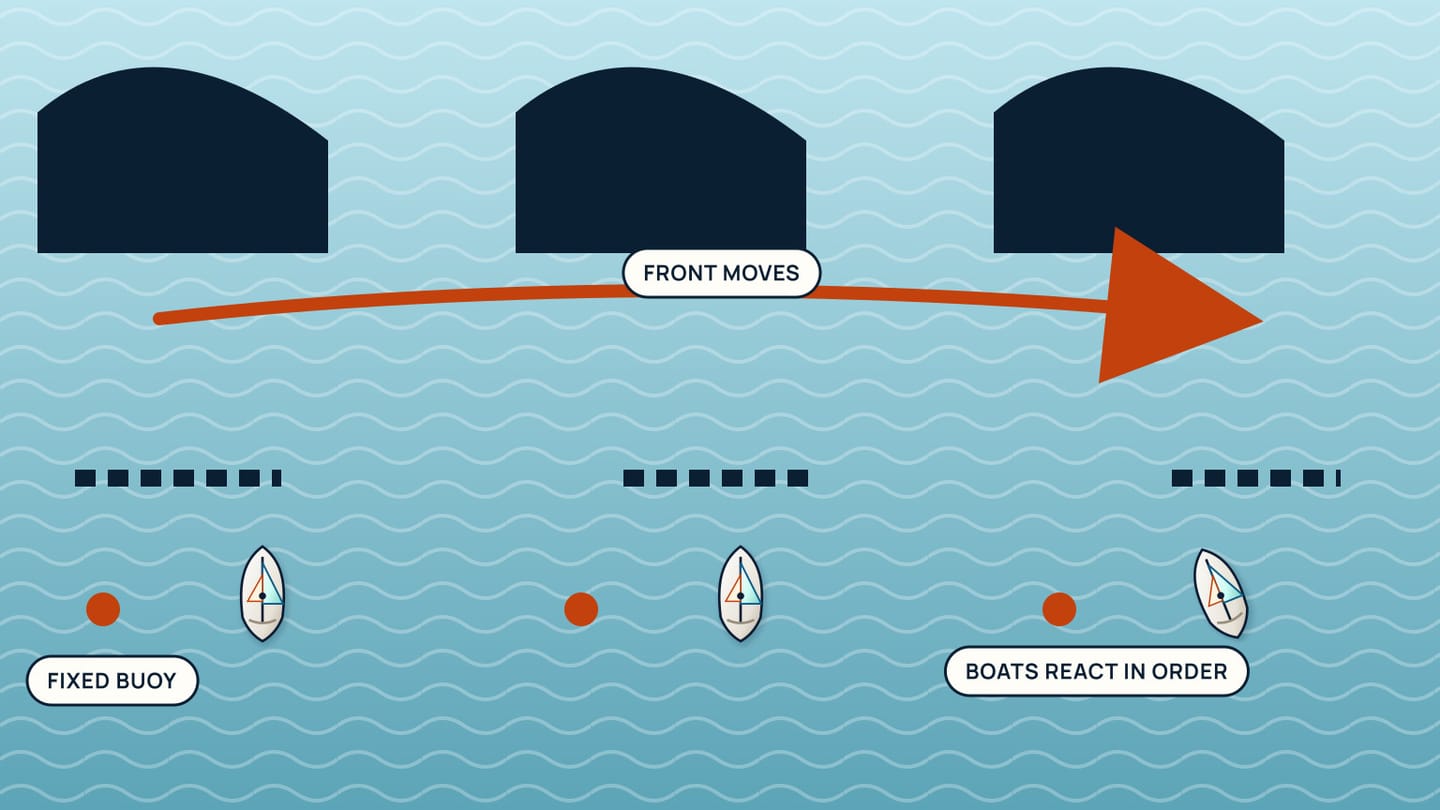
On the water, look for a coherent change. A shelf-like cloud on the storm's leading edge, a darker band or texture advancing across the surface, blowing spray or dust near shore, and boats ahead heeling in sequence can mark outflow. Cooler air may reach you with the shift. None of these alone measures the wind. Together, and in line with official information, they tell you that the boundary may be approaching.
Distance can be deceptive. The rain shaft may look far away while the outflow already spreads beyond it. A storm can also be moving toward your route even when the cloud appears to one side. Compare successive bearings and radar or official nowcast information rather than judging one glance.
If you hear thunder, treat lightning as part of the situation and use authoritative lightning guidance. A sailboat cannot make a thunderstorm safe by reefing. The best response may be to avoid departure or reach shelter well before the cell arrives.
Read sky and water as a moving sequence
Choose fixed references. Note the bearing of the leading cloud edge, the direction of surface streaks, and which boats encounter the wind first. Look again after a short interval. Movement across those references tells you more than whether the cloud looks “bad.”
Water often shows the first practical cue. A band of shorter, darker ripples moving across smoother water can mark stronger surface wind. In rain, visibility may hide that pattern, so the lookout must keep scanning both near the boat and toward the boundary. Do not send a crew member forward solely to get a better view when conditions are deteriorating.
Compare several levels. Cloud motion aloft may differ from the surface wind that fills the sails. A flag ashore, smoke, anchored boats, and gust marks on the water describe the lower layer. Your own masthead indicator and telltales show apparent wind after boat motion is added. A consistent change across those clues deserves action.
A frequent mistake is waiting for certainty. The first preparation steps are reversible: review the route to shelter, put on appropriate personal equipment, close hatches as required, clear loose gear, and organise reefing lines. Completing them early costs little. Completing them while the boat is overpowered costs attention and balance.
Prepare the boat before the first hard gust
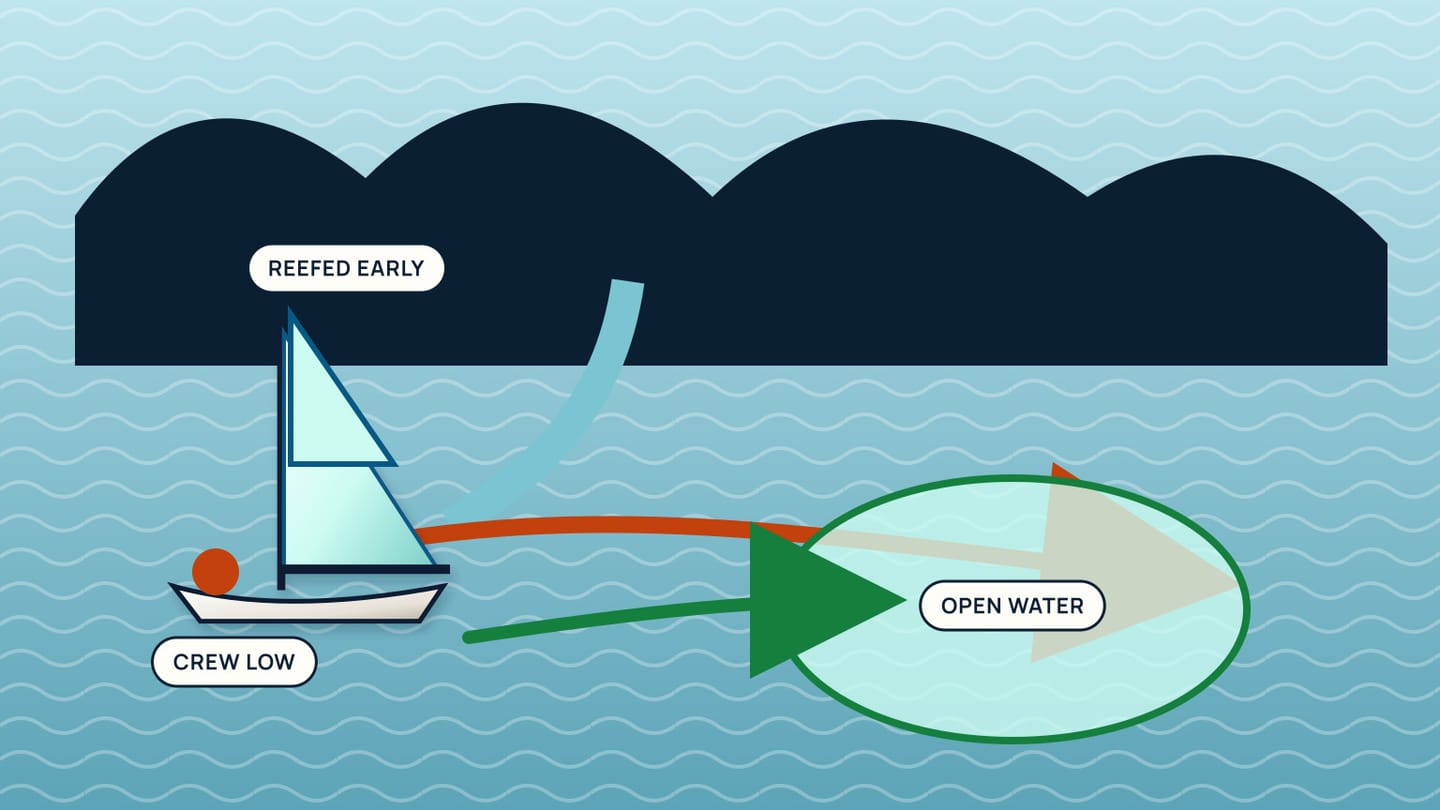
Reduce workload before power arrives. Follow the boat's reefing or sail-reduction procedure while the deck is manageable. Check that the engine is ready if it forms part of the skipper's plan, but do not assume propulsion removes lightning, visibility, or sea-state hazards. Choose a heading and area with room to manoeuvre.
Put people in secure positions. Clip or tether only according to the boat's equipment and trained procedure. Keep everyone out of the boom's travel, loaded sheets, and line bights. Explain what will happen if the wind shifts sharply: who steers, who eases which control, and which command stops nonessential work.
Secure the cabin and deck. A sudden heel can turn loose gear into moving hazards. Close openings according to conditions, stow items, and make sure a crew member does not need to go below during the first change. Preserve visibility from the helm.
Name the abort point. If shelter requires crossing a narrow entrance, reaching it before the outflow is different from arriving during the shift. If the timing no longer works, the alternate may be open water with sea room rather than a rushed harbour approach. Local knowledge and the vessel determine that choice.
Respond to the first shift with control
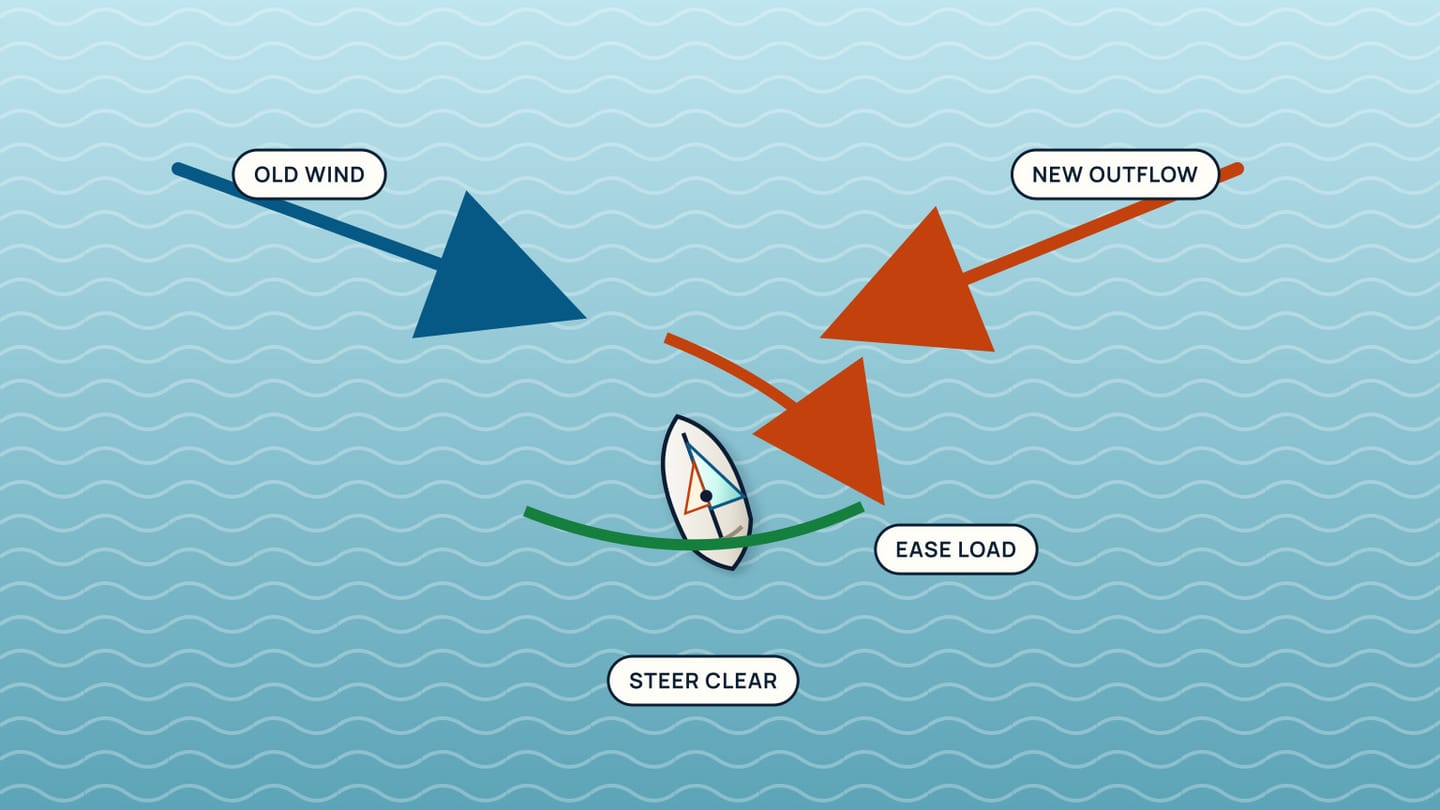
The opening gust can combine more pressure with a different direction. If you steer only for the old wind, sails may load abruptly or the boom may cross. Keep the boat moving, feel the new apparent wind, and use the pre-briefed combination of easing, steering, and sail reduction. The exact controls vary by boat.
Make load-releasing actions direct. An eased sheet works only if it is free to run and no person is in its path. A helmsman who needs a control eased should name it, rather than shouting a vague warning. Crew repeat the command so everyone knows the response is under way.
Avoid a sudden turn that creates another hazard. Bearing away may reduce apparent wind on one course but can expose the boat to an accidental gybe on another. Heading up may depower an upwind sail plan but can stop the boat in waves or traffic. The skipper chooses from the actual geometry, not from a universal slogan.
Continue the lookout. The first gust is not proof that the boundary has passed. Pressure and direction can pulse, rain can remove visibility, and nearby boats may lose control. Hold the safe configuration until observations and official information show a stable situation.
Reset only after the pattern settles
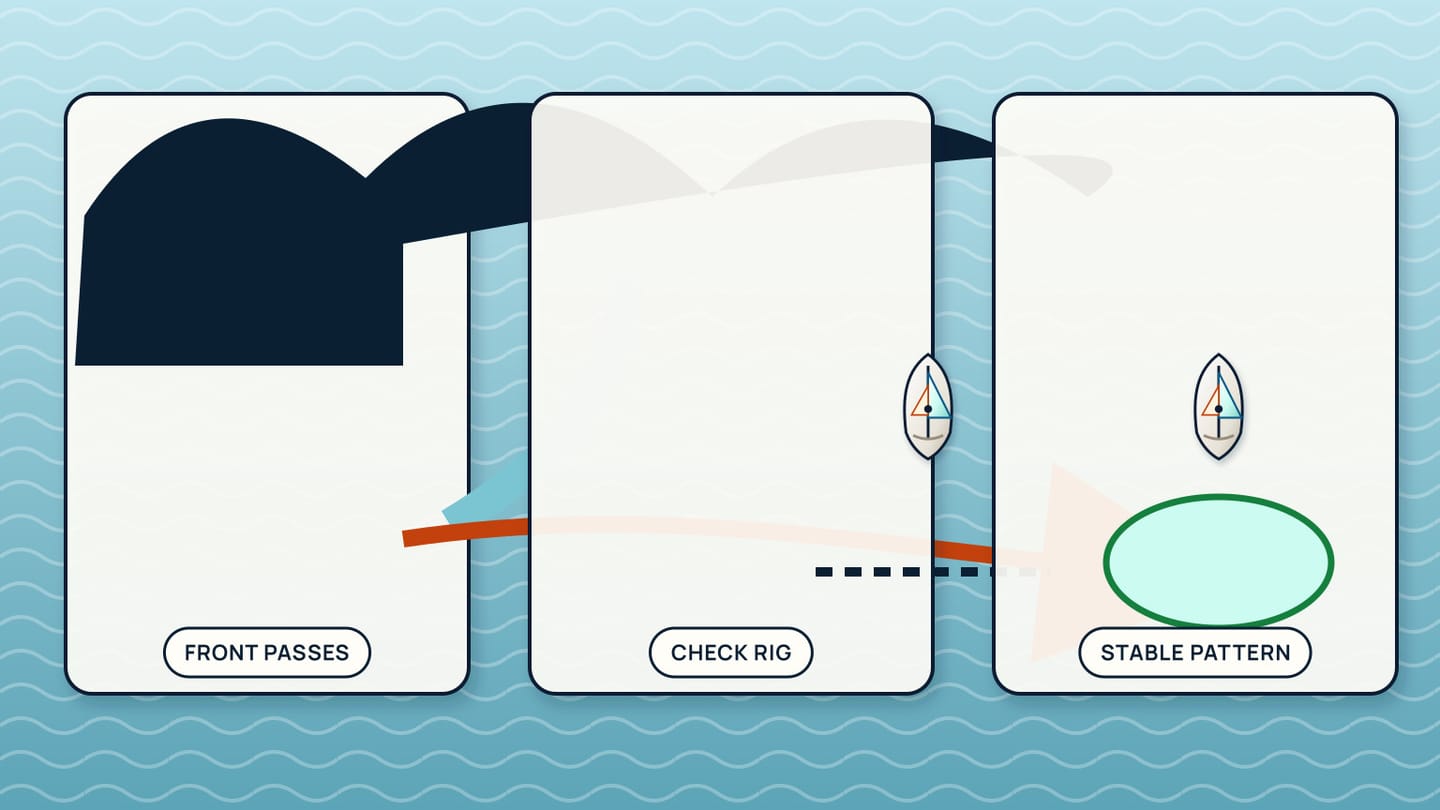
Once the immediate pressure eases, inspect before adding sail. Check rigging, lines, deck gear, steering, and crew condition. Look for chafe, a fouled sheet, or a hatch that moved. A hurried return to full sail can hide a small problem until the next gust loads it.
Rebuild the weather picture. Has the storm passed, or did only one outflow pulse cross you? What do the current warning and radar show? Are more cells following? The wind after a gust front may differ from the wind before it, so an old route assumption may no longer fit.
Decide whether the trip still serves the crew. Fatigue, wet gear, reduced visibility, and a damaged sense of timing all narrow the margin. Continuing because the strongest gust has passed confuses relief with evidence.
Debrief with a timeline: first official cue, first visible boundary, preparation completed, and first wind change. If the crew had to rush, move the trigger earlier next time. The purpose is to improve recognition, not celebrate how much wind the boat endured.
Run the timeline against one alternate decision. If the crew reefed only after the water darkened beside the boat, ask what earlier cue was available: the warning update, advancing cloud edge, or first boats heeling farther upwind. Then name the action that could have moved to that cue. Perhaps loose gear could have been stowed at the forecast update and sail reduced at the visible boundary. Earlier triggers prevent the first hard gust from becoming a start signal.
Also review what “the storm missed us” hides. Rain may pass to one side while outflow crosses the route, or a cell may weaken after its gust front spreads. Judge the outcome from observed wind, lightning guidance, and official updates, not from whether the cockpit became wet.
A useful debrief ends with one earlier trigger and one simpler action the whole crew can repeat.
SailStarter's weather and sail-control lessons help you recognise changing pressure before practising with an experienced skipper. They cannot make thunderstorms routine. Use current official warnings, local shelter knowledge, and an early decision to keep the storm outside the crew's working margin.
Try it from the lesson
Can you spot the next move?
A short ribbon on a supporting wire of the mast streams out sideways. What is it showing?
Why you can trust this guide
. We build each guide from public seamanship and safety sources, then teach the universal principle before any local difference.