Chart your course
How Much Wind Is Too Much for Sailing?

Quick answer
The short version
There is no single wind speed that is too much for every sailing trip. Ten knots may suit a protected beginner lesson but feel difficult against a strong current or steep chop. The same forecast may be manageable on one boat and beyond the operating limit of another, because suitability depends on the boat, the crew's experience, the gusts riding on top of the average, the wave state, the current, and how much shelter the sailing area offers. Start with the full marine forecast, including gusts, waves, warnings, and changes expected during the trip. Then consider the boat, crew experience, water, shelter, and skipper's plan. One sailing school describes Beaufort Force 2-3 (4-10 knots) as a comfortable beginner range, but that is guidance within its teaching context, not a universal safety line every boat and every crew should adopt.
Beginners often search for one number because knots look precise and a single figure feels reassuring. The decision is wider than the sustained wind printed in a forecast. A gust can be much stronger than the average, waves can make every manoeuvre harder even when the wind itself feels manageable, and a return leg can face different conditions from the outward leg as the day develops.
The number describes wind speed well. It does not describe the whole sailing problem by itself, and treating it as if it did is one of the most common mistakes a new sailor makes when reading a forecast.
The final go or no-go choice belongs with the person responsible for the boat and the local operation, whether that is a skipper, an instructor, or the venue running the session. You can still learn to read the evidence yourself. The Beaufort scale, visible water, and forecast trend give you a calm way to ask better questions before leaving shelter, rather than a number to memorise and apply blindly.
Start With the Beaufort Picture
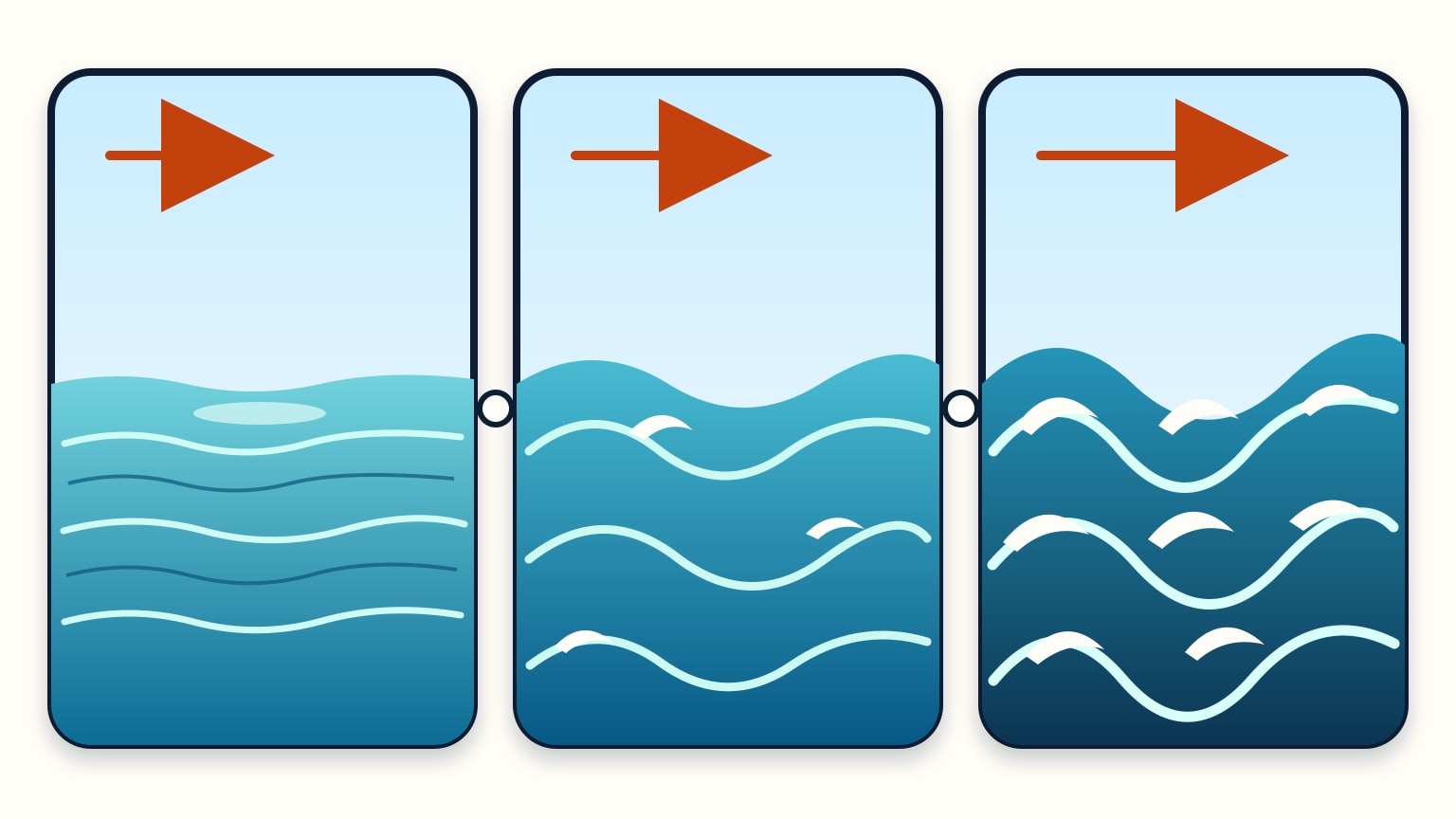
The Beaufort scale joins wind speed to what the water actually looks like, which is what makes it more useful to a beginner than a bare number. At Force 2, 4-6 knots, small wavelets have glassy crests that do not break. Force 3, 7-10 knots, brings crests that begin to break and scattered whitecaps across the surface. At Force 4, 11-16 knots, whitecaps become frequent, and the water's texture changes noticeably from one force band to the next.
Those observations are more useful than a naked number because they help you compare forecast and reality in the moment, standing at the dock rather than reading a screen indoors. If the forecast says light wind but the water already shows frequent whitecaps, pause and find out why before you leave shelter. The wind may have arrived early, a local funnel effect around a headland or building may be strengthening it, or conditions may differ outside the harbour from what the forecast station is reading.
The Met Office notes that Beaufort wave descriptions refer to developed wind waves on the open sea. Sheltered lakes, short fetch, meaning the short distance wind has to build waves across, tide, and current can all change how the water actually looks compared with the textbook description for a given force. Use the scale as one observation tool, never as permission to ignore local knowledge, since a river mouth with an opposing current can look far rougher than the open-sea Beaufort picture would predict for the same wind speed.
The force number also describes the environment, not your qualification to sail in it. Two crews can read the same Force 3 correctly and still make different choices because their boats and support differ. A crew on a stable keelboat with an experienced skipper and a nearby safety boat can reasonably choose to go out in conditions that would be a poor decision for two beginners alone in a light dinghy, even though both crews are looking at the identical Force 3 water.
Treat Beginner Ranges as Context
One sailing school calls Force 2-3, or 4-10 knots, an ideal beginner band. It offers enough wind to make the controls meaningful, so a beginner can actually feel what trimming or steering changes, without the loads and sea state associated with stronger conditions that make every action harder to learn from. That can be a useful expectation for a first conversation with a school, something to compare their answer against rather than a number to demand.
It is not a worldwide cutoff. A heavy training keelboat, a light dinghy, and a fast catamaran do not react identically to the same wind, because hull weight, sail area, and stability all change how much wind feels manageable. A protected basin is different from an exposed coast at the identical forecast wind speed, because fetch and shelter change the wave state that actually makes a session hard or easy. A qualified instructor with a safety boat nearby has options, stopping a lesson early or towing a struggling dinghy in, that a new sailor alone does not have.
Around 15 knots, many boats are reefed or considering a reef, meaning some sail area is reduced to lower the load on the boat and crew. Reefing reduces sail area, which lowers both the power the sail generates and the strain on the gear and the crew holding it. The exact timing belongs to the boat's own procedures and skipper, since a boat built for open-ocean work reefs at a different point than a light day-sailing dinghy. SailStarter's guide to strong-wind sailing preparation covers what that conversation should include if the forecast is trending upward: ask what sail plan, escape route, and cancellation limit the provider uses rather than deciding from one general article or a number you read online.
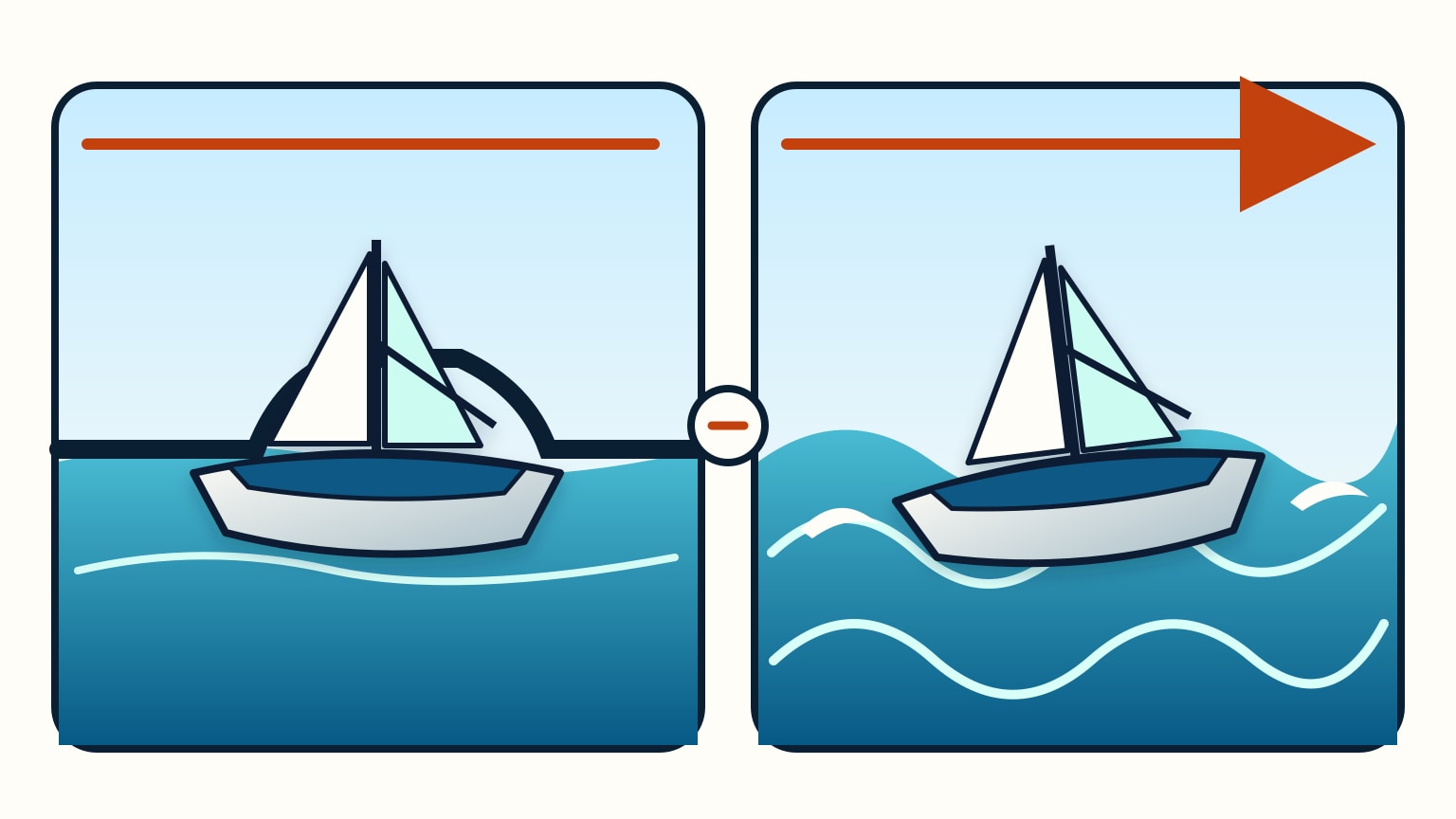
Ask about gusts separately from the average, since the two numbers answer different questions. A session described as "ten knots" may feel quite different if repeated stronger gusts arrive during every manoeuvre, because a gust that spikes well above the average can load the sail and the crew's hands at a moment when they are already busy tacking or trimming.
Look Beyond Sustained Wind
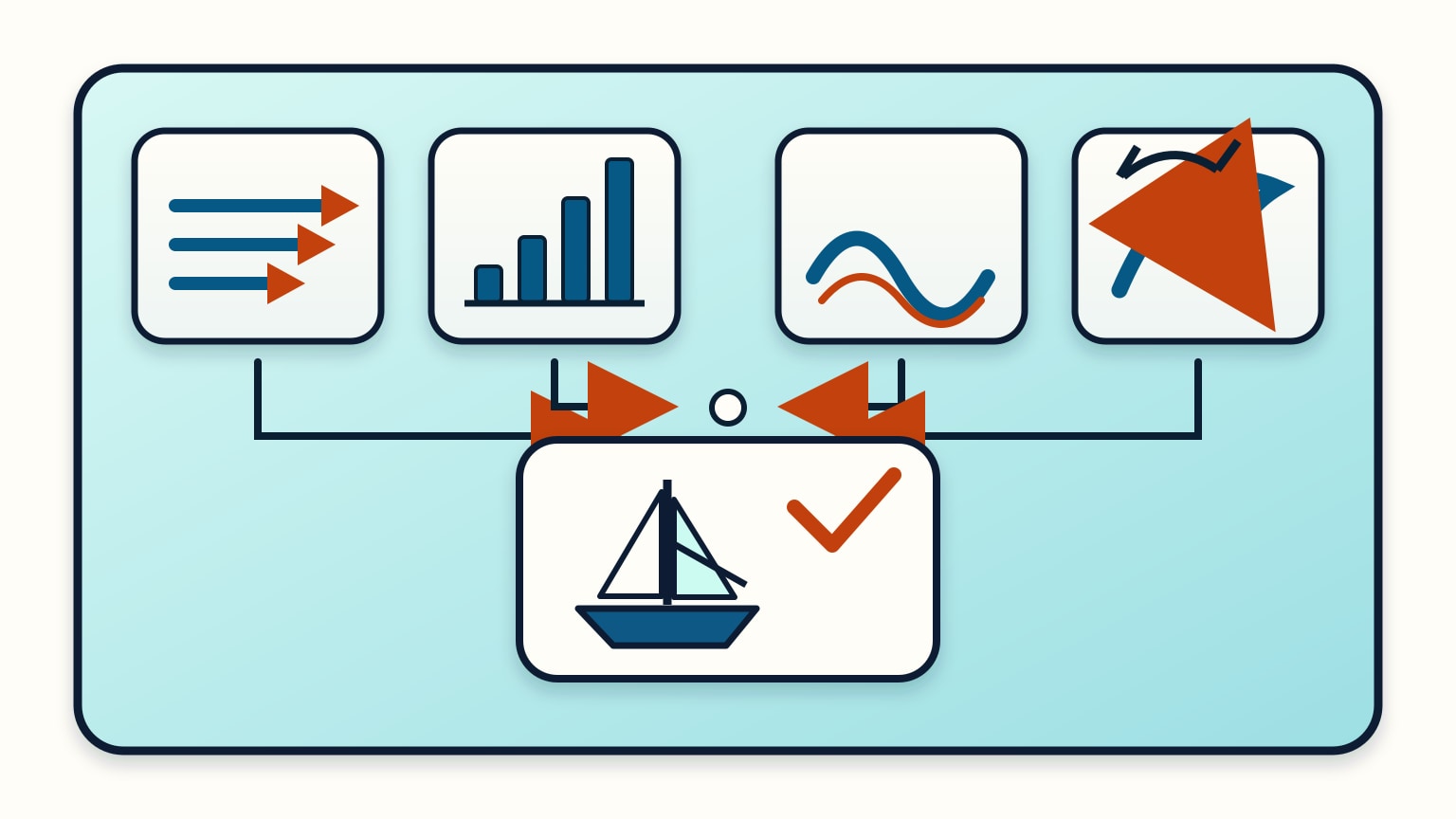
A marine forecast includes wind direction and speed, wave height and period, and significant weather such as squalls or thunderstorms. It may present ranges over several hours, while individual gusts or local conditions fall outside the average the forecast reports. Read the whole forecast period, including the time you expect to return, not just the window when you plan to leave.
Wind load also rises much faster than the number of knots suggests. Aerodynamic force grows with the square of wind speed, so doubling the wind speed produces roughly four times the force. The same relationship holds at smaller steps too: wind speed increasing by half again, say from 10 knots to 15, produces roughly two and a quarter times the force, not one and a half times. This is why an increase that looks modest on a screen, a few knots one way or the other, can feel large in the sheet, the heel of the boat, and the spray coming over the bow.
Add practical questions to the number rather than relying on it alone. Is the wind blowing toward a safe shore or away from it? Are waves building through the session or staying steady? Is the route exposed to open water or mostly sheltered? Is visibility changing? Does the crew know how to reduce sail if conditions build faster than expected? These do not create a formula you can apply automatically. They reveal whether several difficulties are stacking together, which is usually what turns a manageable day into a hard one.
Direction can matter as much as strength. It changes which parts of the route are sheltered by land and which are exposed, and it changes whether the return leg is likely to be easier or harder than the outward leg, since a wind that helped you out may work against you on the way back.
Keep Checking After the Decision
A departure decision is not permanent, and treating it as final is a mistake. Compare the latest forecast with flags, water texture, cloud, and the boat's behaviour before casting off, not just the forecast you checked the night before. Keep watching once underway, since the water in front of you is always more current than the forecast behind you. Changing conditions can justify shortening the route, returning to shelter, or stopping the session entirely, and none of those choices is a failure.
Check forecasts in advance and compare more than one weather source, since sources can disagree, and the disagreement itself is useful information about how confident to be. Actual marine conditions may fall above or below a predicted range on any given day. A responsible venue will make its own conditions decision based on its boats, its crews, and its water, and you can always say that you are not comfortable going afloat, regardless of what the forecast or the venue decides.
For a beginner, good judgment often sounds like a question rather than a number: "What are the gusts, what will the waves do, and what is our plan if it builds?" That is more useful than asking for a universal maximum number that does not exist, because it starts a conversation with the person who actually knows the boat and the local water.
If the answer is unclear, staying ashore and learning from the conditions you can see is still a useful weather lesson. Watching how a Force 4 actually looks on your local water, from the safety of the dock, teaches you something a forecast number alone cannot.
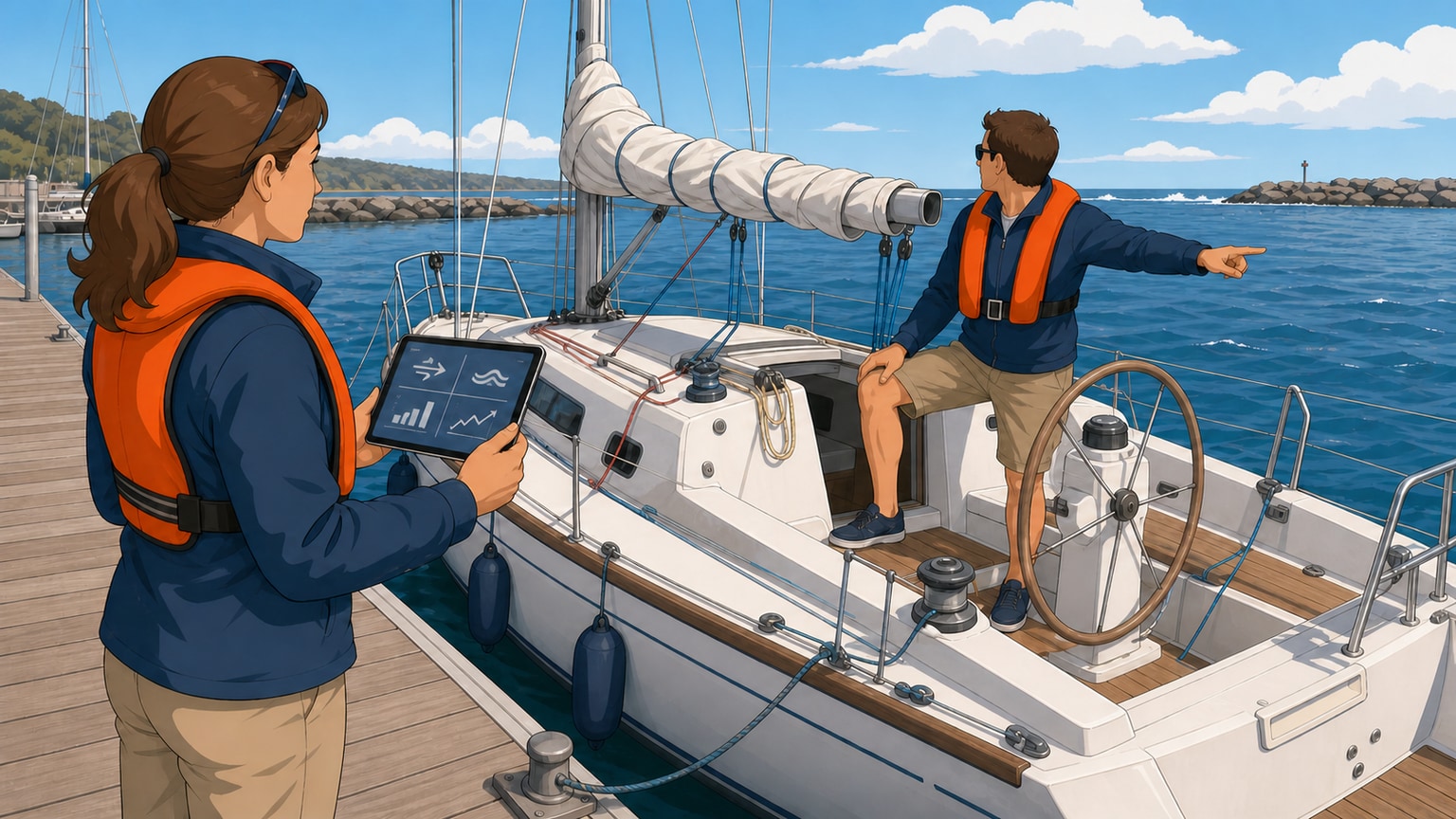
Use SailStarter's guide to the Beaufort scale for sailors to practise turning knots into visible water clues. It will help you recognise the difference between smooth wavelets, scattered whitecaps, and a steadily rougher surface, the same progression this article walks through force by force. Then take that knowledge to a local skipper or instructor and ask how their boat, sailing area, and operating limits change the decision. Compare the forecast range with the water you can see, and ask specifically about gusts, waves, shelter, and the return time.
The lesson prepares your questions; the responsible person on site makes the real-world call with current conditions in view. If you want to go deeper on reading the forecast itself, including wave height and period alongside wind, SailStarter's how to read a marine forecast covers the parts of the report this article only summarises. And once you are watching for the reef point mentioned above, SailStarter's guide to how to reef a mainsail explains the actual procedure a skipper follows to reduce sail before conditions demand it.
Verify current forecasts, warnings, and local guidance every time you sail, since neither this article nor any general source replaces the venue's own conditions decision on the day. Conservative choices keep the next practice session possible, and a beginner who stays ashore on a doubtful day is making the same judgment call a careful skipper makes.
Try it from the lesson
Can you spot the next move?
You're watching the water and spot the first few scattered whitecaps on an otherwise smooth-looking sea. What Beaufort force are you most likely already in?
Why you can trust this guide
. We build each guide from public seamanship and safety sources, then teach the universal principle before any local difference.