Chart your course
How Sailboats Sail Against the Wind
Quick answer
The short version
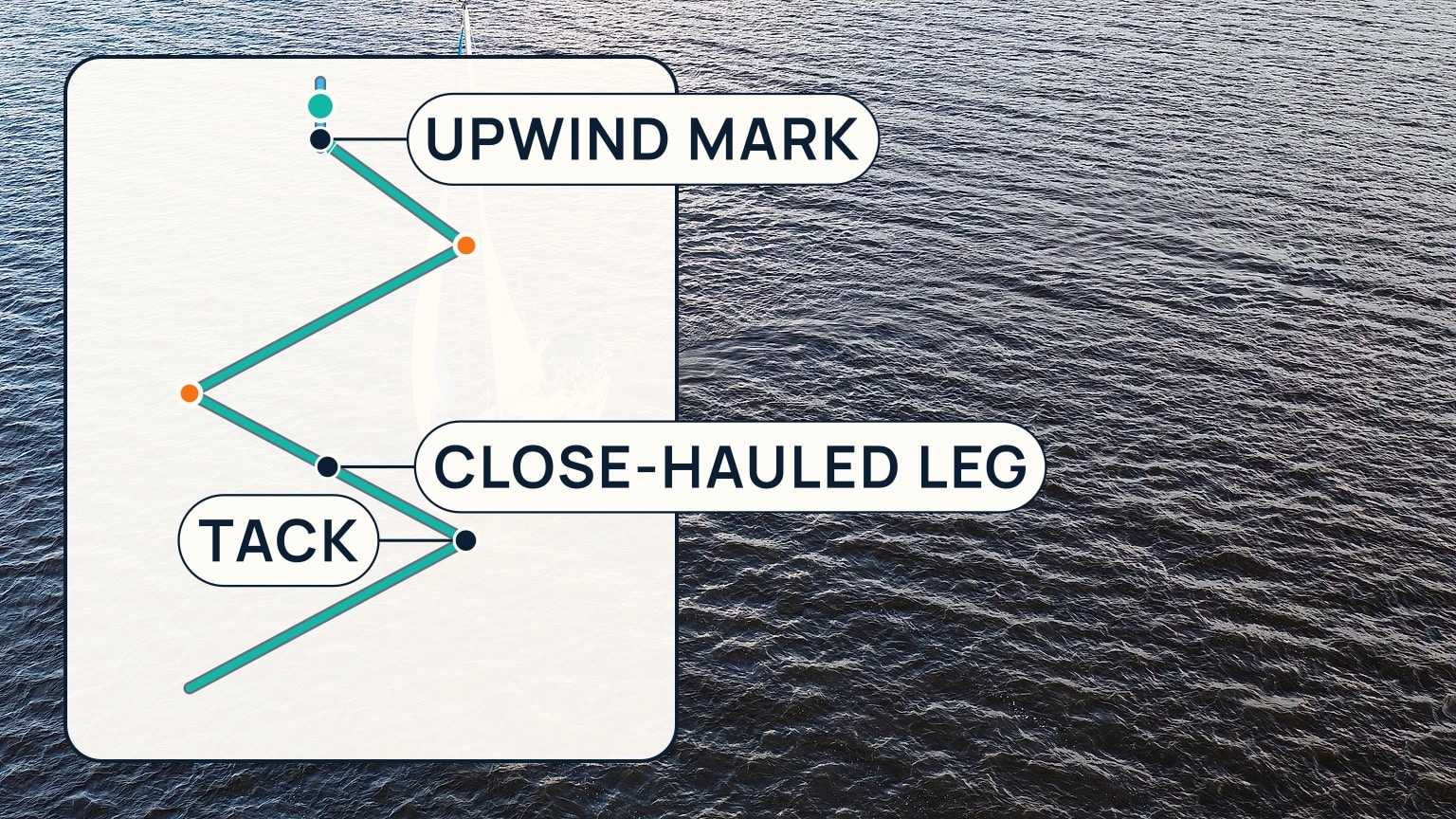
Sailboats move upwind by sailing across the wind at an angle, not by pointing straight into it. Air flowing around the curved sail creates an aerodynamic force with both forward and sideways parts. Below the water, the keel or centreboard resists much of the sideways motion. The sail and underwater foil work together, leaving useful forward drive while allowing a small amount of sideways slip called leeway. A boat can sail close-hauled on one side of the wind, tack its bow through the no-go zone, then sail close-hauled on the other side. Repeating those angled legs creates a zigzag called beating to windward. The route is longer than a straight line, but it turns a wind from ahead into steady progress toward an upwind destination.
The apparent puzzle comes from picturing wind as a hand pushing the boat from behind. Deep downwind, a sail can work partly that way. Across and upwind, it behaves more like a wing. The sail redirects moving air, the keel redirects moving water, and the forces meet through the hull. You do not need equations to understand the result. Watch the sail, the wake, and the boat's track. The bow points diagonally toward the wind, the wake shows a little slip to leeward, and the boat still gains distance upwind on every leg.
Apparent Wind Meets the Sail at an Angle
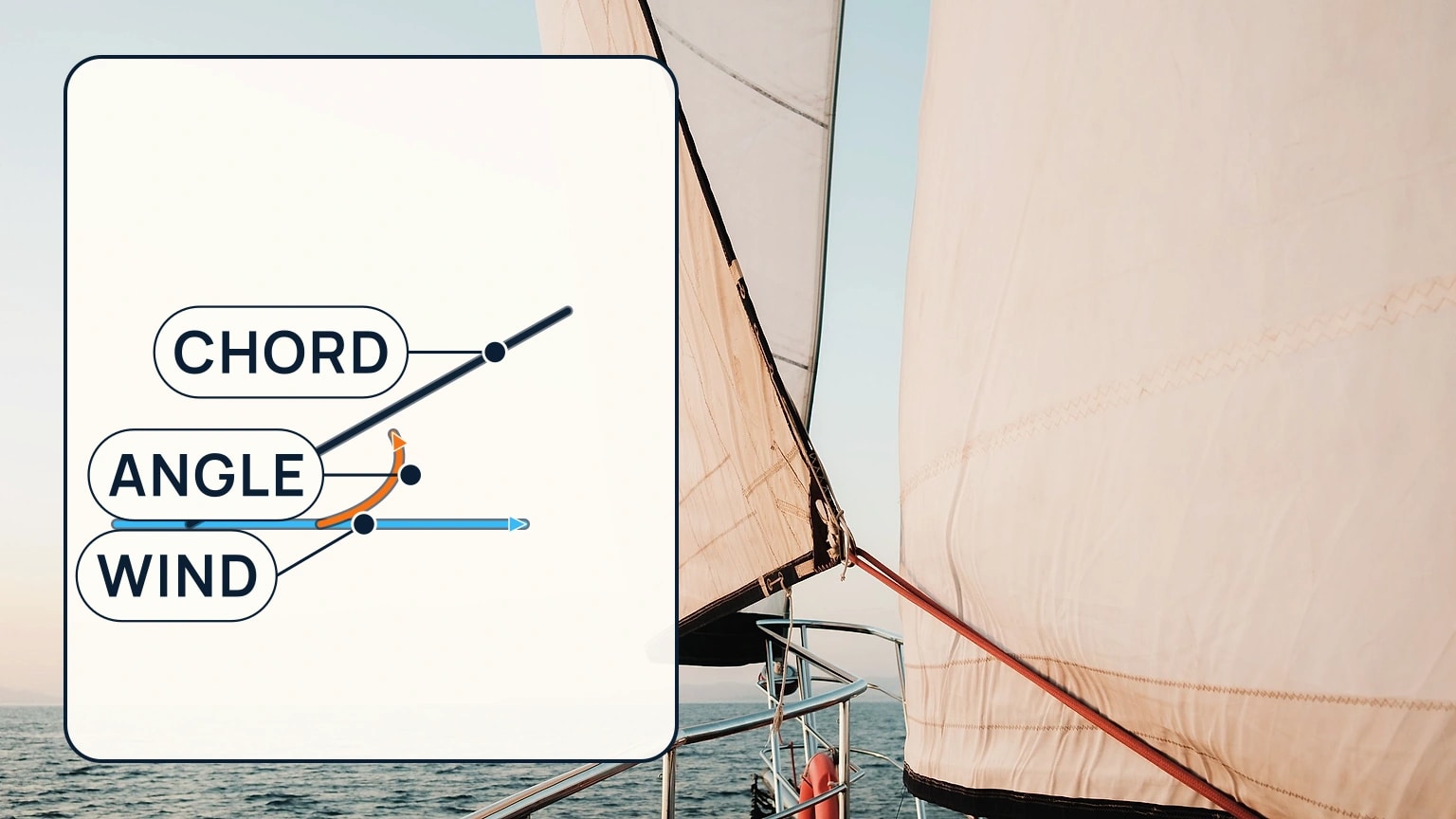
The sail works in the airflow experienced aboard, called apparent wind. It combines the true wind with the headwind created by the boat's own motion. As the boat accelerates, that experienced wind changes direction and strength, so the useful trim follows apparent wind rather than a shore-based wind reading.
For the sail to produce lift, it needs a useful angle of attack to that airflow. Too close to the wind and the sail begins to luff, with its forward edge fluttering. At an excessive angle, airflow can separate and the sail stalls even though it still looks full. Between those limits, the curved sail turns the air and develops a force roughly across its surface.
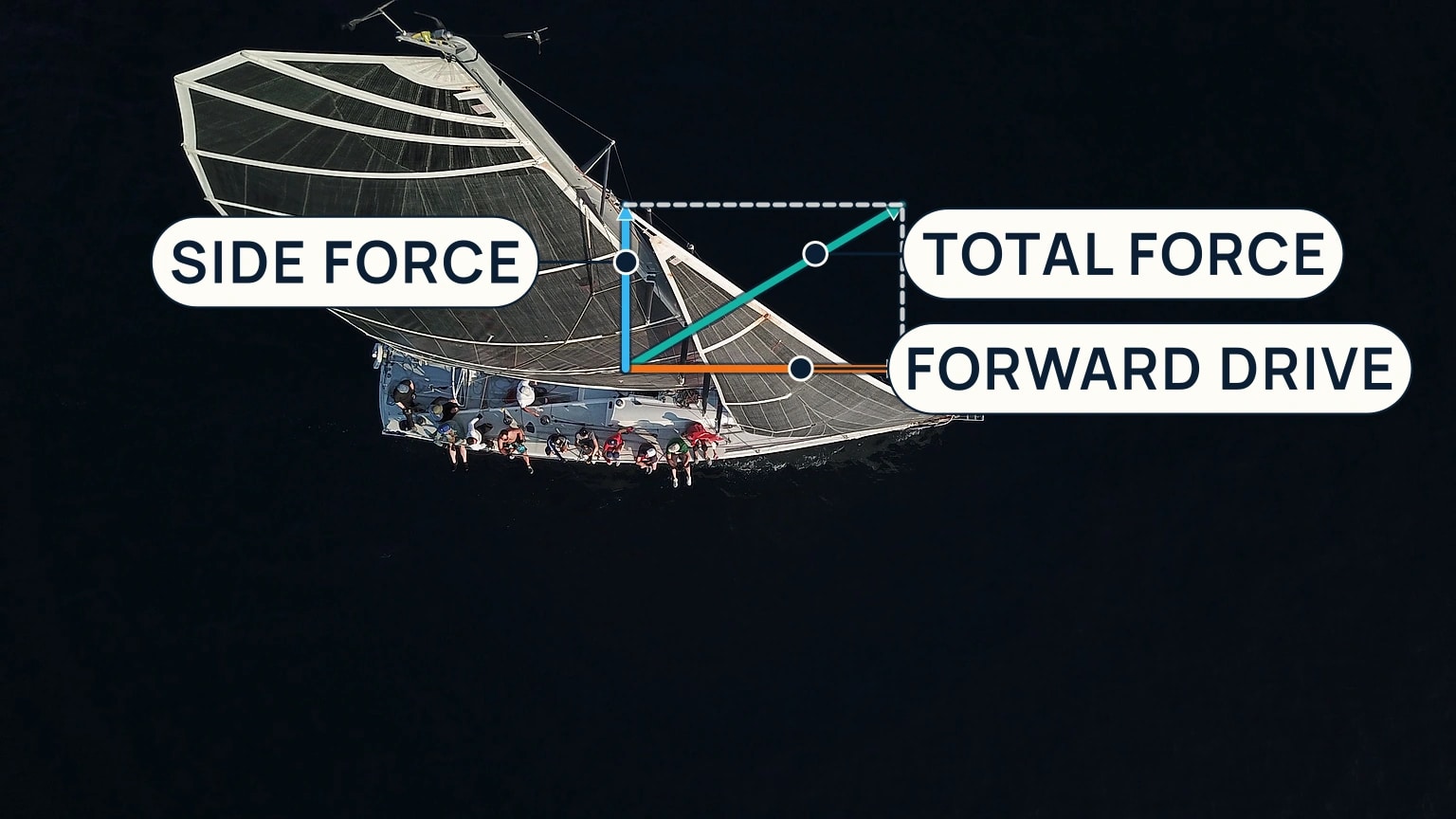
Only part of that force points forward. The rest pushes sideways and contributes to heel. That sideways part is real, which is why a sail alone cannot explain upwind motion.
Sail and Keel Share the Load
Below the water, the keel or centreboard provides lateral resistance. Many are foil-shaped, so water flowing around them creates hydrodynamic force just as air around the sail creates aerodynamic force. The underwater force opposes much of the sail's sideways push.
Connect those forces through a solid hull and forward becomes the direction in which the boat can move most readily. It is similar to squeezing a wet seed between two fingers: pressure from the sides can make it shoot forward. The boat version is controlled and continuous, with a wing in air and another foil in water.
The keel does not lock the boat onto rails. Some sideways slip remains. Sailors call that leeway. The bow may point a little higher than the track over the water, so navigation and close shoreline work must account for the difference between where the boat points and where it actually goes.
The No-Go Zone Sets the Limit
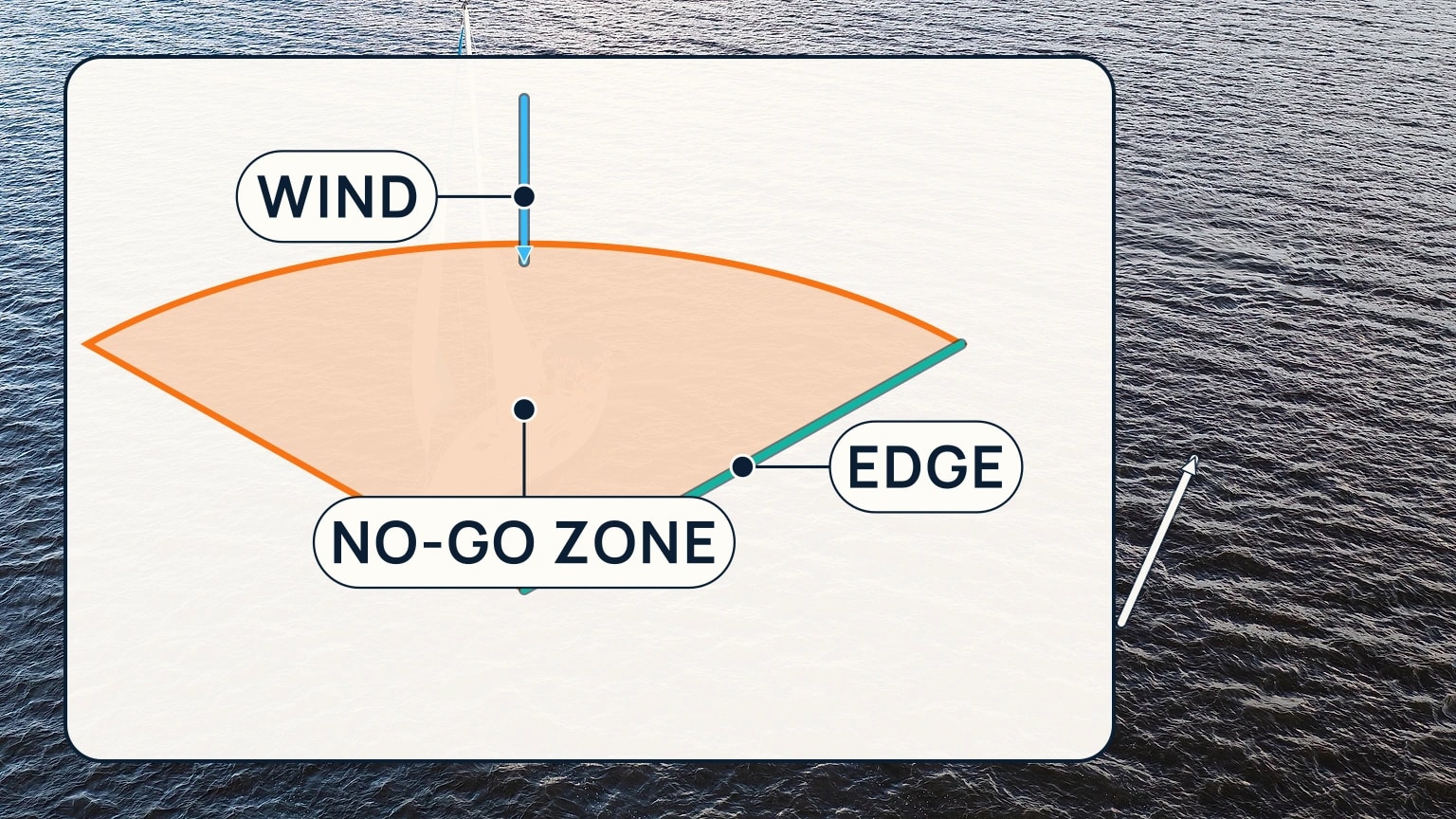
Turn the bow directly into the wind and the sails lose their working angle. They flap along the centreline, driving force fades, and the boat slows. That wedge of headings is the no-go zone. Its exact width changes with boat and sail design, trim, waves, and speed, but the principle does not change.
The nearest useful course toward the wind is close-hauled. Many teaching diagrams place it around 45 degrees from the true wind as a starting picture, not a promise for every boat. Pinching higher may feel as though you are pointing more directly at the destination, yet stalled or luffing sails can cost so much speed that your real progress worsens.
Instead, settle on a course where the sails draw cleanly and the boat carries momentum. You are giving up a few degrees of pointing to gain reliable forward motion.
Tacking Turns Angles Into Upwind Progress
One close-hauled leg eventually carries you to one side of the direct route. A tack moves the bow through the wind so the boat can use the matching close-hauled course on the other side. The sails luff briefly during the turn, then fill again on the new tack.
Viewed from above, the two courses form a zigzag toward the upwind destination. Each individual leg crosses the wind, but part of its motion also points upwind. Add the upwind parts from several legs and the boat reaches a place that lies almost directly into the breeze.
Good tacking preserves momentum through the no-go zone. Begin with useful speed, steer a smooth turn, release and trim the jib at the right moments, and settle before climbing too high again. The manoeuvre does not defeat the no-go zone. It crosses the powerless headings briefly so the boat can work on the other side.
See the difference between heading and track
The bow points along the boat's heading, but wind and water can move the boat sideways as it advances. That sideways movement is leeway. When you judge upwind progress, compare the actual track with the direction the bow points. The keel or centreboard limits sideways slip, but it does not remove it.
Choose a fixed mark upwind and watch how the bearing changes while close-hauled. Then tack and compare the new side. This makes the zigzag visible without relying on a diagram alone. Keep the exercise in suitable open water with a proper lookout and an experienced skipper when you are learning.
Find a workable close-hauled groove
Steer too high and the sails begin to luff as the boat enters the no-go zone. Bear away too far and each leg makes less direct progress toward the upwind destination. Use the sail's luff, telltales, helm feel, and boat motion to hold a repeatable angle. Small corrections are easier to read than wide S-curves.
The sails explanation covers why a trimmed sail can create force at an angle to the apparent wind. The telltales guide shows how the ribbons reveal local airflow while you search for that groove.
Plan the tack before the boundary
Look ahead for shore, depth, traffic, and the room needed to complete the turn. Brief the crew, prepare the new sheet, and choose the new course before steering through the wind. The step-by-step tacking guide covers the crew sequence.
After the tack, settle the boat before judging the result. Trim for the new side, regain a steady heading, and check whether the track serves the destination. One poor tack can be corrected. Repeated late or wandering tacks add distance and workload.
Diagnose weak upwind progress
If the boat will not hold course, check one cause at a time. A luffing sail may show that the helm is too high or the sheet too loose for the course. Excess heel and heavy weather helm may show that the boat carries too much sail for the lasting wind. A large gap between heading and track may reflect current or leeway.
Do not solve every problem by trimming harder. Restore a workable wind angle, balance the sail plan, and reduce area when conditions call for it. Upwind sailing is a chain: suitable angle, attached flow, underwater resistance, controlled tack, and a track that clears the hazards.
Once you see the paired foils and the zigzag, sailing upwind stops looking like a trick. SailStarter's lesson on how sails create power lets you explore the force split visually, followed by the no-go zone and tacking lessons that turn the physics into boat handling. Work through them before your next session, then watch for the same evidence aboard: apparent wind over the sail, leeway in the wake, the loss of drive near head-to-wind, and the new burst of speed after a clean tack. The goal is not to memorize a physics lecture. It is to recognize why a small change of heading or trim can restore the forces that carry you forward.
When planning a practice beat, choose two broad boundaries and tack before reaching either one. Ask the helm to call the new intended course before each turn. After settling, the navigator states whether the boat gained toward the mark. This links steering and sail trim with the ground track instead of judging a tack only by how quickly the sheets moved.
If one side gives much less progress, look for current, waves, wind shifts, or inconsistent steering before blaming the boat. Record the observation and compare another pair of legs.
Try it from the lesson
Can you spot the next move?
The sail's front edge flutters and the sail has little pull. Which angle problem fits?
Why you can trust this guide
. We build each guide from public seamanship and safety sources, then teach the universal principle before any local difference.