Chart your course
How to Build a Sailing Resume
Quick answer
The short version
A sailing resume is a short factual record of experience that matters to the boat and trip you want. Include dates, boat type and size, sailing area, your actual role, trip length, relevant conditions, and the tasks you performed. Put recent and closely related experience first. List training separately and use the certificate's exact name. Never turn passenger time into skippering or claim a task that you only watched.
Charter providers may ask for evidence of recent relevant experience and assess it alongside the proposed boat and destination. Skippers looking for crew also need a clear picture of what you can do without constant direction. There is no single worldwide format, so ask the recipient what information or form they require. Verify current local rules and written provider terms for the intended trip. For a first record, begin with how to log sailing experience and keep the source notes from each outing.
Record the boat and your role
Create one entry per trip or useful block of similar day sails. Start with month and year, then name the sailing area without exaggerating its scope. Add the boat's type, approximate length, and any feature that changes the work you did, such as a cruising monohull, a catamaran, or a small keelboat. If you do not know a detail, leave it out instead of guessing.
State your role in plain terms. “Crew” is a start, but the next line should say what that meant: steering under instruction, handling sheets, preparing dock lines, keeping lookout, helping reef, or taking part in a passage plan. “Skipper” should mean that you accepted responsibility for the boat and crew on that trip. If another person made the decisions while you steered, write “helm” or “crew,” not skipper.
Separate doing from observing. You might write “assisted with anchoring under the skipper's direction” or “observed harbour entry and line preparation.” Both can be useful learning, but they show different readiness. Note the help you needed when it matters. “Completed with coaching” is more credible than a confident skill list that a provider cannot reconcile with your experience.
A sample entry can be brief: “June 2026, two day sails, 9 m cruising monohull, local coastal water, crew. Helmed in open water, handled jib sheets during tacks, prepared fenders and stern line, and joined the departure briefing.” This gives the reader a boat, setting, role, and observable work.
Use verbs that expose responsibility. “Planned” means you prepared the plan; “followed” means someone else prepared it and you used it; “assisted” means the responsible person remained involved. The distinction is especially useful for docking, navigation, anchoring, and emergency drills. Add the number of people only when it explains your role, such as being the sole additional crew member rather than one person in a large training group. If an instructor signed a course log, keep that original record. Do not ask a casual sailing companion to endorse a role they did not observe.
Describe conditions honestly
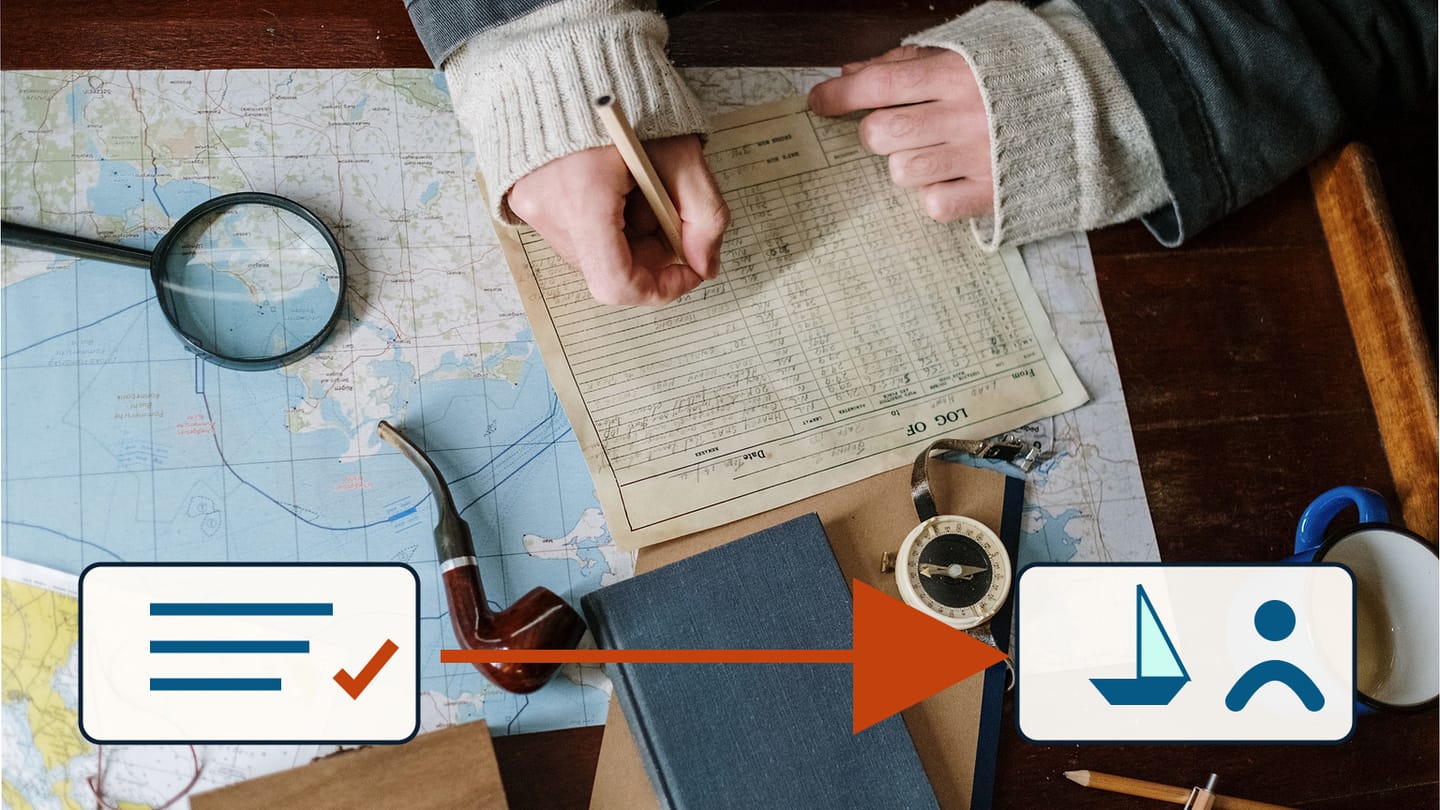
Conditions help a reader judge how closely an earlier trip resembles the proposed one. Use only what you recorded or can support. If you logged wind, sea state, visibility, current, or whether the sailing included daylight and darkness, include the details that affected your tasks. Avoid dramatic summaries such as “all weather” or “heavy seas” unless a reliable record supports the words and the description is useful to the recipient.
Give context instead of awarding yourself a difficulty grade. “Reefed with the skipper in increasing wind” tells more than “advanced conditions.” “Motored through a busy harbour while another crew member navigated” is clearer than “experienced in commercial traffic.” The first version shows the action and the division of responsibility.
Do not reconstruct precise numbers from memory months later. A broad, honest statement such as “light wind during two sheltered day sails” is preferable to invented wind speed. If you keep a log, record useful conditions soon after the boat is secure. Include what changed the plan, since adapting a short trip can be more relevant than simply collecting distance.
Match the detail to the application. A provider considering a larger coastal cruising yacht may care about recent time on a comparable boat, your role in arrivals, and experience in similar waters. A racing skipper may care more about crew position, communication, and whether you have worked in a busy cockpit. Keep the same underlying facts, then select those that answer the recipient's question.
Conditions never prove competence by themselves. A rough trip as a passenger does not outweigh a calm trip in which you handled the boat with supervision. Lead with responsibility and tasks, then use conditions to explain their setting.
Show recent relevant time
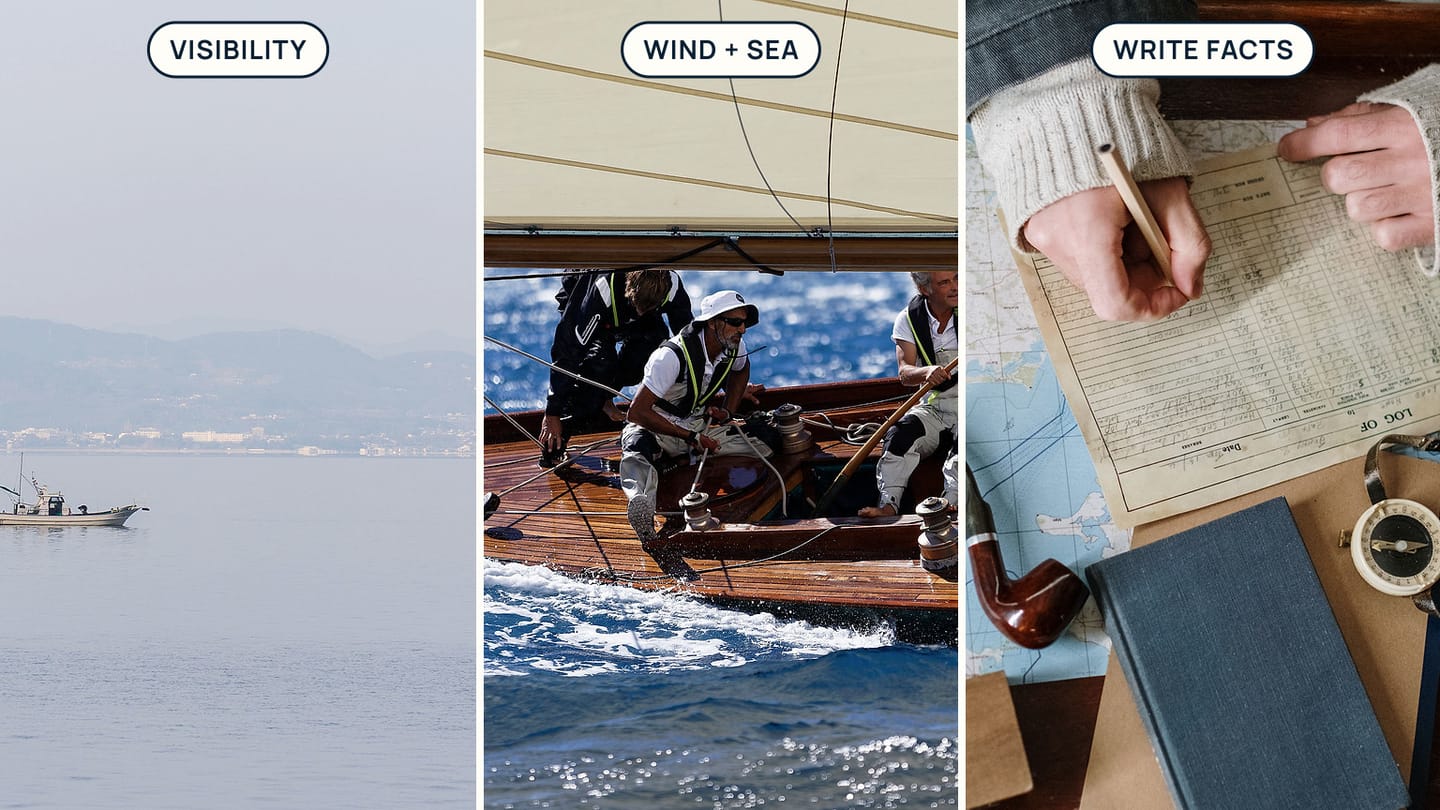
Arrange entries with the newest first. This lets a provider see quickly whether your skills have been used lately. Older trips still belong when they show substantial or directly comparable experience, but do not bury a recent season under a lifetime total. Dates make gaps visible and allow an honest conversation about a refresher.
Relevance depends on the next boat, role, and water. If you want to charter a cruising catamaran, recent command or active crew experience on cruising boats will usually explain more than old dinghy racing alone. Dinghy experience can still show sail awareness and boat handling, so include it in a separate supporting section. Let the reader see the difference rather than presenting every hour as interchangeable.
Group repeated local outings carefully. Ten club evenings may appear as one block with dates, boat class, role, and typical tasks. Keep notable trips separate when you held a different role or worked on a different type of boat. The goal is a record someone can understand, not the longest possible document.
Maintain a private full log and derive the resume from it. The log can hold contact names, exact routes, reflections, and lessons learned. The resume should contain only the facts the recipient needs. This also prevents repeated application edits from changing the underlying history.
Review gaps before applying. If the proposed trip requires work you have not done recently, say so and ask what the provider would accept: supervised practice, a checkout, additional crew, or a professional skipper. Honest placement protects your credibility and often produces a practical route forward.
Recency can be shown without inventing a universal cutoff. Divide the record into “recent relevant sailing” and “earlier experience,” then let the provider apply its own criteria. If a long break followed substantial experience, explain the restart: a refresher, several coached sails, or a return in a less demanding role. This shows how you addressed the gap. Do not hide the dates by giving only a lifetime mileage total.
Send a clear charter copy
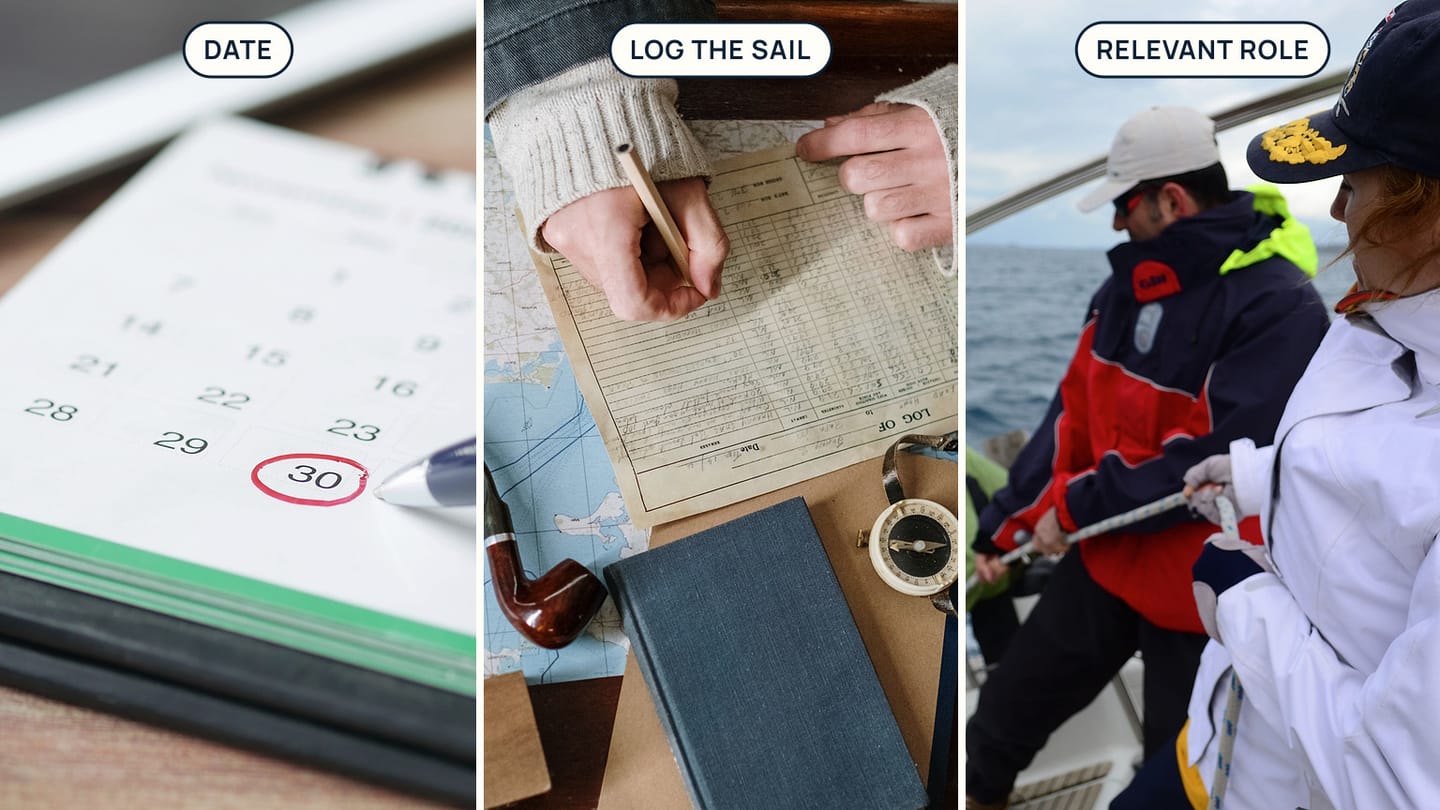
For a charter application, keep the first version easy to scan. Open with your name and the proposed trip. Follow with recent relevant experience, older supporting experience, formal training, and contact details if requested. Use consistent dates and boat units. A compact table or short entries work better than a long personal story.
Name certificates exactly as issued, with the issuing body and completion date. Do not imply that one certificate guarantees acceptance. A provider can consider its own yacht, destination, crew, and insurance or operating terms. Send copies only when requested, and make sure the resume and certificate names agree.
Tailor the introduction without rewriting history. For example: “I am applying to skipper the listed monohull with two adult crew in the stated area. My closest recent experience is below.” Then let the entries carry the evidence. If another crew member has substantial experience, describe that person separately rather than blending two resumes.
Check every claim before sending. Can you identify the trip behind it? Is the role accurate? Are the dates consistent with your log? Have you removed vague praise such as “excellent sailor” and replaced it with tasks? A provider may ask follow-up questions, so the best document is one you can explain naturally.
If the company supplies its own form, use it. Attach a separate page only when the form lacks room for relevant facts. Ask how updates should be submitted if you gain more experience before departure. Local evidence requirements and charter terms vary, so obtain the current answer directly from the provider.
Remove personal data the recipient did not request. Passport details, home address, health information, and other sensitive records do not belong in a general resume attachment. Send documents through the channel the provider specifies and confirm the correct recipient. Keep a dated copy of exactly what you submitted, plus any written response asking for a checkout or additional evidence. When you update the resume later, add new entries rather than silently rewriting old roles.

Use SailStarter to identify the seamanship topics behind your entries, then take those ideas back to supervised sailing. The beginner sailing course guide can help you choose practice that fills a real gap. After each outing, record one task you completed, one condition that shaped it, and one skill that still needed help. Those notes become a resume that grows through genuine experience.
Try it from the lesson
Can you spot the next move?
You turn to face the stern. A crewmate points at your right hand. Which side of the boat is that?
Why you can trust this guide
. We build each guide from public seamanship and safety sources, then teach the universal principle before any local difference.