Chart your course
How to Depower a Sailboat in Gusts
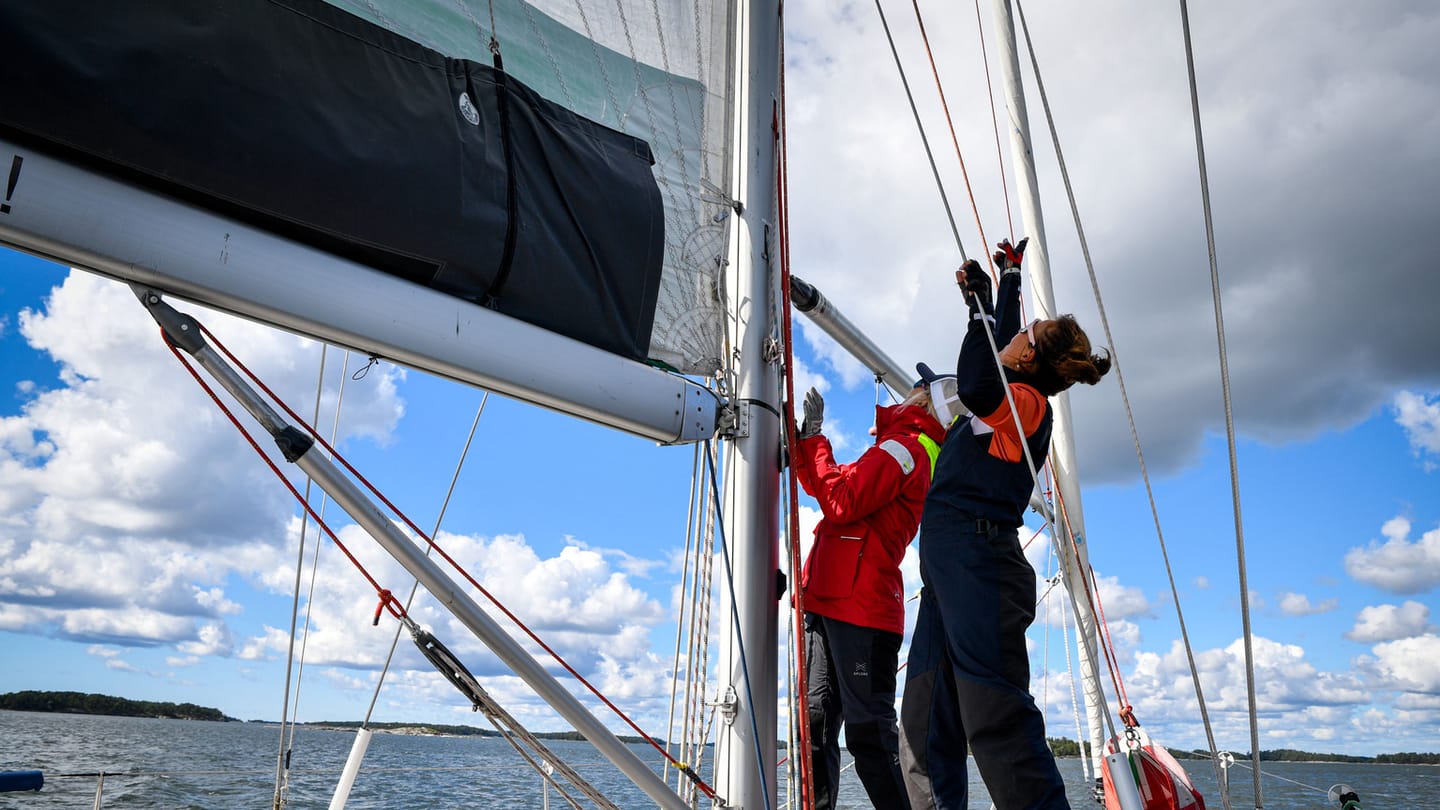
Quick answer
The short version
To depower in a gust, reduce the force the sails are making before the boat becomes hard to steer. The immediate response is often to ease the mainsheet, sometimes while bearing away a little to change the angle of apparent wind. Then re-trim once the gust has passed. That sequence works only when the boat has room, the crew knows who is handling which control, and the gust is a short change rather than the beginning of a stronger day.
Depowering is not one rope or one fixed setting. A mainsheet, traveller, vang, headsail trim, steering angle, and reef all change different parts of the problem. Start with the visible result: heel, helm load, sail shape, and the water ahead. Choose the smallest useful response, then reassess.
Recognise the gust before it loads the helm
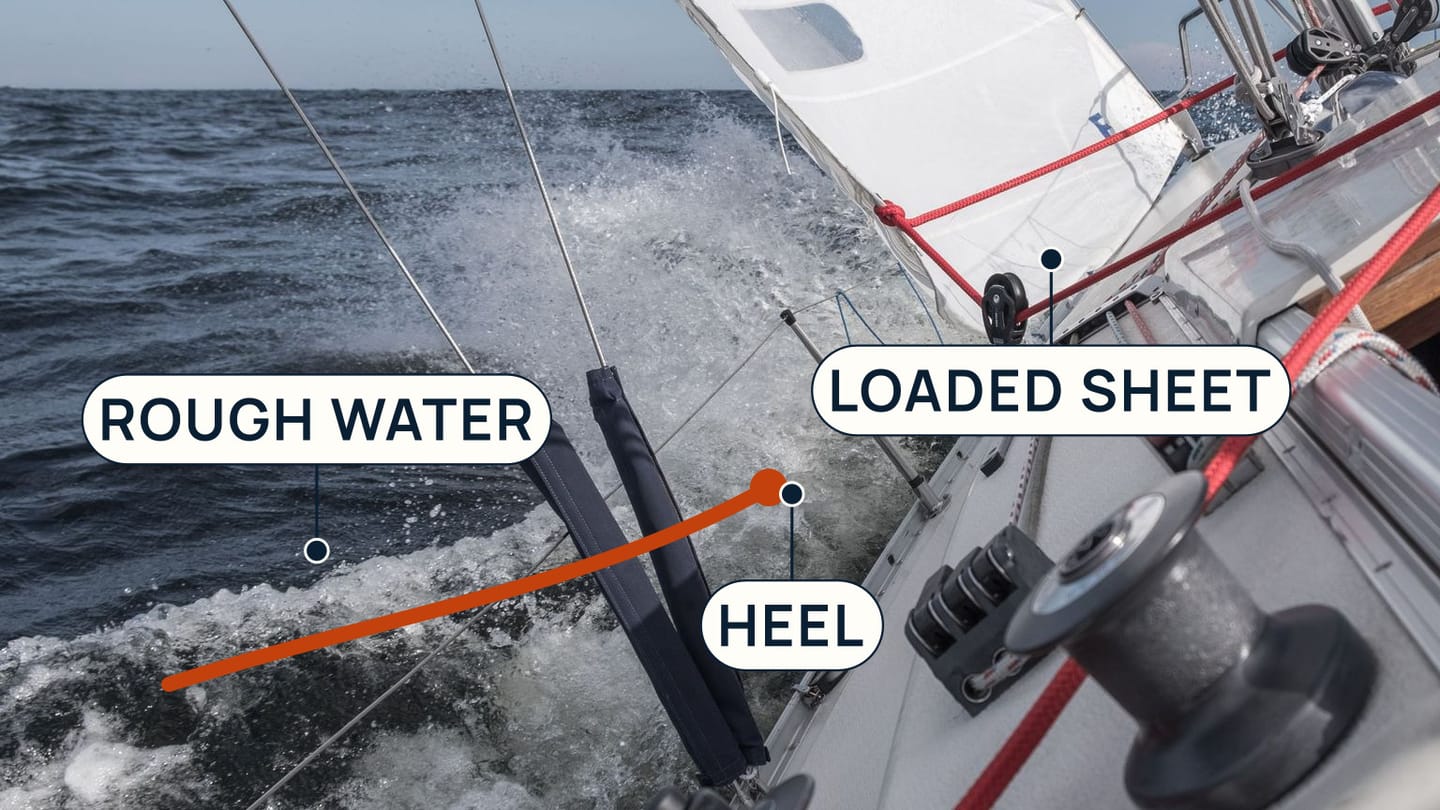
Look for gusts on the water as darker, rougher patches and feel them in the boat as a quick increase in heel or pull on the helm. A gust can arrive while the boat is already carrying a lot of power, so the first signal may be the wheel or tiller asking for more correction. If you wait until the rail is buried and the boat is rounding up, the trimmer is responding late.
The crew should agree in advance how a gust will be called. A short call such as "gust on" tells the helm to expect change and the trimmer to watch the mainsail. It is more useful than several people silently moving controls. The helm still keeps lookout and course awareness; the trimmer still keeps the sheet under control. Neither job should become an excuse to stop observing the water.
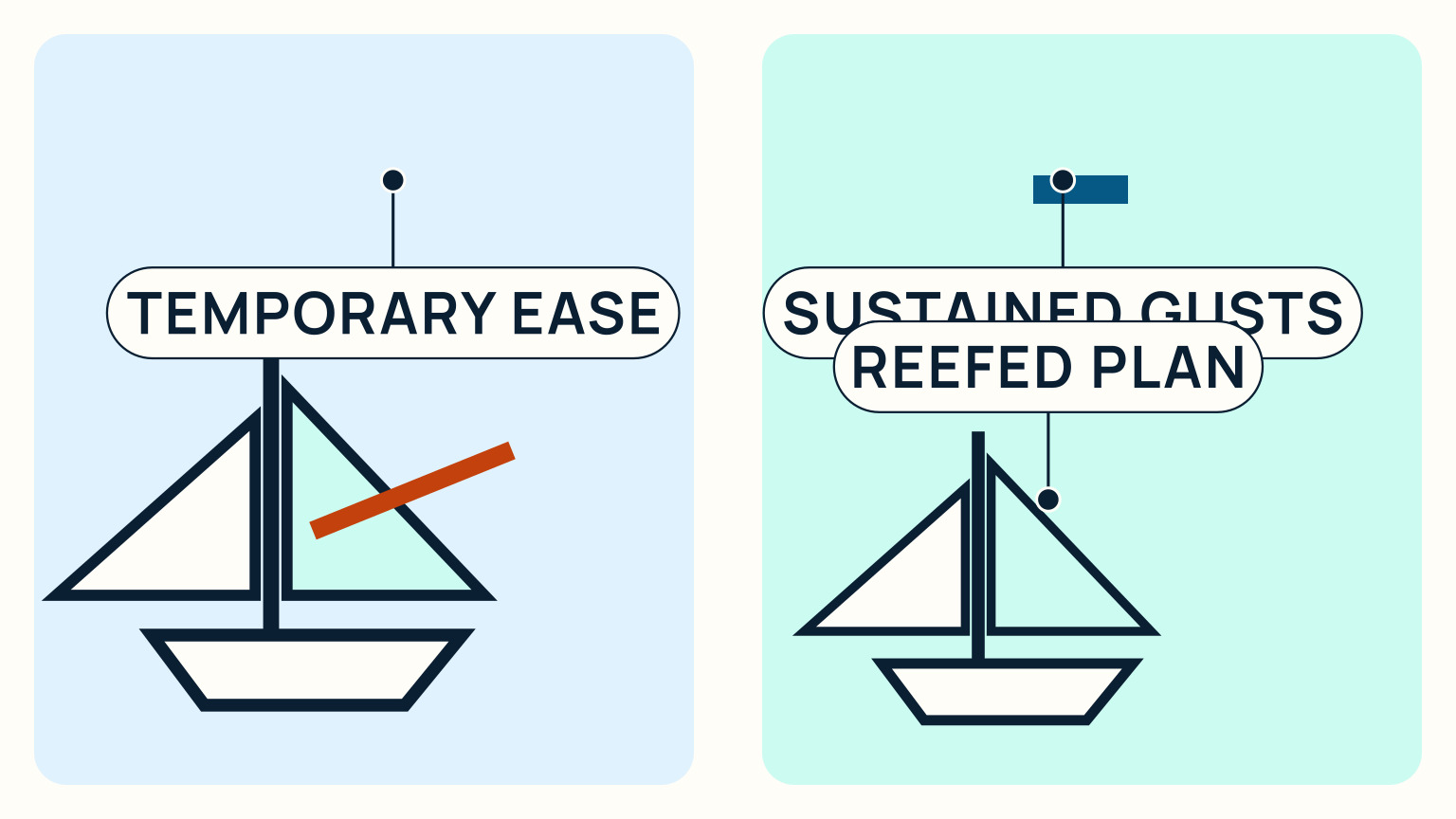
Do not treat every change in wind as a gust. A persistent increase, repeating dark patches, or a steadily heavier helm may mean the baseline wind has risen. The response then shifts from a temporary ease-and-trim routine to a sail-plan decision.
What should you ease first in a gust?
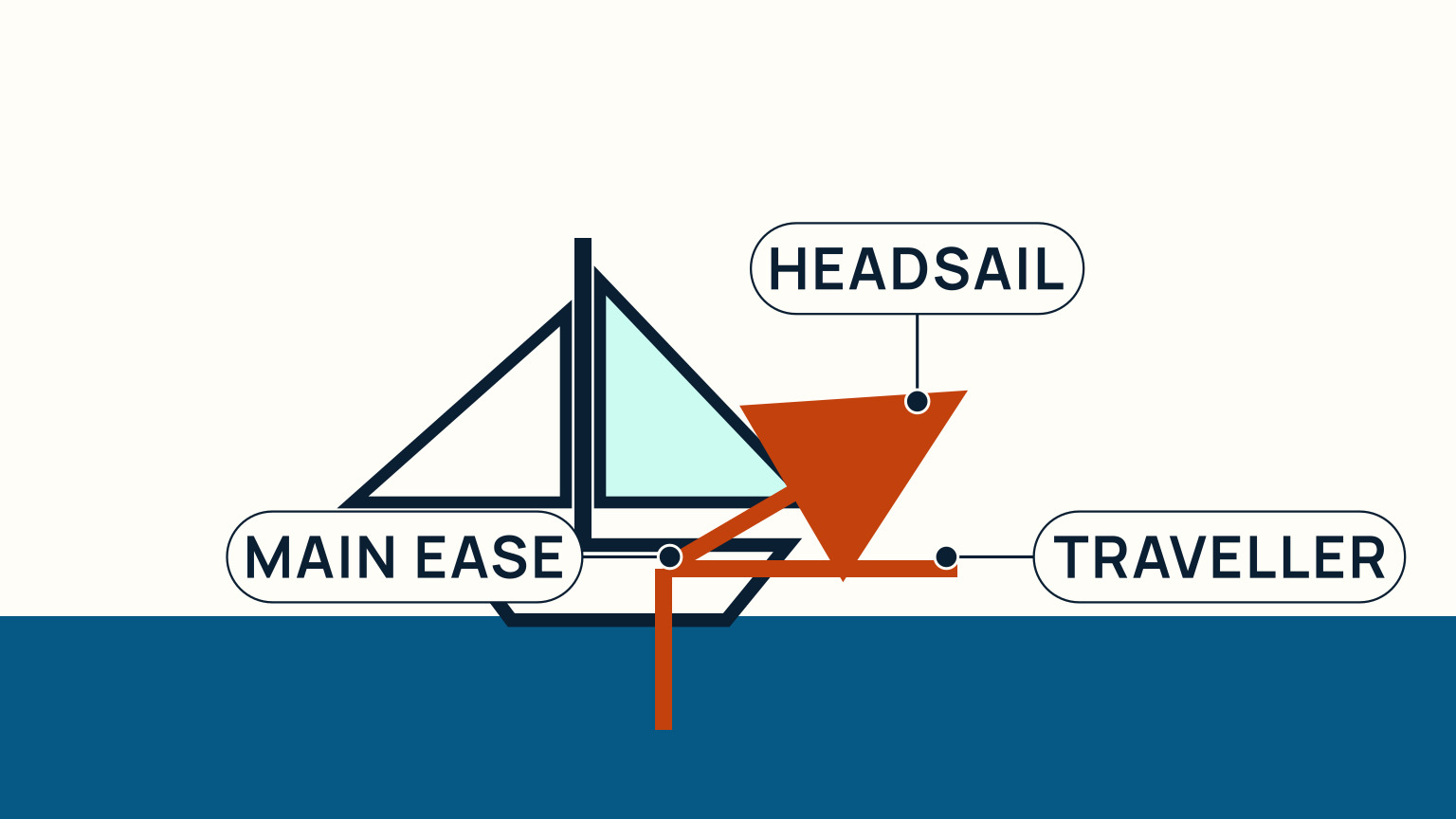
On many boats, easing the mainsheet is the quickest way to reduce the mainsail's angle and spill some force. Ease enough to let the boat stand up, not so much that the boom crashes across or the sail flogs without control. Keep hands and loose clothing clear of loaded lines and winches. The exact handling method is boat-specific, especially where a sheet runs through a cleat, clutch, or winch.
The traveller can reduce mainsail force while keeping more leech control, depending on the rig. A vang may be part of the wider sail-shape setup, but it is not usually the first line to grab during a sudden load unless that is the boat's practiced method. Each control has a job. Learn those jobs in calmer conditions so that gust response is not a guess made while the boat is already heeled.
If the headsail is the source of much of the pull, a small sheet ease or a change of course may help. Do not make every gust a simultaneous change to both sails. Watch which sail is drawing hard, make one controlled adjustment, and use the boat's reaction as evidence.
Steer for a balanced boat
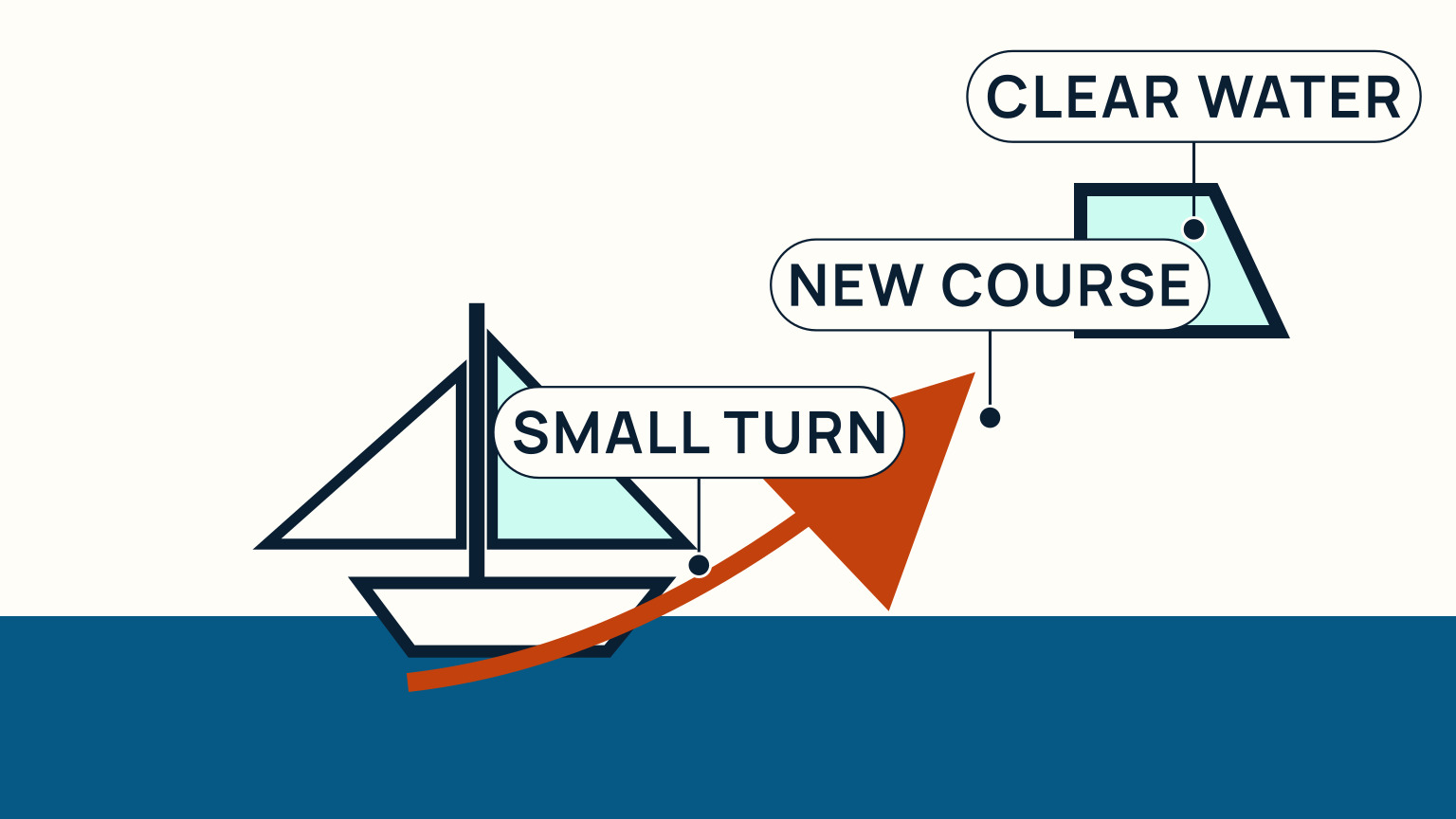
Bearing away slightly can reduce the angle between the sails and the apparent wind, depending on the point of sail. That may take pressure out of the rig and make the helm easier. It also changes the boat's track. Before steering away, confirm there is water, traffic clearance, and room for the new course. A good gust response does not solve heel by creating a navigation problem.
Avoid using a large heading change as a reflex. A boat that repeatedly turns down, then sharply heads up again, wastes distance and makes the crew work harder. Small, anticipated course changes paired with sensible sheet movement usually give a smoother result. When the gust passes, return gradually to the chosen course and re-trim only enough to regain the intended sail shape.
The helm is valuable feedback. A lighter, more neutral feel after easing shows that force has been reduced. A boat that still wants to round up may have too much sail, too much heel, or a trim issue that a few seconds of easing cannot cure. The answer is to reassess, not to hold the helm harder.
When does a gust response become a reefing decision?
Use the short response when the gust is genuinely short and the boat settles afterward. Consider reefing when the gusts repeat, the gust lulls no longer bring relief, the helm remains loaded, or the crew must keep easing the sail simply to stay upright. The question is not whether you can physically hold full sail for another minute. It is whether full sail still gives a useful, manageable boat for the route ahead.
Reef before the crew is busy with another task. Choose a course and place with enough room to reduce load on the sail, brief the jobs, and follow the boat's own reefing procedure. A reef reduces mainsail area. It can make the boat easier to steer through the next sequence of gusts and leaves more attention for lookout, navigation, and communication.
There is no universal wind number at which every boat must reef. Boat design, crew experience, sea state, and the next leg all matter. A reef taken early is often easier to shake out later than a reef delayed until the sail and lines are heavily loaded.
Reset the boat after the gust passes
Once the gust has passed, do not snap every control back to its previous position. First see whether the boat has returned to its earlier balance. Bring the mainsail in gradually until it draws cleanly. Check the headsail, heel, and helm. If the boat immediately becomes difficult again, the previous trim may no longer fit the wind you now have.
Use the interval between gusts to prepare for the next one. Tidy loose lines, confirm the traveller and sheet can move as intended, and tell the crew what you noticed. A simple observation such as "the helm stayed heavy after the last two gusts" gives the skipper a concrete reason to choose a reef or a more sheltered route.
After the sail, make a note. Which signal came first? Did the sheet ease restore balance? Was there enough room to bear away? What did the crew need to do? A short record helps turn the next gust from a surprise into a familiar sequence. It also exposes a pattern that may be hidden while everyone is busy handling the boat.
If the gust line is accompanied by rain, poor visibility, or a large wind shift, widen the decision beyond sail trim. Put on the appropriate clothing, confirm the course has room, and consider whether the next sheltered place is a better destination. Depowering is a boat-handling response. It does not turn an unsuitable weather decision into a suitable one.
The same discipline applies after a close call. If a sudden heel made someone lose their footing or a sheet ran in an unexpected way, slow down the next action. Identify why it happened while the boat is settled. A crew that has learned from one gust is less likely to be surprised by the next.
Keep the order of cause and response clear. A gust changes apparent wind and sail force; the crew observes the effect; then one control is moved with a purpose. That sequence stops the cockpit becoming a collection of simultaneous corrections. If easing the mainsail makes the helm lighter, you have learned something useful about the load. If it does not, return to the wider choice of course, sail shape, sea room, and a reef. The boat's reaction is better evidence than a routine copied from a different rig.
Before returning to harbour, reset the controls only after checking the final approach. A gust response that was right in open water may be unsuitable for a narrow entrance or crowded mooring field. The skipper chooses the final sail plan from the conditions at that point, not from the setting that worked an hour earlier.
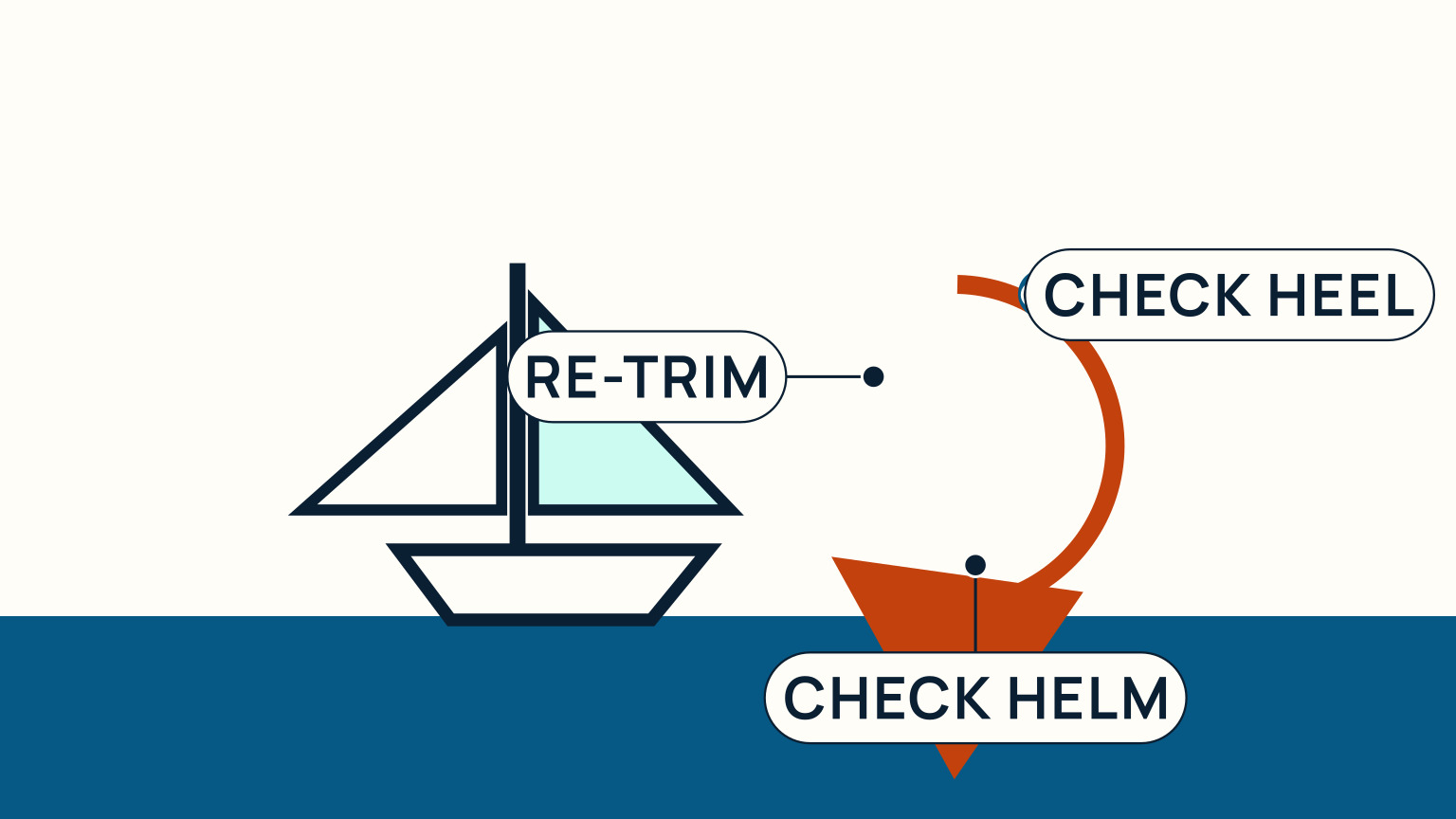
Practise this in moderate conditions with an experienced skipper, then connect it to the reefing guide, the vang, mainsheet, and traveller guide, and weather helm explained. SailStarter can help you learn what each control changes. On the water, the goal is a balanced boat that gives the crew time to see the next gust coming.
Try it from the lesson
Can you spot the next move?
You are about to load a sheet. Which way do you wrap it when looking down at the drum?
Why you can trust this guide
. We build each guide from public seamanship and safety sources, then teach the universal principle before any local difference.