Chart your course
How to Stop Mainsail Leech Flutter

Quick answer
The short version
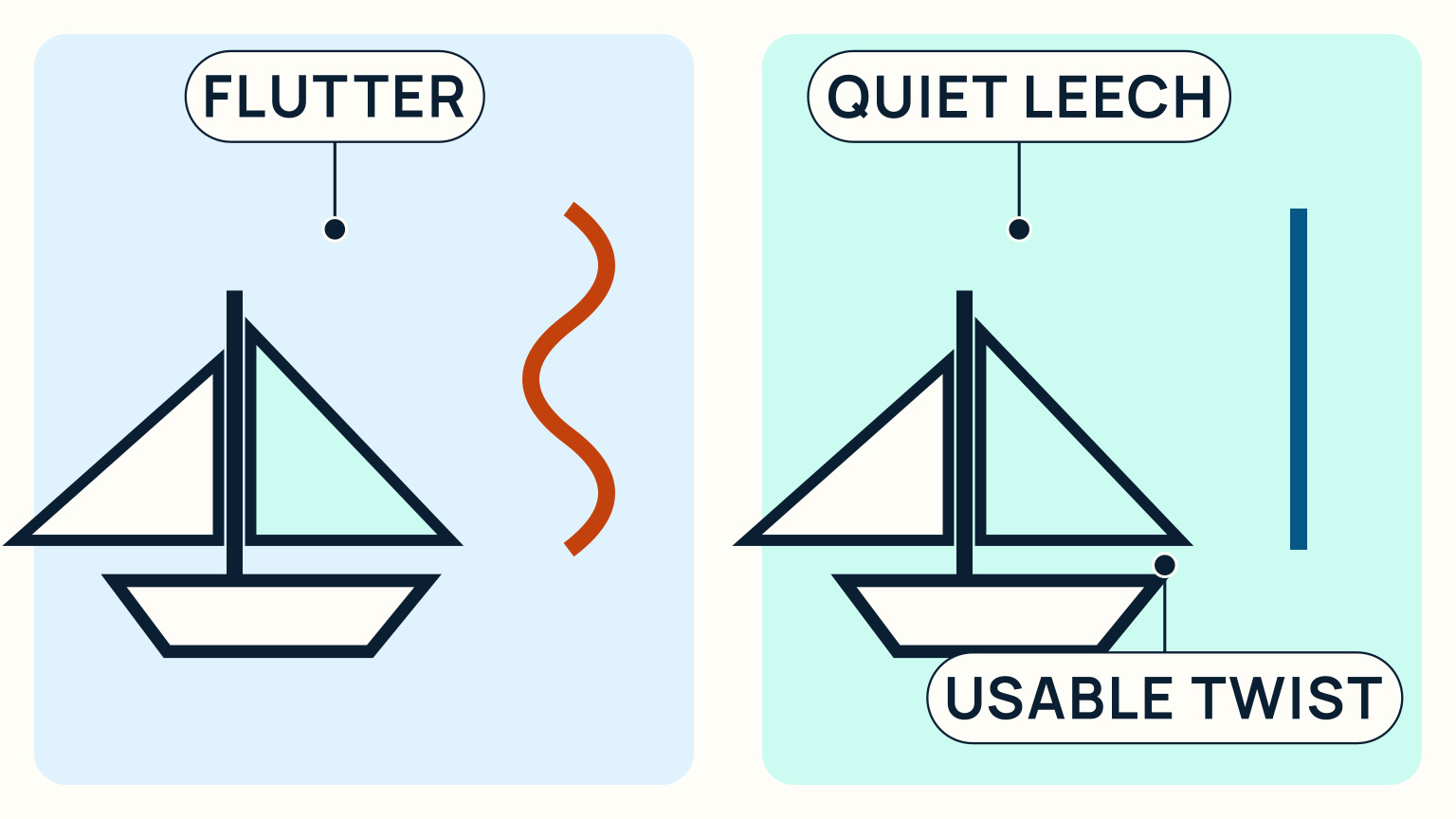
Mainsail leech flutter is a rapid movement at the sail's trailing edge. Start by looking at that edge rather than hauling on the first rope within reach. Flutter can appear when the sail is eased, when its upper section twists open, or when the trailing edge lacks enough tension for the airflow and course. It can also point to a sail or rigging issue that trim alone will not solve.
The first aim is a quiet, controlled leech with the amount of twist that suits the course. You are not trying to make every inch of cloth rigid. A mainsail needs different shapes upwind and on a reach. The question is whether the trailing edge is flapping repeatedly enough to disturb the sail or chafe its own material.
Locate the movement before changing anything
Watch the leech from the clew upward. The clew is the lower aft corner; the leech runs from there to the head. Notice whether the flutter begins low down, halfway up, or near the top. A brief flick as the boat rolls in a wave is different from a whole section snapping every few seconds in steady wind. The location helps you choose the control that has the most direct effect.
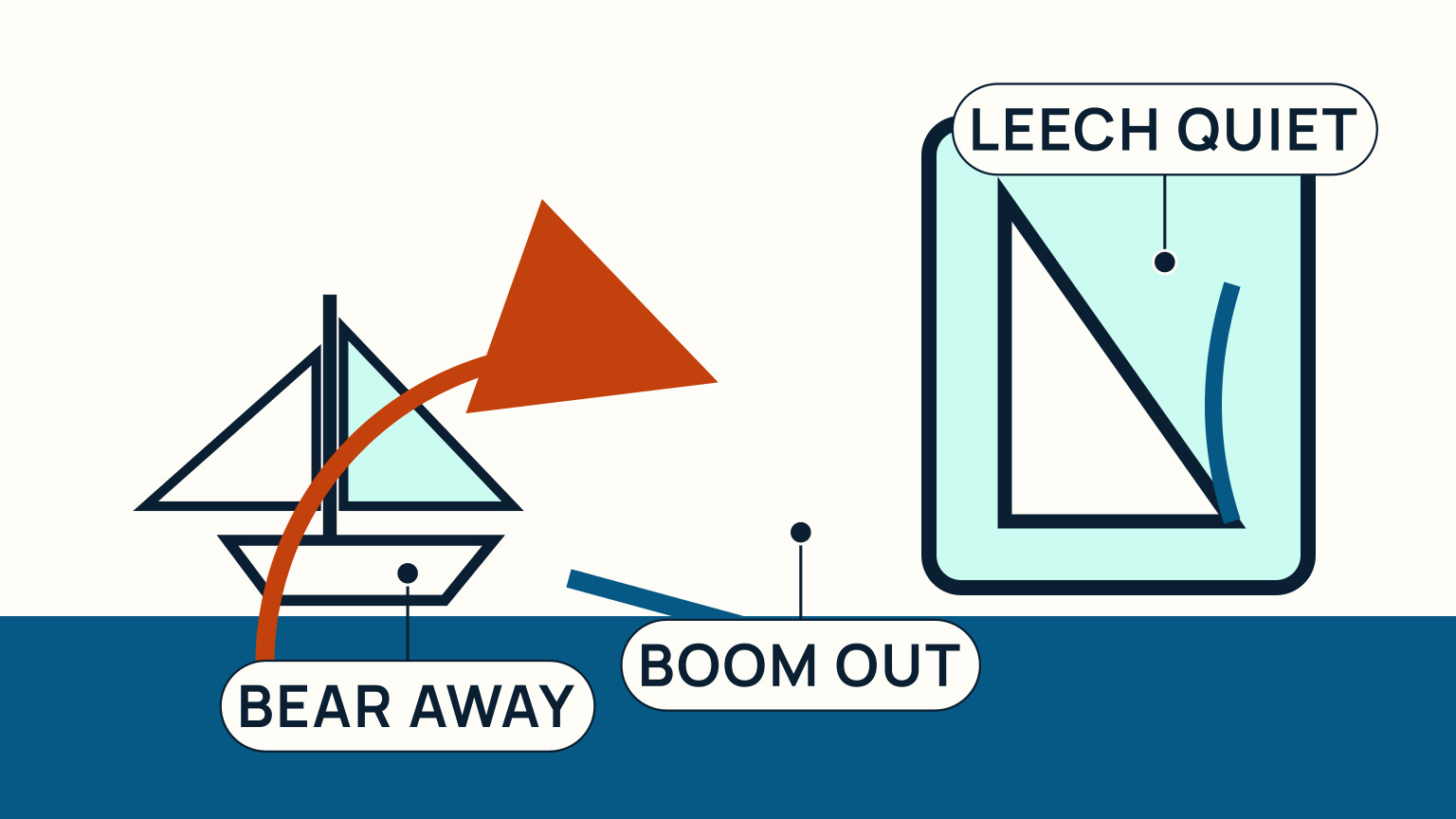
Also look at the course and the apparent wind. A sail that is comfortably filled close-hauled can look very different once the boat bears away. As the sheet is eased, the boom moves out and the upper sail may twist. That can be useful for airflow. It becomes a problem when the edge is no longer controlled enough for the sail's condition and the wind it is meeting.
Do not diagnose from inside the cockpit alone. Ask another crew member to watch from a safe position or take a moment to look along the boom. Keep the helm and lookout covered. The person watching should describe what they see, not simply say the sail looks bad: “the top third is flicking,” or “the flutter starts beside the batten.”

Which control reaches that part of the sail?
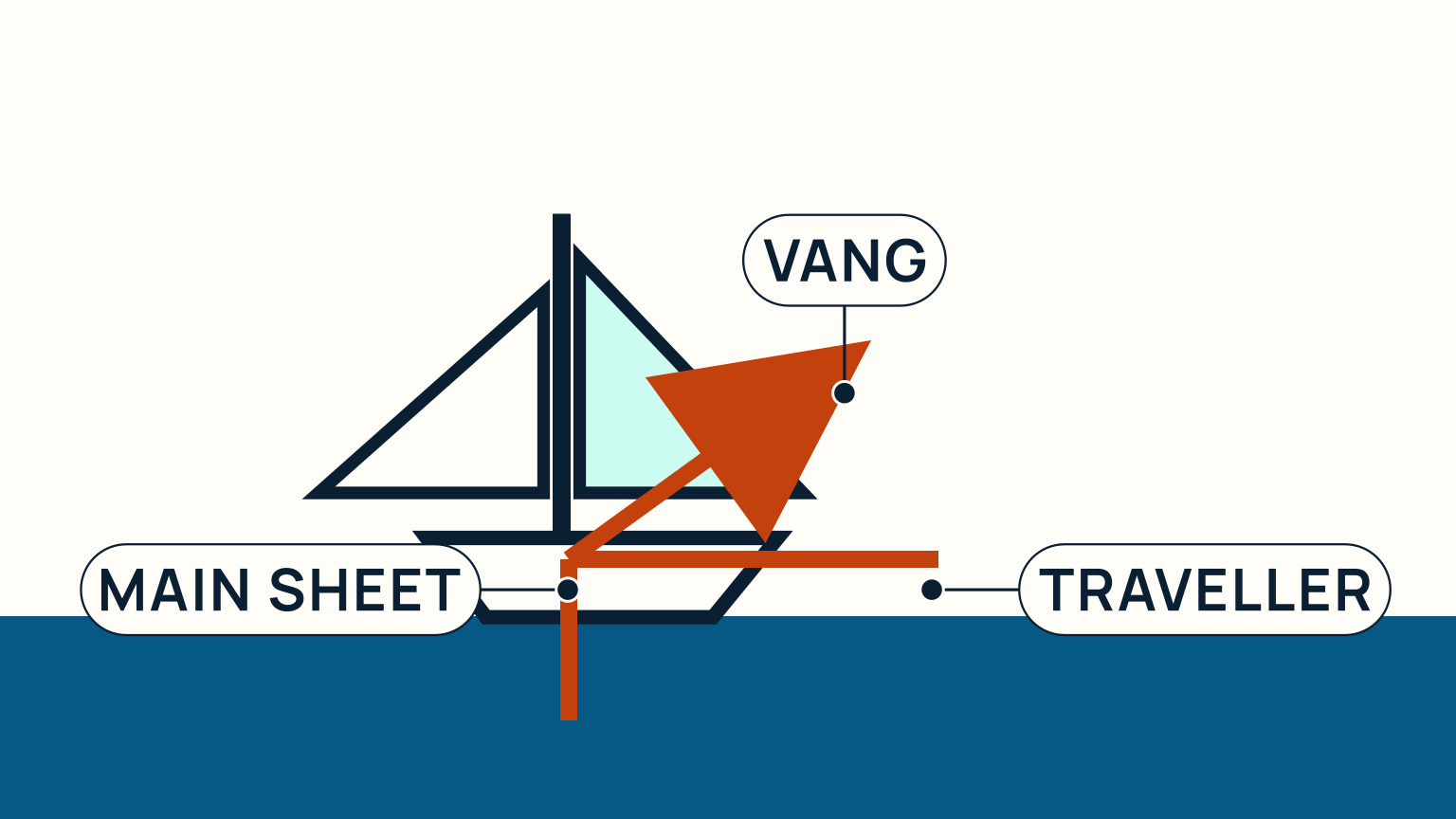
The mainsheet changes boom position and, depending on the rig, contributes to leech tension. The vang pulls down on the boom when the sheet is eased and can limit unwanted twist. A traveller changes the boom's sideways position without necessarily adding as much downward pull. Outhaul, halyard, and other controls shape different parts of the sail. Their exact effect depends on the boat's rig and setup, so learn your controls from the boat manual and an experienced skipper.
Use that map of jobs before making a change. If the boom is eased on a reach and the upper leech is fluttering, a carefully increased vang setting may provide the missing support. If the boat is close-hauled and the whole sail is over-eased, sheeting or traveller position may be the more relevant question. Do not pull the vang hard simply because flutter exists. Too much downward load can close the leech, overload equipment, and produce a different trim problem.
Make one modest adjustment, then look again. A useful adjustment changes the visible edge. If the flutter remains exactly the same, return the control to a sensible setting and consider another cause. This prevents a common cycle in which several controls are tightened until the sail is quiet for the wrong reason.
Work in small changes and read the result
Settle on a steady course before testing. In gusty wind, wait long enough to distinguish the effect of the gust from the effect of the control. Ease or trim in a small amount, count a few breaths, and watch the same part of the leech. Then decide whether the edge has become calmer while the sail still has a workable shape.
The sail should remain a sail, not a flat panel pulled tight against every flutter. Upwind, too much leech tension can make the upper section hook to windward and spoil the airflow. Off the wind, some twist may be appropriate, but a loose edge that flaps continuously deserves attention. The middle ground comes from looking at the whole sail: luff, telltales if fitted, draft, boom angle, heel, and the trailing edge.
Use the helm as a second check. If the boat suddenly heels harder, rounds up, or feels heavy after a trim adjustment, the change may have added force without solving the underlying problem. Ease back to a controlled setting. Sail trim works with steering and balance; it is not a separate task done only by staring at cloth.
Could the sail need attention ashore?
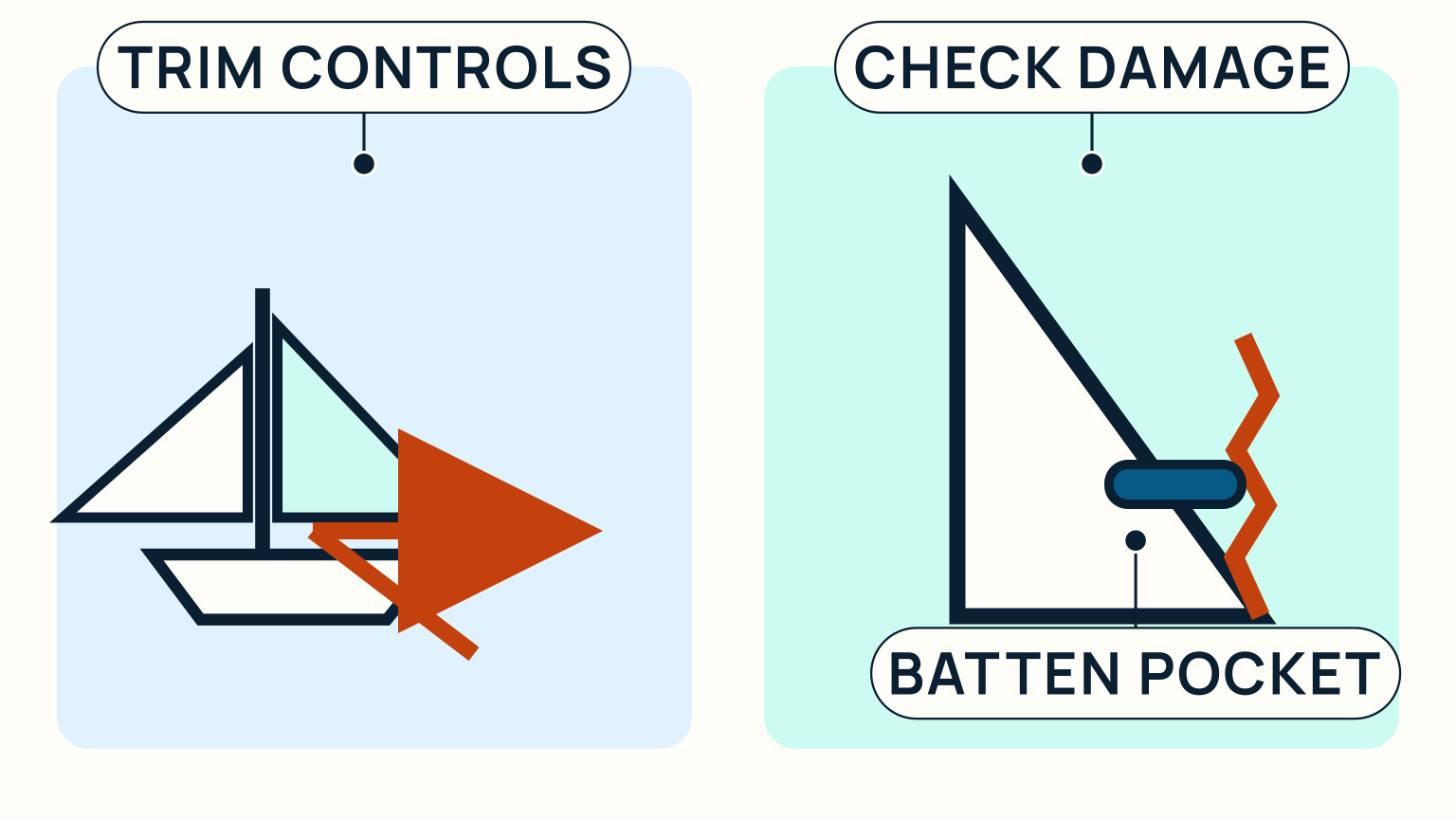
If the leech flutters at a normal trim across several outings, inspect the sail rather than endlessly changing settings. Look for worn stitching, a damaged leech cord, loose batten hardware, chafe, or a section that no longer holds its designed shape. A sailmaker can assess cloth and stitching; a rigger can assess related hardware and controls. These are not jobs to guess at from one photograph or a generic trim chart.
Leech cords deserve careful handling. Some sails have a cord sewn into the trailing edge that can be adjusted to reduce flutter. The method and the amount of adjustment are sail-specific. Pulling it excessively can pucker the edge and change the shape. If you do not know whether your sail has one, ask a sailmaker or check the sail's own documentation before working on it.
Repeated flutter is worth noting because it can wear the edge over time. That does not mean every short flap is an emergency. It means you should separate a passing wind change from a recurring condition that needs a maintenance record. Write down the course, wind feel, controls used, and where the movement began. Good observations make a sailmaker's inspection more useful.
At the dock, run a hand near the edge without pulling the sail into a new shape. Look for a leech cord exit, loose thread ends, or batten pockets that have started to chafe. Photograph a defect with a familiar object beside it for scale, then keep that image with the date and the sail's location aboard. This is useful evidence for a professional, and it prevents a crew from relying on a memory that changes after several sails.
If a sailmaker recommends a repair or adjustment, ask what visible symptom it addresses and how to check it under sail afterward. That gives you a fair test on the water: same approximate course, one change at a time, and a clear view of the same section of leech. Repair work is easier to assess when the original observation was specific.
Check again when the course changes
After you stop the flutter, keep watching when you bear away, head up, reef, or ease the sail for a different leg. The same settings rarely fit every point of sail. A change in apparent wind changes the shape the sail needs, and the leech may become active again as the boom moves. Revisiting the edge is normal sailing, not proof that the earlier adjustment failed.
Build the observation into a simple routine. When the course changes, look up. When the sheet is eased, look up. When the boat begins to feel different, look up. That short habit catches flutter while it is still a small trim question, before it becomes a noisy distraction or a sail-care concern.
If the boat has a new crew member, explain which control they are allowed to move and which should be left to the skipper. A loaded vang or mainsheet can be hazardous if released or adjusted without a plan. Clear calls and one person coordinating the change protect both the sail and the people handling it.
Use the same watching position whenever you test a change. Flutter near the head can be hard to judge from beneath the boom, while a view along the leech makes repeated movement easier to spot. If a crew member is reporting the symptom, ask them to keep describing the same section while the trimmer changes one control. That gives the result a clear before-and-after reference. A vague report that the sail is quieter can hide a new hook, a changed heel angle, or flutter that has simply moved higher.
If you are unsure which line is loaded, pause and identify it before touching it. The boat can sail for another minute with a visible leech. A sudden, unplanned release may create a much larger problem than the flutter you were trying to cure.
Use the sail-flapping guide, sail twist and draft explained, and the vang, mainsheet, and traveller guide to learn the separate controls. SailStarter can help you recognise their jobs. On the boat, make one calm change, read the trailing edge, and seek sailmaker advice when the cloth or stitching looks like the real source of the problem.
Try it from the lesson
Can you spot the next move?
You are about to load a sheet. Which way do you wrap it when looking down at the drum?
Why you can trust this guide
. We build each guide from public seamanship and safety sources, then teach the universal principle before any local difference.