Chart your course
How to Jibe a Sailboat Under Control
Quick answer
The short version
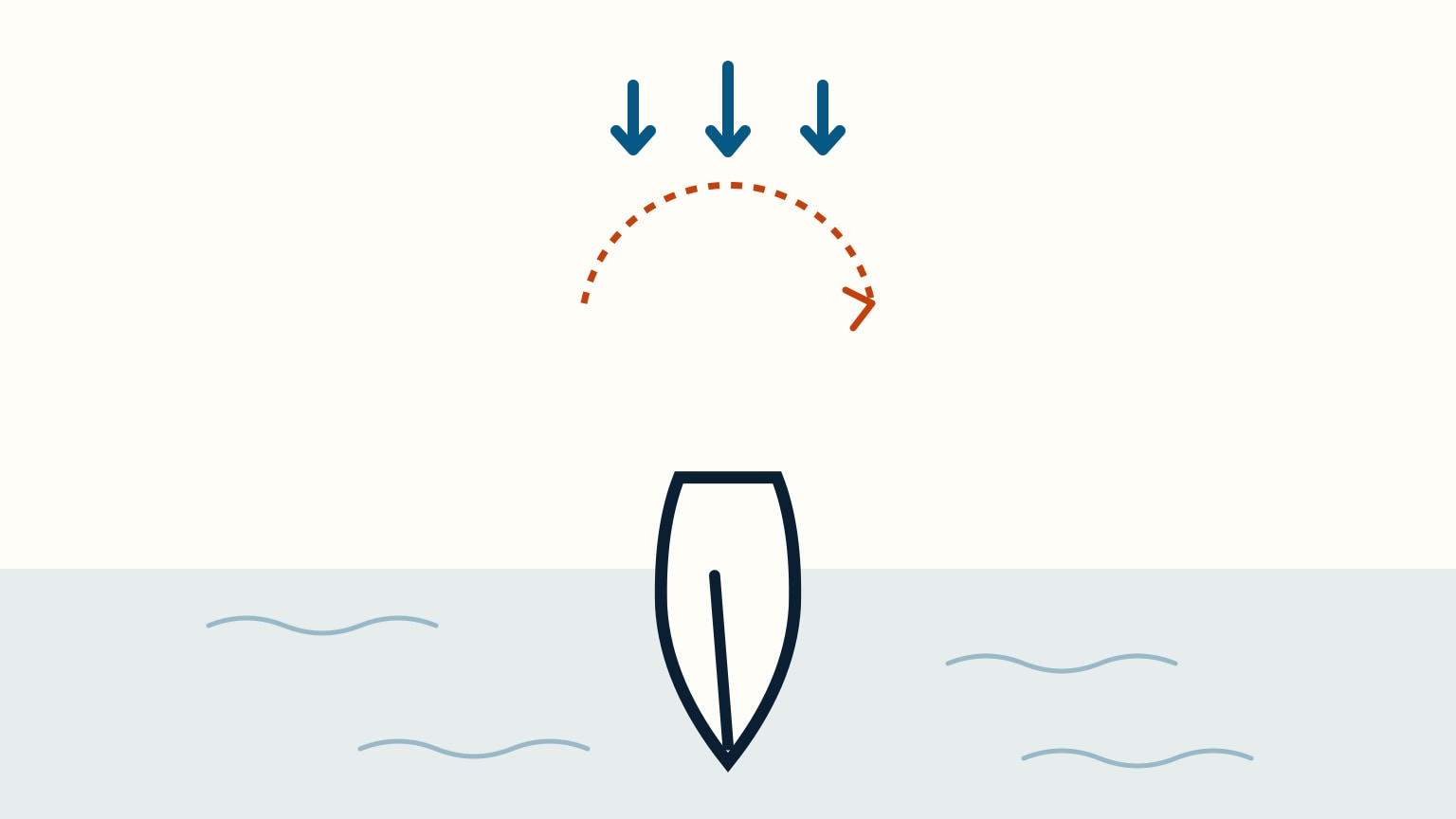
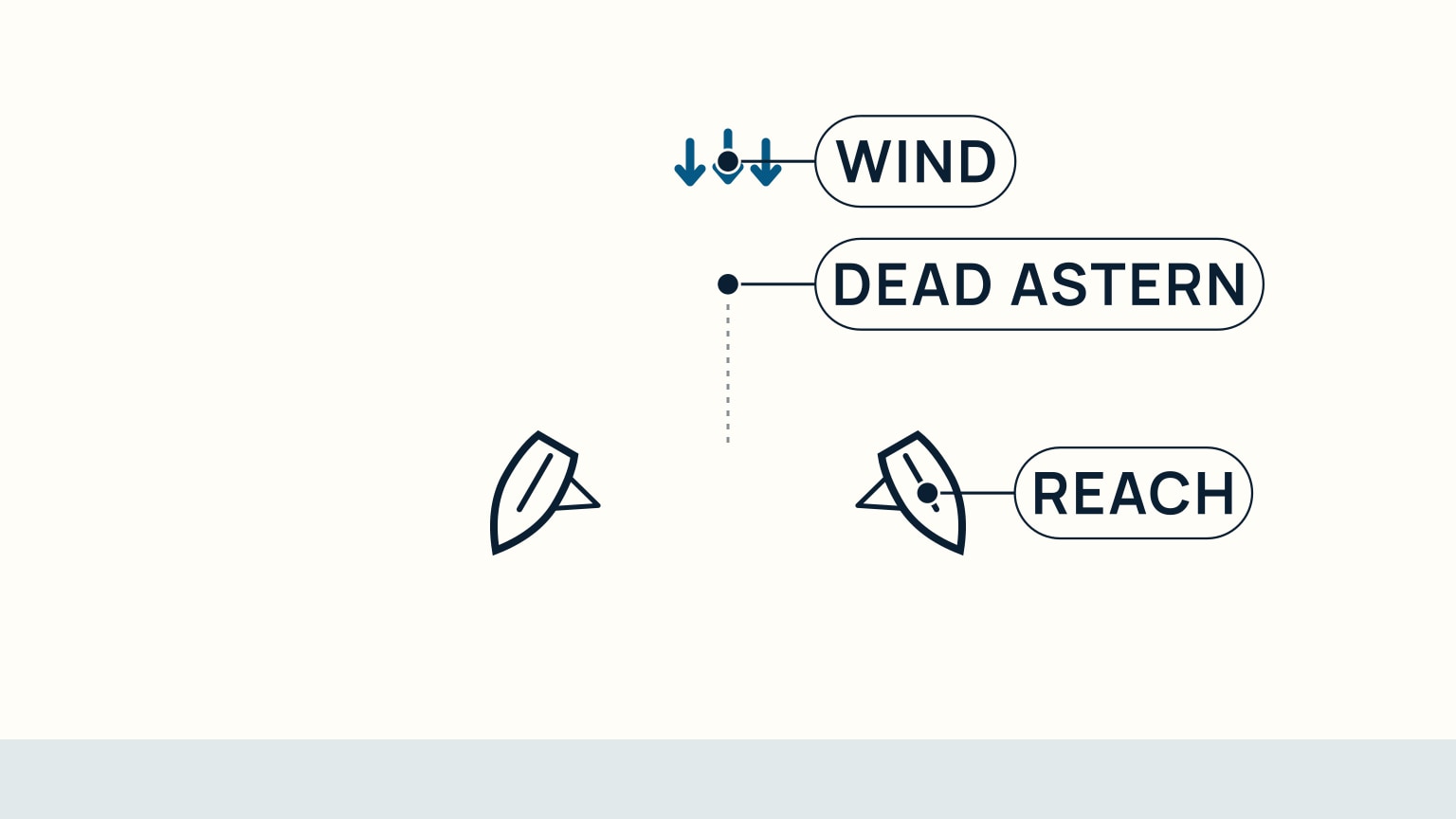
To jibe a sailboat under control, start from a broad reach or dead run (downwind, wind behind you), then warn your crew ("stand by to jibe" or your boat's own version) so everyone can clear the boom's path before you turn. As the helm bears away, sheet the mainsail in toward the centerline; that shortens the arc the boom has to swing once the wind crosses sides. Steer the stern through the wind, a jibe's counterpart to a tack's bow-through-the-wind turn. Once the sail has filled on the new side, ease the mainsheet back out smoothly to match your new course, and trim the jib to match it. Do it in that order (sheet in, turn, ease out) and the boom crosses on your terms instead of on its own.
A jibe (gybe, if you learned to sail somewhere that spells it the British way) is how you change which side the wind is on while sailing downwind, the counterpart to a tack, which does the same job upwind. The two maneuvers share a goal but not a feel: a tack crosses an unpowered gap, while a jibe never lets go of the wind at all, so the boom can move fast the instant it switches sides. That doesn't mean you should avoid jibing. It means doing it in a specific order, every time: warn the crew, clear the boom, sheet in, turn, and ease back out, so the moment the wind crosses feels controlled instead of sudden.
Know a Jibe from a Tack
A jibe turns your boat's stern through the wind, on the downwind side of the boat, to swap which side the wind is on. A tack does the identical job from the other end (turning the bow through the wind, upwind), which you may already know from tacking. Same result either way: the wind ends up on the opposite side. Very different ride getting there.
The part that matters most: a tack crosses the no-go zone, where the sails briefly go slack and empty of drive, so the boom just drifts across because no wind pressure is pushing on it. A jibe never leaves powered sailing. The wind stays on the sail the entire way through the turn, right up until the instant it switches sides, and an unsheeted boom can slam across fast and hard when it does.
That fast crossing is why a controlled sequence exists, and it's worth knowing exactly what it protects against. Left uncontrolled, a jibing boom can put enough sudden load into the rigging to break the boom itself or a piece of standing rigging, and in a hard enough case even bring the mast down. The crossing also throws the boat's heel over to the opposite side in an instant and can swing the bow off your intended course at the same moment, so you're managing a rigging load, a heel change and a course change all at once if nobody has planned for it. None of that is a reason to treat jibing as a big deal. It's the reason a controlled sequence puts that crossing on your terms instead of the wind's.
Call the Jibe and Clear the Boom's Path
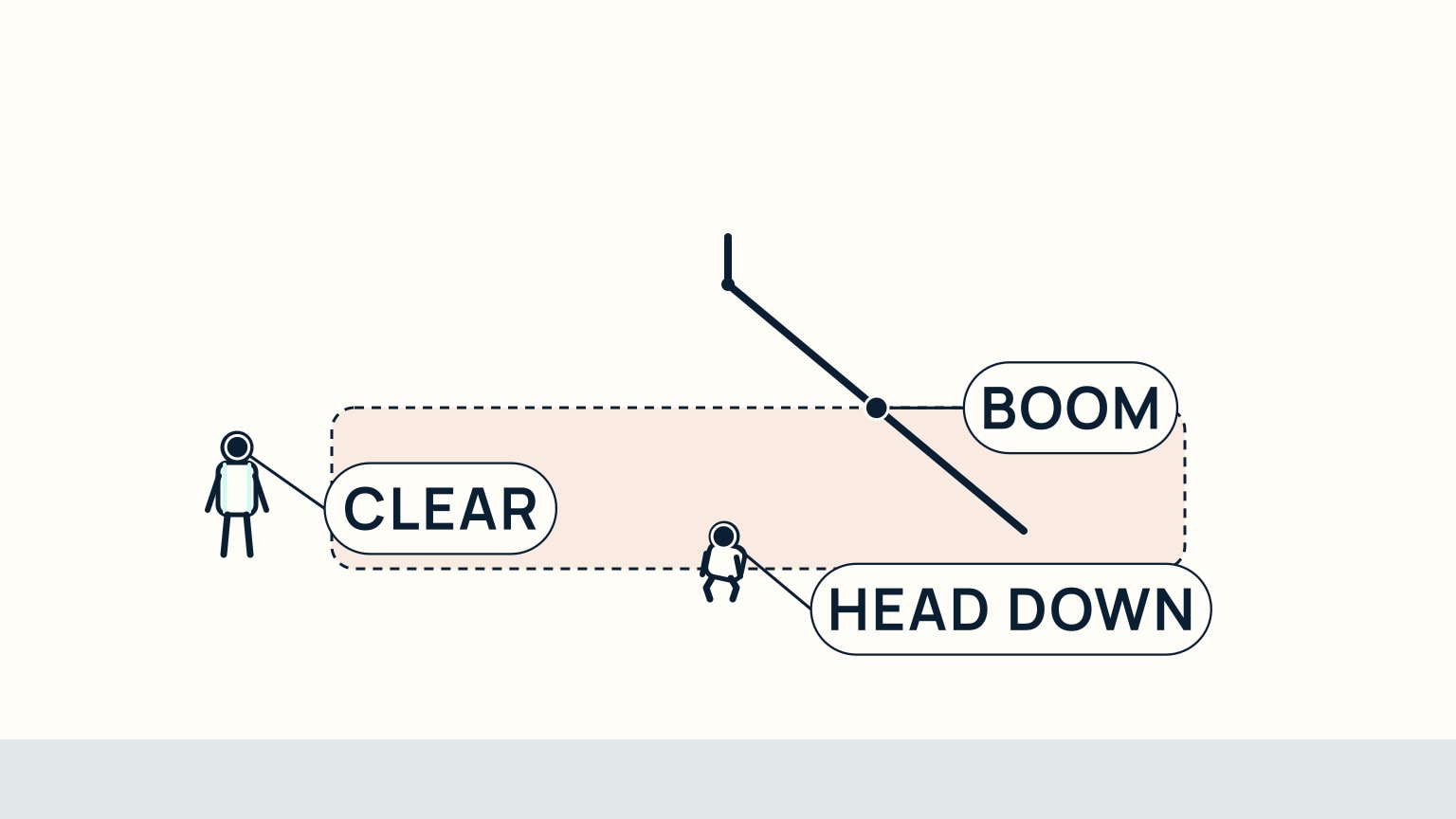
The controlled sequence starts before the boat even turns. The helm gives a warning call ("stand by to jibe") then commits to the turn with "jibe-ho" as the stern actually crosses, or your boat's own version of the same two-part pattern. Sailing schools word this call differently from boat to boat, but the two-part shape (a warning, then a commit) is consistent, and it's kept deliberately distinct from a tack's "ready about" so the crew never has to guess which maneuver, and which hazard, is coming. On that first call, the crew's job is to get clear of the boom's path before it starts to move, not to touch a sheet.
Watch the jib as you clear the deck: the moment it crosses to the new side is your cue that the boom is close behind it, so anyone still inside its arc should already be down by then, not starting to duck.
Not everyone can always get fully clear in time (a small cockpit, a task half-finished). If you can't, crouch down with your head low and your arms in at your sides, out of the boom and mainsheet's reach. It costs nothing when the jibe goes exactly to plan, and it's the one habit that matters the time it doesn't.
Sheet the Main In and Steer the Stern Through
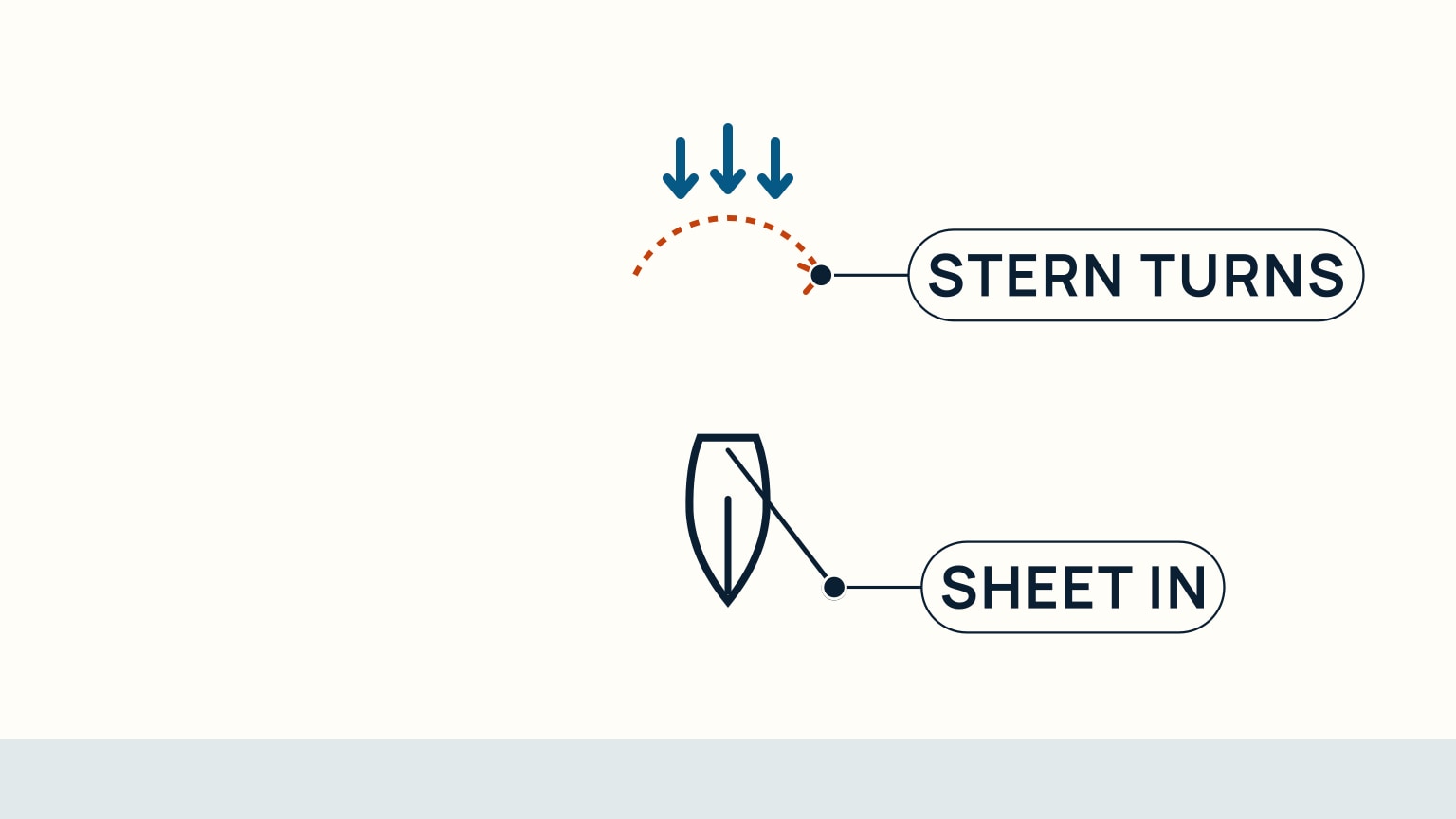
As the helm bears away toward dead run, haul the mainsheet in toward the centerline, cleating a traveller to the centerline at the same time if your boat has one. This is the step that actually controls the boom: sheeted in close, it has almost no distance left to swing; still eased all the way out, it has the boat's full width to cross. Feel is the cue to start: the mainsheet goes noticeably lighter as the load comes off the sail on the way to dead run.
With the boom under control, steer the stern through the wind, the actual turning motion of a jibe, as a slow, deliberate turn rather than a snap of the helm. A slow turn gives you time to keep trimming and controlling the main as the boat comes around, instead of getting ahead of what your hands can manage. There's no unpowered moment to wait through the way a tack has; the sail stays filled and the boat keeps moving the whole time, and in a stronger breeze the load coming through the boom as it crosses can try to round the boat up into the wind, so the helm has to actively hold the new course rather than assume the boat will settle on its own. You'll feel the sail's edge lift as it starts to cross: that's the jibe happening.
Ease Out Smoothly and Avoid Sailing by the Lee
Once the sail fills on the new side, ease the mainsheet back out smoothly and promptly to settle onto your new course: a boom left sheeted in too long can round the boat up into the wind and pile on heel. Trim the jib once it has crossed to the new side, then hold your new course.
Sailing by the lee is what happens when a downwind course drifts past dead run without anyone calling a jibe: the wind creeps around onto the same side the boom is already on. You'll often see the jib go soft or cross to the other side first. That's your warning that the mainsail may follow. Left alone, a gust or a wave can catch the back of the mainsail and throw the boom across with no warning at all; sailors call that uncontrolled crossing an accidental jibe, or a flying jibe when it happens especially hard and fast. The fix is simple: head back up toward dead run, or commit to a deliberate jibe instead of drifting into an accidental one.
A preventer (a line rigged to hold the boom forward and limit how far it can swing) is the second layer of protection against exactly this failure. Sailors rig one mainly for downwind legs, especially once the wind moves behind the beam, more than 90 degrees off the bow, where an accidental jibe becomes a real possibility rather than a remote one. It earns its keep even more in a rolly swell, since a wave can roll the boat enough to let the wind sneak behind the mainsail even when nobody has steered wrong. Without a preventer rigged, the fallback is discipline: strict heads-down practice for anyone inside the boom's arc of travel, the whole way down the run, since nothing else is holding it back if the wind does cross unexpectedly.
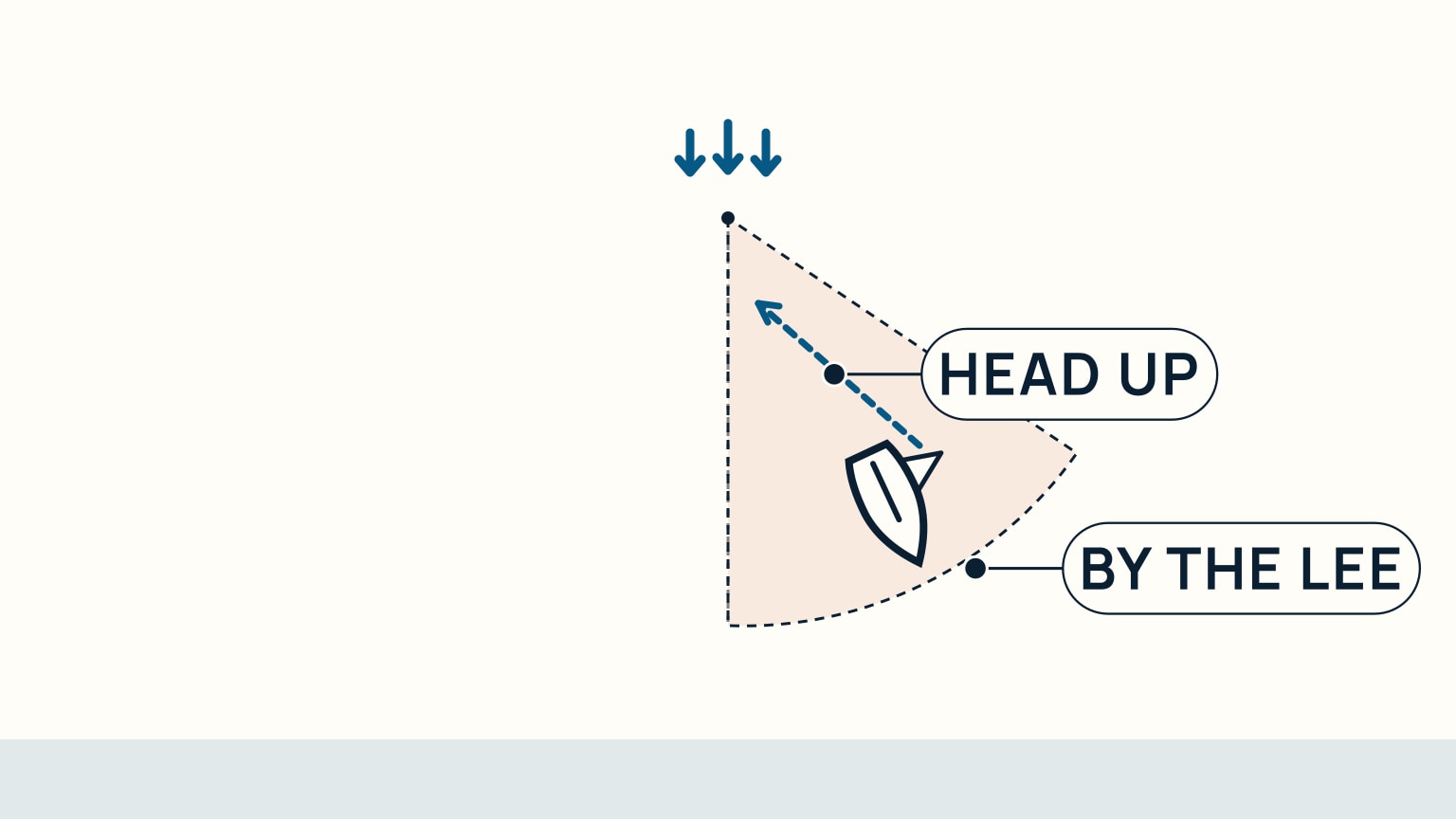
Jibing reads like a lot of separate steps laid out this way, and it is, the first few times you do it (a call, a scramble to get clear, a hand on the mainsheet, a turn, another hand on the mainsheet). Do it enough and it becomes one motion your hands do together while your eyes stay on the boom and the wind. The order doesn't change: warn, clear, sheet in, turn, ease out.
If you'd like to build that sequence somewhere lower-stakes than a moving boom, SailStarter's beginner lessons walk through jibing (and the points of sail and sail trim that set it up) one short step at a time. Try a lesson and see how quickly "stand by to jibe" stops feeling like a big deal.
Try it from the lesson
Can you spot the next move?
A boat turns its stern through the wind, staying on the downwind side the whole time, to swap which side the sail's on. Is that a tack or a gybe?
Why you can trust this guide
. We build each guide from public seamanship and safety sources, then teach the universal principle before any local difference.