Chart your course
How to Pick Up a Mooring Ball
Quick answer
The short version
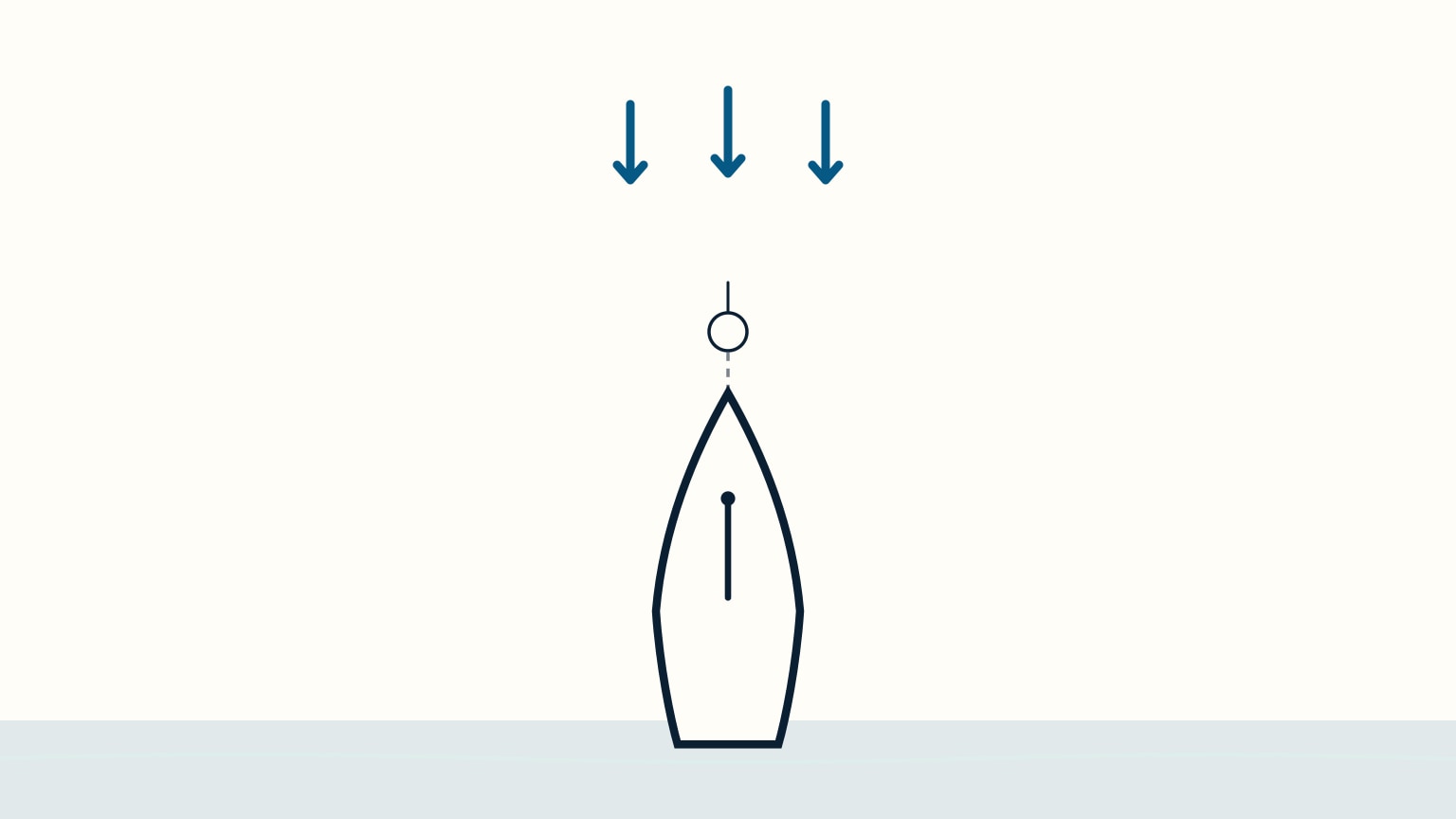
To pick up a mooring ball, read how the already-moored boats are lying before you start in (they all point the same way, into whichever of wind or current is stronger) and approach from directly downwind or down-current of the buoy along that same line. Come in dead slow, short bursts of throttle and back to neutral, aiming the bow at the buoy; late in the approach it slides out of the helm's own sight, so the bow crew calls distance and works from agreed hand signals. Boat hook the pendant (the line leading down to the mooring), lead it through the bow fairlead, the fitting that guides a line onto the foredeck, and cleat it at the bow right away. Miss it, and just circle back calmly.
A mooring field looks like the easiest stop on the water: no berth to squeeze into, no dock lines to time, just a buoy sitting there waiting. It only feels that simple once you know what's actually holding that buoy in place and how to work with it. Under the surface, a swinging mooring is a small system: ground tackle (a sinker or ground chain) anchors the seabed end, a heavy riser or top chain and a swivel carry the load up to the buoy, and the buoy itself often floats a smaller pick-up buoy on a light line spliced into the main pendant. Older or simpler moorings skip the pick-up buoy and give you just a bare ring to work with instead. Either way, the job above the surface goes in order: reading the fleet, closing in, catching and securing the pendant, handling a missed attempt or an unfamiliar buoy, and leaving again without fouling anything.
Read the Fleet, the Wind, and the Current
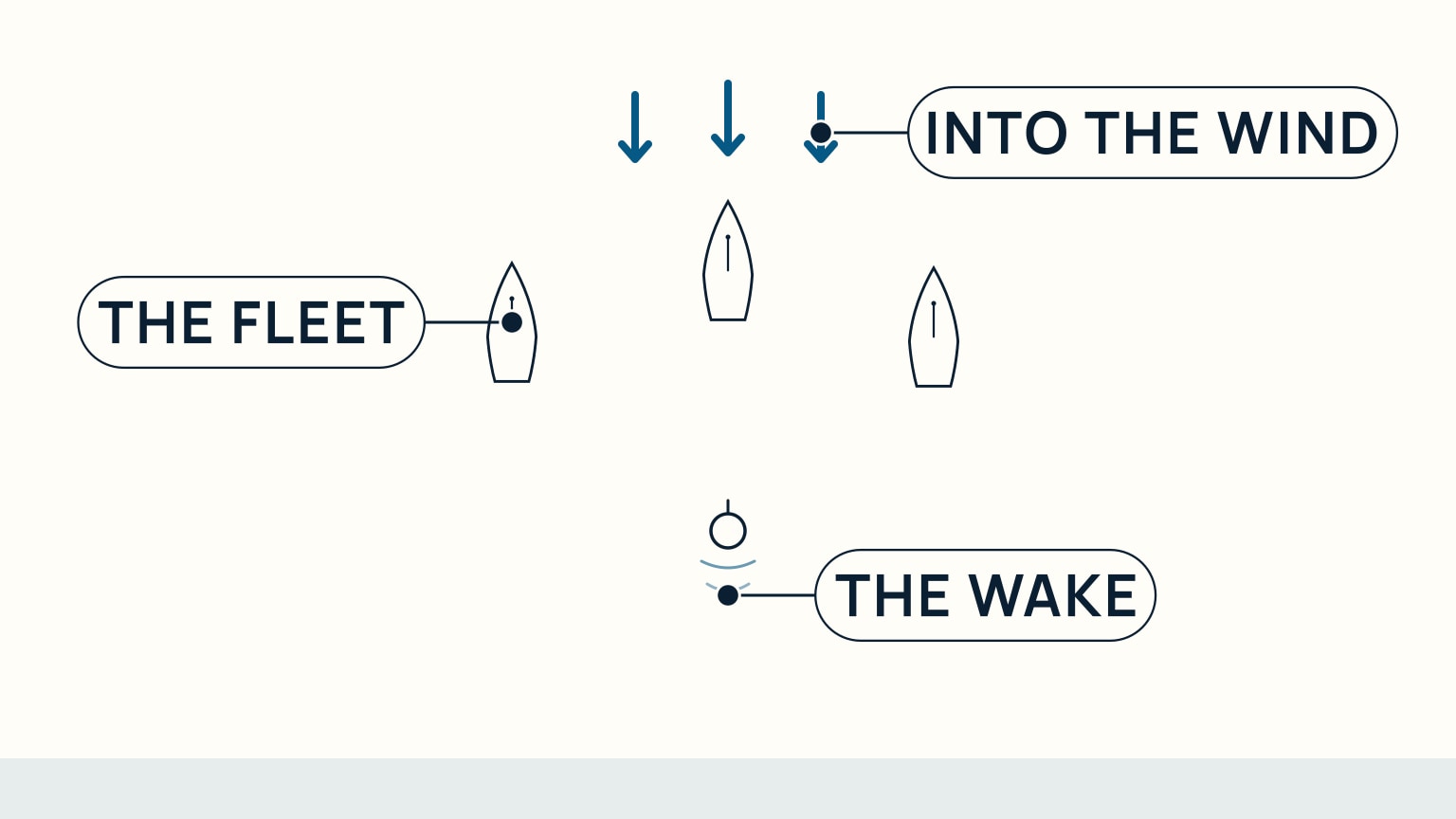
Before you touch the throttle, look at how the boats already on moorings are lying. They all point the same way: bow into whichever of wind or current is the stronger force acting on them at that moment. If the fleet looks ragged, with boats pointing every which way, that's useful information too: wind and current are fighting each other, and neither is clearly in charge. Reading conditions before you commit is the same discipline you'd use docking in wind and current; a mooring approach just replaces the dock with a single fixed point.
The buoy you're aiming for gives you a second, independent check. Look for the ripple trailing behind it: that wake shows which way the current is actually running past it, confirming (or correcting) what the fleet's lie already told you. Reading both before you start the approach means you already know which direction to come from, instead of guessing it out on the water.
Approach Dead Slow, Bow on the Buoy
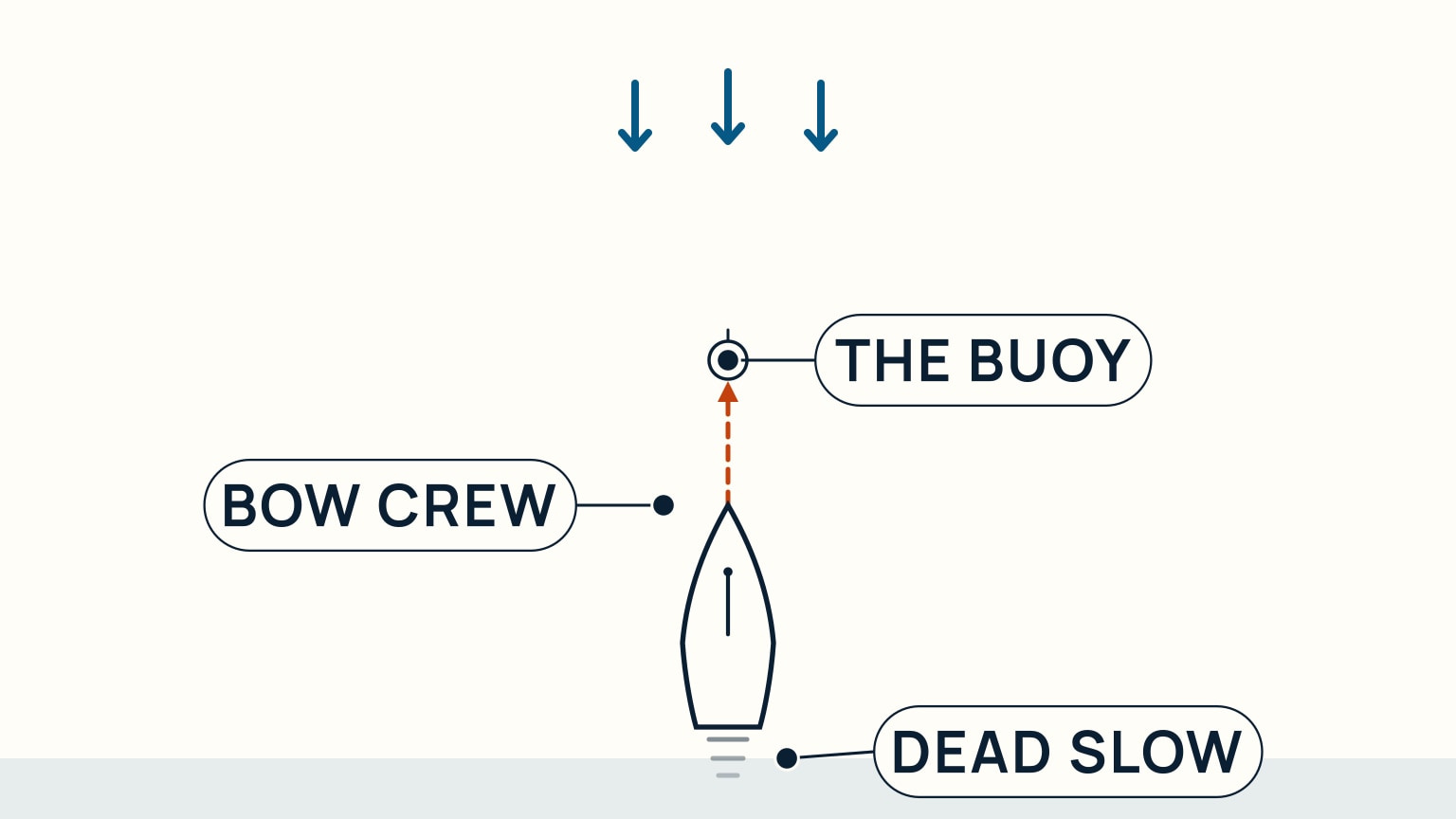
Once you know the direction, approach from directly downwind or down-current of the buoy, at minimum control speed, gliding in along the same line the fleet is already lying. "Dead slow" doesn't mean drifting: it means just enough speed to hold steerage, held with short bursts of throttle and a return to neutral rather than one steady setting, so you arrive with only just enough way to reach the buoy. Approaching too fast is the single most common mistake here, and it's an easy one to avoid simply by giving yourself more time than feels necessary.
Aim the bow at the buoy and hold that aim through the final stretch. Right when it matters most, the buoy slides underneath the bow and out of the helm's own sight. That's exactly why the bow crew calls out the closing distance and works from hand signals agreed before you started in. Shouting doesn't carry over engine and wind noise; a raised hand does. Agree the specific signals before you start in, not just the general plan to use them, so a flat palm clearly means hold, a slow beckoning wave means forward a touch, and a thumbs-up means got it, with nothing left for the helm to guess at through the windshield.
Catch the Pendant and Secure It at the Bow
Agree crew roles before you start the approach, not during it: one person on the helm, one on the foredeck with a boat hook in hand and ready. Gloves are worth putting on too, since a pendant that's been sitting in the water for a season is often encrusted with growth you'd rather not grab bare-handed.
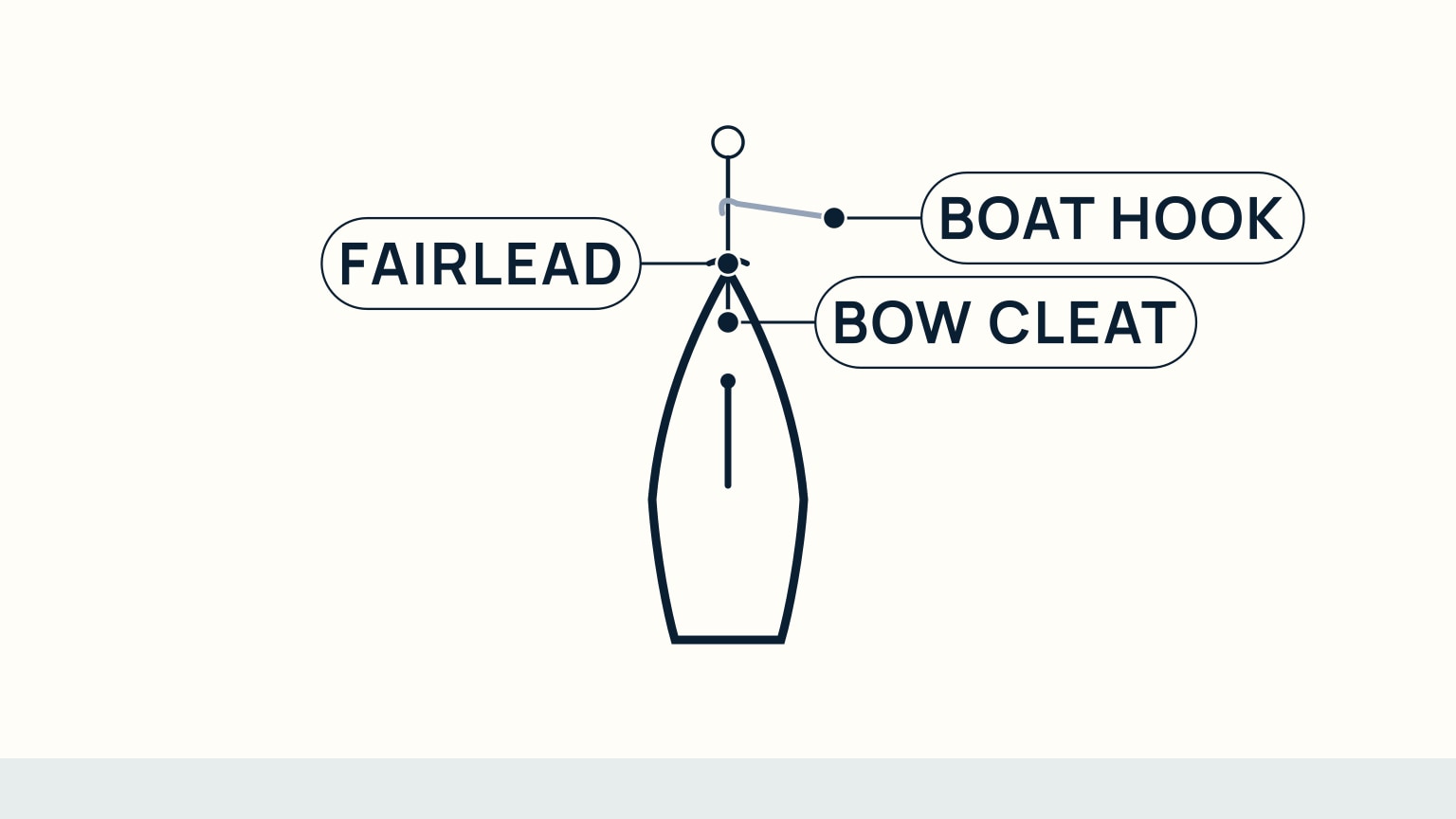
Once it's within reach, the bow crew hooks the pendant or pick-up buoy with the boat hook, brings it aboard, and leads it through the bow fairlead or roller. Get it onto the bow cleat right away. Don't hold it by hand, where the load can pull it straight through your fingers.
The bow is where this line belongs. Led through the fairlead to the bow cleat, it takes a straight pull and lines the boat up the same way the rest of the fleet is already lying. If your mooring is just a bare ring rather than a pendant with a pick-up buoy, the job is the same: run your own line through it and back to the bow cleat, rather than tying off wherever the ring happens to be easiest to reach.
If You Miss It; or It's Not Your Buoy
Missing the pickup calls for no drama at all. Don't reach, lean, or chase the buoy as it slides by. Let the boat drift clear, circle around, and line up for a calm, deliberate second attempt. Every sailor who's picked up more than a handful of moorings has gone around at least once.
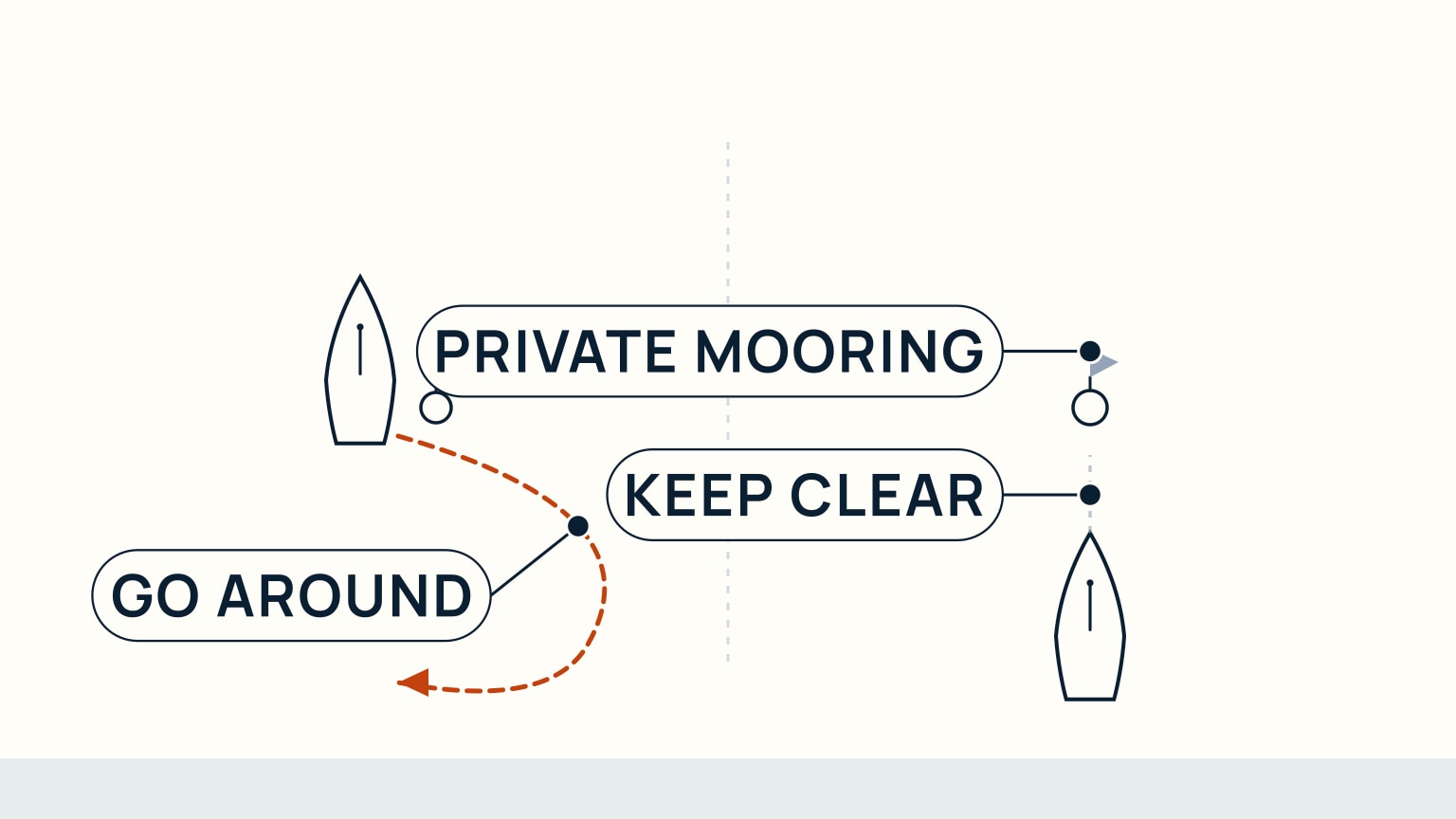
Before you commit to any buoy, though, make sure it's actually available, the same check you'd make before settling on an anchorage rather than dropping the hook on the first likely spot. Many moorings are privately owned or licensed to a specific boat by a harbour authority or marina, and picking one up without checking first is a good way to meet its owner mid-swing. A mooring that looks poorly maintained is worth avoiding for a second reason too: you have no way to know whether its ground tackle is actually sound enough to hold you. Harbours and marinas commonly set aside separate visitor moorings for boats just passing through; contact the harbour office or marina to confirm which buoy is yours to use. If conditions ever force you onto a mooring you haven't been able to confirm, treat it as an emergency measure only: stay aboard and be ready to move off immediately rather than leaving the boat unattended on it.
Leave Clear of the Buoy and Pendant
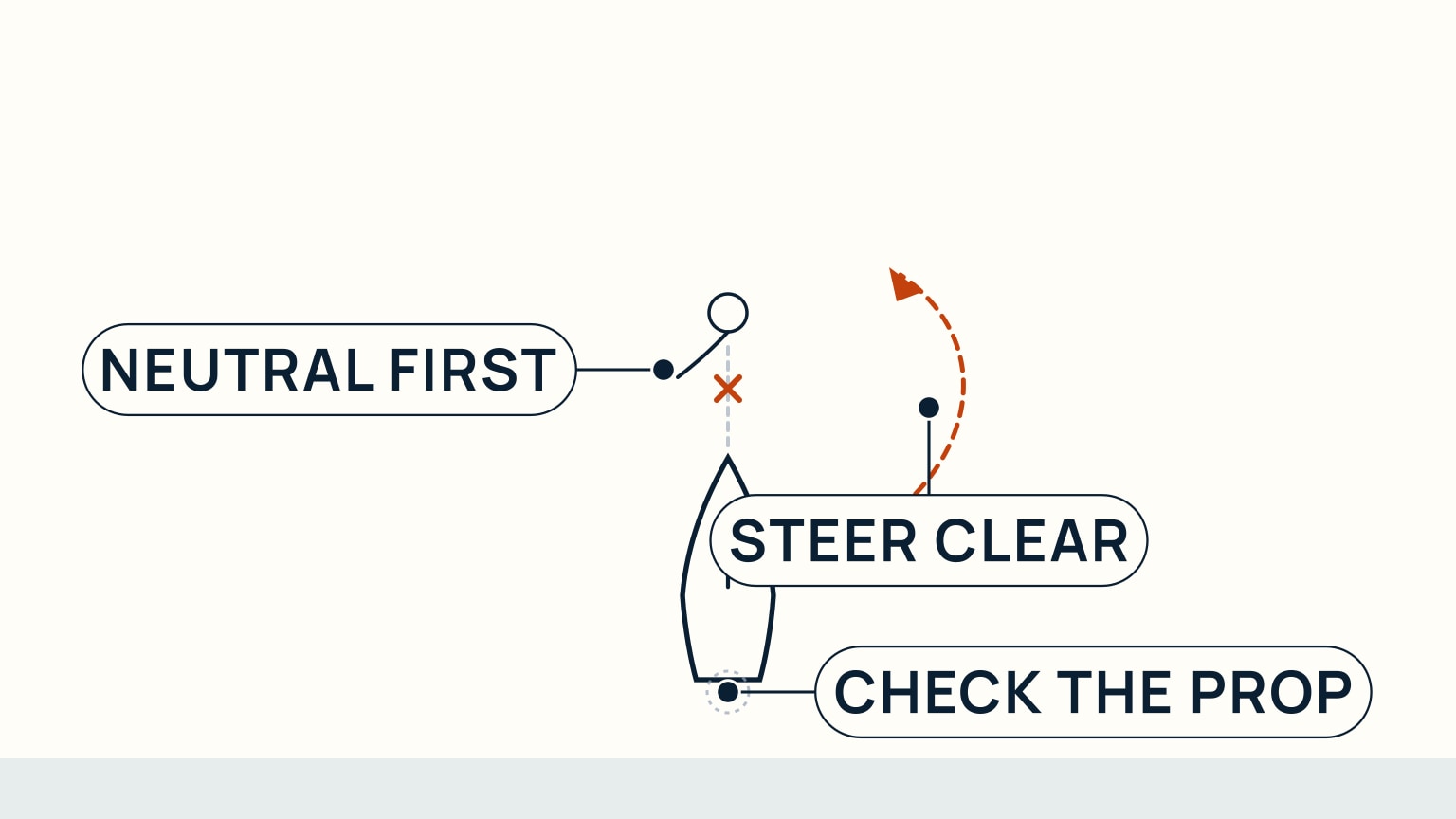
Leaving is the same discipline in reverse. Before you release anything, watch how the boat is already sitting to estimate which way it will drift once it's free, and keep the engine idling rather than shut down so it's ready the moment you need it. Release the pendant only with the engine in neutral, and don't put anything in gear until you've confirmed it (and anything else trailing over the side) is clearly clear of the propeller. A glance around, including briefly astern, catches any other boat or obstruction before you commit to moving.
Then motor away at slow speed, steering clear of the buoy and its pendant rather than crossing directly over them. Running straight over a mooring risks the pendant wrapping around your propeller, turning a routine departure into the kind of problem that ends the day early. The ground tackle riser below the buoy can do the same thing to a propeller, so give the whole mooring a wide berth on your way out, not just the buoy itself. Steer around it instead, the same deliberate way you steered around it, or past it, coming in.
Picking up a mooring is really just close-quarters boat handling with one extra step at the end: reading conditions, holding a controlled approach, and getting a line secured in the one place that lets the boat settle. None of it is complicated on its own: it's doing each piece in order, calmly, and at a speed that leaves you time to react, that turns a buoy from a moving target into an easy stop.
If you'd like to build that sequence before you're doing it for real, SailStarter's beginner lessons cover mooring pickups alongside the rest of close-quarters boat handling under power, including leaving a dock under power, one short step at a time. Try a lesson and see how quickly a mooring field stops feeling like a test and starts feeling like just another stop.
Try it from the lesson
Can you spot the next move?
You're motoring into a mooring field full of boats. How do you know which direction to approach the ball from?
Why you can trust this guide
. We build each guide from public seamanship and safety sources, then teach the universal principle before any local difference.