Chart your course
How to Leave a Dock Under Power
Quick answer
The short version
To leave a dock under power, read the wind and current at the berth first. That reading decides your whole plan, not a fixed routine. Brief your crew, then single up: down to one line at the bow and one at the stern, everything else already let go and coiled aboard. If wind or current is pushing you off the dock, the easy case is exactly that easy: let the lines go, fend the bow off lightly, and drift clear before you engage ahead. If it's pinning you on instead, an after bow spring holds the bow while gentle idle-ahead power and the helm turned toward the dock swing the stern out and clear. Either way, look astern before you shift into reverse, and bring every line aboard coiled rather than leaving it on the dock.
Leaving a dock under power (undocking, in the traditional term) looks simple right up until the wind decides otherwise. Most departures really are that simple: read the conditions, let the last lines go, and drift away with the engine barely working at all. The one moment that actually calls for a trick is when wind or current has you pinned against the dock instead of drifting free of it. A straight pull against that kind of wind won't get you clear on its own, no matter how much throttle you give it. This guide walks through both cases in order, plus the line discipline and look-astern habit that make either one go smoothly from the first line let go to the moment you're clear.
Read the Wind and Current, Then Single Up
Before anyone touches a line, check the wind and current at the berth. Their direction and strength decide which of the two departure plans below actually applies, not a fixed routine you run the same way every time. Brief your crew on what's about to happen: who handles which line, and what happens once it's time to leave.
Once that plan is set, single up: reduce every dock line to just one at the bow and one at the stern, with everything else already let go and coiled aboard. That's the standard preparation immediately before getting under way, and it leaves you holding only what you actually need to control the boat for whichever case comes next, nothing extra to track once the helm starts calling for lines.
When the Wind Is Pushing You Off the Dock
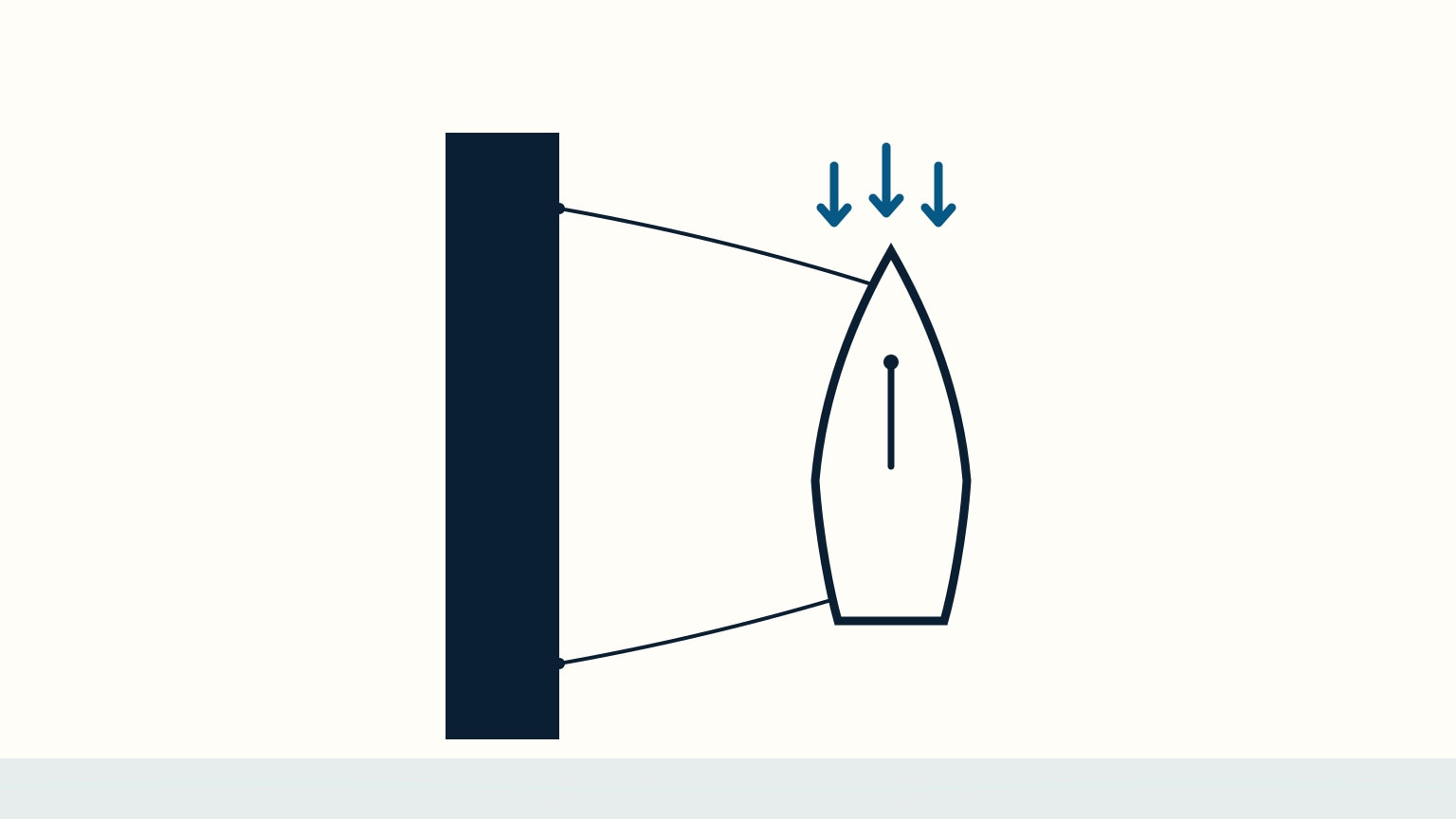
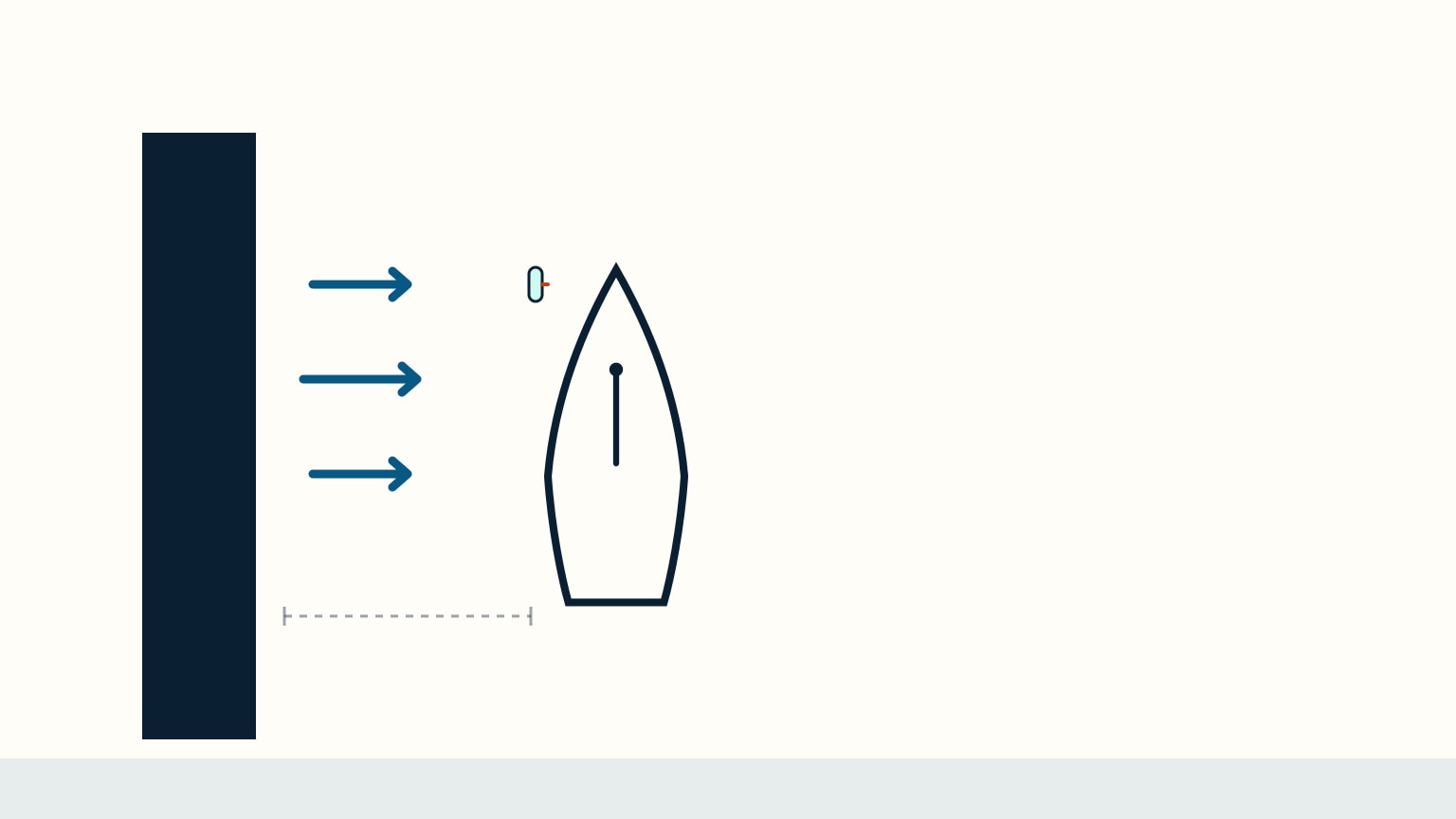
If wind or current is already pushing the boat away from the dock, you're in the easy case, and it really is that easy. There's no engine work to do yet: the wind or current is already doing the one job that matters. Let the last two lines go, fend the bow off lightly so nothing bumps the dock as it swings clear, and let the boat drift out on its own.
Resist the urge to engage the engine right away. Wait until you're genuinely clear of the dock and anything alongside it, then shift into forward gear with enough power to answer the wind and carry on out. Engaging ahead too soon, before there's room to swing, is how an easy departure turns into a scrape that never needed to happen.
When the Wind Is Pinning You On: Spring Off the Bow
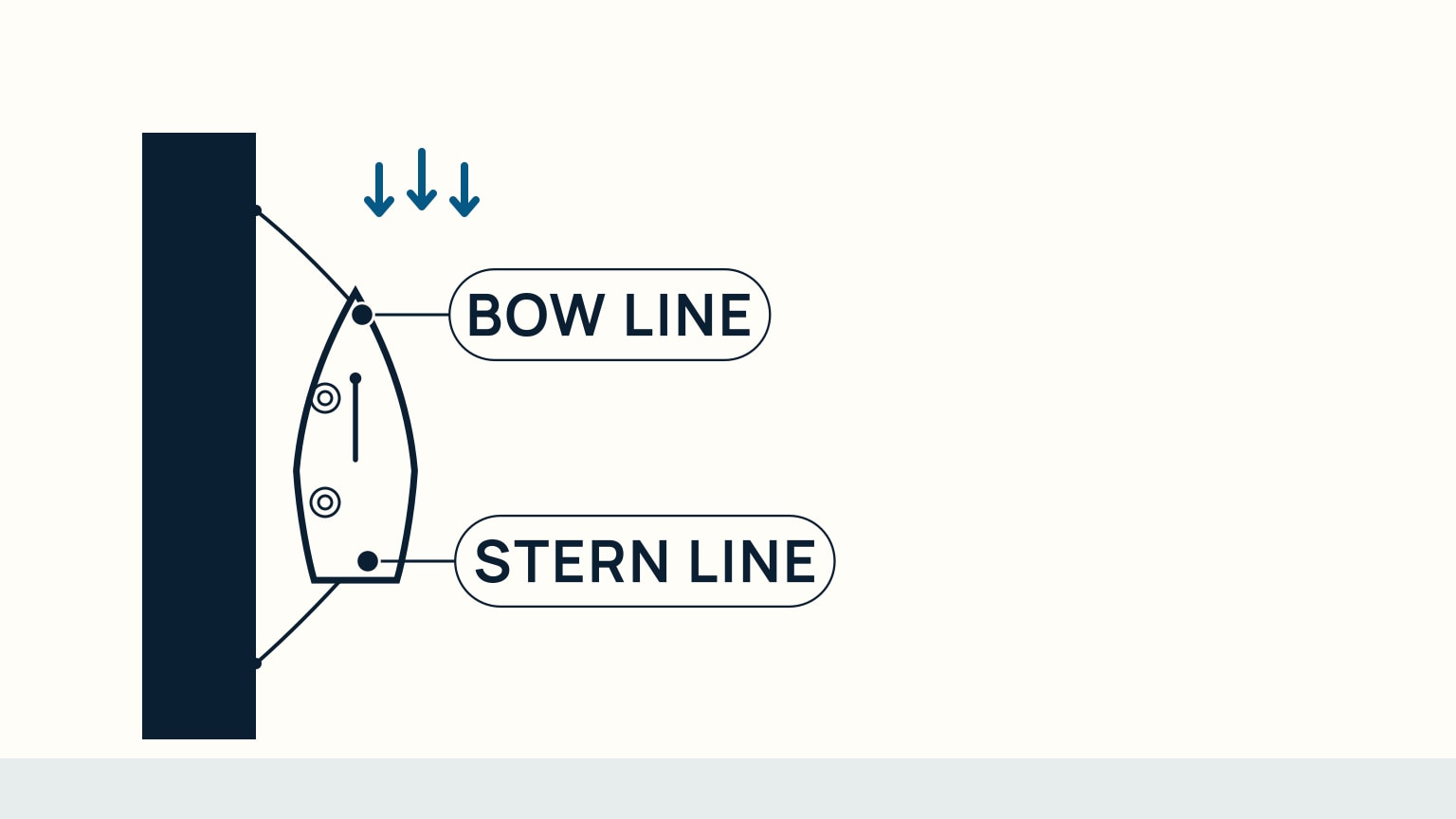
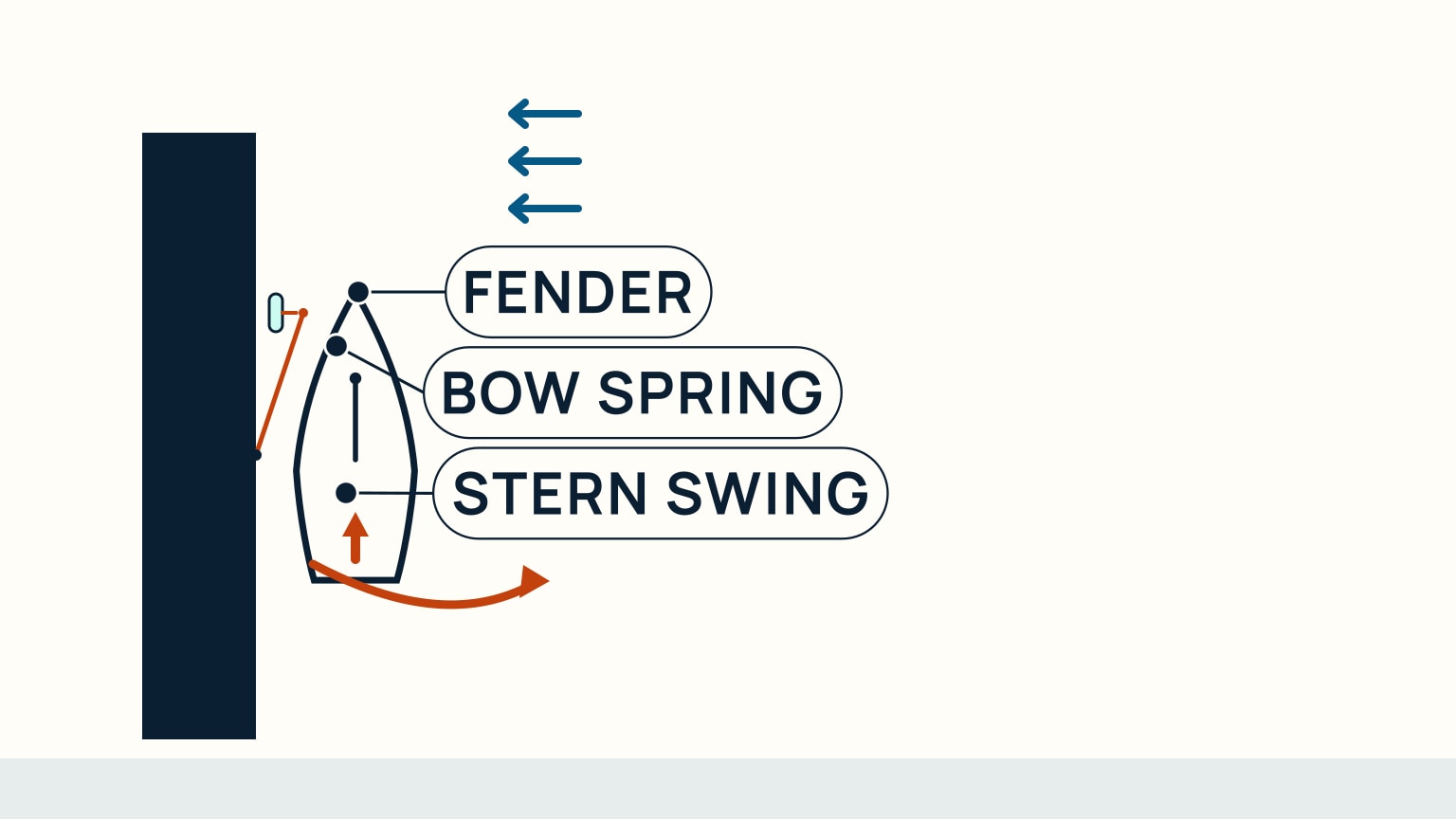
If wind or current is holding the boat against the dock instead, a straight pull forward can't out-muscle it. The boat just gets shoved right back onto the dock before the engine ever builds enough way to answer. What works instead is an after bow spring: a line led from a cleat near the bow aft to a cleat or piling on the dock, not straight across. That aft lead is what turns forward push into a turn.
Cast off every other line, leaving only the spring. Turn the helm toward the dock, then ease into idle-ahead power, gently, since the spring is doing the holding, not the engine. The bow stays put against the spring while the stern swings out and away from the dock. Put a fender right at the bow, where the hull actually bears against the dock while the spring holds it there. Once the stern has swung clear, cast off the spring, bring it aboard, and back away. The mirror version works from the stern: a spring made fast aft, worked against in reverse gear, swings the bow out instead of the stern.
Look Astern and Keep the Lines Under Control
Brief one sequence and one abort
Name the line order before starting. Crew should know which lines remain as springs, which come aboard first, and who reports that every line is clear of the water. The helm should repeat the departure direction and the point at which the plan will stop if the boat does not move as expected.
Keep lines outside lifelines only as the setup requires and never let a loose end trail near the propeller. A crew member does not jump across a widening gap. If a line cannot be released safely, stop the manoeuvre while the boat is still controlled.
Use the spring with low power and clear communication. The line controls one end of the boat while thrust moves the other. Fenders must protect the contact area. Once the required angle opens, return the engine as planned, release and recover the spring, confirm it is aboard, then move into clear water.
Account for reverse behavior
Look astern before selecting reverse and continue looking through the movement. Test how quickly this boat develops steerage and whether prop walk pushes the stern sideways. A short burst may create thrust before the rudder becomes effective. Do not assume steering input will instantly overcome that sideways motion.
Wind and current can change which end moves first. Pause outside the berth and observe flags, ripples, nearby boats, floating debris, and your own hull. If the actual set differs from the brief, return to neutral or the berth while room remains and reset.
The prop-walk explanation helps predict one reverse tendency. The docking in wind and current guide uses the same force, line, and abort logic for the return.
Once clear, stow lines and fenders without losing lookout. Check cooling-water flow and engine indications, then confirm the next course. A departure is complete when the boat is clear, lines are accounted for, systems are normal, and the crew can move safely, not simply when the hull leaves the dock.
Practise without a departure deadline
Choose a quiet period and rehearse singling up, spring leads, line recovery, neutral, and abort calls while the boat remains secured. Then test low-speed response in open water. Crew can learn where lines run and the helm can learn delay between control input and hull motion without traffic adding pressure.
Do not practise by repeatedly loading weak dock fittings or lines. Use the berth and procedures approved for the boat. Stop when wash, wind, current, or traffic makes the exercise disruptive or unsafe.
Tell neighboring crews what you plan when the exercise could affect them. Courtesy also prevents someone from “helping” by grabbing a line that your crew intended to release.
Before you shift into reverse, in either case above, look astern, and check around for any other boat nearby. At low speed the bow blows off the wind far more easily than it will once you're making proper way, and a helm absorbed in lines and fenders is exactly the one who misses a boat that's already moving close behind.
Whichever case you're in, the same line discipline applies: nobody lets a line go before the helm calls for it, by name, in the order the helm wants it released. Every line that comes off the dock comes aboard coiled. None stay behind on the dock, and none trail loose over the side where they can catch underfoot or find the propeller.
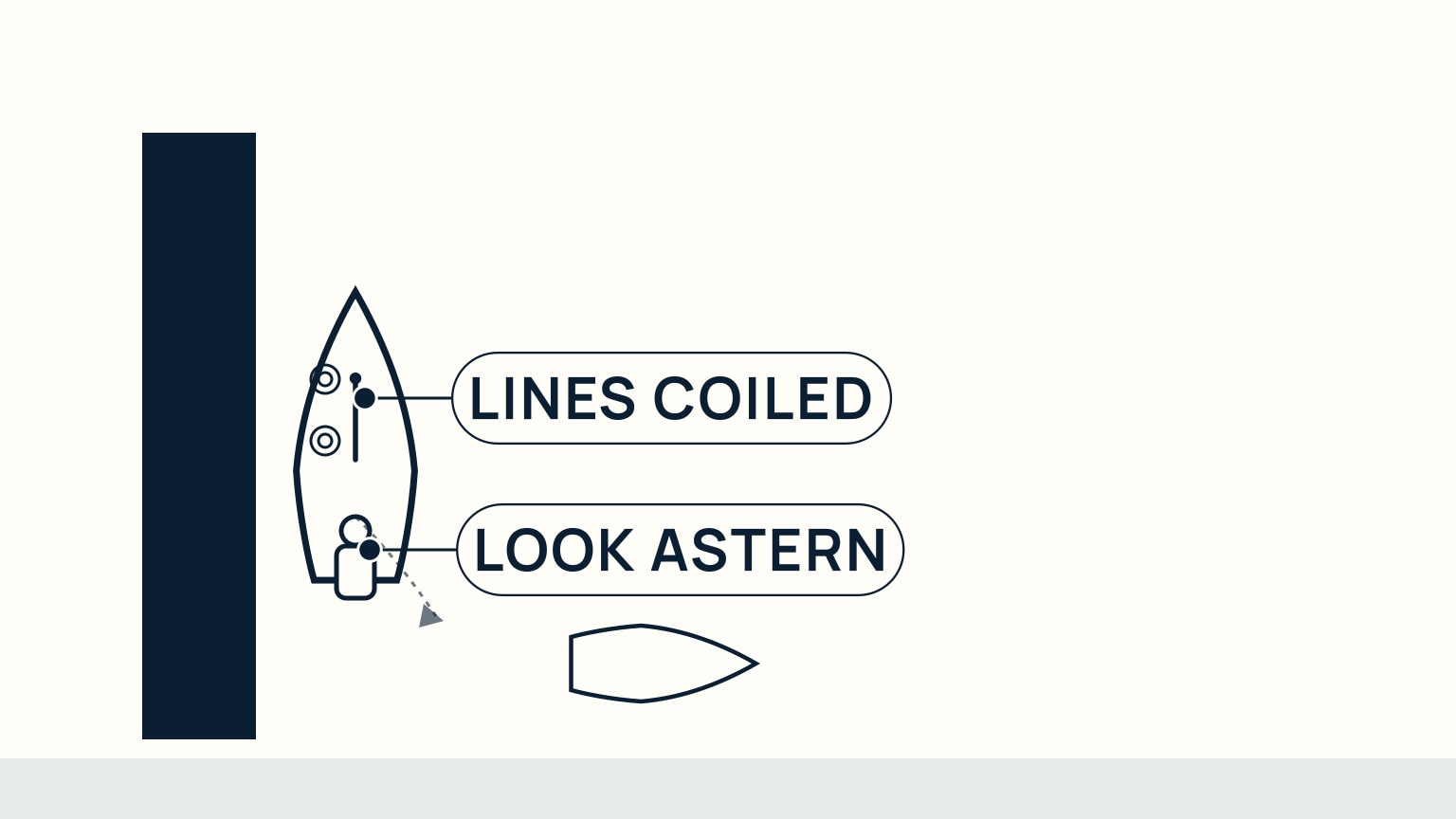
Leaving a dock under power is really two skills stacked on one habit: read the conditions correctly, and you already know which of two short sequences to run. Get comfortable with singling up, the drift-clear case, and the after-bow-spring case somewhere lower-stakes, and the moment you actually need one stops feeling like a decision made under pressure.
If you'd like to build that judgment before you're doing it dockside, SailStarter's beginner lessons cover coming alongside and leaving the dock as a matched pair, each broken into the same short, visual steps this guide walks through. Try a lesson and see how quickly reading the wind turns into an automatic first move.
Try it from the lesson
Can you spot the next move?
Before anyone touches a line, what's the very first thing to check?
Why you can trust this guide
. We build each guide from public seamanship and safety sources, then teach the universal principle before any local difference.