Chart your course
How to Read a Sailboat Listing

Quick answer
The short version
Read a sailboat listing as a set of claims to investigate, not a condition report. First ask whether the model, size, layout, storage, and equipment fit your intended sailing and total budget. Then sort each statement into four groups: basic identity, seller description, supporting evidence, and missing information. “New engine” becomes useful only with maker, model, installation date, hours, invoice, and commissioning evidence. Turn gaps into focused questions and carry the answers into a direct inspection, independent survey, haulout, trial, or specialist check. A polished advert can help you shortlist; it cannot establish hidden condition.
The goal is not to catch the seller using enthusiastic words. Listings are short and often written by someone summarizing years of ownership. Your job is to translate them into details that can be compared across boats. Begin with the first-sailboat buying guide, then use one worksheet for every candidate. A consistent method makes omissions visible and keeps an attractive inventory from distracting you from the boat's fit and condition.
Read for the basic identity
Capture builder, model, documented year, hull material, length, beam, draft, displacement where supplied, rig, keel, engine, drive, location, asking price, and seller or broker. Record hull or official identifiers only through a secure exchange, then match them to the physical boat and transfer documents during due diligence.
Check whether the dimensions describe the same variant. Draft may change with keel option. Interior plans, rig dimensions, engine packages, and tankage can differ within one model name. Ask for a builder document or clear measurement source when a detail controls berth, lift, route, or trailer choice.
Compare the basics with your intended crew and water. A feature has value only if it helps the job. More cabins, systems, and deck gear can add maintenance and access demands. Rejecting a poor fit early saves survey money for a stronger candidate.
Check the age of the listing and every photograph. A boat may have moved, been launched, suffered weather exposure, or had equipment removed since the advert was written. Ask for the current storage state and a fresh exterior, machinery-space, bilge, and deck overview. Note whether the price includes local taxes, broker fees, cradle, trailer, or transfer costs, but verify those details under local rules. When comparing currencies, keep the date and rate used. The purpose is not a perfect remote valuation; it is a shortlist built from the same categories.

Sort claims from evidence
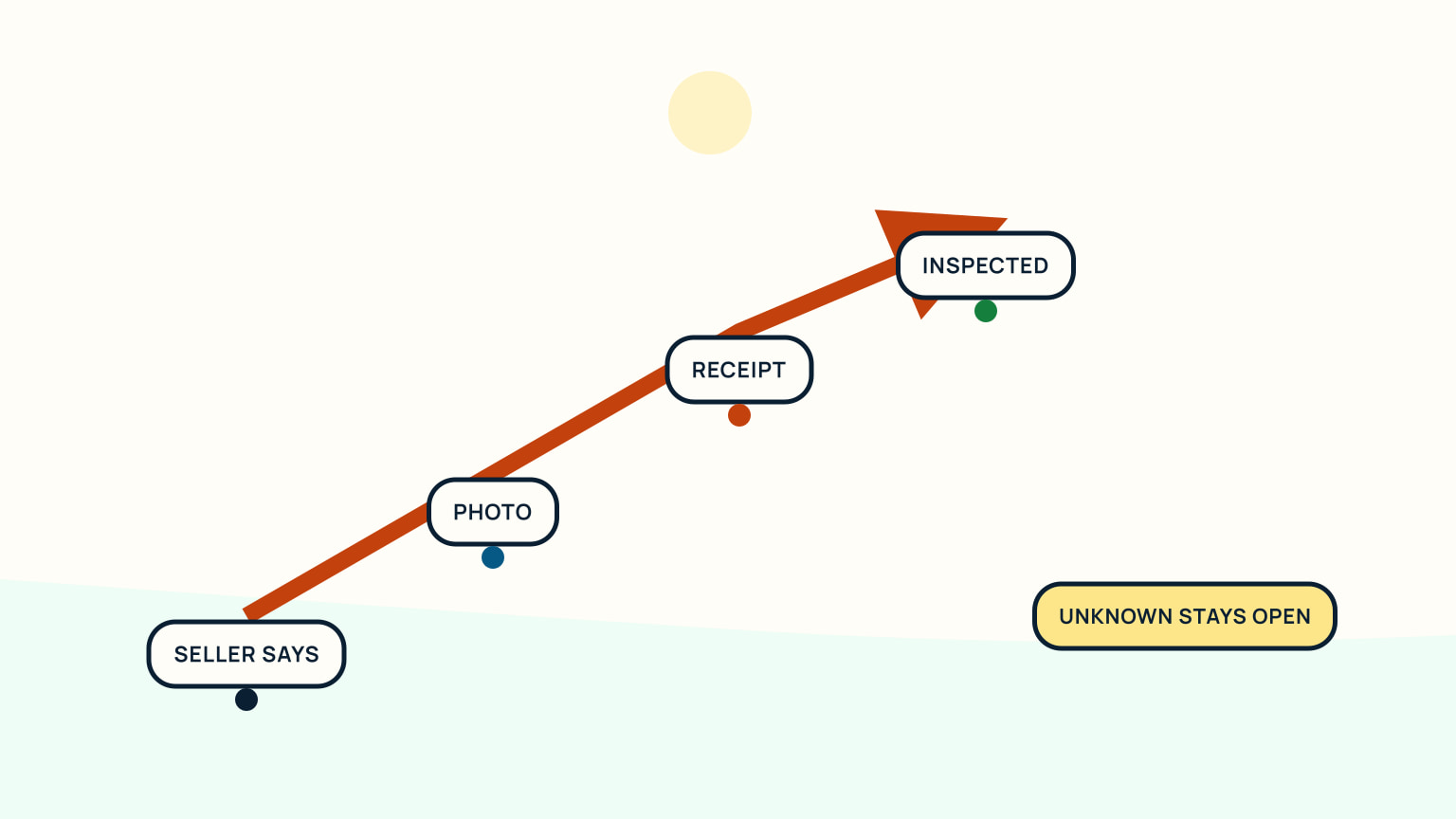
Highlight words such as new, rebuilt, upgraded, refitted, serviced, dry, offshore, turnkey, and sail-ready. For each one, ask what changed, who did it, when, which exact component was used, and how the result was tested. Request invoices, model numbers, photographs, or reports that can answer those questions.
Match records to the installed equipment. An invoice for a battery charger does not show that the present wiring is sound. A rig inspection may exclude the mast step or chainplates. A recent haulout may have been for paint only. Read the scope before giving the document weight.
Use neutral statuses: supported, partly supported, seller statement, and unknown. Unknown is not the same as defective. It means the price and inspection plan must allow for evidence you do not yet have.
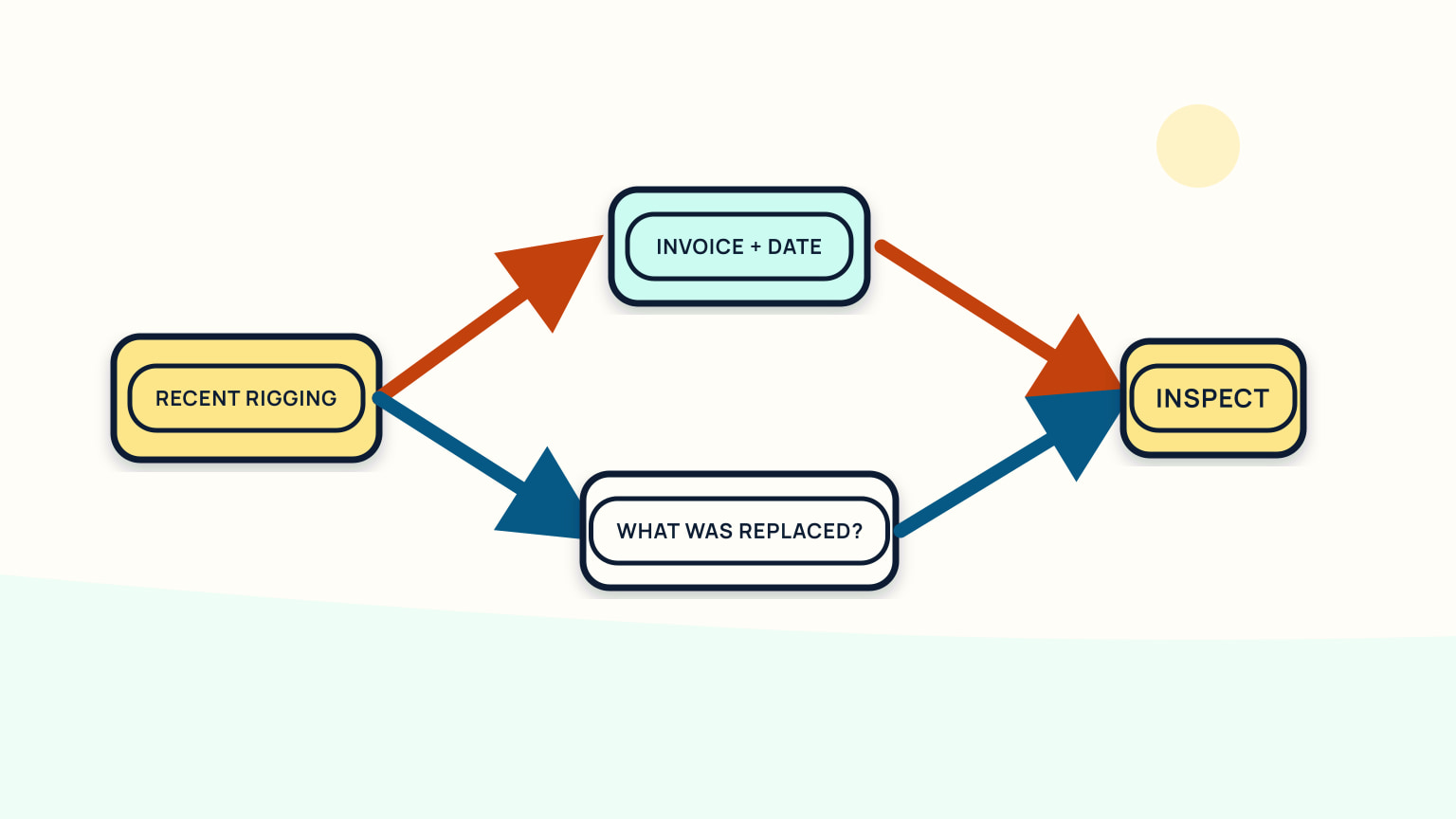
Distinguish installation from purchase. A box dated last year may contain equipment that was never fitted. An installed component may not have been connected, configured, or tested. Ask for the final invoice or commissioning record and inspect the work. For sails, identify which sail the age refers to and whether the inventory names material, maker, and condition. For batteries, model and installation date matter more than “newer.” These details keep a list of upgrades from becoming a substitute for a systems inspection.
Look for condition gaps
Study photographs for access and continuity. Are the engine, bilge, batteries, chainplates, steering connections, lockers, deck fittings, underwater gear, and sail condition shown clearly? Repeated wide cabin views with no systems are an information gap. Ask for current, well-lit photographs rather than trying to diagnose from compression and shadows.
Look for clues that deserve a closer view: staining below fittings, uneven finish, corrosion, crowded wiring, unsupported hoses, standing water, soft furnishings placed over access, or recently painted patches. Record the location and ask what the seller knows. Do not label structure soft or wiring unsafe from a photograph alone.
Read the service story for missing systems. An advert may list engine work but say nothing about rig, sails, steering, fuel, plumbing, batteries, or underwater gear. Use the used-sailboat inspection checklist to build a complete set of questions.
Notice what cannot be demonstrated because the boat is ashore, winterized, dismantled, or without charged batteries. An engine that is winterized may reasonably remain unstarted, but the operating test is still missing. A mast-down boat offers excellent rig access but cannot show sailing behaviour. Write these as inspection constraints and decide whether the agreement can preserve a later condition. Avoid asking the seller to perform a risky or maker-prohibited test just to close a gap. A safe exclusion with a price and decision attached is better than weak evidence.

Turn details into questions
Send a short first round. Confirm ownership and transfer documents, reason for sale, included inventory, known damage or insurance claims, current location, service records, last haulout, and whether the boat can be surveyed and trialled. Add only the model-specific questions that decide whether a visit is worthwhile.
Ask for facts that can be observed. Instead of “Is the engine good?” ask how it starts from cold, when it last ran under load, what alarms or leaks are present, and what service records exist. Instead of “Is the deck solid?” ask whether moisture, movement, repairs, or leaks have been reported and where.
Keep the seller's answers with the listing version and date. If a material answer changes, ask for clarification without accusation. A precise record supports a later offer and prevents two similar boats from blending together in memory.
Prioritize questions that can remove a boat from the shortlist. If draft prevents access to your berth, or ownership evidence is unavailable, solve that before asking about cushion fabric. If the boat remains suitable, move to condition and records. Save preference questions for last. This order respects the seller's time and protects yours. It also reduces confirmation bias: once you have spent hours discussing small features, walking away from a basic mismatch can feel harder even though the boat has not become a better fit.
Carry the list into inspection
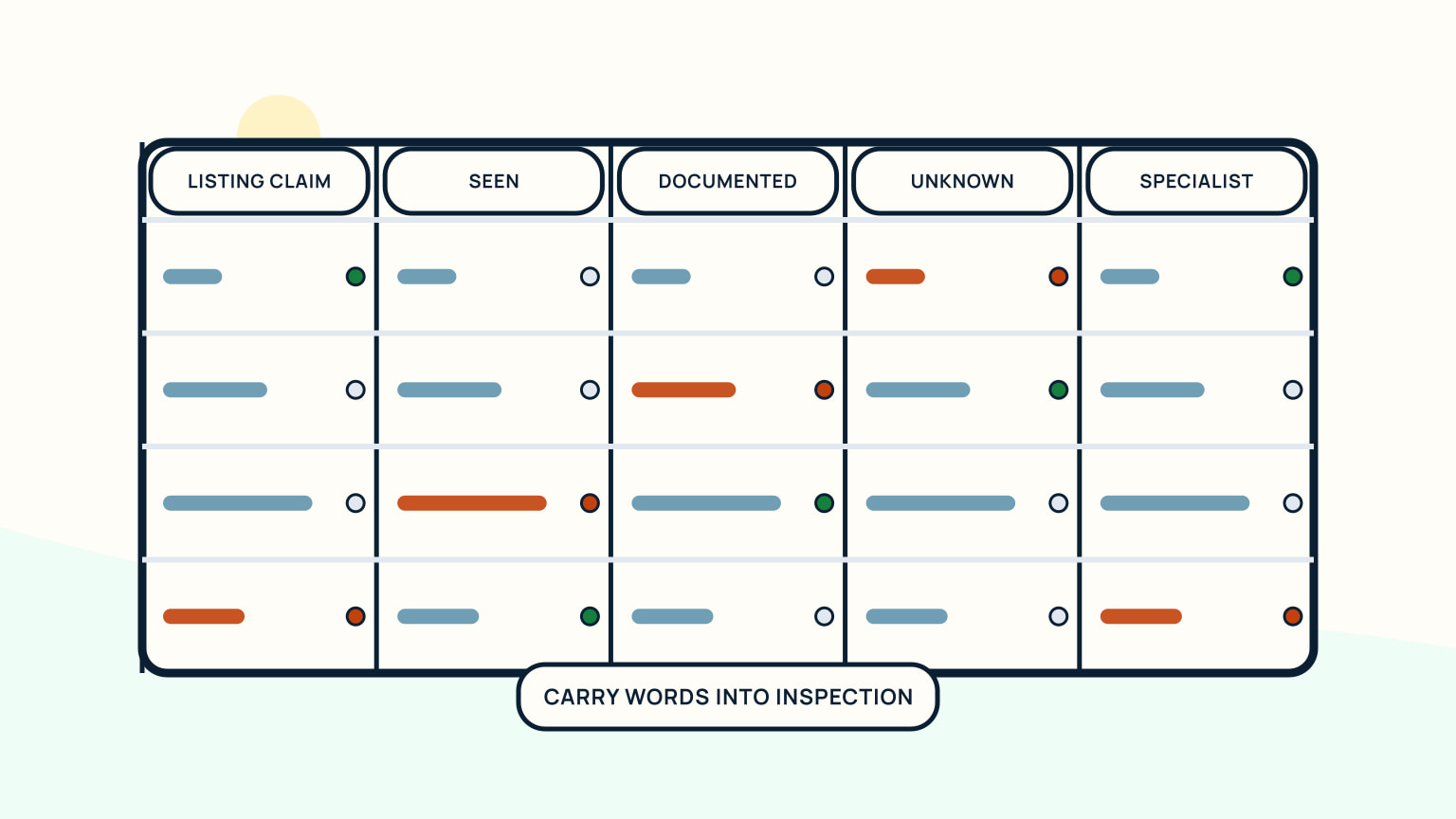
Bring a clean worksheet rather than scrolling through the advert. Verify identity and inventory first. Walk the boat systematically and mark each listing claim as seen, documented, still unknown, or needing professional assessment. Photograph the same systems for every candidate.
A preliminary inspection can reveal visible cracks, corrosion, blistering, repairs, steering issues, rig condition, machinery, and accommodation-system concerns. It does not replace an independent pre-purchase survey. Plan an afloat inspection, haulout, and trial where appropriate, and arrange engine or rig specialists when the general survey cannot settle a significant concern.
After the visit, revise the budget and question list before negotiating. Price access and important findings with real quotations where possible. If the boat remains a candidate, the negotiation guide turns that evidence into clear terms.
After inspection, rewrite the listing in plain condition language for your own use. Keep the original advert unchanged, then create a factual summary with sources: observed, document, surveyor, specialist, or unresolved. Add the access and timing needed to answer remaining questions. This prevents the seller's opening description from continuing to frame your decision after better evidence arrives. It also creates a clean basis for comparing the completed cost with another candidate and for explaining an offer without exaggerating defects.
Score fit and evidence separately after the visit. A boat can fit your sailing beautifully while carrying unacceptable uncertainty. Another can have excellent records but the wrong draft, accommodation, or handling needs. Keeping two scores prevents clean paperwork from selling you the wrong boat and prevents desire from erasing condition gaps. Add a third column for the next cost needed to decide, such as haulout, engine diagnostic, or rig inspection. Compare that cost with the value of resolving the question before spending it.
Choose one listing and strip it back to identity, evidence, and gaps. If the boat fits your use and the seller can support a useful first review, arrange access without assuming the advert has proved condition. SailStarter lessons can help you recognize the equipment named in a listing, while the surveyor and specialists test the actual boat.
Try it from the lesson
Can you spot the next move?
A wide sailboat glides past on two side-by-side hulls, barely leaning at all. What type is it?
Why you can trust this guide
. We build each guide from public seamanship and safety sources, then teach the universal principle before any local difference.