Chart your course
How to Reef a Mainsail: Make Less Sail Before You Need To

Quick answer
The short version
Reefing makes the mainsail smaller, so the boat heels less and is easier to steer as the wind builds. Reef early: wind force rises much faster than wind speed, and the job is simpler before stronger gusts arrive.
For a typical slab-reefing system, brief the crew and assign clear roles. Reduce pressure on the sail, ease the mainsheet and vang, then lower the mainsail enough to secure the new front corner. Tension the halyard, secure and tension the new back corner, then adjust the sail until it is flat before trimming again.
Hardware and line routing vary. Learn this sequence under supervision on your specific boat, then practise it with the whole crew in moderate conditions.
A smaller mainsail keeps the boat more balanced and easier to control as the wind builds. Knowing how to reef a mainsail matters, but knowing when matters just as much. Reef early and you get time to work calmly, before stronger gusts add load to the sail and rig.
You will learn how to prepare the crew, follow the broad sequence for slab reefing, and check that the finished sail is flat and supported at its load-bearing corners. You will also see when and how to shake the reef out as the breeze eases.
Hardware and line routes vary between boats. Learn your exact system and practise it under supervision, first in calm conditions and then on the water. Use this guide to understand the sequence, not to replace onboard instruction.
Why the Best Time to Reef Is Before the Gust Arrives
Reefing makes the mainsail smaller. You do it before the boat becomes hard to manage, not after.
Sail force rises roughly with sail area and the square of apparent wind speed (the wind you feel as the boat moves). This means a modest increase in wind can produce a much larger increase in heel and load. Reducing sail area also lowers where that force acts, helping the boat stay more upright.
There is no single wind-speed threshold for every boat. Before leaving, check the forecast and prepare if stronger wind is likely. Remember that forecast wind figures are averages; gusts can be stronger. On the water, watch the surface and approaching weather. Notice repeated gusts, increasing heel, heavier steering, or the need to keep easing the mainsheet to stay in control.
Excessive heel does not necessarily make you faster. A reefed boat can be easier to steer, place less strain on the rig, and move more efficiently. If you are wondering whether to reef, preparing early gives you more time and calmer conditions for the job.

Learn Your Boat’s System and Brief the Crew
First, learn the system on your boat. Slab reefing may use separate lines for the front and back of the sail, one line for both, or hardware that someone must handle at the mast. A furling mainsail, which rolls away to reduce sail, needs its manufacturer's procedure.
Before leaving, trace every line from end to end. Check where it runs, what it controls and where it may catch. Ready the main halyard (the line that raises and lowers the sail) and the correct reef line. Remove twists and knots, then place each line on its proper winch or control.
Give one person responsibility for coordinating the reef. Agree on short calls such as “Lower halyard” and “Made.” Brief everyone on their position and on how you will control the boat while the sail is unloaded.
Practise at the dock, then under supervision on the water in moderate conditions. Check the system under load. If anything is unclear, ask a knowledgeable instructor, sailmaker or rigger before relying on it.
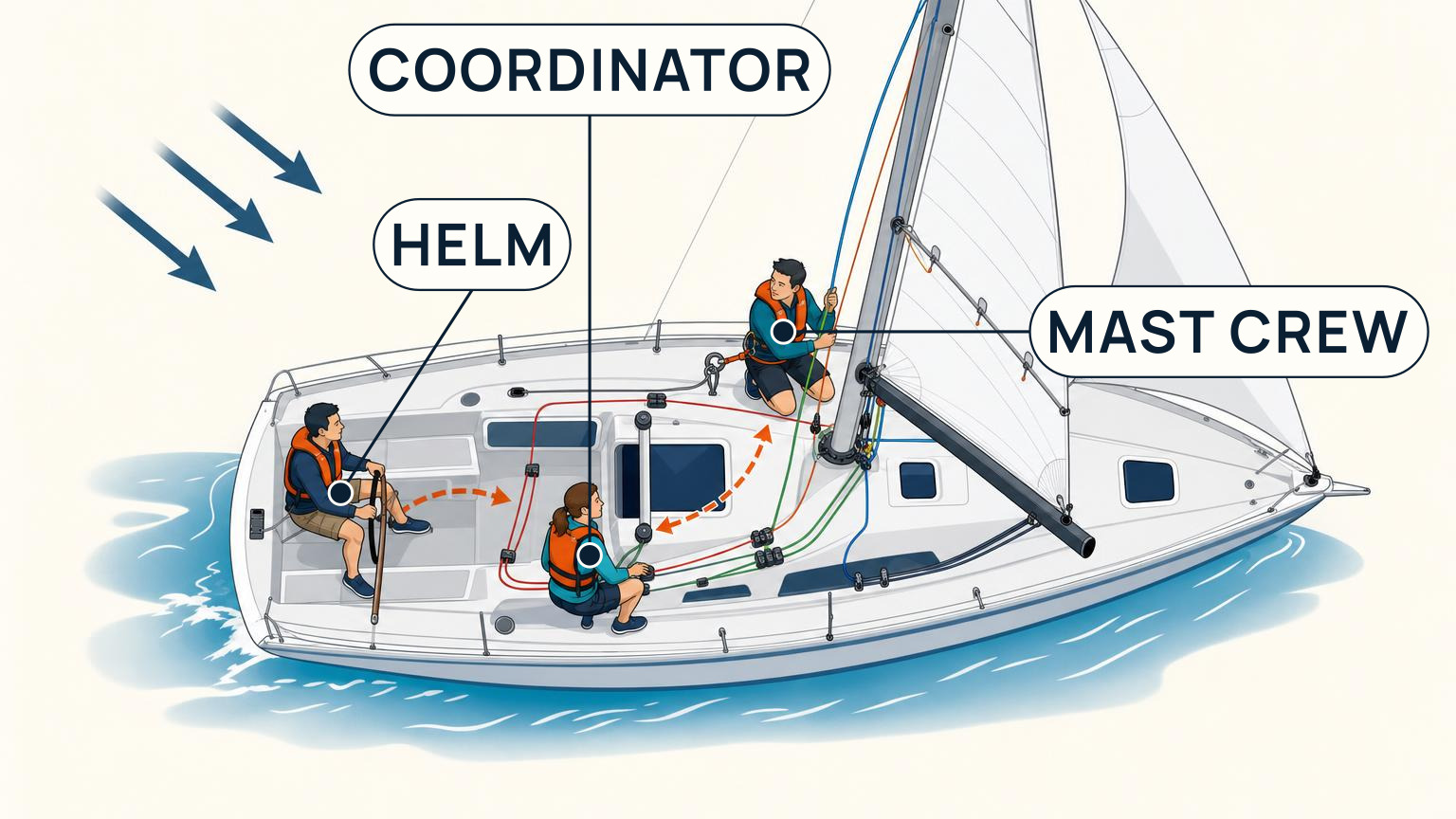
The Broad Crew-Led Reefing Sequence
To reef a mainsail with a slab, or jiffy, system, follow this broad order. Furling mainsails use a different process; follow the manufacturer's manual. Learn and practise your boat's exact sequence under supervision.
- Set a controlled course and reduce pressure on the mainsail.
- Ease the vang, which controls the boom, then ease the mainsheet so both are slack.
- If your boat requires it, tighten the topping lift, the line that holds the boom up.
- Lower the halyard (the line that raises the sail) under control. Pull slack from the reef line as you lower so it cannot tangle.
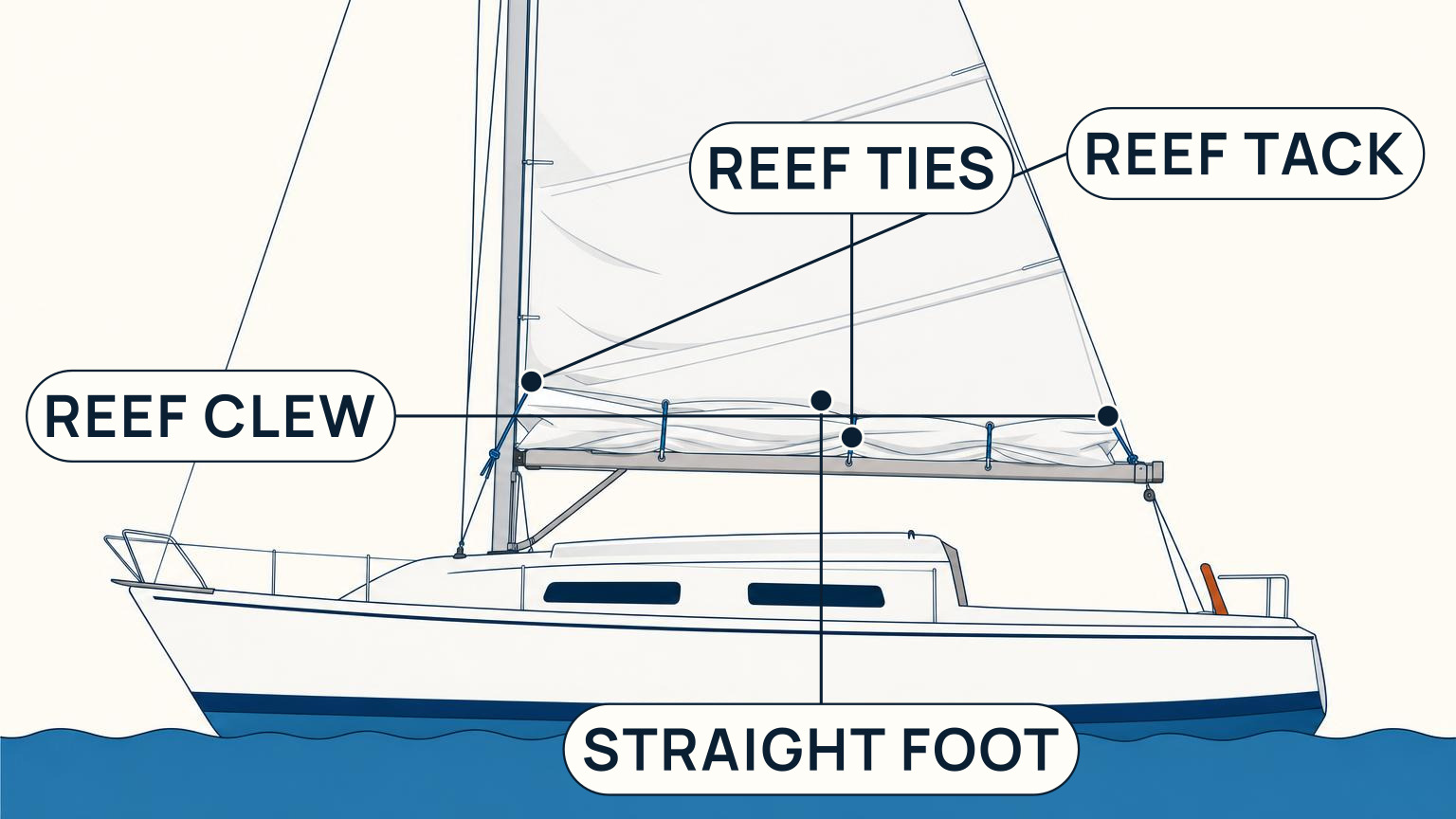
- Secure the reef tack, the new lower front corner. Call “Made” when it is secured and cleated off.
- Retension the halyard.
- Pull the reef clew, the new lower back corner, down and aft.
- Reset the topping lift, vang, and mainsheet as your boat requires.
One person should coordinate the job. Use clear calls before each action. If a line snags or anyone is unsure, stop, keep the boat controlled, and check the system before continuing.
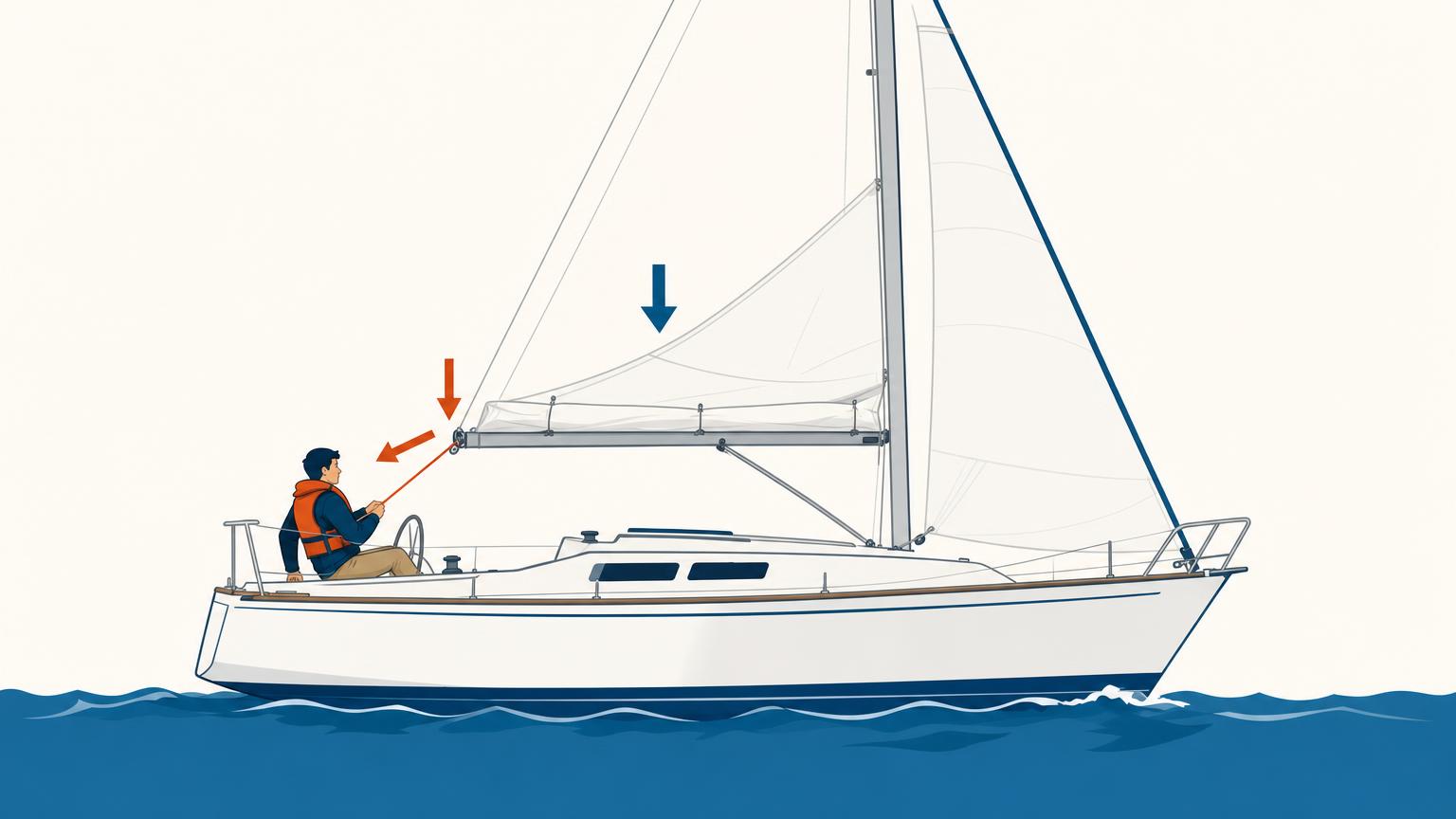
Check the Load-Bearing Corners and Sail Shape
Once you know how to reef a mainsail, pause and inspect the finished reef before you settle back onto course.
The new tack (the lower front corner) must be held down and forward. If it moves aft, the slide just above the reef can take the whole load and break, or the sail can pull from its track.
The new clew (the lower back corner) must be pulled down to the boom and aft. Tension the halyard and reefing line tight, not merely snug. The foot of the reefed mainsail should run straight and flat between the tack and clew. A loose, full shape makes the boat heel more.
Intermediate reef ties only gather the loose sail. They carry no sailing load. Pass them around the gathered sail only, never around the boom. If the reef line fails, a tie around the boom can concentrate the load at one reef point and tear the sail.
If you expect to stay reefed for a while, follow the boat's procedure for adding a separate sail tie from the reef clew to the boom as a backup.
Shake the Reef Out Only When Conditions Support It
Learning how to reef a mainsail also means knowing when to make it full-sized again. First, reassess the breeze. Look for a steady, lighter wind and check whether stronger gusts are still passing through. If conditions remain uneven, keep the reef in.
When you are ready, depower the sail and keep the boat under control. Ease the mainsheet and the vang, the line that pulls the boom down. If your system requires it, tighten the topping lift, which supports the boom.
Remove every tie used to gather the loose sail. A forgotten tie can tear the sail when you hoist it.
Next, release the reef controls in the order taught for your boat. At the front lower corner, you may need to ease the halyard slightly. This removes the load so the sail ring can come off its hook or lashing. Release the rear lower-corner control, then hoist the mainsail while making sure the reefing lines run free.
Once the halyard is tensioned, slack the topping lift so the sail carries the boom. Restore the vang setting and trim the mainsheet. Learn and practise this sequence under supervision on the specific boat.

Debrief the reef as a system
After the boat is settled, check the new tack and clew, halyard tension, reefing line, sail shape, and every loose line. Confirm that reef ties, if the boat uses them, only gather loose cloth and do not carry sail load. Then note which step caused delay or confusion.
Practise the sequence in mild conditions using the boat's own manual and an experienced skipper. The strong-wind preparation guide helps place reefing inside a wider plan for crew roles, route, and early decisions. Familiar controls make it easier to shorten sail before the crew is already overloaded.
Reef before rising wind makes the job harder. A smaller mainsail can reduce heel, improve control, and help the boat move more efficiently. Learn which lines and fittings your boat uses, agree on clear crew roles, and practise the full sequence under supervision in moderate conditions. Hardware and line routes vary, so treat the broad steps in this guide as a learning framework, not an onboard procedure.
After reefing, check that the reef tack and reef clew (the new lower corners) carry the load and that the sail is flat. Shake the reef out only when the breeze is steady and lighter. Before hoisting, release every reef tie and confirm that the reefing lines can run freely.
Try the SailStarter lessons to build your reefing knowledge one visual step at a time.
Use the sail-trim mistakes guide to distinguish a small adjustment from the need to reduce area.
Try it from the lesson
Can you spot the next move?
The boat is heeling too much and feels hard to steer. What does a reef change?
Why you can trust this guide
. We build each guide from public seamanship and safety sources, then teach the universal principle before any local difference.
- physicstoday.aip.org
- arxiv.org
- arxiv.org
- rmets.org
- journals.ametsoc.org
- sailing-blog.nauticed.org
- goodoldboat.com
- northsails.com
- northsails.com
- cruisingworld.com
- uksailmakers.com
- yachtingmonthly.com
- liveabout.com
- sailboat-cruising.com
- greatescape.co.nz
- sailmagazine.com
- apps.sailbp.com
- forums.sailboatowners.com
- upffront.com
- spinnaker-sailing.com
- support.seldenmast.com
- support.seldenmast.com
- modernsailing.com
- dsv.org
- svensksegling.se