Chart your course
When Should You Reef a Sailboat?
Quick answer
The short version
Reef when the boat is beginning to ask more of the helm and crew than you want to manage for the next part of the sail. Repeated gusts, growing heel, a heavy helm, short waves, an uncertain route, or a crew that has stopped moving comfortably are better reasons than waiting for a number on a wind display. A reef reduces mainsail area. It also buys time: the sail is smaller before the next gust makes the job louder and more physical.
There is no universal wind-speed trigger. A light-displacement boat, a cruising boat, a tired crew, an exposed reach, and a familiar protected bay can all lead to different choices in the same forecast. The useful question is not whether another boat still carries full sail. It is whether your boat is balanced enough for what is already happening and what you expect to meet next.
Watch the pattern, not one surprise gust
A single puff can heel a boat sharply and then disappear. It deserves attention, yet it does not automatically require a reef. The pattern matters more. Look along the water for darker patches that keep arriving, listen for a steady increase in rigging noise, and notice whether the gusts now come before the boat has settled from the last one. If each gust needs a larger correction, the breeze has changed from an interruption into the condition you are sailing in.
Start that assessment before the boat is pressed. A forecast may describe an average while the boat experiences stronger bursts. Your own observations fill in the part of the forecast that matters at cockpit level: how quickly the boat heels, how much sheet you are easing, whether steering stays light, and whether the next leg gives you room to work.
What does an early reef feel like?
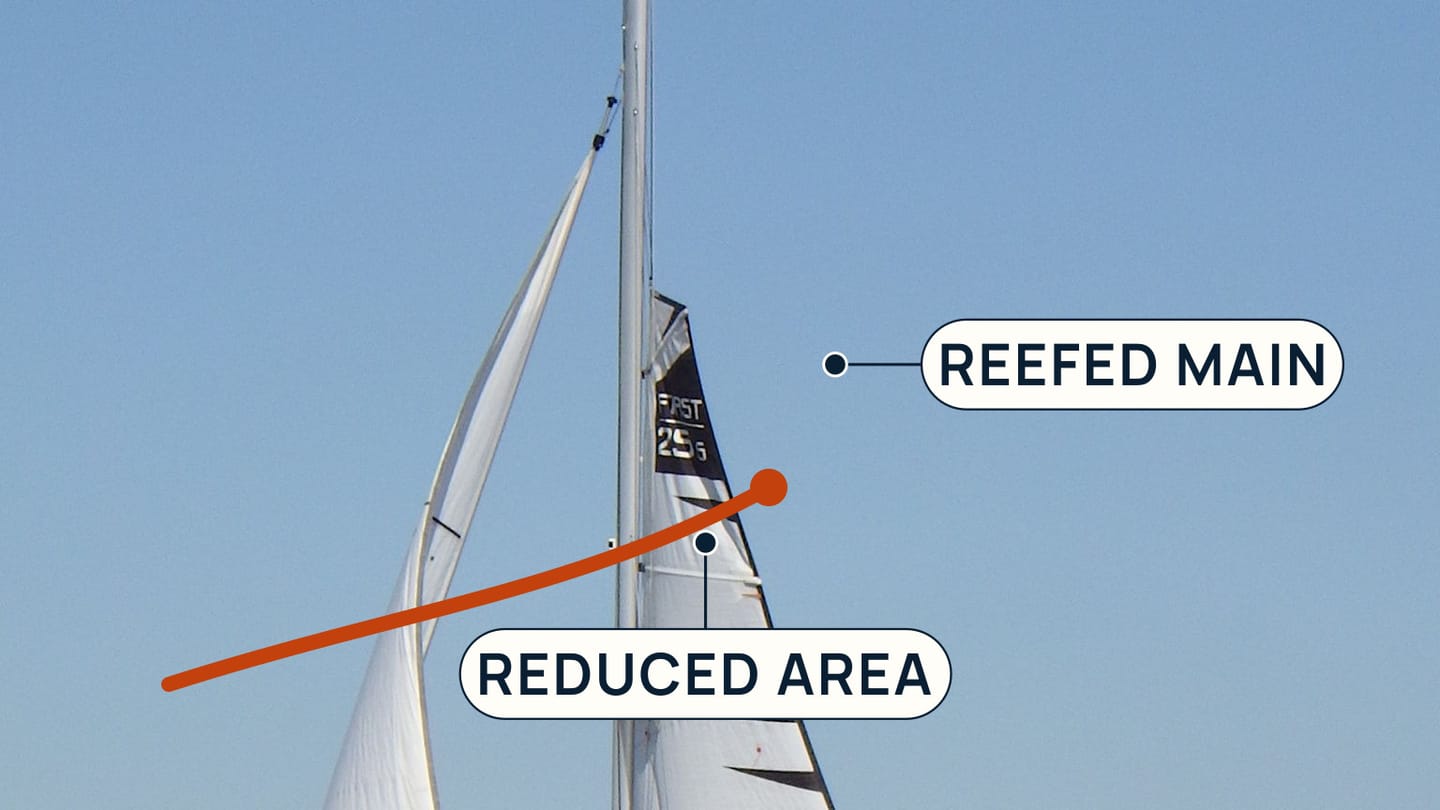
An early reef usually feels slightly anticlimactic. The boat stands up, the helm becomes easier to hold, and the crew has enough spare attention to tidy the lines and continue the route. That is the point. Reefing is not a penalty for getting the forecast wrong. It is a normal sail-plan change when full sail no longer gives a useful balance.
Pay attention to the helm. A boat that repeatedly pulls toward the wind asks the helm to fight sail force. You may be able to ease the mainsail through each gust for a while. If that easing has become the main job, or the boat remains hard to steer after the gust passes, reduce area rather than holding a long argument with the wheel or tiller.
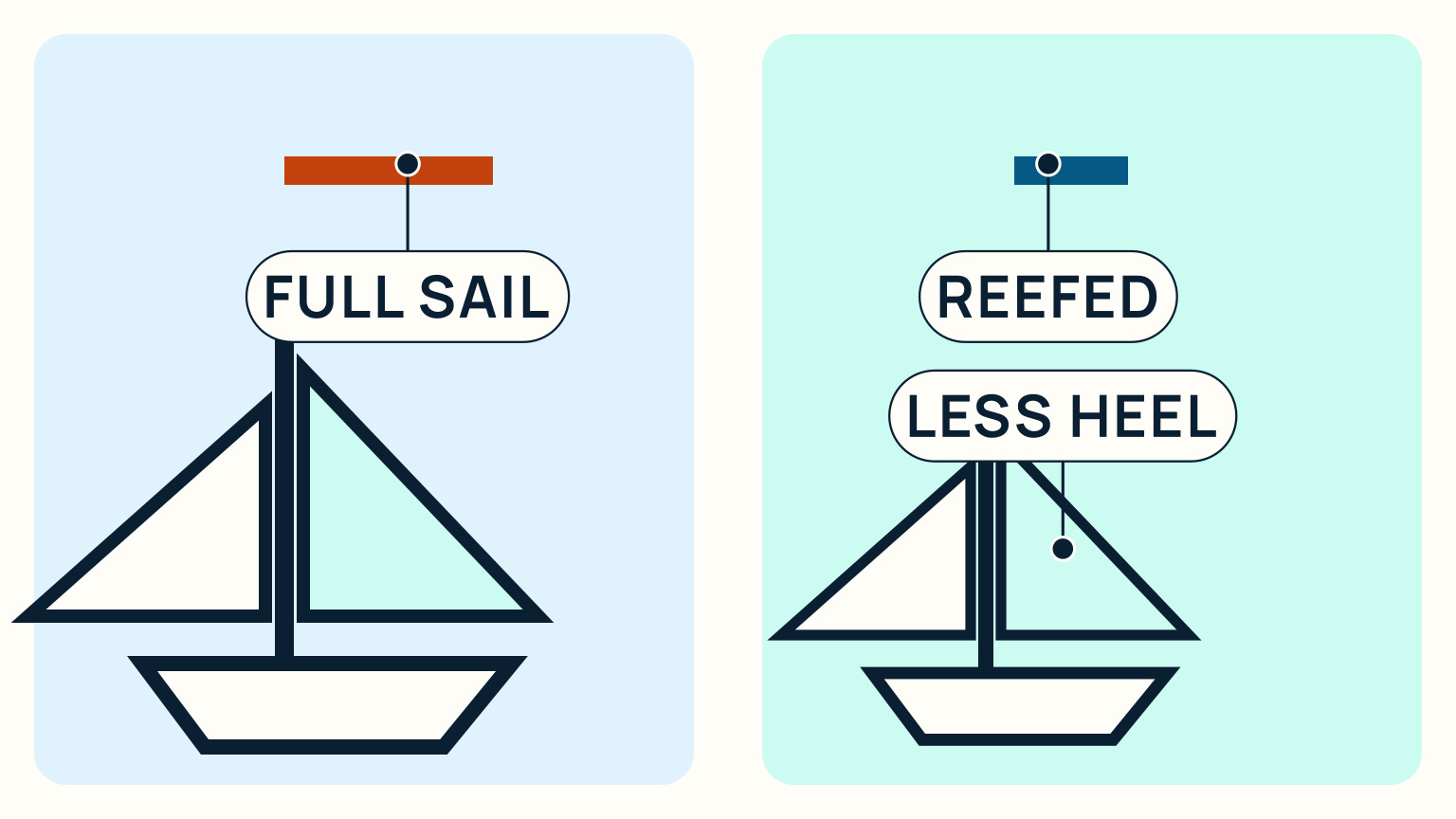
Heel is another clue, although it is not a universal angle to measure. What matters is the effect aboard. Are people bracing to move? Is the leeward rail close enough to make routine work awkward? Is the rudder losing bite as the boat heels? Those observations describe the boat you have today. They are more useful than a number borrowed from a different design.
Read the water and the route together
Wind does not arrive alone. A fresh breeze over short, steep waves can make a previously easy course tiring because the bow slows at each crest and the apparent wind changes with the motion. The crew then handles an unsettled boat while the rig and sails load and unload. In that setting, reefing can be the decision that preserves control for the rest of the route.
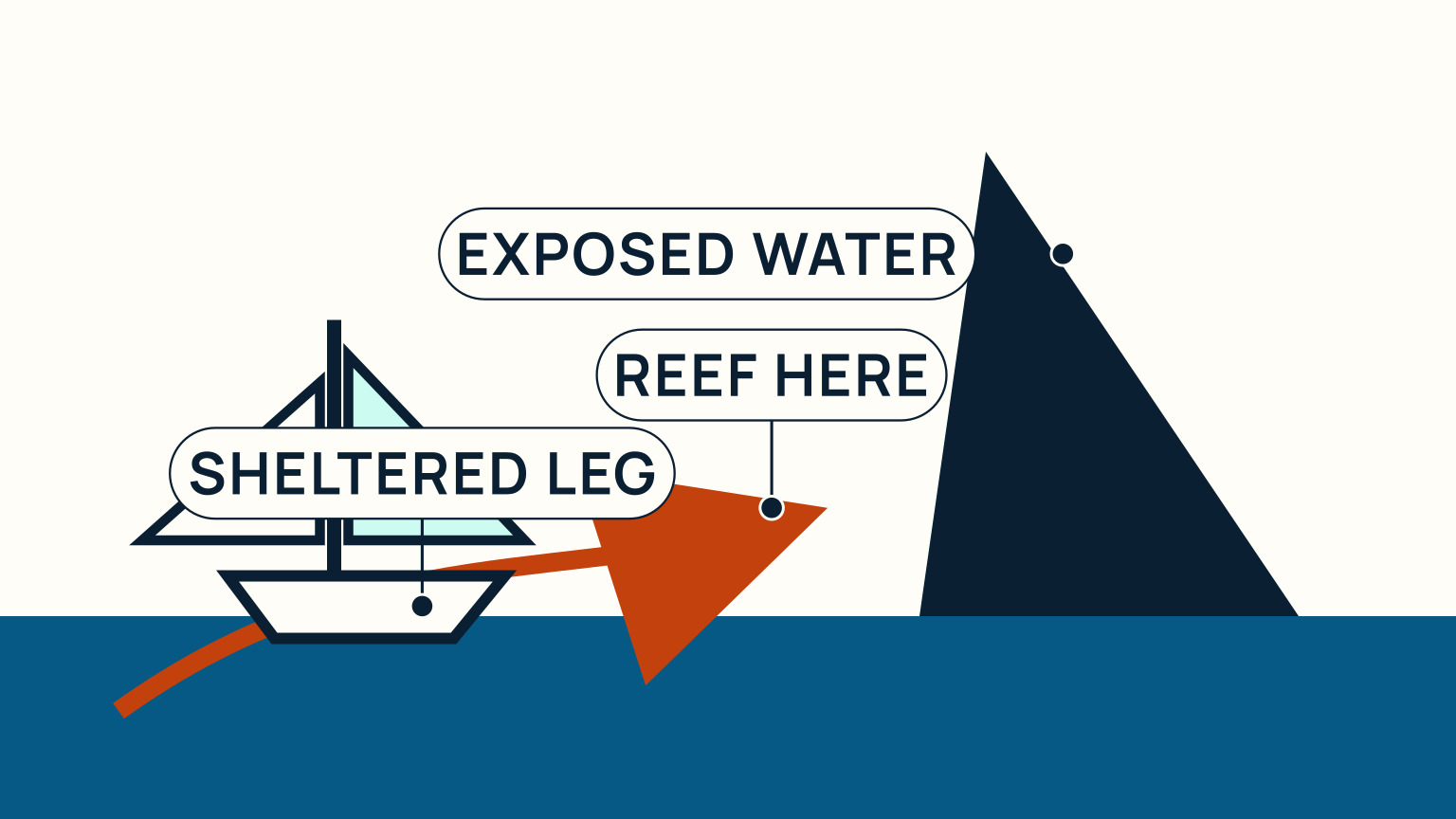
Look beyond the present patch of water. A sheltered reach may be easy with full sail, but the next headland, open channel, or turn upwind can expose the boat to a different sea state. Reef before that boundary when you have sea room and can choose a controlled course. Waiting until the boat is close to shore, traffic, shallow water, or a tight manoeuvre turns a simple sail change into an urgent task.
The route also affects what counts as enough power. You need steerage and a working pace, not the largest possible sail area. If a reefed boat still moves cleanly through the waves and gives the helm a settled feel, it may be the better configuration even if a full-sailed boat beside you looks faster for a few minutes.
Is the crew ready to carry full sail?
Crew readiness belongs in the decision. A practiced crew on its own boat may shorten sail quietly because everyone knows the calls, the controls, and where to stand. A new crew, a short-handed crew, or people who are cold, tired, or seasick need more margin. That does not make them poor sailors. It means the sail plan should leave enough attention for lookout, steering, communication, and moving safely.
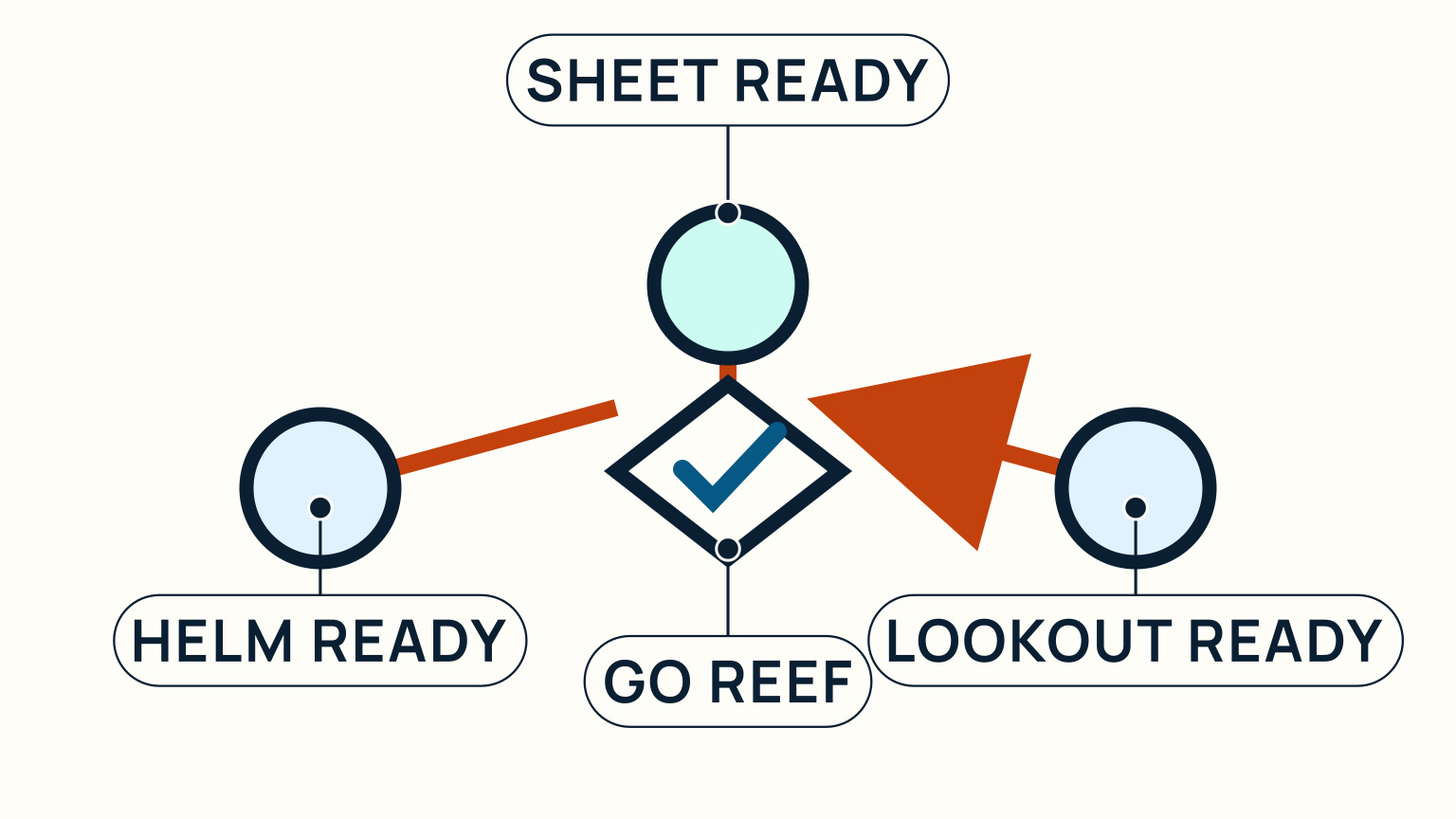
Before the wind builds, identify the reefing system and assign simple jobs. One person keeps the boat on the agreed course. Another works the halyard or reef line. Someone watches the sail and confirms when a corner is secured. The exact line route is boat-specific, so learn it from the boat's manual and an experienced skipper. A generic sequence should never replace the procedure for a furling main, slab reef, or another arrangement.
If the crew cannot describe the next action without shouting over the wind, choose a calmer moment. Prepare the reef while the boat is still manageable. That can mean running a line, clearing a snag, putting on gloves, or agreeing on the course that will take pressure out of the sail. Preparation is a real part of reefing, not a delay before the "real" job.
Make the reef, then inspect the new shape
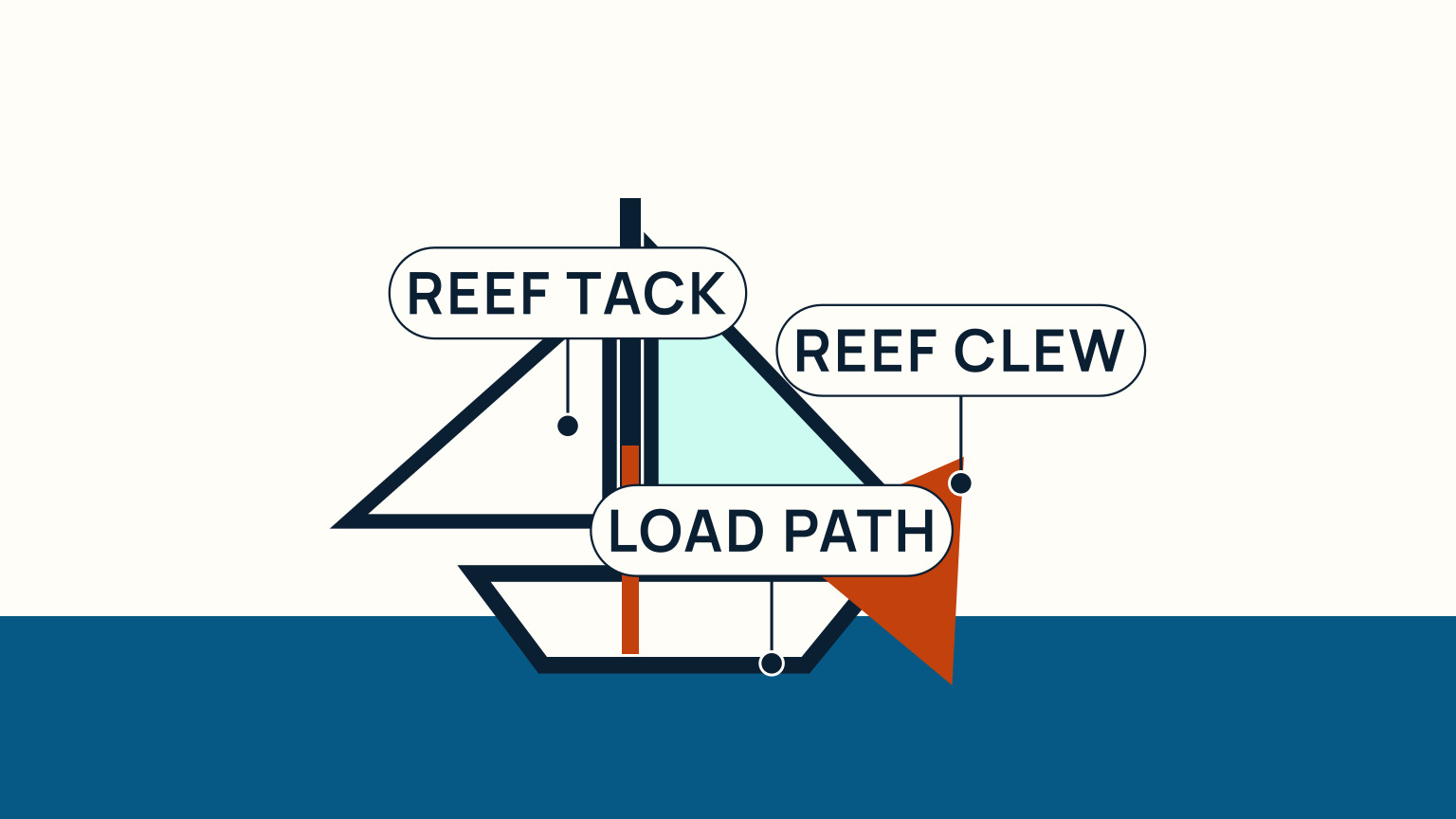
Once the decision is made, put the boat on the safe, controlled course taught for its system. Ease the forces that hold the sail loaded, lower or furl only as the boat's method requires, and secure the new tack and clew. The reefed sail needs a proper inspection before you resume normal trim. The new lower corners carry the important load. Loose cloth can be gathered, but it should not be mistaken for a load-bearing tie.
Then sail for a few minutes and review the result. Is the helm lighter? Does the boat meet waves without slamming the crew into the cockpit? Are the sails drawing instead of flogging? Can someone look around, navigate, and communicate without every task competing for the same pair of hands? If the answer is no, there may be another adjustment to make: further reduction, a change of course, a different destination, or a decision to stop for shelter.
Do not immediately shake the reef out because one quiet interval arrives. Look for a sustained change and consider what lies ahead. The same planning habit that prompted the reef should prompt its removal. A reefed boat that is slightly slower but calm is often more useful than a full-sailed boat that needs constant rescue from the next gust.
Apparent wind can change when the boat changes speed or direction, so check the reefed sail on the course you actually intend to sail. A quieter reach can make a sail plan look generous until the next turn puts the boat closer to the wind. Rather than treating one comfortable minute as proof that full sail is right again, keep watching the helm, heel, water, and the crew's ability to work. Those four observations belong together. They tell you whether the smaller sail has restored a working boat for the whole leg, not merely reduced the drama of the last gust.
Before leaving the dock, use the forecast to make an if-then plan rather than a promise to carry full sail. For example: if the gusts become frequent enough that the helm must repeatedly fight to hold course, you will reef before rounding the exposed point. If the crew has to move forward to handle the sail, you will choose a sheltered course with space to keep the boat controlled. Those are observations and decisions, not borrowed wind-speed limits.
That plan also gives the crew permission to speak early. The person at the helm may feel the load first. A crew member at the rail may notice that moving around has become awkward. The navigator may see the open water ahead. Say the observation aloud, then decide while there is time. This is calmer than waiting for one dramatic gust to make the choice for everyone.
For a first practice, reef in moderate conditions with an experienced skipper and make a short note afterward: what prompted the decision, which line caused hesitation, and how the boat felt once the reef was set. Pair that practice with how to reef a mainsail, preparing for stronger wind, and understanding heel. SailStarter's sail-handling lessons can help you recognize the controls before you use them on the water.
Try it from the lesson
Can you spot the next move?
The boat is heeling too much and feels hard to steer. What does a reef change?
Why you can trust this guide
. We build each guide from public seamanship and safety sources, then teach the universal principle before any local difference.