Chart your course
How to Sail Through Steep, Choppy Waves
Quick answer
The short version
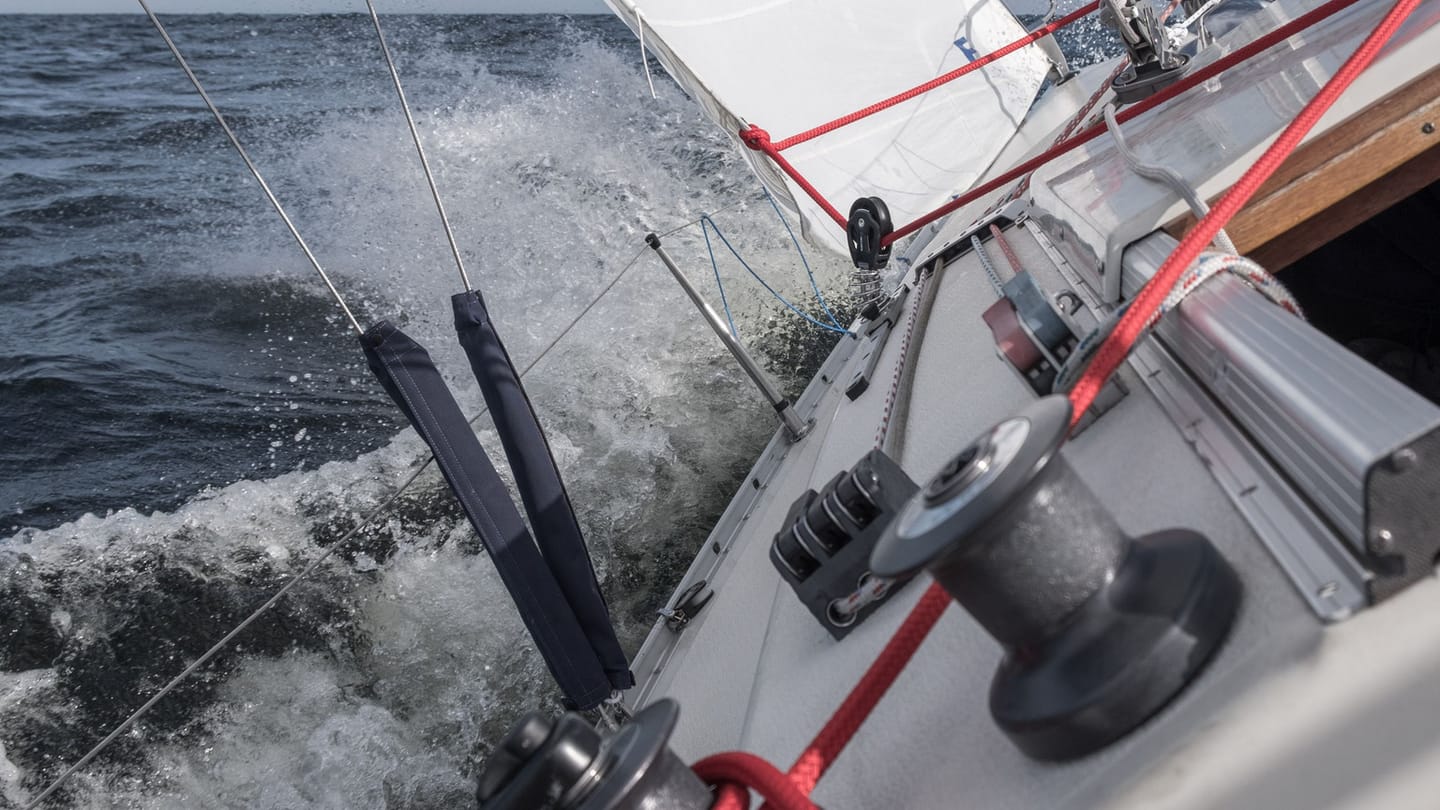
Steep chop is not a condition to solve by pointing the bow at every crest and pressing on. Short waves can stop the boat, alter the apparent wind, throw people off balance, and make steering and sail trim inconsistent. First decide whether the route still suits the boat and crew. If it does, choose an angle that lets the boat keep steerage without pounding, carry a sail plan that is manageable between waves, and make the cockpit ready before the motion becomes tiring.
The answer changes with wave height, spacing, wind, boat, crew, depth, traffic, and the shelter available. There is no universal heading or sail setting. The reliable habit is to watch how this particular hull meets the waves, then adjust one part of the plan at a time.
Decide whether the water still suits the plan
Before altering trim, look at the bigger decision. Are the waves becoming steeper or closer together? Is the next leg more exposed? Does the crew have the clothing, strength, and confidence for another hour of abrupt motion? Is there a sheltered harbour, anchorage, or return route that is easier to reach now than it will be later? Turning back or changing destination is good seamanship when the conditions no longer match the plan.
Watch the boat's behaviour. A bow that repeatedly stops, throws spray into the cockpit, or causes the helm to lose a consistent feel is giving useful evidence. So is a crew that cannot move safely to handle a line. Do not dismiss those signals because the forecast number still seems modest. The sea state at the boat is the condition you must manage.
Give the crew a clear decision point. State what would make you reduce sail, alter course, or seek shelter. That prevents a gradual escalation in which everyone notices the same discomfort but nobody says it aloud.
How should you meet short, steep waves?
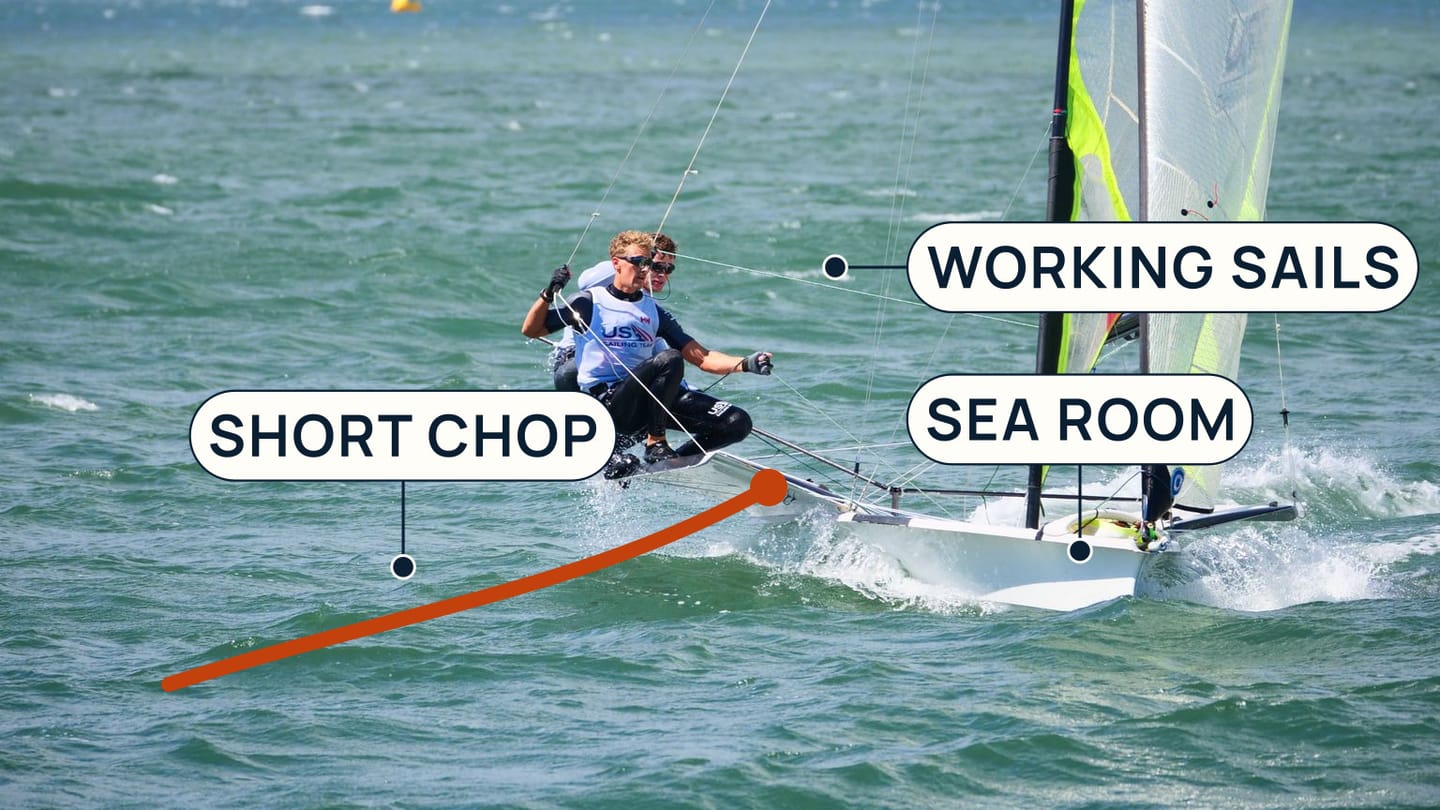
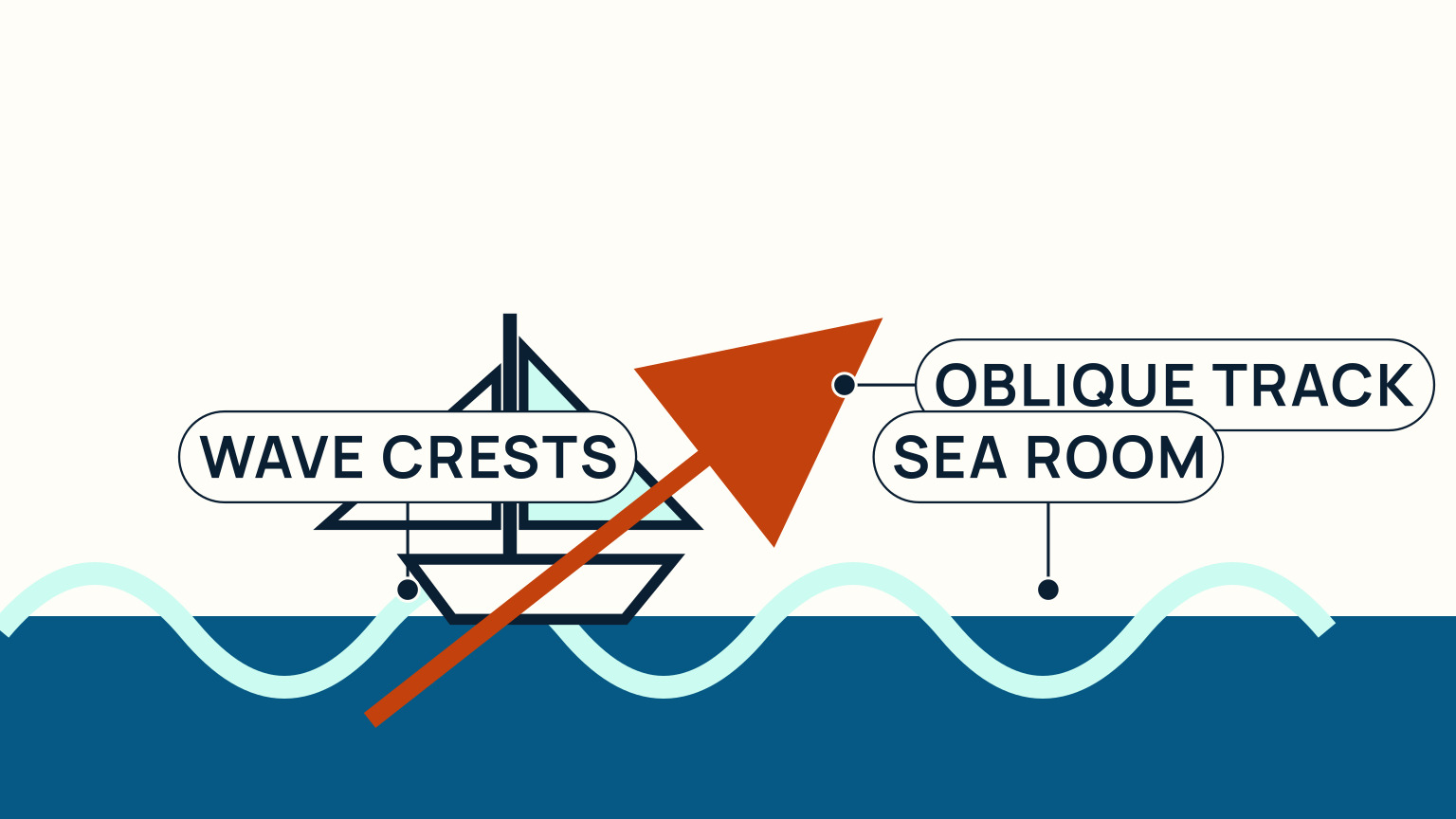
Try a modest change of angle and watch the result. Meeting the waves directly may make the bow rise and fall sharply. Crossing them too broadly can create an uncomfortable rolling motion and increase the risk of being knocked sideways. The useful angle is the one that lets the boat make steady progress while keeping the crew and steering under control. It will change as wind, wave direction, and the route change.
Avoid chasing every crest with the helm. Small corrections preserve a readable course and reduce the chance of a wide turn when the boat is light on the rudder. Look ahead to the pattern of water rather than down at the next wave alone. A helmsperson who sees two or three crests can make a smoother path than one who reacts after each impact.
Keep enough sea room to alter the angle. Close to a lee shore, shallow water, traffic, or a narrow entrance, a course experiment may not be available. That is a reason to make the exposed-water decision earlier, while there is still room to choose.
Keep drive without overpowering the boat
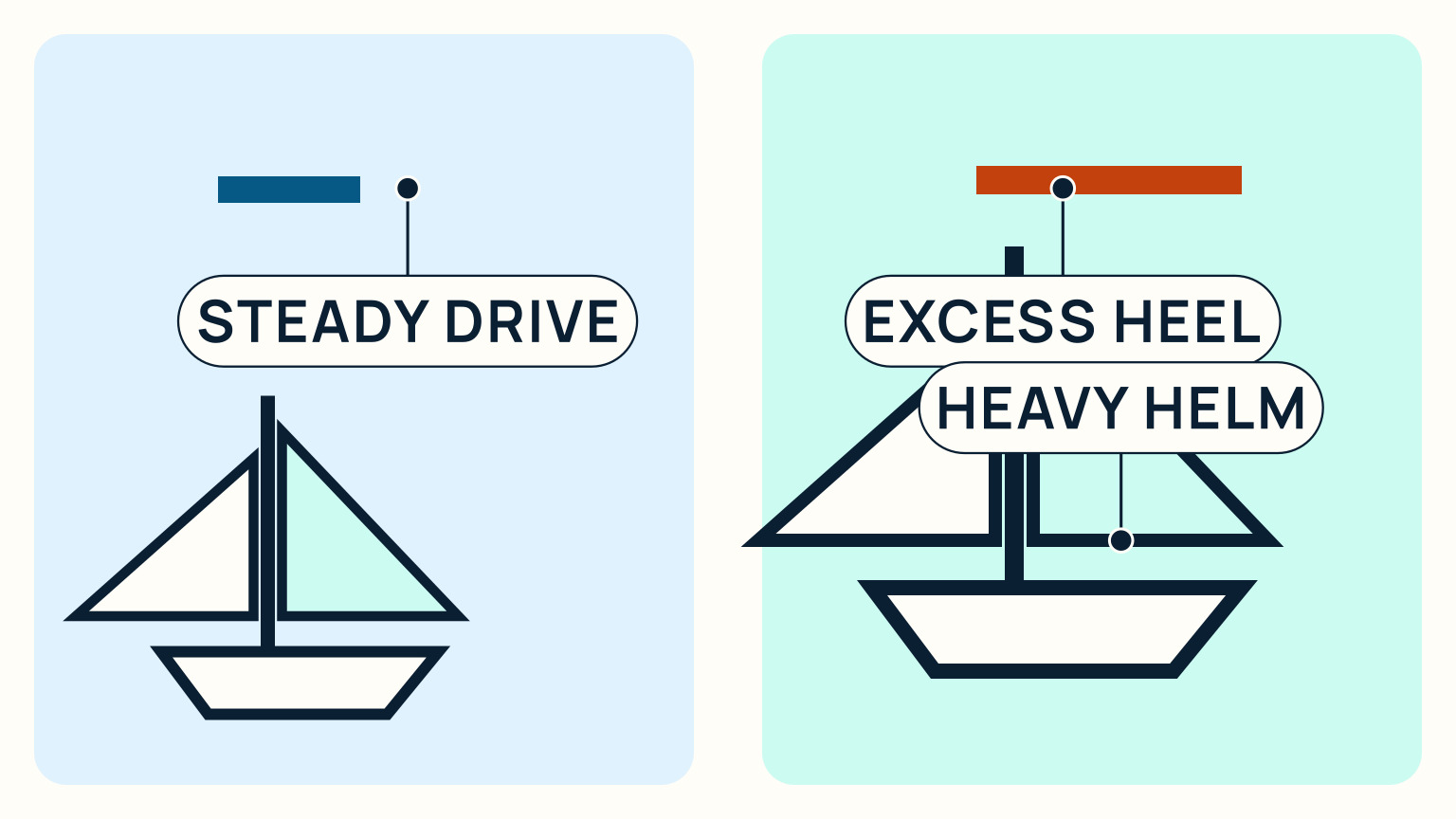
The boat needs enough drive for the rudder to work and for the bow to climb through the water. It does not need every square metre of sail available. In gusts, full sail may produce heel and a heavy helm just as the waves need your attention. Reduce power with a controlled sheet ease, a course adjustment, or a reef when the lasting condition calls for it.
Read the sails after each change. A boat that slows dramatically at every wave may have too little drive or an unhelpful angle. A boat that heels hard, rounds up, and makes the crew brace continuously may have too much. Seek the middle: forward motion, a manageable helm, and enough spare attention for lookout and navigation.
The apparent wind can change as the hull slows on a crest and accelerates down the next face. That is why a sheet setting may feel inconsistent in chop. Do not chase each small change. Use the overall trend and make measured adjustments after the boat has settled for several waves.
What should the crew prepare below and on deck?
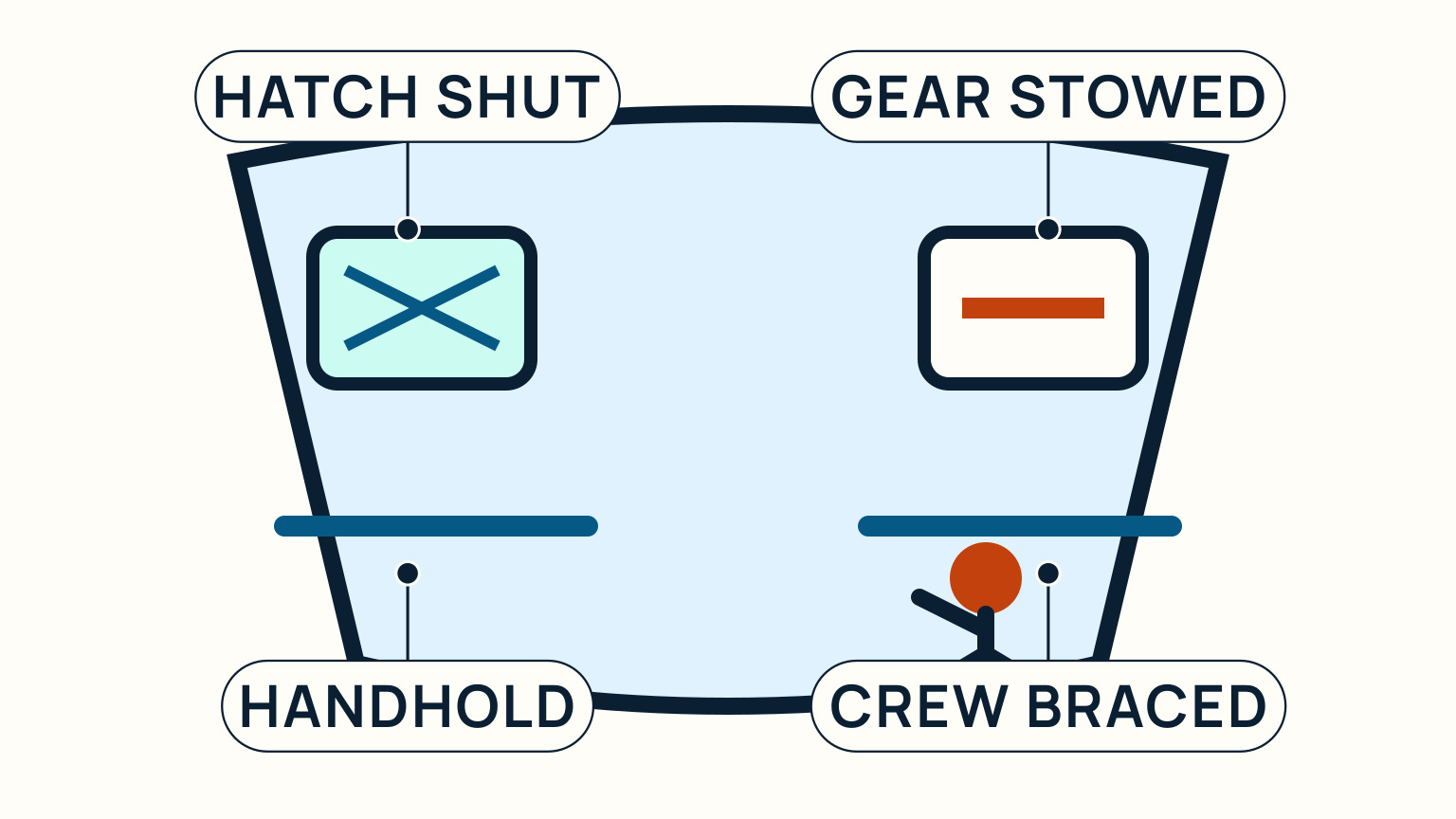
Secure loose objects before the motion gets worse. A mug, hatch board, tool, or bag that moves across a cabin becomes a hazard and a distraction. Close and latch what should be closed, stow hot drinks, put on lifejackets as the boat's plan requires, and make sure people know where they can hold on. On deck, one hand for the boat is especially practical when each wave changes the angle underfoot.
Reduce non-essential movement. Prepare lines, navigation tools, and clothing before a manoeuvre rather than sending someone forward repeatedly. If reefing or changing course may be needed, brief the jobs while everyone can still hear and move comfortably. A crew member who is cold, wet, or seasick may need a simpler role and more rest, not an instruction to push through.
Keep the cabin dry and useful. Water entering through an open hatch or unsecured companionway can make the next decision harder. Check bilge and drainage only when it is safe to do so; do not send someone below to investigate every sound while the boat is still taking sharp motion.
Use the next sheltered option
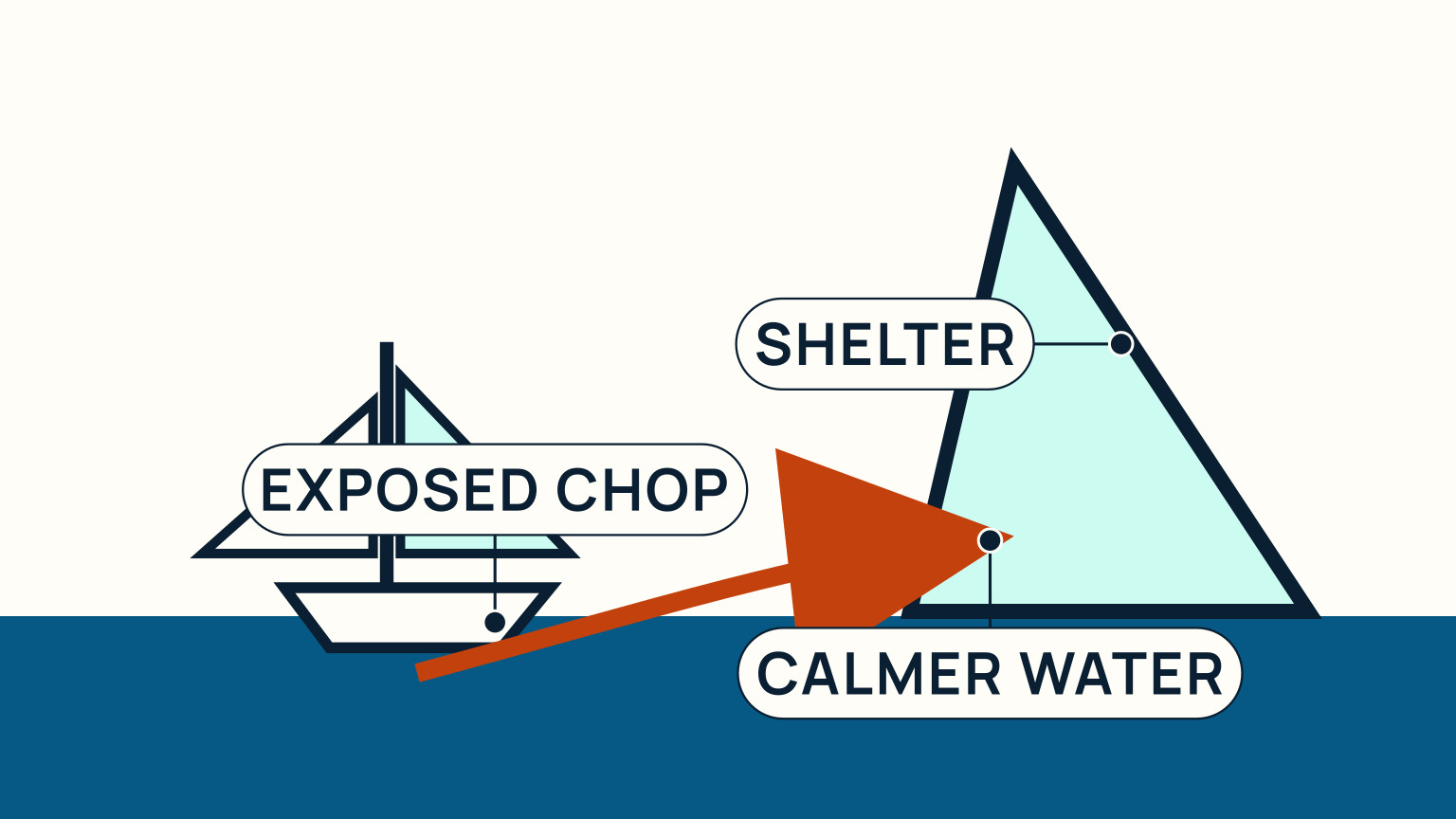
When the boat has reached the point where every wave demands a correction, choose the next sheltered option before fatigue turns a manageable decision into an urgent one. A harbour, lee, or course closer to land may not remove every wave, but it can give the crew a place to reset, eat, inspect the boat, and wait for a change. Treat shelter as part of route planning, not as an admission that the sail failed.
On approach, remember that entrances and headlands can concentrate waves and wind. Slow down the plan, review depth and local information, and keep a safe alternative if the entrance does not look as expected. Do not assume the water will become calm at a line on the chart. Keep enough fuel, communications, and daylight margin for the real arrival.
After reaching shelter, debrief the observations. Which angle worked best? Did the sail plan give enough drive? What equipment moved? Was the crew's clothing adequate? These notes make the next forecast and route discussion more concrete. They also help distinguish a one-off uncomfortable patch from a condition the boat and crew should avoid in future.
If the boat must turn through the waves, plan the turn before initiating it. Look for traffic and shallow water, tell the crew which side will become exposed, and secure anything that can slide. A turn can briefly put the waves on a different part of the hull and change the apparent wind in the sails. Give the boat time to settle on the new heading before deciding whether the change was an improvement.
Use the engine only under the skipper's plan and with the same attention to steering, waves, and crew safety. Power does not erase the need for a workable angle or sea room. It may provide useful control, or it may add another system that needs monitoring. The conditions and the boat decide.
Treat each adjustment as a short test rather than a permanent answer. A small course change can improve how the bow meets a wave train, yet the next shift in wind or wave direction can change that result. Let the boat cross several waves before deciding whether the new angle has preserved steerage and reduced the harsh motion. If the test leaves the crew more tired, the helm less predictable, or the route with fewer safe options, reverse it early. The aim is control with room to make the next decision.
Before the next trip, compare the forecast's expected wave direction and period with the route's exposed sections. Do not treat a forecast as a promise of comfort, but use it to choose a time and route that give the crew options. A plan with an earlier start, a protected stopping place, and a clear turn-back point gives the helm more choices than a schedule that demands one open-water leg.
Pair this with reading wave and swell forecasts, the weather check and float plan, and reefing a mainsail. SailStarter can help you recognise the handling clues. On the water, the sensible outcome may be a new angle, less sail, more shelter, or a decision to go another day.
Try it from the lesson
Can you spot the next move?
The boat remains pointed into the wind, stopped or nearly stopped with its sails luffing. What condition is it in?
Why you can trust this guide
. We build each guide from public seamanship and safety sources, then teach the universal principle before any local difference.