Chart your course
The No-Go Zone: Why Sailboats Can't Sail Straight Into the Wind
Quick answer
The short version
You can steer a car or motorboat toward almost any destination. A sailboat has one important limit: it cannot sail straight into the wind, whatever you do with the sails. In the roughly 90-degree no-go zone centred on the incoming wind, air cannot flow across the sails at a useful angle, so they cannot generate lift. At the edge of this zone, the boat can sail close-hauled (as near to the wind as its design allows, with the sails pulled in tightly). Point farther into the zone and the sails flap, the boat slows, and it may stop in irons. To reach a destination upwind, you beat to windward: alternate close-hauled legs, tacking through the wind between them to make a zigzag route forward.
When you steer a car or motorboat, you expect it to point toward your destination. A sailboat works differently. One direction is unavailable, however carefully you trim the sails. The no-go zone is a roughly 90-degree wedge centered on the direction the wind is coming from. Inside it, the sails cannot generate the lift that drives the boat.
This guide shows you why the sail needs an angle to the wind and what happens near the no-go zone. At its edge, close-hauled is the closest course you can sail while the sails remain full and drawing. Point too far into the zone and the sails luff, or flap without driving the boat. The boat may end up in irons: stalled into the wind, with luffing sails and little steering response. You will also see how tacking swings the bow through the wind so it arrives on the other side, creating a zigzag route upwind.
Why the Sail Needs an Angle to the Wind
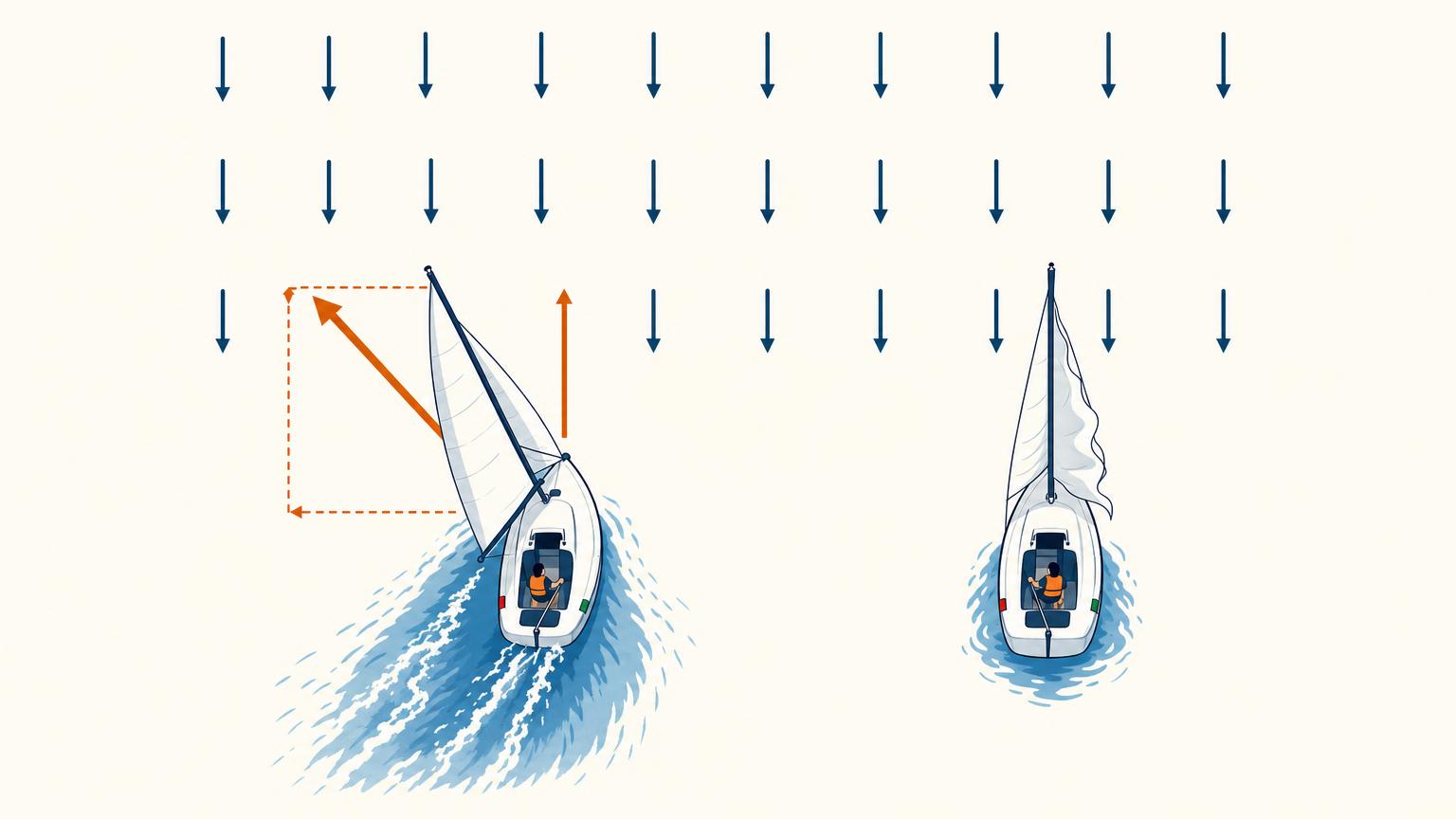
A sail works when air flows smoothly across it at a useful angle. In that position, its curved shape acts much like a wing. The airflow creates lift, a force that acts across the sail rather than straight along it.
Much of that force would push the boat sideways. But the part below the water (a keel or centreboard) resists sideways movement. The sail keeps applying force while this underwater surface limits the boat's drift. Together, they leave the boat moving mainly forward, with some sideways motion.
As you turn closer toward the wind, the angle between the sail and the airflow becomes smaller. The sail begins to lose lift before the bow points exactly into the wind. Too close, and the sail flaps instead of holding a smooth, powered shape. Sailors call this flapping luffing.
This range of headings where the sail cannot produce useful lift is the no-go zone in sailing. It is a wedge around the direction the wind comes from, rather than one exact line straight into it. Side-by-side real photographs compare a sail driving with the wind crossing the boat against a boat pointing into the wind with no drive while its yarn hangs instead of streaming. The same blue and white arrow colours identify wind and course in both panels.
The No-Go Zone and Its Close-Hauled Edge
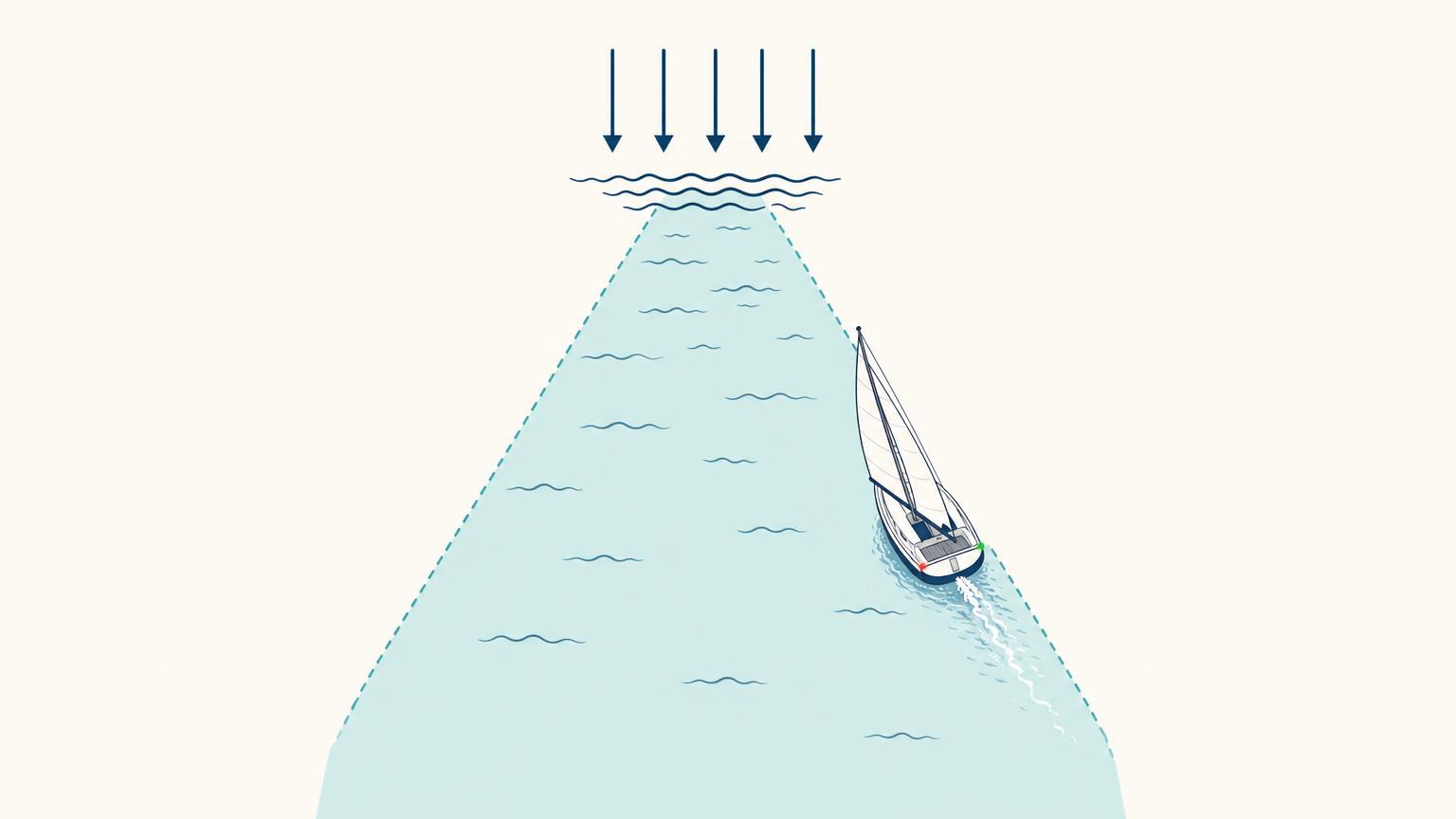
Picture a wedge opening from the boat toward the wind. This is the no-go zone: the range of directions where the sails cannot produce enough lift to drive the boat forward.
The wedge is centred on the true wind direction (the direction the wind blows from, as measured by someone standing still). It is roughly 90 degrees wide, or about 45 degrees on either side of straight into the wind. This is only a useful guide. The exact width varies with the boat's sails, keel, and overall design.
The usable course along either edge of this wedge is called close-hauled. You sail diagonally toward the wind, often at roughly 45 degrees to it, rather than pointing straight at it. You pull the sails in close to the boat's centreline, where they can remain full and keep producing lift.
Turn farther toward the wind, and you cross the edge. The sails begin to flap, or luff, and the boat loses speed. Ease away from the wind again, and the sails can fill and draw. The precision figure uses a 90-degree teaching wedge centred on the blue incoming-wind axis, places a faded stalled boat inside it, and shows one teal sailable edge with a recognisable close-hauled boat roughly 45 degrees from the wind axis.
What Happens When a Boat Is in Irons
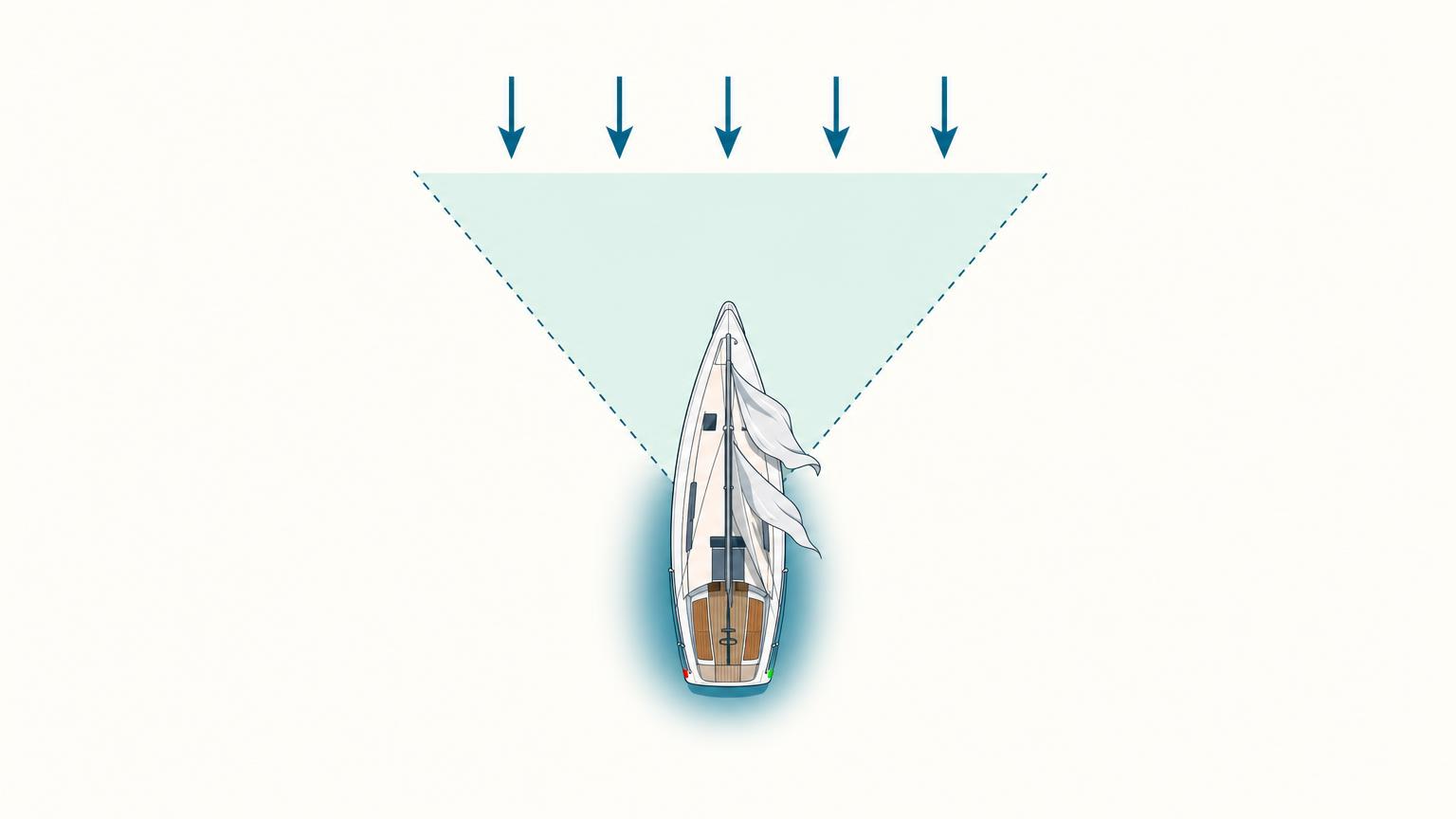
When you steer into the no-go zone and stay there, the sails lose the angle they need to make power. They begin to luff (the sailing word for flapping loosely instead of holding a smooth, full shape).
Without power from the sails, the boat slows. As its movement through the water fades, the steering becomes less effective. Turning the rudder may no longer change the boat's direction as you expect.
A boat that is stopped or nearly stopped while pointing into the no-go zone is in irons. It may look ready to sail because its bow faces the wind, but the sails cannot pull it forward on that course. This can also happen during a turn through the wind if the boat loses its momentum before reaching the other side of the no-go zone. The real photograph shows the white course arrow aimed straight toward the opposing blue wind arrow, while the red sail telltales hang instead of streaming in attached airflow.
Beating: The Zigzag Route Upwind
Use the sails and speed as feedback
Sail close-hauled on one tack and watch the luff of the headsail, telltales if fitted, boat speed, heel, and rudder feel. If the bow points too close to the wind, the leading edge begins to luff, speed falls, and steering becomes less effective. Bear away a few degrees, allow the sails to fill, and rebuild speed before trying to point higher.
Do not pull the sheets tighter every time the sail flutters. A correctly trimmed sail cannot drive a boat aimed inside its no-go zone. Heading, trim, and speed work together. The why-won't-my-sailboat-point guide diagnoses pinching, trim, current, and boat condition in more detail.
Plan progress over the ground
The closest angle through the water is not always the fastest route toward the destination. Pinching may reduce speed enough that the boat makes worse progress. Waves can require a slightly fuller course to keep momentum. Current can change the track over ground even while the boat sails well through the water.
Choose a reference ahead on each tack and compare progress after a few minutes. Use the chart and position information to see whether one tack is favored by wind shift or current. Leave room to tack before shore, shoal, traffic, or another obstruction.
Recover from in irons deliberately
If the boat stops head to wind, ease the mainsheet as needed, move the tiller or wheel according to the taught recovery, and let the bow fall onto one tack. A backed jib may help turn the bow. Do not keep steering as though water were still flowing strongly over the rudder.
Once the bow is outside the no-go zone, trim gradually and build speed. Clear lines and confirm traffic before returning to the intended course. Practise in open water so recovery becomes familiar rather than urgent.
The no-go zone moves relative to the true and apparent wind the boat experiences. Use wind clues and sail behavior rather than a compass number copied from another boat. The steering guide explains why motion must come before a useful turn.
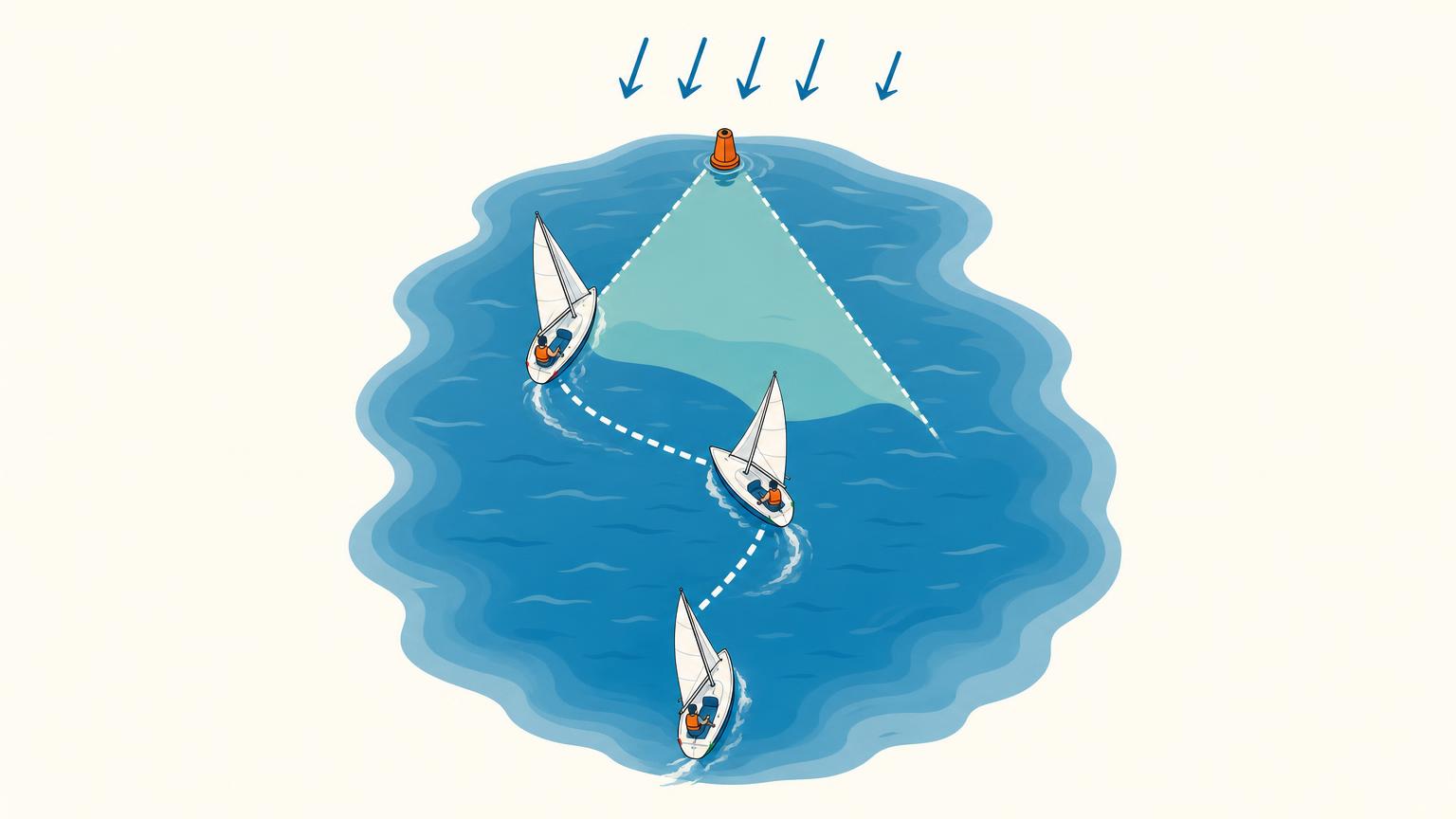
If your destination lies upwind, you approach it in a zigzag. You sail close-hauled along one edge of the no-go zone, moving both sideways and toward your destination. Then you turn and follow the opposite edge.
That turn is called tacking. You steer the bow through the wind, changing which side of the boat receives the wind. For a short time, the boat crosses the no-go zone. The sails luff, meaning they flap and stop driving the boat.
Momentum carries you through this powerless part of the turn. Once the bow reaches the other side, the sails fill again. You settle onto a new close-hauled course, angled upwind in the opposite direction. If the boat loses too much speed before crossing the zone, it may stop in irons instead.
Repeating these alternating close-hauled legs is called beating to windward. Each leg points beside the wind rather than straight into it, but together they let you make steady progress toward an upwind destination. The computed route keeps a blue incoming-wind axis fixed while three recognisable boats follow the orange 45-degree legs, turn at the labelled tack, and finish at the upwind mark.
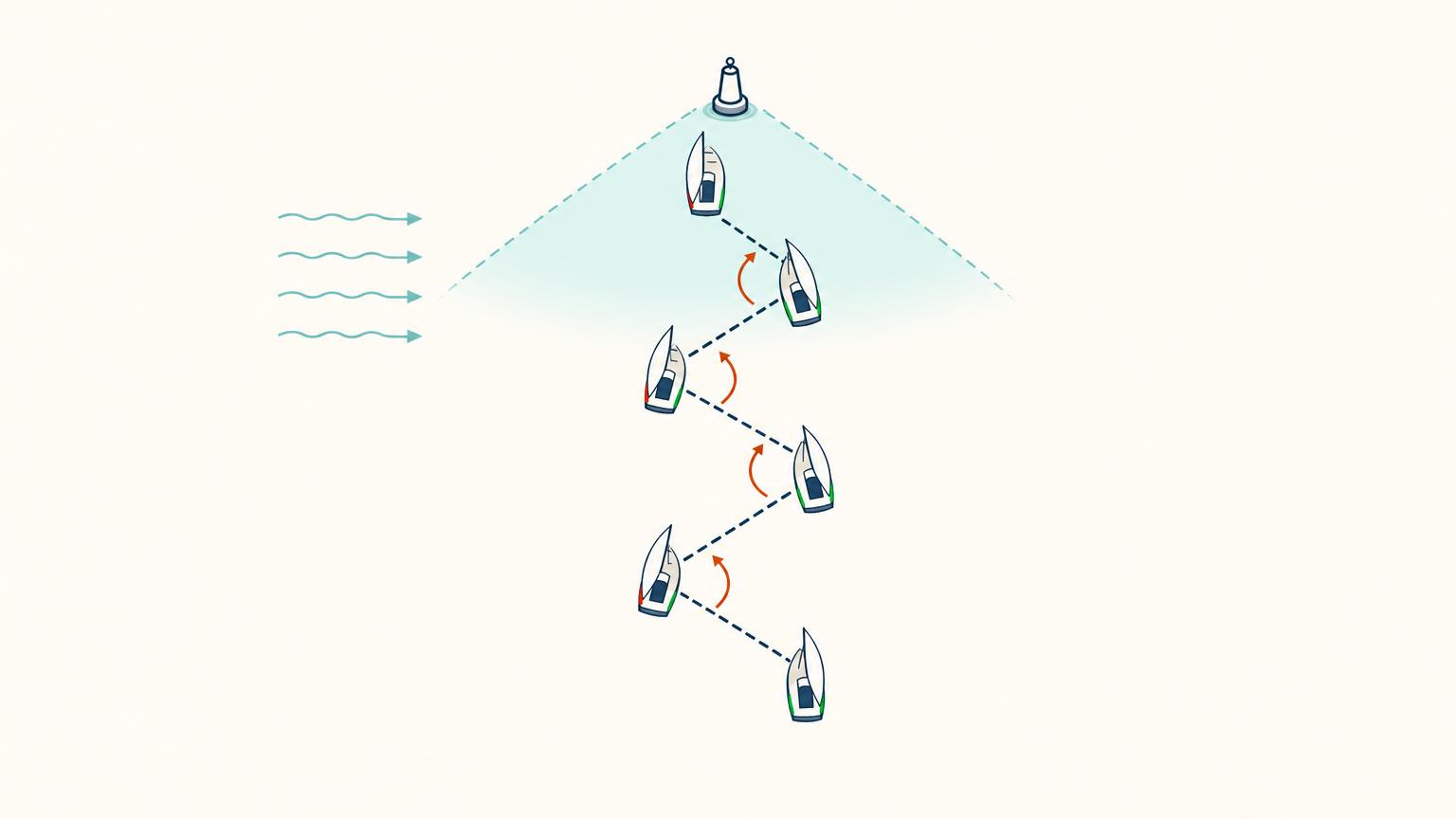
A sailboat cannot take a straight path toward a destination directly upwind. Instead, you sail close-hauled, near the edge of the no-go zone where the sails can still stay full and produce power. Tacking: turning the bow through the wind to put the wind on the boat's other side: lets you link these close-hauled legs into a zigzag. Each leg carries you diagonally, but together they move you toward the upwind destination. This route may look indirect, yet it works with the angle the sails need rather than fighting the limit straight ahead. To practise spotting the no-go zone and following an upwind route, try SailStarter's short beginner lessons.
Try it from the lesson
Can you spot the next move?
The boat remains pointed into the wind, stopped or nearly stopped with its sails luffing. What condition is it in?
Why you can trust this guide
. We build each guide from public seamanship and safety sources, then teach the universal principle before any local difference.