Chart your course
How to Sail Wing-on-Wing
Quick answer
The short version
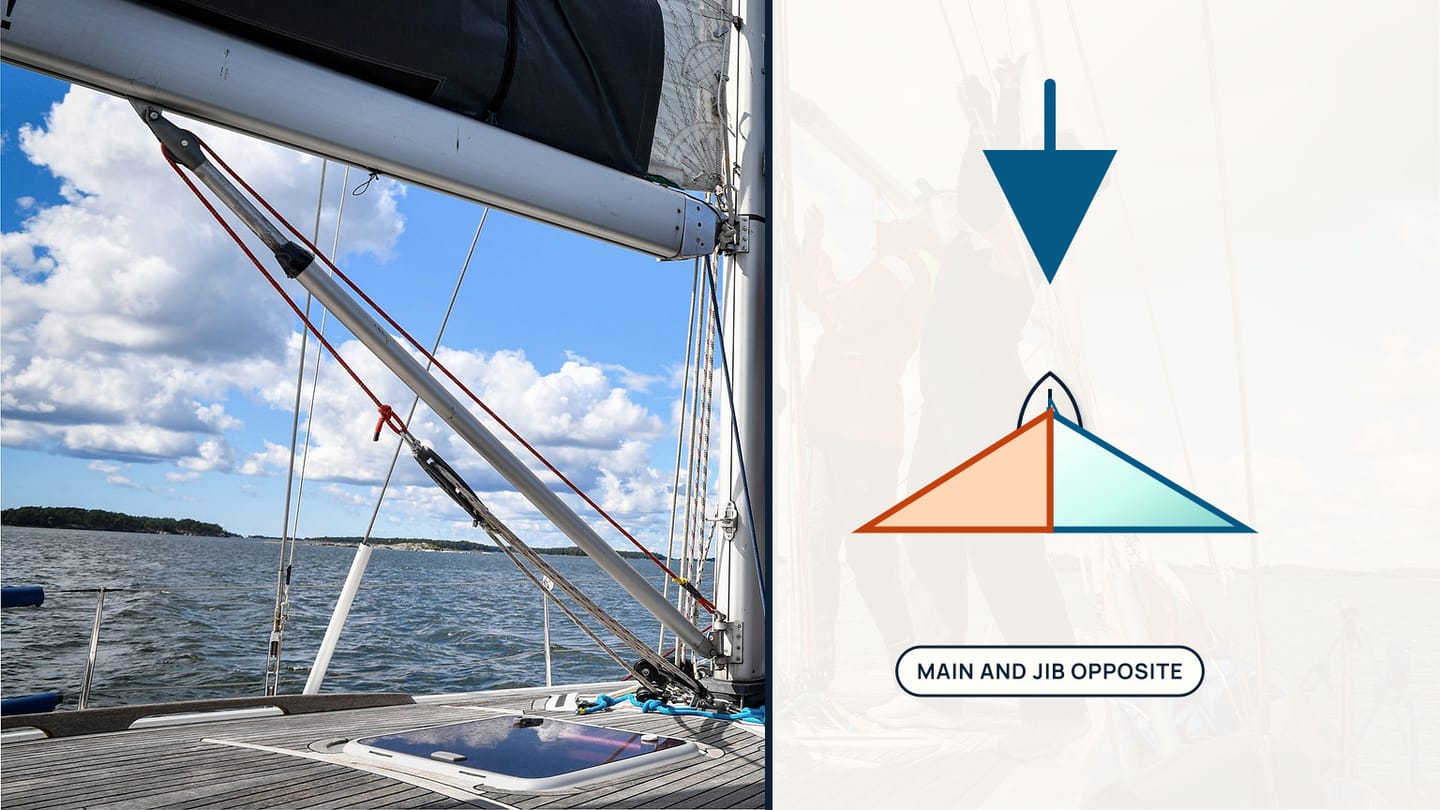
Wing-on-wing is a downwind arrangement with the mainsail on one side and the jib on the other. It can expose both sails to wind that would otherwise hide the jib behind the main. The setup needs a stable course because a small wind shift or steering error can collapse the jib or send the boom across in an accidental gybe. Establish the downwind angle, secure the boom only with the boat's approved preventer practice, move the jib across under control, and steer from wind clues rather than chasing the collapsing sail.
This is a configuration, not a promise that dead downwind is the fastest or safest route. Many boats make better progress by sailing broader reaches and gybing. Sea state, traffic, crew experience, and rig design decide whether wing-on-wing is useful.
Prepare with points of sail explained, how to rig and use a preventer, and how to gybe a sailboat. The boom can move violently. Keep heads and bodies out of its arc, follow the skipper's commands, and do not improvise a restraint on unfamiliar hardware.
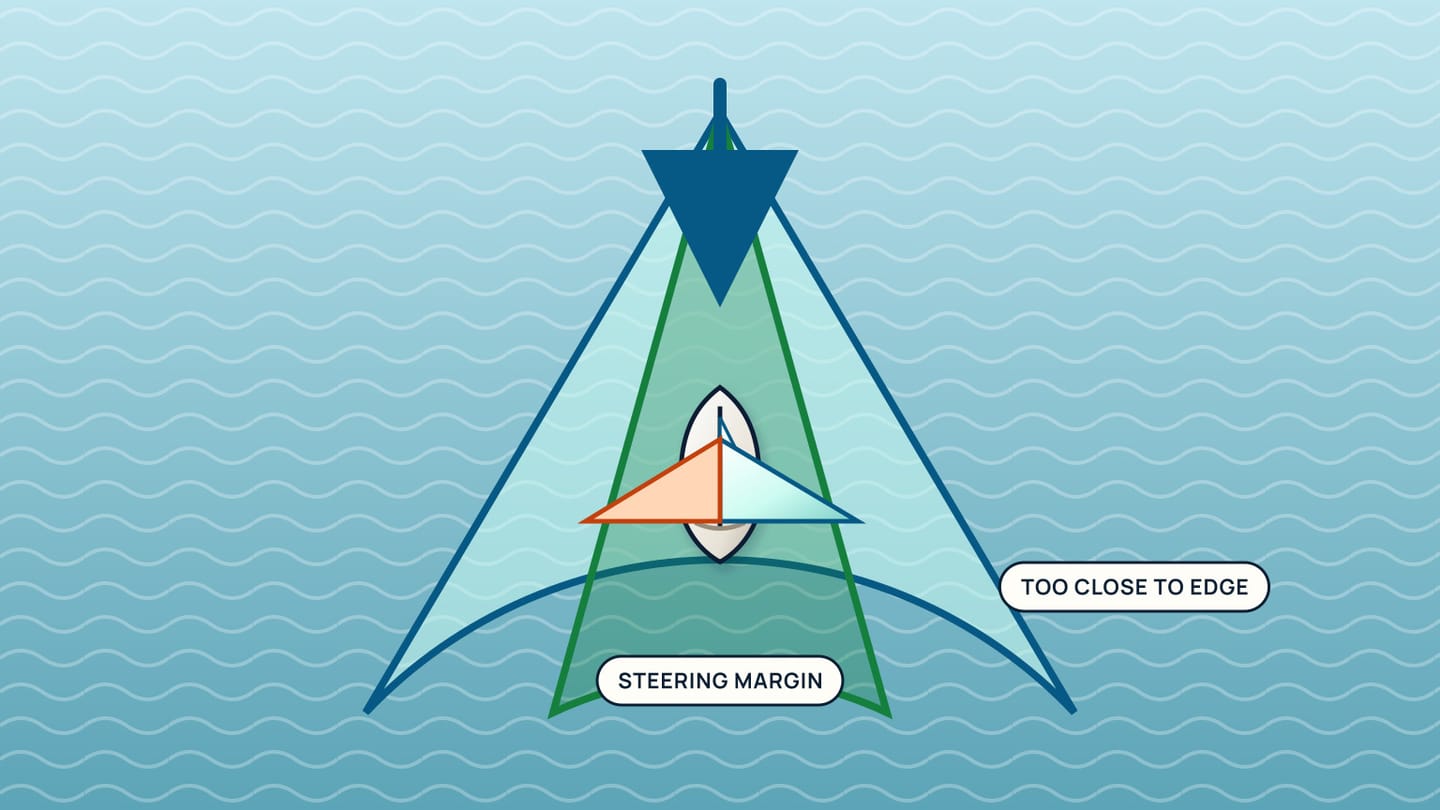
Choose an angle with steering margin
Begin on a broad downwind course with the mainsail stable on one side. Watch the apparent wind indicator, leech, waves, and wake. The boat needs enough margin that normal yaw does not repeatedly cross the wind. Sailing exactly on the knife-edge of a gybe gives the helmsman no room for a wave or distraction.
Check the route. A direct line downwind may lead toward a lee shore, traffic, or an awkward harbour approach. A pair of broad reaches may create a longer track but a steadier boat. Decide from safe progress, not from the visual appeal of two spread sails.
Feel the rolling motion before setting the jib opposite. Large rolls change the sails' apparent angle and can flick the boom. If the boat cannot hold a controlled course with one sail plan, adding a second exposed sail does not repair the problem.
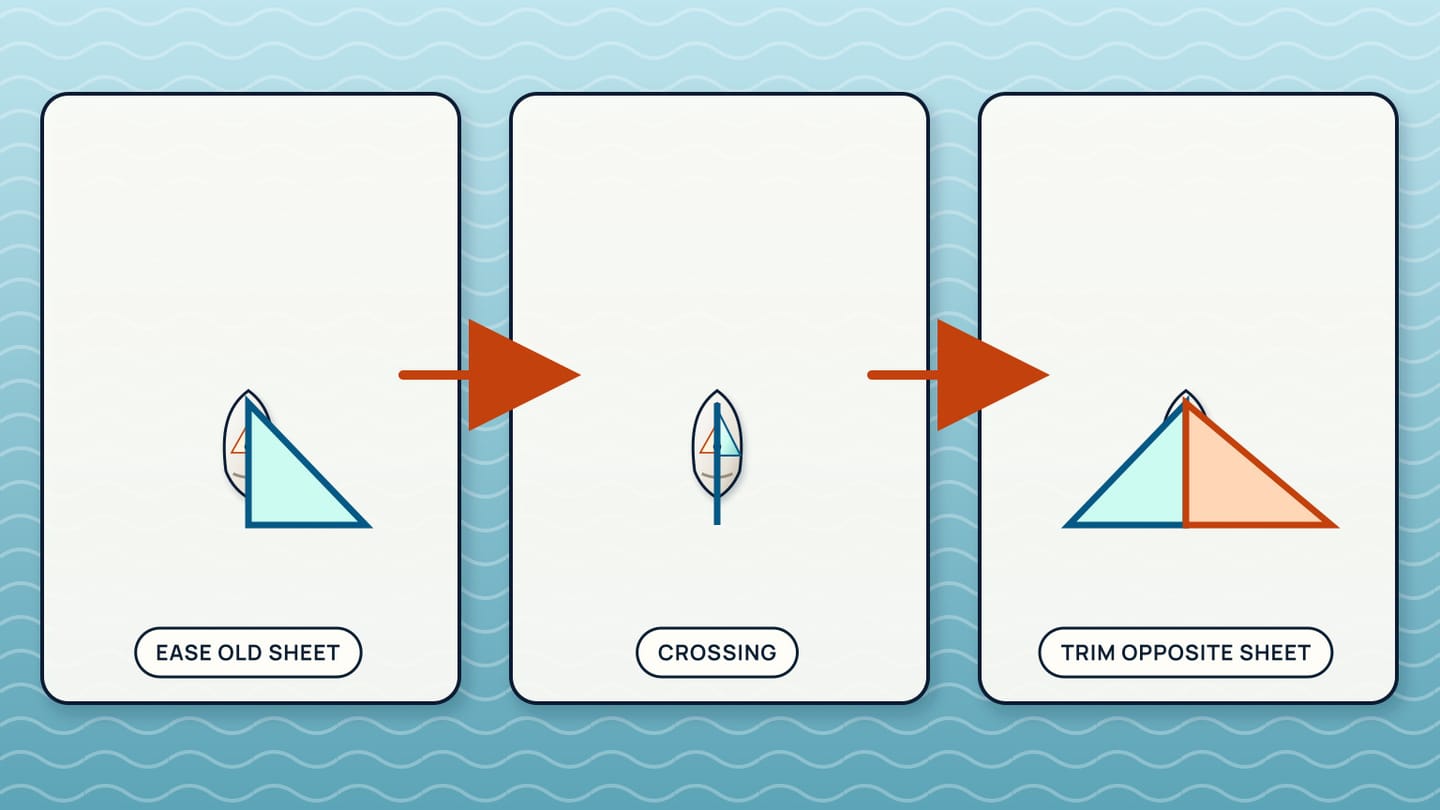
Brief an exit: bear onto the current mainsail side to fill the jib behind it, or gybe through a planned manoeuvre. The exact choice depends on room and traffic. Everyone should know it before the jib is moved.
Set and control the mainsail first
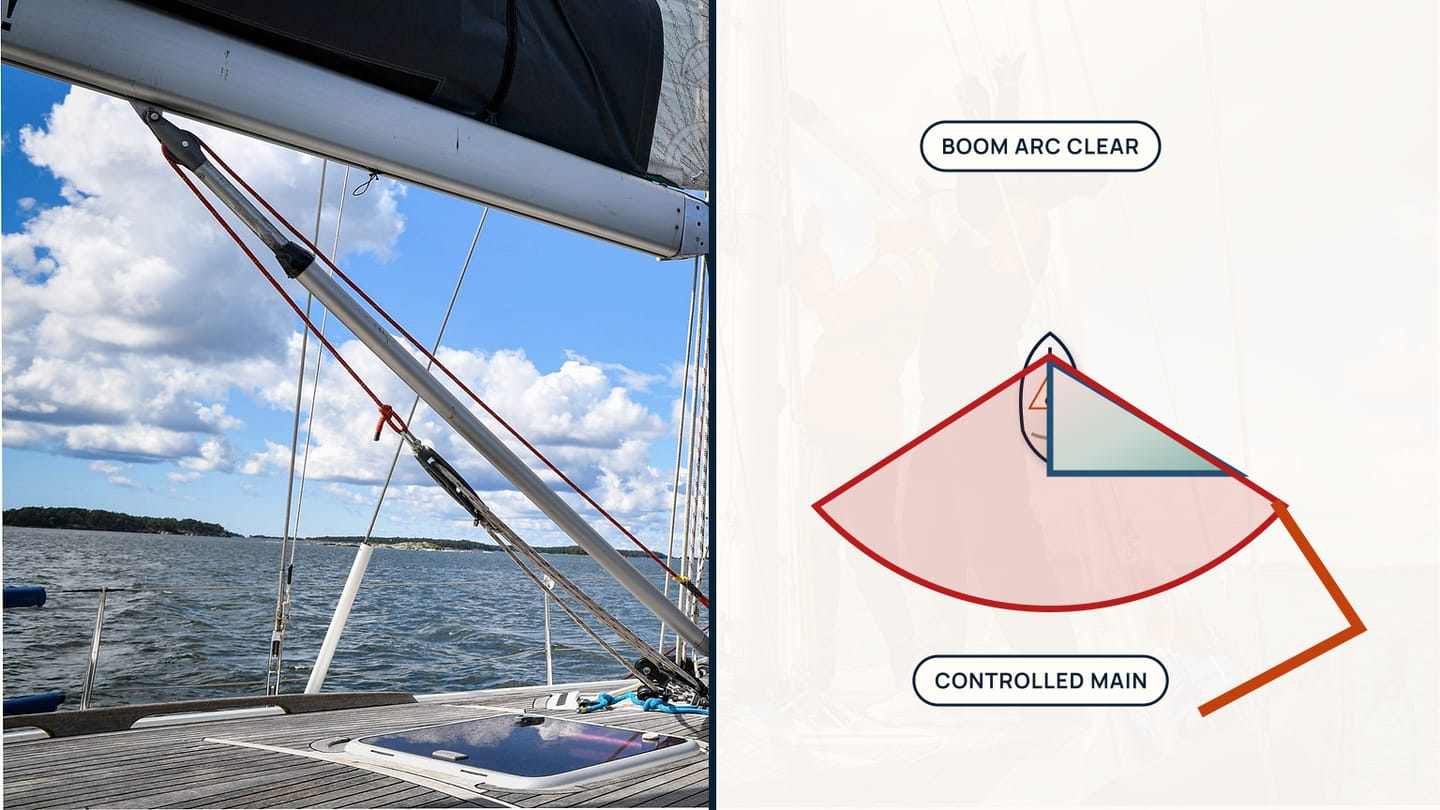
Ease the mainsheet for the chosen broad course while controlling its run. Set vang according to the boat's downwind trim so the boom does not rise unchecked and the upper sail remains manageable. Keep the boom clear of shrouds and rigging.
If the skipper uses a preventer, rig it before the risk grows. A correct preventer limits unintended boom movement and can be released from a safe position. A short line tied to a weak or poorly placed point can shock-load hardware and trap the crew, so boat-specific knowledge is essential.
The mainsail tells the helmsman when the course is nearing the gybe boundary. A softening leech, a boom that unloads, or a wind indicator crossing centreline deserves immediate attention. Steer smoothly toward the safe side; do not wait for the sail to slam.
Crew remain outside the mainsheet and preventer bights. Downwind loads can change without warning as the boat rolls. A tidy cockpit is part of the trim.
Move the jib to the opposite side
Once the main is stable, ease the working jib sheet and trim the opposite sheet until the jib fills across the foretriangle. Keep both sheets organised so neither fouls the foredeck or catches under the sail. Use the normal sheet leads; do not hold a loaded sheet by hand outside the boat.
Some boats use a whisker pole to hold the jib clew out. Pole handling adds compression, moving ends, and foredeck work. It requires the boat's equipment and trained procedure, and it is not necessary for a beginner's first understanding of wing-on-wing.
Trim for a full, steady jib without dragging it tight and flat. If the sail repeatedly collapses behind the main, first check heading. Pulling harder cannot expose a sail that is still blanketed. A small course change may be the real adjustment.
Watch the luff and leech over several rolls. One momentary fold is normal feedback. Continuous snapping shows that the configuration or steering margin is poor. Change the angle or return to a broad reach before the cloth and crew absorb repeated shocks.
Steer from wind clues, not from the jib alone
Pick a distant heading reference and keep small corrections. Use the masthead indicator, pressure in both sails, and the boat's wake. Looking only at the jib creates a delay: the helm chases each collapse after the boat has already wandered.
Anticipate waves. As the stern lifts, the boat may yaw. Correct early and gently, then let it settle. Large alternating helm movements amplify roll and move the apparent wind across the stern.
Assign a crew member to watch the mainsail side and traffic while the helmsman holds the reference. Another can report the jib. No one should stand under the boom to inspect trim.
If the main unloads, steer away from the accidental-gybe boundary according to the brief. If the jib collapses behind the main, steer enough toward its open side to restore exposure. Those cues point in opposite directions, which is why the stable zone between them matters.
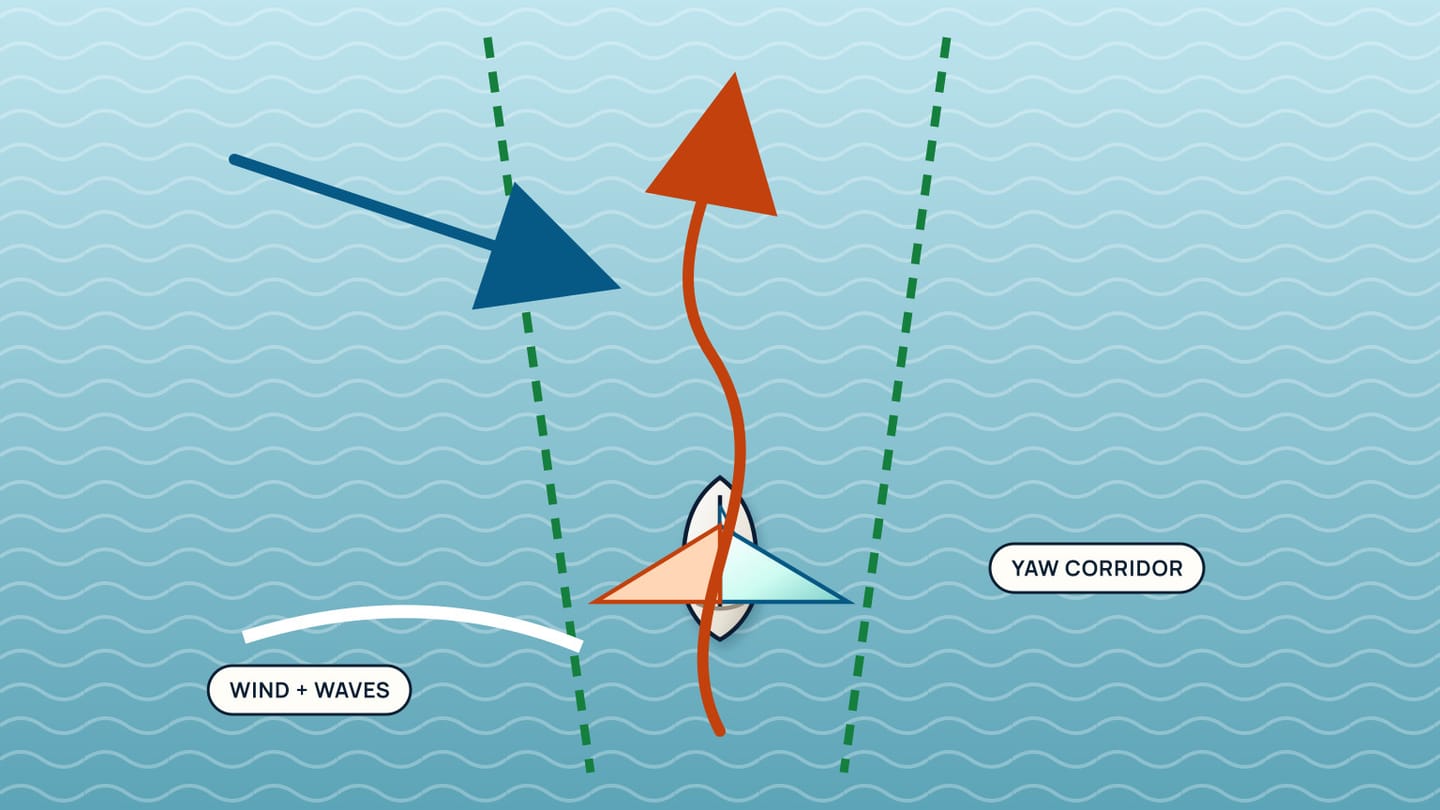
Stop when the configuration loses its margin
End wing-on-wing before a turn, traffic encounter, narrow entrance, or worsening sea removes steering room. Bring the jib back behind the main on a controlled broad reach, or perform the planned gybe with the crew ready. Do not wait for the course change to force the sails across.
Rising wind increases loads and makes a collapse or gybe more serious. Reduce sail through the boat's normal procedure. A preventer limits boom movement; it does not make an overpowered boat comfortable or remove the need to steer.
Fatigue is evidence. If the helmsman must make constant corrections or the trimmer repeatedly catches the jib, choose broad reaches. The faster-looking arrangement may be slower over the ground once poor control and repeated resets are included.
After the run, inspect sheets and preventer for chafe and debrief the angle that worked. Record the wind and sea conditions with the observation. A heading number without context will not transfer to another day.
Practise the exit more often than the perfect run. From a stable setup, call the return to a broad reach, ease the opposite jib sheet, trim the working side, and confirm that the headsail is again behind the main. Reset only after the cockpit is clear. Then practise the same decision when the jib begins collapsing, so the first response under pressure is a known sequence rather than a fight to preserve the arrangement.
Add a traffic scenario without another boat present. The lookout calls an imaginary vessel entering from the mainsail side. The helmsman names whether the safe exit is toward the jib side, onto a broad reach, or through a planned gybe, then points to the required clear water. This exposes whether the original course left a real option.
For a longer run, rotate helms before fatigue appears. The outgoing helm reports the steering reference, safe side, wave pattern, and first sign of sail instability. The incoming helm repeats it before taking control. A wing-on-wing handover deserves more care than an ordinary reach because one unnoticed wander can move the boom.
Use three outcome measures instead of asking whether the sails looked full. First, did the boat hold a course with small helm inputs? Second, did both sails remain stable without repeated snapping? Third, did the direct track preserve sea room and avoid forcing a late gybe? If one answer is no, compare a broad-reaching alternative over the same stretch.
The comparison may reveal that the “longer” zigzag is calmer and no slower after collapses are counted. It may also show that wing-on-wing works well in steady water but fails in quartering waves. Record that boundary as part of the technique.
Never use the preventer as evidence that the heading is safe. Its tension may be the first clue that the sail has backed. The helm still watches wind and course, and the handler reports unexpected load immediately so the boat can return to the briefed side.
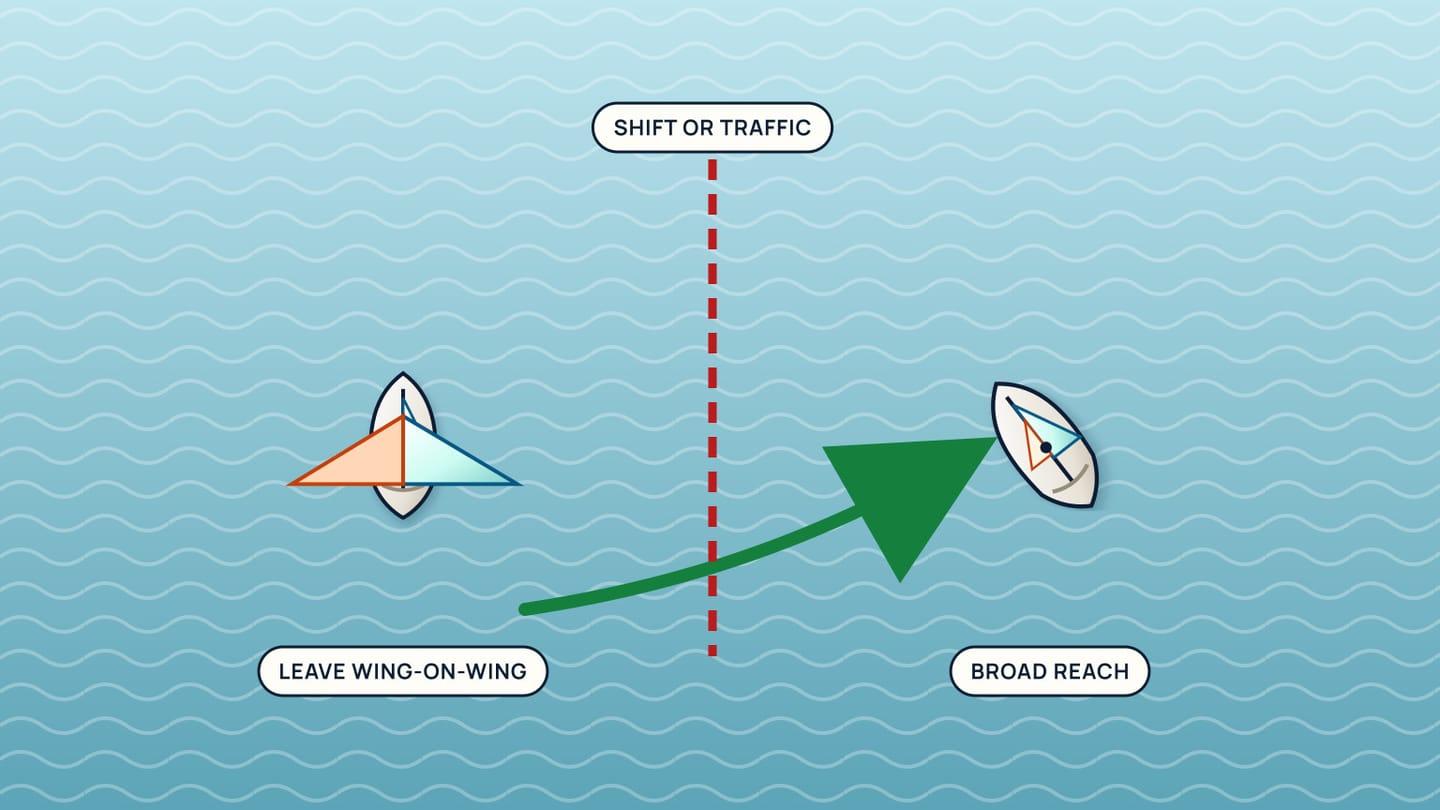
SailStarter's downwind lessons help you recognise the boom's risk zone and the relation between sails before trying this afloat. Practise in open water with an experienced skipper, and treat an early return to a broad reach as a normal trim choice.
Try it from the lesson
Can you spot the next move?
You pinch too long and stall head to wind, sails luffing. What's the first thing to do?
Why you can trust this guide
. We build each guide from public seamanship and safety sources, then teach the universal principle before any local difference.