Chart your course
Why Is My Sail Flapping?

Quick answer
The short version
Your sail is probably flapping because it is luffing: it has lost a stable, filled shape at its current angle to the apparent wind. If you are on a usable course and the leading edge alone flutters, trim the sheet in gently until the flutter just stops. If both sails flap and the bow points nearly into the wind, turning away from the wind may be necessary before trimming can work. Brief luffing is normal during tacks, hoisting, lowering, or deliberate depowering. Prolonged, violent flogging should be corrected because it slows the boat and ages the sail. Watch the heading first, then adjust the sheet.
The noise can sound dramatic, but it is useful feedback. A smooth, filled sail is working with the airflow. A flutter at the front edge tells you that the angle has become too small for that trim. Full flapping says the sail has lost most of its shape.
You do not need to pull every line. Start with two questions: where is the bow pointing relative to the wind, and is the sail too far out for that heading? The answer usually separates a simple trim correction from a boat that needs to change course.
Make only the adjustment the skipper requests.
Read Where the Flapping Starts
The luff is the sail’s leading edge. “Luffing” describes the flutter that begins there when the sail no longer holds a stable shape. A small bubble or shake at the front is often the first sign. More of the sail joins in as the mismatch grows.
Look at the whole sail before acting. If the leading edge flickers while the rest remains curved, the sail may need a small trim. If the entire sail snaps back and forth, it is far from a drawing shape or is being deliberately left unloaded during a manoeuvre.
Also compare the mainsail and jib. One sail fluttering can point to that sail’s sheet trim. Both sails flapping together, especially as the boat slows with the bow near the wind, points more strongly to heading.
Listen to the rhythm as well. A light flutter beginning at one edge is different from the hard snapping of the whole sail. That sound helps confirm what your eyes see.
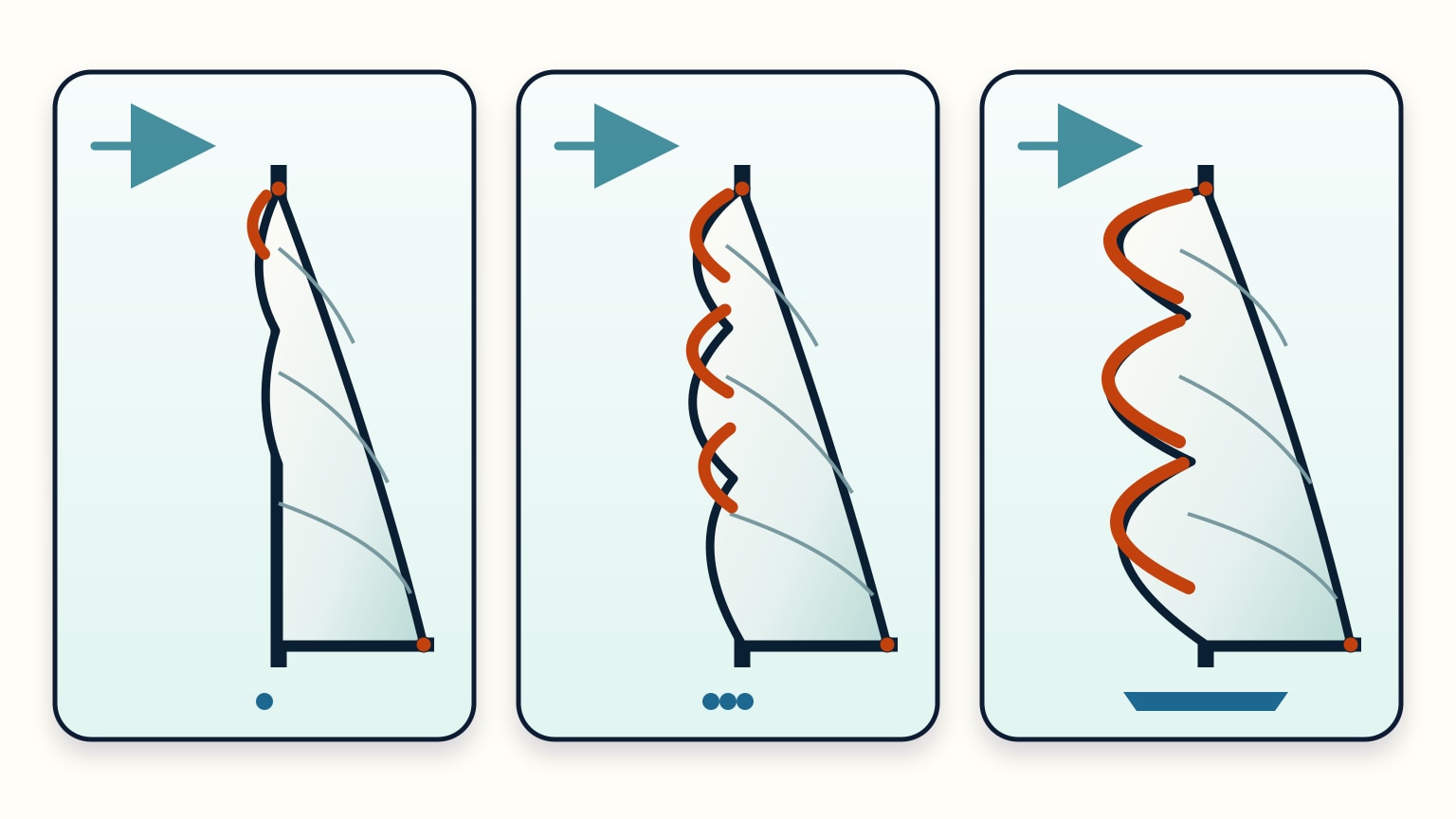
Worked example: only the jib is fluttering
Say the mainsail sits full and quiet while the jib’s front edge flutters on and off. The mainsail tells you the heading is fine for sailing, because a wrong heading would upset both sails together. That points you straight at the jib sheet rather than at the helm (the wheel or tiller used to steer). If the boat also carries telltales on the jib’s luff, that same sail is the one worth watching as you trim, since it is already flagging itself as the odd one out. Treating every flutter as a full-boat problem is a common beginner reflex. Reading which sail is actually unsettled narrows the fix before you touch a single line.
Try the Simple Trim Test
On a normal sailing course, use the sheet that controls the flapping sail. Trim in slowly until the leading-edge flutter stops, then stop pulling. More tension is not automatically better. An over-trimmed sail may look quiet while producing extra drag or poor balance.
You can also find the setting from the other direction. Ease the sail until the luff just begins to flutter, then trim in only enough to remove it. This ease-until-luffing, trim-until-it-stops method gives a clear visual boundary.
Heading changes alter the required trim. When the boat turns toward the wind, the sails generally come in. When it turns away, they generally go out. If the helm changes course but the crew leaves the sheet untouched, the sail’s flapping may simply be asking for the matching adjustment.
Make one change at a time and watch the result. Small movements preserve the useful boundary between a sail that has just stopped luffing and one pulled far past it.

The mistake that looks like the opposite problem
A quiet, motionless sail is not proof of a good trim. Pulled in too far past the point where the luff stopped, a sail can stall in the other direction: it stops flapping but also stops driving the boat well, and the helm may feel heavier than it should. This is one of the more common sail trim mistakes beginners repeat, because silence feels like success. The ease-until-luffing check described above is the fix either way. If you are not sure whether the sail is correctly trimmed or over-trimmed, ease it out until the luff just starts to flutter again, then trim back in only as far as needed. That single movement tells you exactly where the boundary sits, rather than guessing from how the sail looks when it is already pulled in.
Check Whether the Boat Is Too Near the Wind
A sailboat cannot keep its sails drawing while pointing directly into the wind. In this no-go zone, pulling the sheets harder does not solve the problem. The sails continue to flap, drive disappears, and the boat slows.
If it stops there, the boat may be in irons. The rudder has little effect without water flowing past it, so recovery uses a specific technique to turn the bow away and rebuild movement. Follow the skipper or instructor’s direction rather than hauling the sheets tighter.
Before the full stall, a small heading correction may be enough. Turning slightly away from the wind gives the sails a usable angle again. Once they begin to fill, trim them for the new course. The order matters: restore a sailable heading, then refine the sheets.
Look for movement returning through the water before expecting firm steering. A stopped rudder cannot answer the same way as one with water flowing across it.
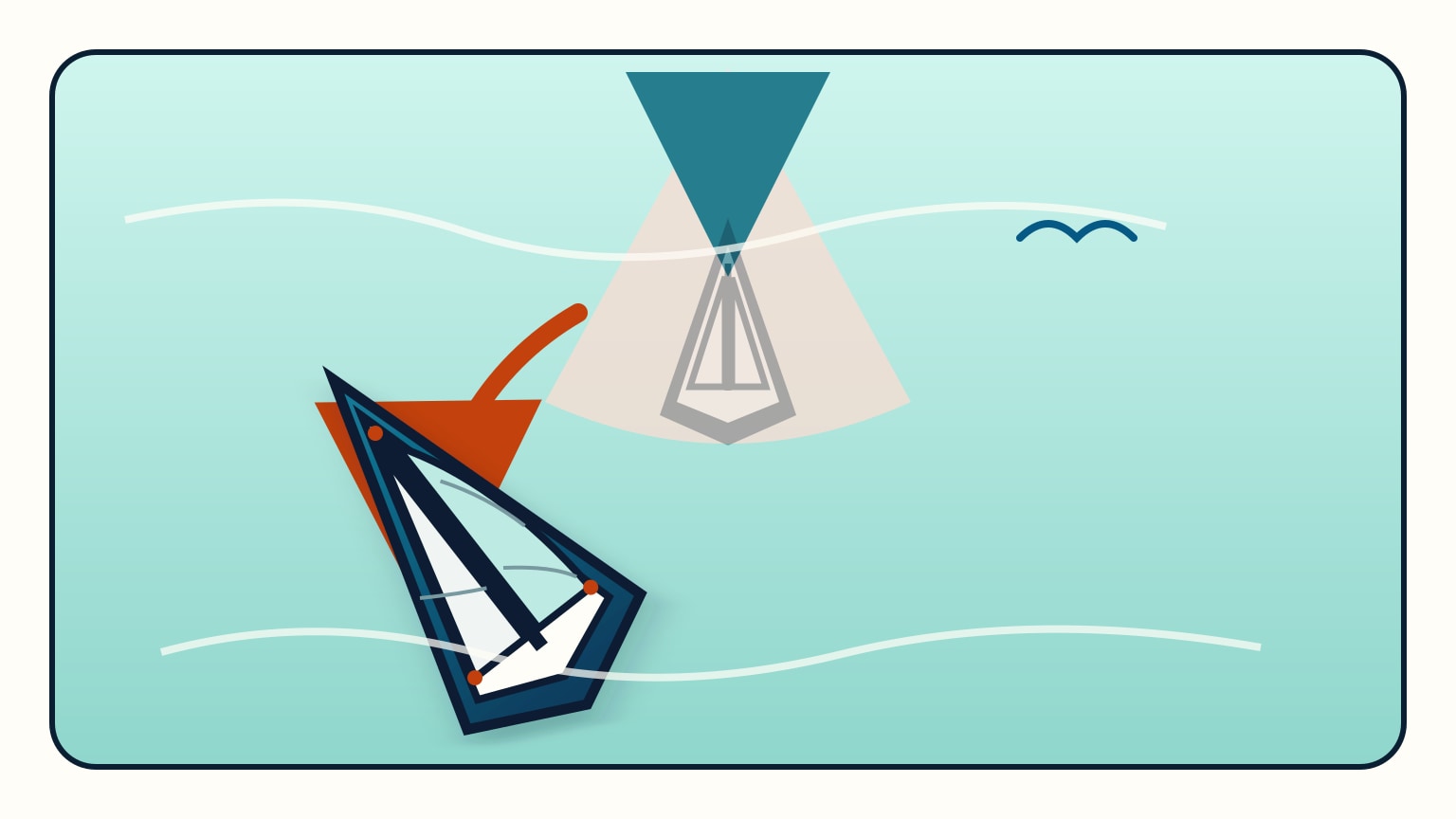
Why this differs from a normal tack
It helps to know what this state is not. A tack deliberately steers the bow through the no-go zone for only a moment, using the boat’s existing speed to carry it across to the new side before trimming in again. Being stuck head to wind is what happens when that momentum runs out before the turn completes, which sailors call being in irons. The sails flap the same way in both cases, so the flapping itself does not tell you which one you are in. What tells you is whether the boat is still turning and gaining speed on the new side, or sitting still with the bow pinned into the wind. Practising a controlled tack in moderate wind is the most direct way to learn the difference, because you feel the boat carry itself through the gap rather than stall in it.
Know When Luffing Is Intentional
Sails briefly luff during a tack as the bow crosses through the wind. They may also flap while being hoisted or lowered because the boat is pointed into the wind to reduce sail power. This temporary noise belongs to the manoeuvre.
In strong wind, a skipper may ease the mainsail until part of it luffs to reduce power and heel. That is controlled depowering. The goal and duration are different from leaving a sail to flog without purpose.
Prolonged flogging flexes the cloth and fittings. North Sails advises trimming promptly after hoisting and steering a course that fills the sails rather than allowing continued flapping. If the sail will not be used, follow the boat’s procedure for lowering or securing it. A short luff is information; sustained flogging calls for action.
Do not try to silence every planned luff during a tack or sail drop. Follow the sequence, then restore the sail’s working shape when the manoeuvre reaches that stage.
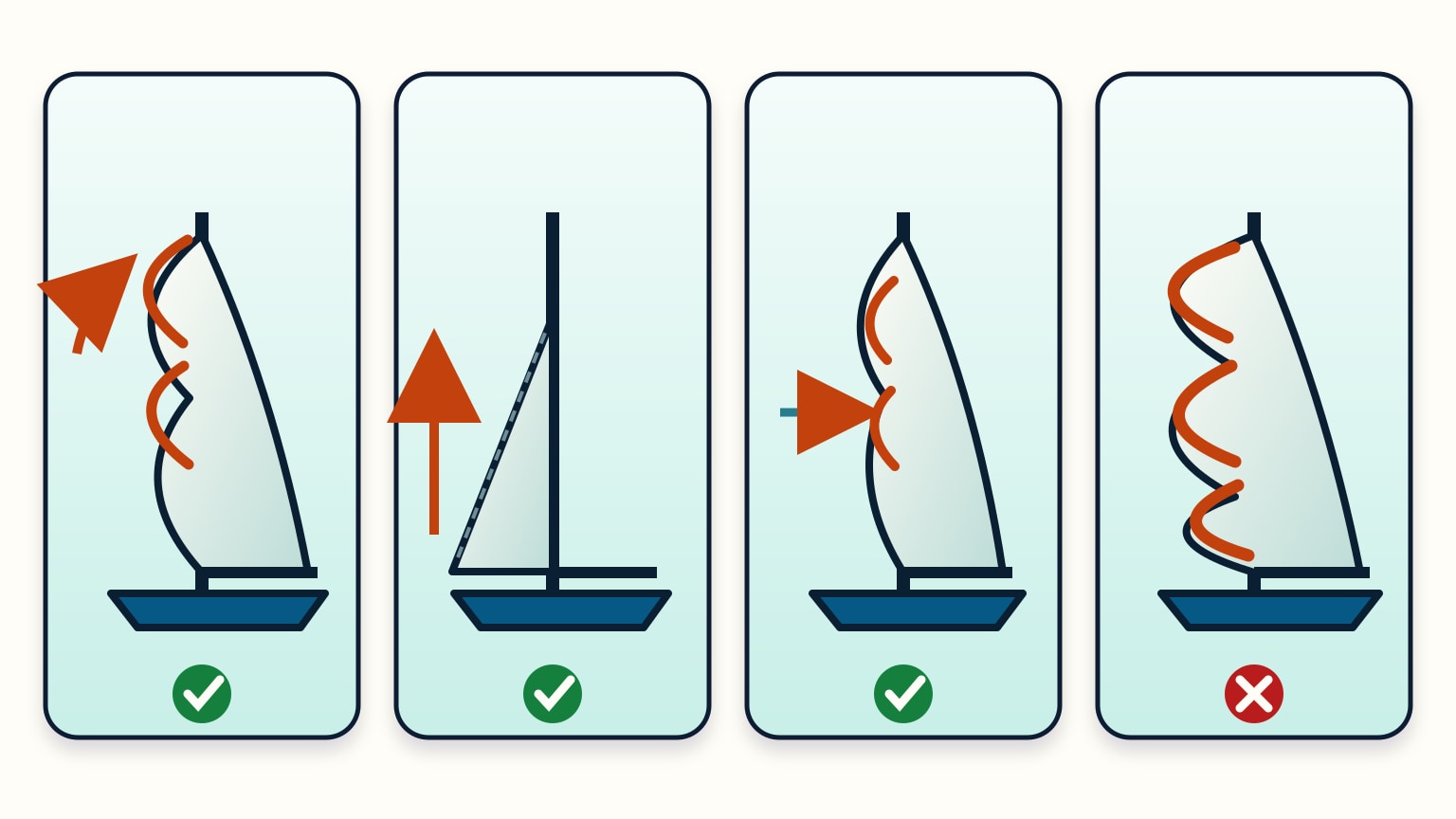
Does a bit of flapping actually damage the sail?
A few seconds of luffing during a tack or a hoist puts little strain on the cloth. What sailmakers warn against is leaving a hoisted sail flogging for minutes at a time, because the repeated snapping flexes the fabric and the stitching at the edges more than steady, loaded sailing does. North Sails’ own care guidance is direct on this: trim and steer promptly after hoisting so the sail fills, rather than letting it flap while you sort out something else on deck. Duration and purpose separate the two cases, not the noise itself: a few seconds of planned luffing during a manoeuvre is routine, while the same sound continuing for minutes with nobody adjusting anything is the moment to act. The angle the sail actually flaps at is measured against the apparent wind, the wind you feel on a moving boat, which is why the same course can feel steady one minute and unsettled the next as boat speed changes.
SailStarter’s sail-trim lesson gives you the next layer: matching sheet position to each point of sail and using the first flutter at the luff as a repeatable cue. Practise identifying the luff in a diagram before looking for it on a moving boat. Afloat, follow the skipper’s call and make small adjustments rather than yanking a line. Watch whether the flutter begins at one edge, affects one sail, or arrives in both sails as the boat slows. Soon the sound becomes less mysterious. It tells you to check heading, trim, or the manoeuvre already underway, and each possibility has a clear next question. Read the cue carefully before changing anything.
Try it from the lesson
Can you spot the next move?
You pinch too long and stall head to wind, sails luffing. What's the first thing to do?
Why you can trust this guide
. We build each guide from public seamanship and safety sources, then teach the universal principle before any local difference.