Chart your course
Steering a Compass Course Without S-Curves
Quick answer
The short version
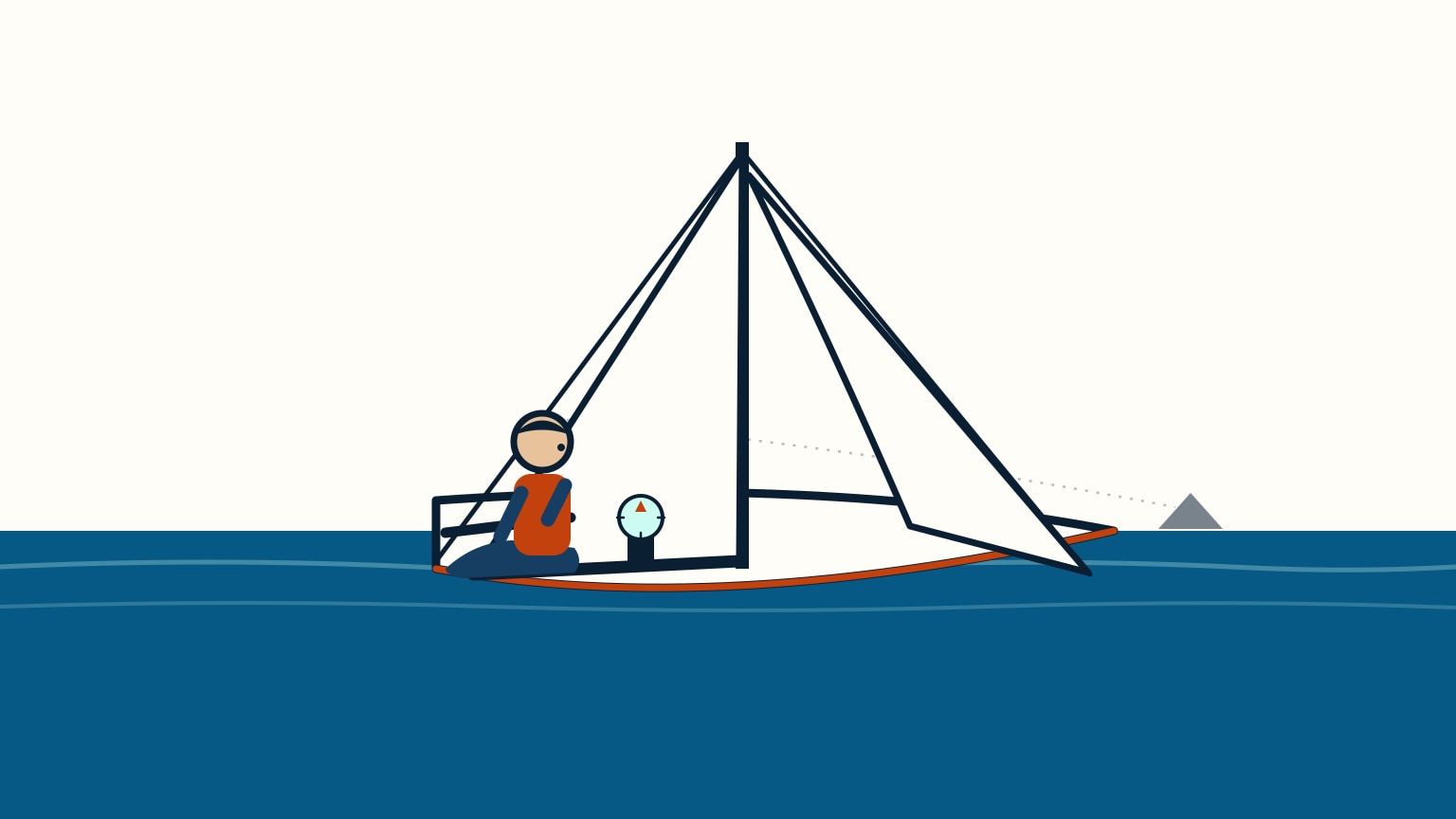
To steer a compass course, don't stare at the compass: steer to something outside the boat and let the compass confirm you're right. Pick a landmark, a cloud, or a star roughly on your heading and hold the bow on it, glancing down at the card only now and then. The compass card is graduated the full 360 degrees and stays oriented to north; your heading is whatever number currently sits at the lubber line, the mark fixed to the boat itself. When you do need to correct, make it small and early. Nudge the helm the moment you notice drift, not after you're already well off. Wait too long and the correction has to be bigger, and a big correction tends to overshoot, carving a wandering S-curve instead of holding the straight line to your mark.
The first time someone hands you a heading ("steer two-two-five"), it's tempting to lock your eyes on the compass and react to every twitch of the card. That habit is exactly what gets beginners into trouble: the card is always drifting a little, and chasing each wobble turns a straight course into a zig-zagging one that covers more water than it needed to. Sailors who steer well barely look at the compass at all. They pick something steady out on the horizon, steer to that, and treat the compass as a second opinion rather than the main event. This guide walks through reading a steering compass properly (the card, the lubber line, and a precision trick called a transit) plus the timing habit that keeps your wake looking like a line instead of a snake.
Steer to a Landmark, Not the Dial
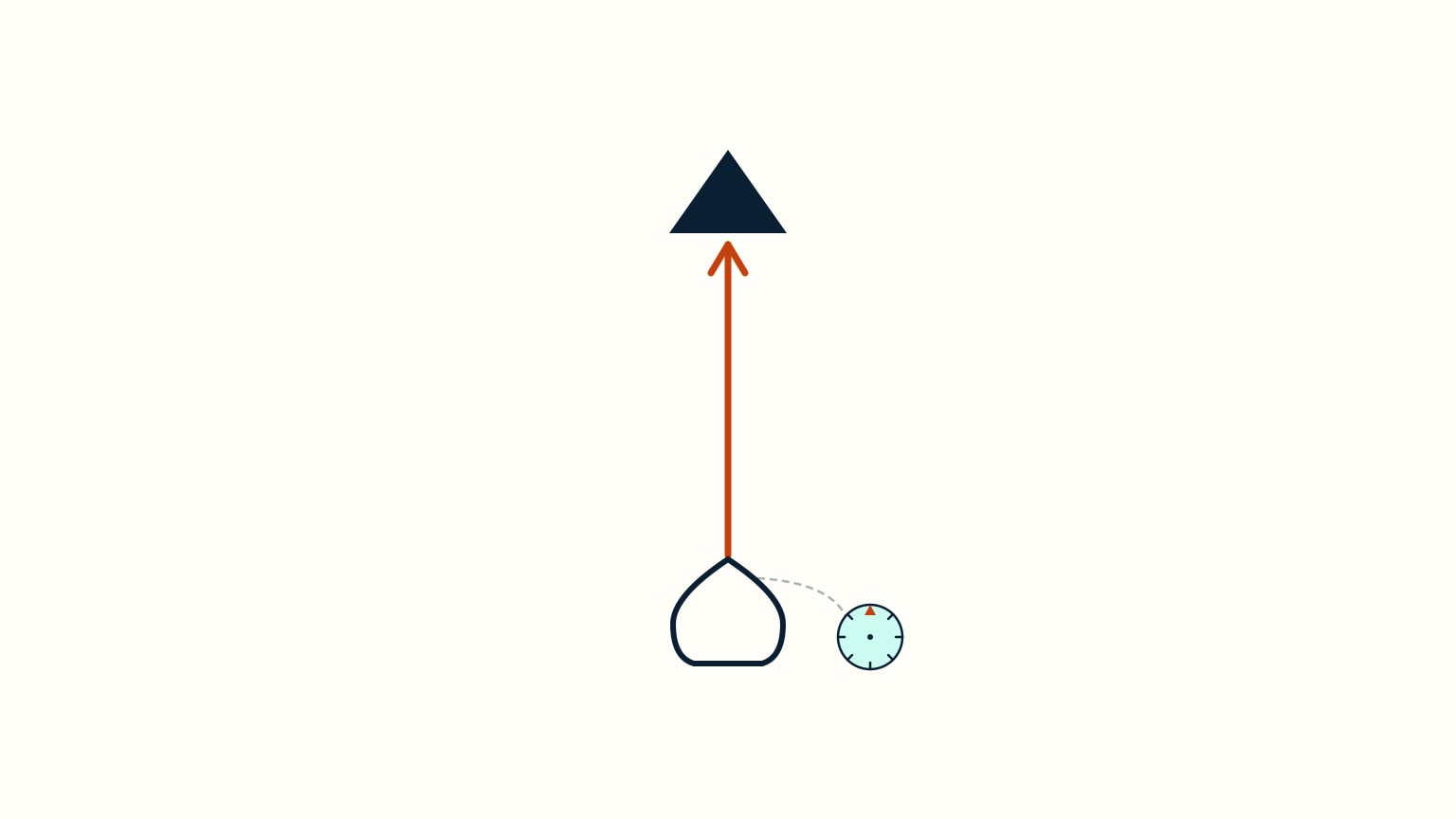
Before you look at the compass at all, look outside the boat. Pick something distant and steady roughly on the heading you want (a headland, a water tower, a cloud, or at night a star) and hold your bow on it. Your eyes catch the smallest drift almost instantly, faster than you'll notice the same drift by watching a card. Steer to keep that point dead ahead, and only glance down at the compass every so often to confirm you're still tracking the number you were given.
This is how sailors who steer well actually do it, not a workaround for using the compass properly. The compass is the reference you check; the horizon is what you steer by. A distant point holds still for you to aim at, while a rotating card rewards staring at it by tempting you to correct every tiny swing, which is exactly the habit that wastes distance later in this guide.
Read the Compass Card and the Lubber Line
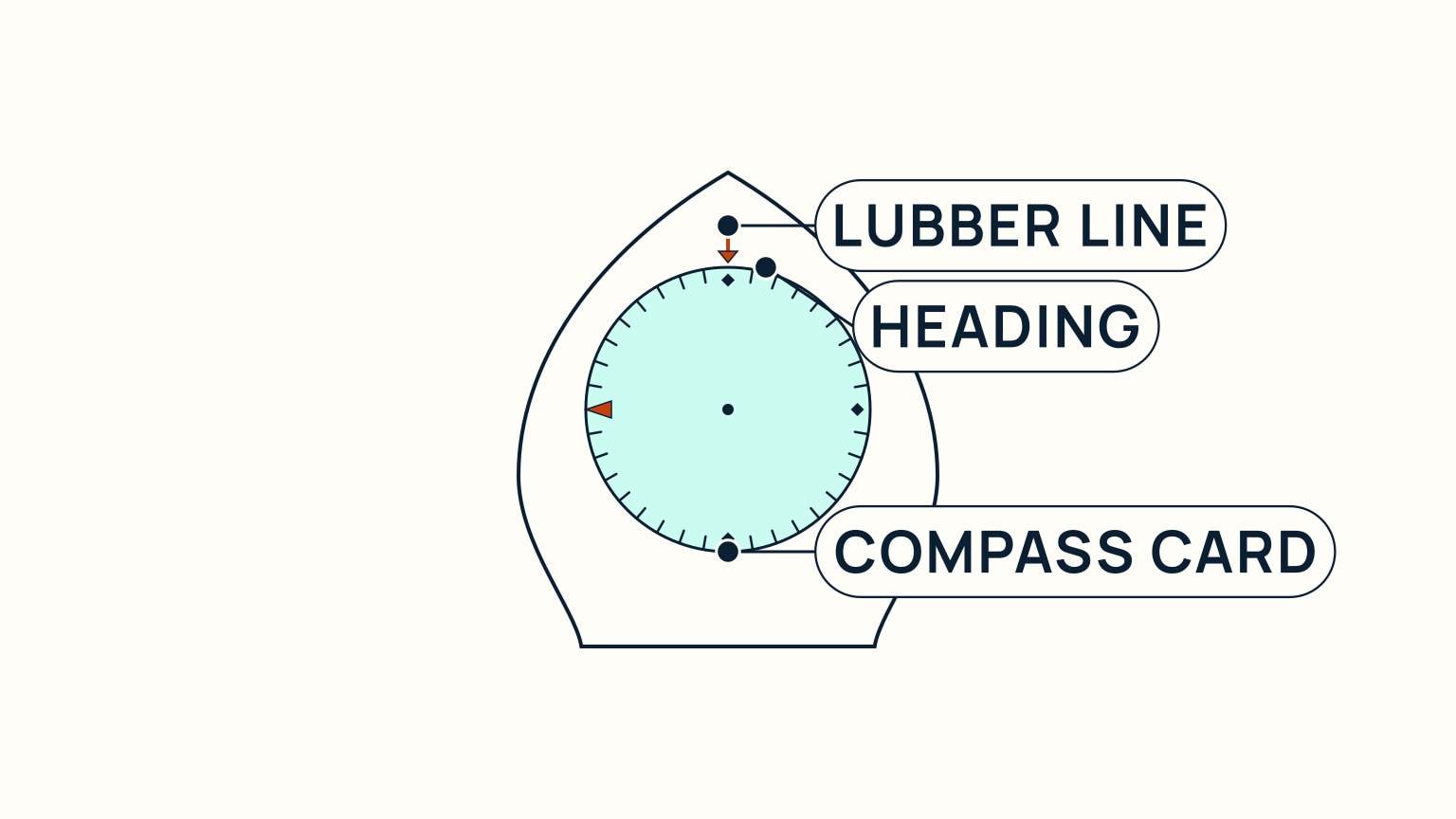
A steering compass has two working parts, and knowing which one moves is the whole trick. The compass card is graduated the full 360 degrees around its rim and floats free of the boat, staying oriented to north no matter which way you turn. The lubber line is the opposite: it's fixed to the compass housing itself, lined up with the boat's own centerline, so it turns with the boat while the card holds still against north.
Reading a heading is nothing more than noting which graduation on the card currently sits at the lubber line. Turn the boat and the card appears to rotate: really it's the boat, and the lubber line fixed to it, swinging around a card that hasn't moved at all. To hold a heading, keep the lubber line parked on the number you were given; if it starts creeping off that number, you've started to turn, whether you meant to or not.
Hold a Transit for a Precision Course
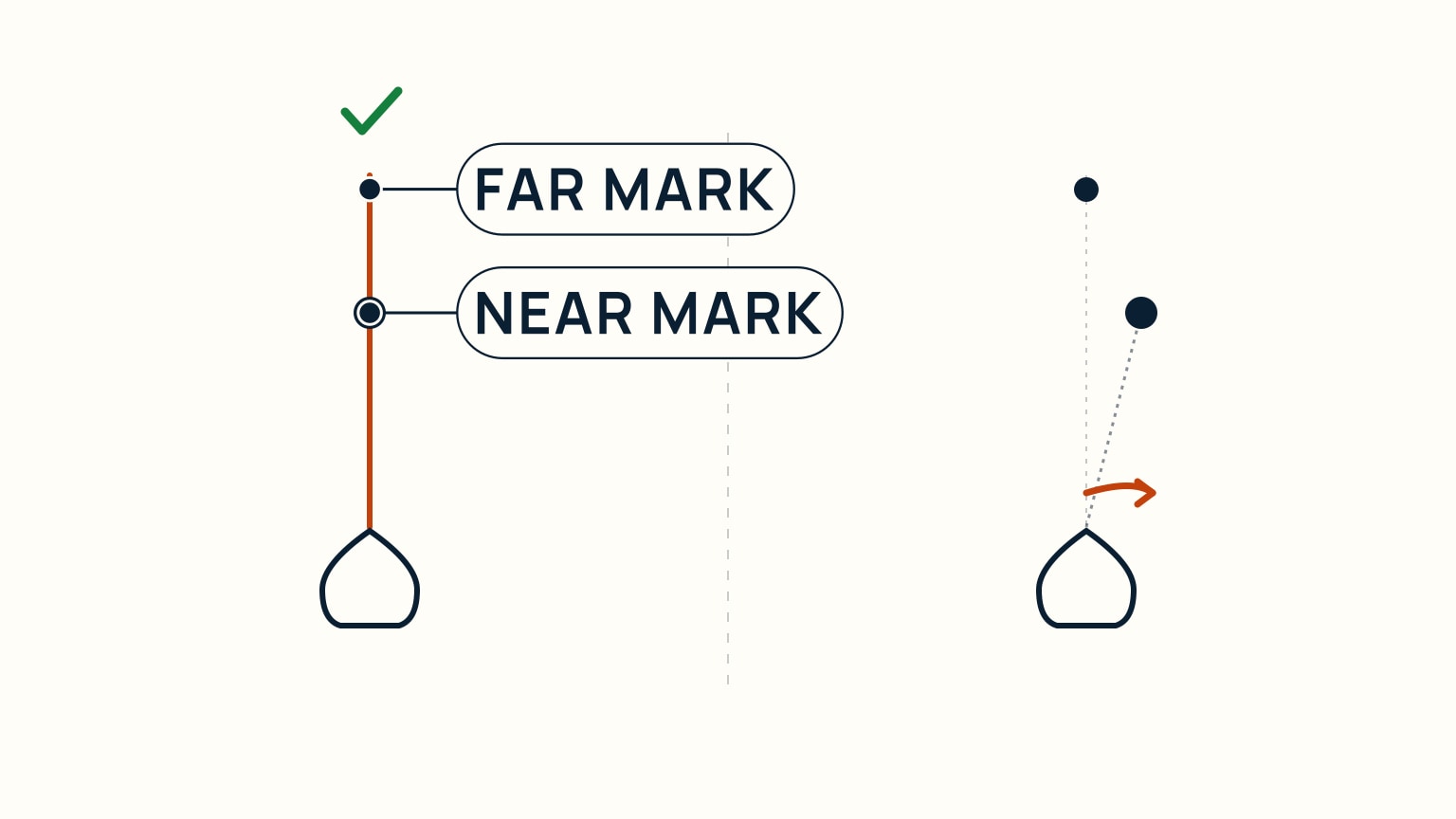
When you need to hold a course exactly (threading a channel, lining up on a mark), a transit beats the compass for precision. A transit is simply two objects held in line, one behind the other: a post and a distant tower, two buoys, anything steady you can sight past one another. Aim the boat so the near object sits directly in front of the far one, and as long as the two stay lined up, you're exactly on track, current and leeway included.
The moment the two objects separate, you know instantly that you've drifted, without waiting for the compass to catch up. Correct by steering toward whichever object now looks closer, and the two will swing back into line. Once they're aligned again, ease back toward your original heading and keep watching; a transit doesn't replace the compass, it just gives you a faster, more precise way to confirm you're holding your line.
Meet the Swing Before It Grows
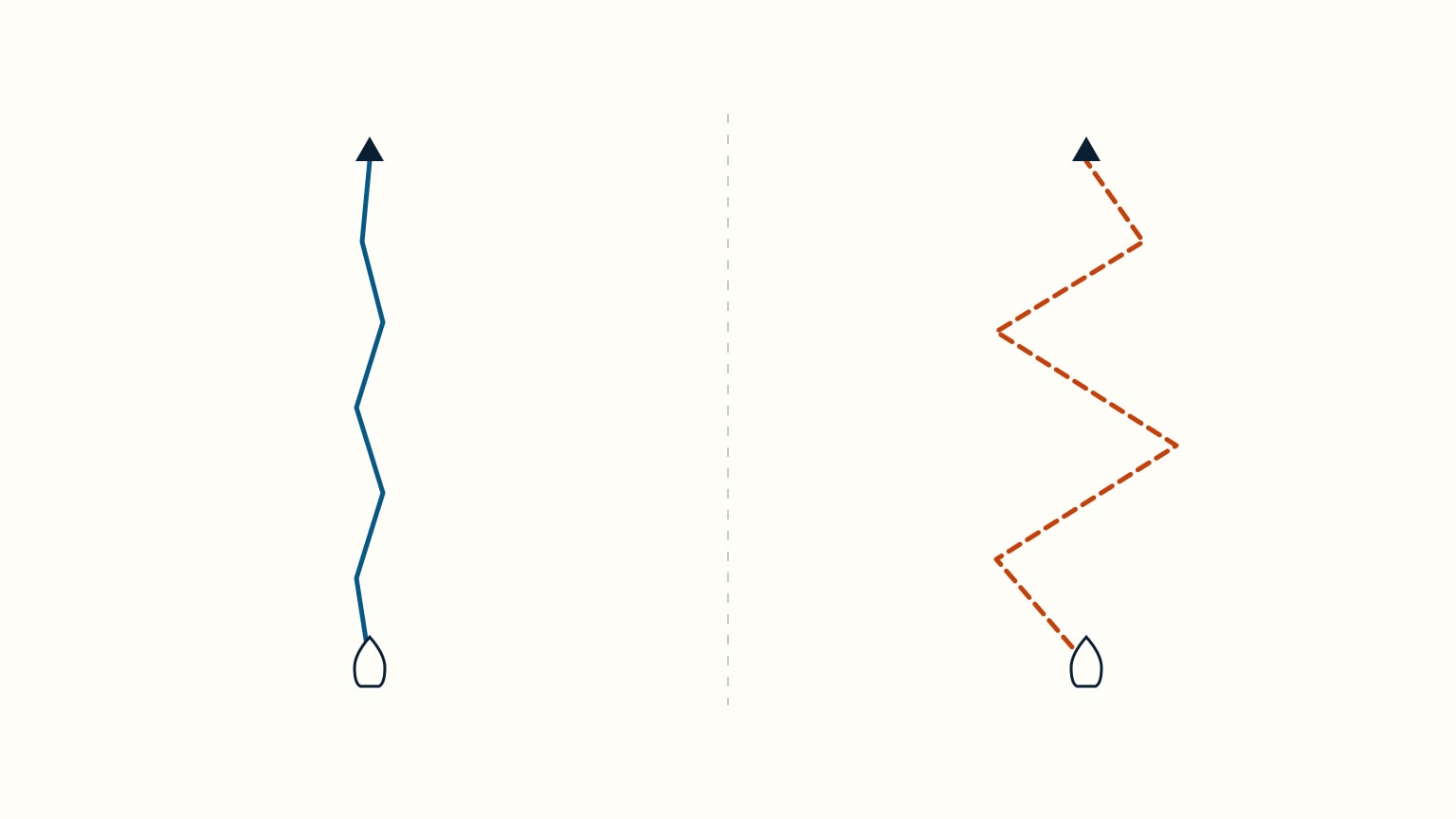
Good helming is mostly a timing habit: small corrections made early beat big corrections made late, every time. The instant you notice the card, or your landmark, starting to drift, nudge the helm (just a touch, applied before you're actually off course) to meet the swing and stop it before it builds. Wait until you're well off, and the same drift forces a bigger, later correction that tends to swing past the mark and start the whole cycle again the other way.
That's the mechanism behind "chasing the compass": reacting to every twitch of the card instead of anticipating it turns a straight course into a wandering S-curve, correction after overcorrection, covering more water than the direct line to the same destination ever needed. Fixing it doesn't take faster reflexes. It takes looking up, anticipating the drift, and making the correction small enough that you barely notice you made it.
Close-Hauled, Steer to the Wind Instead
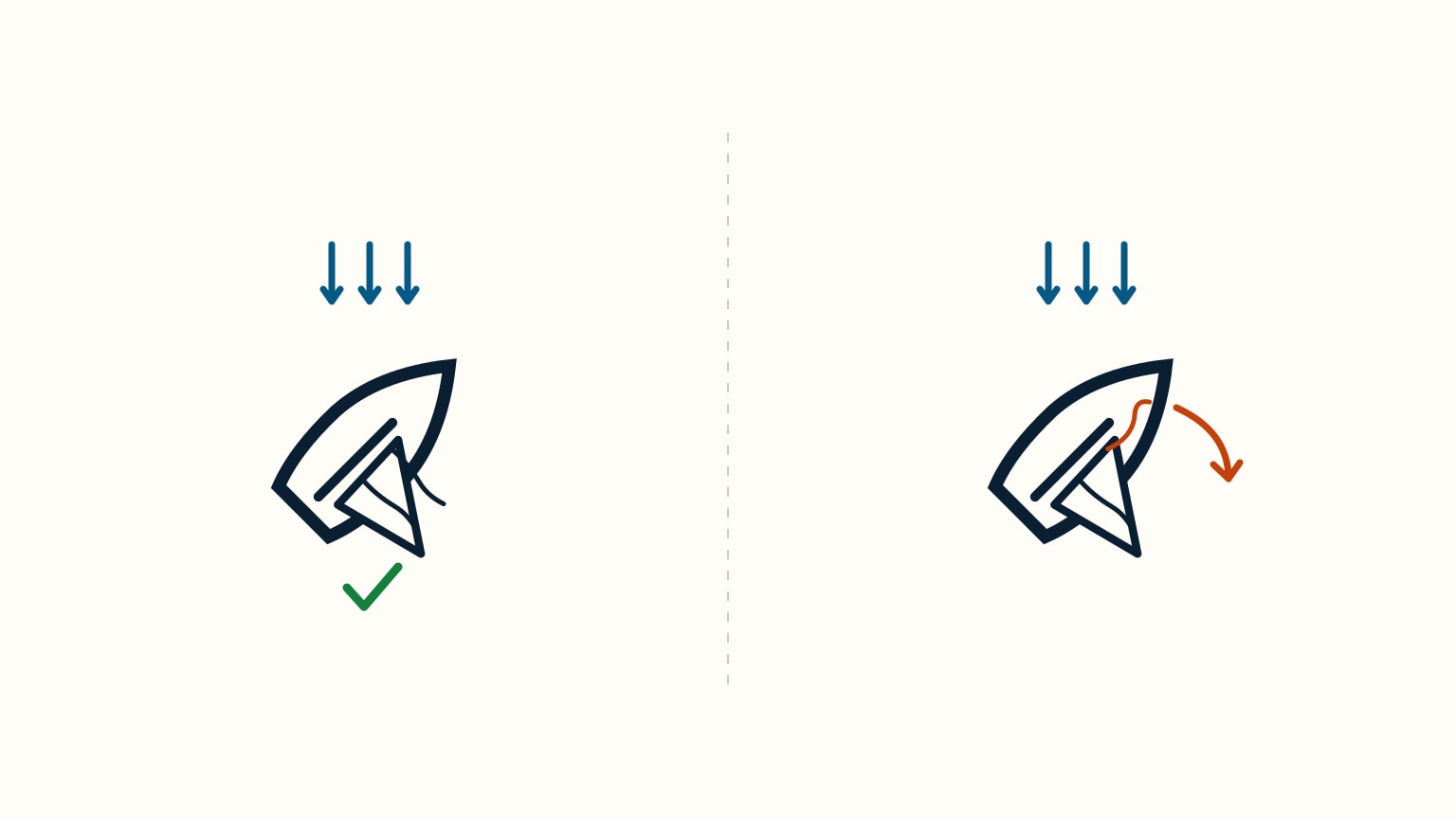
Everything above changes the moment you're sailing close-hauled, as tight to the wind as the boat will point. Here, the wind sets your course, not a fixed number on the card. Steer by the jib's telltales instead: keep them streaming aft on both sides, and head up toward the wind only until the windward telltale just starts to lift, then ease back down a touch to settle it.
The compass has not left the cockpit; it has changed jobs. Instead of directing your steering, it records the heading you achieve by sailing well-trimmed and close to the wind. Glance at it once you have settled into a groove, note the number for later reference, and go back to watching the telltales. They are a better guide to the wind than any heading you picked in advance.
Give the helm a repeatable scan
Look ahead at the steering reference, scan traffic and water, glance at the compass, then return outside. This keeps the dial as a check instead of the place where your eyes stay. If the heading begins to wander, use a small correction and wait for the boat to respond.
Call the steered course and material changes so the navigator can compare them with the plan. Record whether wind, waves, current, or sail balance makes one side harder to hold. A large correction followed by an equal correction creates the S-curve you are trying to avoid.
The variation and deviation guide explains how compass heading relates to magnetic and true references. Keep the reference named whenever a course is passed between navigator and helm.
Choose the right outside reference
For a steady compass course, pick a distant object near the required heading and steer toward it while checking the card. For precise alignment, use a transit formed by two fixed objects. As soon as they move out of line, the direction of their separation shows which way the boat has moved.
Close-hauled, the wind may be the more stable short-term reference because shifts change the compass heading the boat can hold without luffing. Use the telltales guide to read airflow, while the navigator continues checking the actual track and hazards. Steering well means choosing the reference that serves the sailing job, then checking it against the wider navigation picture.
Steering a compass course well comes down to a small set of habits that work together, not faster reflexes or sharper eyes on the dial: pick something steady to steer by, know which part of the compass actually moves, use a transit when precision matters, and meet every swing before it grows into a correction. None of it takes special coordination, and every hour on the helm makes the small corrections more automatic than the big ones ever were.
If you want to build that habit properly (reading a real compass card, practicing transits, and feeling the difference between a straight track and an S-curve), SailStarter's lessons walk through steering step by step, alongside the rest of what it takes to handle a boat with confidence.
Try it from the lesson
Can you spot the next move?
The lubber line on your compass sits on the graduation for southwest. What heading is that, in degrees?
Why you can trust this guide
. We build each guide from public seamanship and safety sources, then teach the universal principle before any local difference.