Chart your course
Sea Anchor vs Drogue: Choose the Right Storm Posture
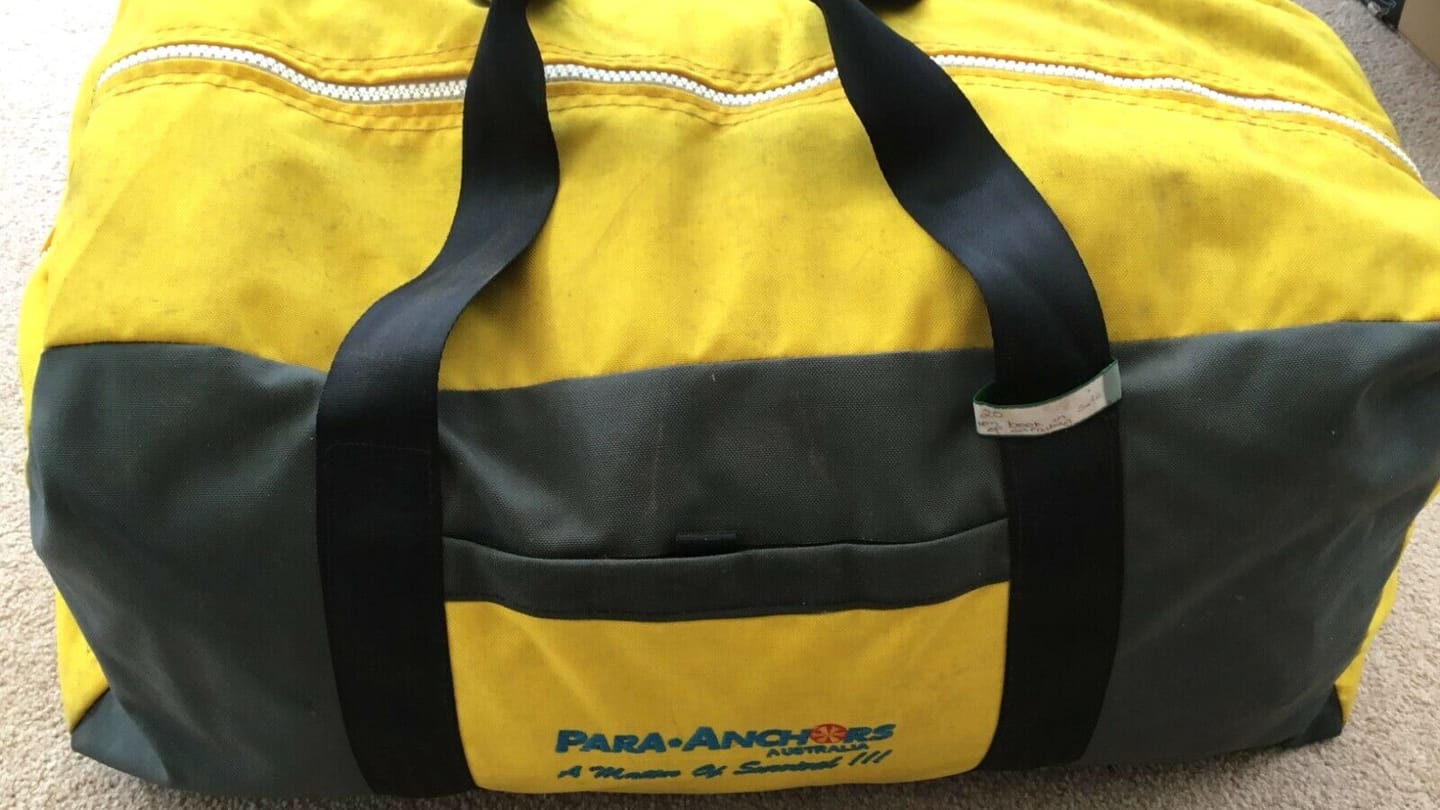
Quick answer
The short version
The short answer to “sea anchor vs drogue” is about posture, not just drag. A parachute sea anchor is commonly designed to hold a yacht by the bow and reduce drift. A drogue is normally streamed astern to resist downwind speed and help the boat remain stern-to the seas. That contrast is useful, but it is only the first line of the decision.
Neither device is a piece of fabric that can be clipped to any convenient cleat. The canopy or cones, rode, weights, floats, bridle, shackles, chafe protection and hull attachments form one load-carrying system. Its size and arrangement must match the boat and the maker’s instructions. A safe choice also needs enough sea room for the expected drift and a crew that can launch and recover the actual package.
This is planning guidance, not an at-sea deployment recipe. Heavy-weather tactics depend on the yacht, the wave field and the equipment already aboard. Set the plan with the boat’s designer or builder, the device maker and an experienced offshore rigger before a forecast forces the decision.
The names hide two different storm postures
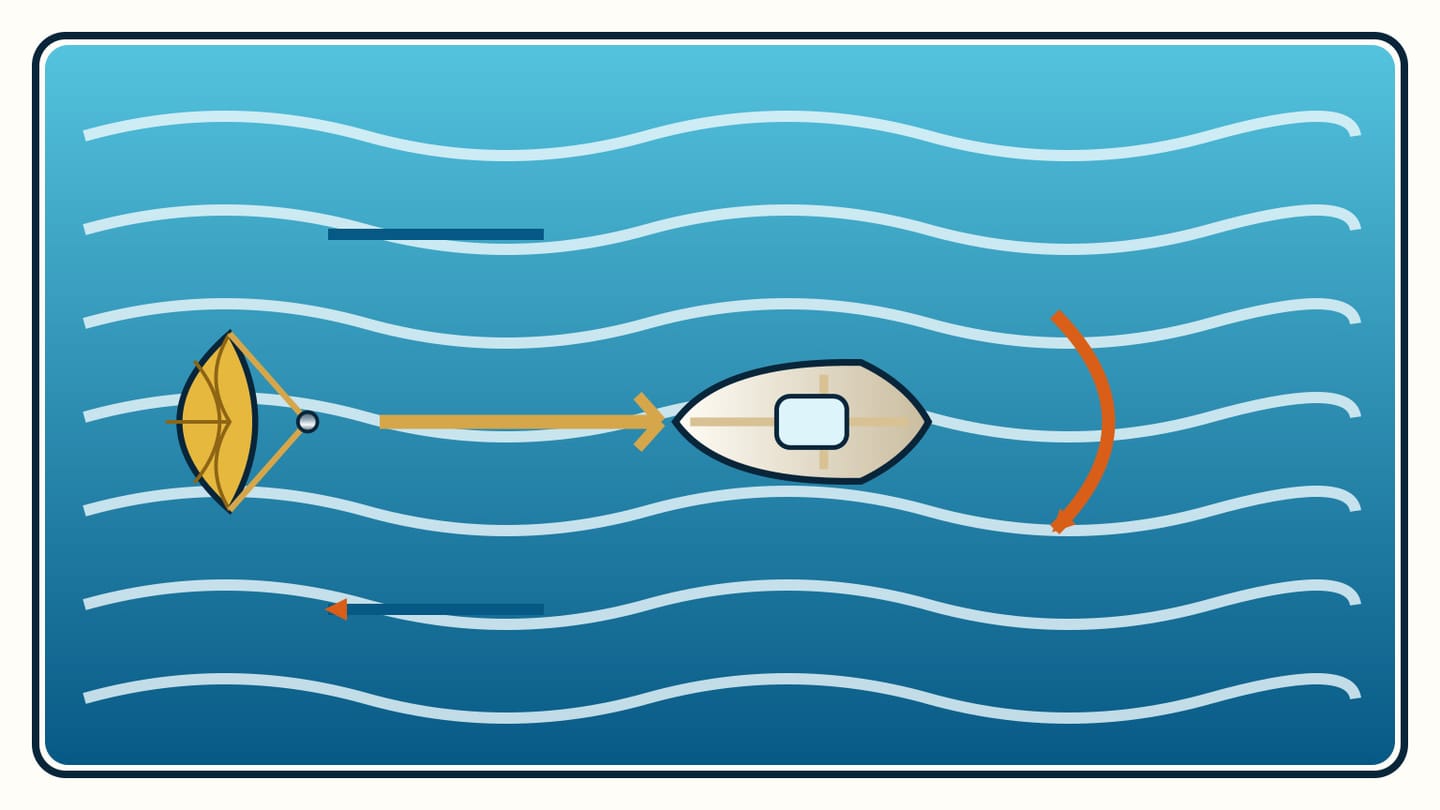
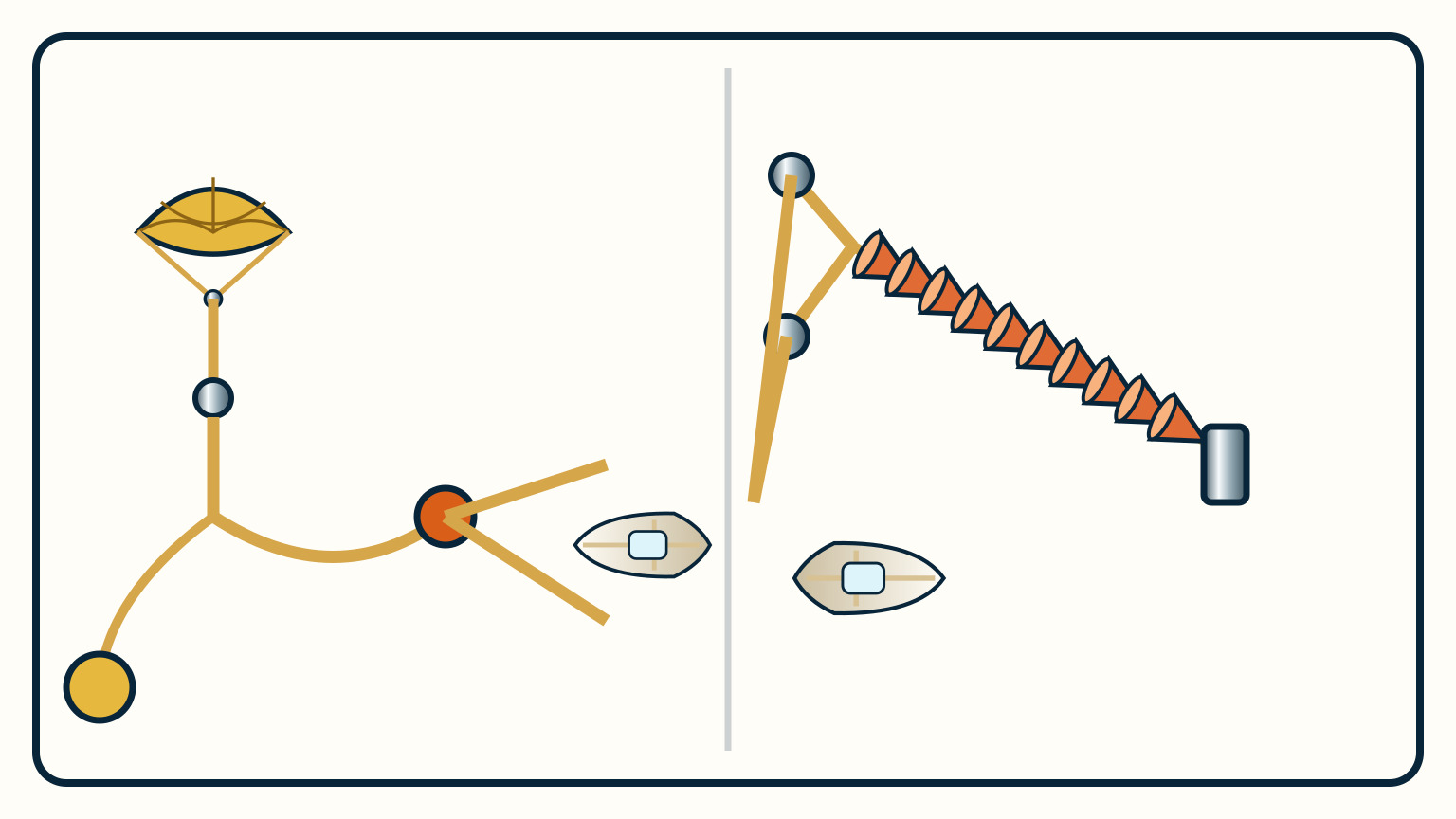
A parachute sea anchor resembles an underwater parachute. Its large canopy develops drag well ahead of the boat, and the main rode leads back to a bow attachment or maker-specified bridle. The boat drifts away from the slower-moving canopy until the rode comes under load. The intended result is low drift with the bow presented toward wind and waves. It is not a seabed anchor, and “holding” does not mean the yacht remains over one charted point.
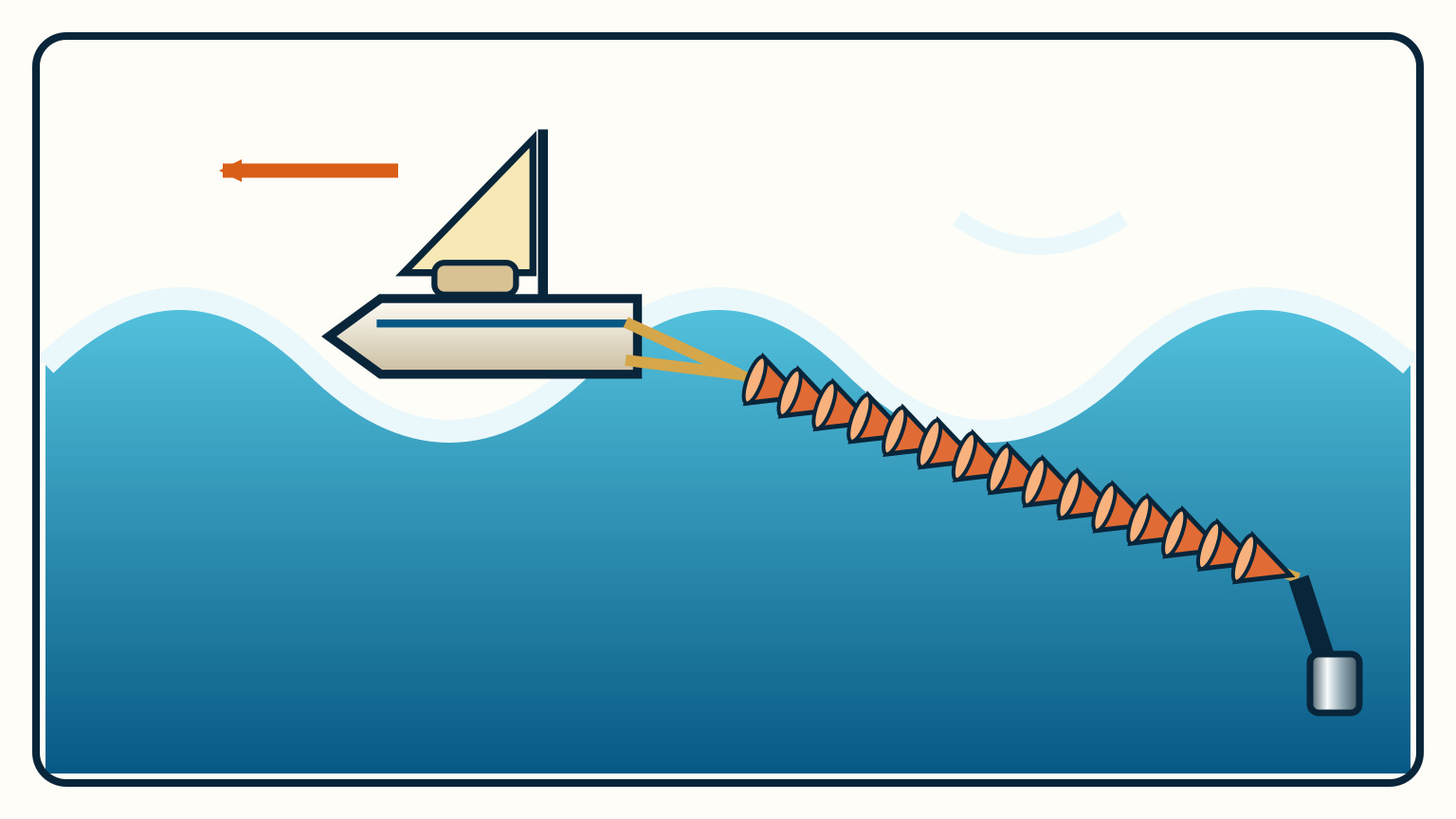
A drogue is a broader category. Some are single fabric cones or panels; a Jordan Series Drogue is a particular design with many small cones distributed along a long, tapered line and a weight at the far end. It is deployed from two stern attachments through a bridle. Its job is not to stop the boat dead. It adds controlled resistance while the boat moves with the seas and helps keep the stern facing the approaching wave motion.
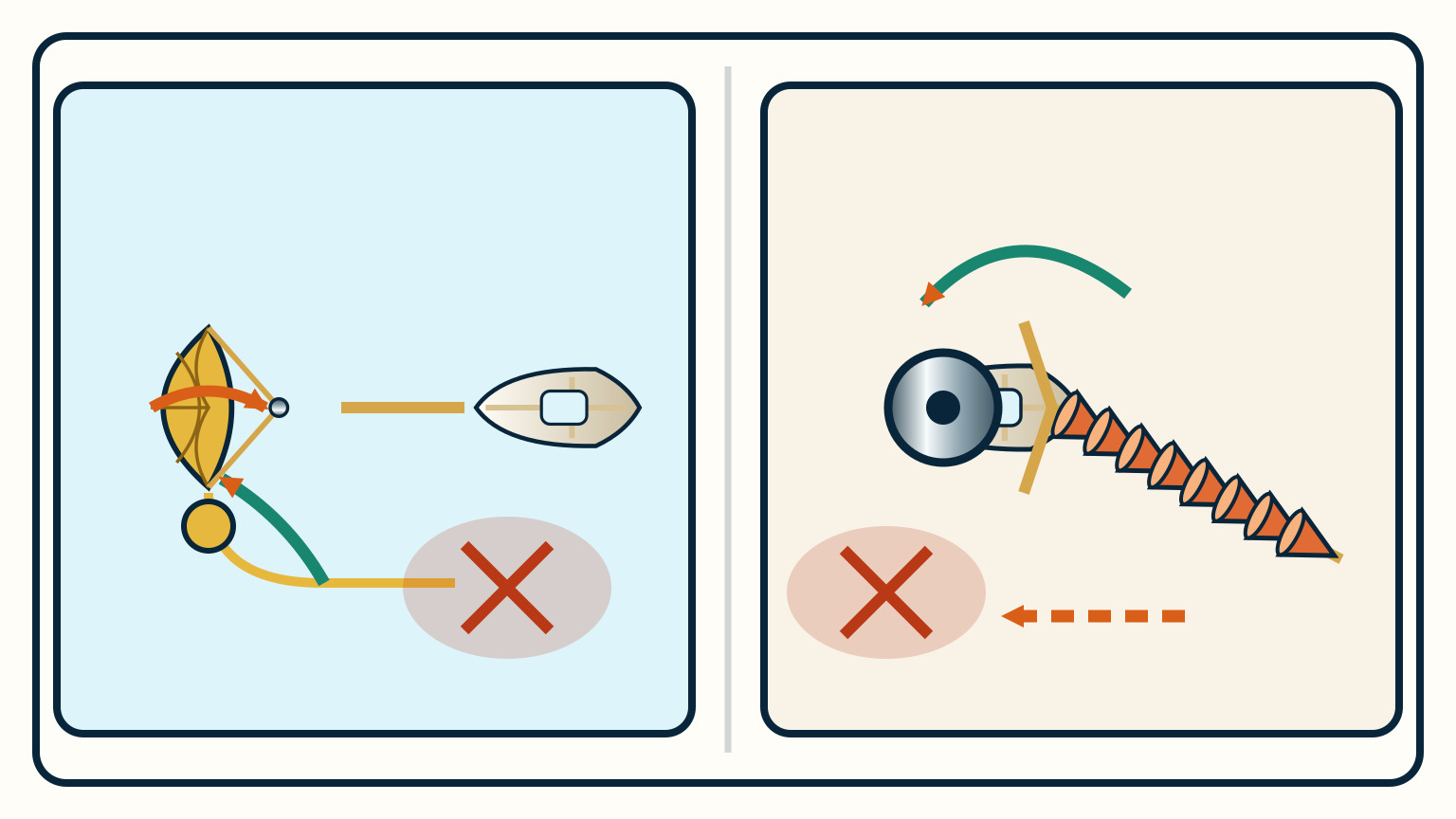
That distinction immediately changes what must be prepared. The sea-anchor load reaches the bow structure and its rode must lead clear outside the rigging. The stern drogue loads aft attachments and brings cockpit drainage, lockers, companionway security, steering gear and the stern’s shape into the conversation. Both plans need an honest drift estimate. A device that produces a comfortable ride but carries the yacht toward a lee shore is not solving the whole problem.
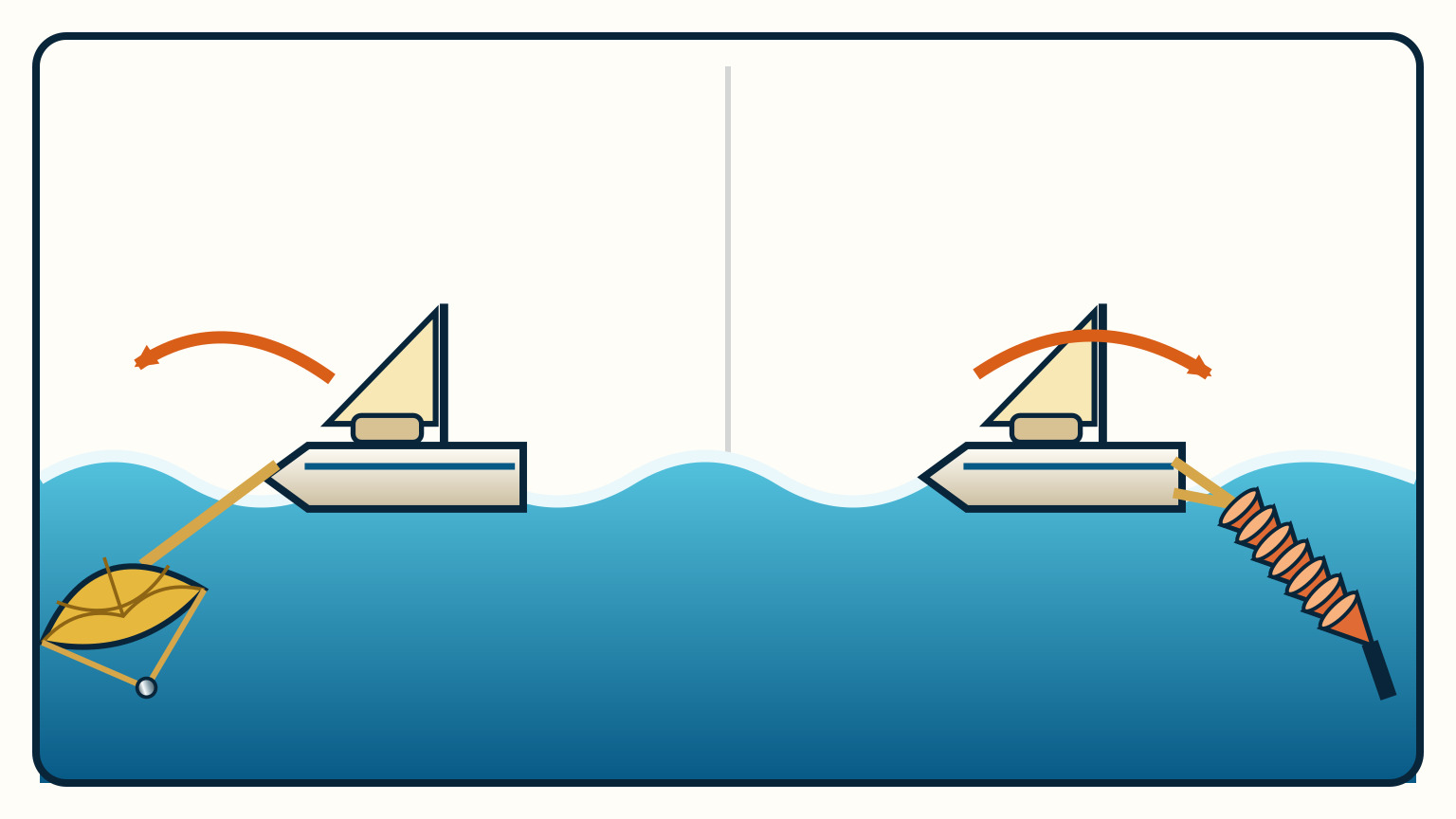
How does a sea anchor hold the bow to the seas?
The useful mental picture is a load path running from water to hull. Water fills the parachute canopy. Its shroud lines gather at the hardware, the main rode carries tension toward the yacht, and the attachment spreads that load into structure at the bow. Floats and a maker-specified trip arrangement serve different purposes: one keeps the rig’s recovery point identifiable, while the trip line can collapse the canopy so it no longer has to be hauled aboard full of water.
Each detail is model-specific. Para-Tech’s manual, for example, specifies a complete arrangement of canopy, float line, primary float, trip line, rode, hardware and optional chain. It warns that a full trip line can foul or trip the sea anchor accidentally in heavy weather. That is why copying a neat sketch from another boat is risky: even a line intended for recovery can become a failure path if its length, buoyancy or route is wrong.
The yacht’s behaviour matters too. A hull can yaw or “sail” from side to side while tethered by the bow. Windage, keel and rudder geometry, bridle arrangement and the relationship between boat drift and canopy grip all affect the motion. A maker may prescribe a bridle, sail trim or another correction for a particular boat. Do not improvise that geometry after deployment.
The bow is also a busy place. Pulpits, furlers, forestays, anchor rollers and ground-tackle hardware can snag or cut a rode. The prepared lead must stay outside obstructions, reach a verified structural attachment and carry chafe protection where it bears. A windlass is not automatically the final strong point. The complete bow load path needs a designer or qualified rigger’s approval.
What does a stern drogue control?
A stern drogue trades near-stationary drift for controlled motion with the sea. In the Jordan system, many cones share the work along a long line. As different sections pass through crests and troughs, some cones remain immersed and producing drag. The weighted far end helps the system stream behind the yacht. The stern bridle establishes the boat’s orientation; it is not a steering line to be adjusted casually under storm load.
This is where “a drogue” is too vague for purchase decisions. A single-element speed-limiting drogue, a series drogue sized for breaking-wave survival and a homemade substitute do not have the same drag curve, line arrangement or design purpose. Jordan configurations select cone count, rope diameters and design load by loaded displacement. The specified system includes the bridle, leader, tapered cone line and end weight—not merely something cone-shaped in the locker.
The aft attachments deserve special scrutiny. Jordan’s guidance places them as far aft and outboard as practical and treats each bridle leg as a major structural load. It specifically warns against assuming a sheet winch is suitable: the line pulls above deck level and can try to overturn the winch installation. Purpose-designed chainplate-like straps at the transom corners are the preferred concept in that guidance, but their actual design belongs to the yacht’s naval architect or builder.
Stern-to seas also expose different weaknesses. Water may board the cockpit or strike the companionway, so drains, locker latches and washboard security matter. Steering arrangements must be considered rather than left free to slam. These are reasons to prepare the boat, not reasons to substitute one generic tactic for another. Heaving to creates a different attitude and drift pattern and may or may not be available as conditions change.
Choose a complete system, not a fabric shape
Start with the result you need and the evidence you have. Is the proposed device intended to hold the bow up to the seas, limit speed while running, or protect against a breaking-wave strike? What does its current manual claim, and for what hull type and displacement? A vendor’s size table is a starting point only if the boat’s loaded displacement is realistic. Stores, fuel, water and cruising gear all count.
Then trace the system in both directions from the fabric. For a parachute anchor that may mean canopy size, shrouds, swivel, rode construction and length, chain or other catenary, floats, partial trip line, bow lead, bridle and chafe gear. For a series drogue it means the specified cones, tapered line, leader, end weight, bridle legs, shackles and two engineered stern attachments. Record every connection and verify that pins have their intended retention.
Now inspect the boat that must carry the load. Look beyond the visible cleat or strap to backing, fasteners, laminate and the route by which force reaches the hull. Ask a designer to consider asymmetric loading if one bridle leg fails or unloads, not just an ideal pull shared equally. Check whether the deployed line can touch a rail, vane, rudder, propeller, solar arch or sharp transom corner. Chafe at one contact point can defeat an otherwise correctly sized system.
Finally, compare consequences rather than marketing promises. How fast is the expected drift, in what direction, and for how long is there safe water? Can the yacht tolerate bow-on or stern-on exposure with its particular openings and steering? Can the smallest crew move the packed gear without entering the line’s path? Is there a second tactic if deployment is impossible? If those questions remain unanswered, the boat is not yet equipped simply because a bag has been purchased.
How will the crew launch and recover it?
The best time to discover a crossed rode or unreachable shackle is alongside in calm weather. Lay out the maker’s complete system, connect it in the intended order, and repack it exactly for deployment. Walk the real lead from bag to water. The bitter end must already be secured to its approved attachment. Nothing should pass inside a stanchion, under a lifeline or around standing rigging if the manual requires a clear outside lead.
Mark a no-body zone around coils and bights. Para-Tech explicitly warns crews to keep arms and ankles out of the rode and to deploy into clear water. The Jordan launch sequence is different: the end chain leaves first, then the many cones feed from their bag, followed by the leader and bridle already connected at the stern. In either case, a loaded line is allowed to run by the planned method; a crew member does not stand over it and try to sort it by hand.
Recovery needs its own rehearsal because the device is still doing its job. A parachute sea anchor is normally approached through its maker’s trip system so water spills from the canopy before it is brought aboard. A series drogue is recovered progressively. Jordan’s guidance describes using a cockpit winch a little at a time and belaying when the pull rises, or alternating helper lines. It specifically rejects adding a light parallel line to pull the cones backward because that extra line can foul.
Write the sequence on a waterproof card for the actual gear, including crew positions, communications, safe stopping points and the tool needed for each connection. Practise only in suitable calm conditions with abundant open water and professional instruction. Afterward, rinse, dry, inspect and repack to the maker’s schedule. A survival system is ready when its structure, geometry and crew routine agree—not when its unopened bag merely fits the locker.
Build your heavy-weather plan before the forecast hardens. SailStarter’s lessons help crews read changing conditions and communicate clearly; pair that foundation with hands-on instruction, the exact device manual and professional review of the boat’s attachment structure.
Try it from the lesson
Can you spot the next move?
You are on a close reach with the sails trimmed. A gust hits and you want to shed power while holding course. What is the quickest, most reversible move?
Why you can trust this guide
. We build each guide from public seamanship and safety sources, then teach the universal principle before any local difference.