Chart your course
Why a Sailboat Won't Complete a Tack
Quick answer
The short version
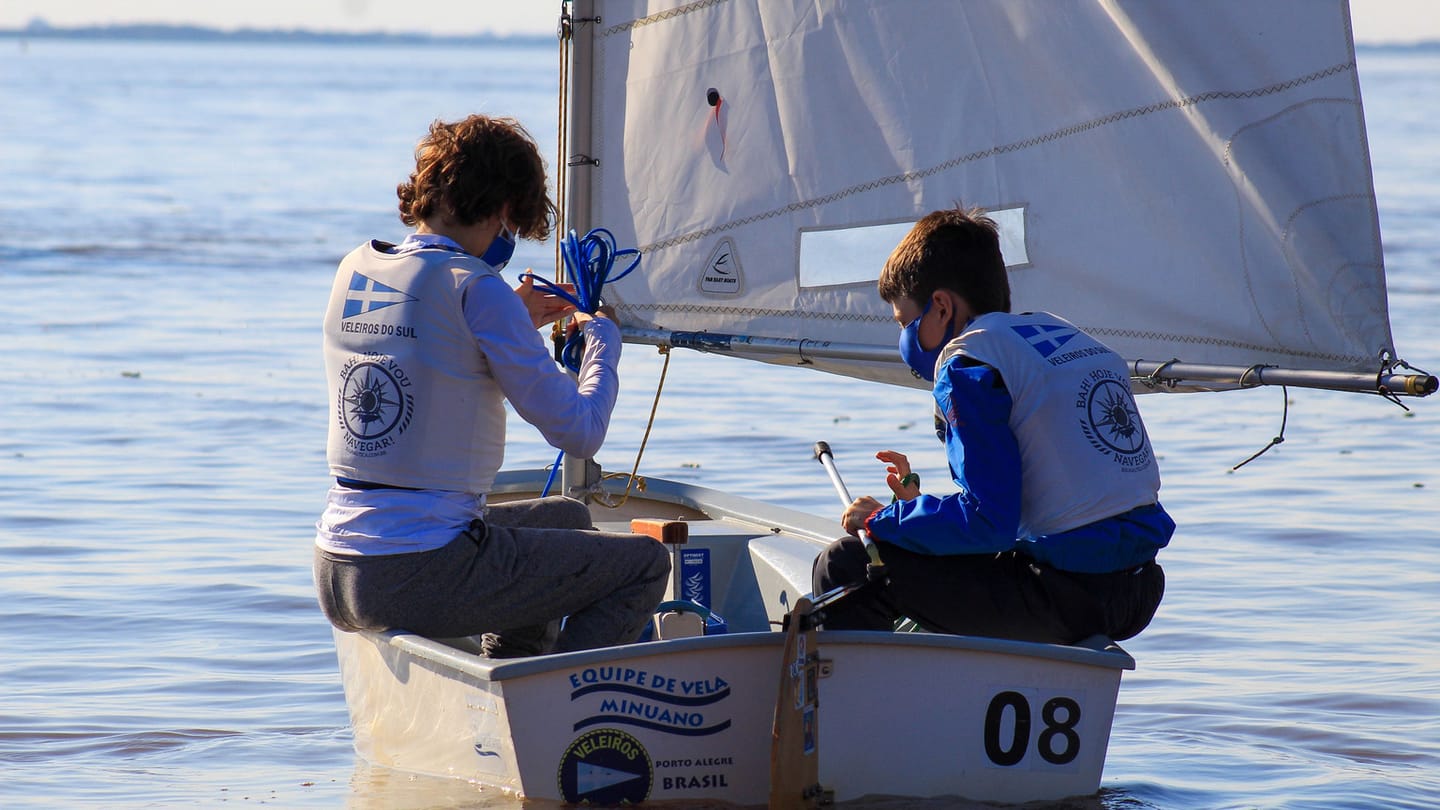
A sailboat that will not complete a tack has usually lost the forward motion that lets the rudder turn the boat through the wind. The bow slows near head to wind, the sails flap, and the helm stops producing the response you expected. The fix is rarely a harder shove on the tiller or wheel. It is to restore a useful starting speed, make one positive turn, and coordinate the jib so the boat emerges on the new tack instead of pausing at the top of the turn.
The same stalled picture can start in light air, steep chop, a hesitant turn, a late jib release, or a course that was already too close to the wind. Diagnose the entry, then use a quiet recovery. A failed tack is useful feedback: the boat has shown that speed, turn rate, sail handling, or the conditions need a different plan.
Carry speed into the turn
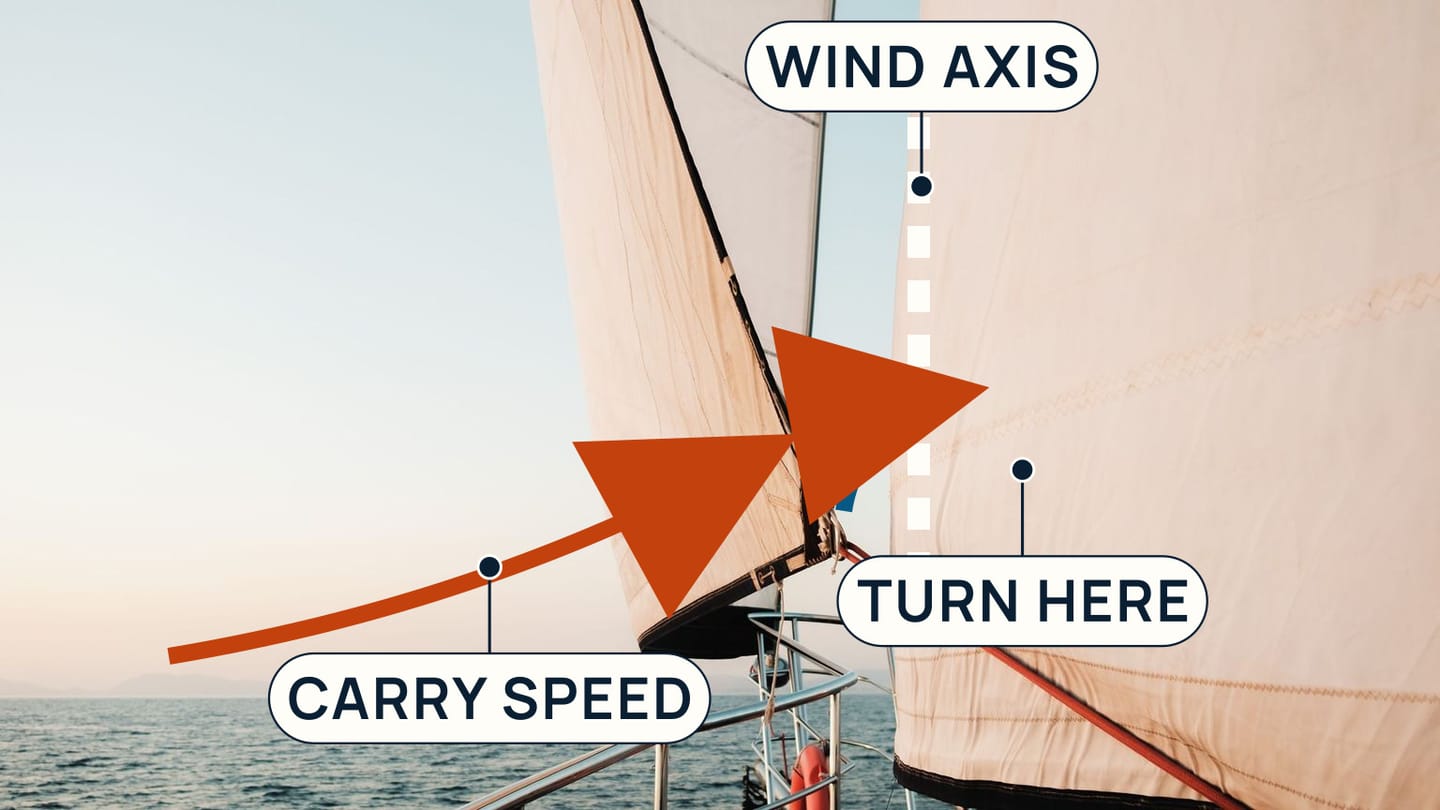
Before calling for a tack, look at the boat rather than the destination. Are the sails drawing cleanly? Is the boat travelling steadily enough that water is moving over the rudder? Has the helm already been steering high to keep a mark in sight? A tack begins best from a close-hauled course with some reserve of speed. If the jib luff is already lifting and the boat feels slow, bear away a little, rebuild flow, and only then prepare the turn.
Speed is not a raceboat obsession here. It is what gives the rudder something to work with. As water passes its blade, a modest helm movement creates a turn. When the boat slows to a stop, the same helm position may do almost nothing. Starting with better flow lets the crew use a smoother turn instead of trying to drag the bow through the no-go zone after the drive has vanished.
Do not confuse a smooth turn with a slow, wandering one. The bow needs to pass through the wind before the speed disappears. A positive, continuous movement usually works better than a series of small corrections that leave the boat pointed into the wind for too long.
Why does the bow stop head to wind?
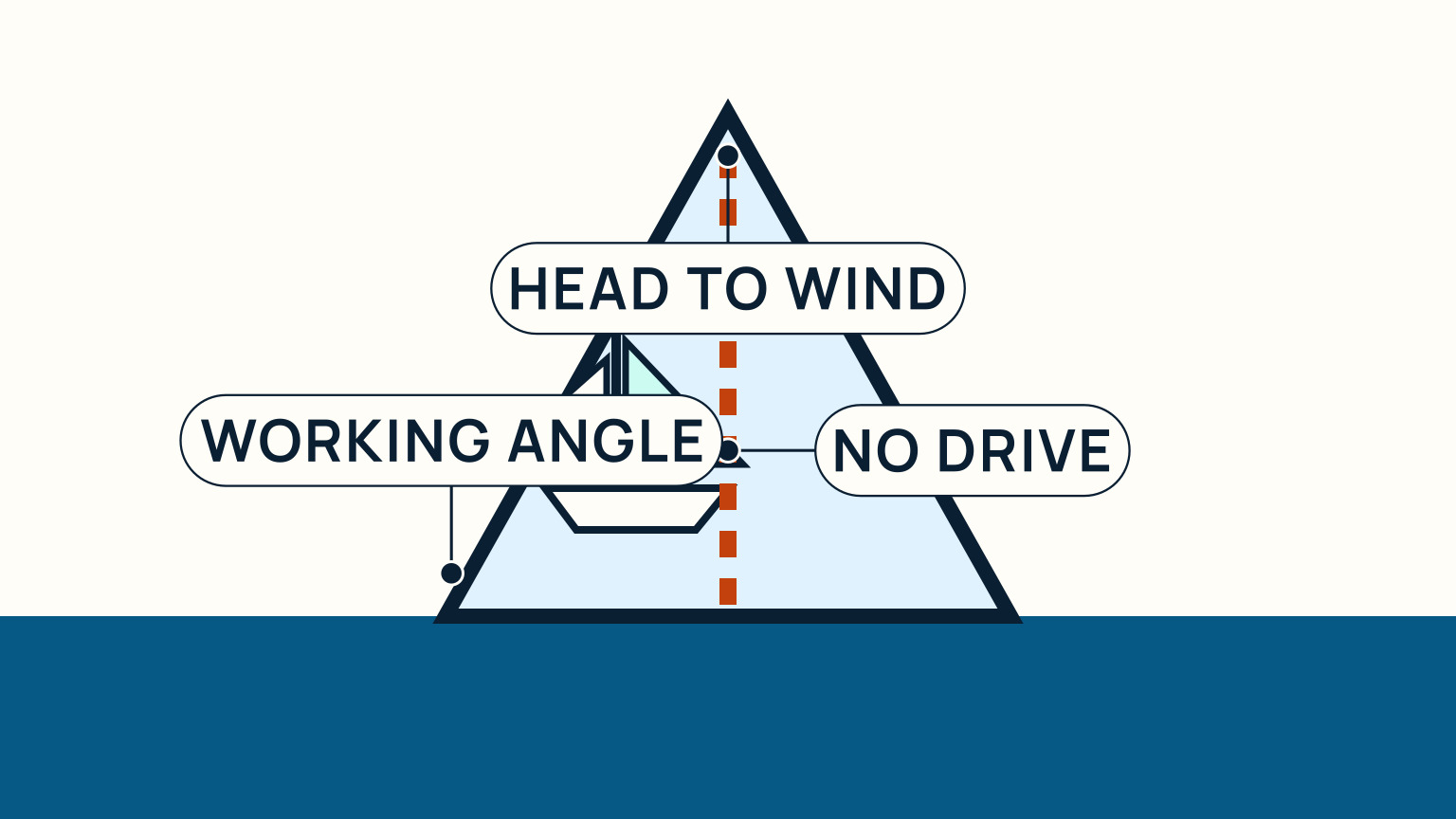
Head to wind is the gap between the useful sailing angles on either tack. As the bow enters it, both sails lose their working angle and luff. That is normal for a moment. The problem begins when the boat has too little momentum to cross the gap. It stops with its bow facing the wind, its sails hanging along the centreline, and little water moving over the rudder. Sailors call this condition in irons.
The visible clues are simple. The wake fades. The jib and main flap rather than fill. The bow points at the wind instead of falling onto the other side. The helm feels disconnected. At that point, more urgent steering does not create water flow. Let the boat's actual movement tell you which recovery is available.
Several small causes can add up. The boat may have entered the tack slowly. The helm may have turned too gently. A wave may have stopped the bow just as it reached the wind. The jib may have been held too long on the old side, resisting the turn. None requires a dramatic conclusion. They are prompts to change one part of the next attempt.
Do not confuse a stalled bow with a mechanical failure before checking motion. A rudder cannot create the water flow it needs when the boat has stopped, and a sail cannot drive the boat while it is luffing directly into the wind. That makes the immediate question practical: is the boat still moving ahead, beginning to move astern, or simply hanging in place? The answer guides the recovery and stops the crew from adding conflicting helm and sheet movements while the boat has no steerage.
Release and trim the jib at the right moments
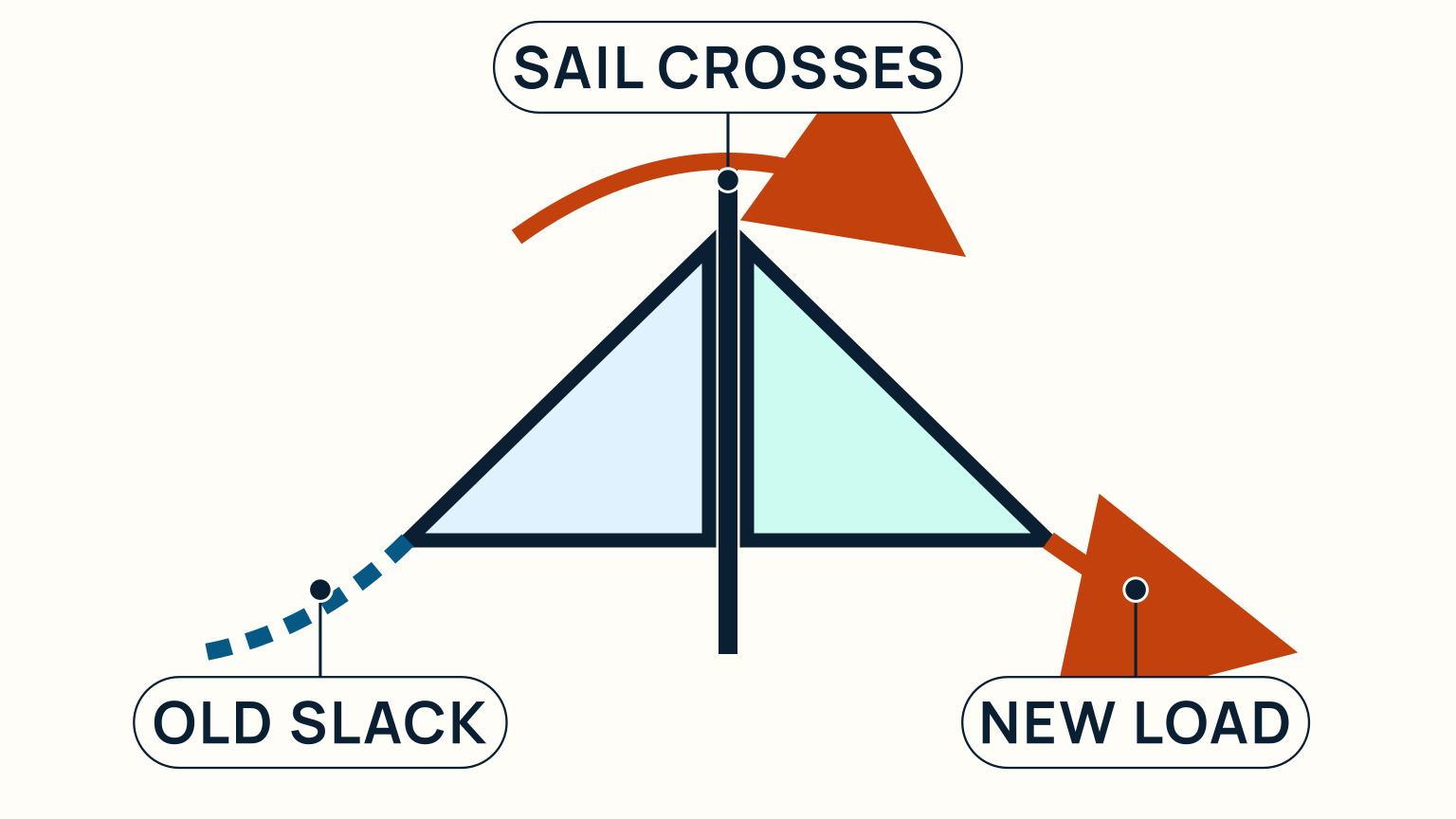
The jib needs an active handoff. Before the tack, make sure the new sheet can run and the person handling it knows which side will become loaded. As the bow turns through the wind, ease the old sheet enough that the sail can luff and cross. Once the jib reaches the new leeward side, trim it for the new course rather than hauling it hard without looking at the sail.
Holding the old sheet too long can keep the jib full on the old side. That pressure may oppose the bow's movement and make a slow tack harder. Releasing too early can leave the sail loose and unhelpful once the bow crosses. The practical answer is not a universal count of seconds. Watch the sail, communicate, and practise the timing on the boat you sail.
Give one clear call for the turn and another for the new sheet. A crew that talks through the sequence avoids both people trying to solve the same moment differently. The helm keeps the turn continuous. The trimmer releases, crosses, and trims. After the bow reaches the new side, settle on the new close-hauled angle before judging whether the tack succeeded.
What changes in waves or light air?
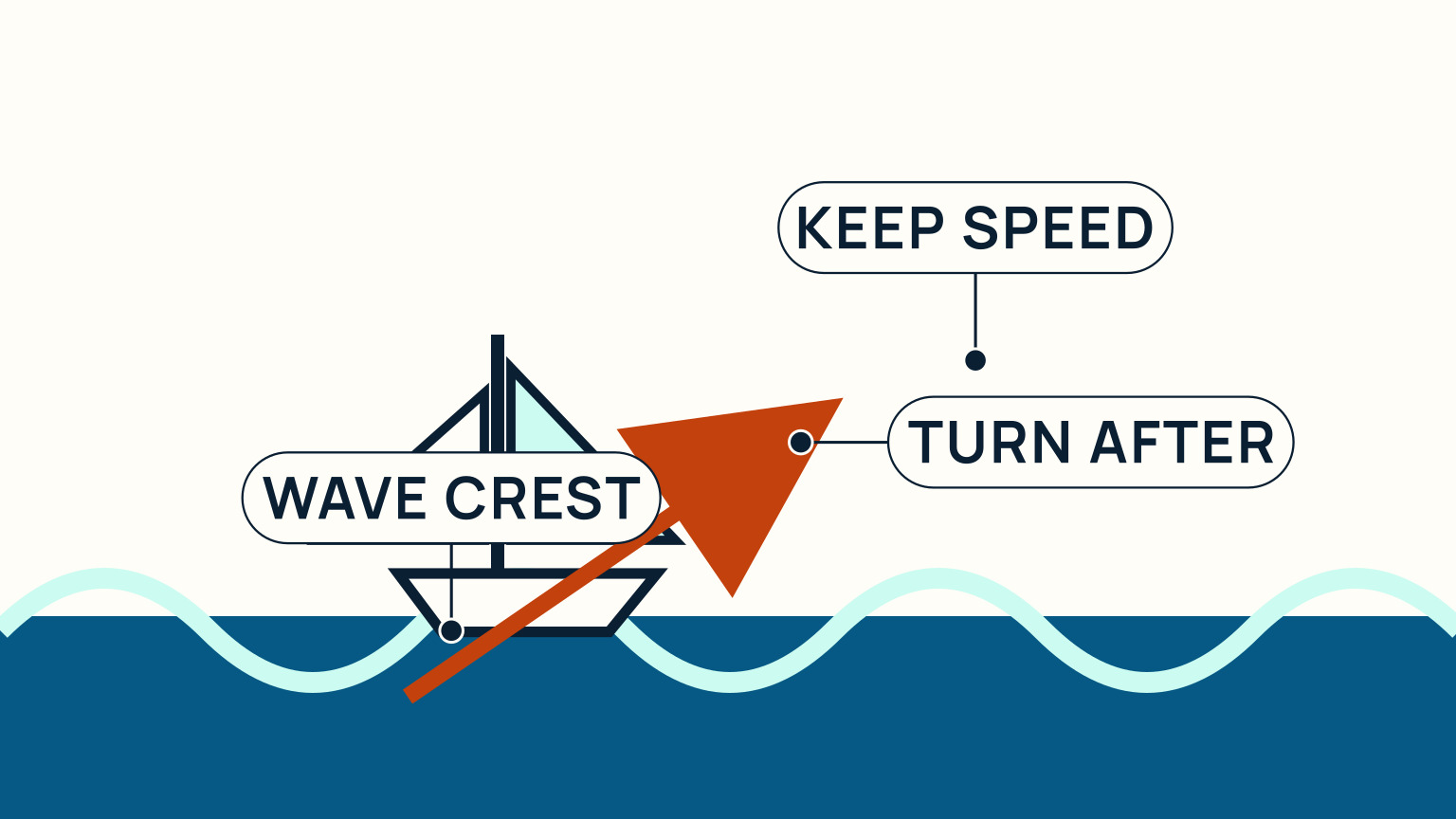
Waves can take speed away exactly when the boat needs it most. In short chop, a bow that meets a crest during the turn may lose enough momentum to stop head to wind. Wait for a moment when the boat has cleared a crest and has a little acceleration. Steer a clean turn rather than starting as the bow is already being checked by a wave. If there is room, use a slightly fuller approach to build speed before coming up.
Light wind presents the opposite-looking problem with the same result. The boat may be moving slowly even before the turn, so every unnecessary drag matters. Keep the crew's movement calm, avoid over-sheeting, and turn only after the sails are drawing. If the boat will not tack reliably, consider whether a gybe, a different route, or a motor-assisted manoeuvre under the skipper's plan is safer for the available space. The right manoeuvre depends on the boat and the situation, not on pride in completing every tack under sail.
On a crowded or shallow route, do not use a marginal tack as an experiment. Build the margin first. You need room for a failed turn, a recovery, and another choice. Lookout, depth, traffic, and the next safe course remain part of the manoeuvre even while the crew watches the sails.
Recover without fighting the boat
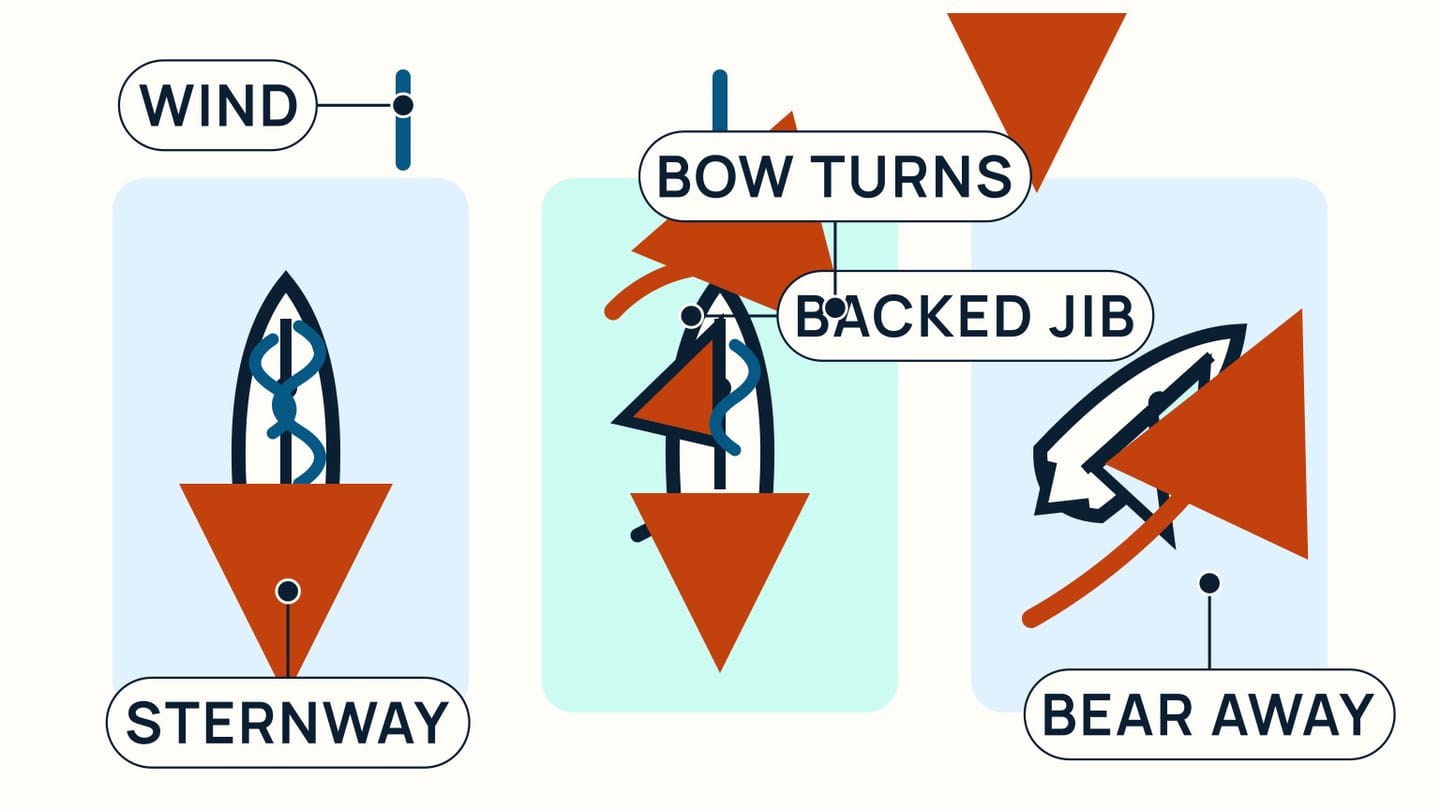
When the boat stops in irons, pause the urge to force it forward. Let it begin moving backward if the conditions allow. That sternway creates flow over the rudder in the reverse direction. A backed jib, held on one side against the wind, can help push the bow away from that side. With sternway established, tiller steering is reversed: move the tiller toward the side you want the bow to go. On a wheel boat, learn the equivalent movement with an instructor before relying on it.
As the bow swings clear of the wind, release the backed jib and trim for the new side. Bear away enough for the sails to fill and regain steerage before trying to climb back toward the original course. The objective is not a perfect-looking recovery. It is a boat with drive, a working rudder, and room to choose the next action.
Practise this in open water with an experienced skipper. Deliberately stop head to wind in gentle conditions, identify the loss of steerage, then recover. That rehearsal makes a real failed tack less surprising. It also teaches the crew that the boat has a sequence of states: moving, slowing, stalled, backing, turning clear, and sailing again.
After any incomplete tack, make the debrief specific. Ask whether the boat had speed before the turn, whether the helm continued through the wind, whether the jib was released in time, and whether a wave changed the result. Do not answer all four questions with "more speed". The record is useful only when it identifies the moment that changed the boat's motion.
On the next attempt, alter one condition. Begin on a slightly fuller course, wait for a smoother patch of water, or agree earlier on the jib release. The boat will tell you whether that change helped. This small-step approach builds dependable handling without turning each tack into a test of nerve.
Use the step-by-step tacking guide, the in-irons recovery guide, and the no-go zone explanation to practise the pieces separately. SailStarter's handling lessons can give you a visual vocabulary before you rehearse the manoeuvre afloat. A reliable tack starts before the call: with speed, space, a prepared jib, and a crew that knows what will happen when the bow crosses the wind.
Try it from the lesson
Can you spot the next move?
The wind is blowing over your port side. Which tack are you on, and which side is the boom?
Why you can trust this guide
. We build each guide from public seamanship and safety sources, then teach the universal principle before any local difference.